We are staying in Moxy, but I will write more about the hotel later. Before we start our Titanic adventure tomorrow, we go for a stroll to the river to reconnoitre the area. The plan is to reach the River Lagan and see the Salmon of Knowledge.
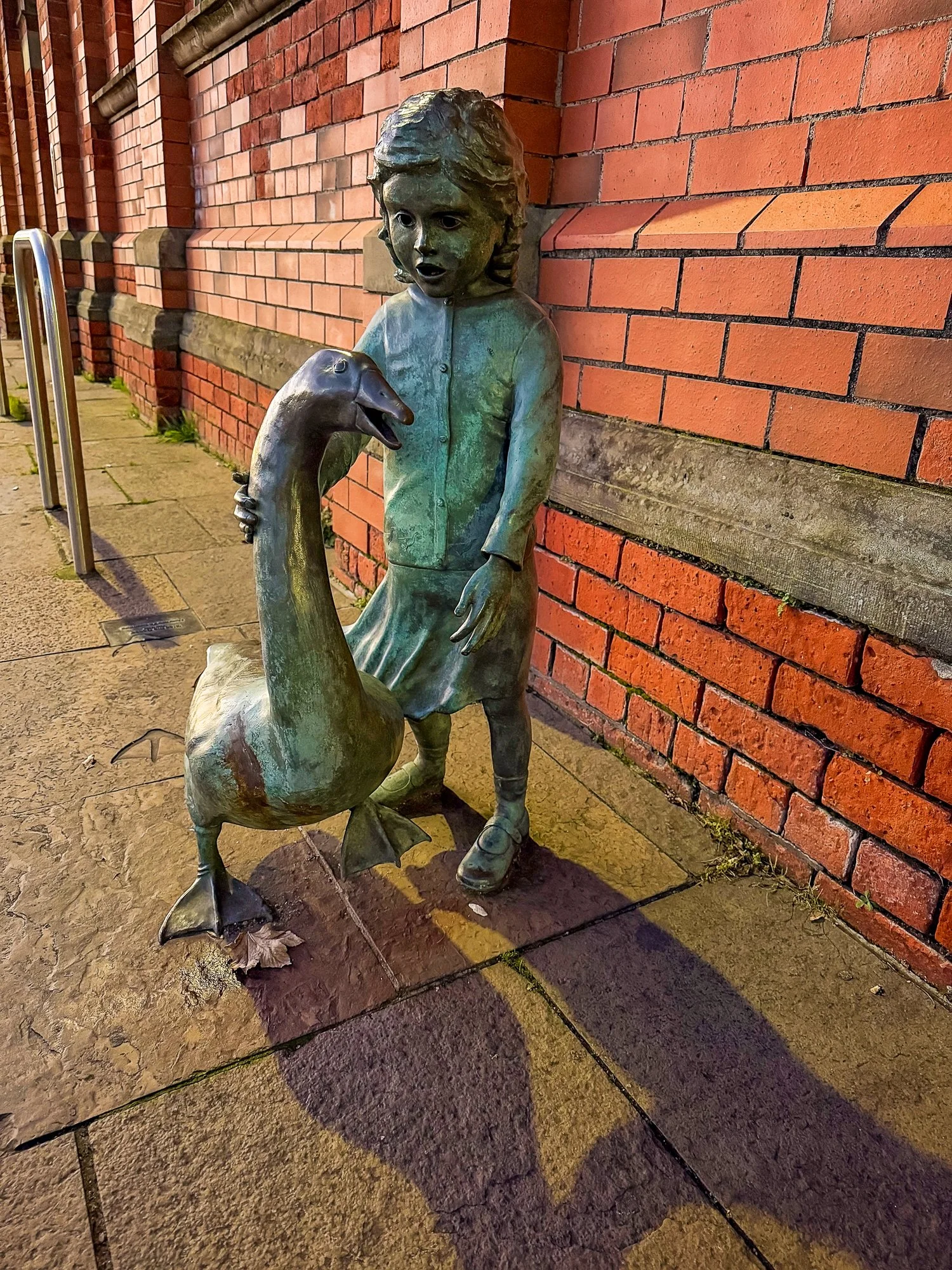
The first interesting thing we pass is a bronze artwork standing right outside the southern entrance of St. George’s Market on East Bridge Street - a girl with a goose. It commemorates a real goose named Alec, who became something of a local character in the 1920s. Alec belonged to a poultry vendor at the market and was known for wandering around the area and even escorting local schoolchildren on their way to school. Sadly, Alec was hit by a vehicle and died, but his memory lives on in this charming statue that shows him beside a young girl, capturing a little of quirky Belfast history and community spirit.
Zatrzymujemy się w Moxy, ale o hotelu napiszę później. Dziś, zanim ruszymy jutro na naszą przygodę z Titanikiem, wybieramy się na rekonesans okolicy. Naszym celem jest dotarcie do rzeki Lagan i zobaczenie Salmon of Knowledge (Łosia Wiedzy).
Pierwszą ciekawostką, na którą natrafiamy, jest rzeźba stojąca tuż przy południowym wejściu na St. George's Market przy East Bridge Street – dziewczynka z gęsią. Upamiętnia ona prawdziwą gęś o imieniu Alec, która w latach dwudziestych była tu przez wszystkich znana. Należała do lokalnego sprzedawcy drobiu i często wędrowała po okolicy, a czasem nawet odprowadzała dzieci do szkoły. Niestety, Alec został potrącony przez samochód i tak zginął, ale jego pamięć przetrwała w tej uroczej rzeźbie, przedstawiającej gęś obok dziewczynki - mały fragment lokalnej historii Belfastu.
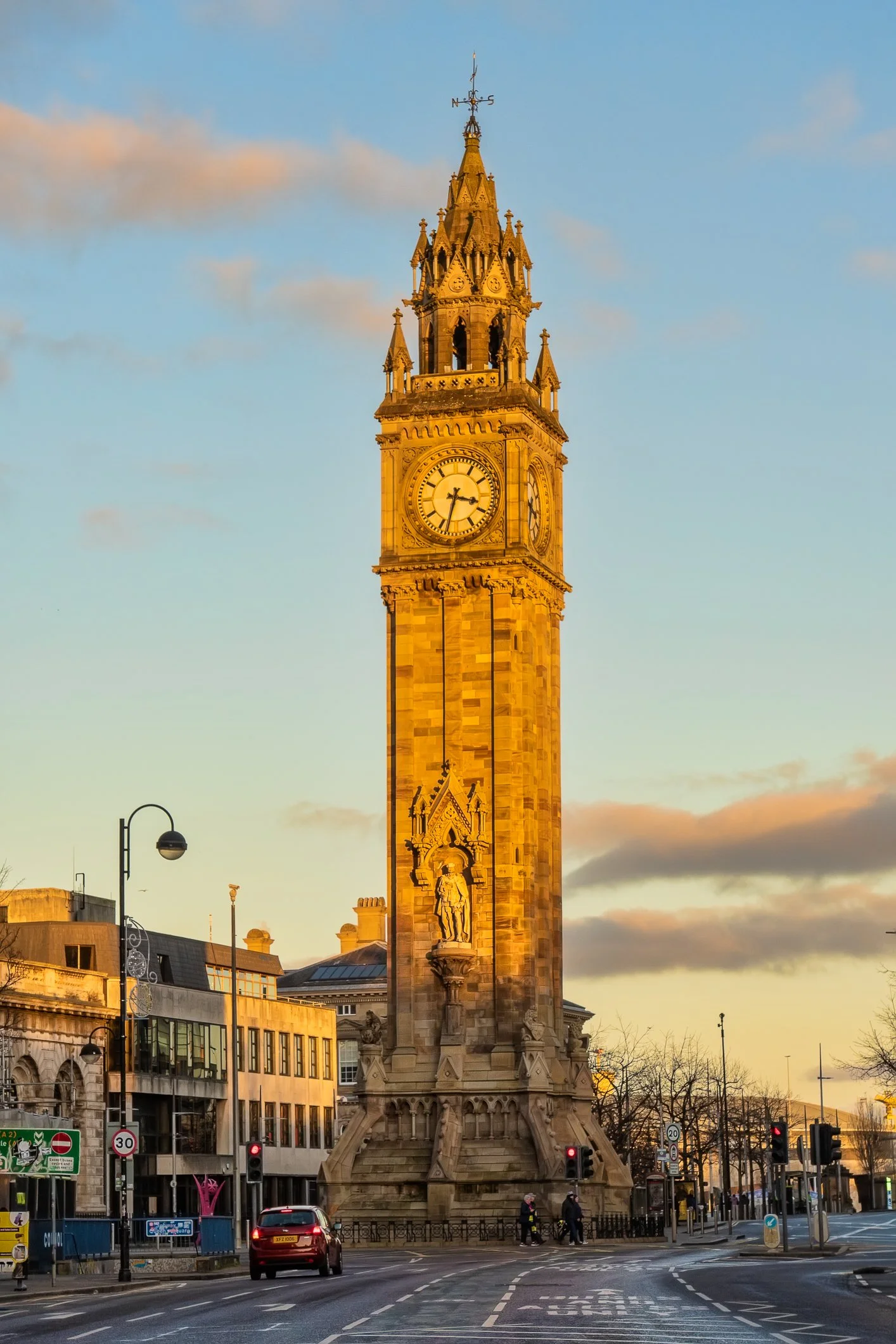
On our way to the waterfront, we pass one of Belfast’s best-known landmarks, the Albert Memorial Clock, built in 1869 in memory of Prince Albert, the husband of Queen Victoria. It is about 34 metres (113 feet) tall sandstone tower built in a Gothic Revival style.
The tower stands at Queen’s Square, not far from the River Lagan and the Big Fish sculpture. Fun fact: it actually leans slightly due to unstable ground near the river. For years it tilted about 4 feet off centre at the top, so it is sometimes called Belfast’s “Leaning Tower.” It was restored in the early 2000s to stabilise it and prevent further movement. The landmark is now affectionately described as having both „the time and inclination”.
Idąc w stronę nabrzeża mijamy jeden z najbardziej rozpoznawalnych punktów miasta - Albert Memorial Clock, zbudowany w 1869 roku na cześć księcia Alberta, męża królowej Wiktorii. Wieża zegarowa ma około 34 metrów wysokości i jest wykonana w piaskowcu w stylu neogotyckim.
Zegar stoi na Queen's Square, niedaleko rzeki Lagan i wielkiej ryby. Ciekawostka: wieża lekko się przechyliła z powodu niestabilnego gruntu nad rzeką. Przez lata odchylenie w górnej części doszło do około 1,2 metra, dlatego czasami nazywana jest ona „Krzywą Wieżą Belfastu”. W 2002 przeszła restaurację, aby ustabilizować konstrukcję i zapobiec dalszym przesunięciom.
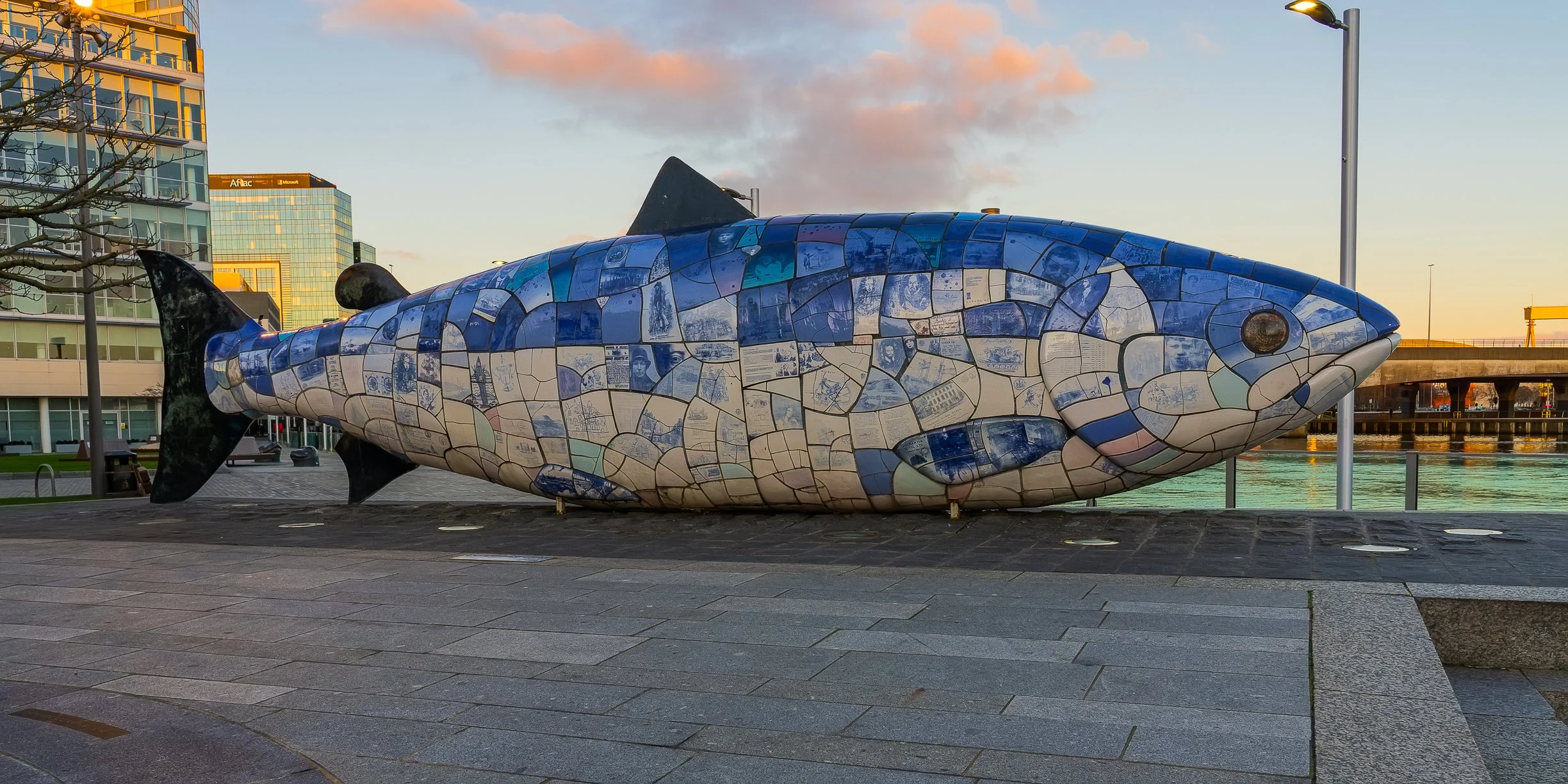
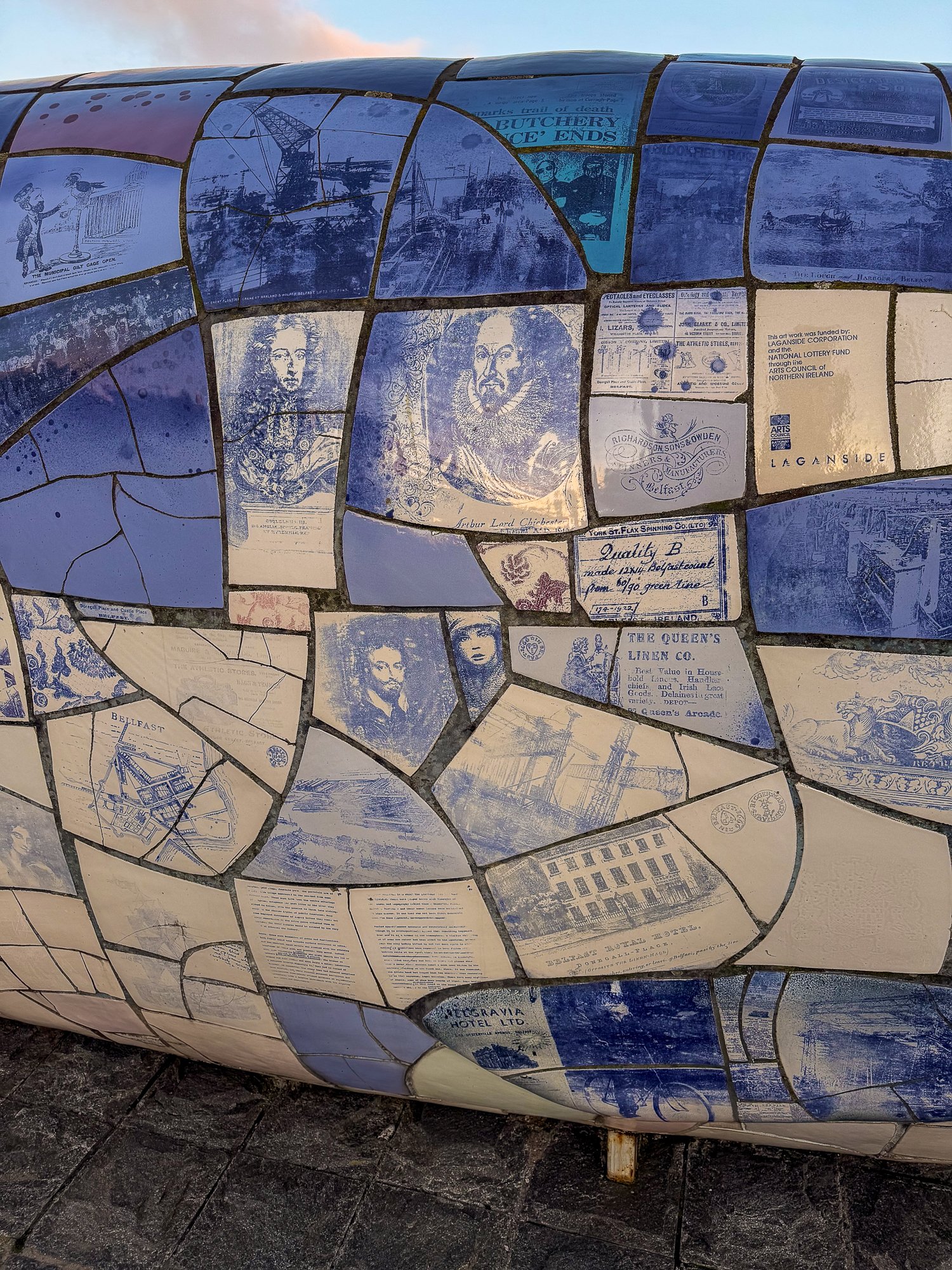
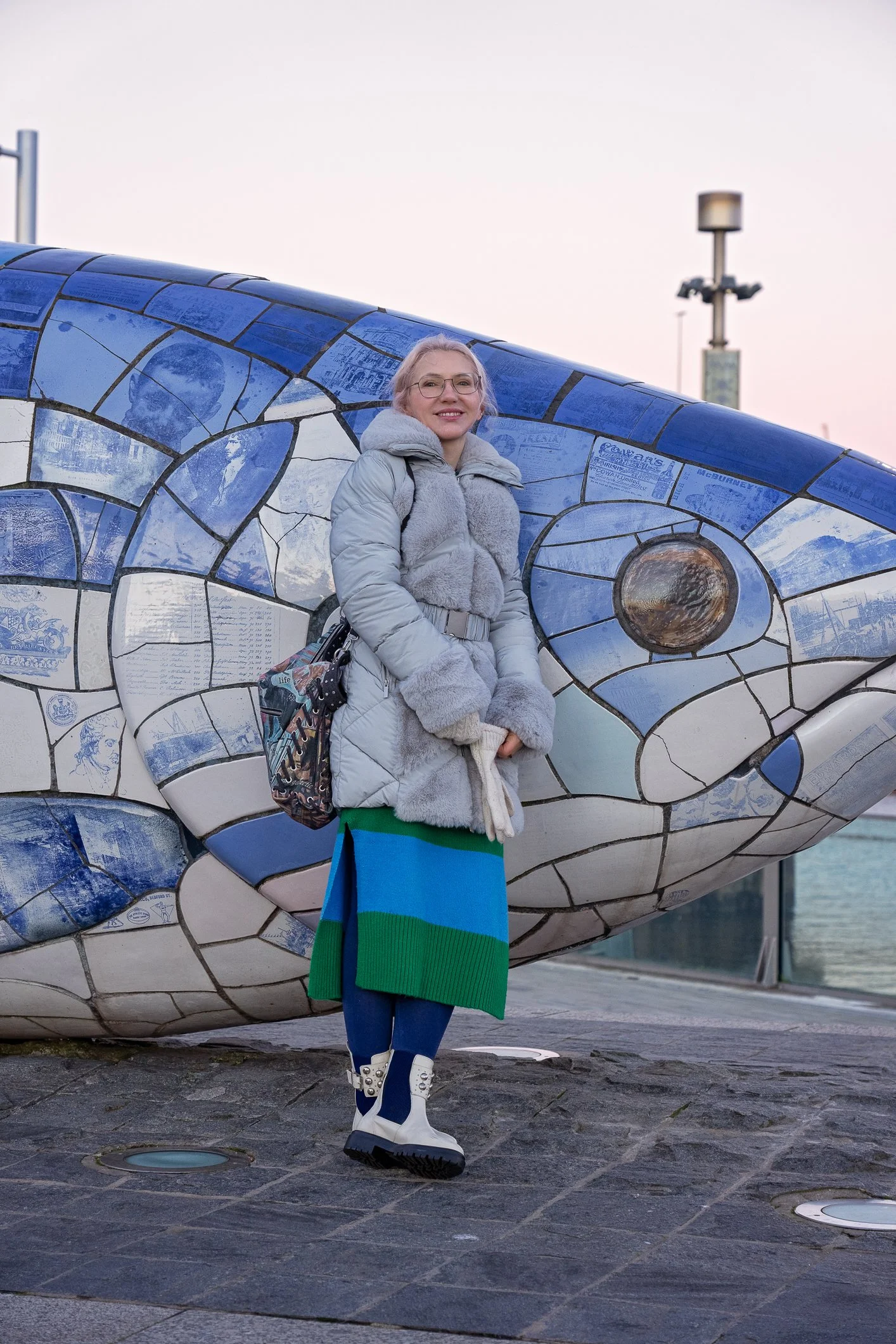
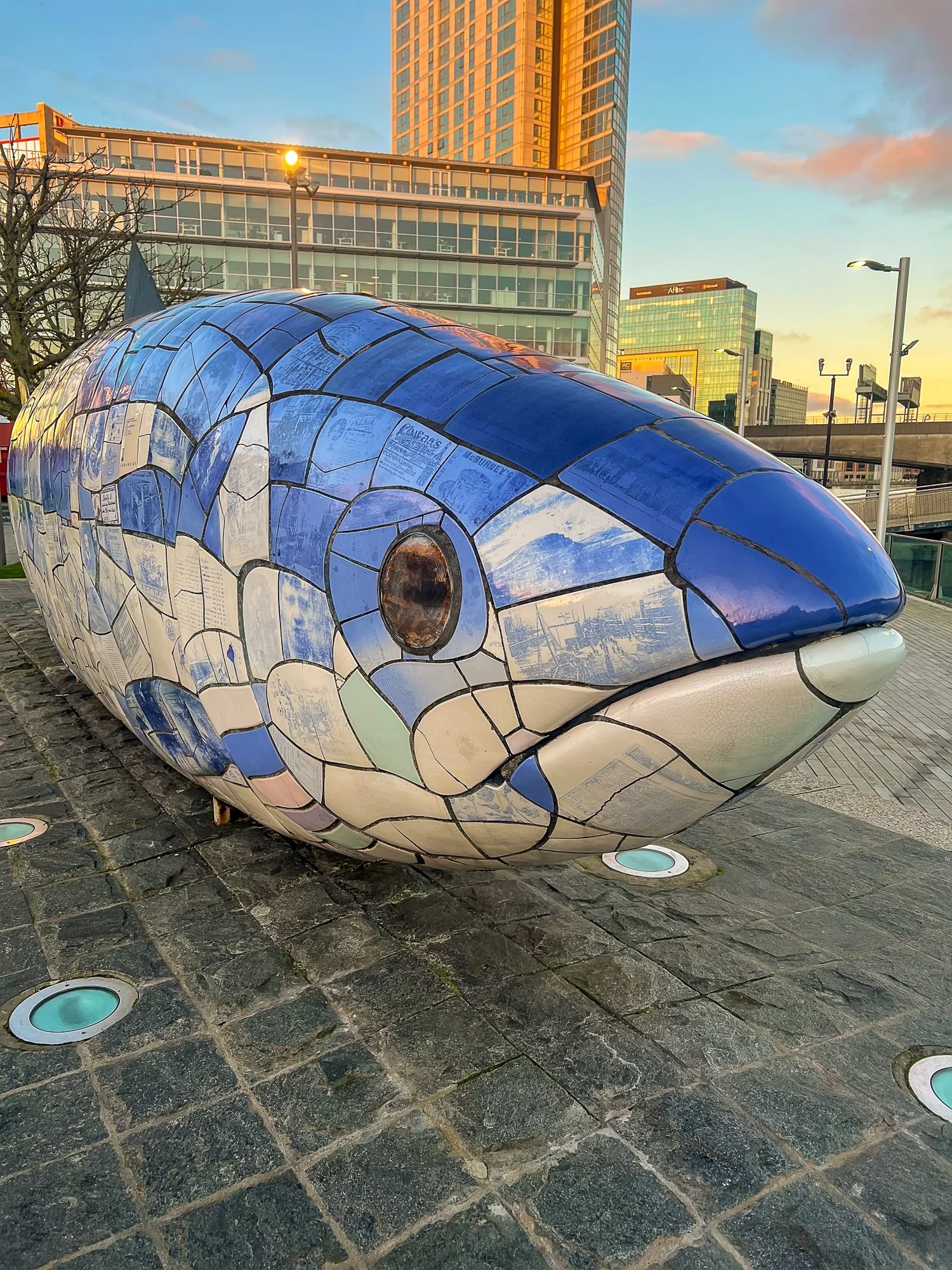
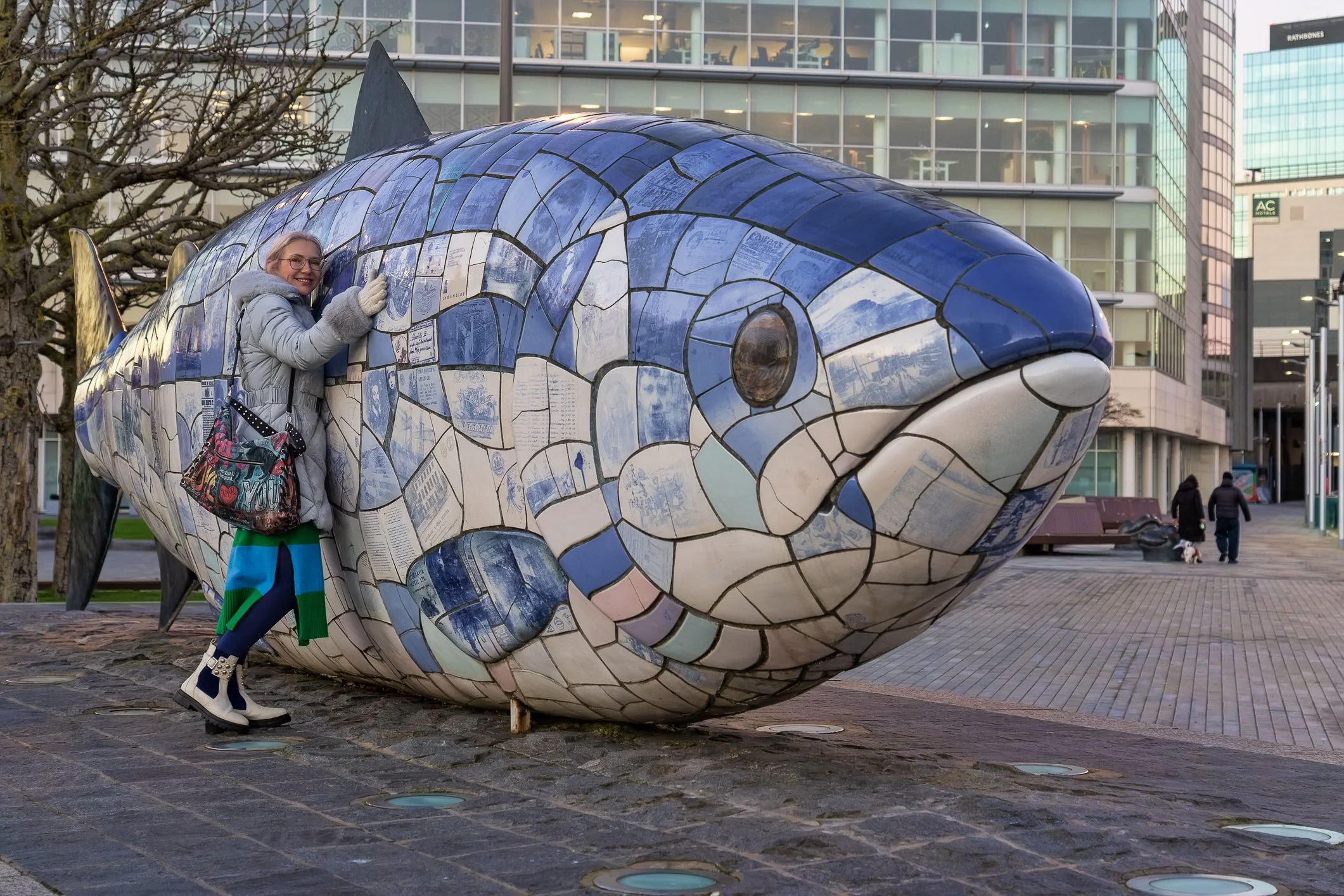
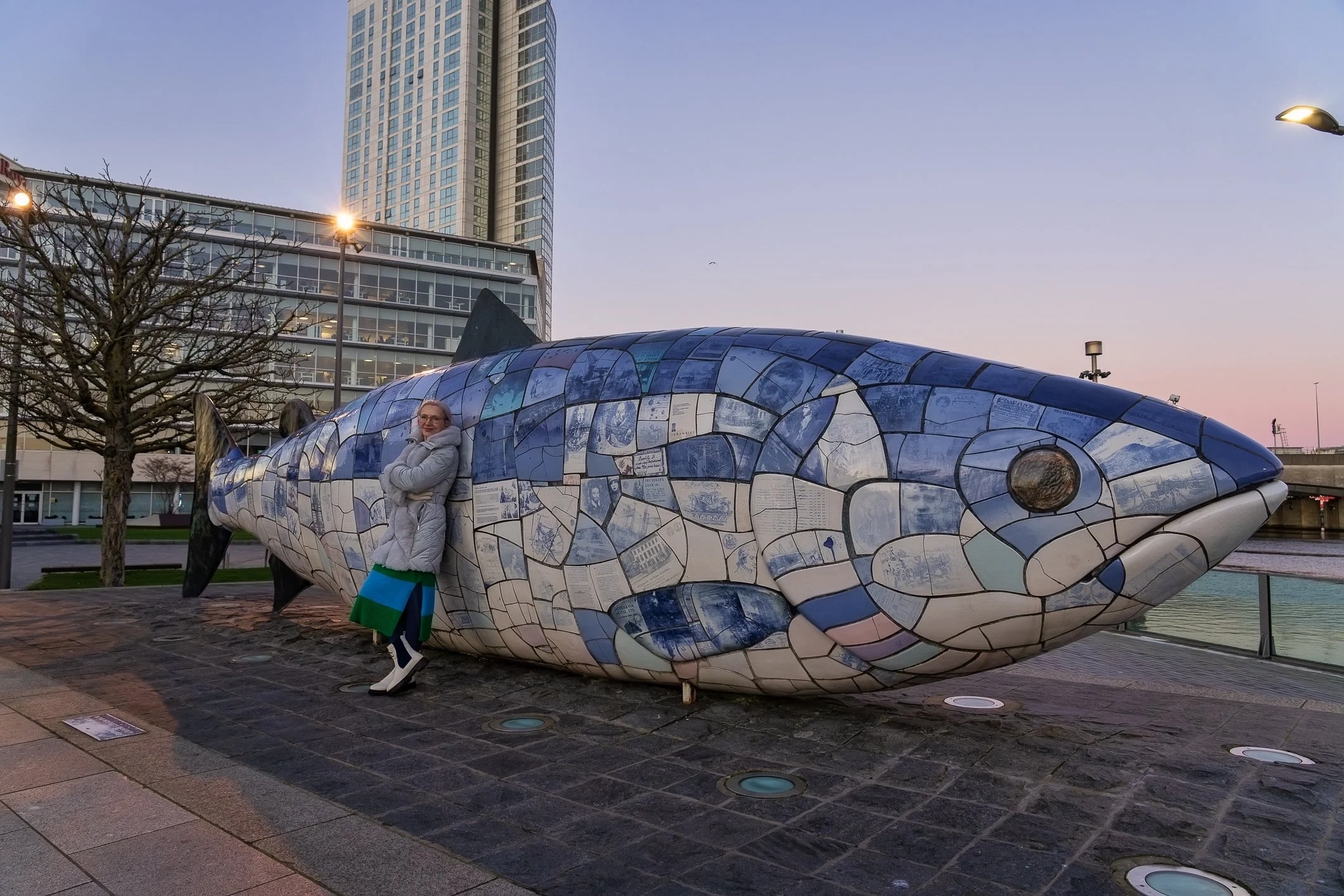
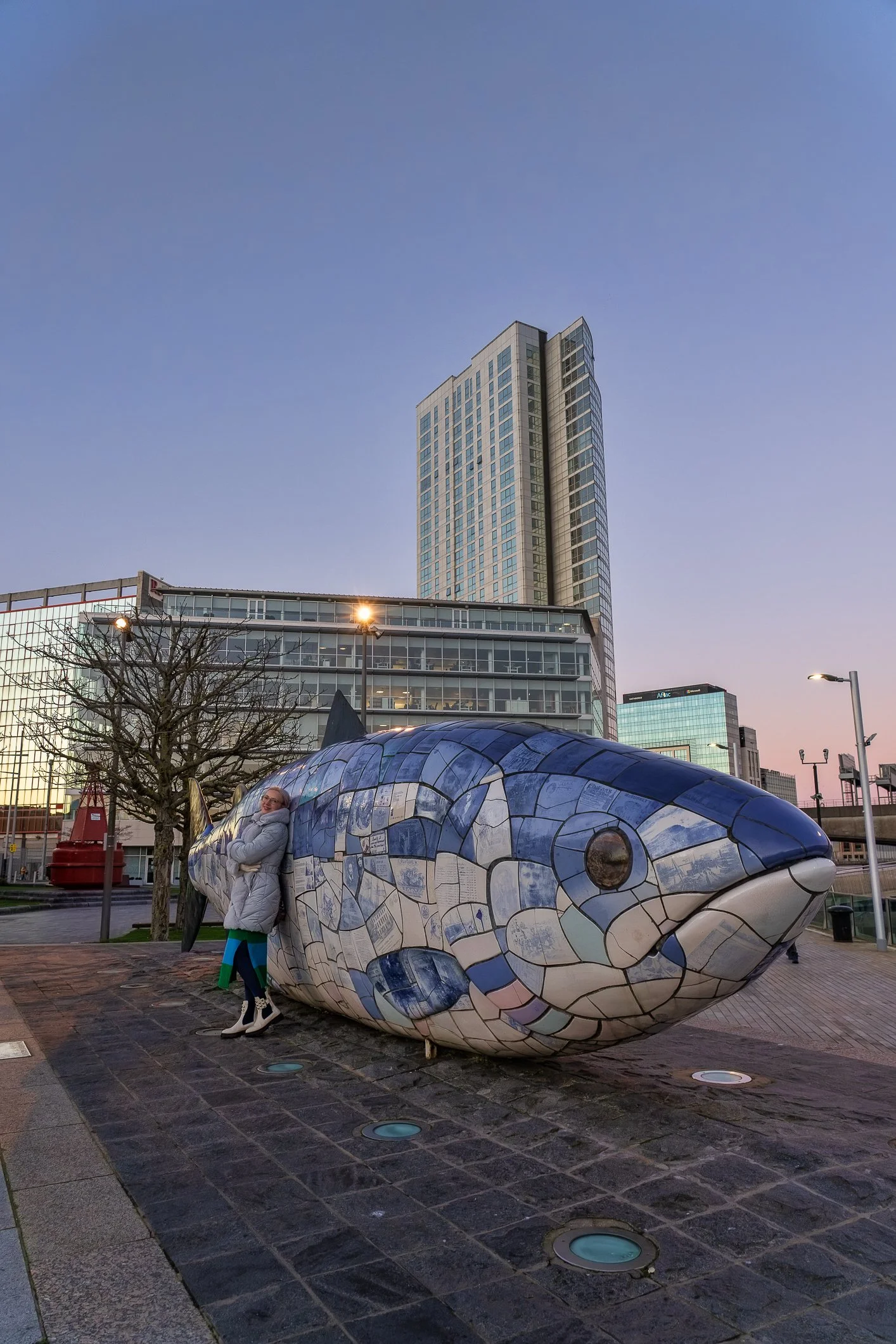
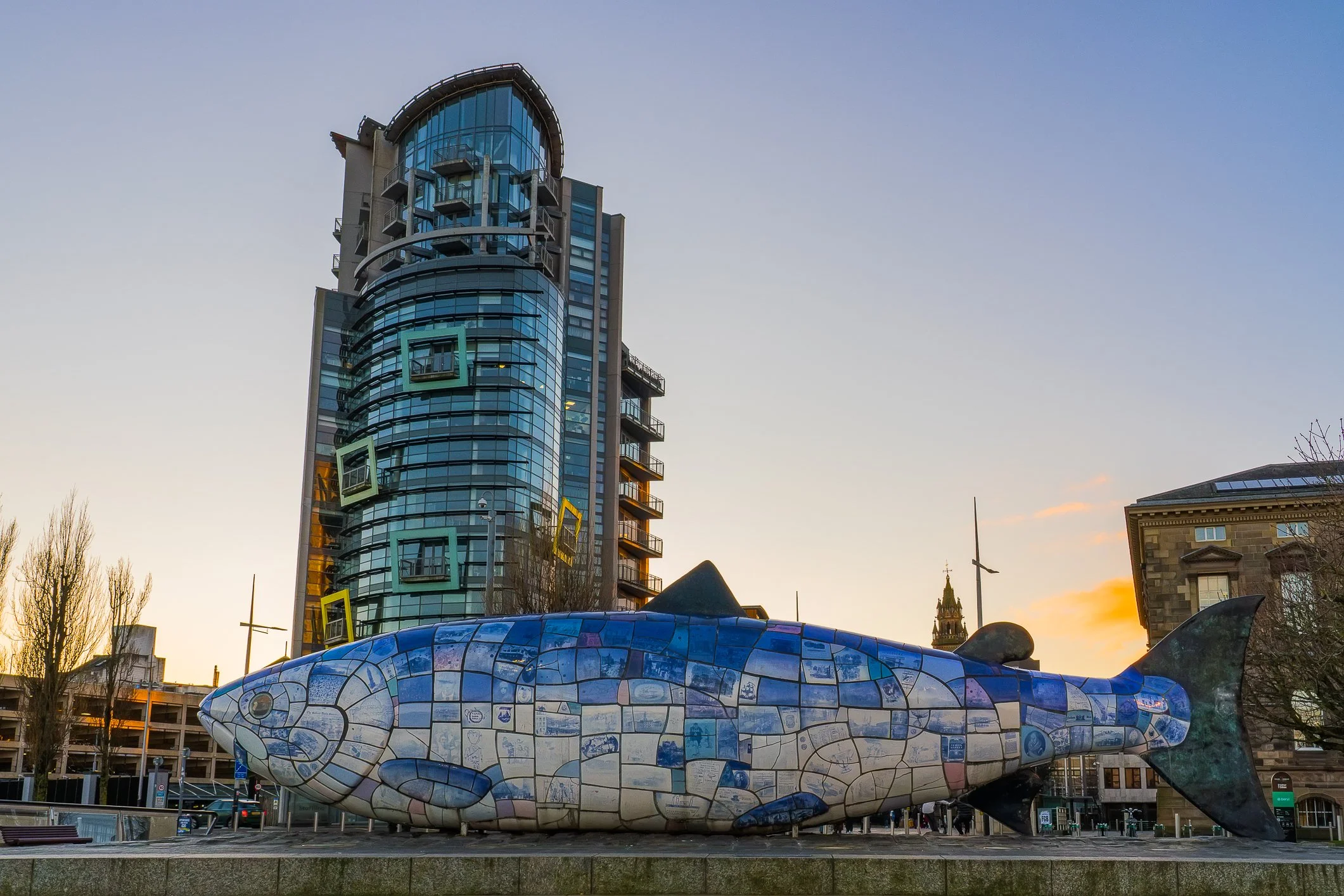
A few steps from here, we arrive at today’s destination - the Big Fish, officially called the Salmon of Knowledge. This 10-metre-long sculpture was created in 1999. The fish is covered in blue-and-white ceramic tiles decorated with images, texts, maps, and newspaper clippings that reflect Belfast’s history. In a way, it acts as a visual time capsule, capturing moments from the city’s past and preserving them in art. There are images of politicians John Hume and David Trimble, architectural drawings of the Grand Opera House, U2’s Bono as a reference to a concert held to promote the Good Friday Agreement of 1998, and many more.
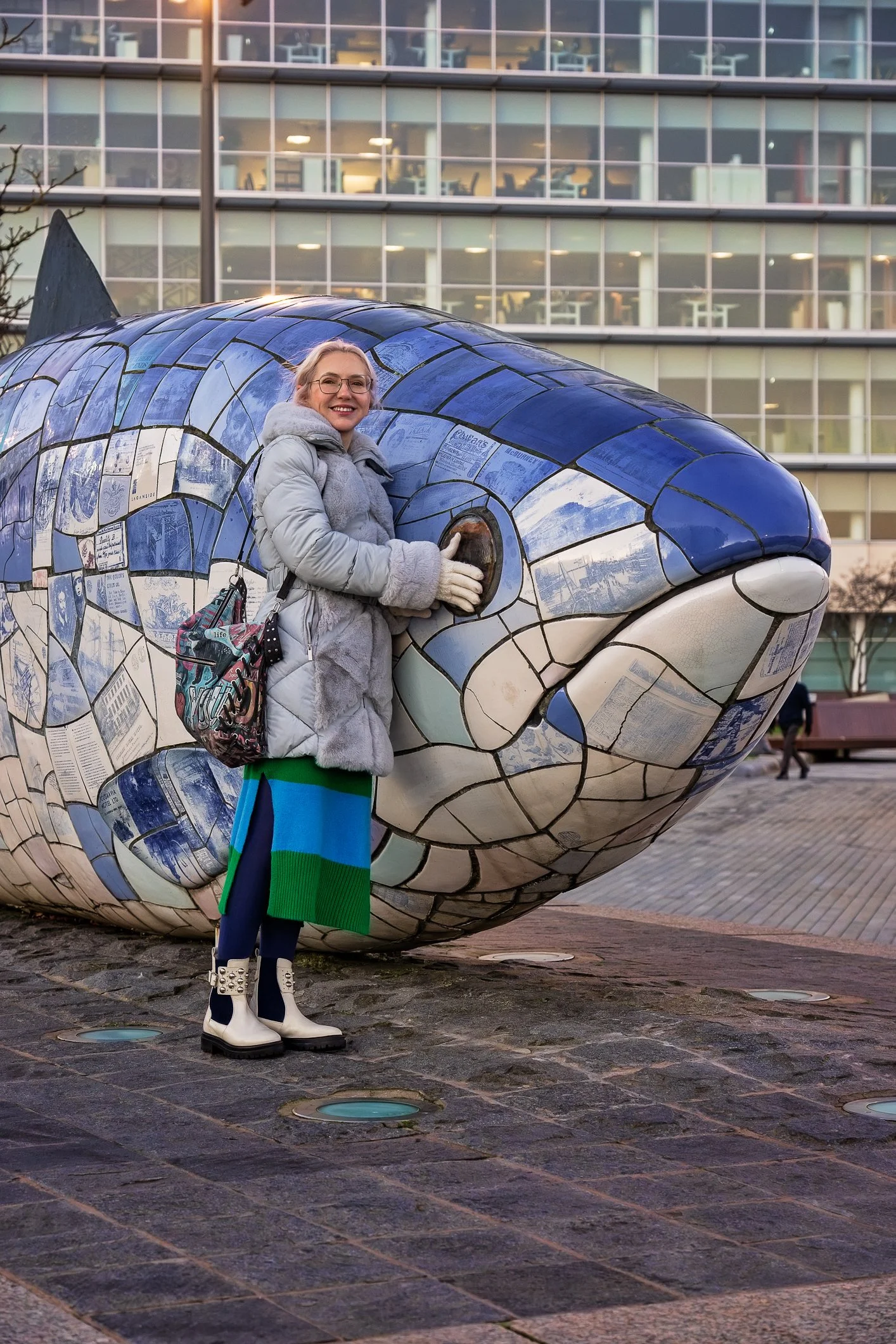
The name “Salmon of Knowledge” comes from Irish mythology. According to legend, a magical salmon gained all the wisdom in the world by eating hazelnuts that had fallen into the Well of Wisdom (it is complicated, I know). The hero Fionn mac Cumhaill accidentally tasted the salmon and instantly acquired its knowledge. Because of this story, there is a playful belief that touching the sculpture might bring you wisdom. So from now on, call me the wise one.
Salmon were historically found in the River Lagan, so at least the fish makes sense. Today, the sculpture symbolises renewal and shared history, especially meaningful given its installation not long after the peace process in Northern Ireland. It has become not just a piece of public art, but a gentle reminder of Belfast’s stories, resilience, and cultural roots.
Kilka kroków dalej docieramy do naszego celu – Wielkiej Ryby (Big Fish), oficjalnie zwanej Łososiem Wiedzy - Salmon of Knowledge. Ta 10-metrowa figura powstała w 1999 roku i jest pokryta ceramicznymi płytkami w odcieniach niebieskiego i białego, ozdobnymi obrazami, tekstami, mapami i wycinkami z gazet, które opowiadają historię Belfastu. W pewnym sensie pełni rolę wizualnej kapsuły czasu, zachowując fragmenty przeszłości miasta w formie sztuki. Wśród motywów znajdują się wizerunki polityków Johna Hume’a i Davida Trimble’a, szkice Grand Opera House, zdjęcie Bono z koncertu promującego Porozumienie Wielkopiątkowe z 1998 roku i wiele innych.
Nazwa „Salmon of Knowledge” pochodzi z mitologii irlandzkiej. Według legendy magiczny łosoś zdobył całą mądrość świata, jedząc orzechy laskowe spadające do Studni Wiedzy (to jest długa historia…). Bohater Fionn mac Cumhaill przypadkowo spróbował łososia i natychmiast przyswoił jego wiedzę. W związku z tym powstał zabobon, że dotknięcie rzeźby może przynieść wielką mądrość. No to podotykaliśmy.
Historycznie łososie żyły w rzece Lagan, więc wybór ryby ma przynajmniej sens. Dziś rzeźba symbolizuje odnowę i wspólną historię, co jest szczególnie wymowne, biorąc pod uwagę, że powstała niedługo po procesie pokojowym w Irlandii Północnej. Stała się nie tylko dziełem sztuki publicznej, ale też subtelnym przypomnieniem historii, wytrwałości i kulturowych korzeni Belfastu.
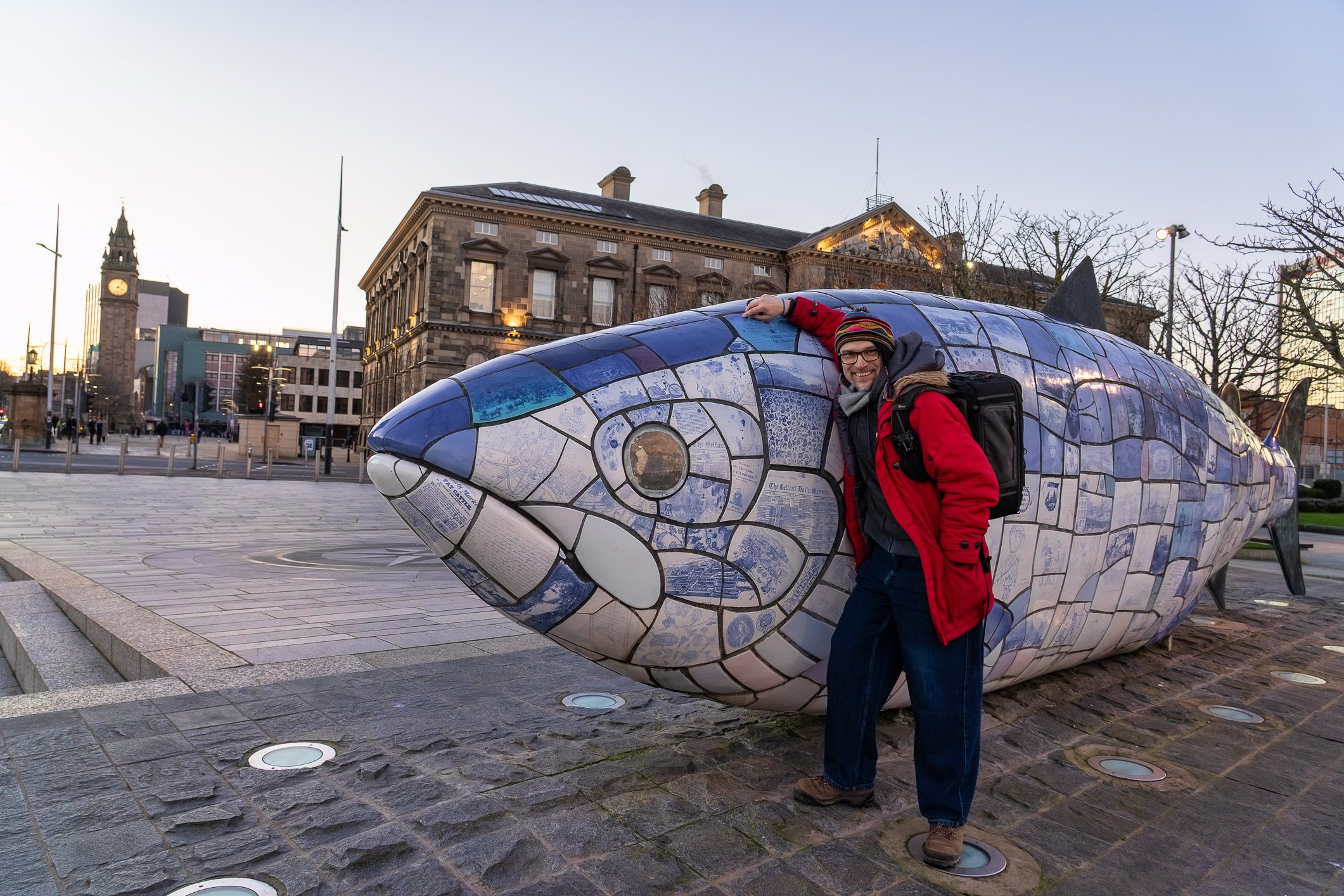
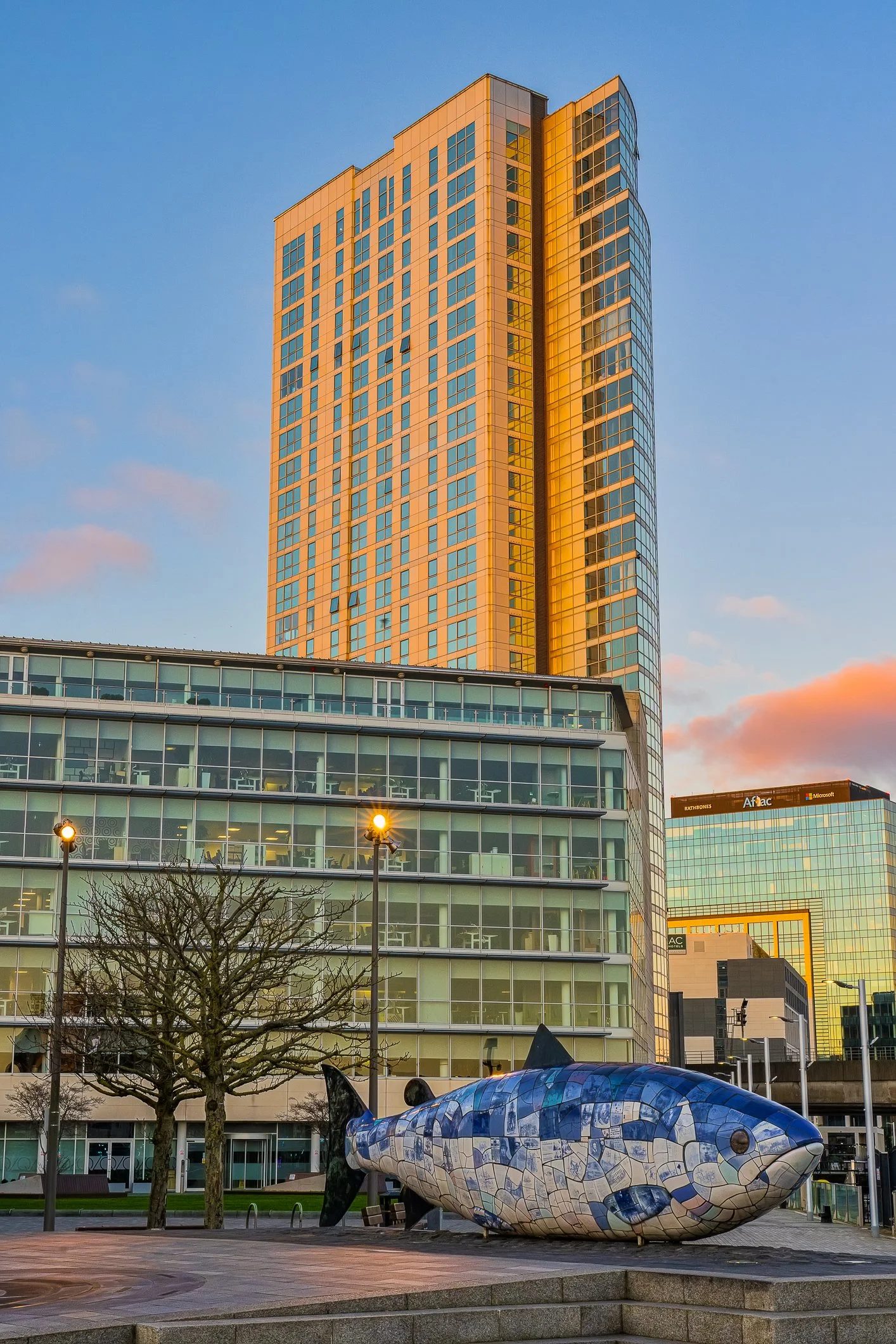
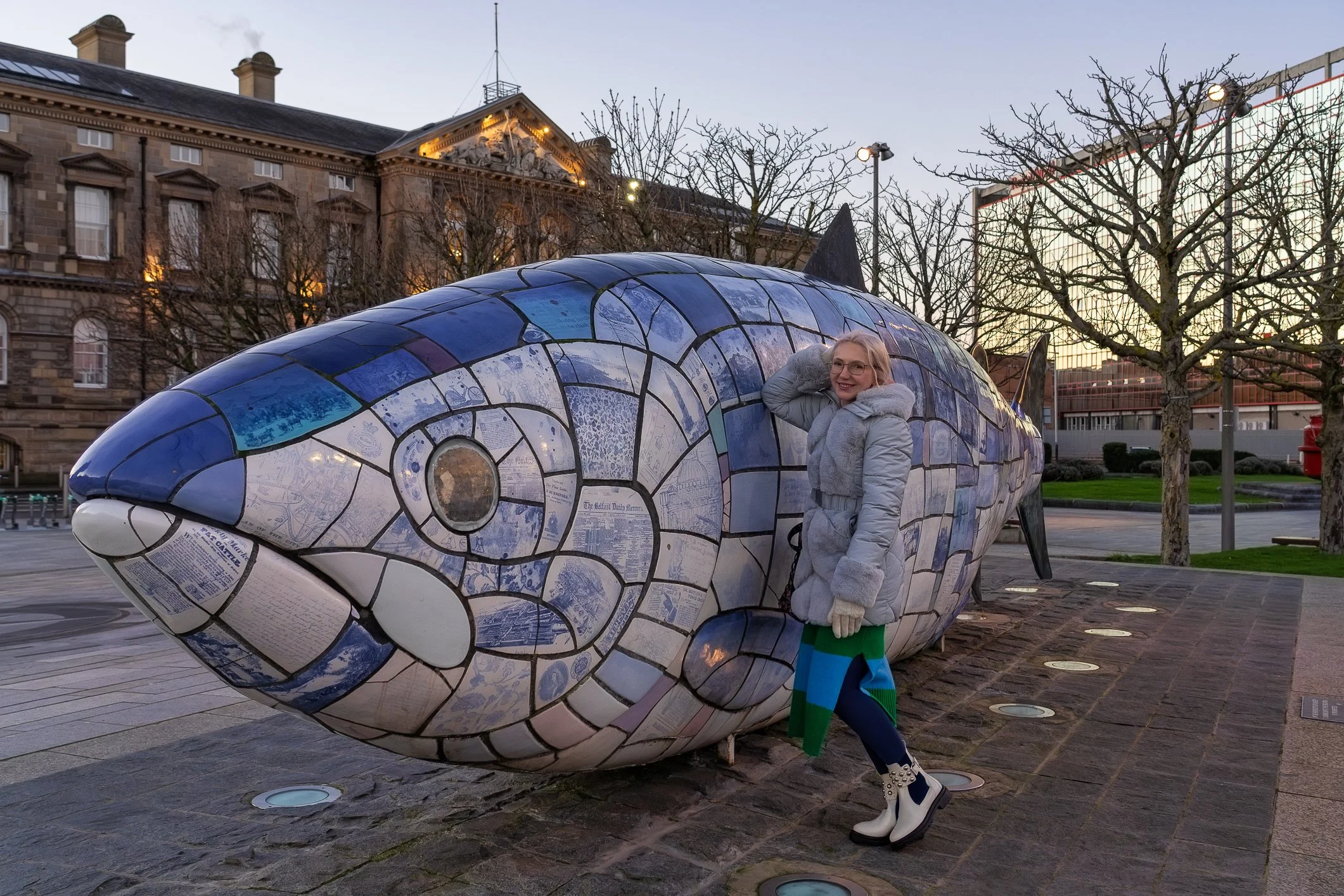
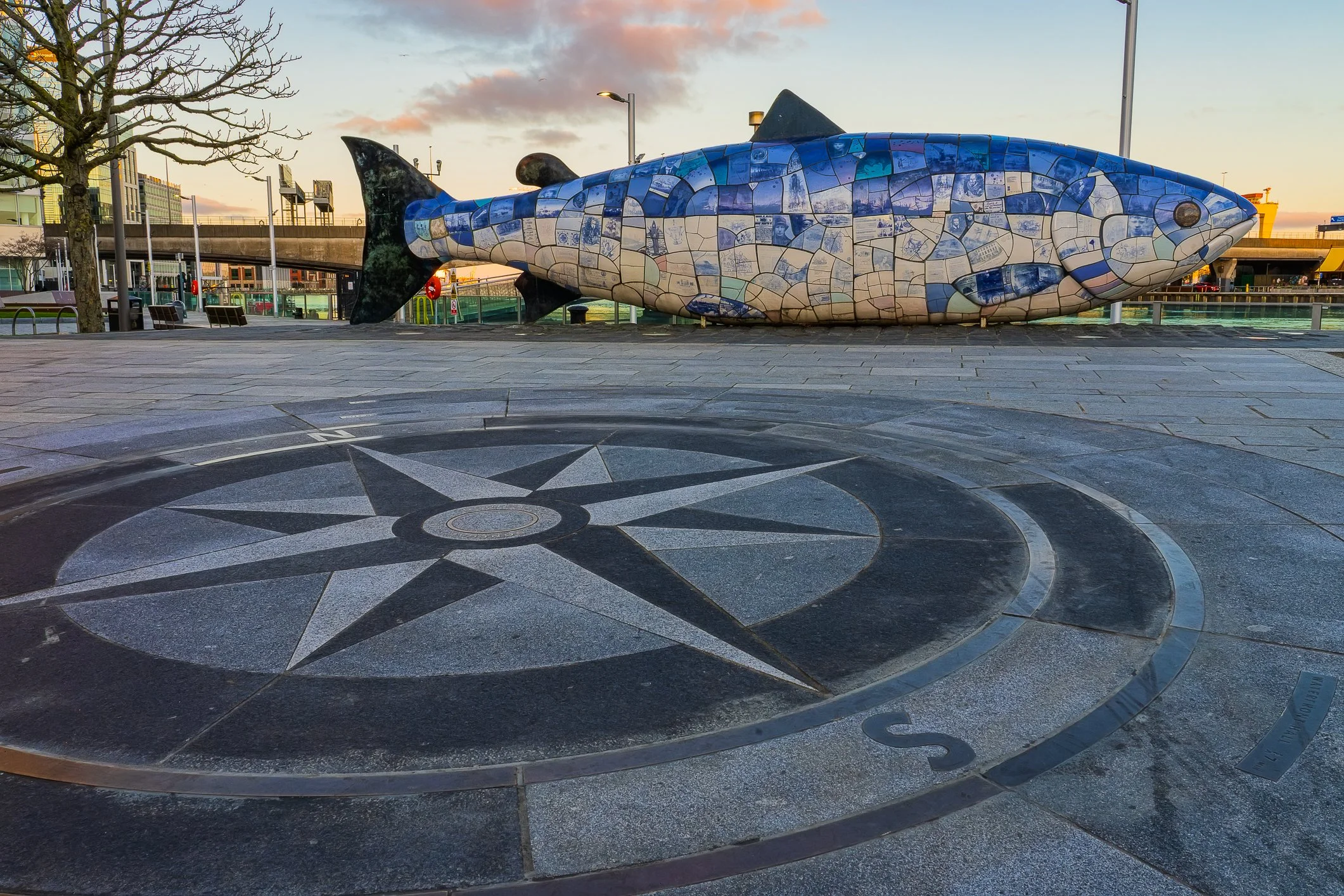
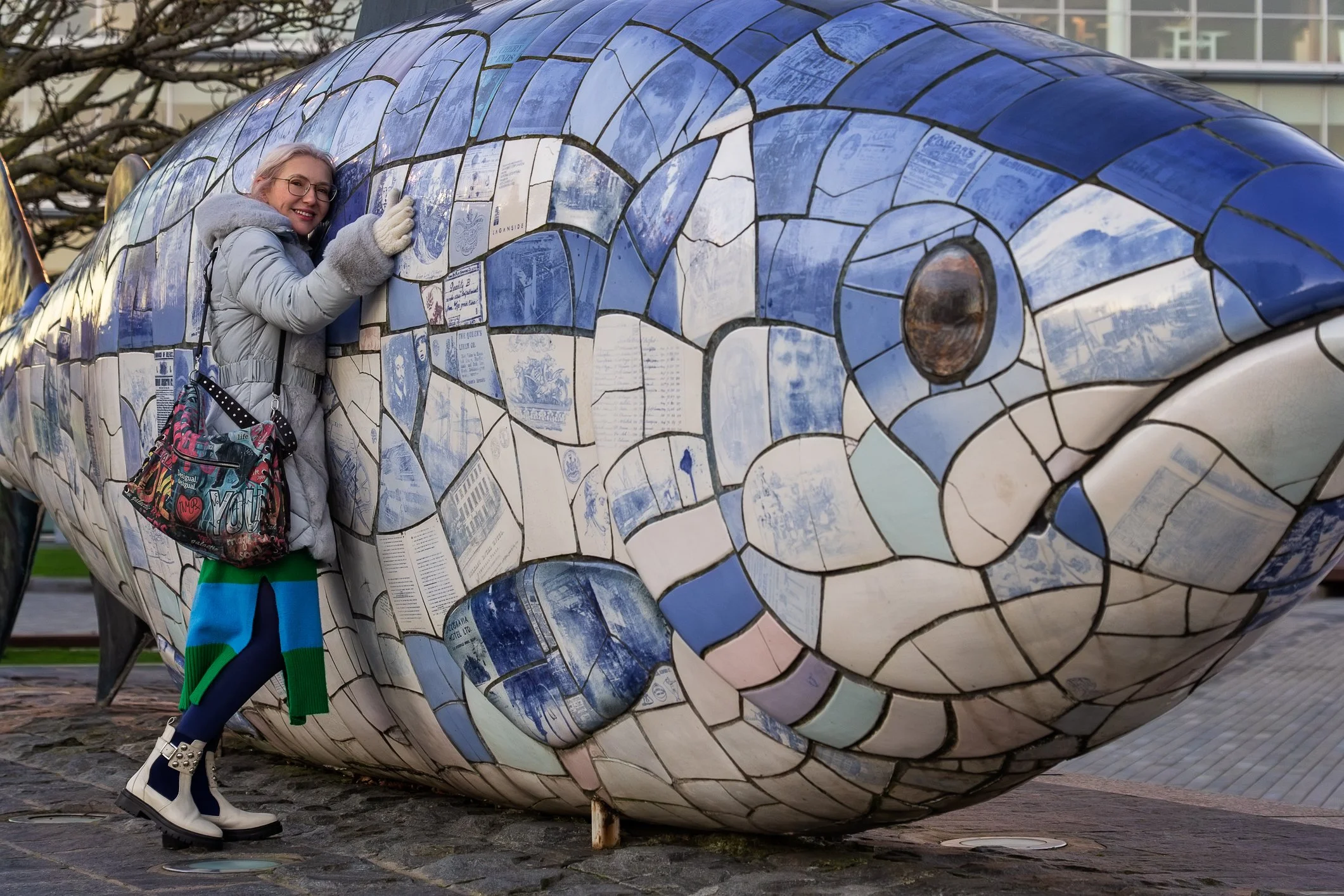
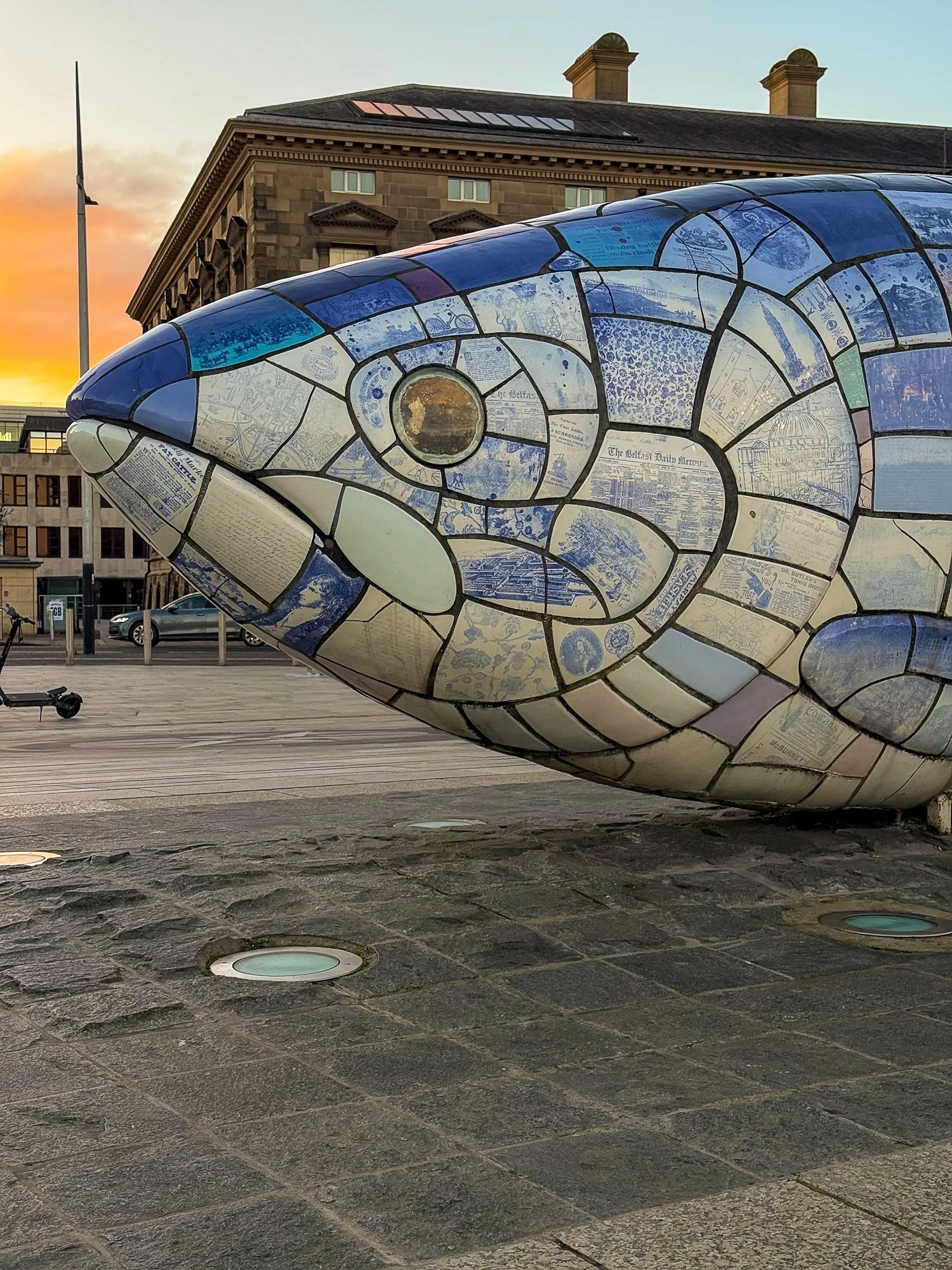
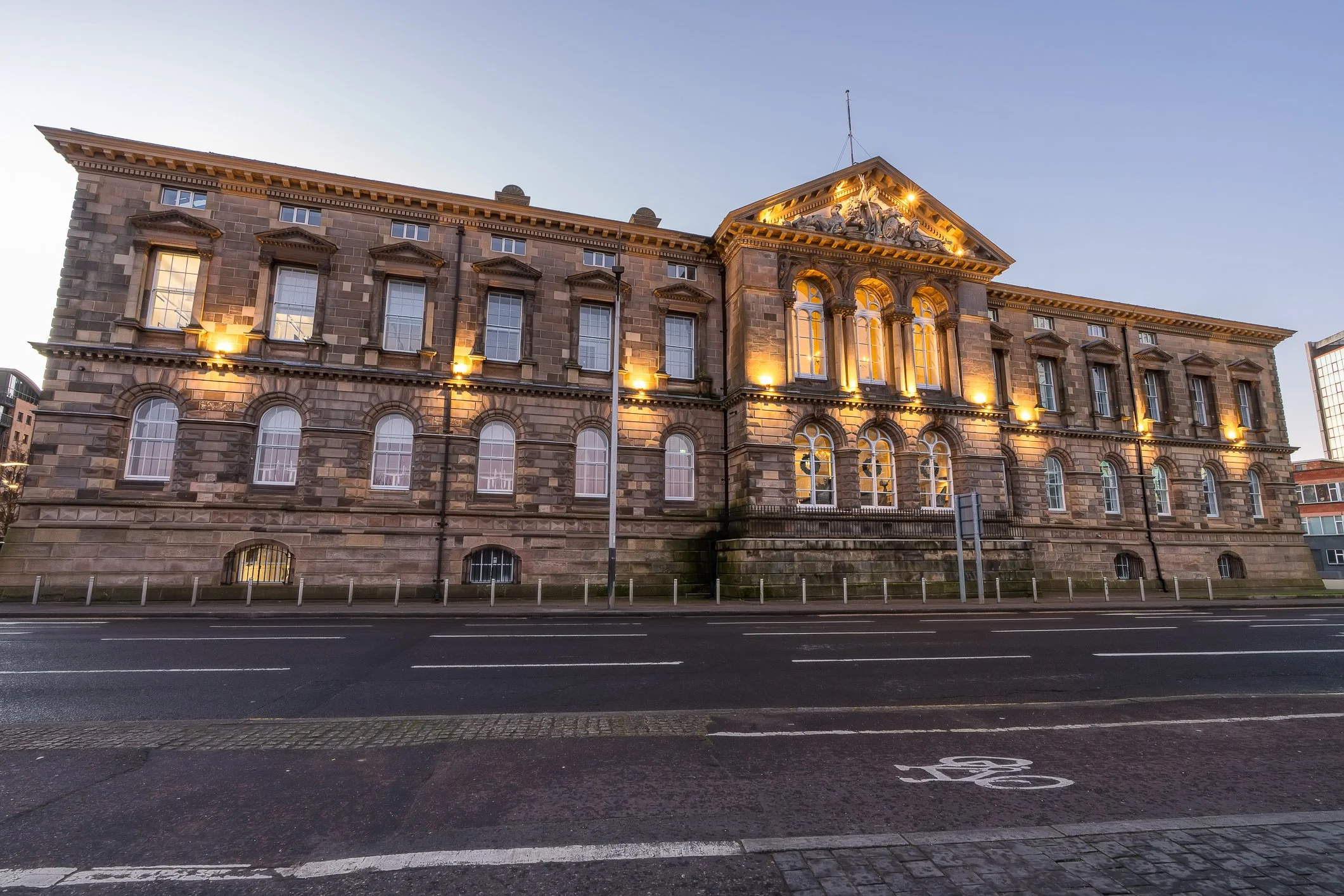
The large historic building directly opposite The Big Fish is the Custom House. It is one of Belfast’s most impressive 19th-century buildings. Completed in 1857, it was originally used by the Commissioners of Customs to manage trade and shipping in what was then a booming industrial port. At that time, Belfast was expanding rapidly thanks to shipbuilding, linen production, and global trade. The building is designed in a classical style, with a symmetrical façade, grand columns, and a central dome topped with sculptures representing commerce and navigation, a nod to Belfast’s maritime importance. Its prominent position facing the River Lagan symbolised the city’s connection to trade and the wider world.
Duży, historyczny budynek naprzeciw Big Fish to Custom House. Jest to jeden z najbardziej imponujących budynków XIX wieku w Belfaście. Został ukończony w 1857 roku dla Urzędu Celnego do zarządzania handlem i transportem w rozwijającym się porcie przemysłowym. W tym czasie Belfast szybko się rozrastał dzięki stoczniom, produkcji lnu i handlowi międzynarodowemu. Budynek zaprojektowano w stylu klasycystycznym, z symetryczną fasadą, kolumnami i centralną kopułą zwieńczoną rzeźbami symbolizującymi handel i żeglugę. Jego położenie nad rzeką podkreślało znaczenie Belfastu jako ośrodka handlu i kontaktów ze światem.
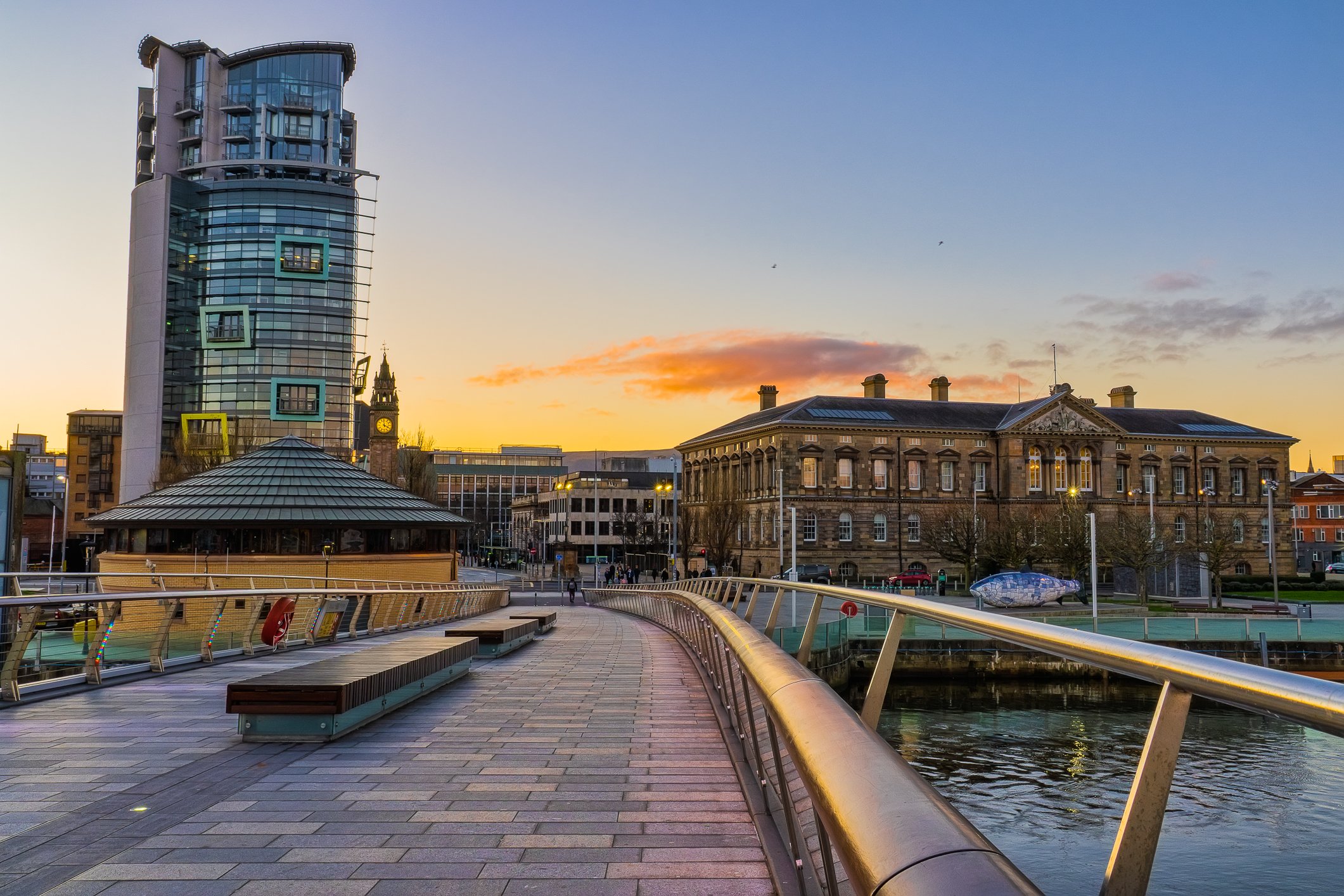
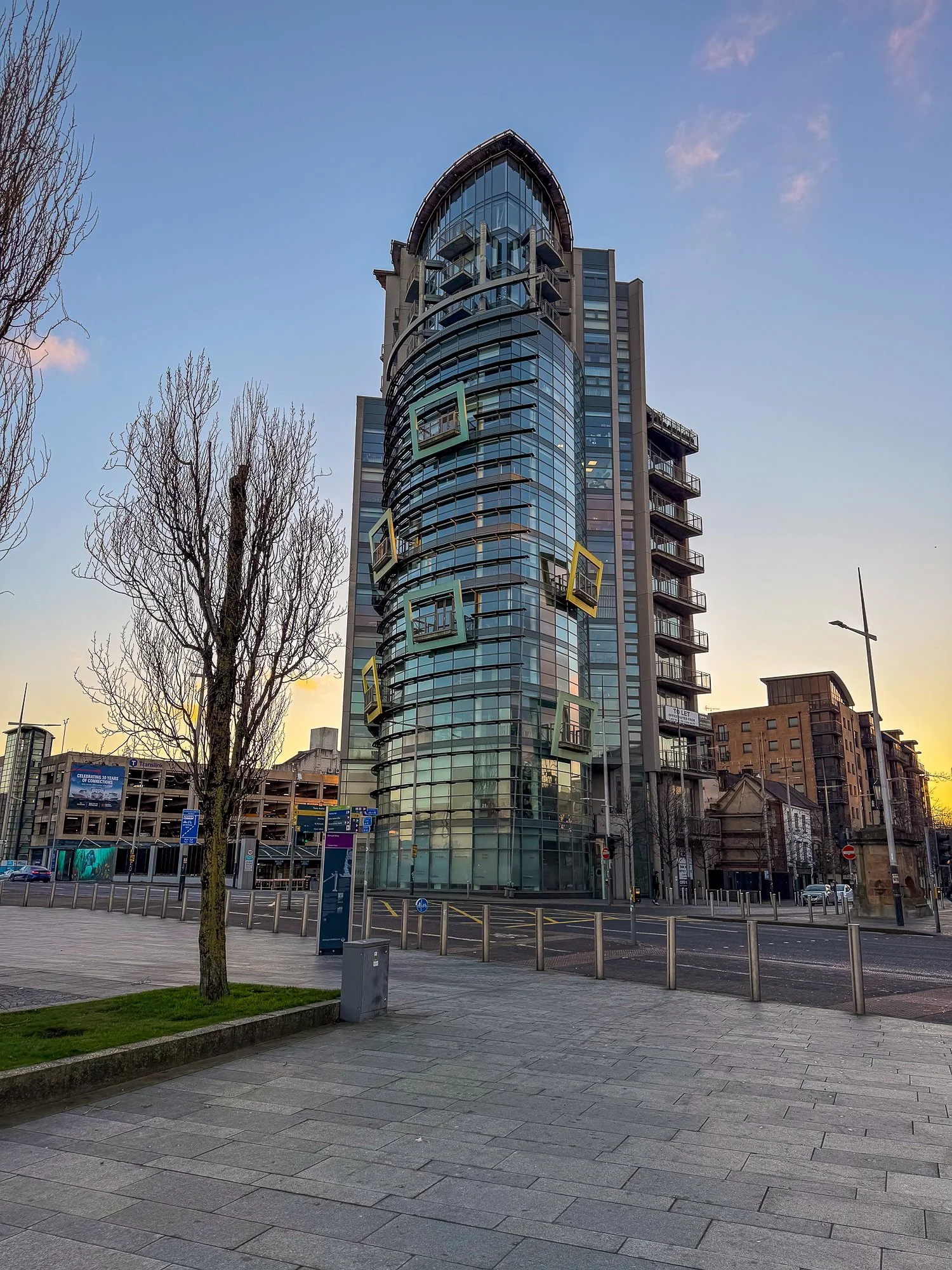
Our attention also goes to a different riverside building called The Boat, a modern block with distinctive geometric shapes in different colours on its façade. It is designed to resemble the prow of a boat.
Naszą uwagę przyciąga też nowoczesny budynek nad rzeką, zwany The Boat (Łódź), o geometrycznej, kolorowej fasadzie, która ma przypominać dziób statku.
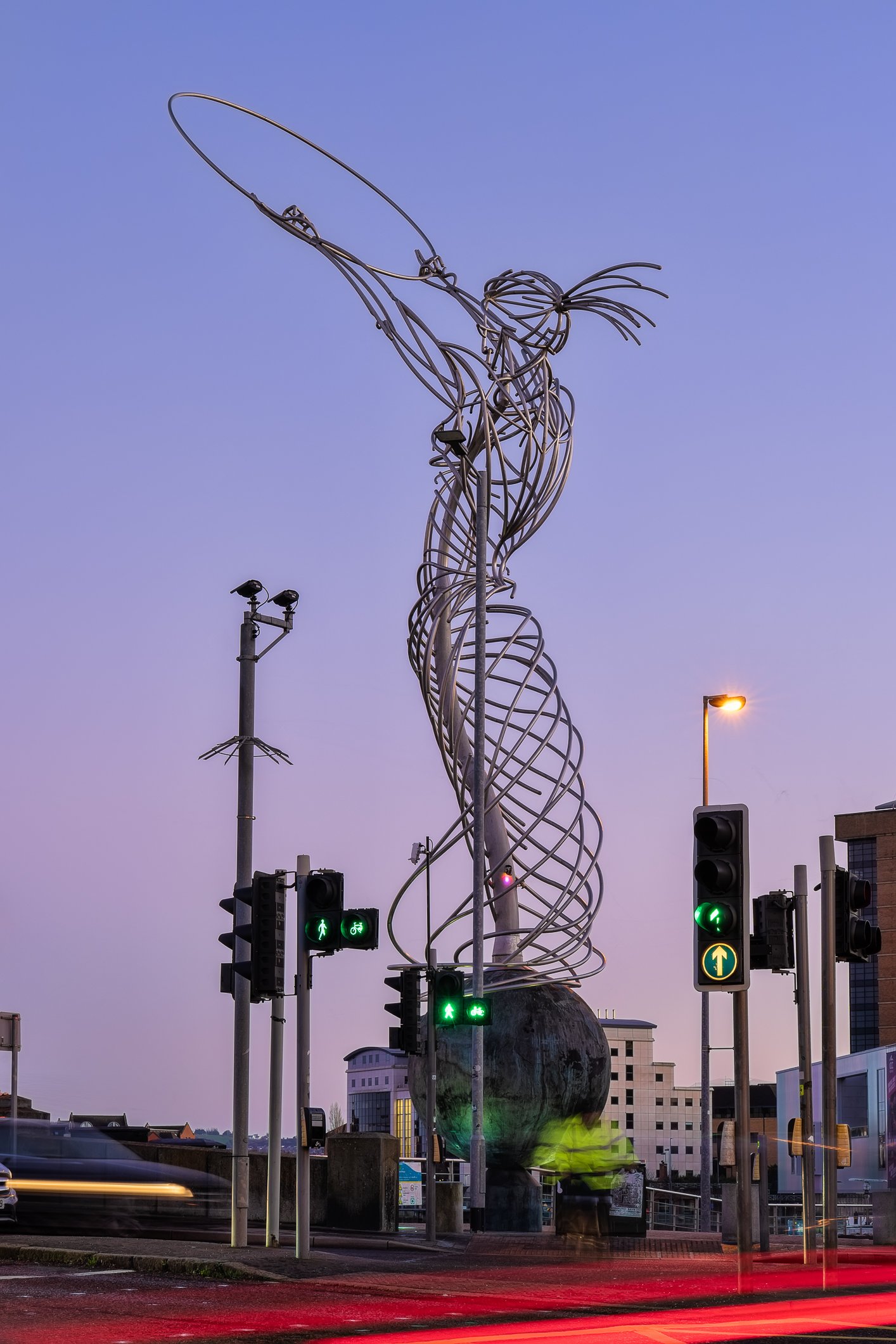
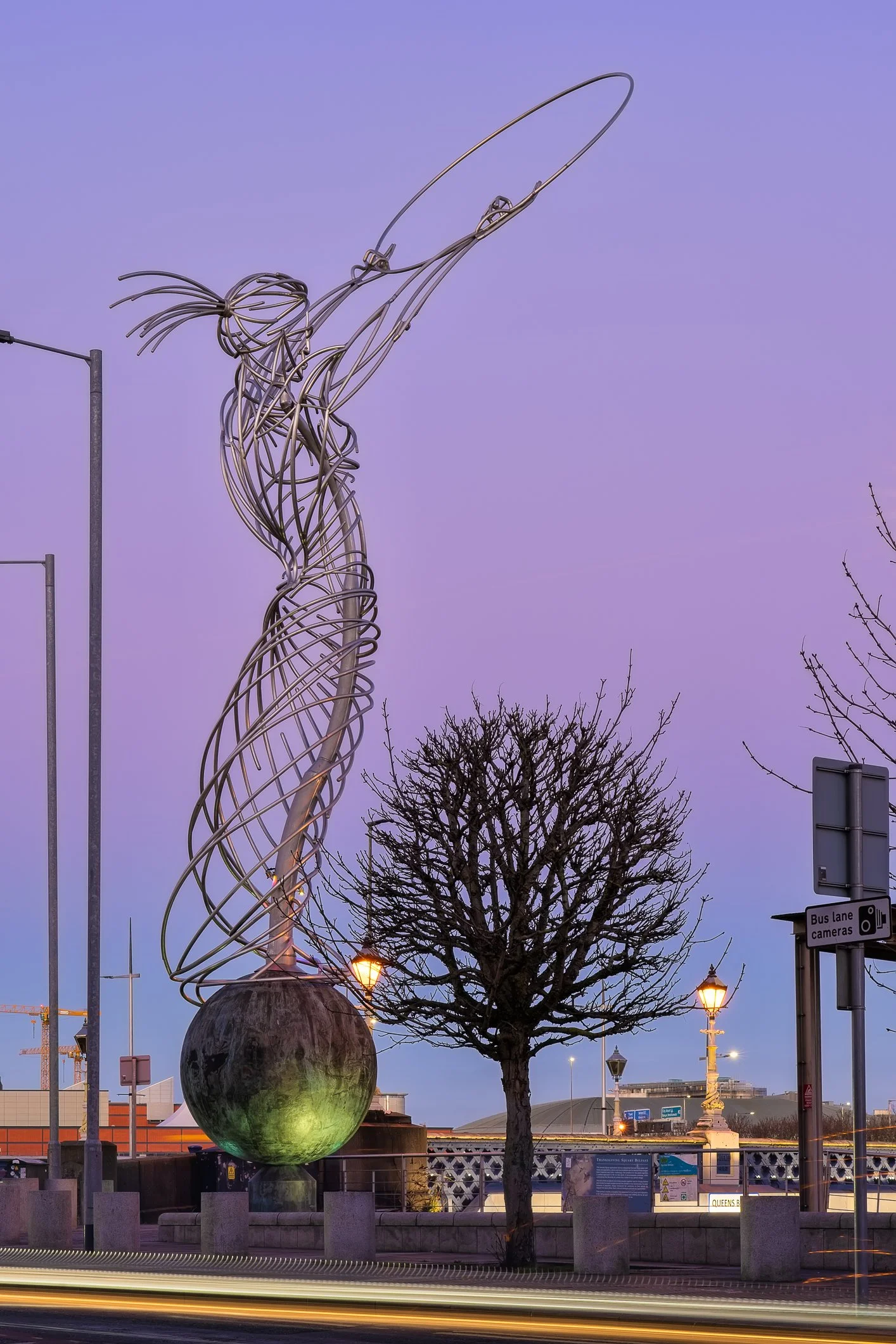
Just a short stroll along the River Lagan brings us to the Beacon of Hope, a sculpture created by Andy Scott in 2007. It depicts a woman holding a shimmering globe, symbolising peace, harmony, and gratitude. Locals affectionately call it “Nuala with the Hula.”
Zaledwie krótki spacer wzdłuż rzeki Lagan prowadzi nas do „Beacon of Hope”, rzeźby stworzonej przez Andy’ego Scotta w 2007 roku. Przedstawia ona kobietę trzymającą lśniącą kulę, symbolizującą pokój, harmonię i wdzięczność. Mieszkańcy nazywają ją pieszczotliwie „Nuala z Hula”.