Our first riad this time is Kbour & Chou, located in the quiet northwest corner of the Marrakech medina. The riad is celebrated for its seamless blend of traditional Arab-Moorish architecture.
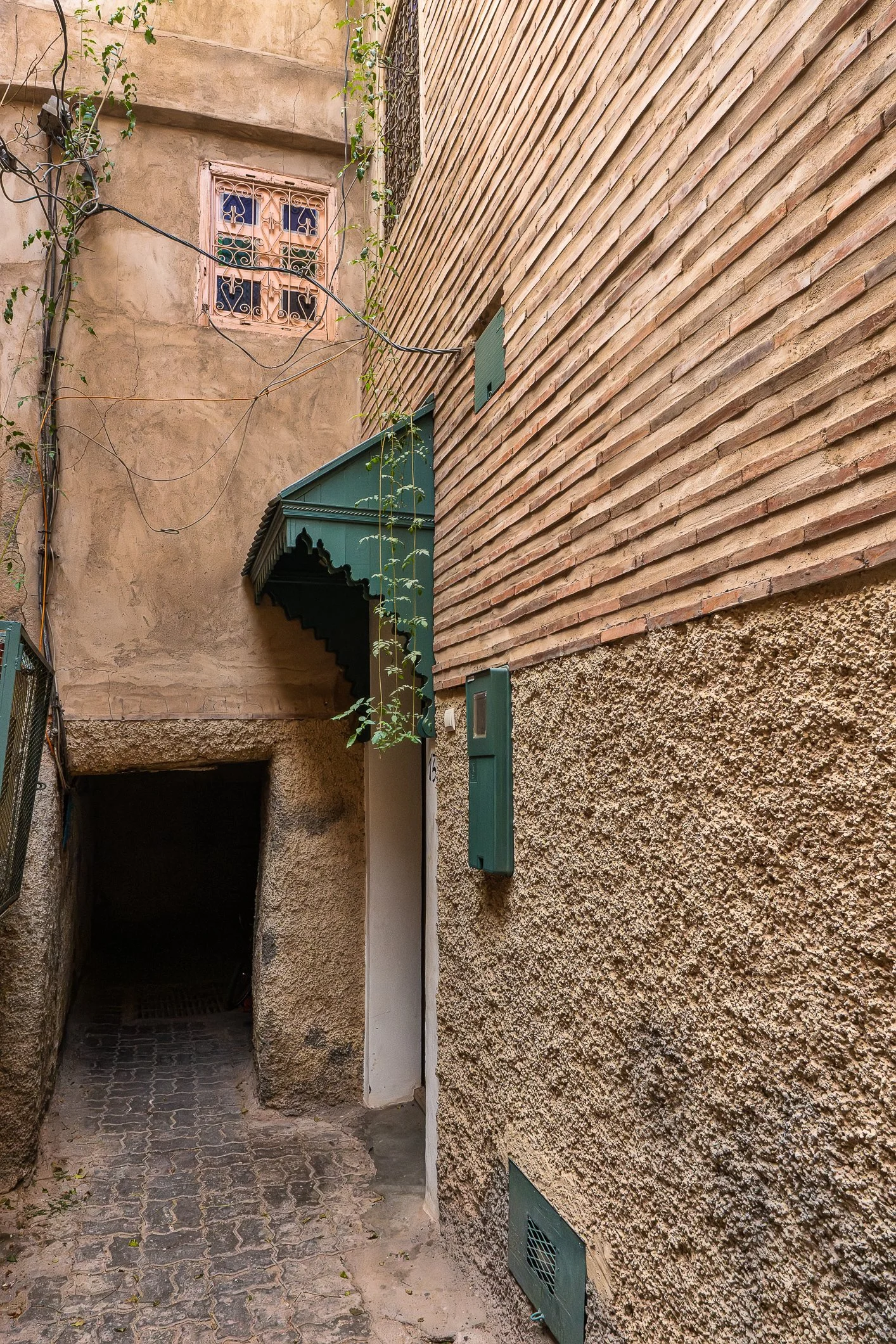
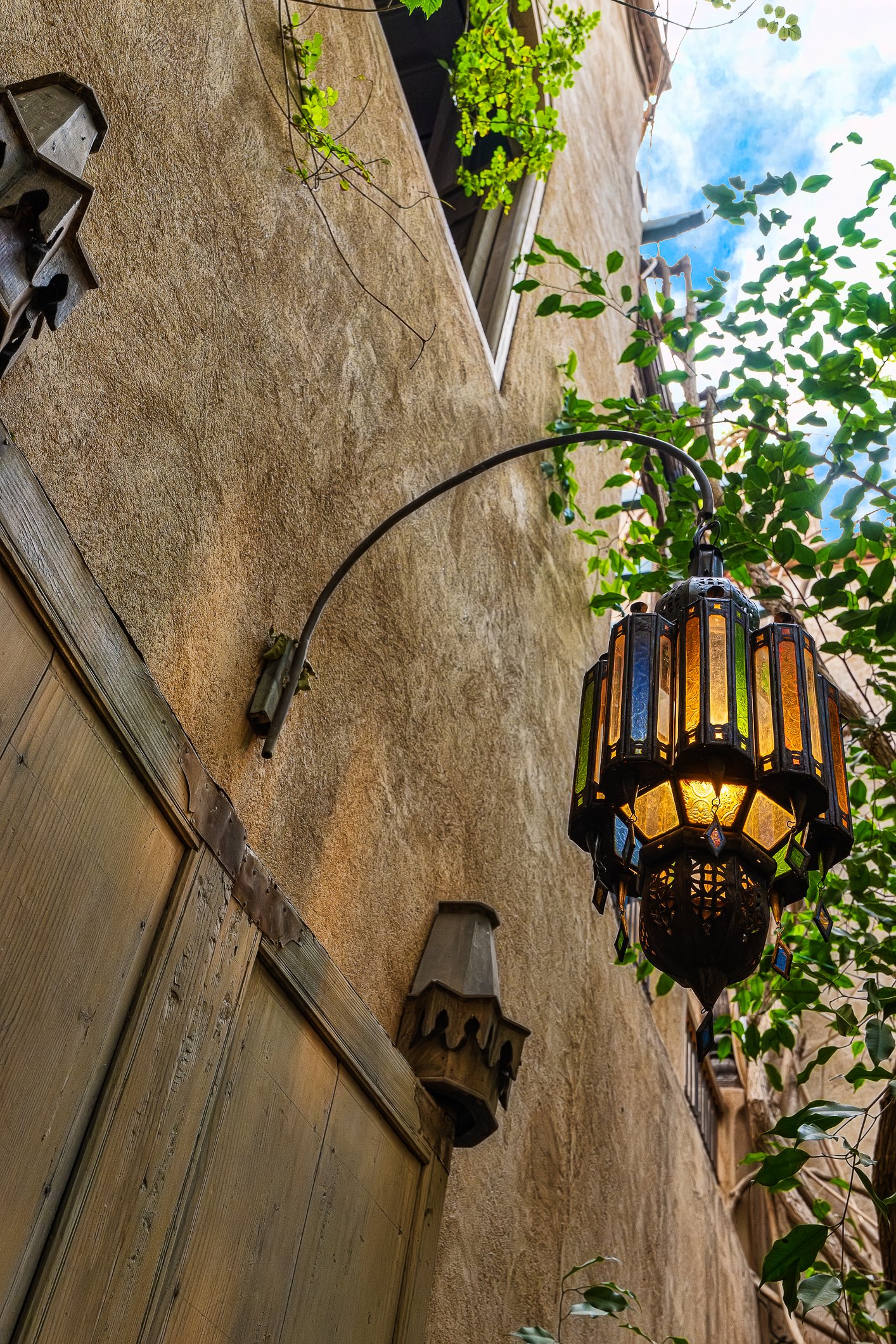
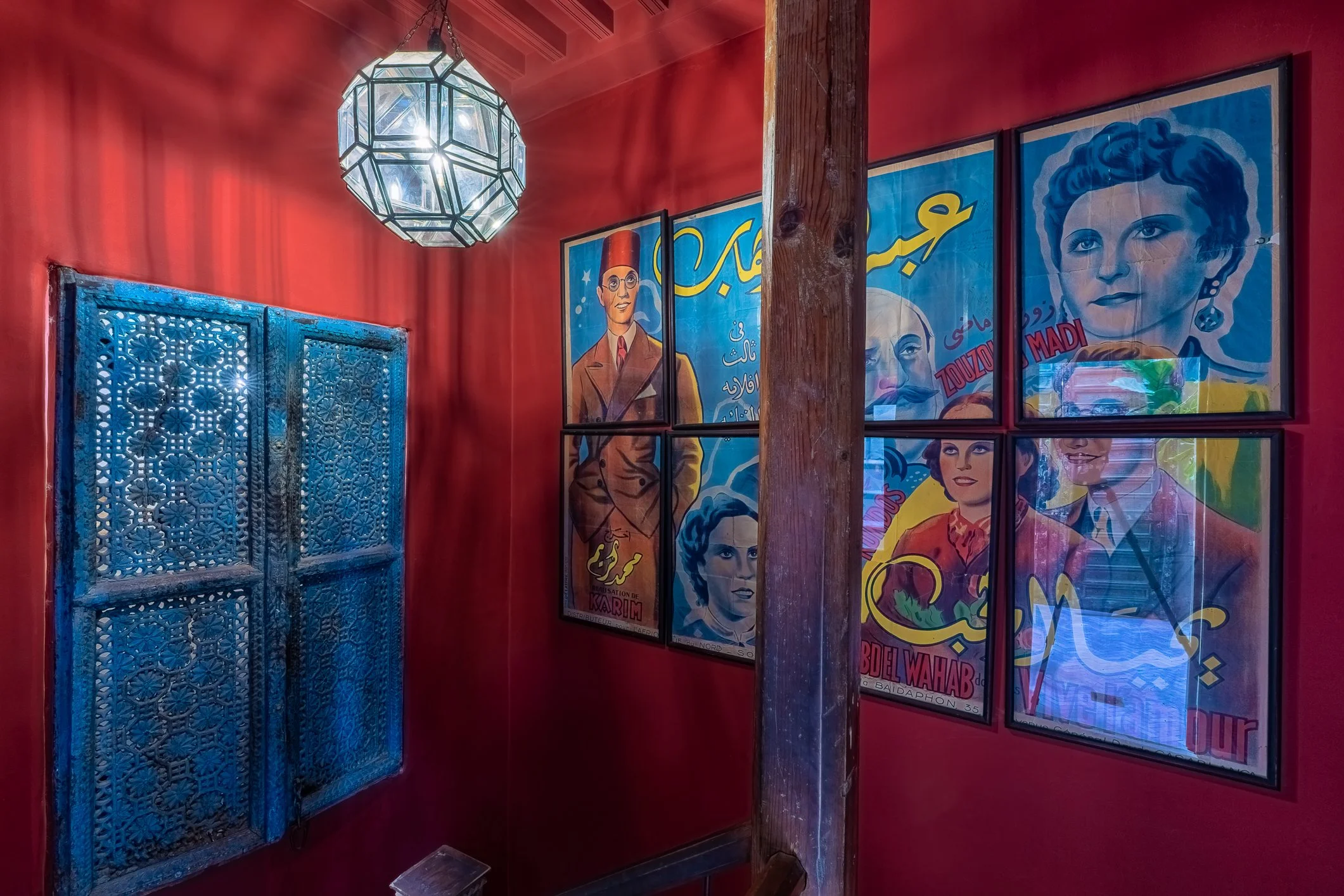
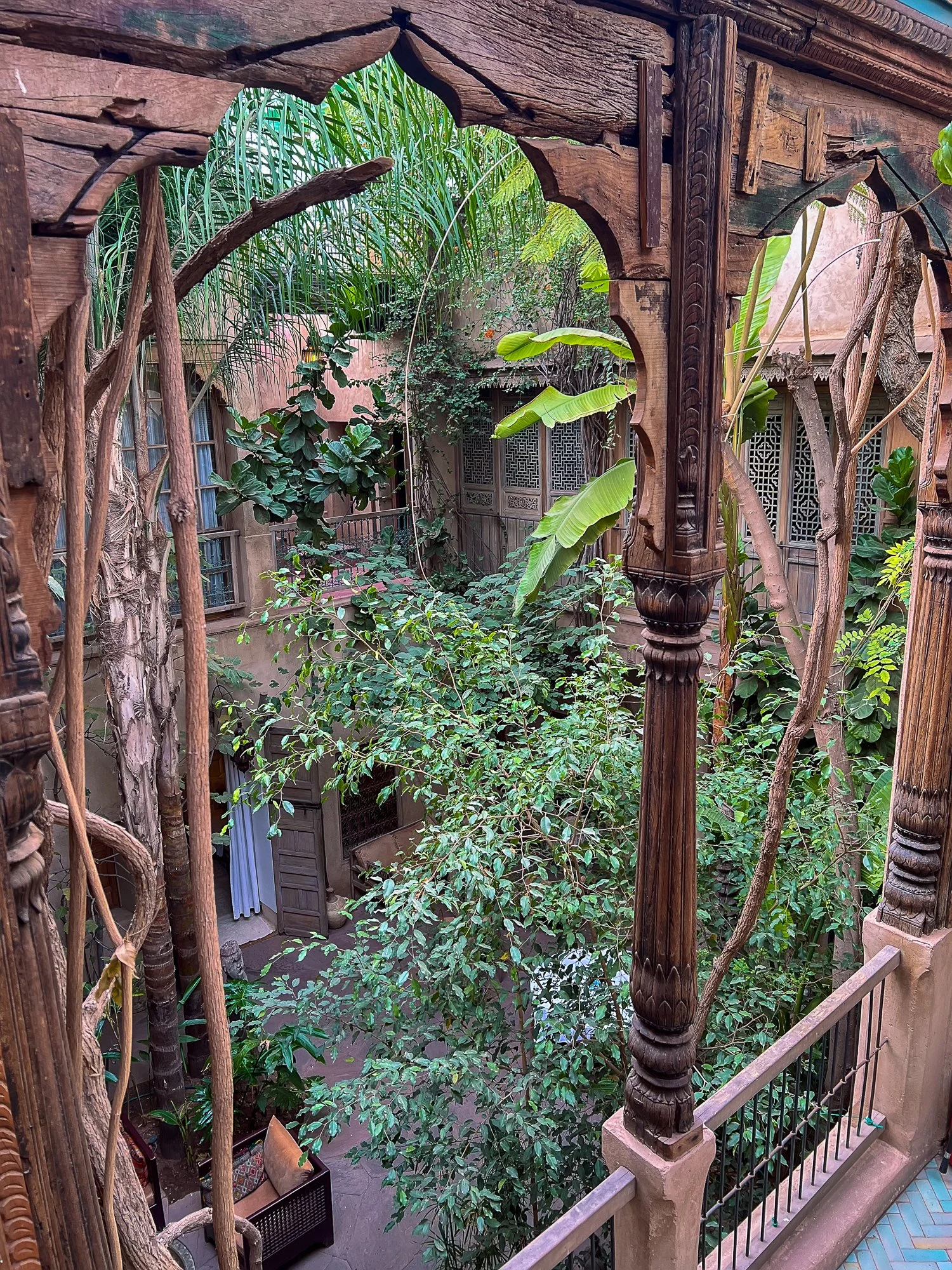
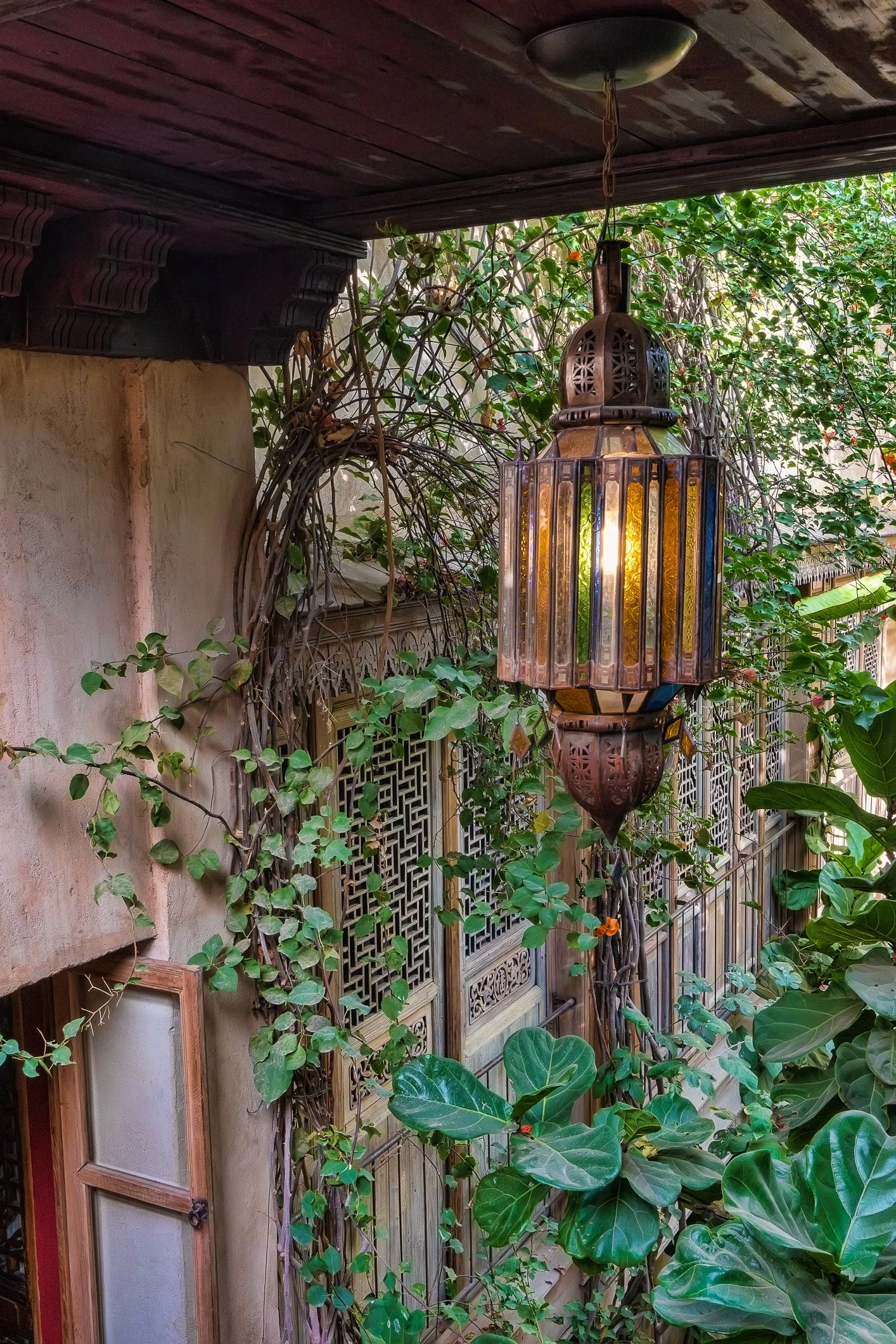
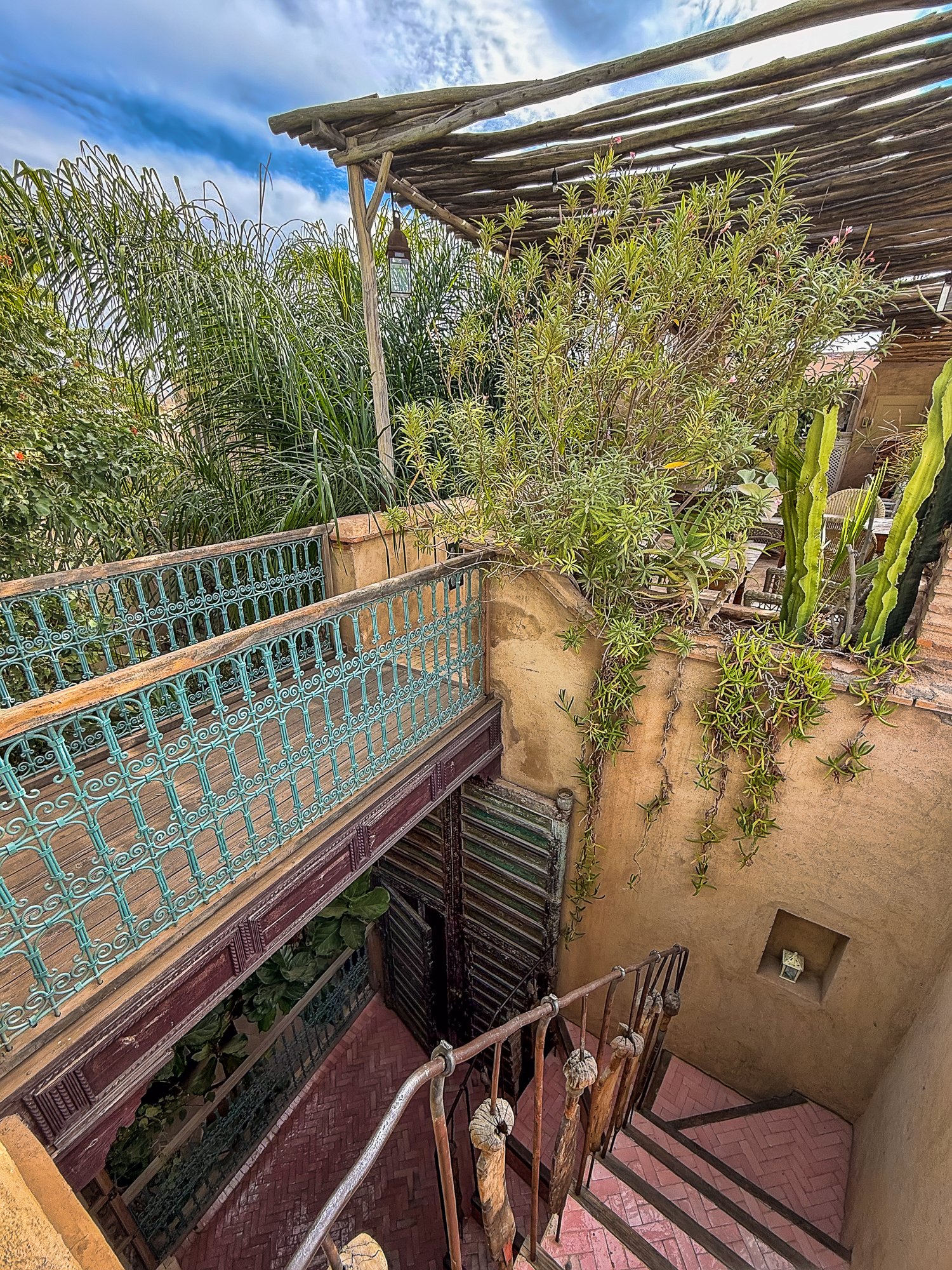
From the street, the riad is very discreet, tucked behind a modest door that offers little hint of the splendid and somewhat eccentric interior within. Upon entering, your attention is immediately captured by a wealth of interesting details: wrought-iron balconies, spiral staircases, and doorways that require a small dip of the head to pass through.
Naszą marokańską przygodę zaczynamy tym razem w północno-zachodniej części medyny, z dala od największego zgiełku. Tutaj, w cichym zakątku dzielnicy Zaouia el Abassia, kryje się Kbour & Chou – riad łączący w sobie architektuę arabsko-mauretańskią z dodatkową nutką artystycznej finezji.
Z zewnątrz budynek wygląda dość niepozornie i nie zdradza swoich tajemnic. Skromne drzwi są barierą oddzielającą uliczkę medyny od wnętrza pełnego niespodzianek. Po przekroczeniu progu od razu uderza bogactwo detali: od kręconych schodów i kutych balustrad po wąskie przejścia i malowane ręcznie drzwi.
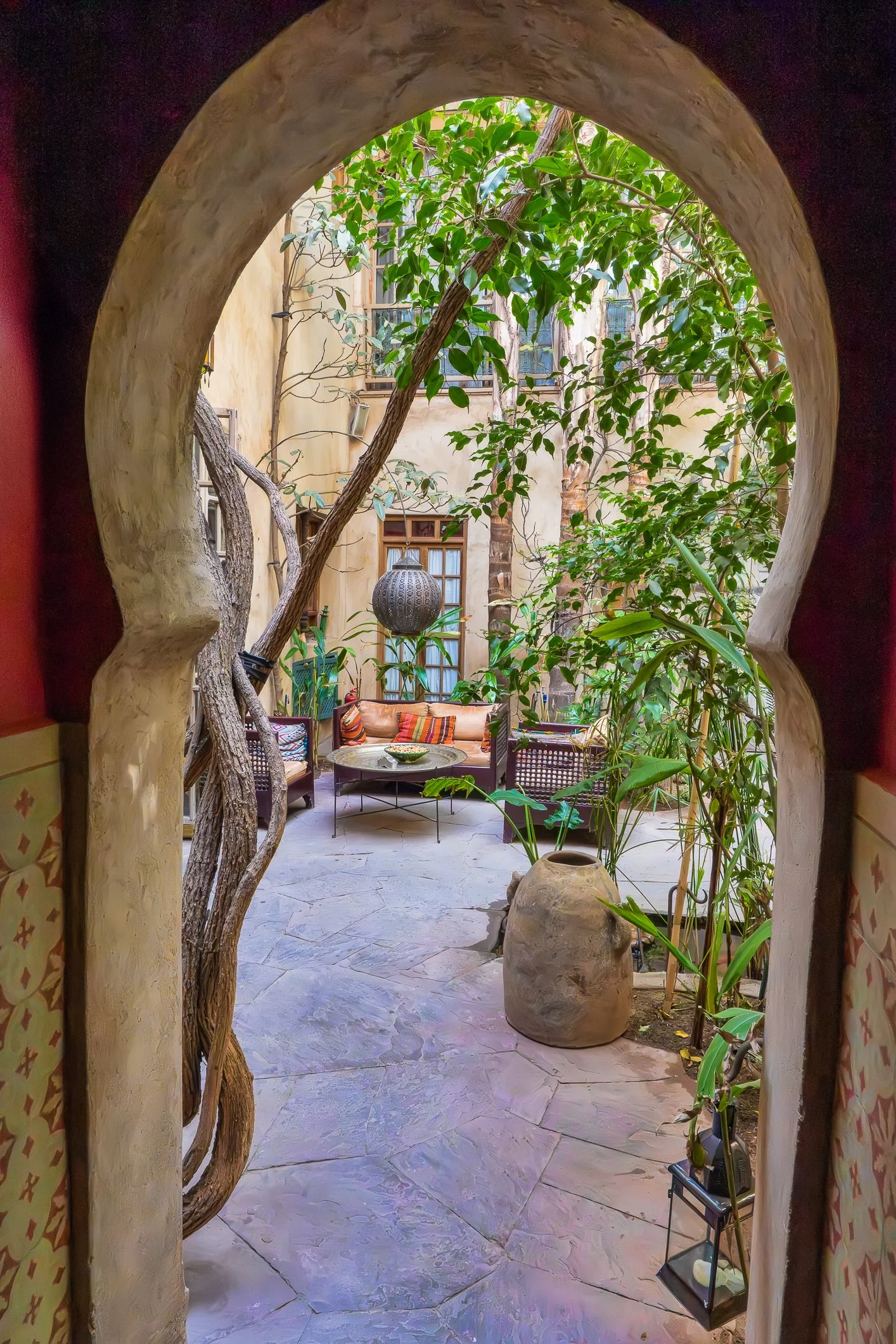
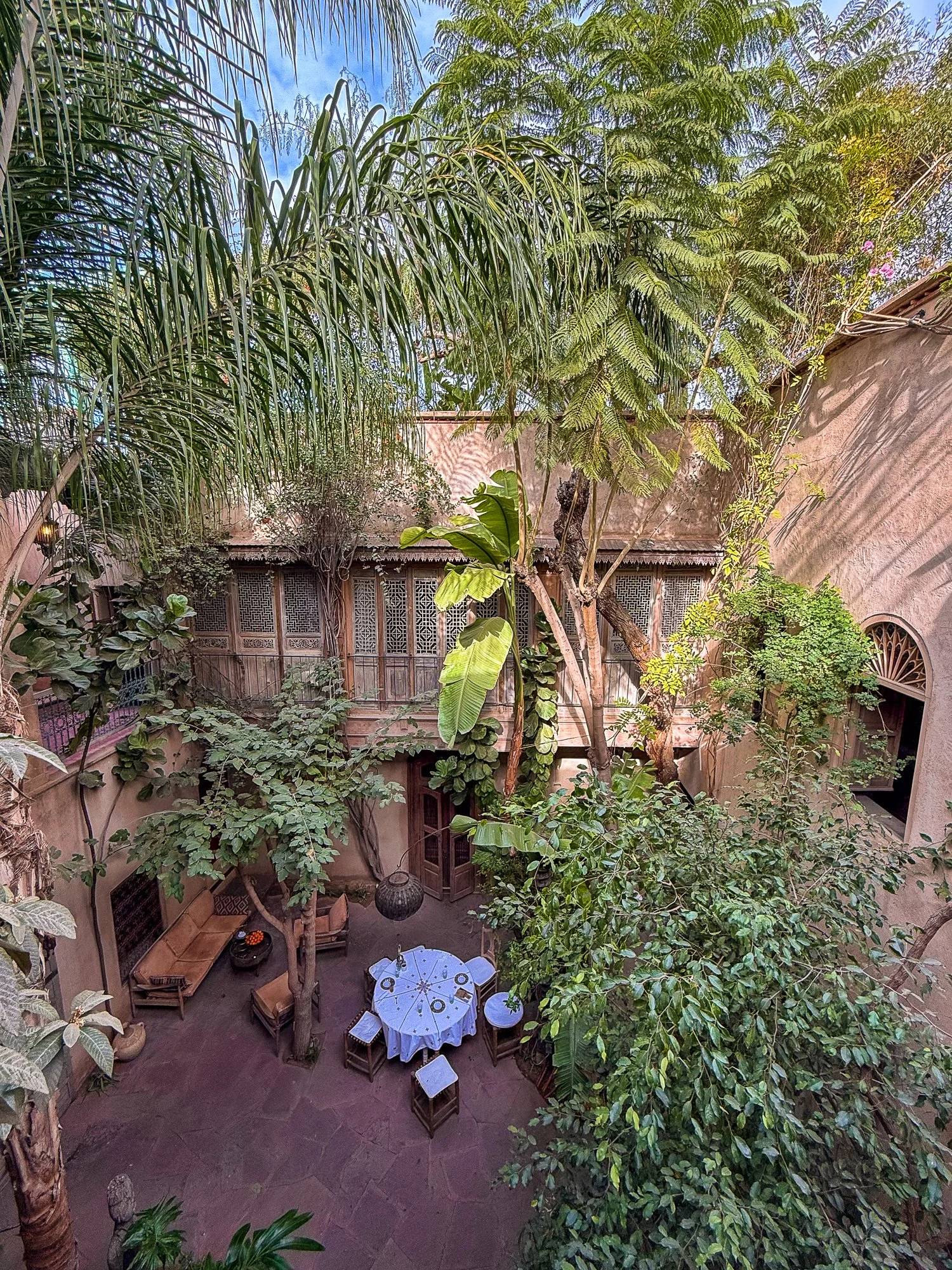
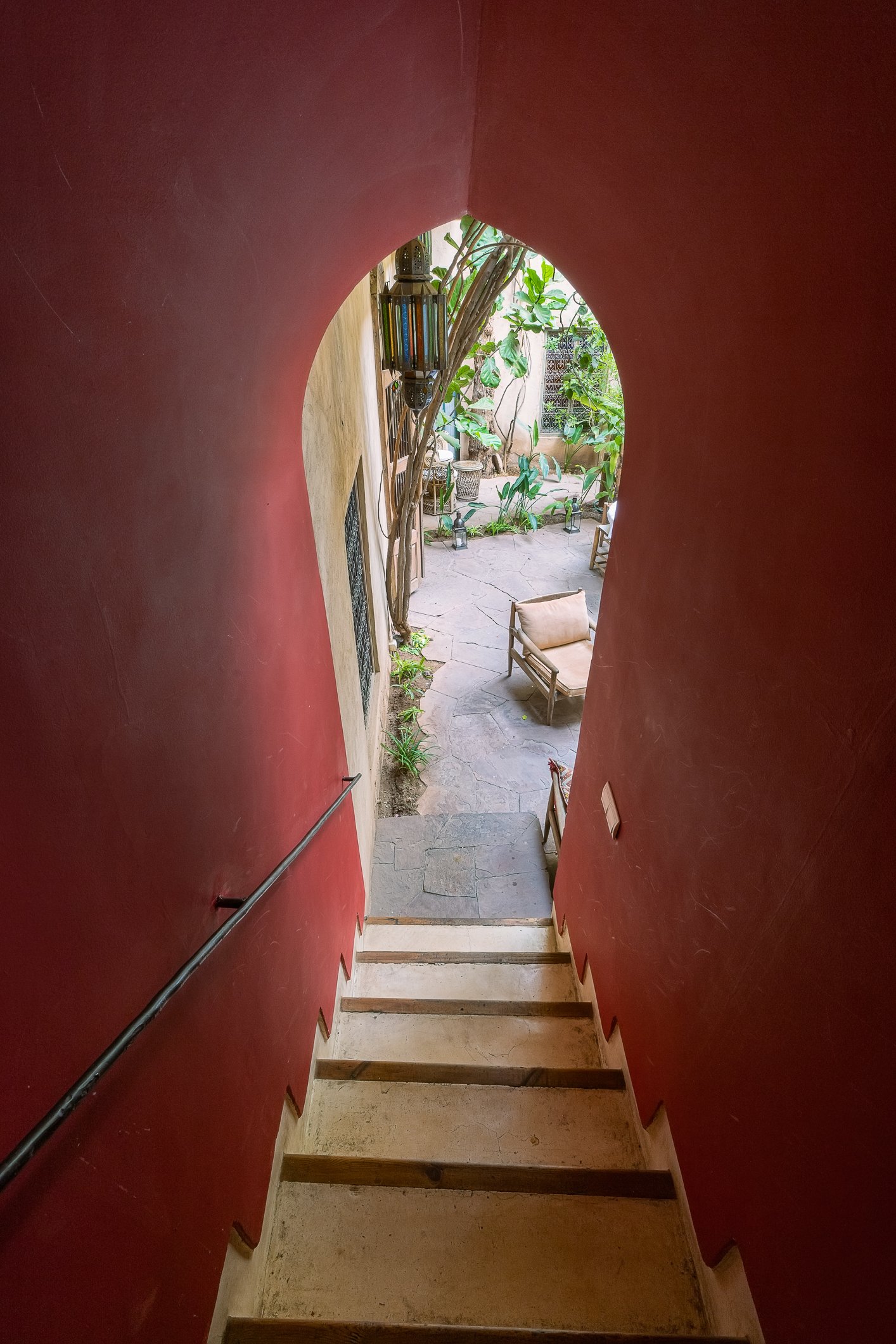
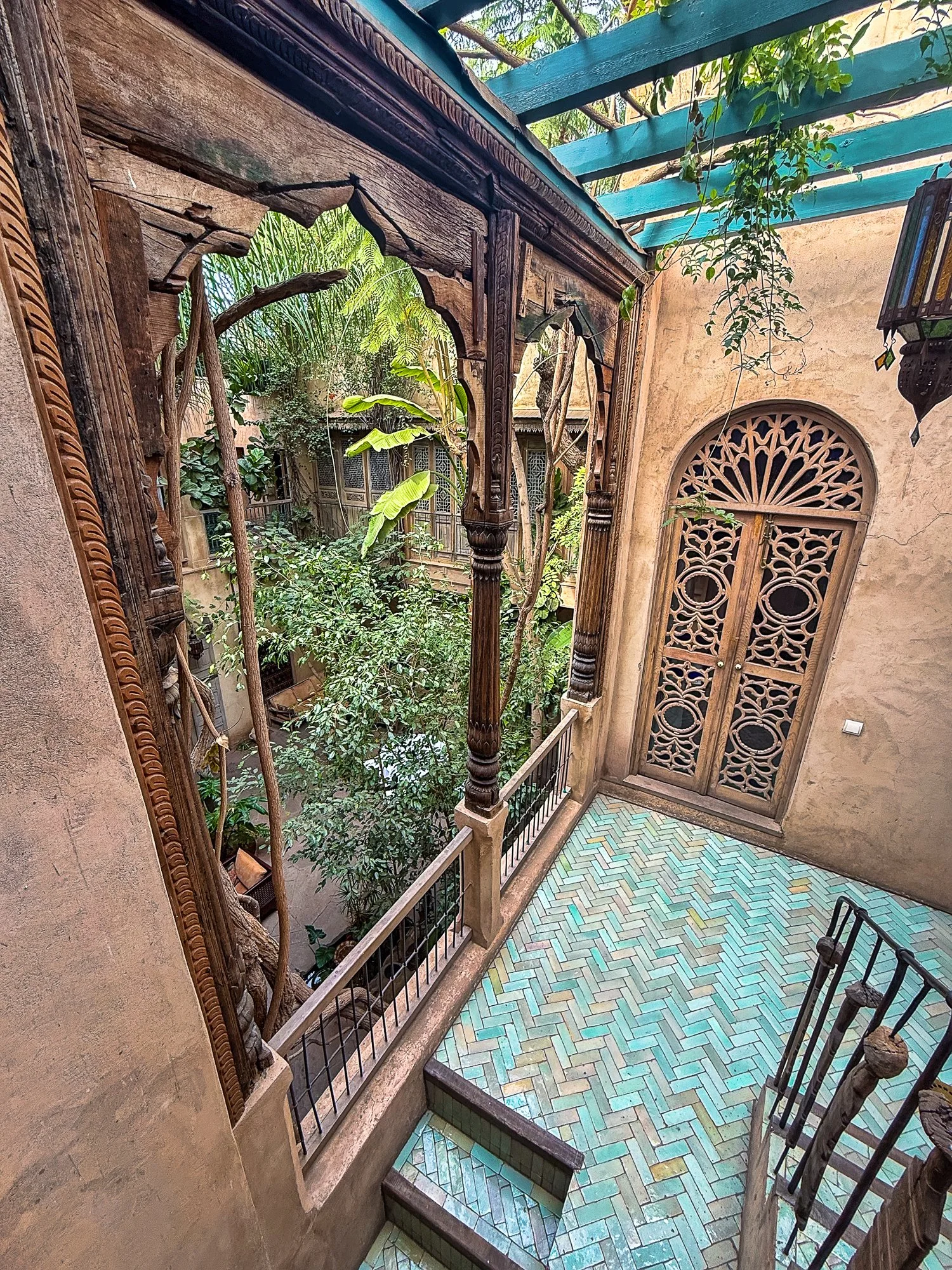
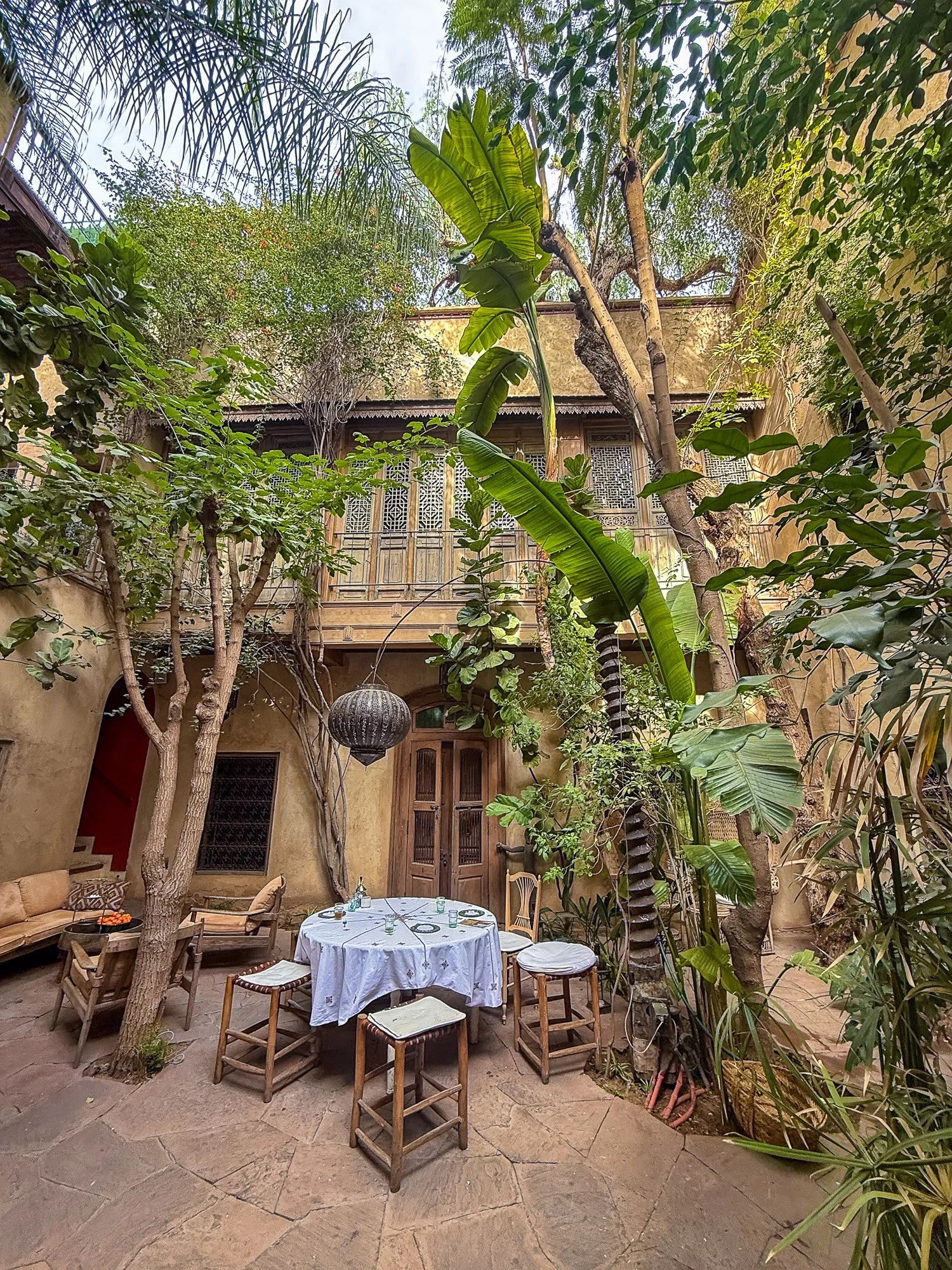
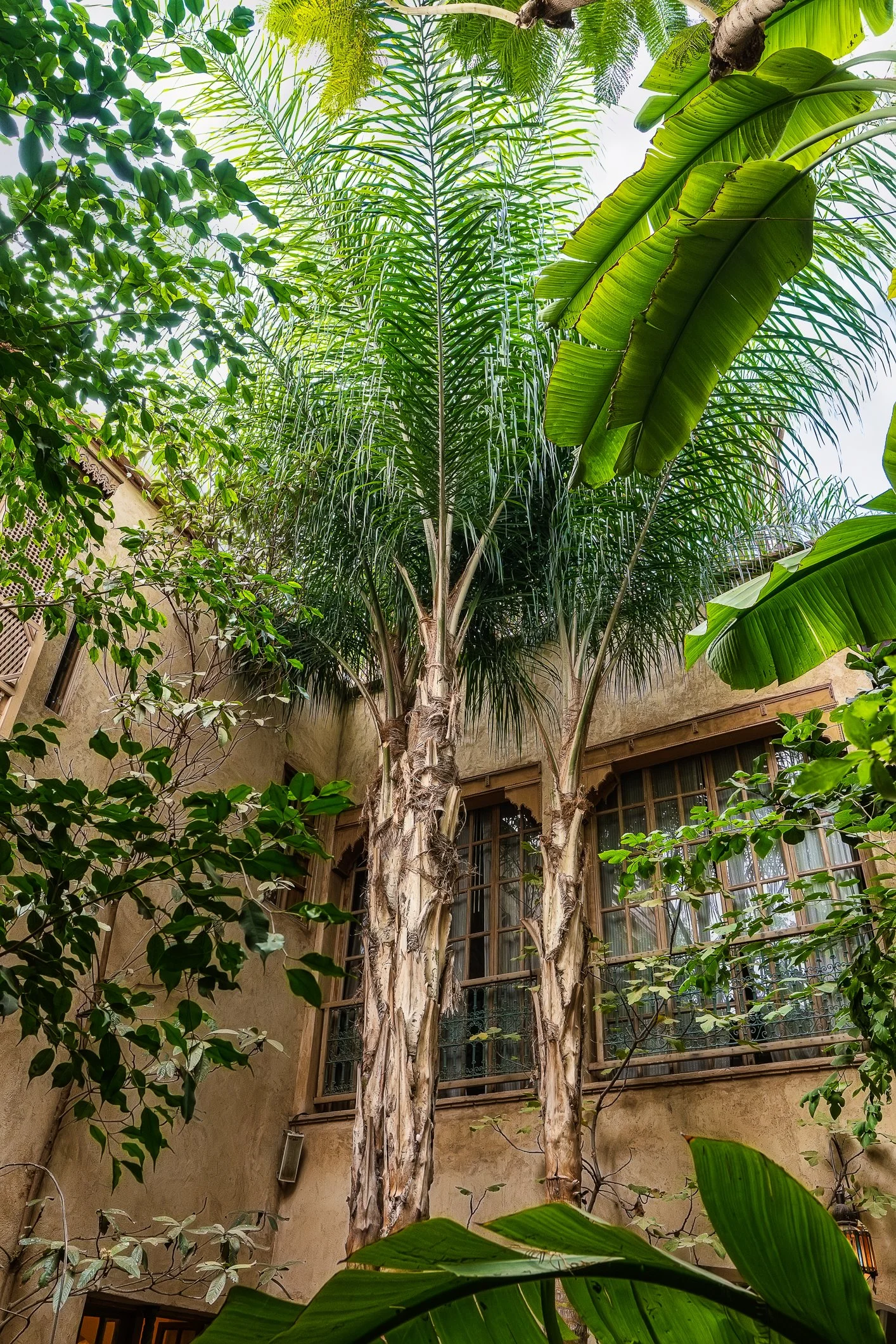
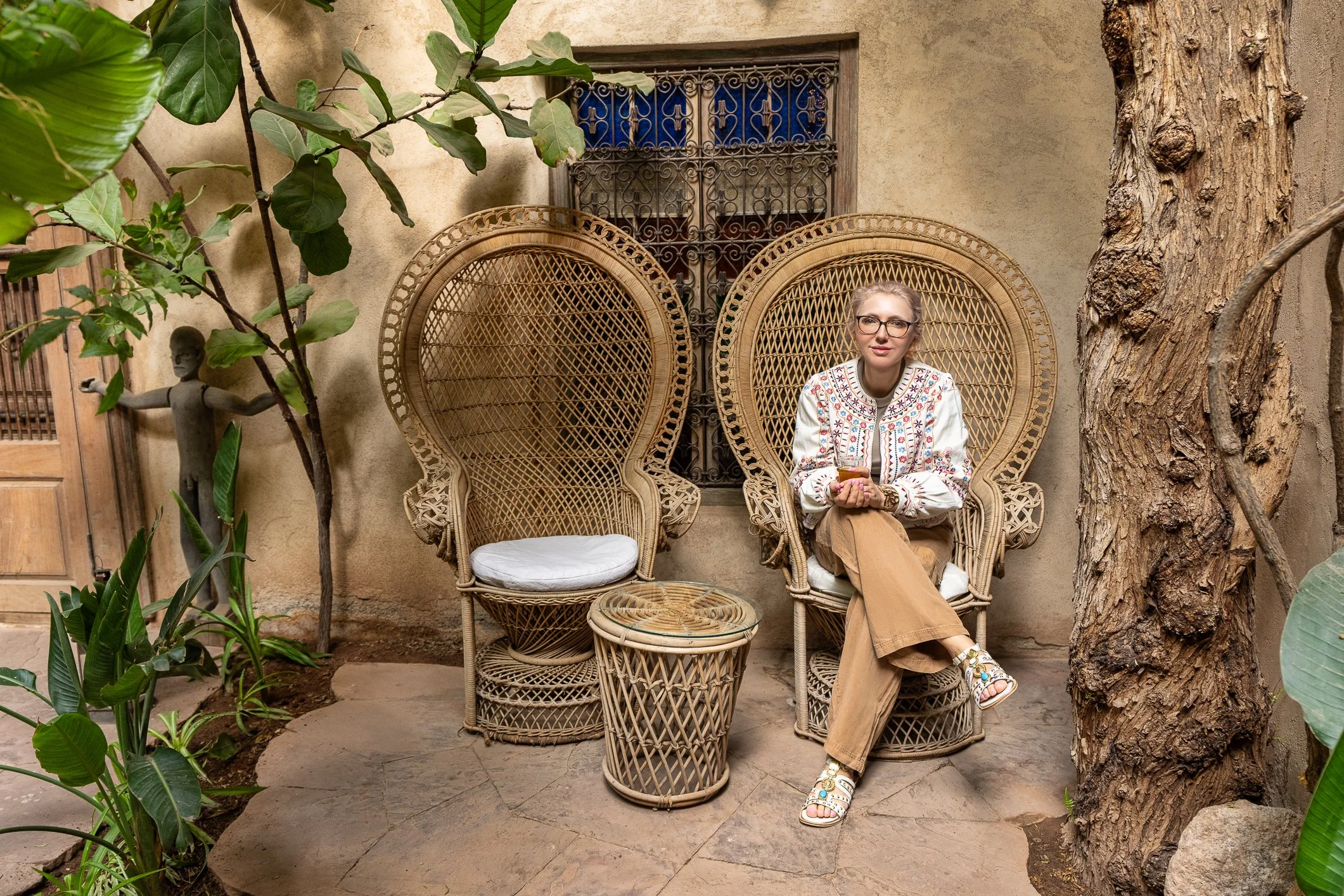
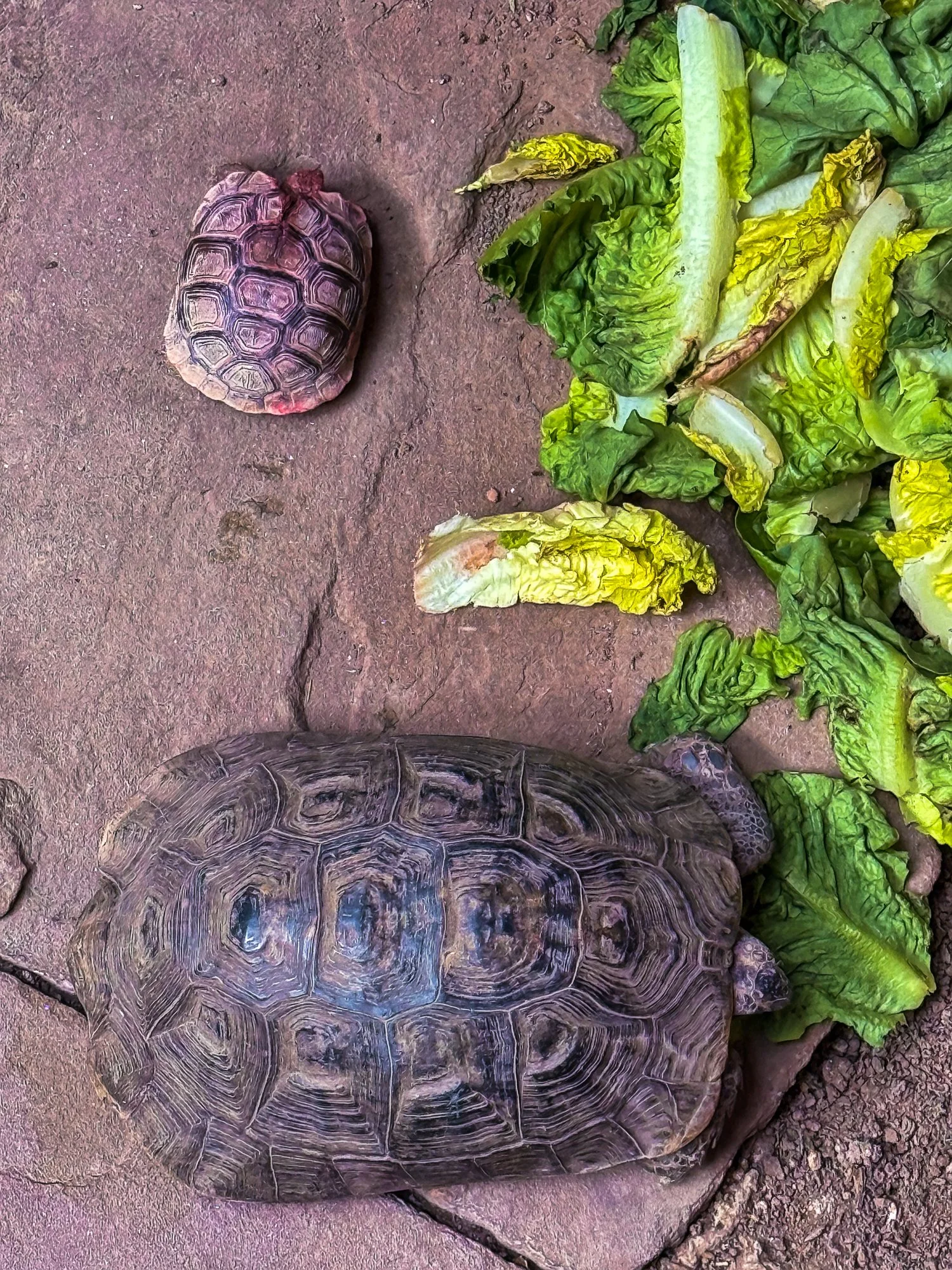
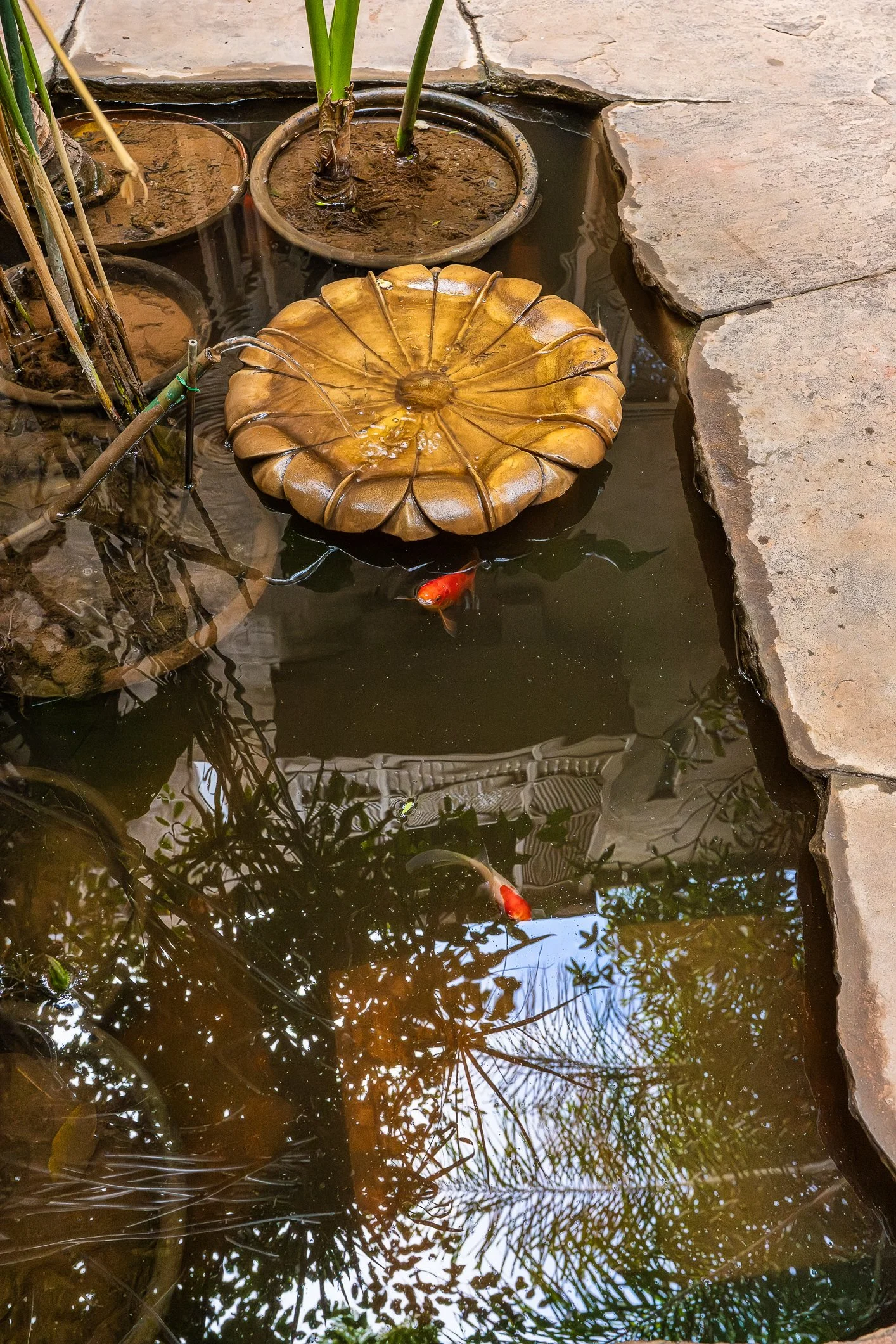
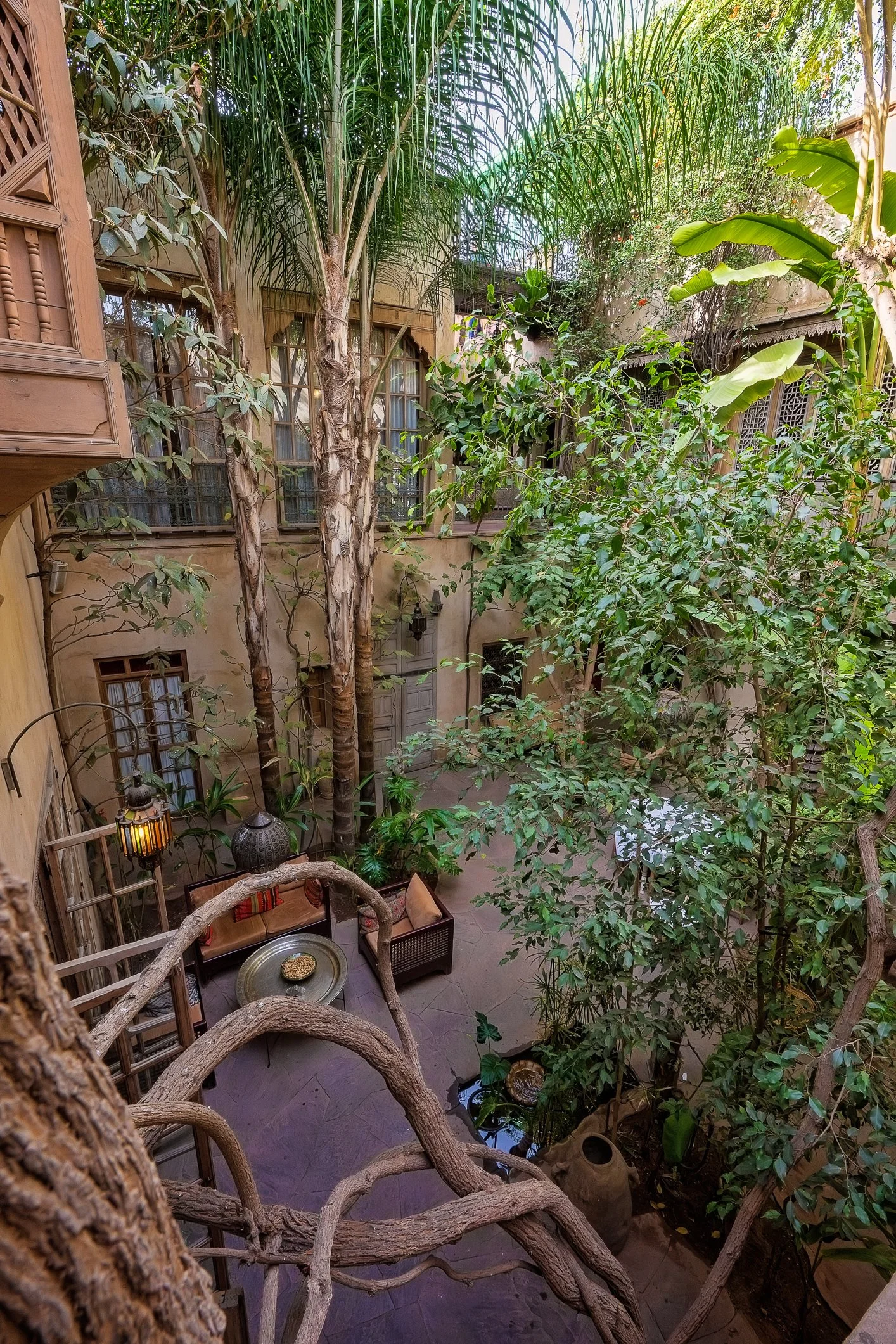
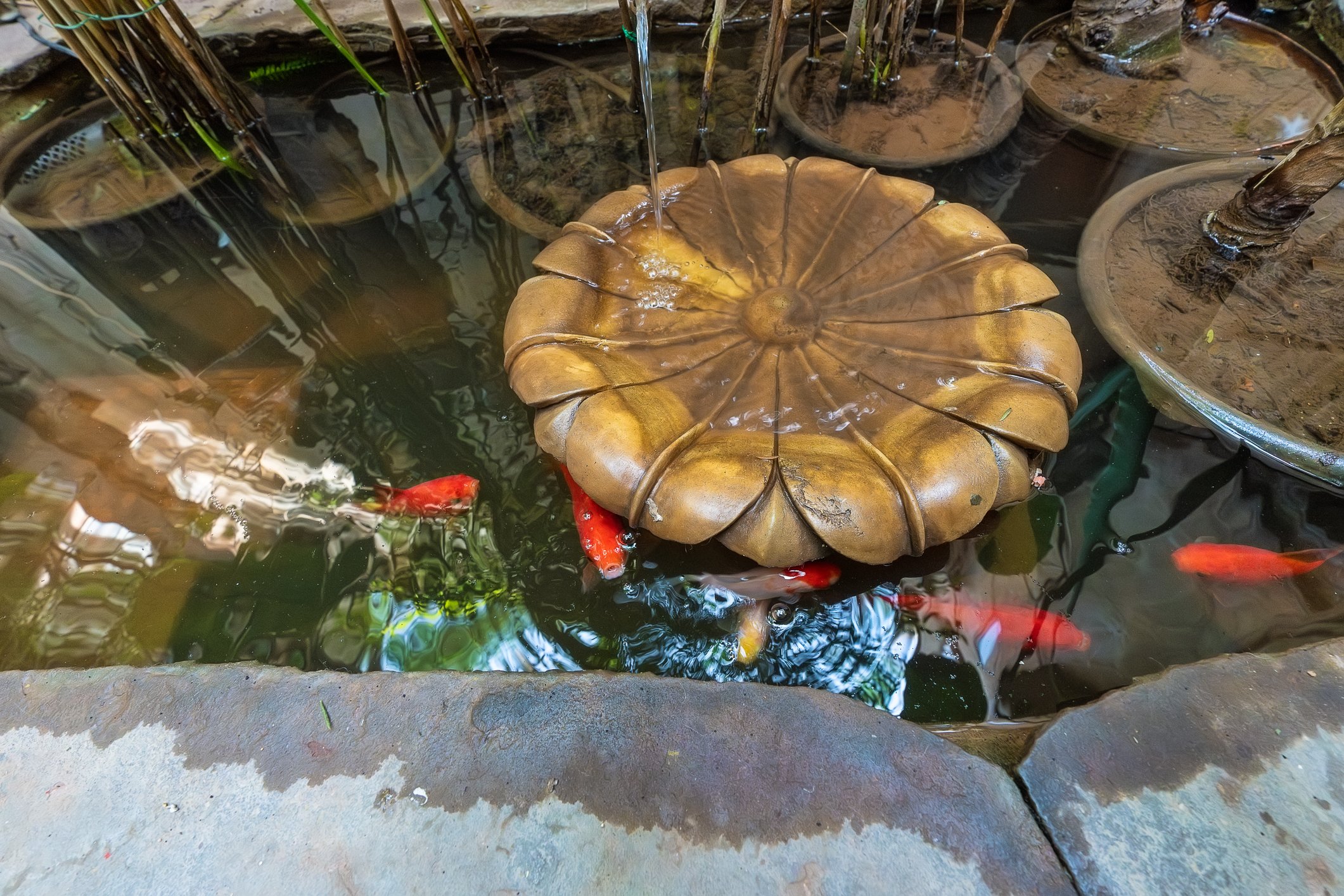
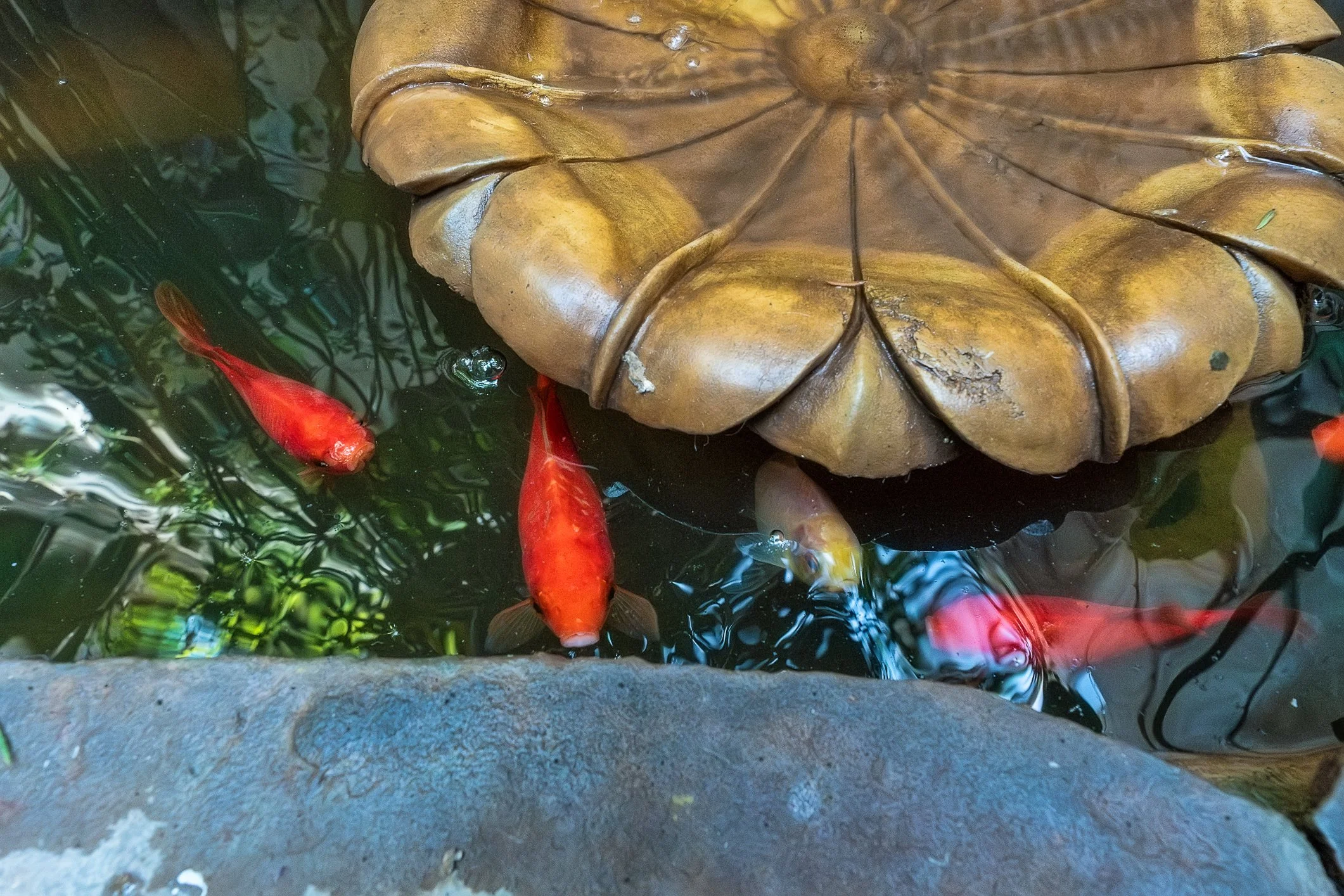
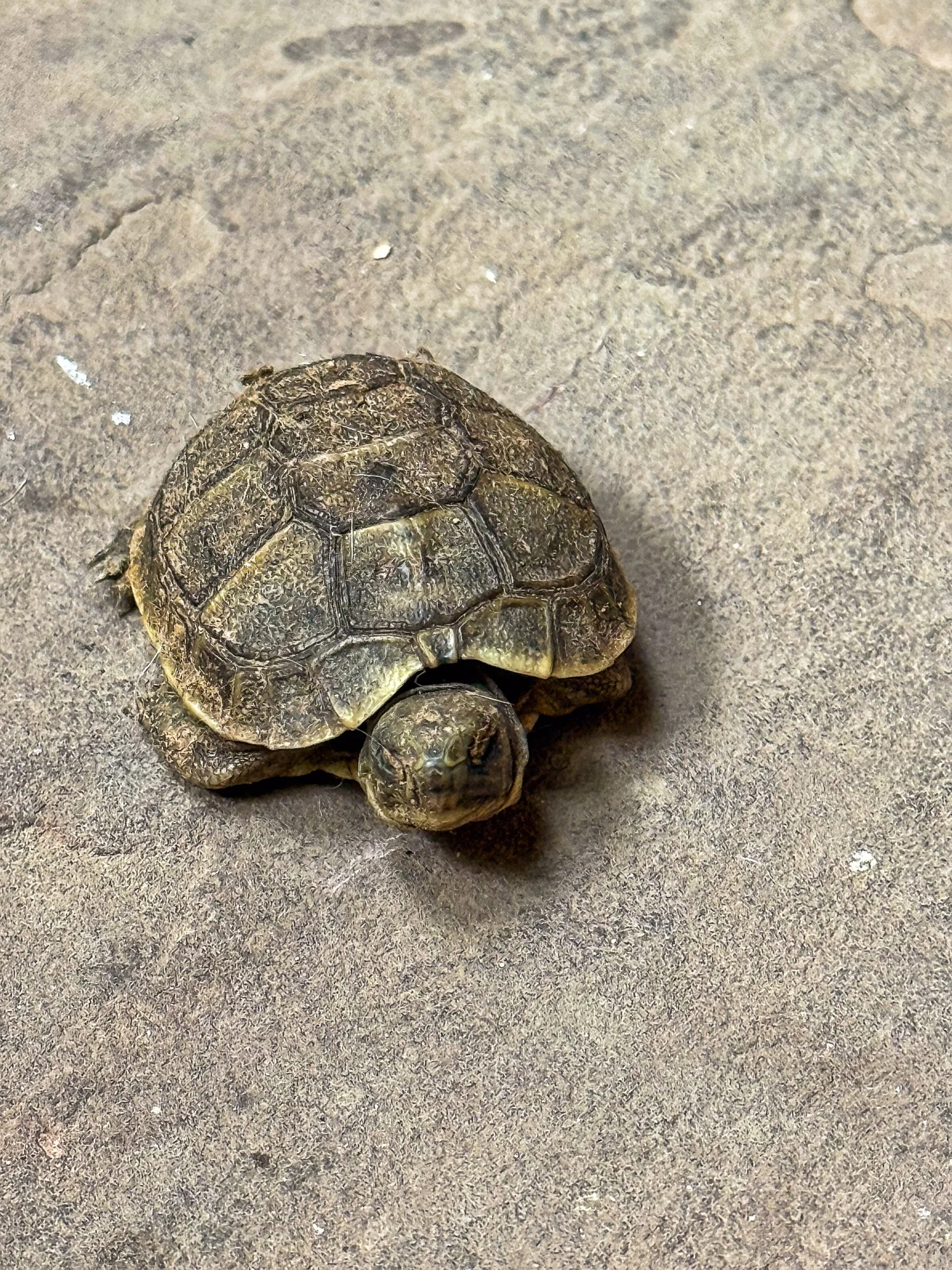
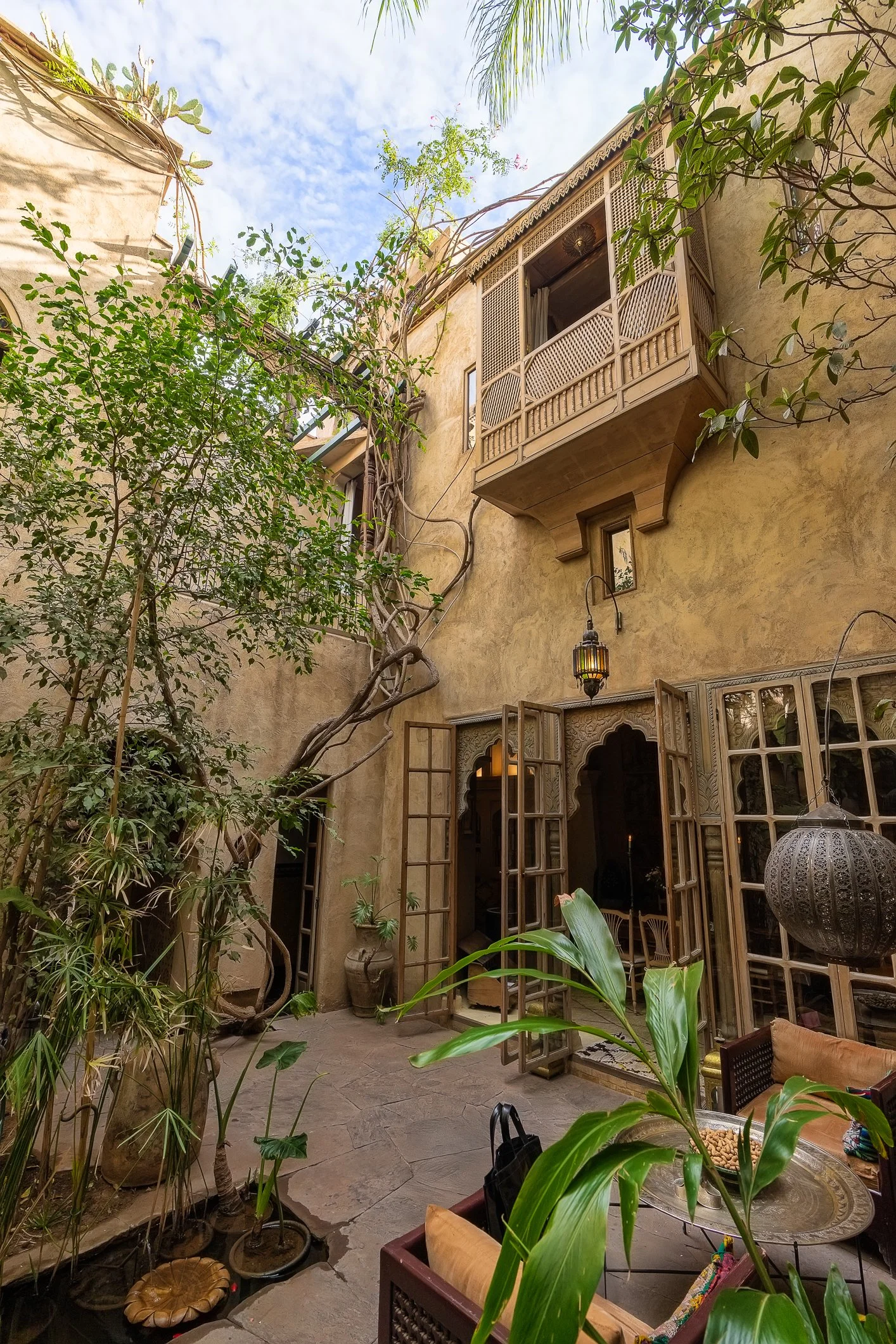
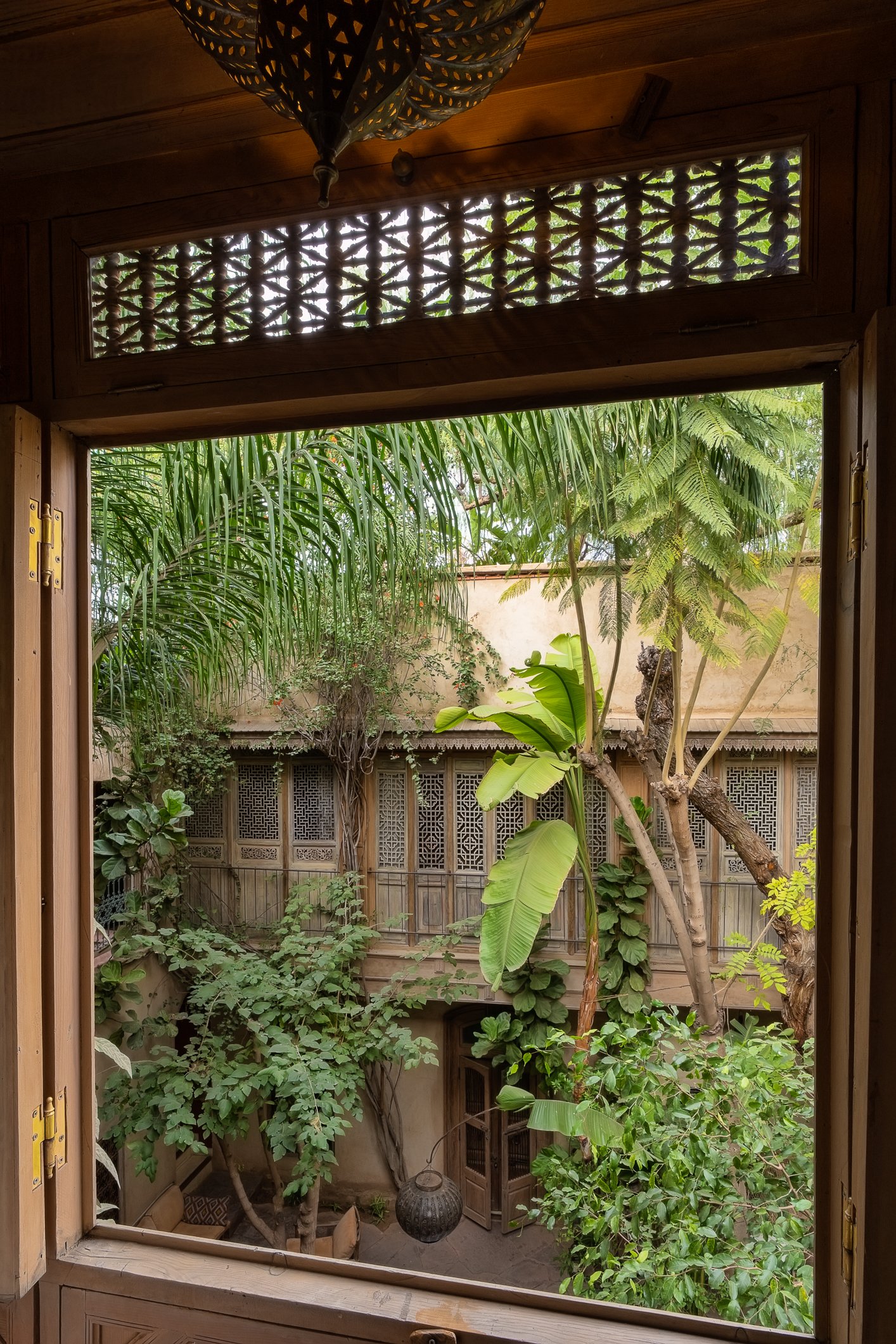
The central courtyard and garden serve as a lush, green oasis featuring 10-meter-tall eucalyptus and palm trees. It feels remarkably like a tropical hideaway. A traditional stone pond is home to several koi fish, and a few tortoises roam freely among the greenery.
Sercem riadu jest wewnętrzny ogród, który przypomina tropikalną dżunglę. Dziesięciometrowe palmy i eukaliptusy dają przyjazny cień, a pośród gęstej zieleni leniwie spacerują sobie mieszkające tutaj żółwie. W tradycyjnej kamiennej sadzawce pływają zaś karpie koi.
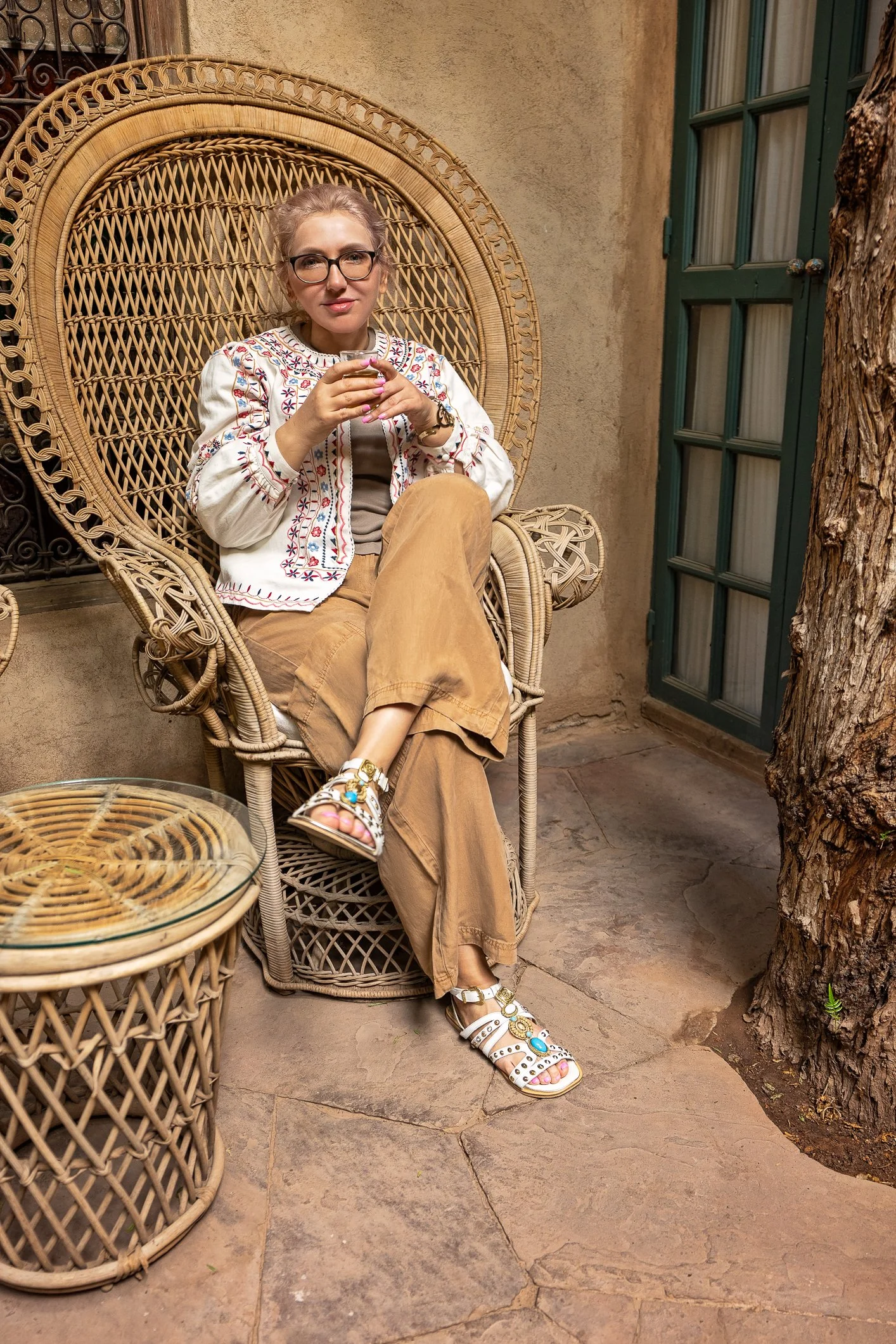
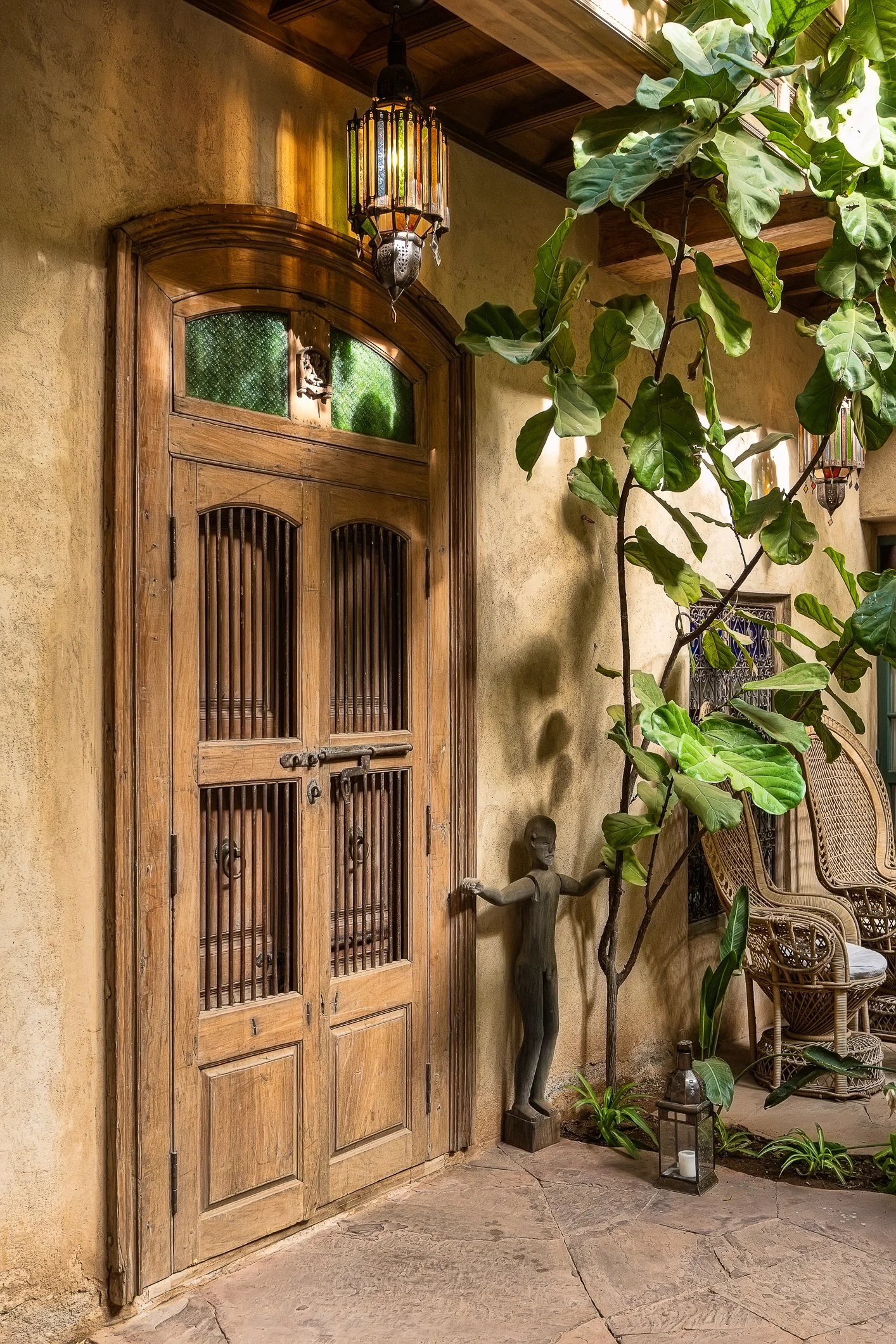
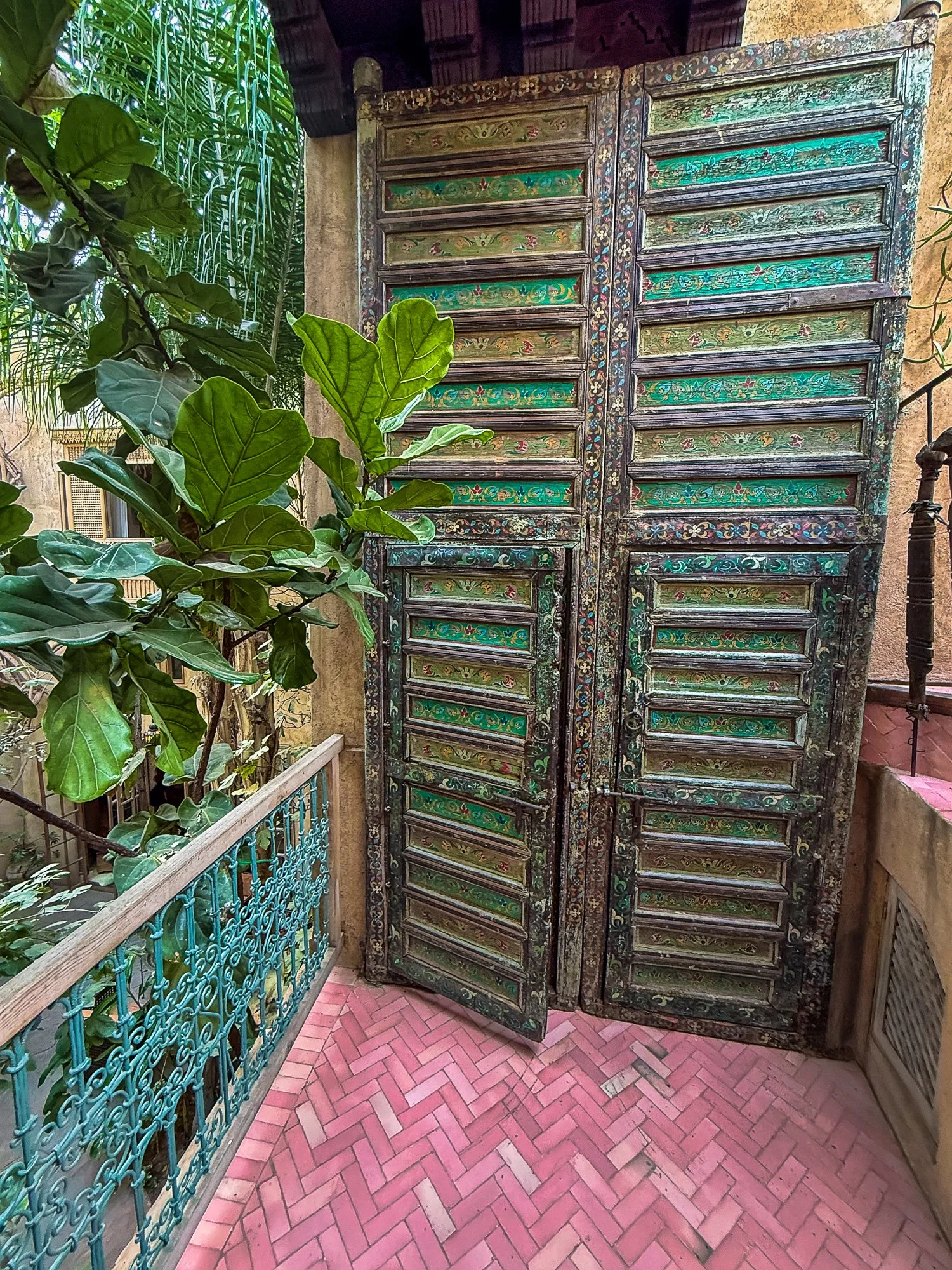
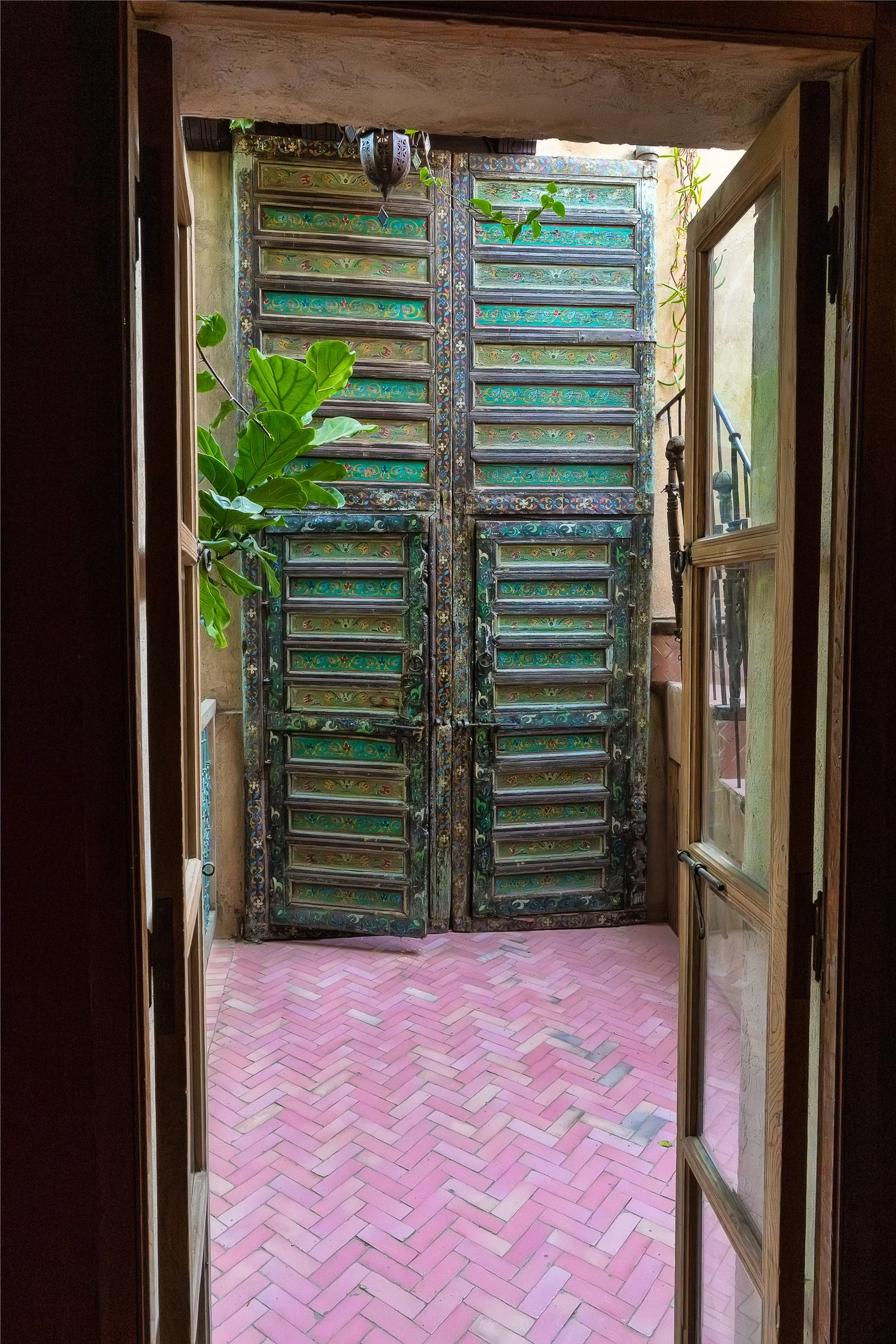
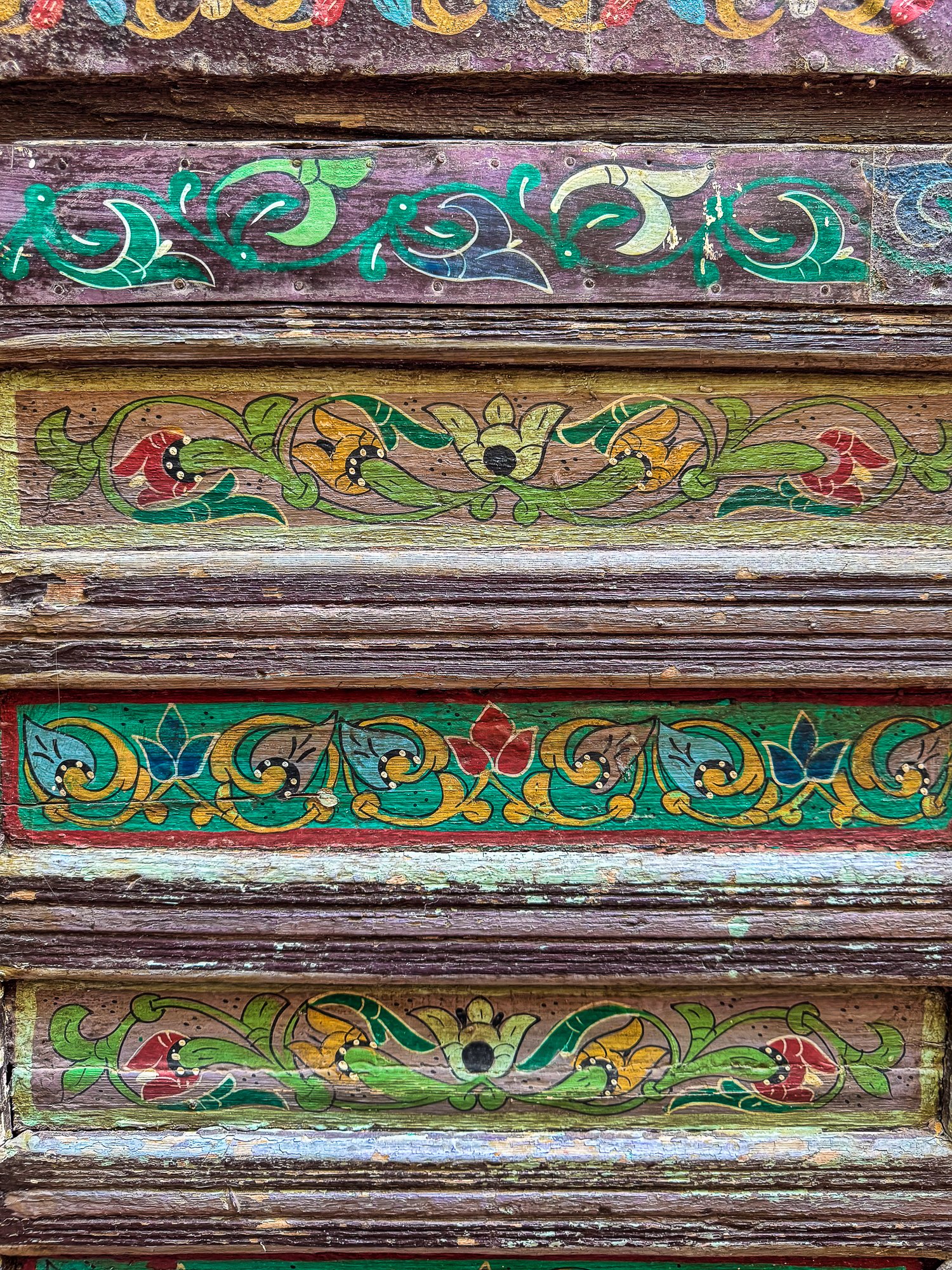
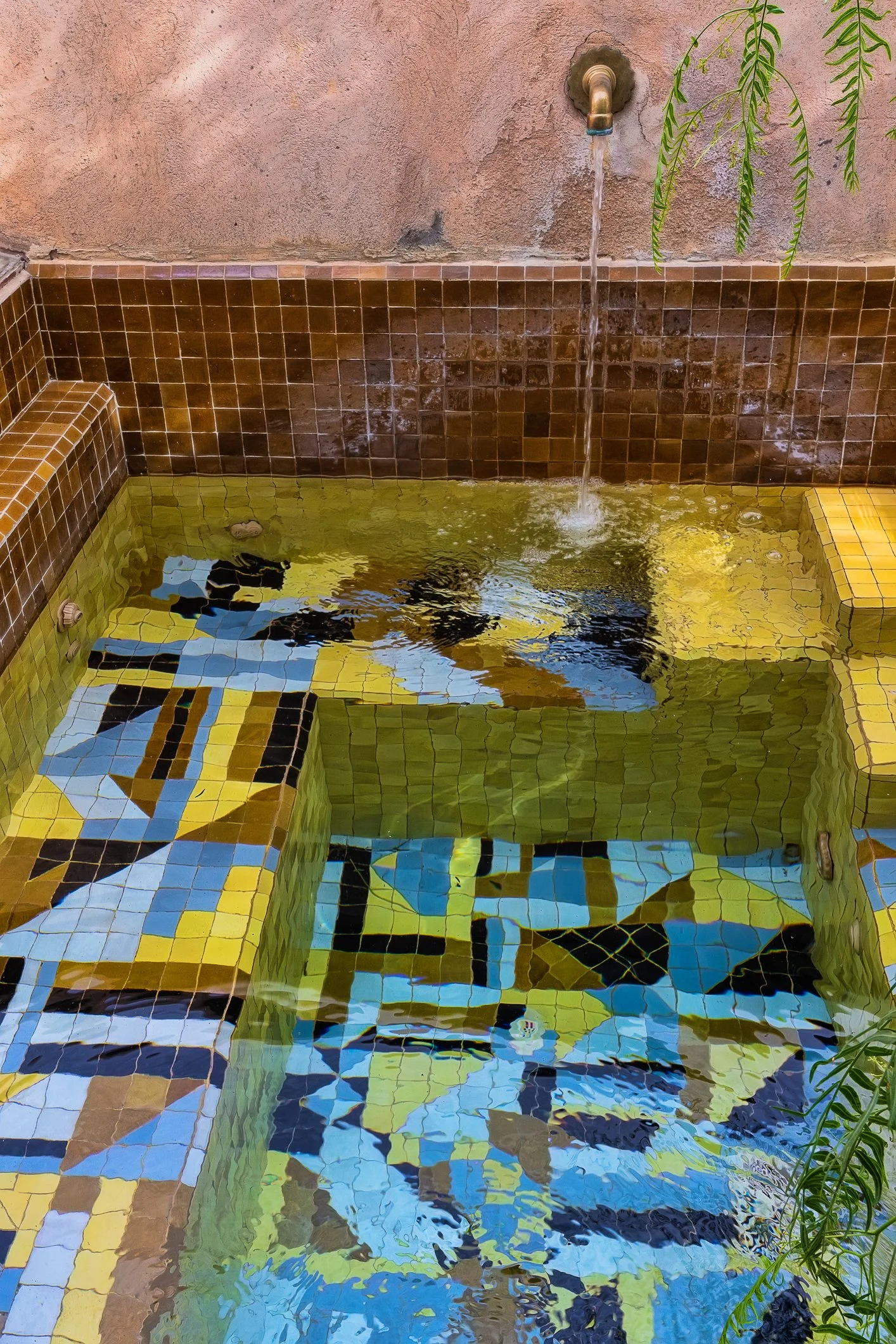
Throughout the riad, the floors utilize traditional terracotta tiles. Designs range from pure white bejmat (the rustic, rectangular bricks often used for a natural, earthy feel) to intricate zellige patterns, which are meticulously hand-cut tile mosaics. Hand-painted zouak doors are also featured, showcasing traditional floral and geometric motifs painted directly onto the wood.
To, co zachwyca w tym riadzie najbardziej, to autentyczność materiałów. Podłogi to surowe, terakotowe płytki bejmat lub misterne, ręcznie wycinane mozaiki zellige, ręcznie malowane drzwi zouak zdobią motywy roślinne, a sufity tatoui wykonane są z plecionych gałązek oleandra. Ściany są często wykończone gładkim, lśniącym tynkiem tadelakt, polerowanym rzecznymi kamieniami.
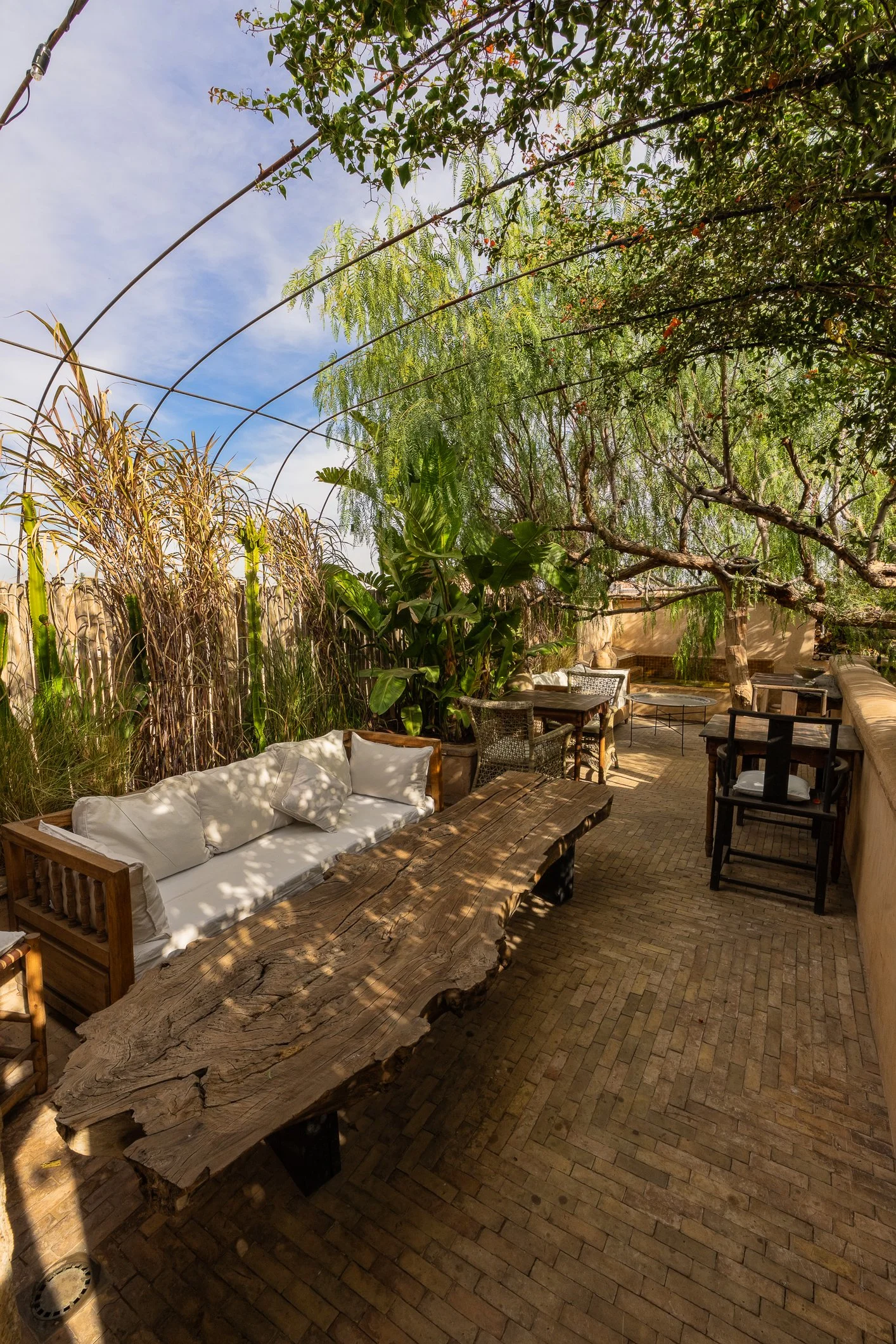
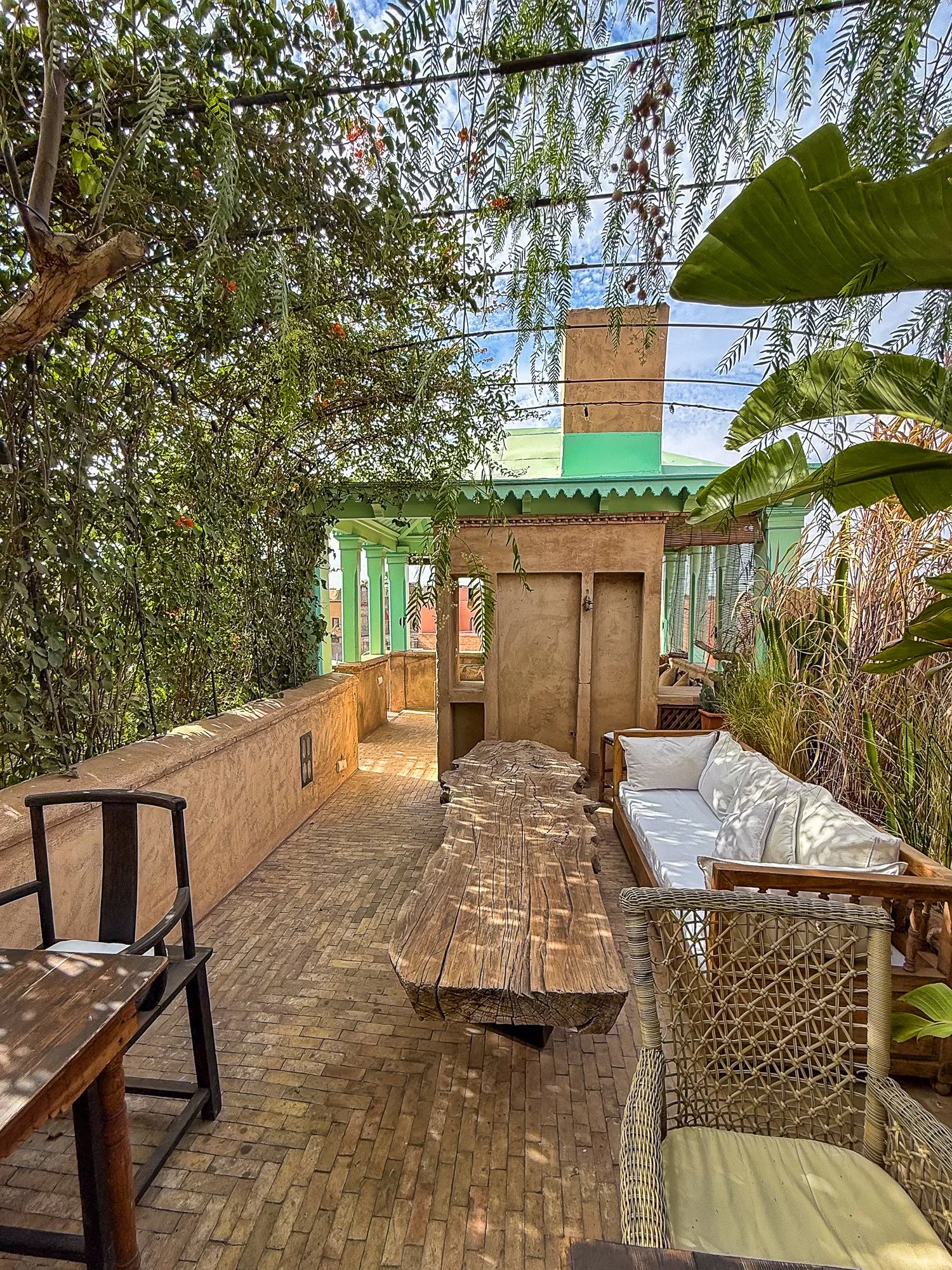
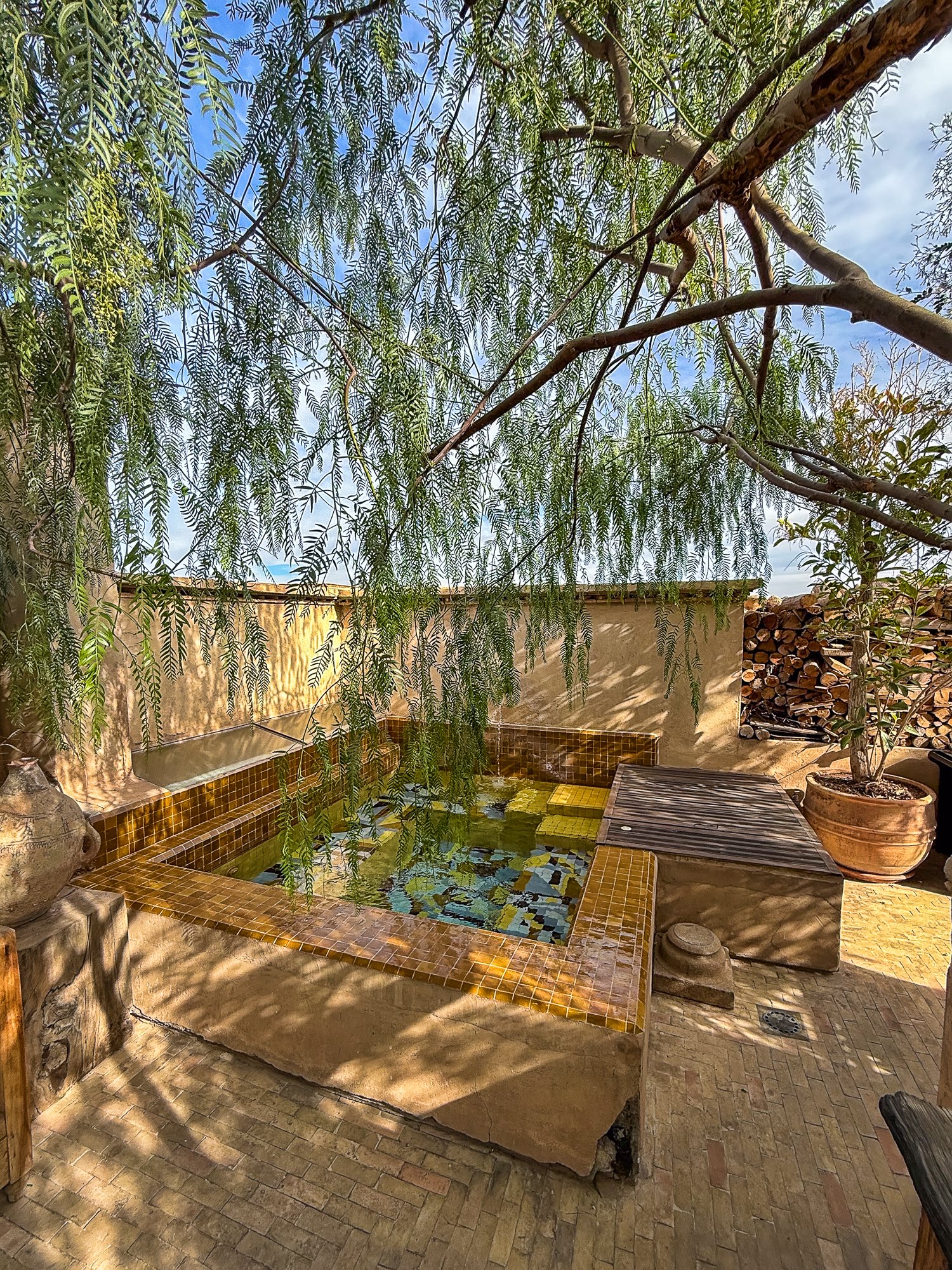
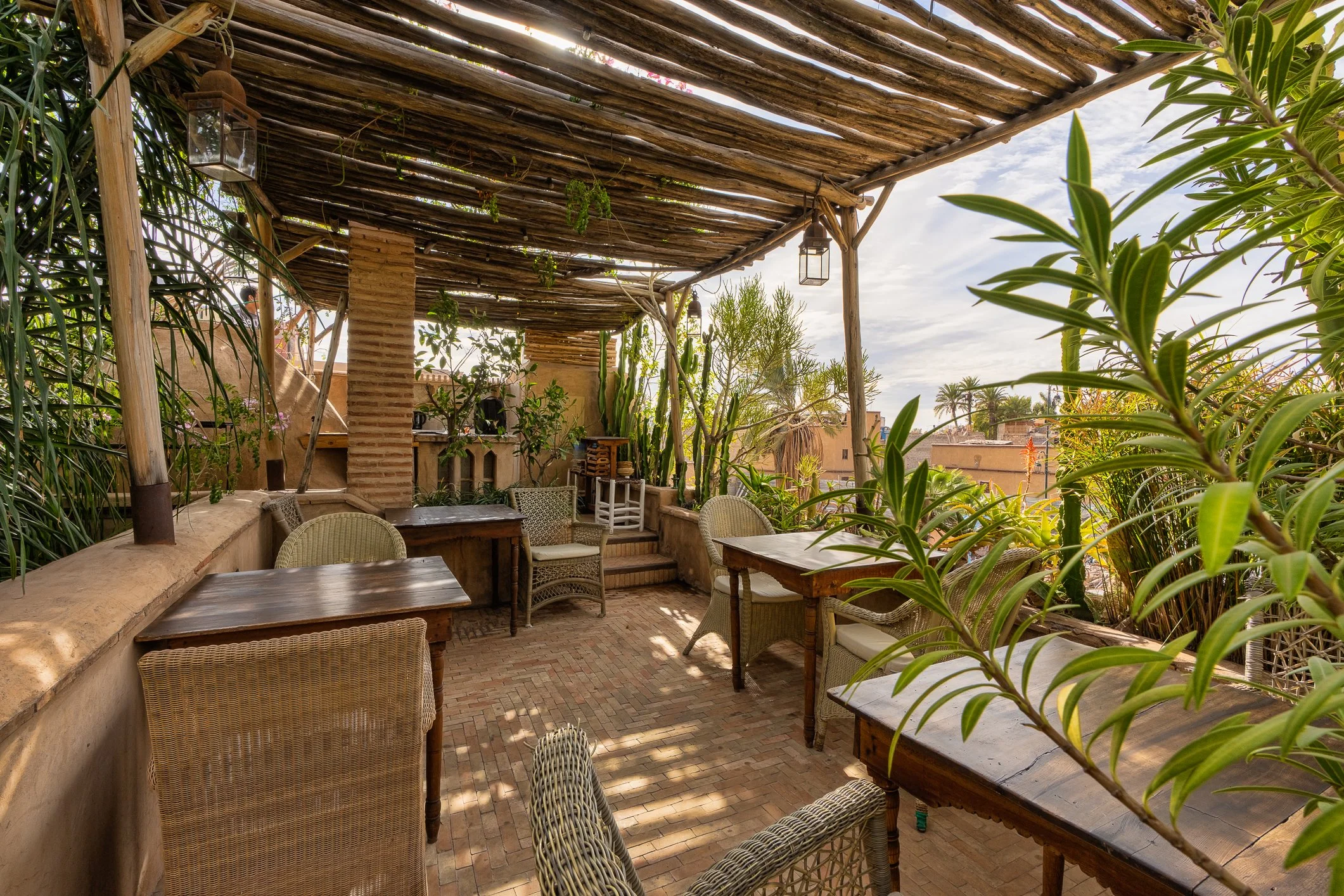
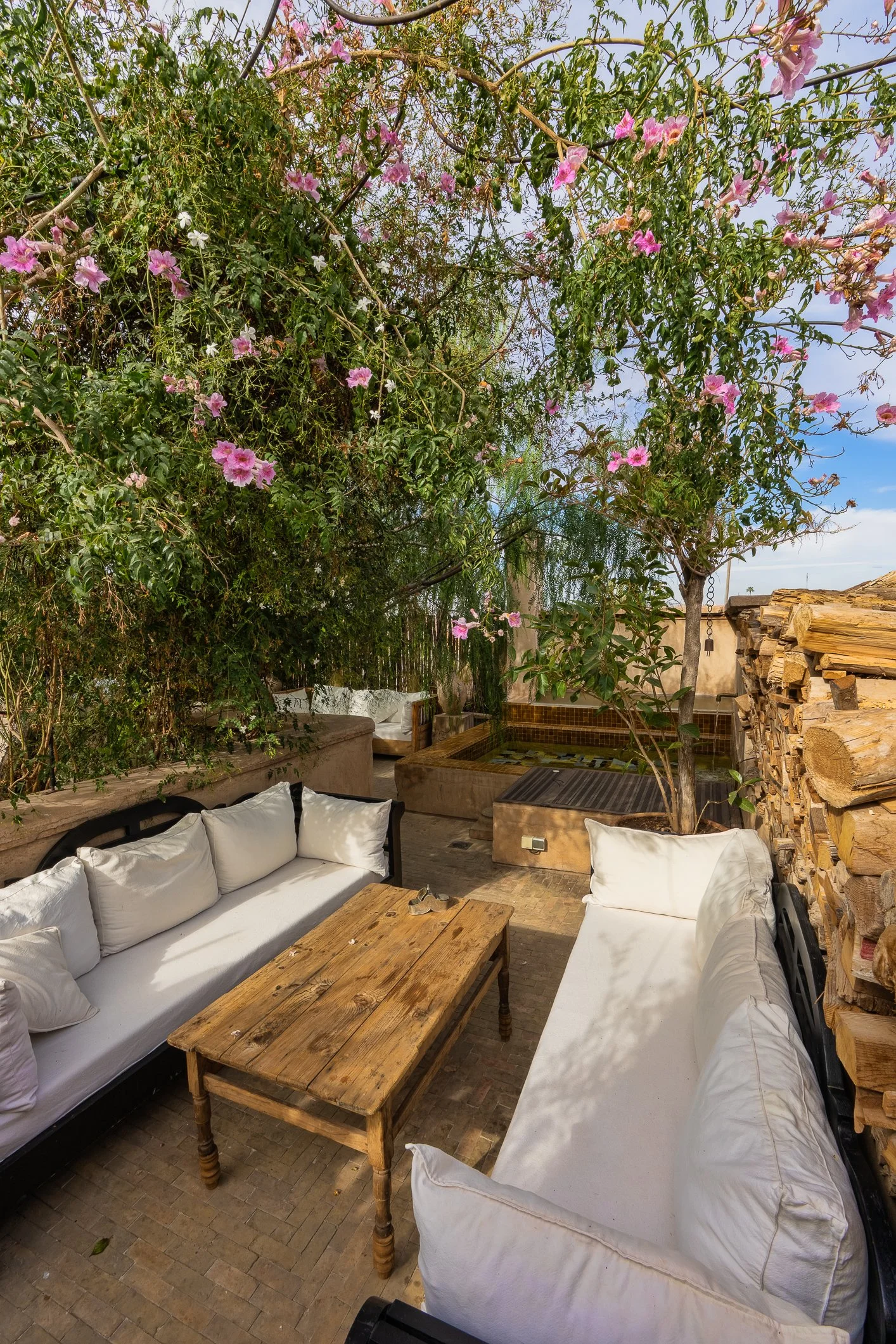
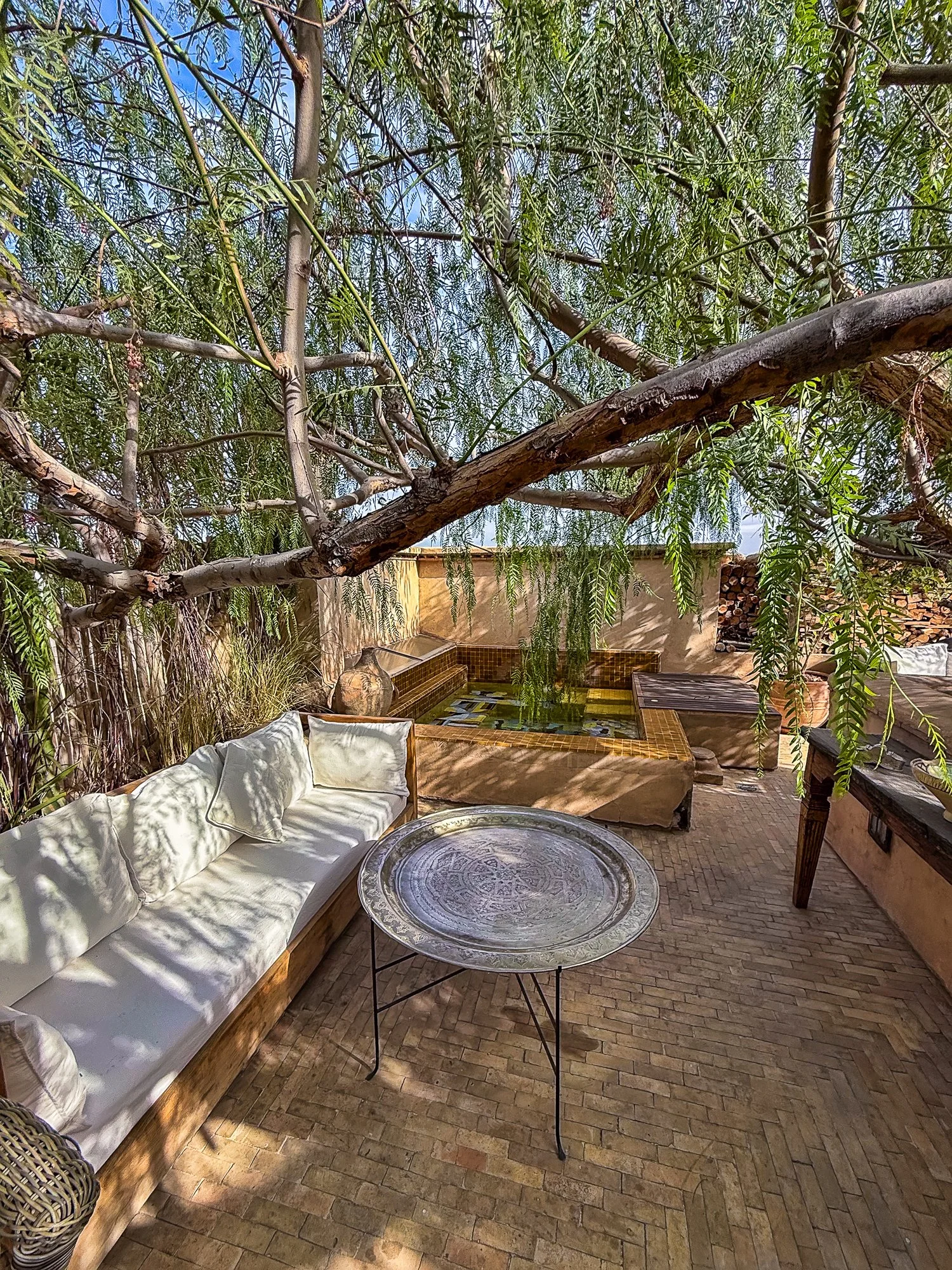
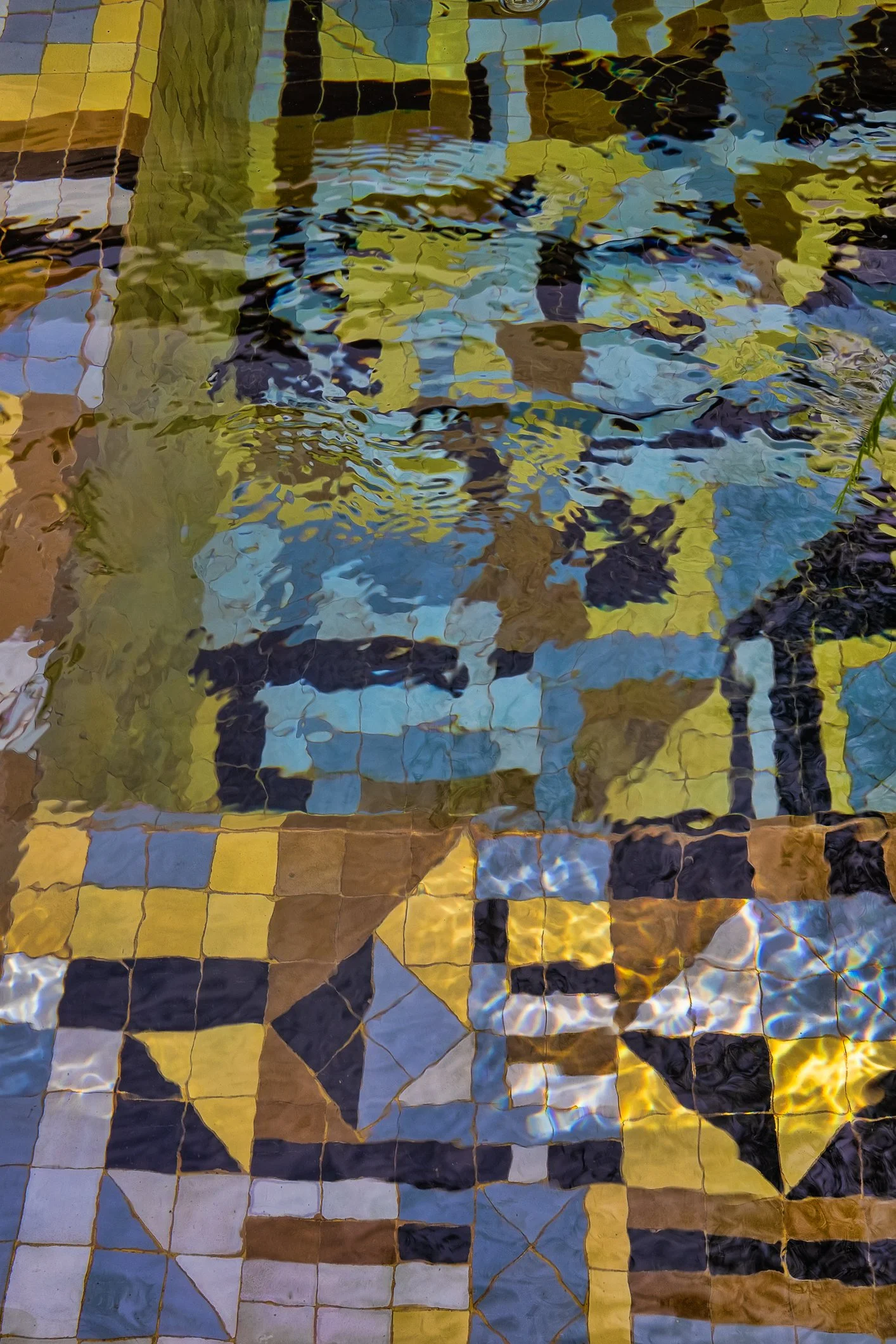
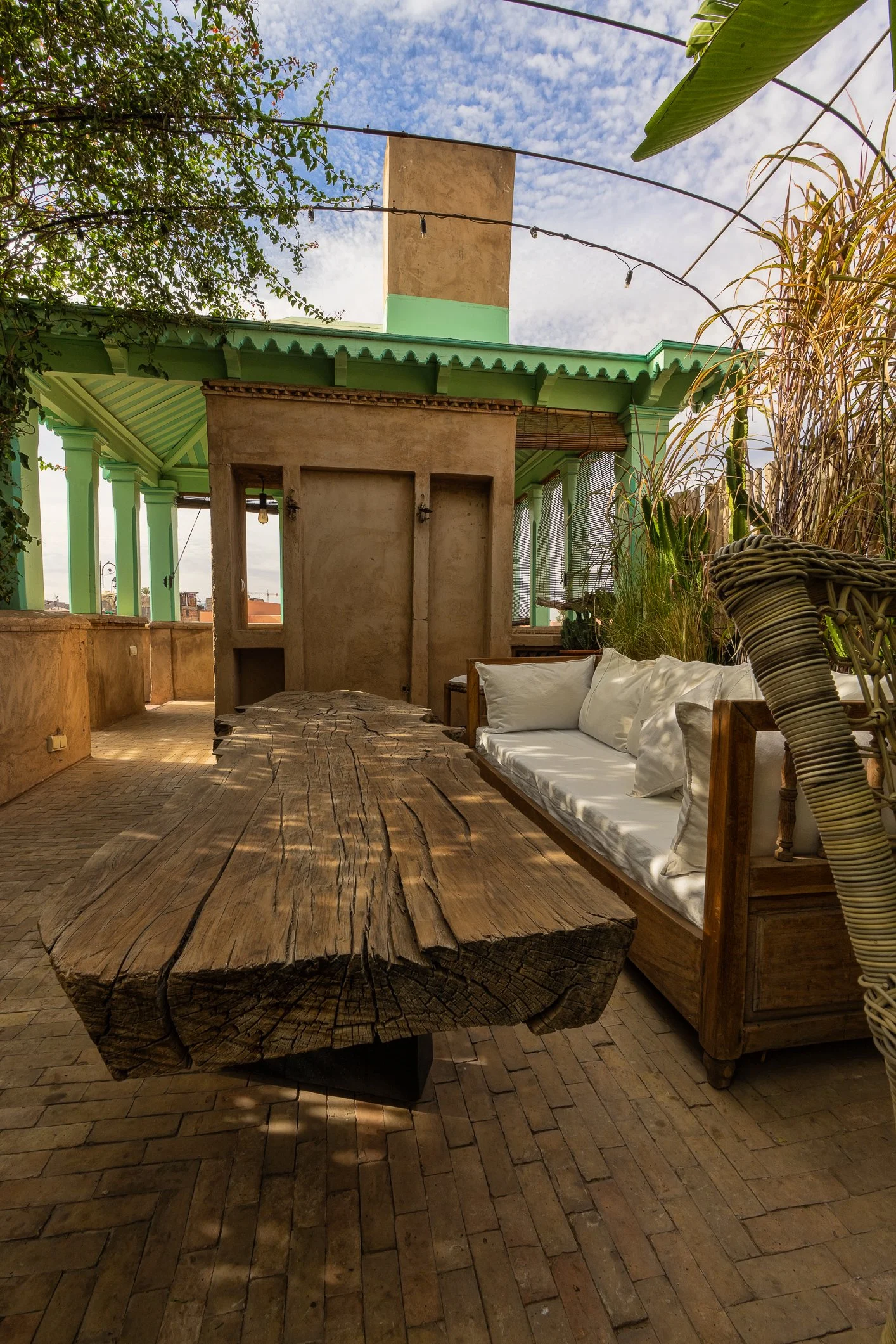
The terrace is designed as a series of intimate "pockets" rather than a large open plaza. It provides panoramic views over the authentic, less-developed Zaouia el Abassia quarter of the medina. A modest traditional plunge pool is integrated into the terrace design, providing a cool retreat from the heat. This is not the season though to jump in, at least not for us.
W przeciwieństwie do ogromnych, otwartych tarasów, ten w Kbour & Chou jest podzielony na kameralne wnęki. Można się w nich zaszyć z książką lub dzbankiem herbaty, obserwując panoramę mniej turystycznej, surowej części medyny. Dla ochłody przygotowano tradycyjny mały basen (plunge pool), idealnie wkomponowany w architekturę dachu. Latem pewnie byśmy już tam moczyli swoje odwłoki, ale Marrakesz o tej porze roku jest na to dla nas za zimny.
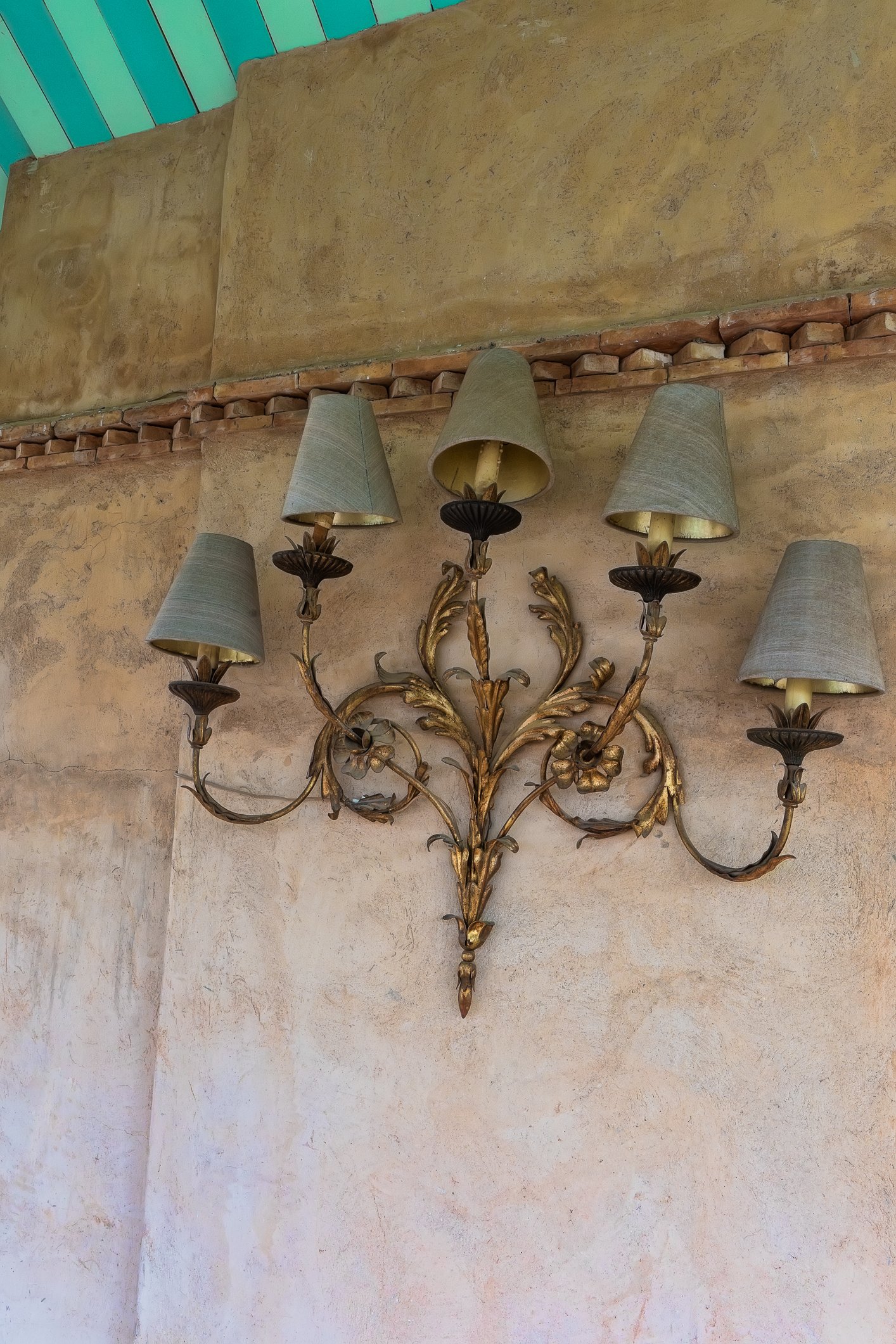
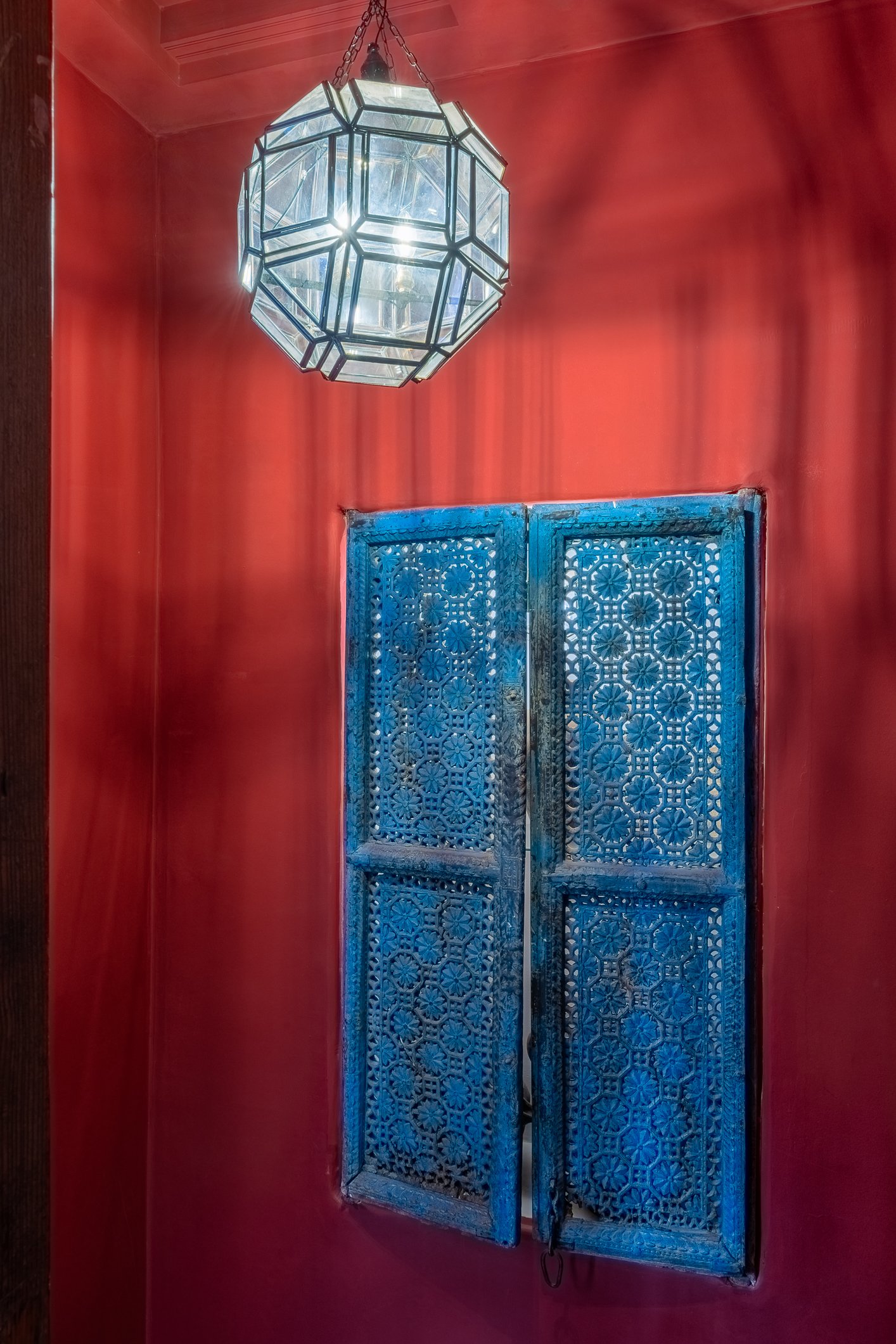
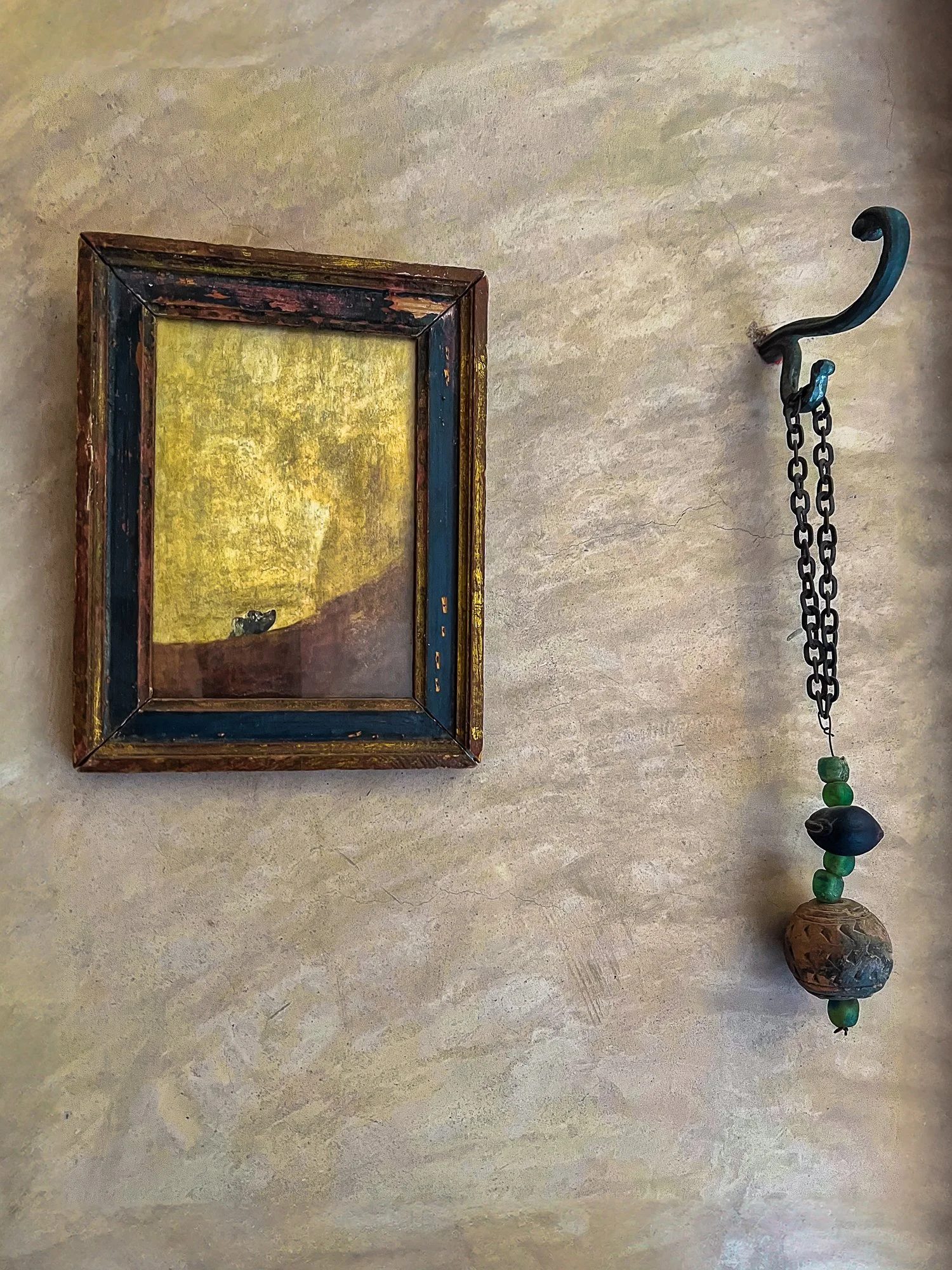
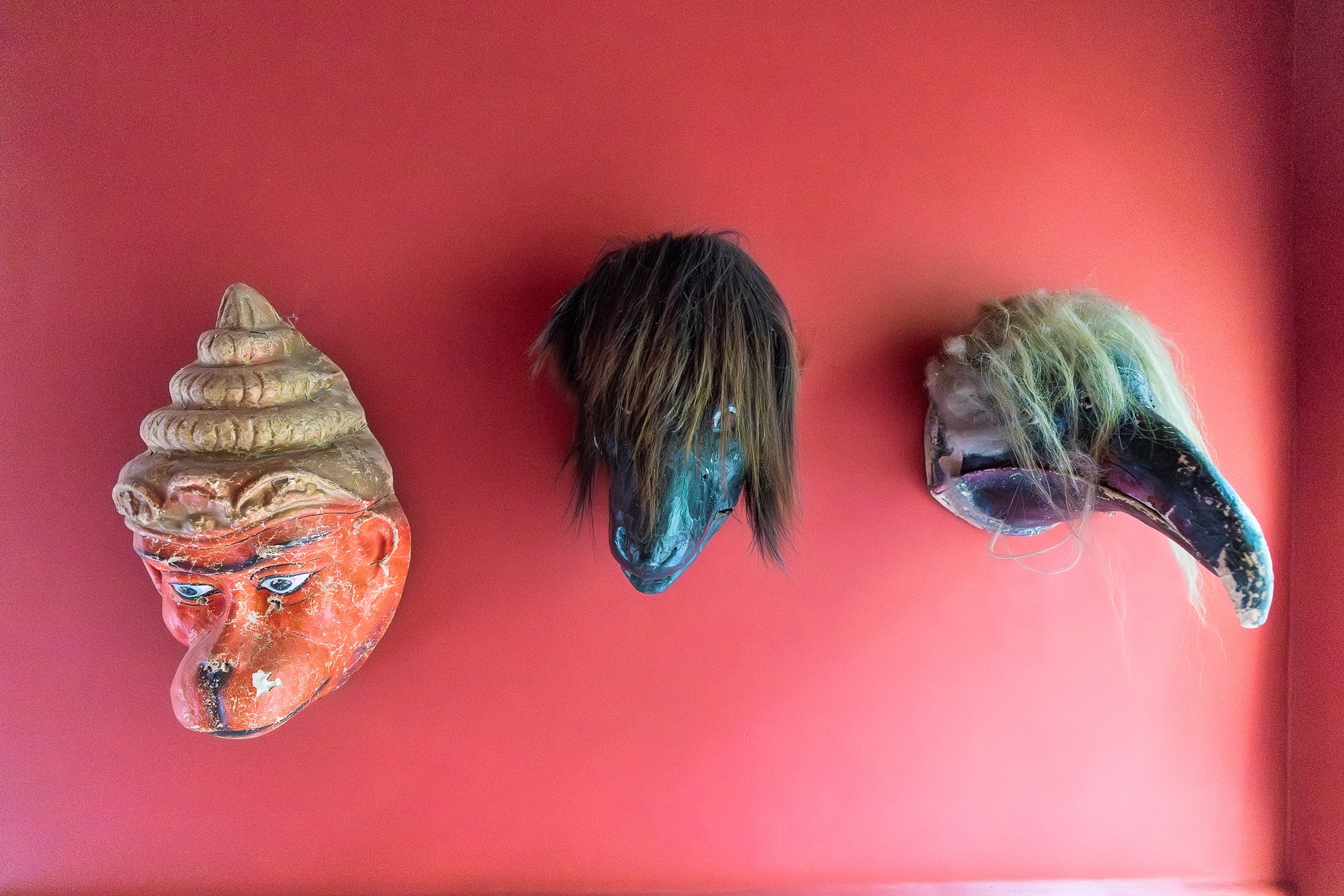
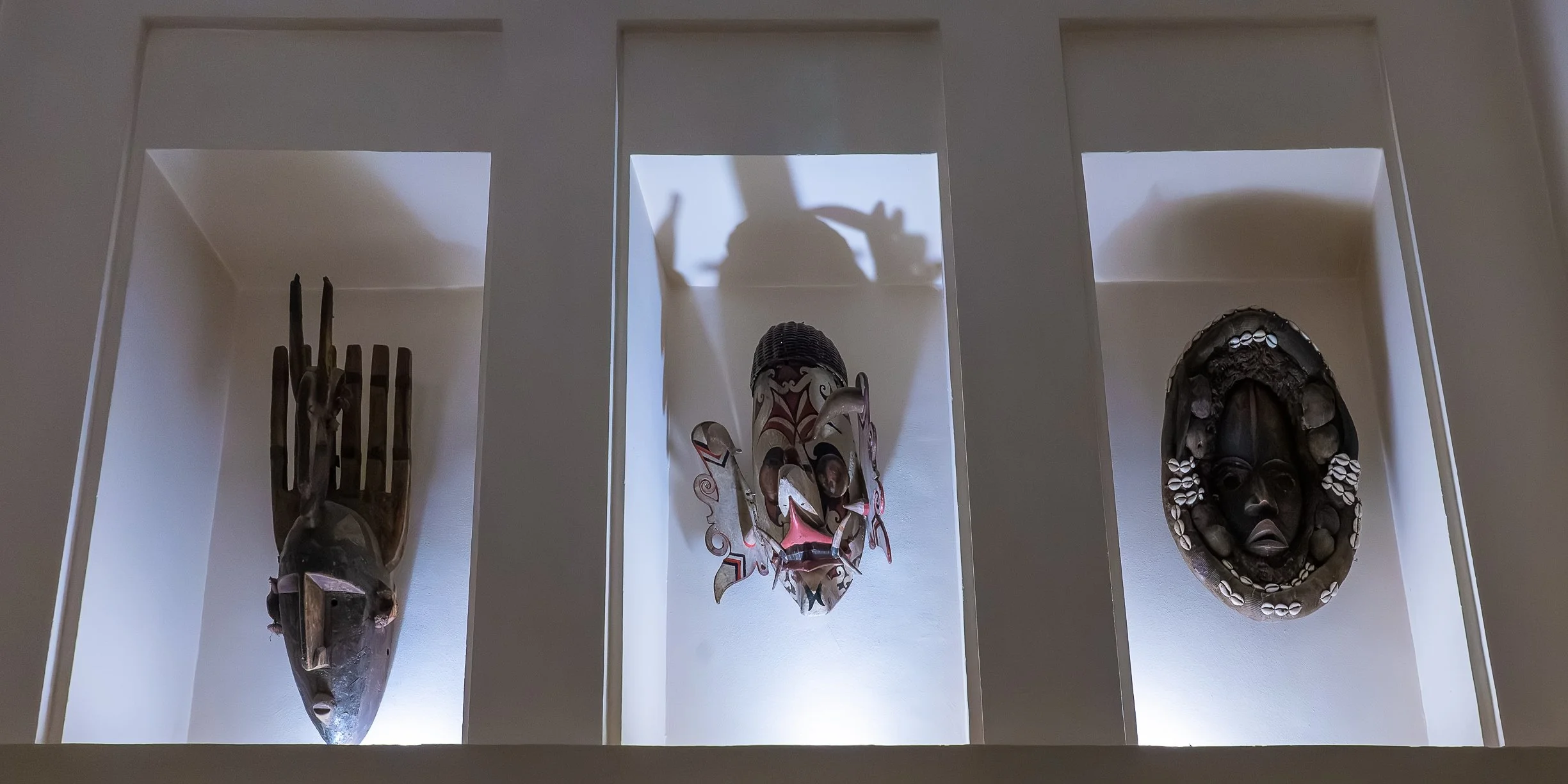
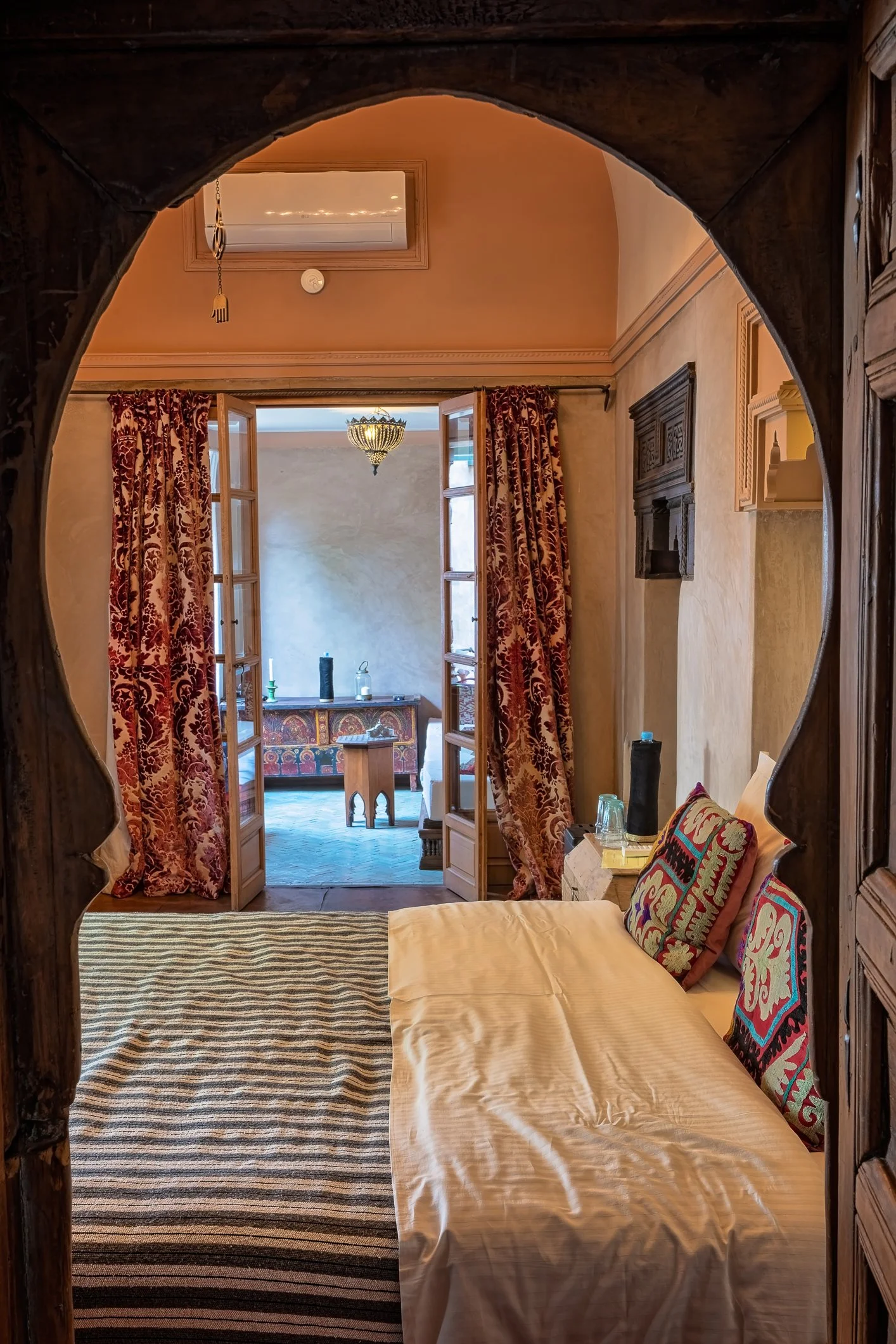
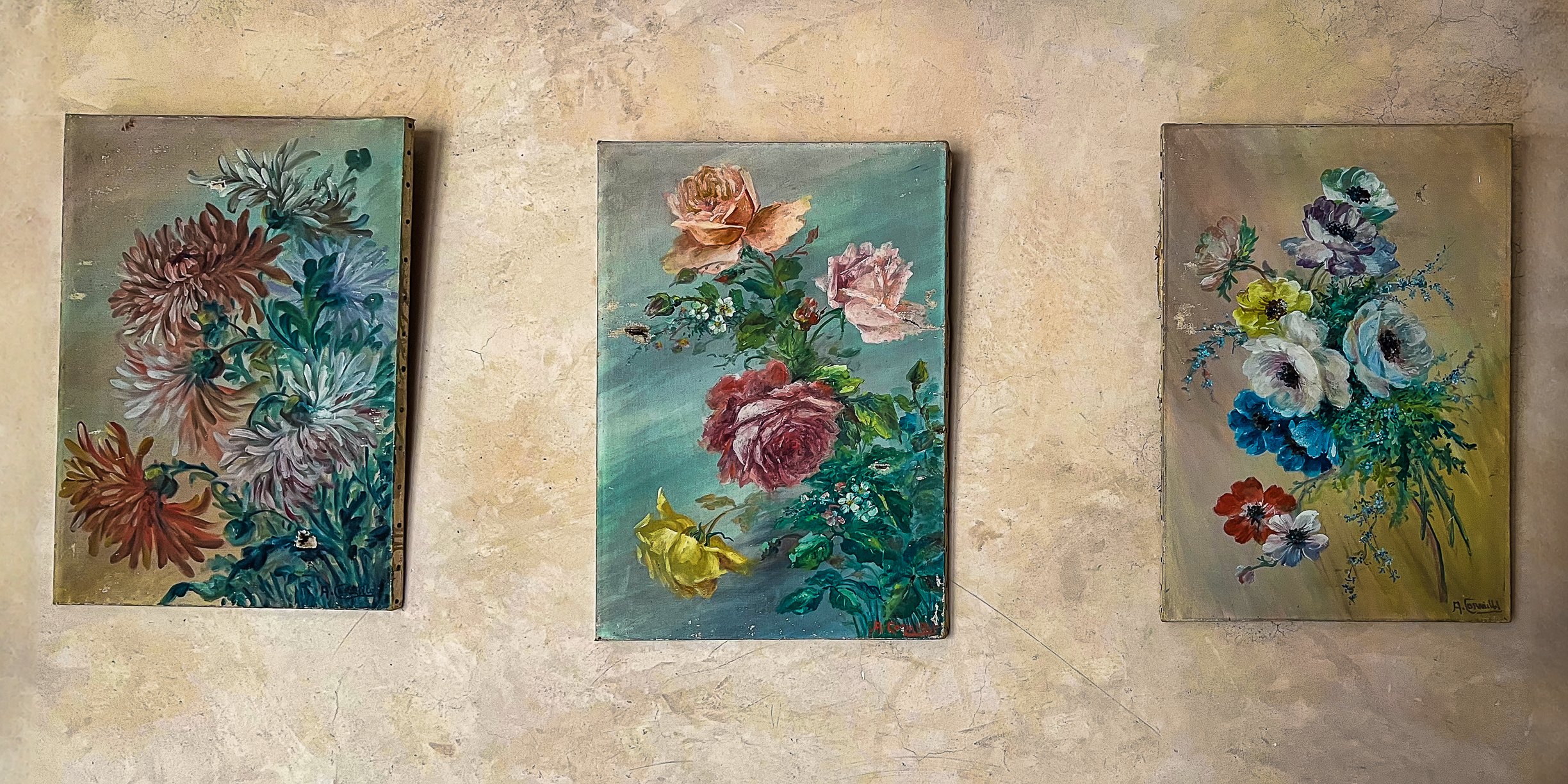
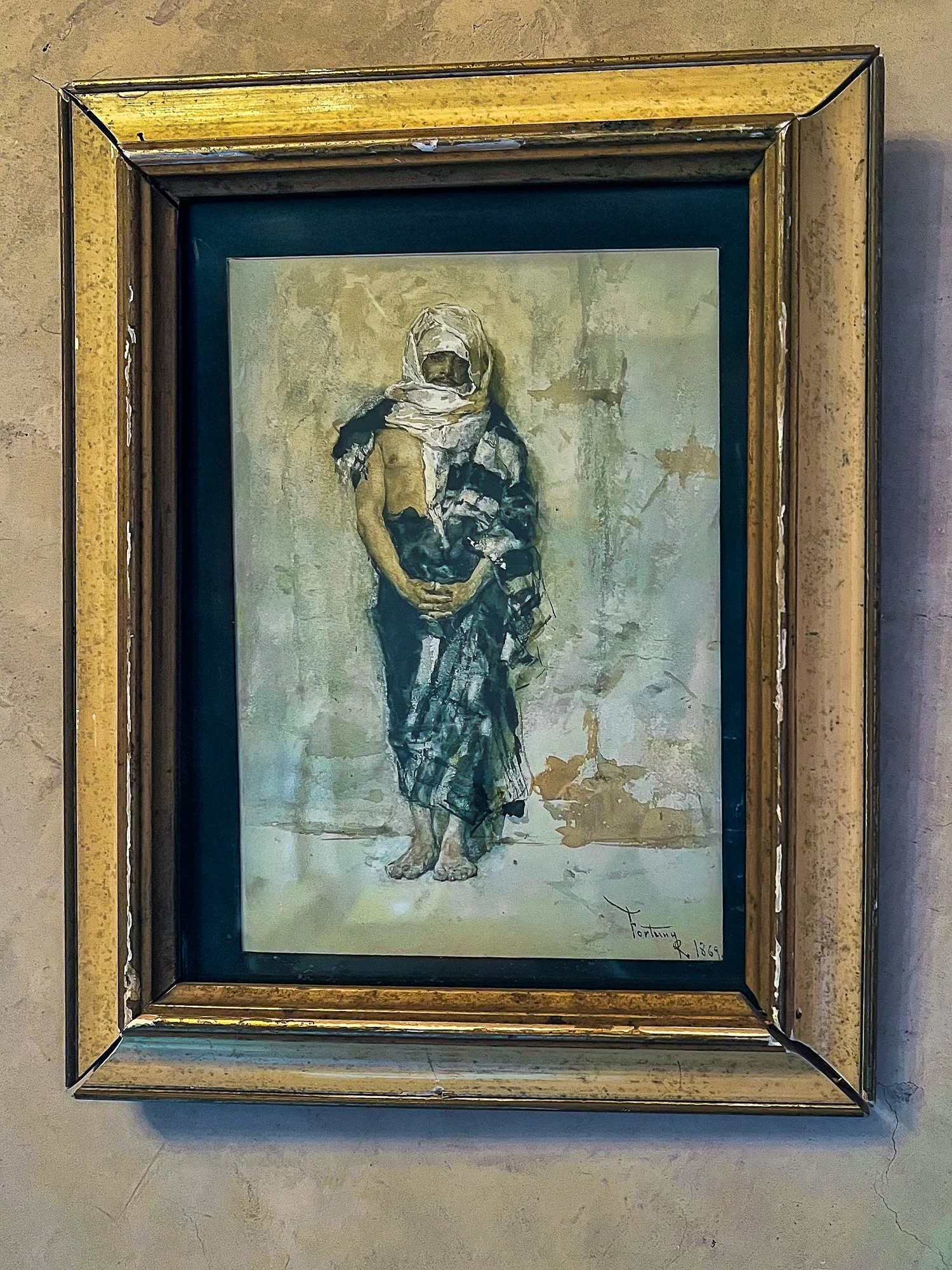
There are only seven rooms, each with its own character and distinct features: traditionally painted wooden arches and vaulted roofs, sculpted plaster, and tadelakt. You’ll also find tatoui ceilings made of woven oleander branches, antique Chinese moucharabieh doors featuring intricate lattice woodwork for privacy and ventilation, and stained glass alongside bejmat vaults.The spaces are further decorated with artefacts collected during the owners’ travels across Africa and the rest of the world.
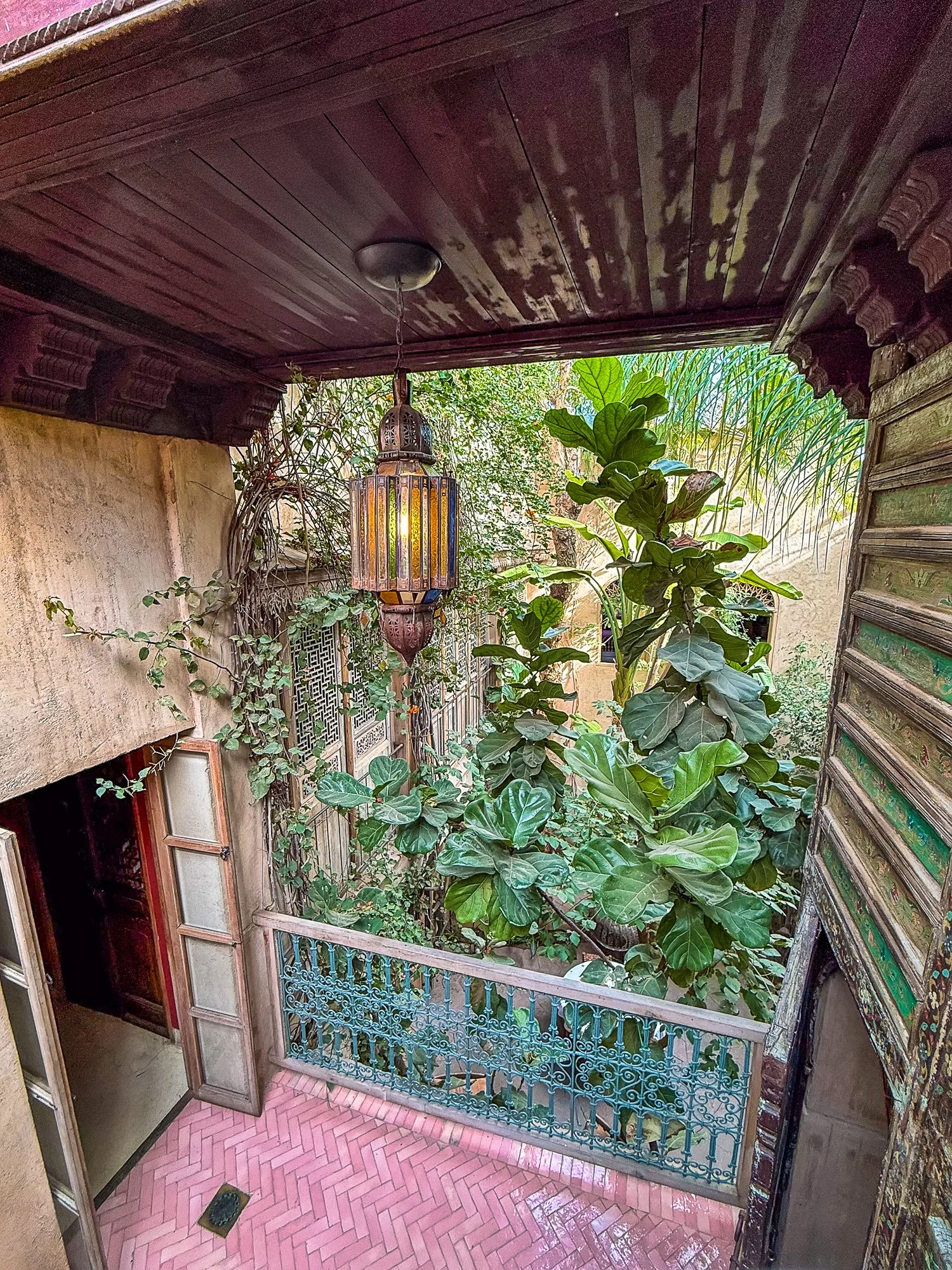
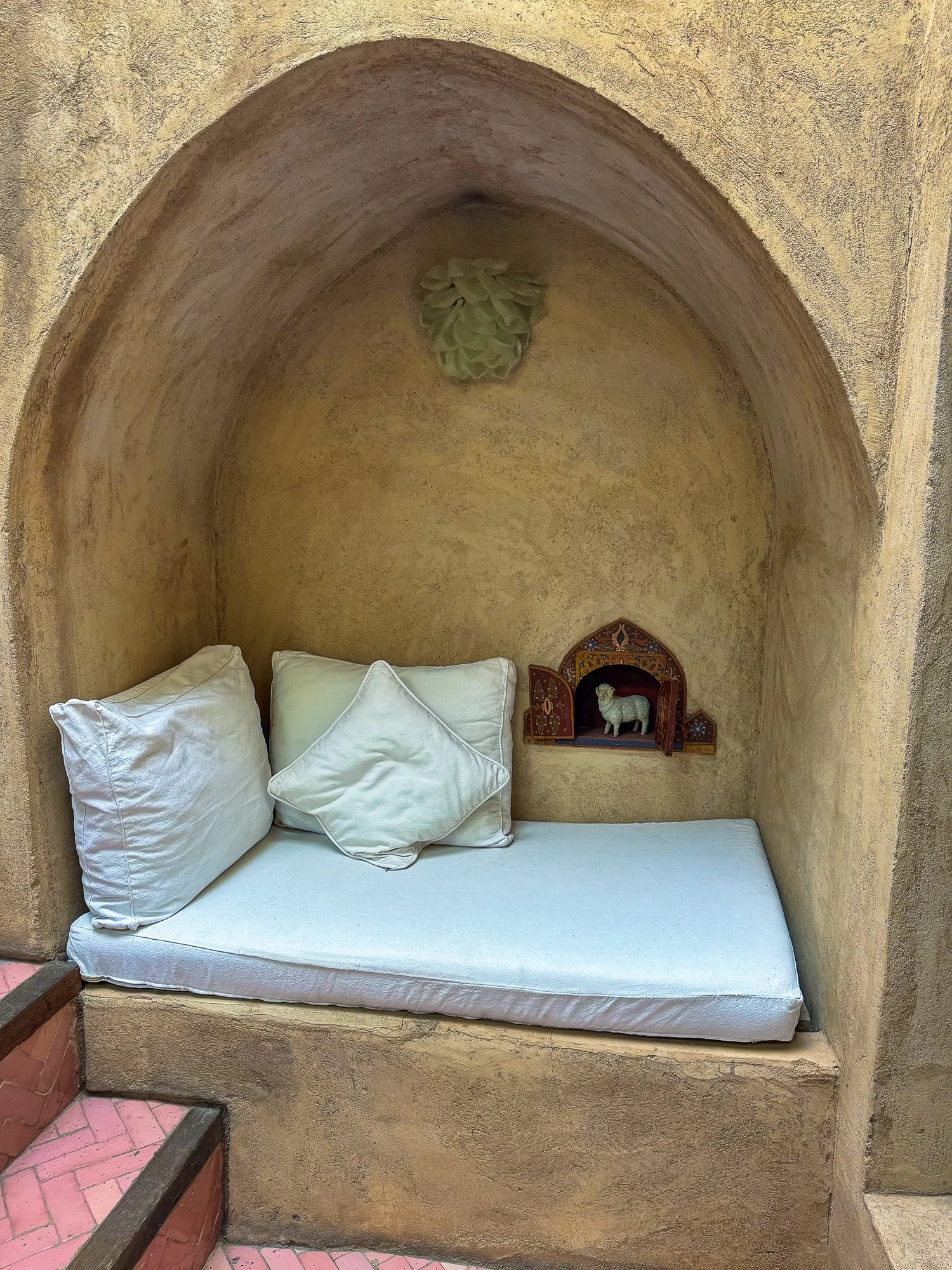
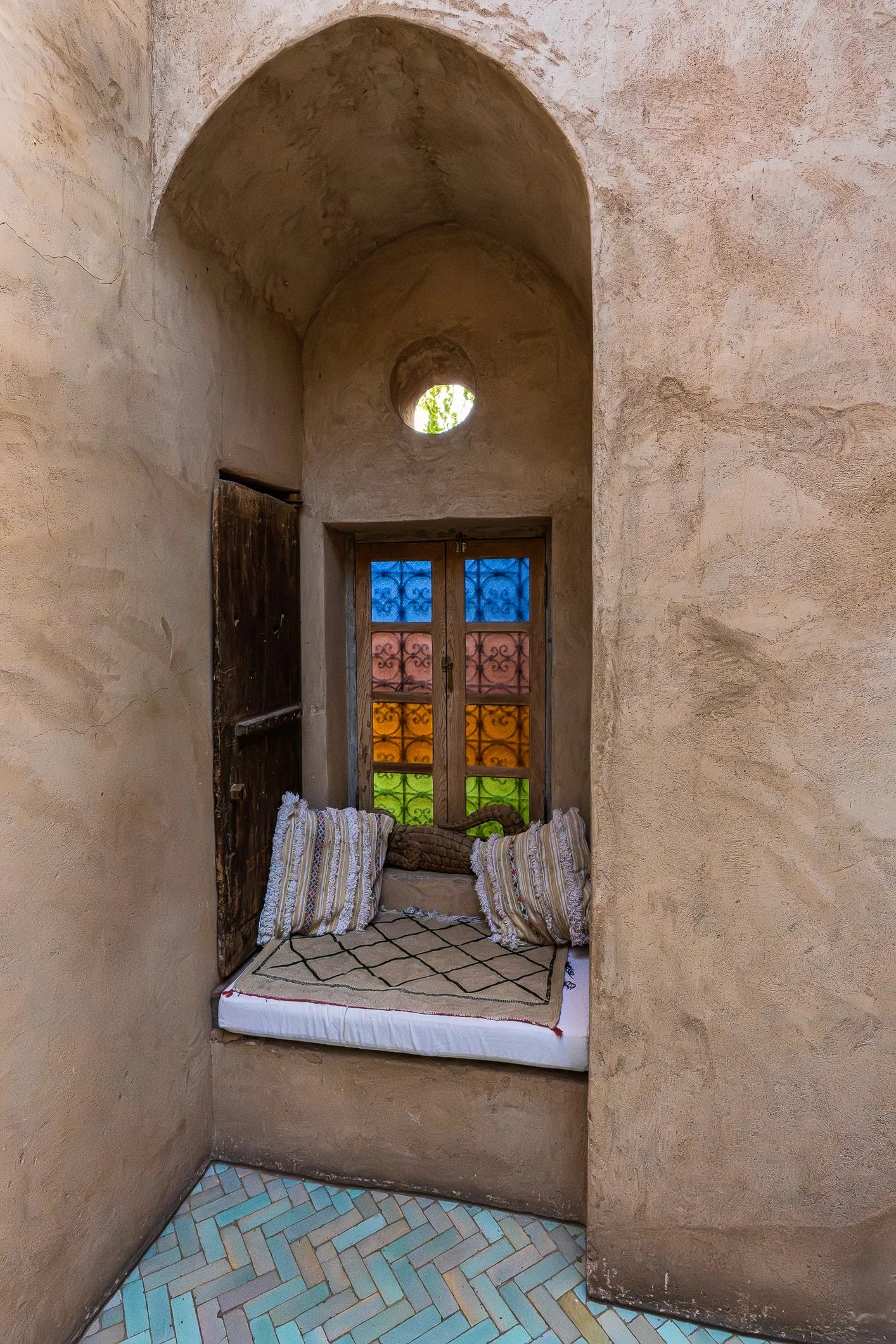
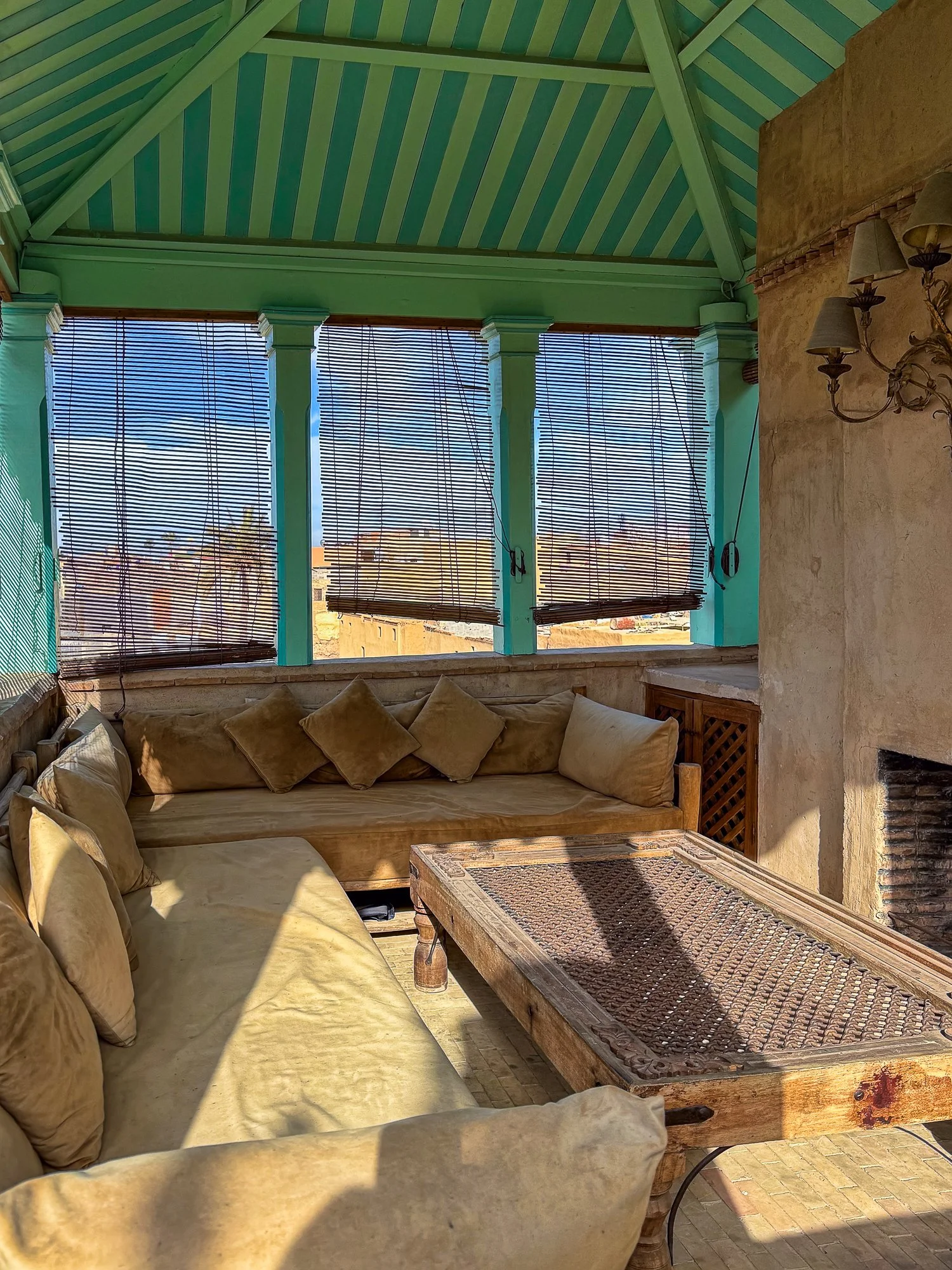
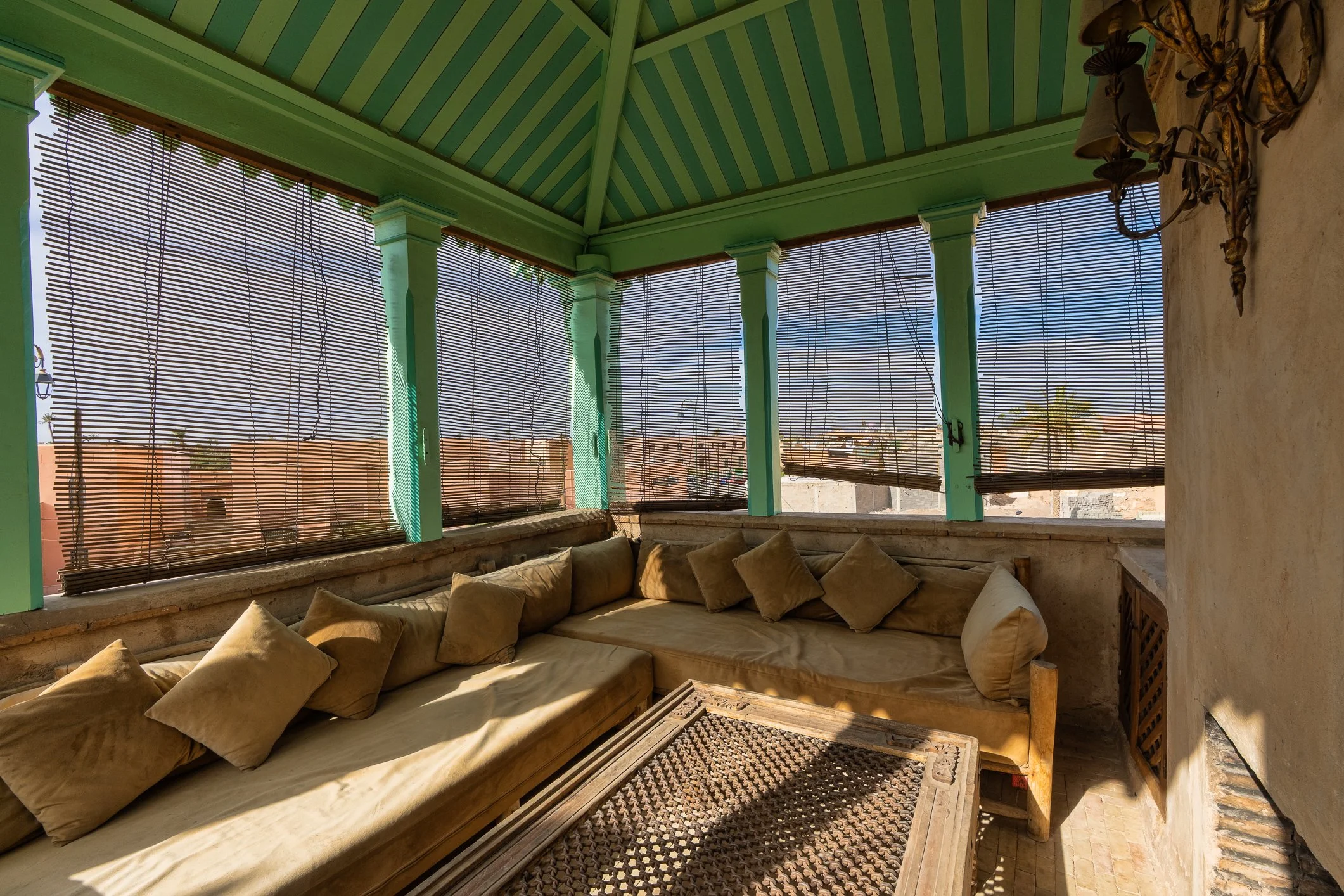
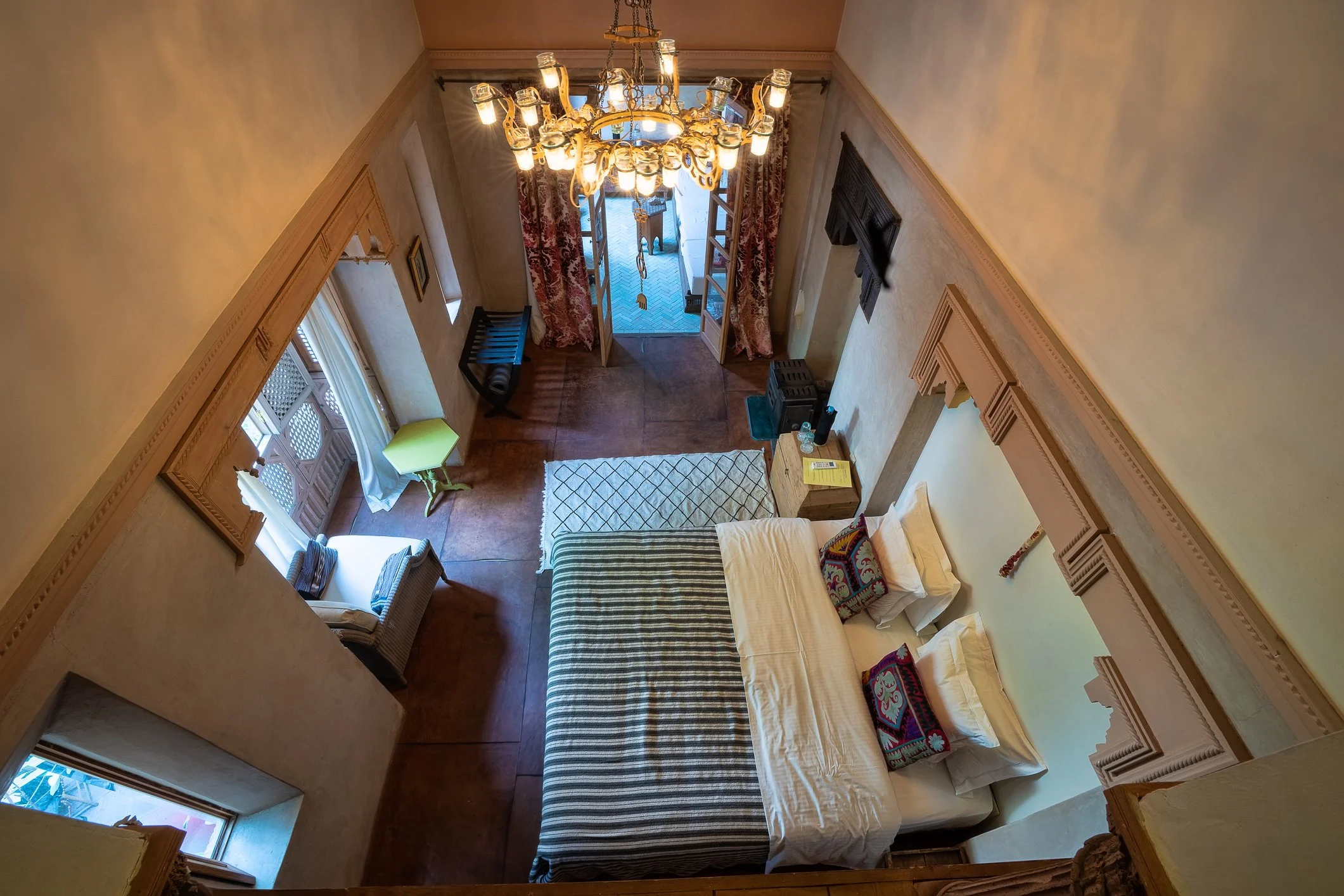
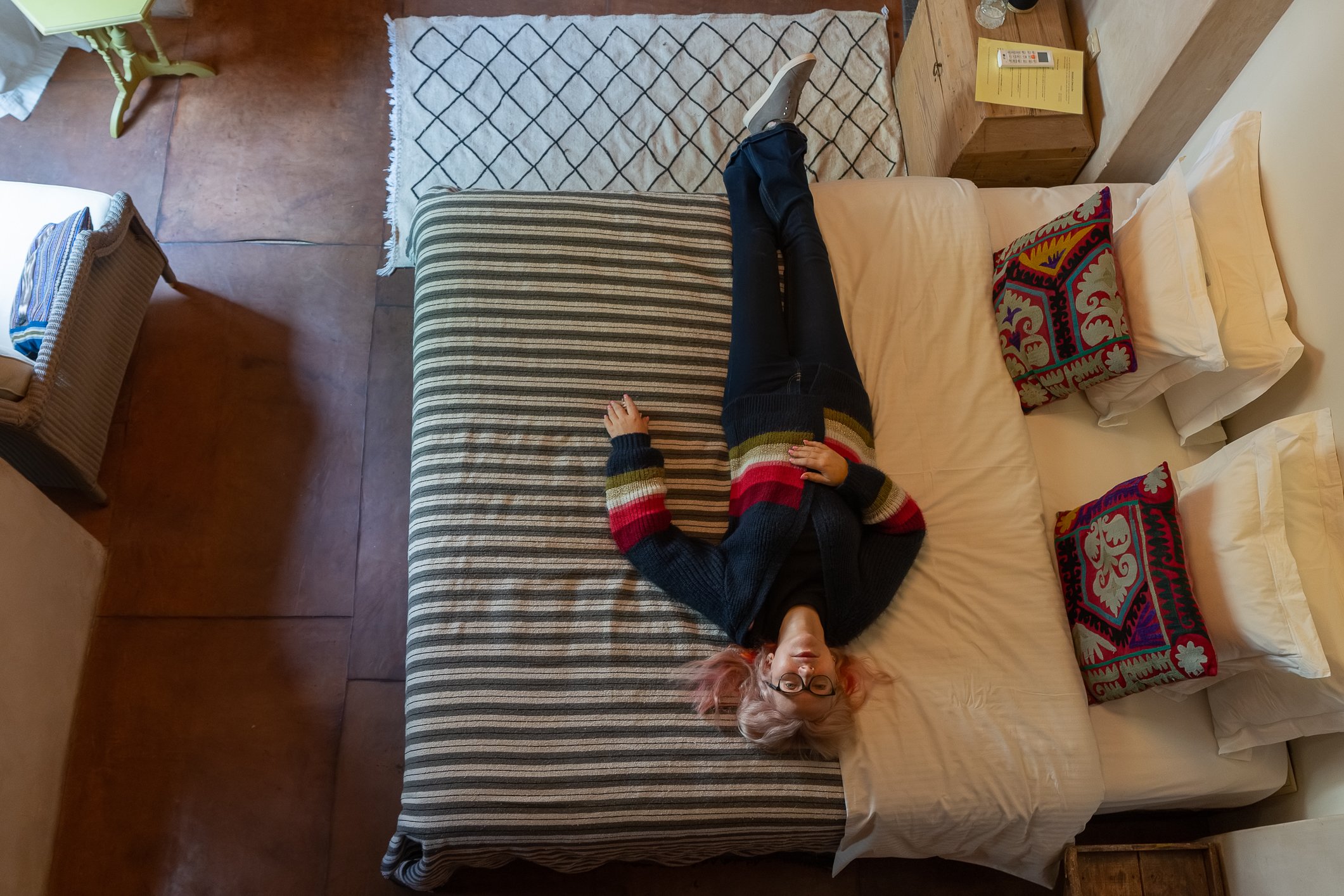
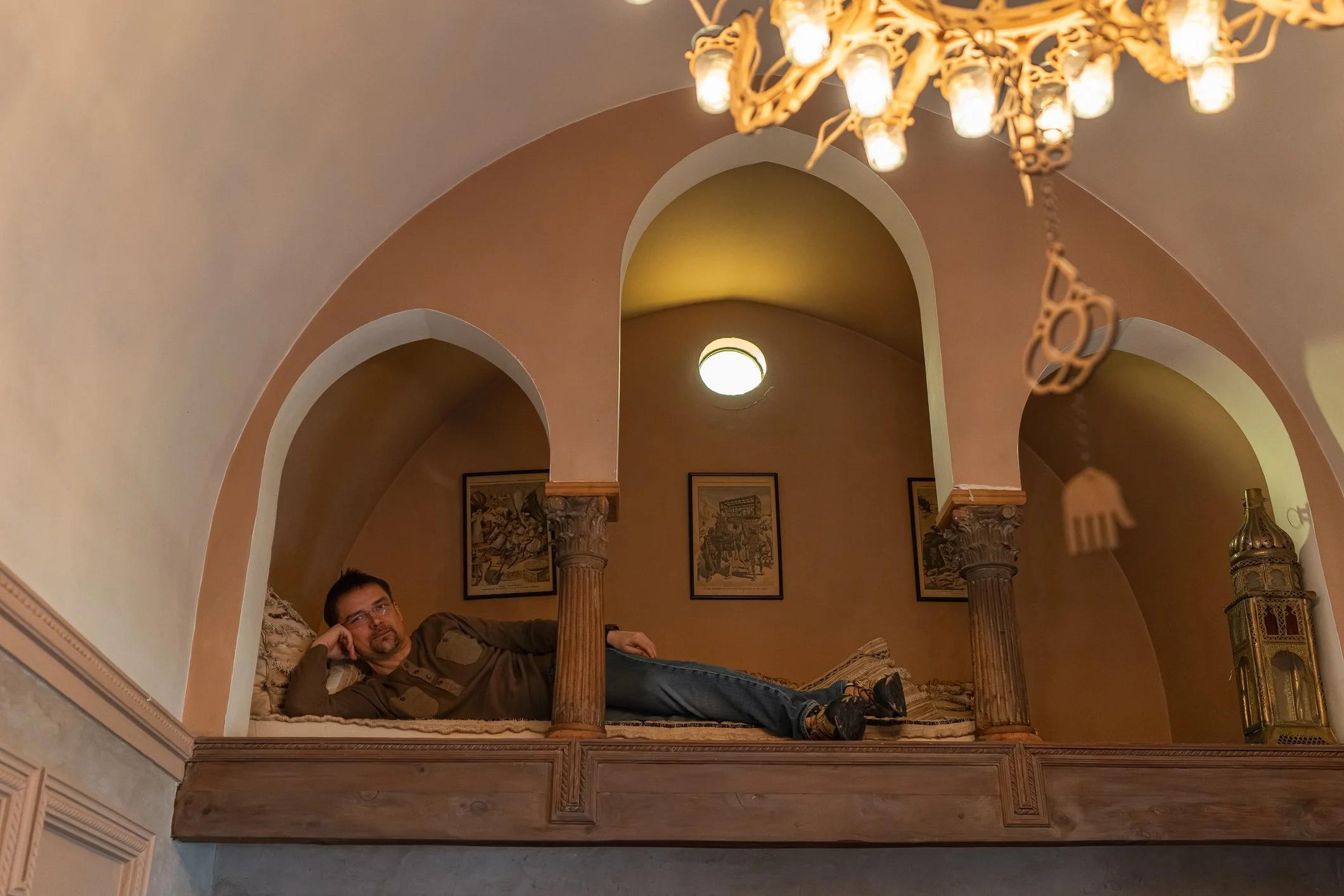
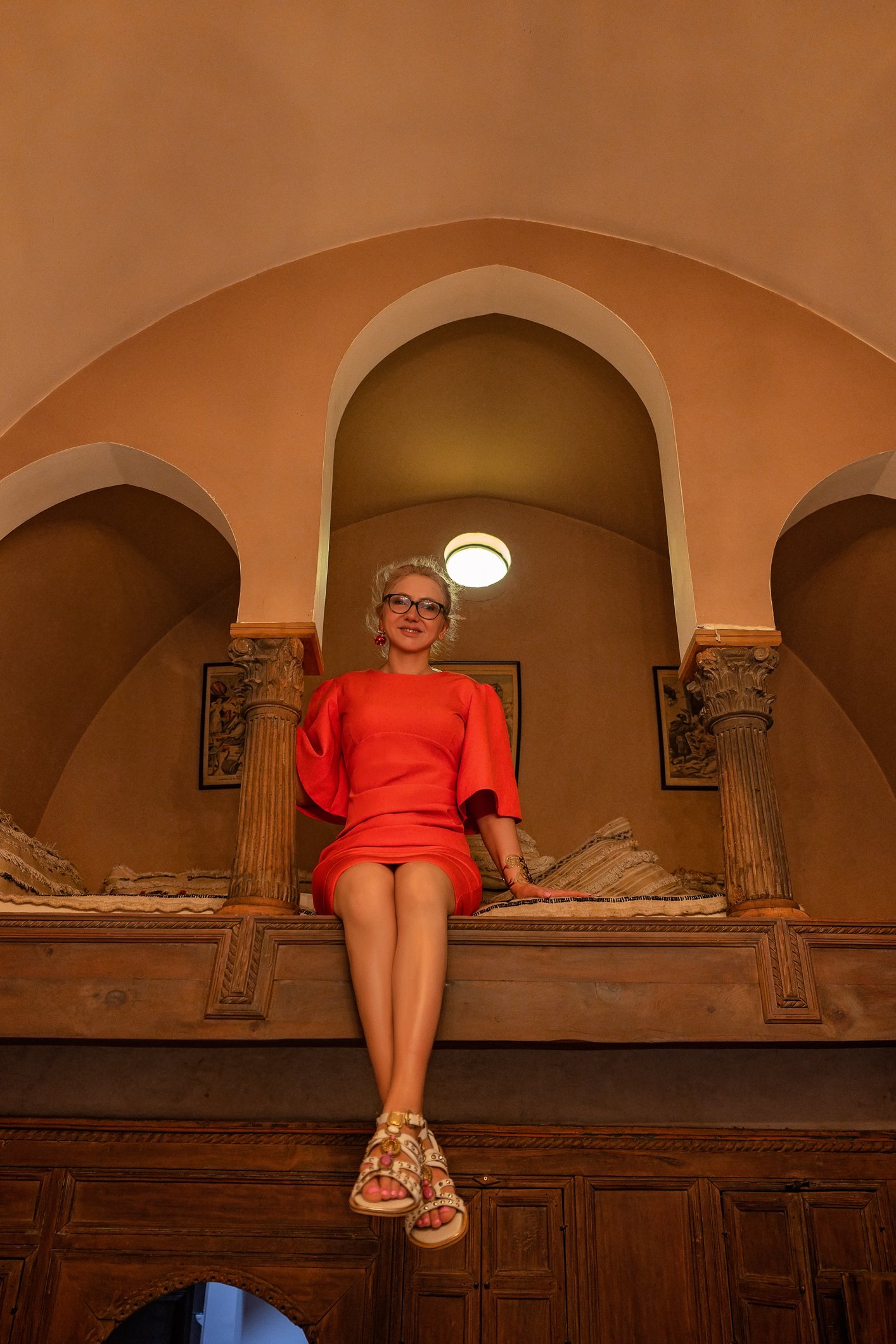
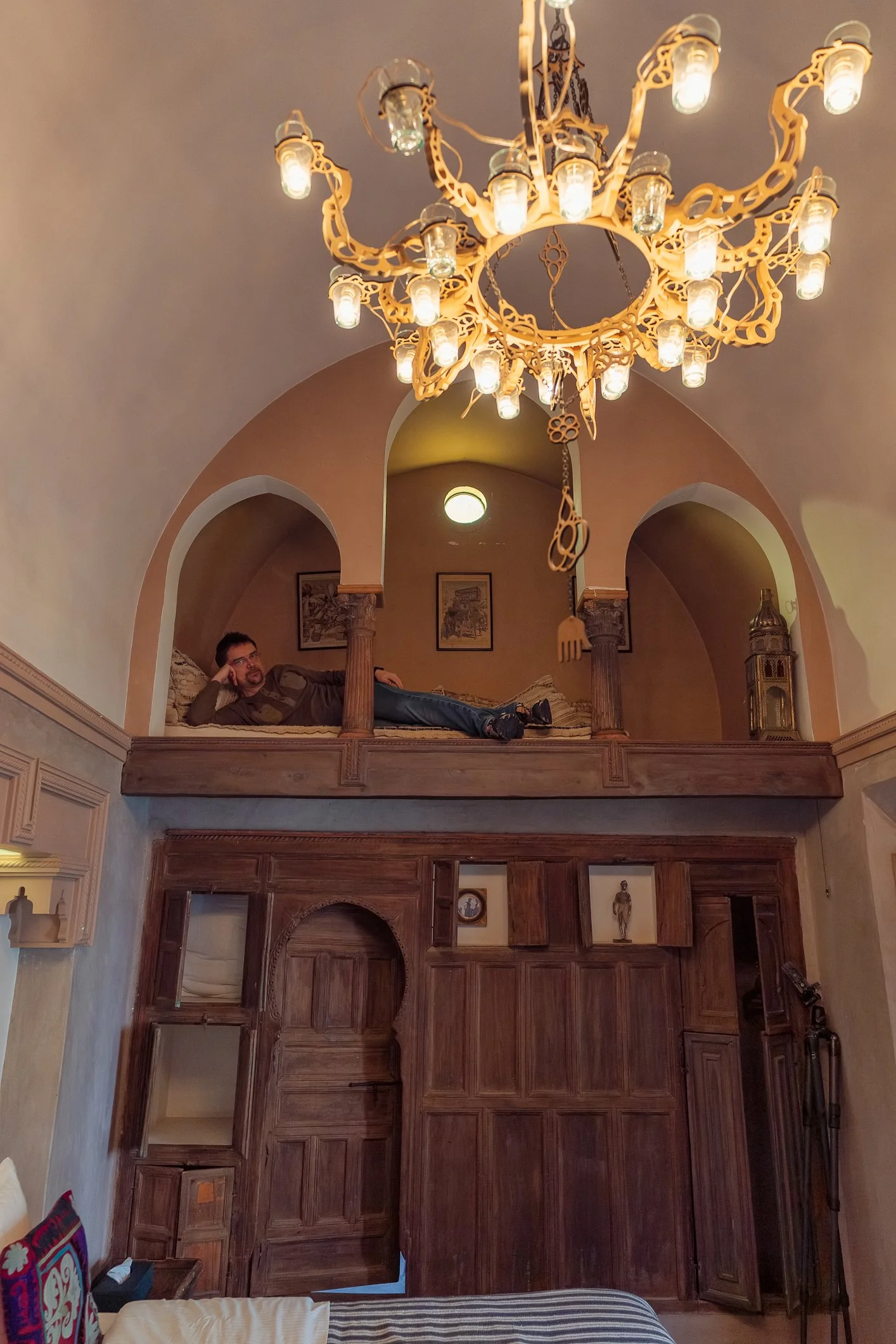
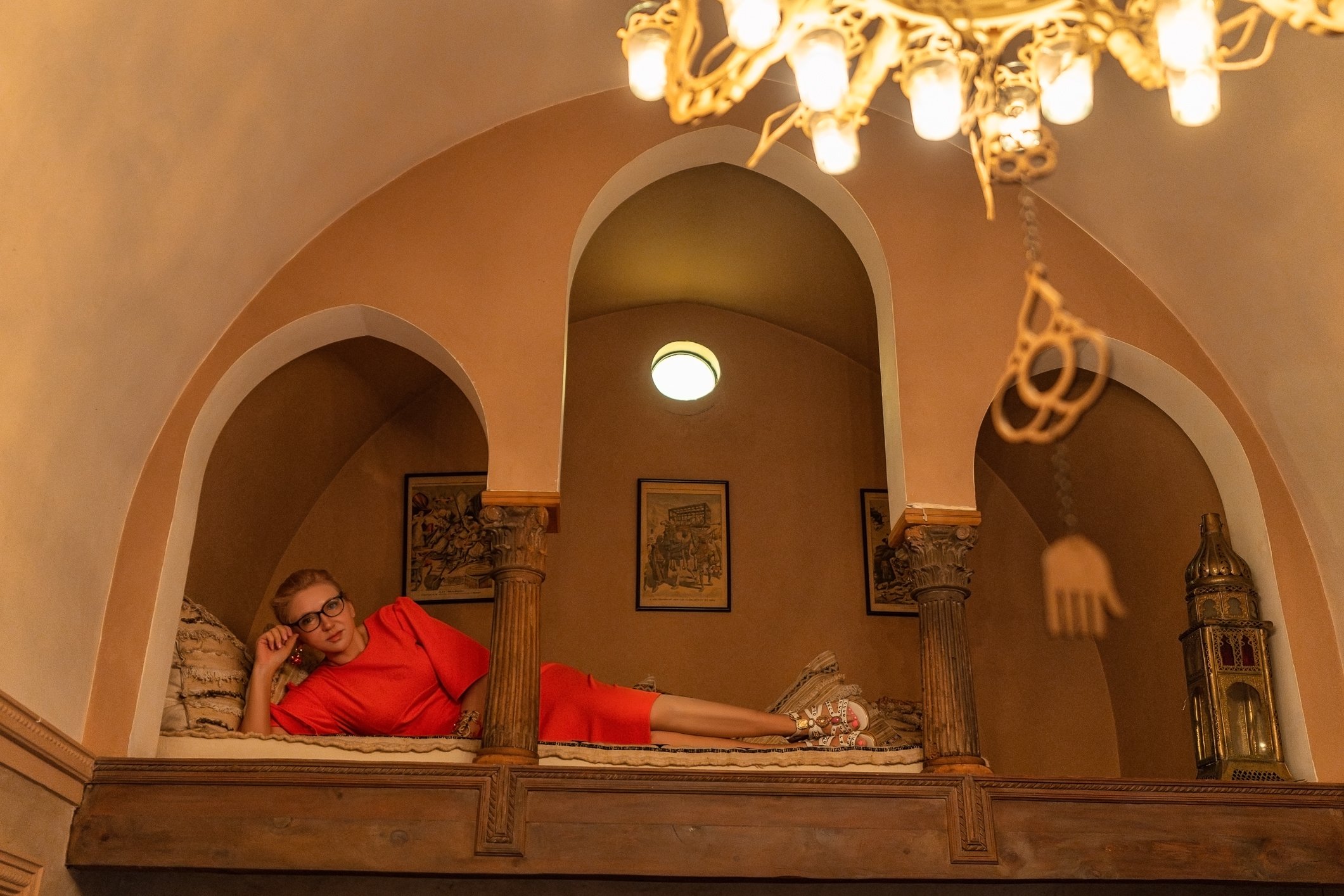
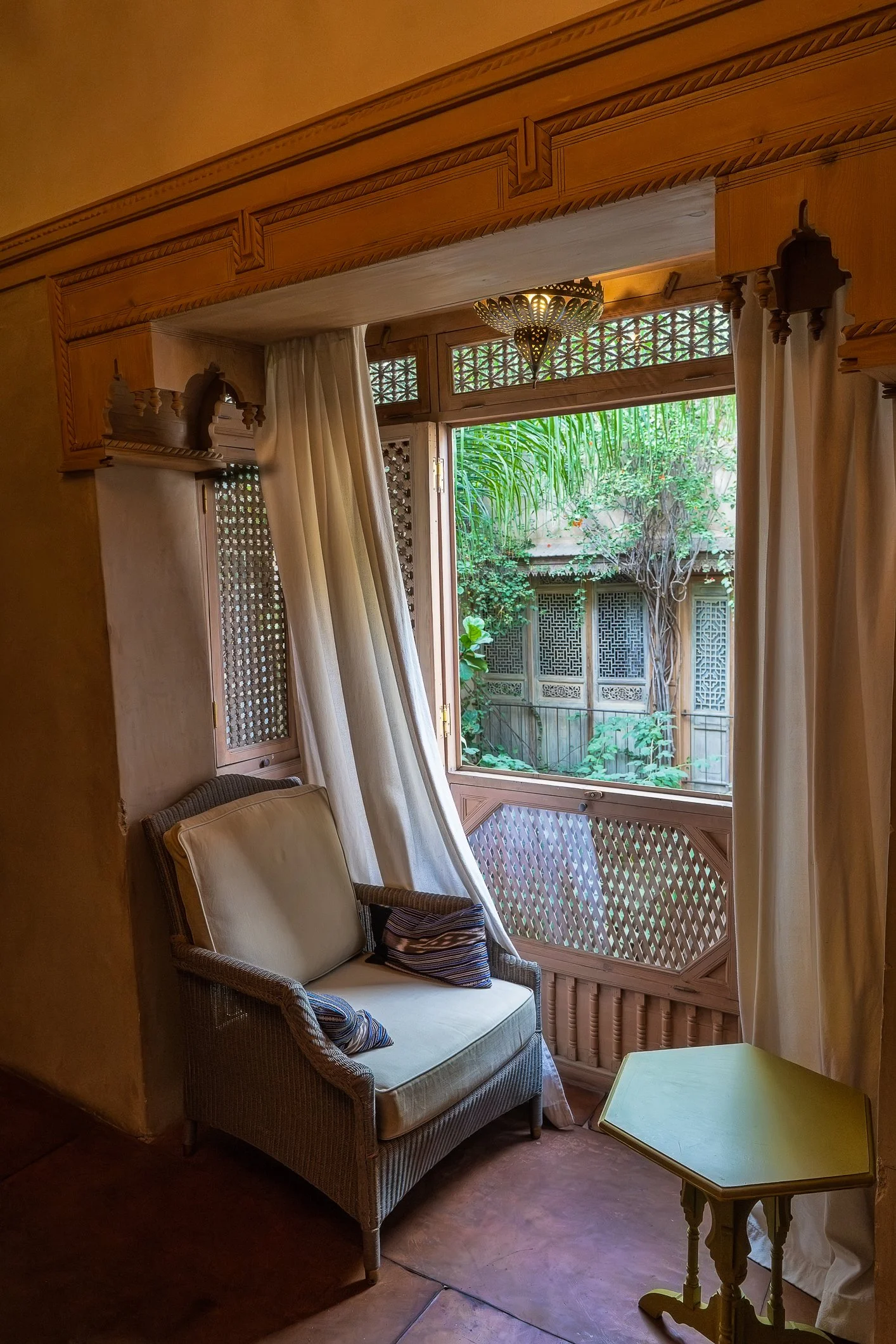
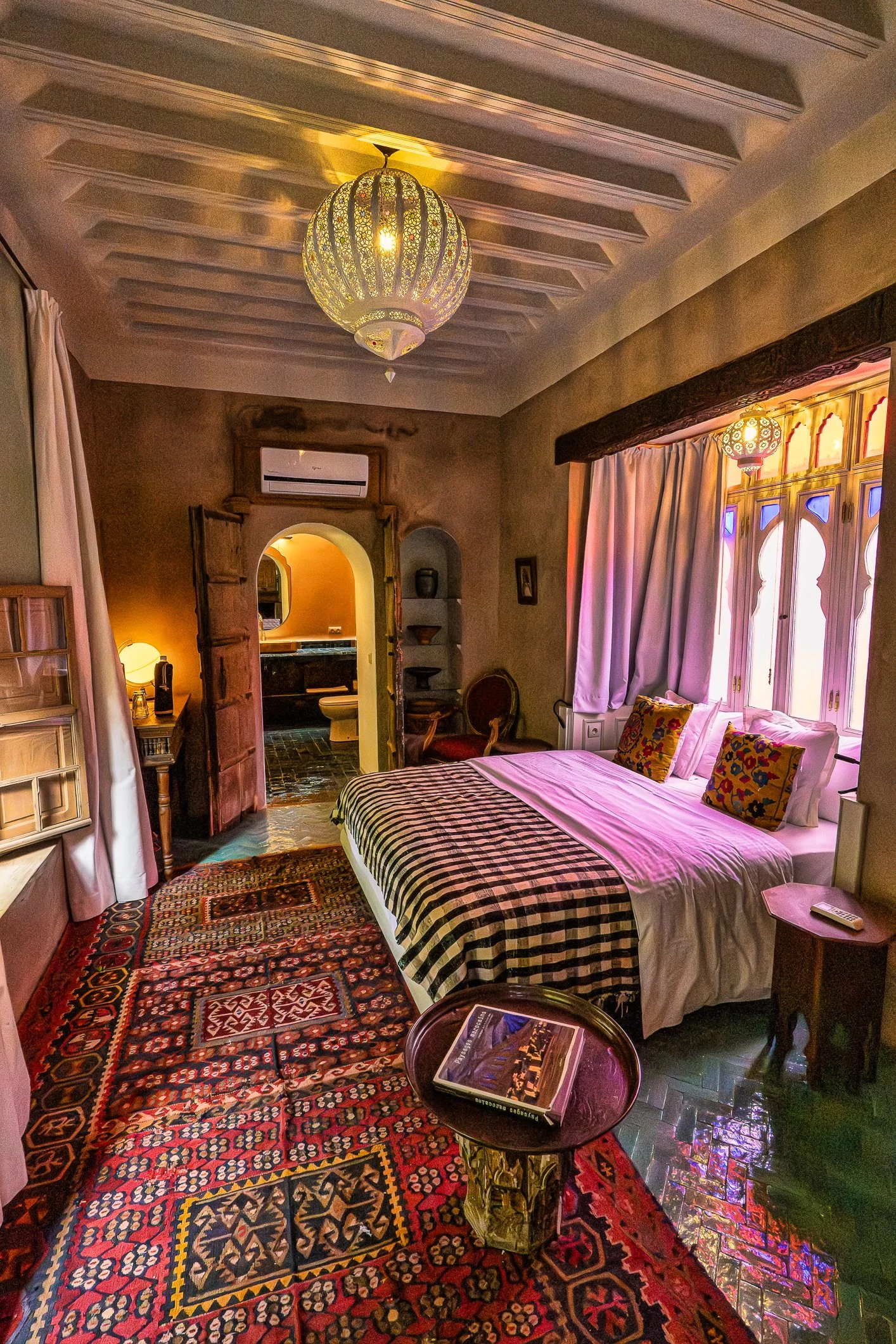
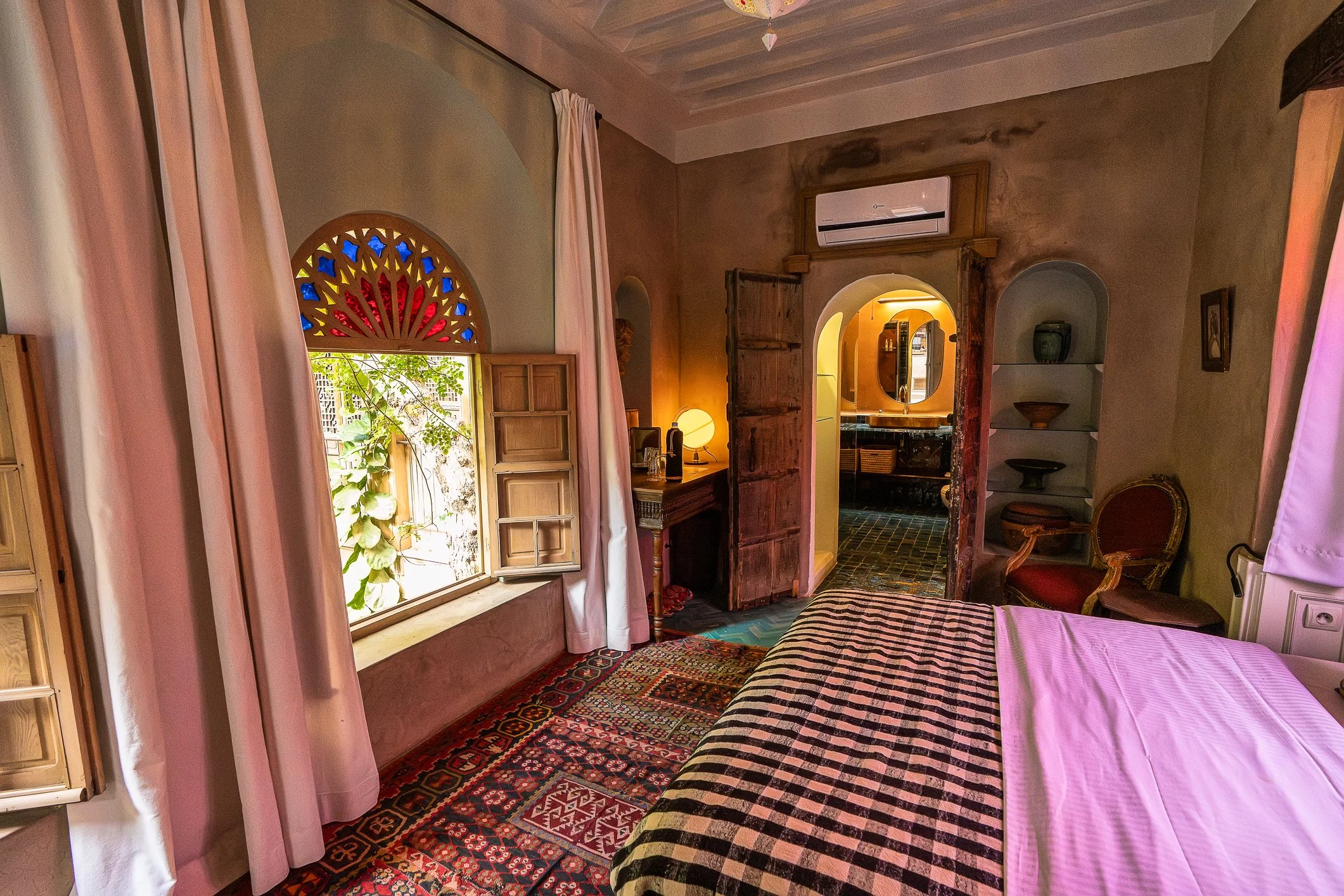
We chose the Koubba room for our stay. Koubba is the name for traditional brick vaults - masterpieces of Arab-Moorish architecture - and this suite features two of them (one in the main room, one in the bathroom). It also includes a private loggia with a daybed. The walls are finished in tadelakt. A menzeh (bow window) opens onto the lush greenery of the courtyard, while a wooden wall hides a ladder to a sleeping loft and the door to a very atmospheric bathroom.
W riadzie znajduje się tylko siedem pokoi, a każdy z nich ma swoj spcyficzny charakter. Wnętrza zdobią artefakty przywiezione przez właścicieli z dalekich podróży po Afryce i Azji.
My zatrzymaliśmy się w apartamencie Koubba. Nazwa nawiązuje do tradycyjnych ceglanych sklepień, które są wizytówką tego pokoju. Mamy tu też prywatną loggię z szezlongiem do popołudniowej drzemki oraz uroczy wykusz (menzeh) z widokiem na ogród. Największym zaskoczeniem są jednak ukryte za drewnianą ścianą schodki prowadzące na antresolę oraz bardzo nastrojowa łazienka.
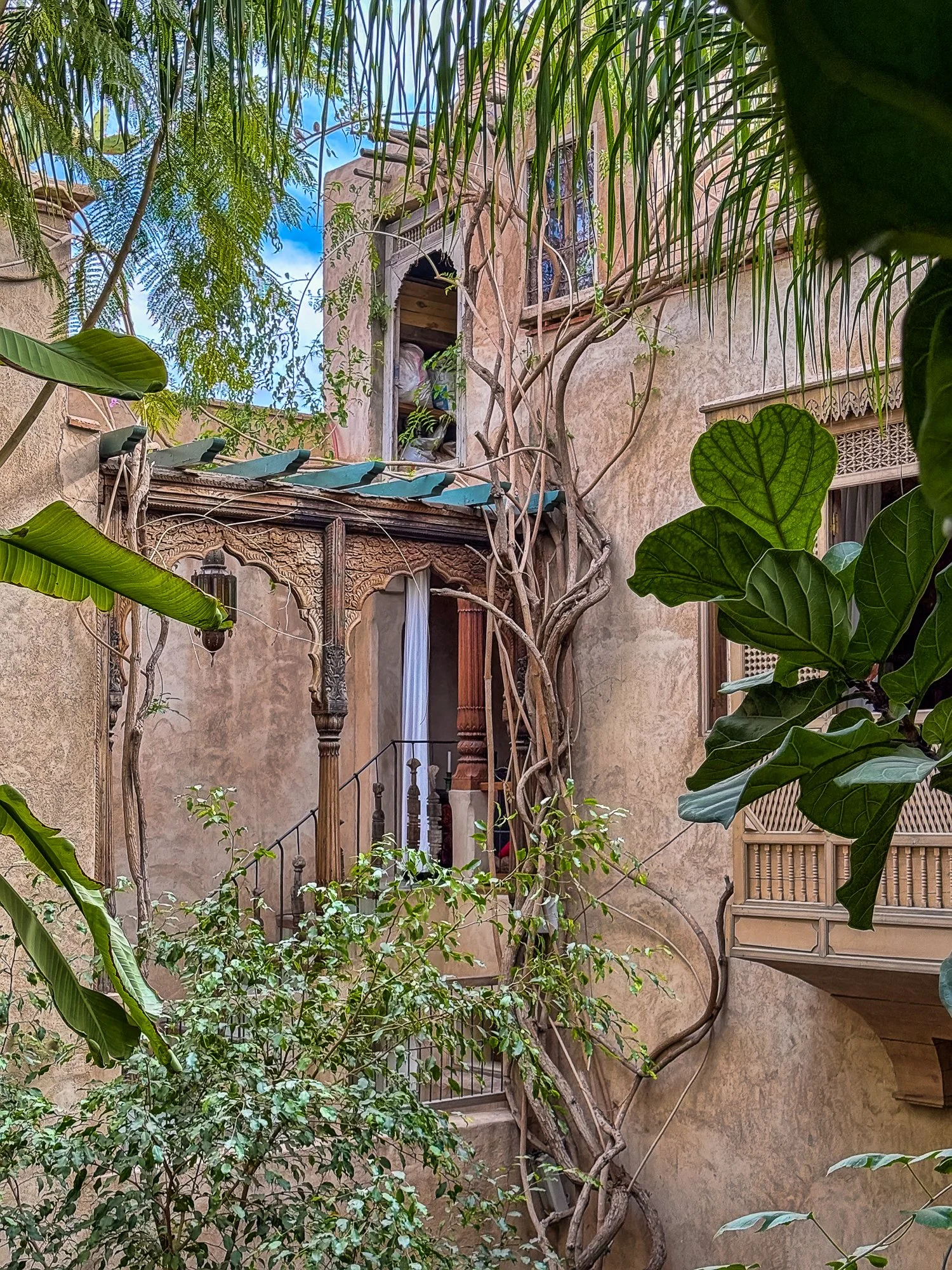
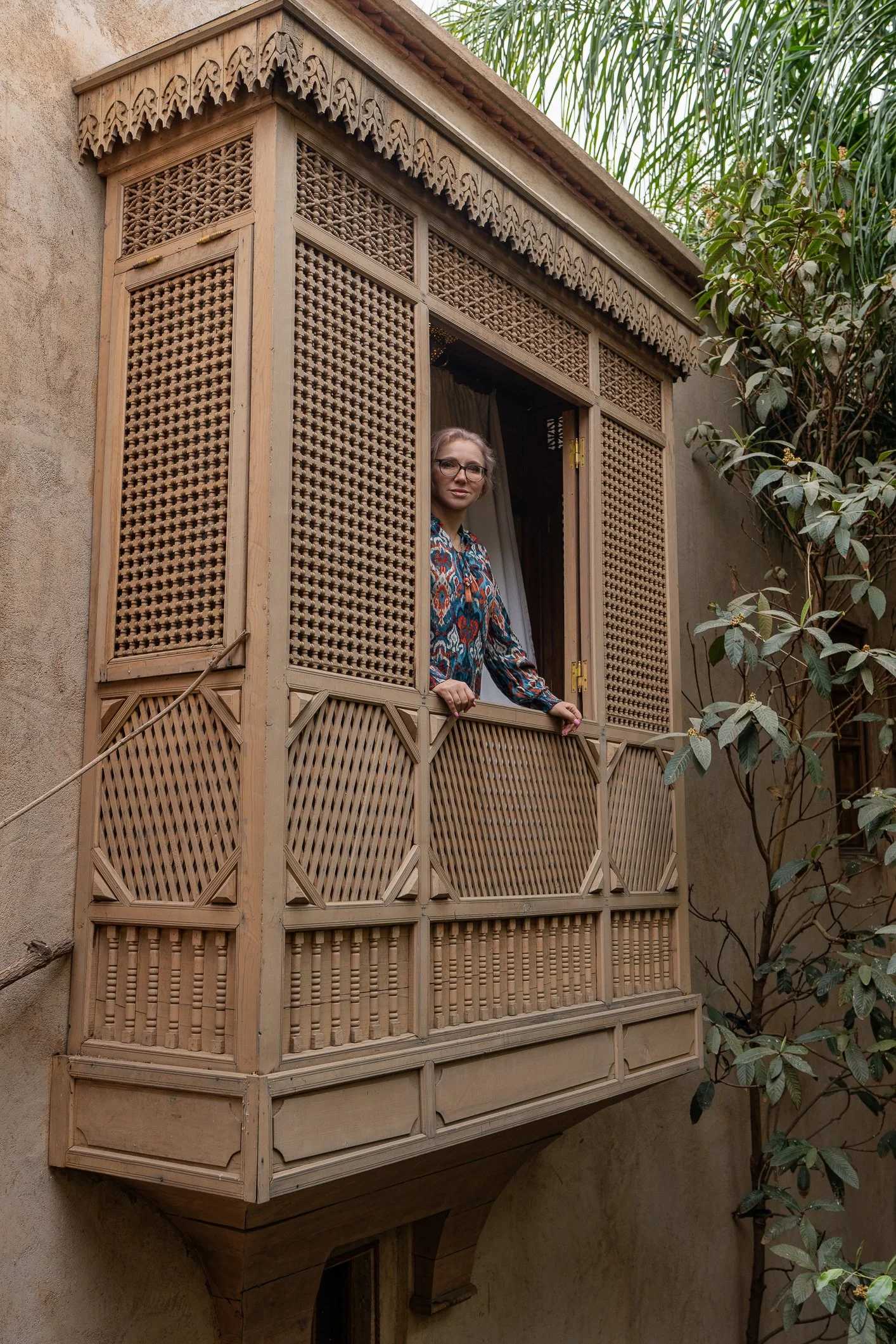
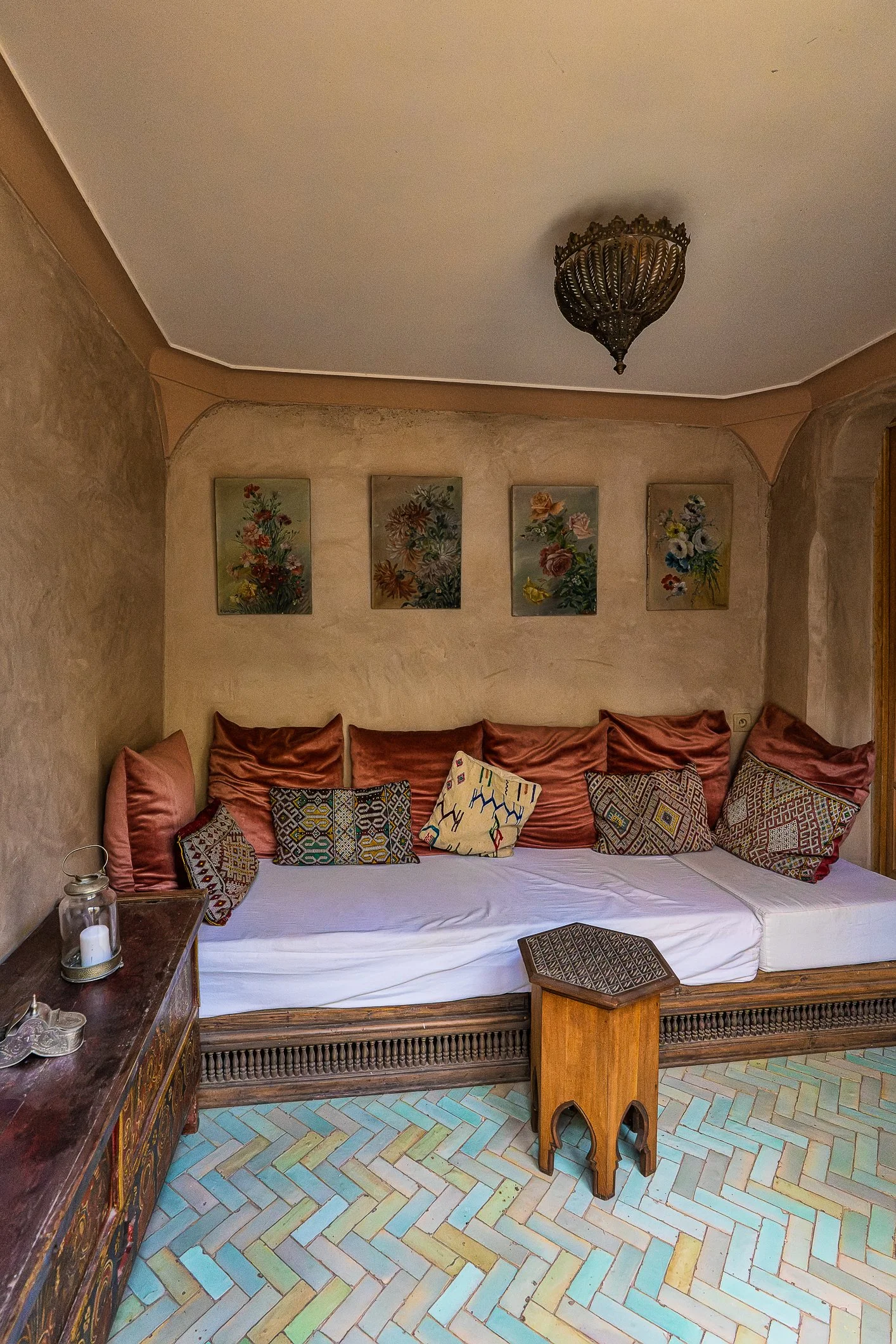
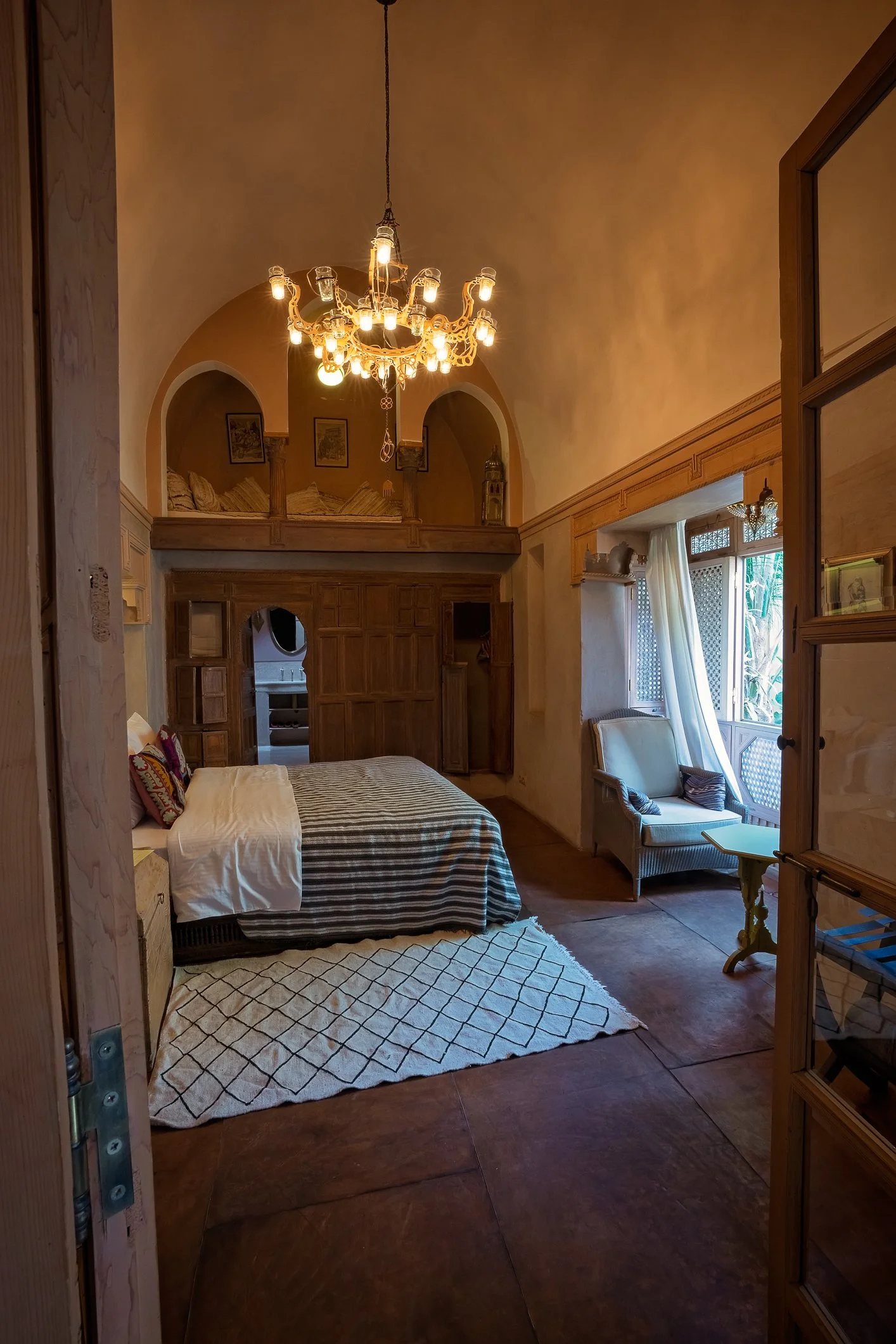
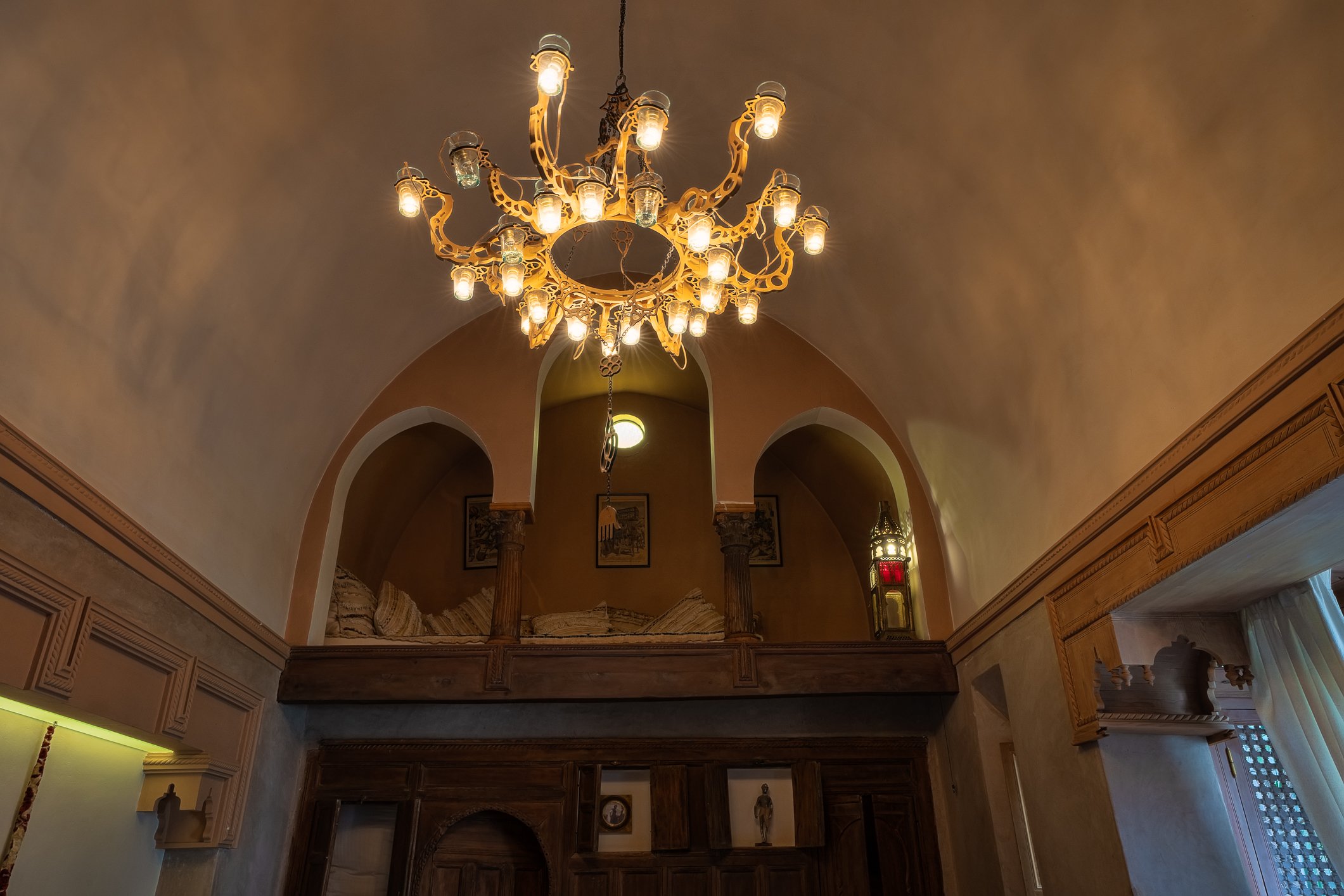
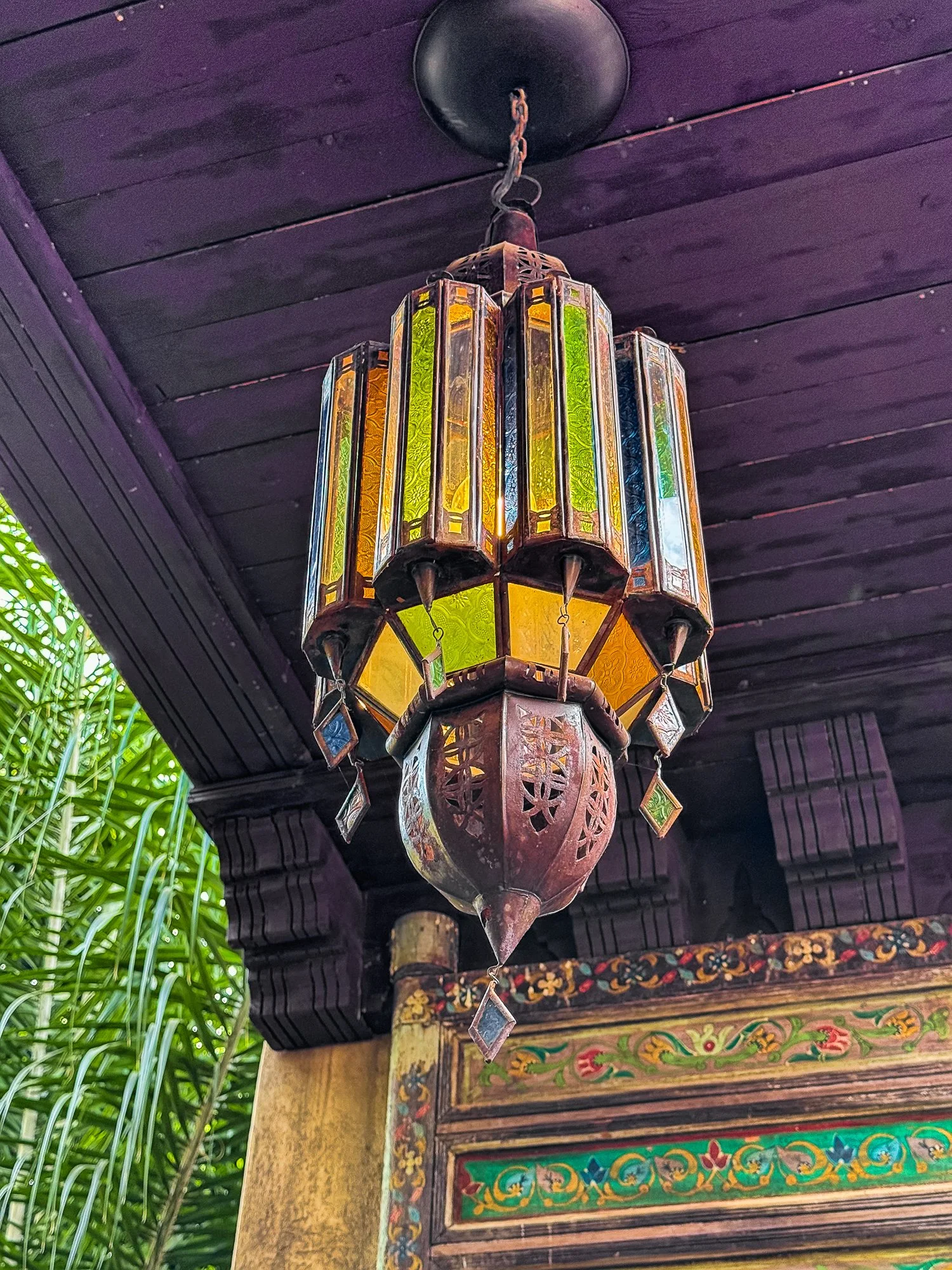
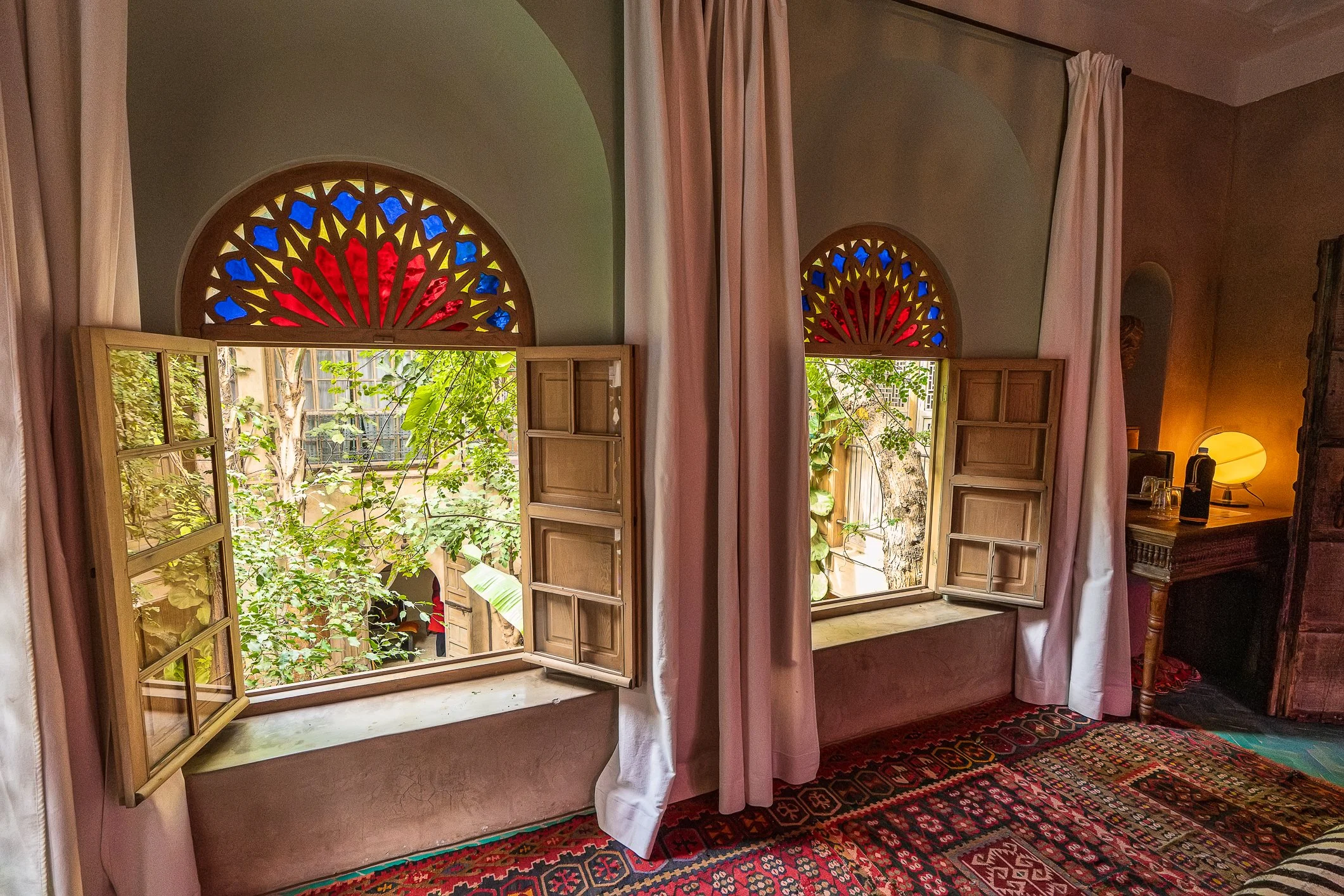
The room closest to us, the Driba room, utilises coloured glass in the doors and windows to create kaleidoscopic light patterns.
Najblizej naszej suity znajduje się pokój Driba, gdzie kolorowe witraże w oknach i drzwiach tworzą na ścianach kalejdoskop barw, gdy tylko padną na nie promienie słońca.
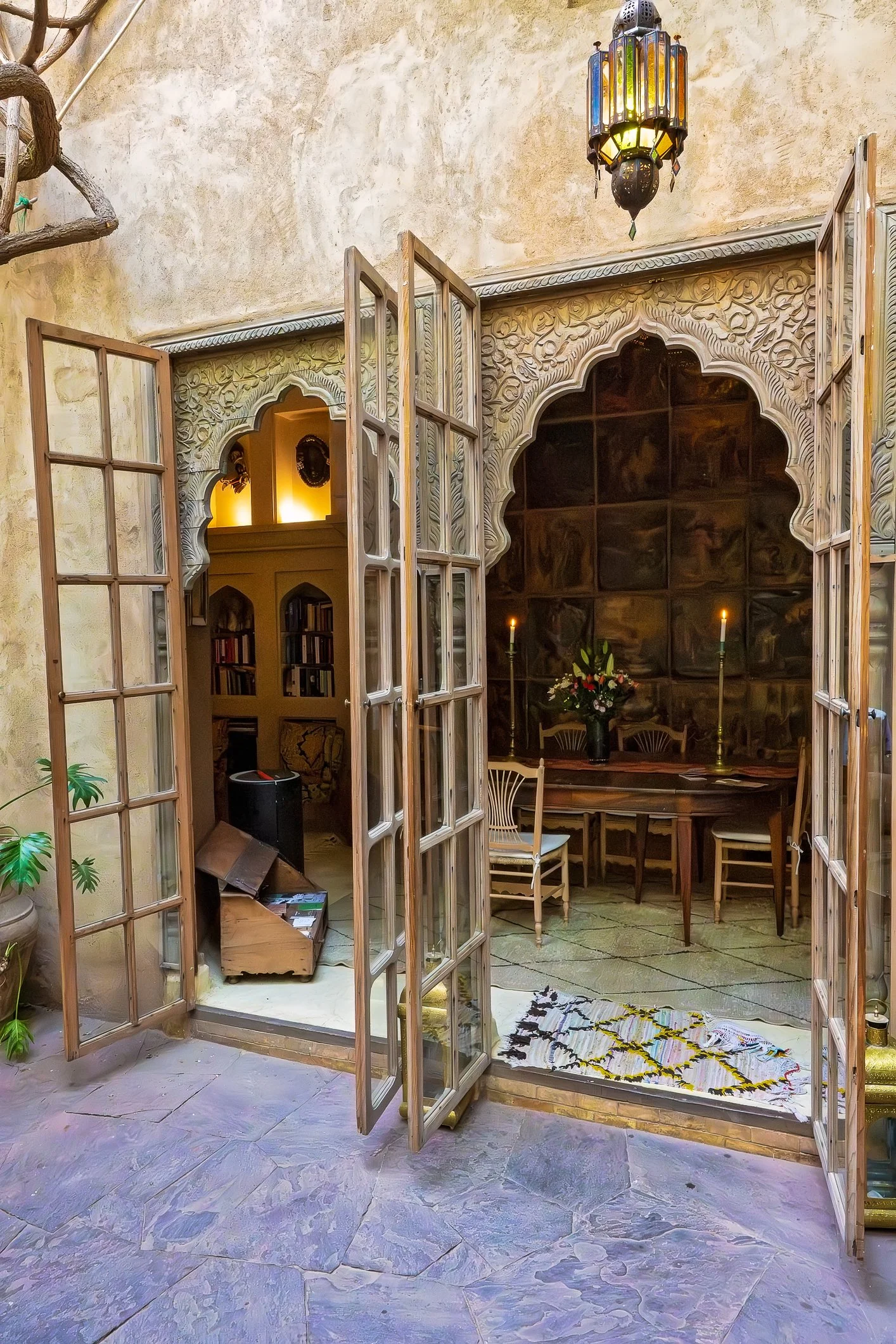
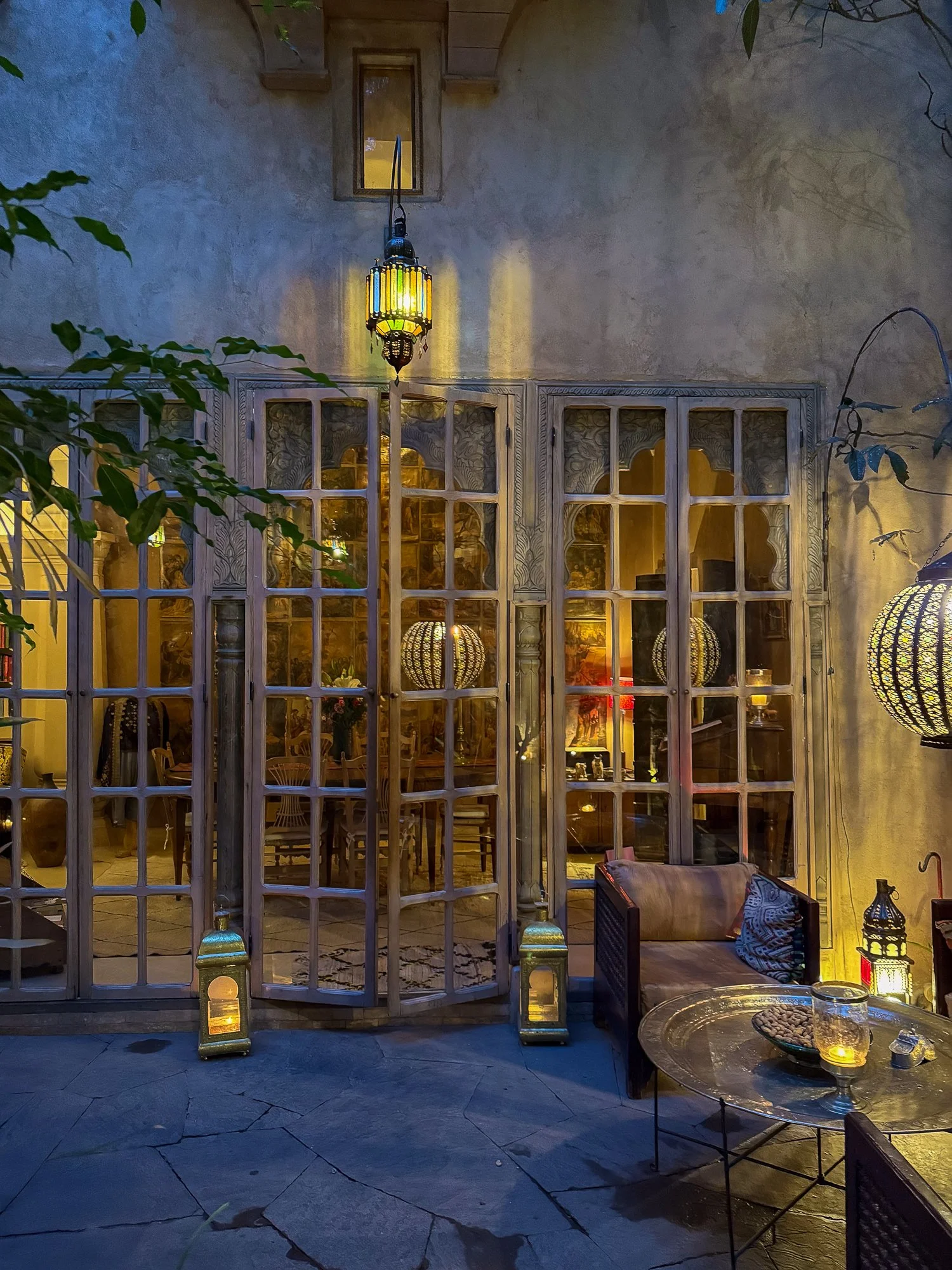
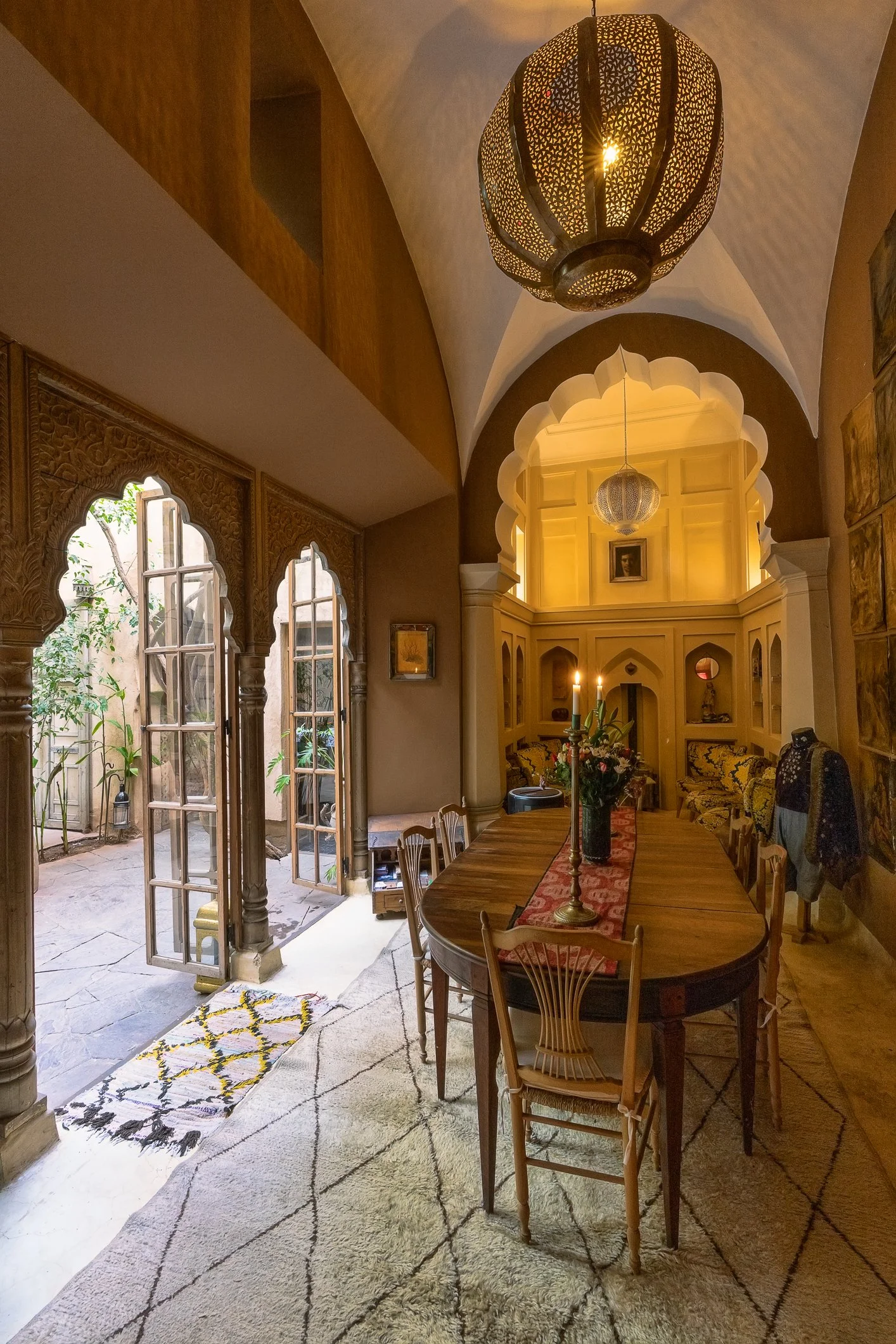
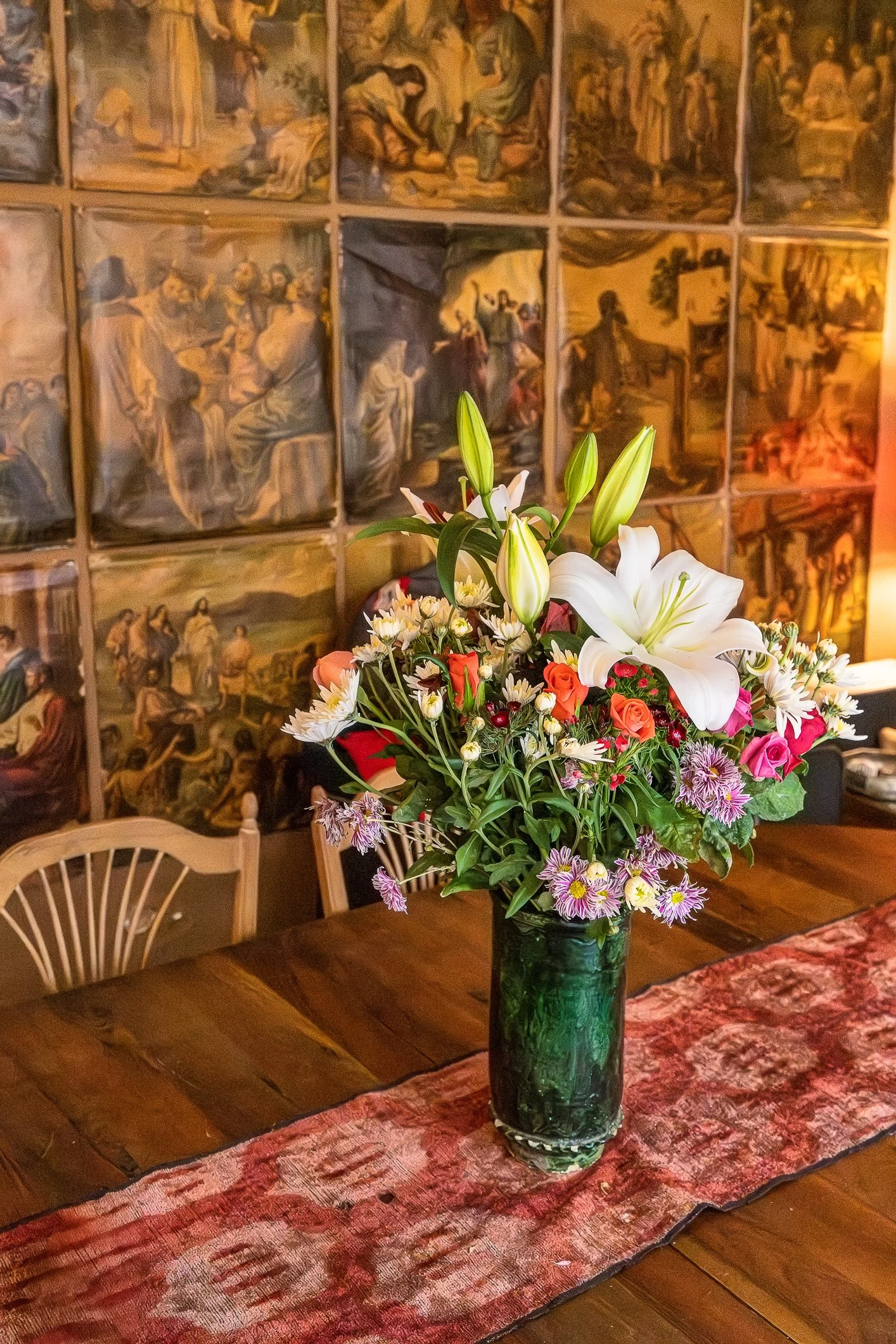
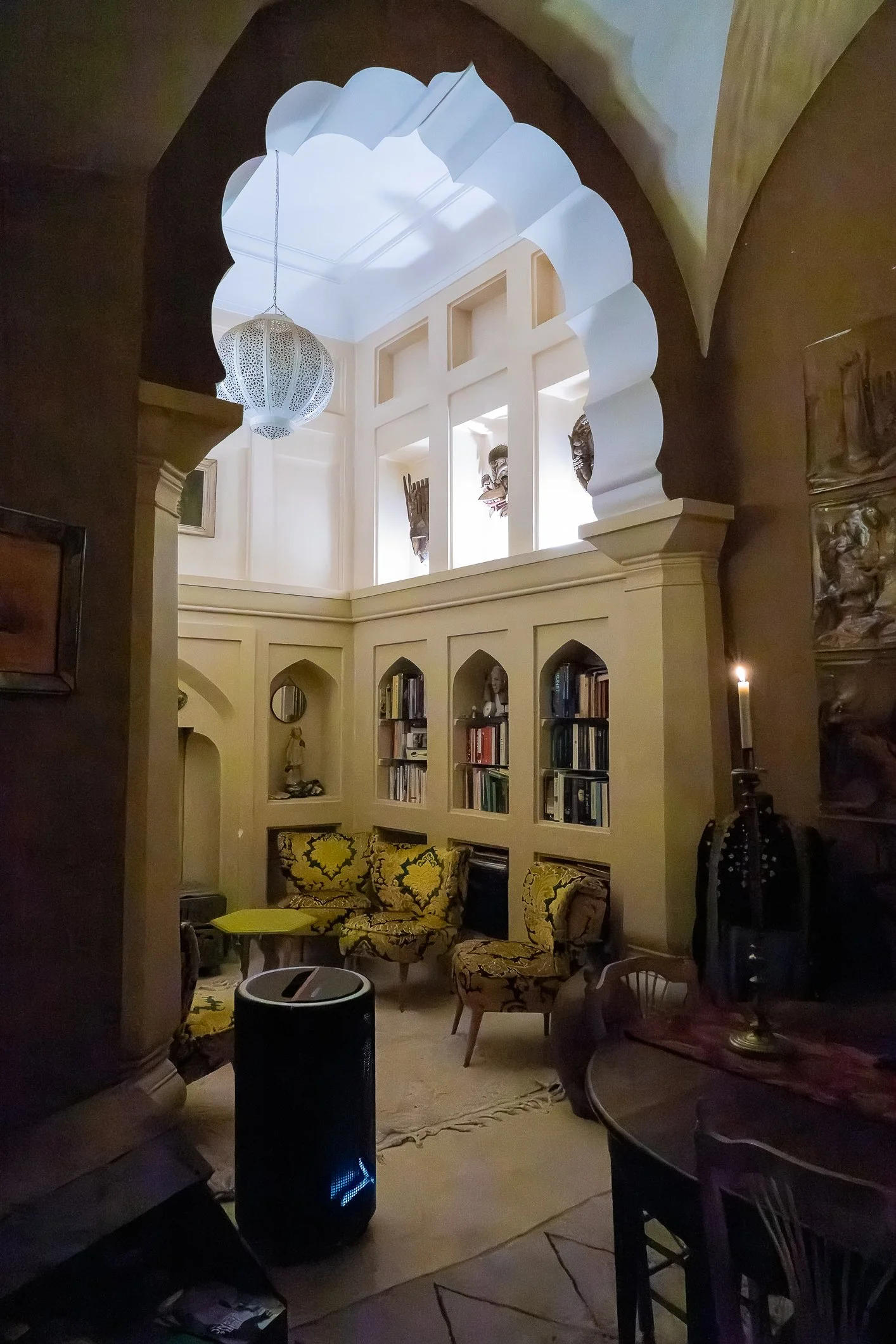
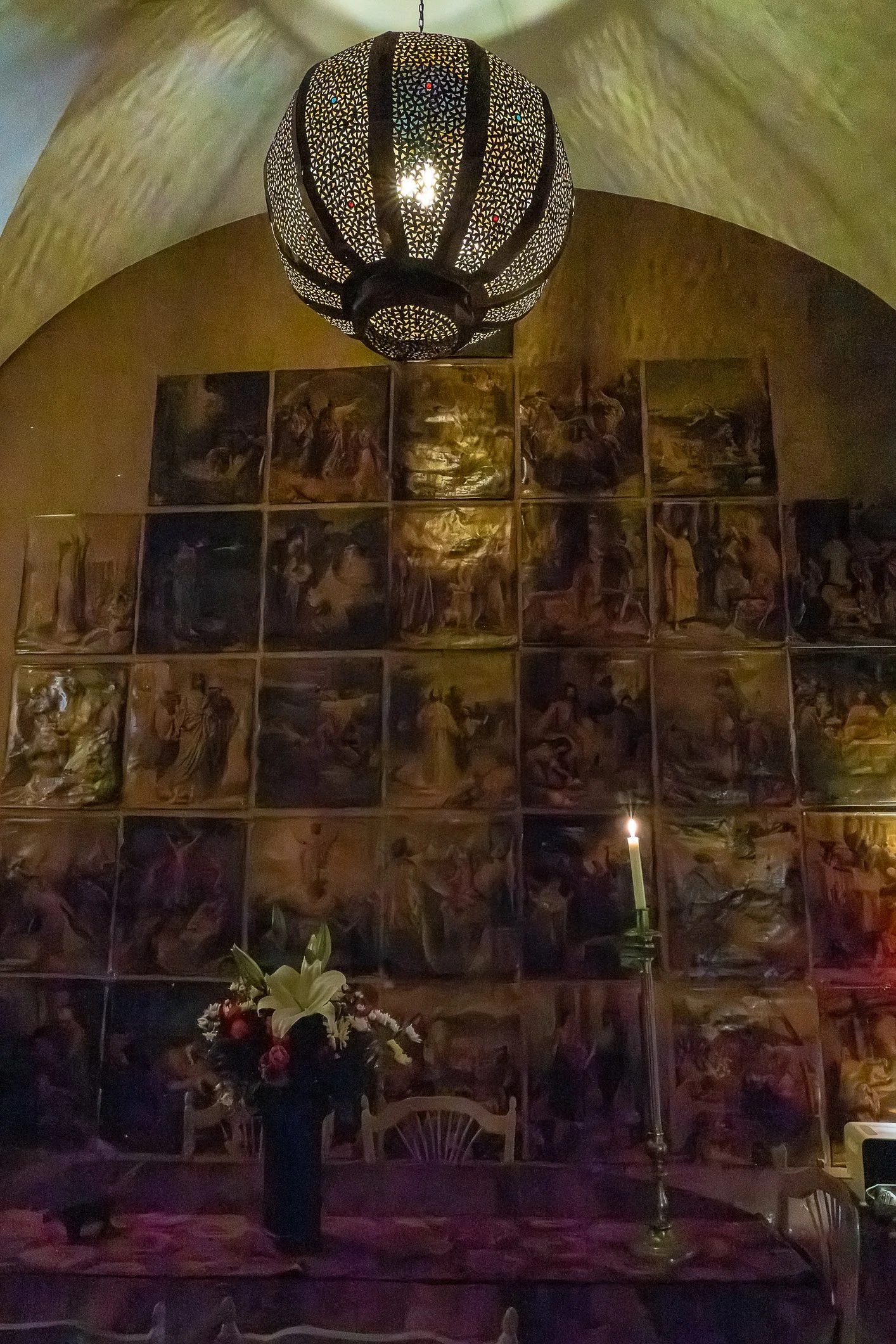
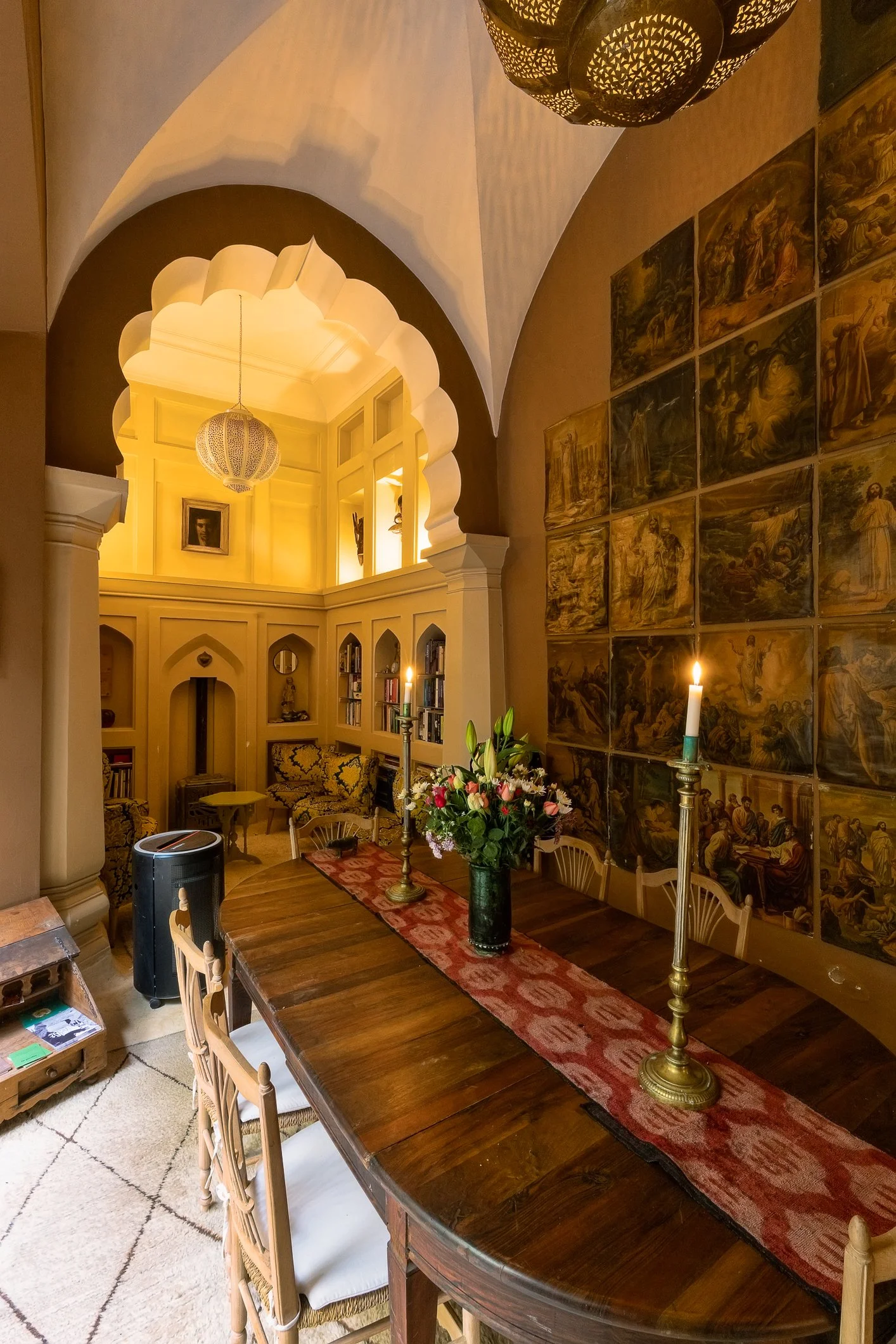
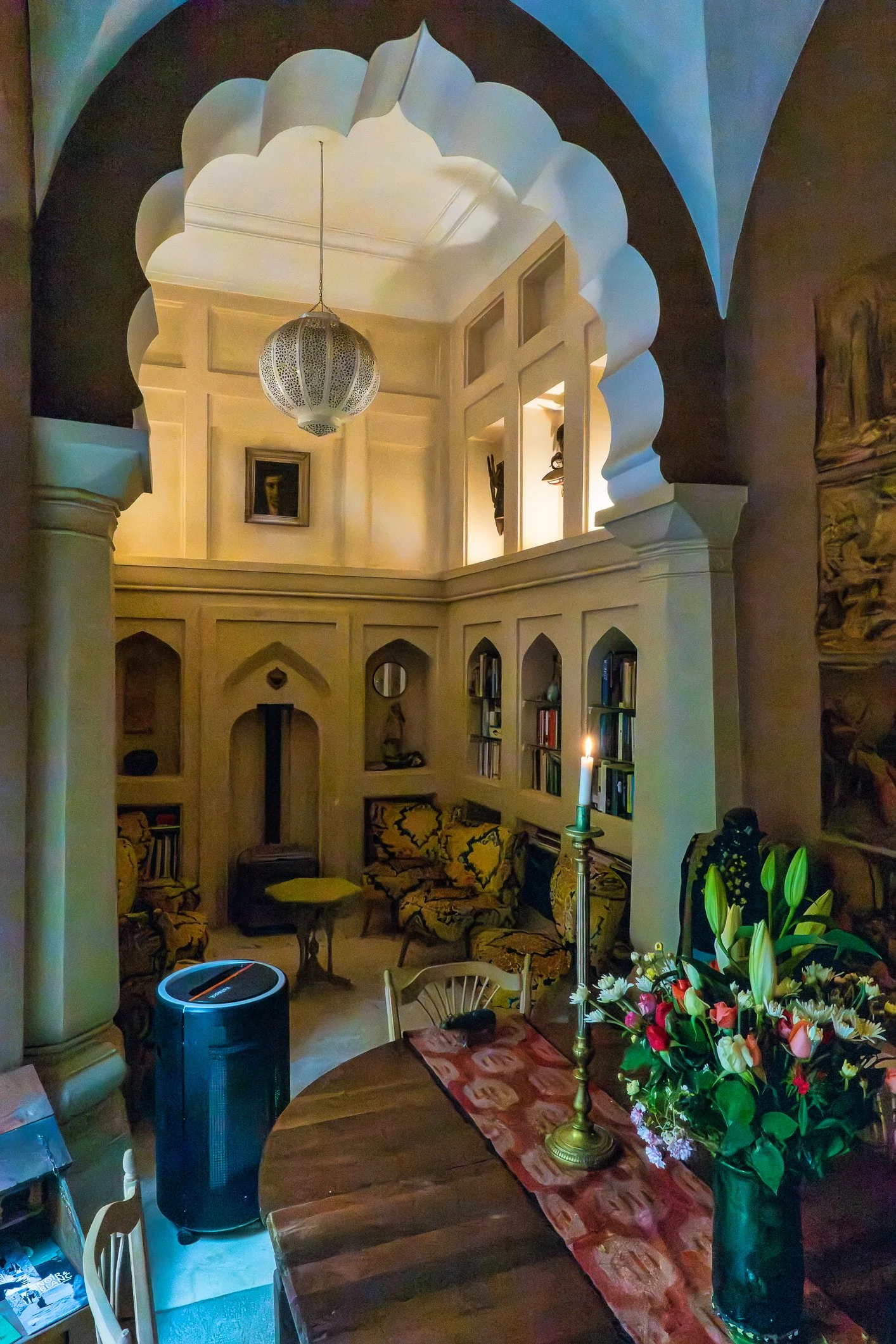
Dinner is traditionally served in an elegant, communal indoor salon. The room is designed with candlelit tables and features an eclectic aesthetic. The highlight is the striking wall of antique Dutch manganese tiles, often called "Bible tiles" (bijbeltegels). These tiles use a distinct purple-brown or reddish-sepia tone; under the dim, warm light, the scenes look like aged sepia ink on the walls.
Kolacje w Kbour & Chou serwowane są w eleganckim salonie w bardzo eklektycznym stylu. Największe wrażenie robi ściana wyłożona antycznymi holenderskimi płytkami z manganu, zwanymi "płytkami biblijnymi". W ciepłym świetle świec ich purpurowo-brązowe zdobienia wyglądają jak stare ryciny wykonane sepią, tworząc niesamowite tło dla tradycyjnych marokańskich potraw.