landmark

The Bahia Palace

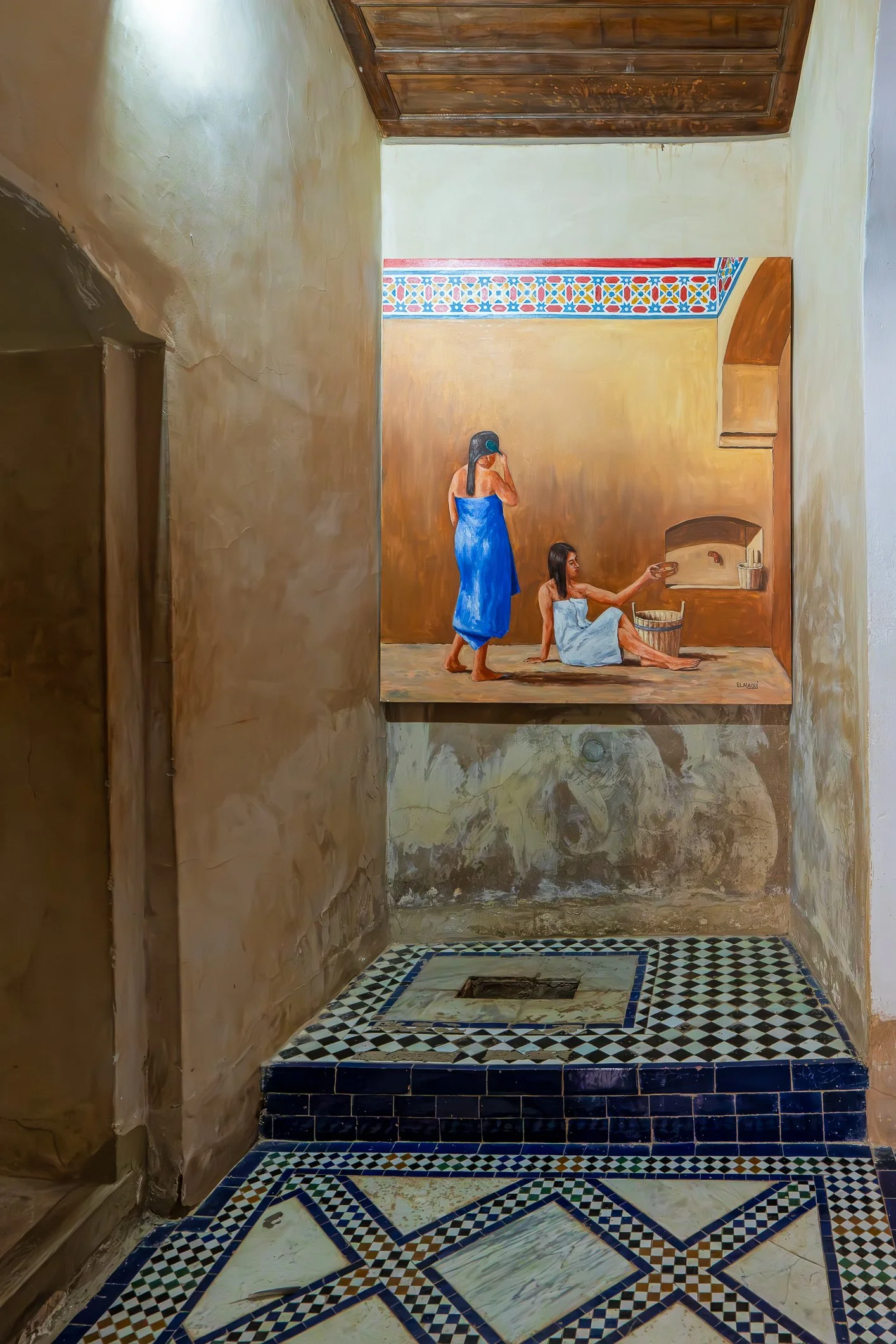
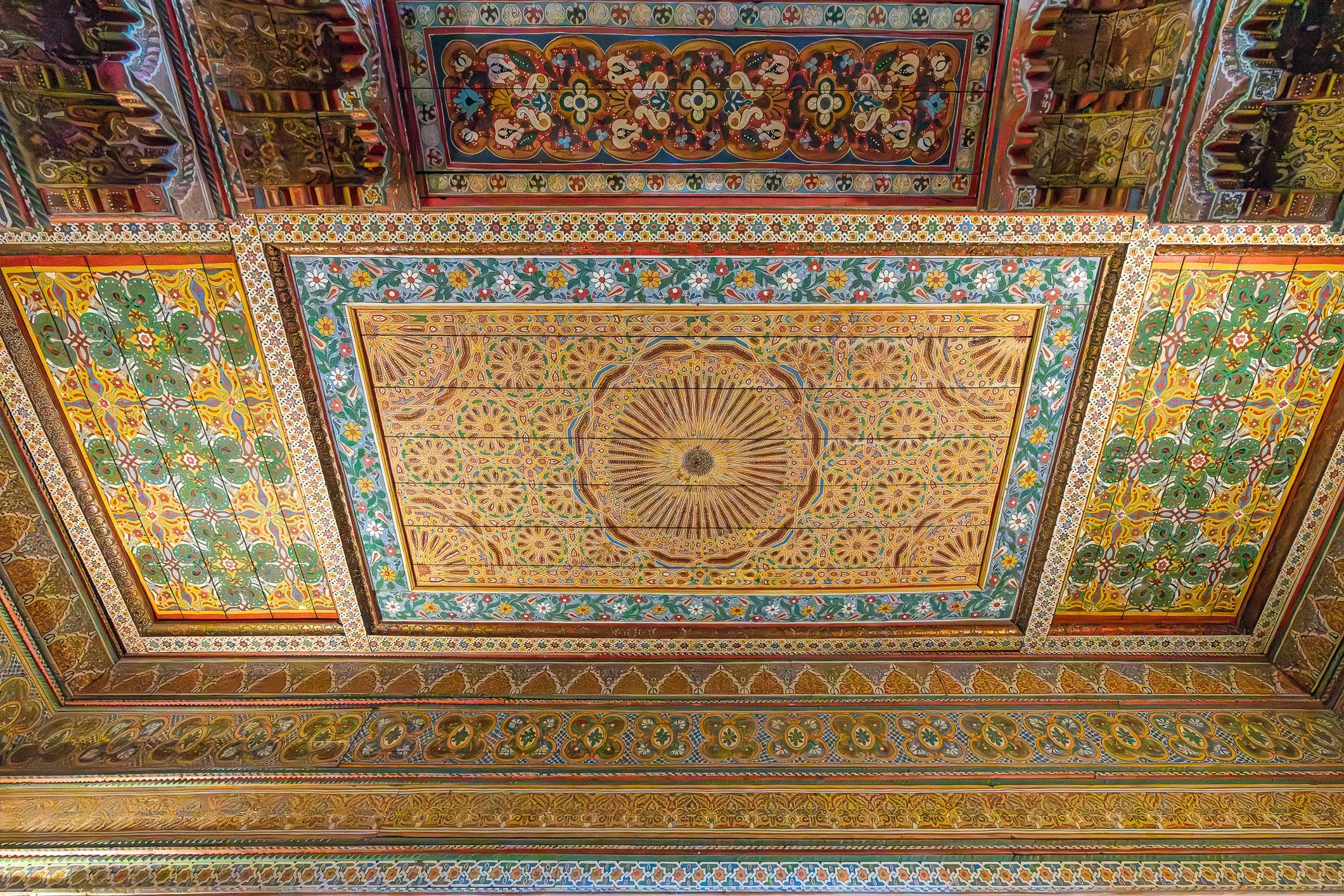
The Bahia Palace is a stunning example of Moroccan architecture combining Moorish, Arab, and Islamic styles. Arches, domes, intricate plasterwork and zouak (painted wood) adorn the architecture adding to the palace's grandeur.

As in typical Islamic architecture, the palace is marked by bold geometrical symmetry in all its shapes, and landscaped gardens with their reflected light and water features. However, within the Bahia Palace, there are instances where the fundamental rules and principles of Islamic architecture are deviated from. For example, the distribution of living areas and courtyards is uneven. This can be attributed to the palace's complex history, as its expansion necessitated accommodating existing buildings within a limited space.

Nasz drugi riad znajduje się zaledwie kilka kroków od Pałacu Bahia.

Zbudowany w XIX wieku przez Si Moussę, wielkiego wezyra sułtana, na jego własny użytek, pałac przeszedł na przestrzeni lat kilka procesów renowacji, ale nadal daje wgląd w swój pierwotny urok i wielkość. Jest to wspaniały przykład architektury marokańskiej łączącej style mauretańskie, arabskie i islamskie. Łuki, kopuły, misterne stucco i zouak (malowane drewno) dodają pałacowi majestatu. Typowo dla architektury islamskiej, pałac charakteryzuje się geometryczną symetrią kształtów oraz pięknymi ogrodami, wykorzystaniem odbitego światła i elementami wody. Jednak zdarzają się tu przypadki odstępstwa od podstawowych zasad i zasad architektury islamskiej. Na przykład rozkład obszarów mieszkalnych i dziedzińców jest nierówny. Można to przypisać złożonej historii pałacu, gdyż jego rozbudowa wymagała oddawania budynków na ograniczonej przestrzeni.

Na teren pałacu wchodzi się przez łukowatą bramę od głównej ulicy, za którą do pałacu prowadzi długa ogrodowa ścieżka. Ścieżka między zewnętrznymi ścianami pałacu a wejściem do samego pałacu Bahia jest wysadzana palmami, jukami, drzewami cytrusowymi, cyprysami i hibiskusami.

Pierwszym budynkiem, do którego wchodzimy podczas naszej wizyty jest Mały Riad (Petit Riad). Jego kwadratowy ogród wypełniony jest bujną roślinnością i podzielony chodnikami wzdłuż dwóch środkowych osi. Otaczają go bogato zdobione galerie i pokoje. Podziwiać możemy tu kunsztowne dekoracje ze sztukaterii i drewna cedrowego.

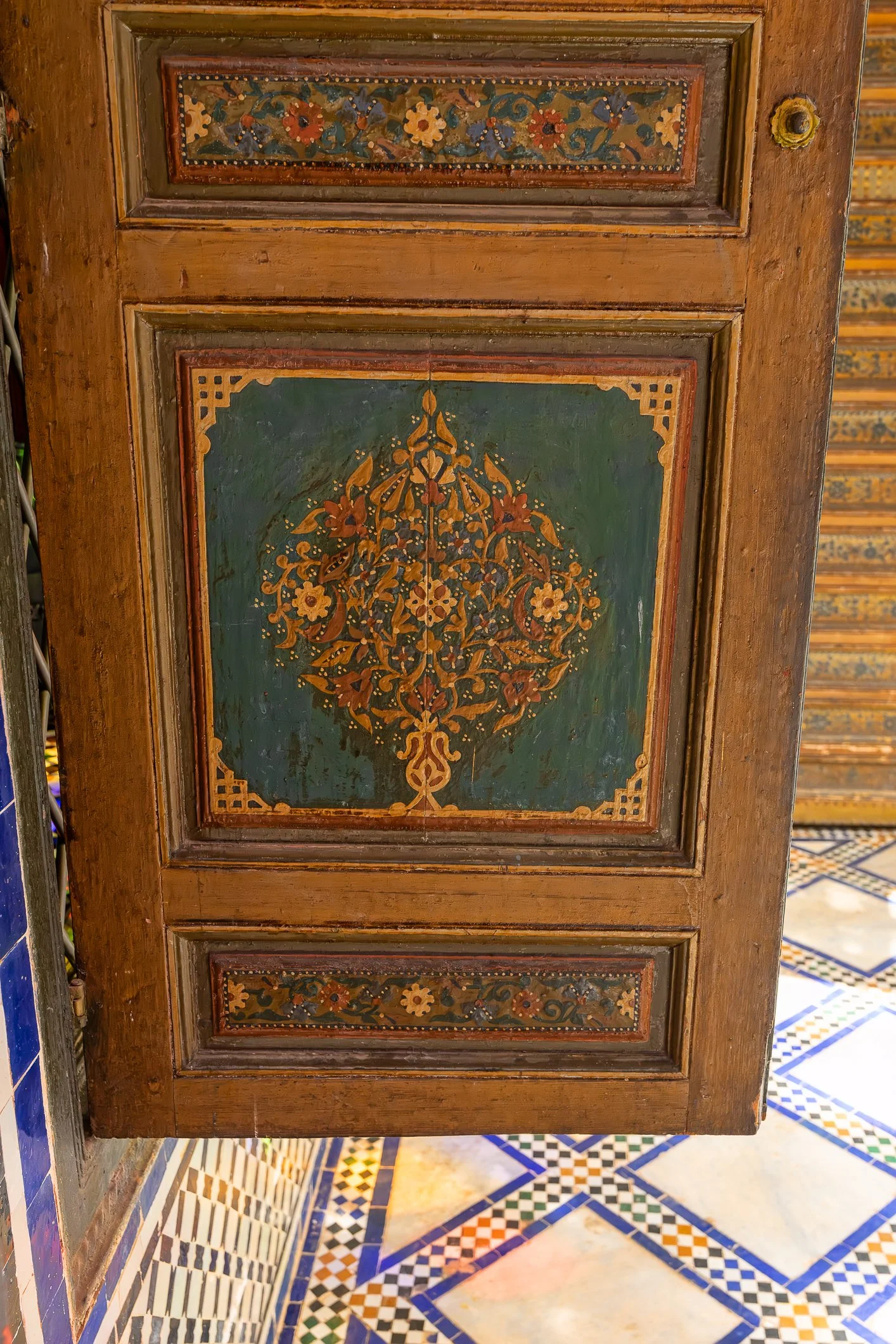
From here we go to the Small Courtyard, with white, mostly unadorned walls. The floor consists of white Carrara marble. In the centre stands a fountain, encircled by tiled mosaics. These tiny, carefully positioned ceramics are particularly characteristic of Morocco. The technical term for this art is Zellij. Four rooms open out onto the courtyard: each was once occupied by one of the four wives of the Grand Vizier. The buildings in this part of the palace are more modestly decorated than the two riads. Other than the mosaics, the notable features are the cedarwood ceilings and the beautifully carved doors.

Stąd idziemy na Mały Dziedziniec, z białymi, w większości pozbawionymi ozdób ścianami. Podłoga wykonana jest z białego marmuru z Carrary. Pośrodku stoi fontanna otoczona mozaikami kafelkowymi. Te maleńkie, starannie rozmieszczone ceramiki są szczególnie charakterystyczne dla Maroka. Termin techniczny określający tą sztukę to Zellij. Cztery pokoje wychodzą na ten dziedziniec. Każdy z nich był kiedyś zajmowany przez jedną z czterech żon wielkiego wezyra. Budynki w tej części pałacu są skromniej urządzone niż w riadach. Oprócz mozaik godnymi uwagi elementami są sufity z drewna cedrowego i pięknie rzeźbione drzwi.

The so-called Courtyard of Honour (Cour d’honneur) or Grand Court, is particularly impressive. It was completed in 1898/99 and its size is really impressive (50 by 30 metres). The courtyard is completely lined with Italian Carrara marble and surrounded by an elegant and colourful wooden gallery. It is surrounded by as many as 80 rooms, built to house the concubines of the Grand Vizier’s harem. These women did not enjoy a particularly high social status during their time, nor did the eunuchs who guarded the harem.

 Dziedziniec Honorowy (Cour d’honneur), znany także jako Wielki Dziedziniec został ukończony w latach 1898/99, a jego wymiary są naprawdę imponujące (50 na 30 metrów). Jest on w całości wyłożony marmurem i otoczony elegancką, kolorową drewnianą galerią. Otacza go aż 80 pokoi, zbudowanych dla konkubin haremu wielkiego wezyra. Kobiety te nie cieszyły się w swoich czasach szczególnie wysokim statusem społecznym, podobnie jak eunuchowie strzegący haremu.

The Large Riad is located on the northern side of the Courtyard of Honour. This is the oldest part of the Bahia Palace. The ceilings are carved from cedar wood and embellished with decorative patterns. The courtyard is occupied by a very large riad garden which is still planted with trees from the 19th century.

Wielki Riad położony jest po północnej stronie Dziedzińca Honorowego. To najstarsza część Pałacu Bahia. Sufity są tu rzeźbione z drewna cedrowego i ozdobione dekoracyjnymi wzorami. Dziedziniec zajmuje bardzo duży ogród, w którym nadal rosną drzewa z XIX wieku.

To the west and east of the Large Riad, there are additional chambers, which are equipped with fireplaces and adorned in the typical Zellij style. Once again, the wooden ceilings are beautifully painted. Near the palace gates, there is a private apartment. This was constructed in 1898 for Bou Ahmed's first wife, Lala Zinabe. In this space, too, there are masterfully painted ceilings, elaborate stucco decorations, and stained-glass windows.

Na zachód i wschód od Wielkiego Riadu znajdują się dodatkowe komnaty wyposażone w kominki i ozdobione typowym stylem Zellij. Po raz kolejny drewniane sufity są pięknie pomalowane. Niedaleko bram pałacowych znajduje się prywatny apartament. Został on zbudowany w 1898 roku dla pierwszej żony Bou Ahmeda, Lali Zinabe. Również i w tej przestrzeni znajdują się mistrzowsko pomalowane sufity, wyszukane dekoracje sztukatorskie i witraże.

Jemaa el-Fna and dinner at El Fenn

Jemaa el-Fna (also known as Djemaa el-Fna), a UNESCO World Heritage site, is one of the most iconic and bustling public squares in Marrakech. Located in the heart of Marrakech's old Medina, near the Koutoubia Mosque, it has a rich history of serving as a meeting point for regional farmers, tradesmen, storytellers, and healers. Today, the square is surrounded by bustling bazaars, vibrant cafes, and historic mosques. While it is relatively quiet during the day, Jemaa el-Fna transforms into the pulsing heart of the medina at night.

In the afternoon, food stalls and performers begin to appear, and by sunset, the square is packed with people from all over the city. We only stopped by for a brief visit on a way to dinner, to grab some freshly squeezed juice and take an orientation walk around the area.


Jemaa el-Fna (Dżamaa el-Fna) jest wpisana na Listę Światowego Dziedzictwa UNESCO.  Jest to jeden z najbardziej charakterystycznych i tętniących życiem placów w Marrakeszu. Położony w samym sercu starej medyny, w pobliżu meczetu Koutoubia, plac ten ma długą tradycję bycia miejscem spotkań regionalnych rolników, kupców, gawędziarzy i uzdrowicieli. Dziś otaczają go gwarne bazary, kawiarnie i zabytkowe meczety.

Choć w ciągu dnia jest tu stosunkowo pusto, w nocy Jemaa el-Fna zamienia się w pulsujące serce medyny. Po południu zaczynają pojawiać się stragany z jedzeniem i artyści, a o zachodzie słońca plac zapełnia się po korek ludźmi z całego miasta. Zatrzymaliśmy się tu dzisiaj tylko na krótką wizytę w drodze na kolację, aby napić się świeżo wyciśniętego soku i zorientować, co i jak.

Unfortunately, our dinner experience at El Fenn was somewhat of a letdown. Although they had checked our reservation, we were initially seated in the bar area and subsequently forgotten about. After prompting them to rectify the situation, we were finally moved to our table. The dinner was decent but not particularly impressive. A few hours later, I was struck with food poisoning, and I couldn't help but wonder if it was either the juice or dinner that had caused my condition. Marcin had shared the juice with me, and he remained unscathed so I am thinking El Fenn... The next day is just bed and restroom, until the late afternoon when we have to change the riad.

Niestety kolacja w El Fenn nas trochę rozczarowała. Chociaż personel sprawdził przy wejściu naszą rezerwację, początkowo posadzili nas po stronie baru i zapomnieli o naszym istnieniu. Po tym, jak Marcin się wreszcie zirytował, w końcu przeniesiono nas do restauracji. Jedzenie było przyzwoite, ale nie imponujące. Za to kilka godzin później dopadło mnie zatrucie pokarmowe i jego przyczyną mógł być jedynie sok lub obiad. Marcin pił ten sam sok i pozostał bez szwanku, więc myślę, że El Fenn mi zafundował tą zabawę... Następnego dnia praktycznie nie ma w moim życiorysie… Spędzam go pół na pół w łóżku i łazience az do późnego popołudnia, kiedy musimy zmienić riad.

The House of Photography

The first place we are this afternoon is The House of Photography, located in a beautifully restored traditional Moroccan riad in the Medina, not too far from our hotel. The architecture of the building features intricate tilework, carved wooden doors, and decorative arches typical of Moroccan design. The internal courtyard is adorned with a central fountain and lush greenery, creating a tranquil and inviting atmosphere.

The museum is dedicated to the history and culture of photography in Morocco. It houses a collection of historic photographs, glass negatives, cameras, and related artifacts dating from 1870 to 1960, and offers visitors the opportunity to explore the development of photography in Morocco and its impact on the country's culture and history.


Pierwszym miejscem, które odwiedzamy tego popołudnia, jest Dom Fotografii, mieszczący się w pięknie odrestaurowanym tradycyjnym marokańskim riadzie w Medynie, całkiem niedaleko od naszego hotelu. W architekturze budynku zwracają uwagę piękne kafelki, rzeźbione drewniane drzwi i dekoracyjne łuki typowe dla stylu marokańskiego. Wewnętrzny dziedziniec ozdobiony jest centralną fontanną i bujną zielenią.

Muzeum poświęcone jest historii fotografii w Maroku i zawiera kolekcję historycznych fotografii, szklanych negatywów, aparatów fotograficznych i powiązanych artefaktów z lat 1870–1960, oferując zwiedzającym wgląd w rozwój fotografii w Maroku i jej wpływ na kulturę i historię kraju.

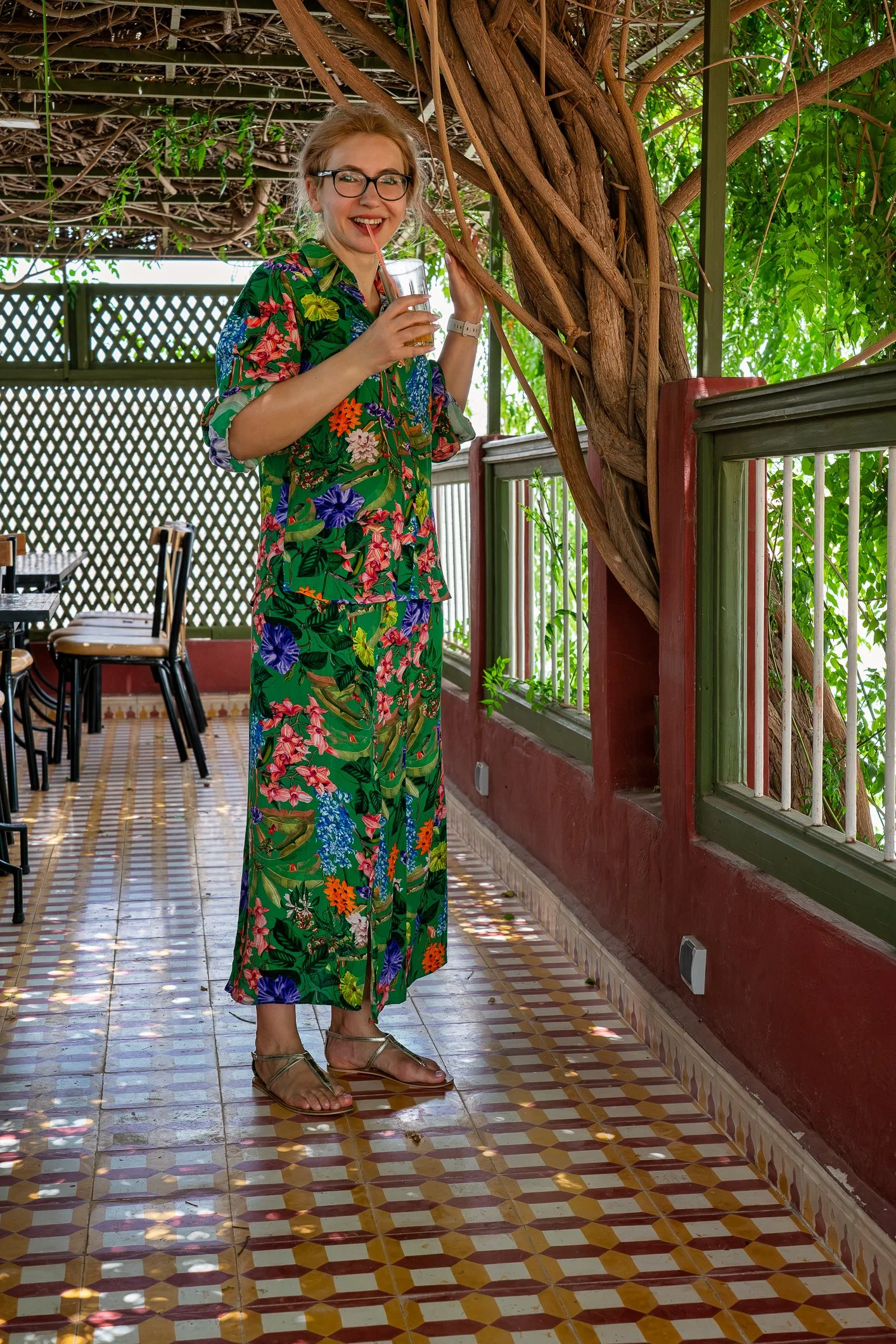
The rooftop terrace, where a little café is located, offers a nice view of the city and a peaceful retreat from the relentless heat. We relax with a glass of fresh orange juice and take in the beauty of Marrakech.


Z tarasu na dachu, na którym znajduje się mała kawiarnia, roztacza się ładny widok na miasto, a cień i powiewy wiatru oferują wytchnienie od nieubłaganego upału. Relaksujemy się przy szklance świeżego soku pomarańczowego i podziwiamy piękno Marrakeszu.

Musee du Parfum

The Museum of Perfumery is a fascinating attraction that showcases the art of perfumery and the rich history of fragrance in Morocco


Muzeum Perfum  to fascynująca atrakcja prezentująca sztukę perfumeryjną i bogatą historię zapachów w Maroku.

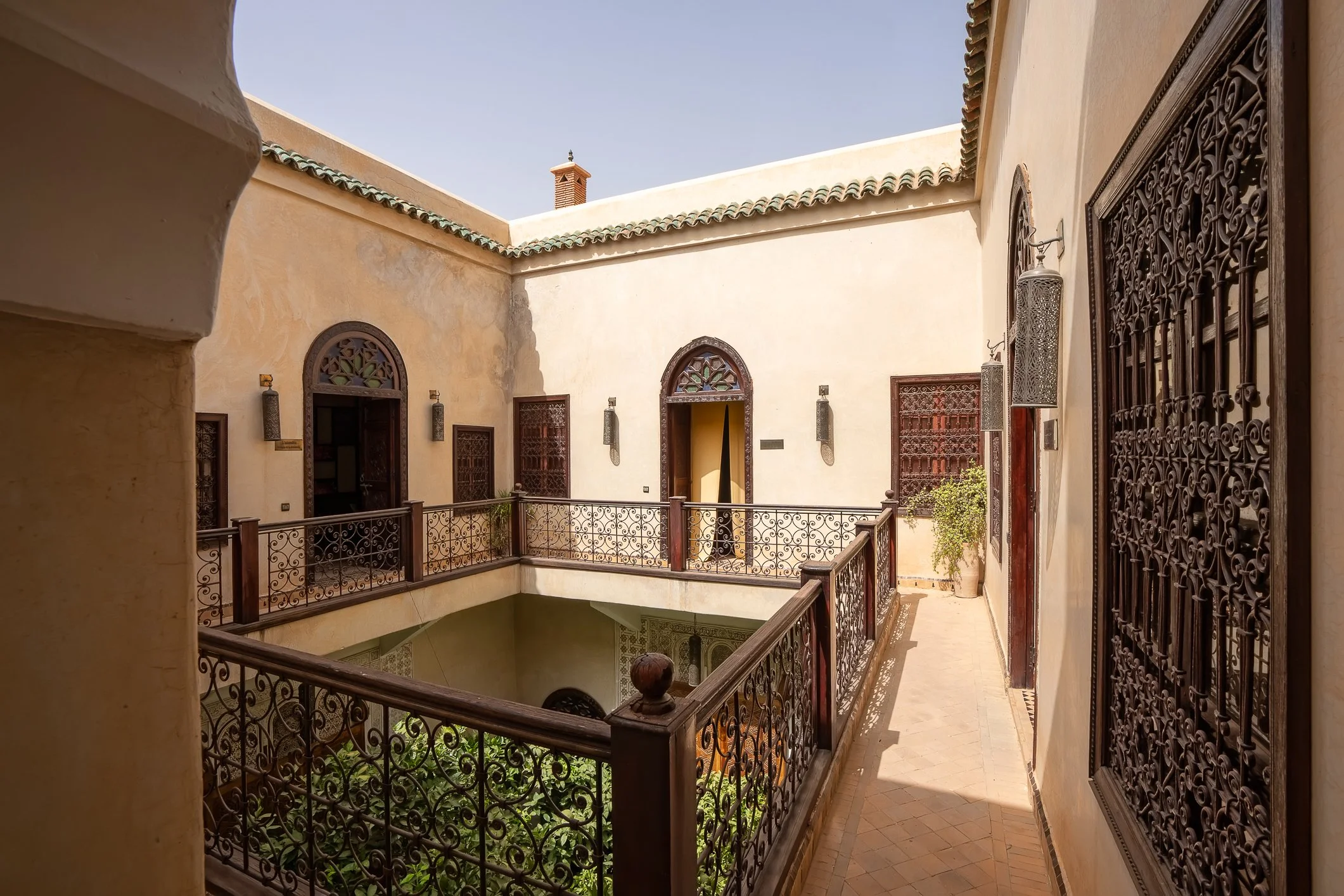
The museum is located in a beautifully restored 19th-century riad (traditional Moroccan house) in the heart of Marrakech's old medina. The building's interior courtyard, known as a "sebil," is surrounded by ornate tile work, intricate archways, and ornate wood carvings.


Muzeum znajduje się w pięknie odrestaurowanym XIX-wiecznym Riadie (tradycyjnym marokańskim domu) w sercu starej medycy Marrakeszu. Wewnętrzny dziedziniec budynku, znany jako „sebil”, jest otoczony ozdobnymi płytkami, misternymi łukamii ozdobne ymi rzeźbami z drewna.

The museum's interior spaces are designed to evoke the atmosphere of a traditional Moroccan palace, with opulent furnishings and stunning decor.


Wnętrza muzeum mają na celu przywołanie atmosfery tradycyjnego marokańskiego pałacu, z bogatym wystrojem i umebowaniem.

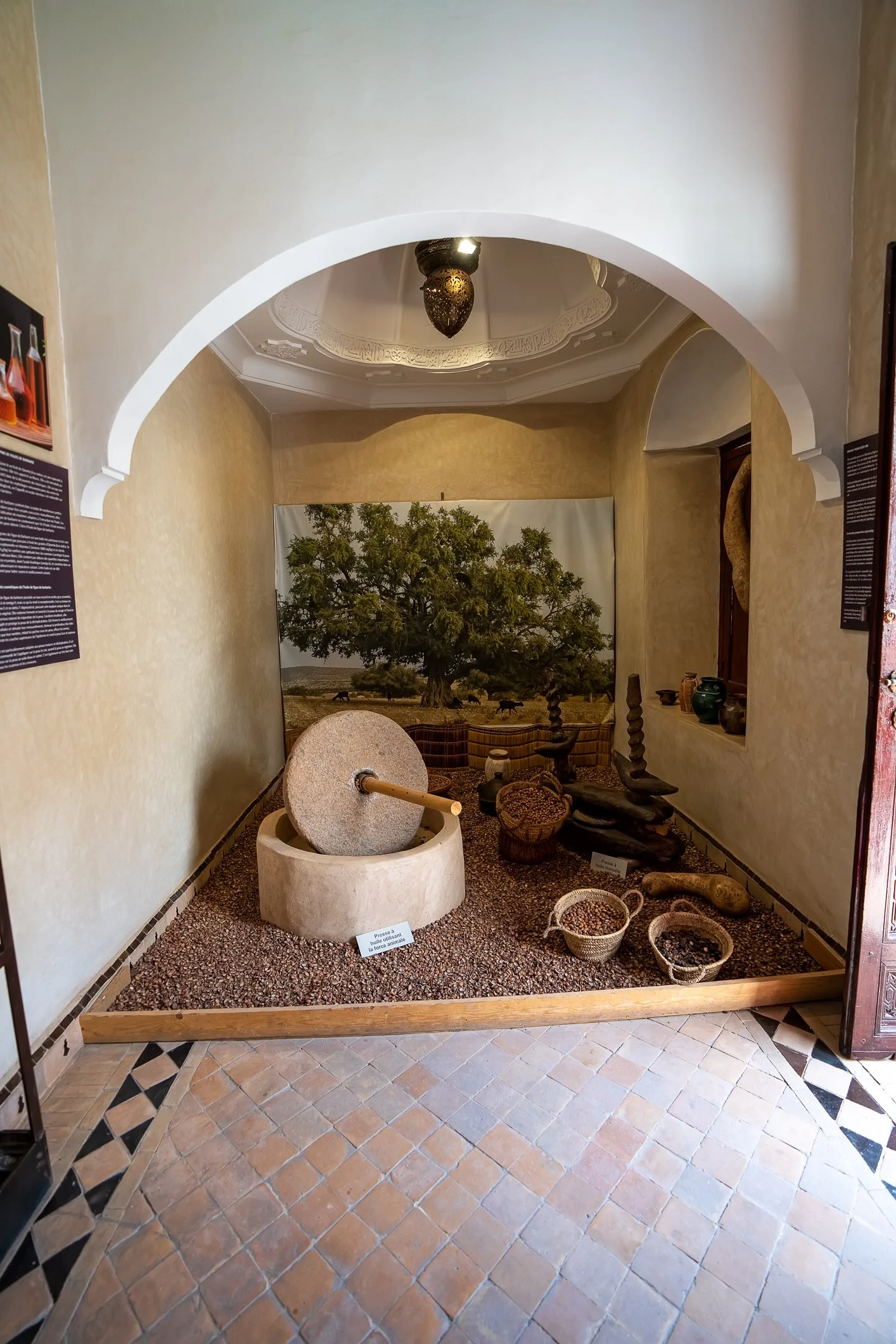
The museum showcases the traditional methods of perfumery used in Morocco, including the use of rose water, orange blossom water, and other local ingredients. Visitors can watch skilled perfumers create fragrances using traditional methods and ingredients.

The museum also has an extensive collection of rare and precious fragrances from around the world.


Muzeum prezentuje tradycyjne metody perfumerii stosowane w Maroku, w tym stosowanie wody różanej, wody pomarańczowej i innych lokalnych składników. Odwiedzający mogą oglądać wykwalifikowanych perfuiarzy tworzących zapach za pomocą tradycyjnych metod i składników. Muzeum posiada również obszerną kolekcję rzadkich i cennych zapachów z całego świata.

And then I have a chance to create my own body oils, mixing argan oils with the extracts of my choice.

Na koniec wizyty robie swoje wlasne olejki dopielegnacji skory dodajac wybrane przez siebie ekstrakty do oleju arganoweo.

Madrasa Ben Youssef

We begin our day's explorations from the nearby Madrasa Ben Youssef. Founded in the 14th century, this madrasa was once the largest Islamic school in North Africa and is now a designated UNESCO World Heritage Site. In addition to being a religious school, it also served as a mosque and a library. In the 16th century, a grand courtyard and minaret were added to the complex. Though it fell into disrepair when abandoned in the 18th century, the madrasa was meticulously restored in the 19th century and reopened as an Islamic school.


Zwiedzanie rozpoczynamy od pobliskiej Madrasy Ben Youssef. Założona w XIV wieku madrasa była niegdyś największą szkołą islamską w Afryce Północnej, a obecnie znajduje się na Liście Światowego Dziedzictwa UNESCO. Oprócz tego, że była szkołą religijną, służyła także jako meczet i biblioteka. W XVI wieku do kompleksu dodano okazały dziedziniec i minaret. Choć została opuszczona w XVIII wieku i zaczęła popadać w ruinę, madrasa została pieczołowicie odrestaurowana w XIX wieku i ponownie otwarta jako szkoła islamska.

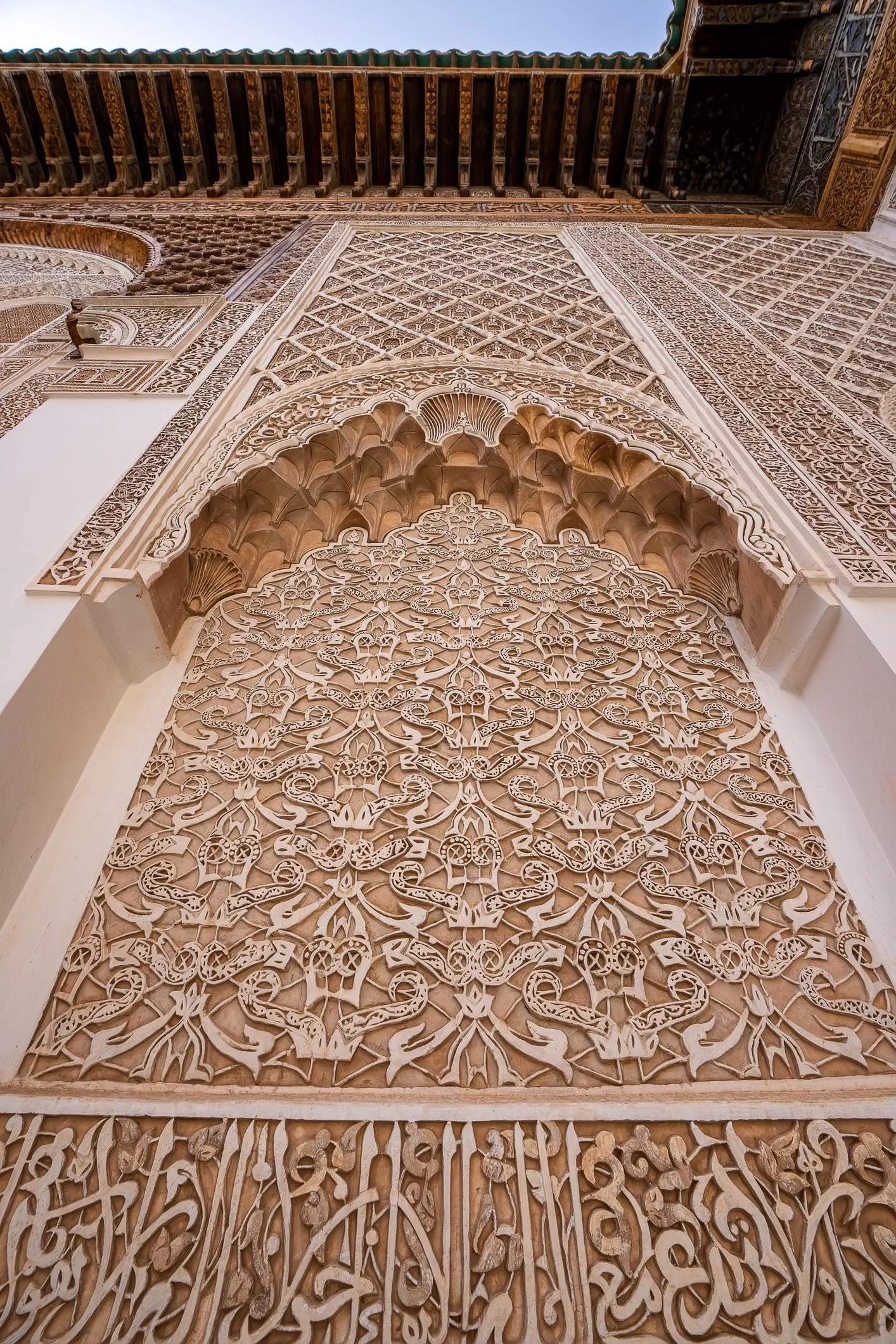
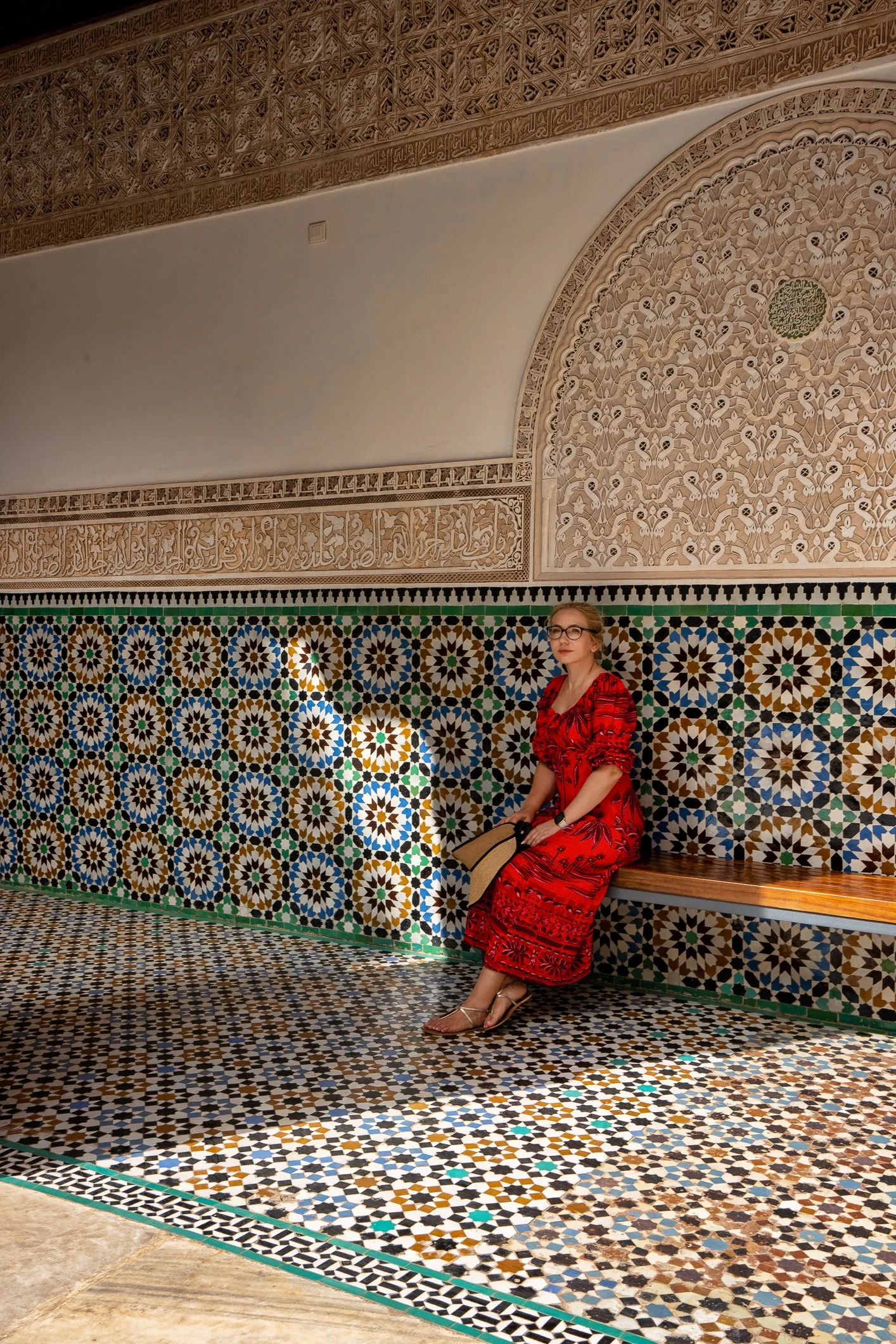
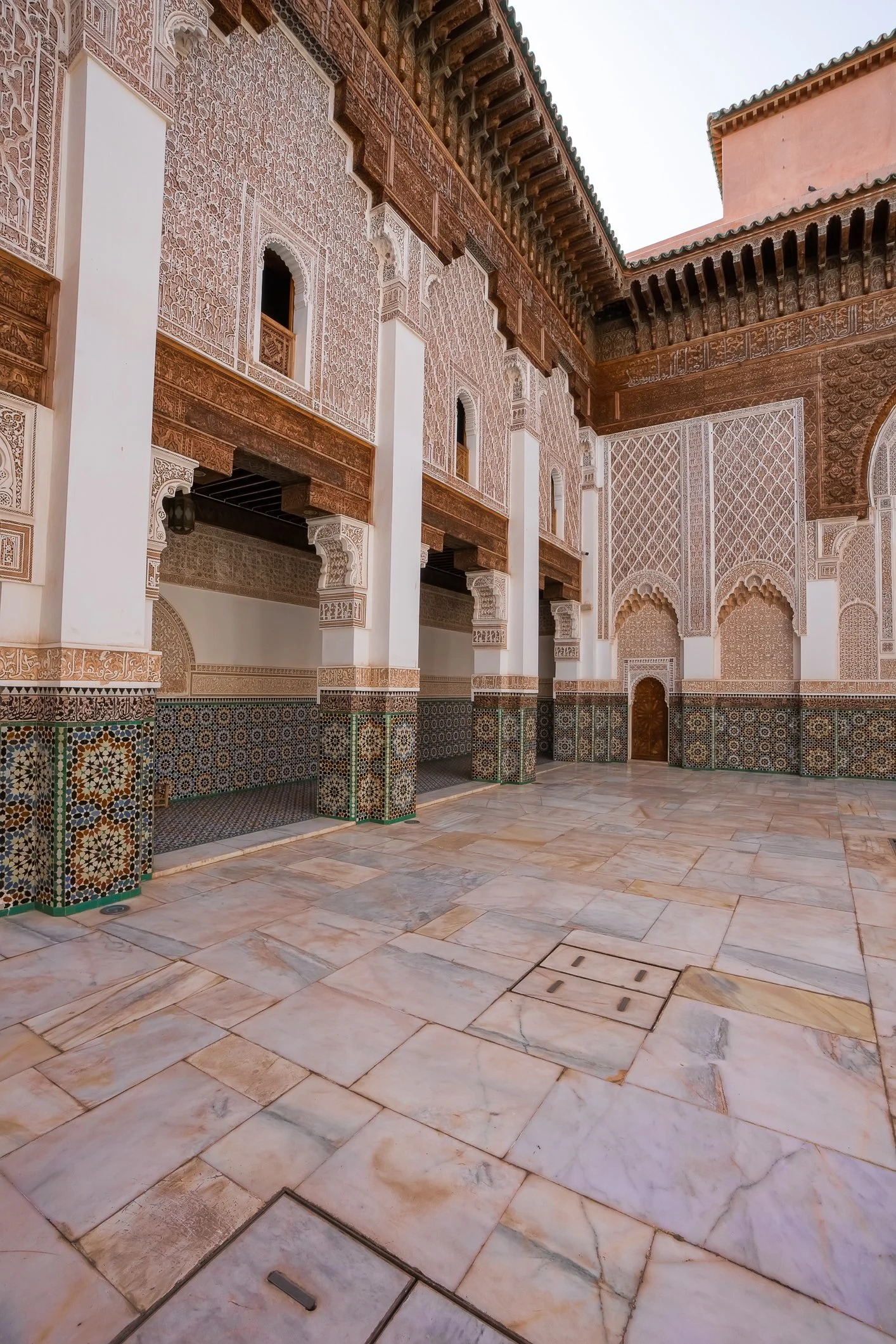
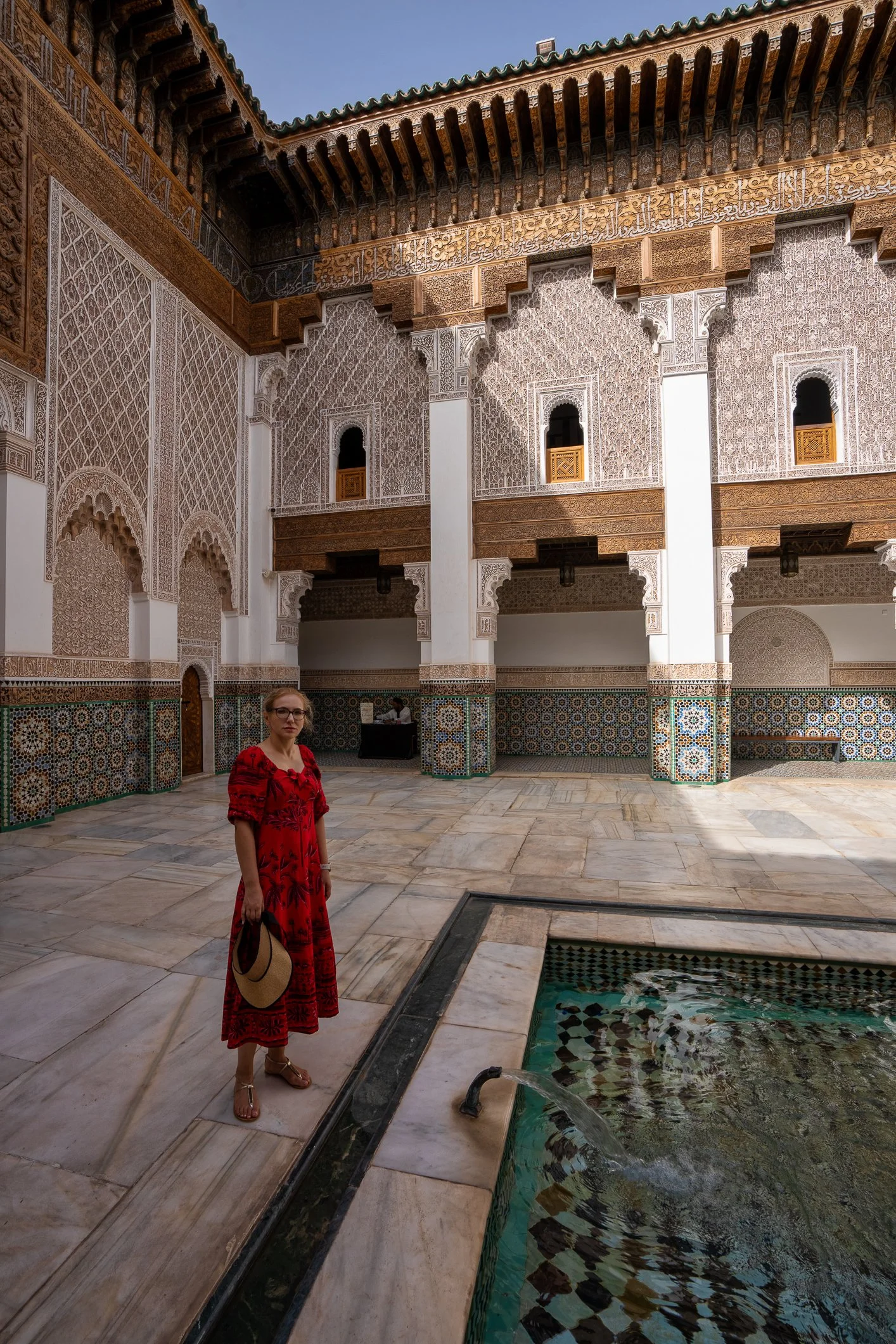
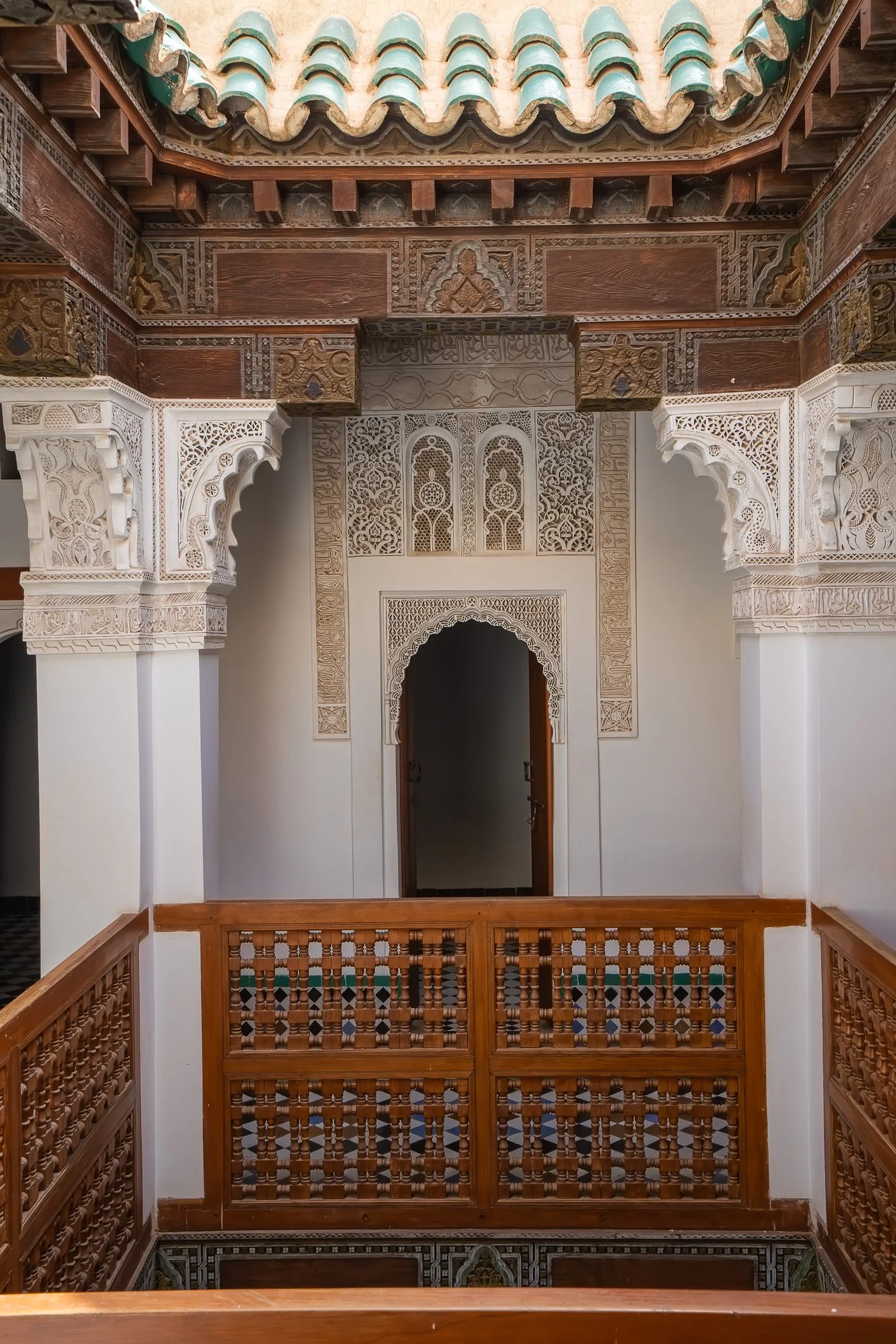
The architecture of Madrasa Ben Youssef is a stunning representation of Moroccan design. Crafted from red sandstone, the building is adorned with intricate geometric patterns and carved stucco. Zellige tiles featuring exquisite geometric and floral motifs embellish the walls, while elaborately carved cedar wood graces the doors and ceilings.

Passing through the vestibule's bronze doors topped by a carved cedar lintel, we find ourselves in a mosaic-paved corridor leading to the main entrance - a grand archway that ushers us into a vast central courtyard.


Architektura Madrasy Ben Youssef jest piękną reprezentacją marokańskiego stylu. Budynek wykonany z czerwonego piaskowca ozdobiony jest misternymi geometrycznymi wzorami i rzeźbionymi sztukateriami. Płytki Zellige z kunsztownymi motywami geometrycznymi i kwiatowymi zdobią ściany, a misternie rzeźbione drewno cedrowe ozdabia drzwi i sufity.


Przechodzimy do przedsionka przez brązowe drzwi zwieńczone rzeźbionym nadprożem z cedru, aby znaleźć się w wyłożonym mozaiką korytarzu prowadzącym do głównego wejścia – wielkiego łukowego przejścia, które wprowadza nas na rozległy centralny dziedziniec.

The courtyard, embellished with white marble and supported by four stunning facades, features an ablution pool at its centre and is encircled by two tiers of arched galleries. These galleries exhibit vibrant tiles and carved stucco, guiding visitors to the diverse classrooms and prayer halls.


Dziedziniec, ozdobiony białym marmurem i wsparty na czterech pięknych fasadach, ma pośrodku basen do ablucji i jest otoczony dwoma poziomami łukowatych galerii.Galerie prowadzące do sal lekcyjnych i modlitewnych ozdobione są imponującymi kafelkami w intensywnych kolorach oraz rzeźbionymi sztukateriami.

A magnificent wooden door grants access to the expansive prayer hall, distinguished by a cedar dome and segmented by marble columns. Similar to the cedar carvings in the courtyard, the hall's decorations are characterized by pine cone and palm motifs. The mihrab is adorned with verses from the Qur'an, adding a spiritual dimension to the interior.


Wspaniałe drewniane drzwi prowadzą  do obszernej sali modlitewnej, wyróżniającej się cedrową kopułą i podzielonej marmurowymi kolumnami. Podobnie jak cedrowe rzeźby na dziedzińcu, dekoracje sali charakteryzują się motywami szyszek i palm. Mihrab ozdobiony jest wersetami z Koranu, co dodaje wnętrzu duchowego wymiaru.

Within the madrasa are 134 small student rooms arranged around 13 courtyards, primarily situated on the east and west sides of the edifice - 54 on the ground level and 80 on the upper floor. Each room is a testament to the dedication to learning that once resonated within the walls of Madrasa Ben Youssef.


W madrasie znajdują się 134 małe pokoje studenckie rozmieszczone wokół 13 dziedzińców, położonych głównie po wschodniej i zachodniej stronie gmachu – 54 na parterze i 80 na piętrze. Każdy pokój jest świadectwem motywacji do nauki, która kiedyś yła motywem przewodnim Madrasy Ben Youssef.