Peru

Yaku

A few blocks away from the main plaza, at the corner of Regocijo Square, we find a building with a protruding wooden balcony painted blue. It houses Yaku: Cocina de Altura, a restaurant that consistently appears on lists of the top 10 best places to eat in Cusco, regardless of the source. Personally, I believe it might even be the number one, but let me not get ahead of myself. Yaku serves classic Peruvian and Andean flavours alongside a variety of delicious wood-fired pizzas and salads.

Kilka przecznic od głównego placu, na rogu placu Regocijo, znajdujemy budynek z wystającym drewnianym balkonem pomalowanym na niebiesko. Mieści się w nim Yaku: Cocina de Altura, restauracja, która stale pojawia się na listach 10 najlepszych punktów gastronomicznych Cuzco, niezależnie od źródła. Osobiście uważam, że może być nawet jest numerem jeden.... Yaku serwuje klasyczne peruwiańskie i andyjskie smaki, pizzę z pieca opalanego drewnem i rozmaite sałatki.

We are seated on the outdoor patio, and to be honest, the decor isn’t particularly striking here (not that it is bad, just relatively simple). However, it’s covered for the rainy season, and the warmth from the heaters dispersed throughout the room creates a pleasant atmosphere. You might think it’s just an average Cusco restaurant, but you’ll be pleasantly surprised when your food arrives. To me, it is at the very least worthy of a Michelin recommendation, if not a star (btw, Micheline guide does not cover Cusco).

Sadzają nas na tarasie na zewnątrz i szczerze mówiąc, wystrój nie jest tu szczególnie uderzający (nie mówię, że jest źle, tylko nic szczególnego). Jednak taras jest zadaszony na czas pory deszczowej, a ciepło z pieców grzewczych rozproszonych po całym pomieszczeniu tworzy przyjemną atmosferę. I można by pomyśleć, że to po prostu przeciętna restauracja w Cusco, ale ta opinia diametralnie się zmieni, jak tylko dotrze do zamawiającego jedzenie. Dla mnie jest ono co najmniej godne rekomendacji Michelin, jeśli nawet nie gwiazdki (tyle, że ranking Michelin nie operuje w Cuzco).

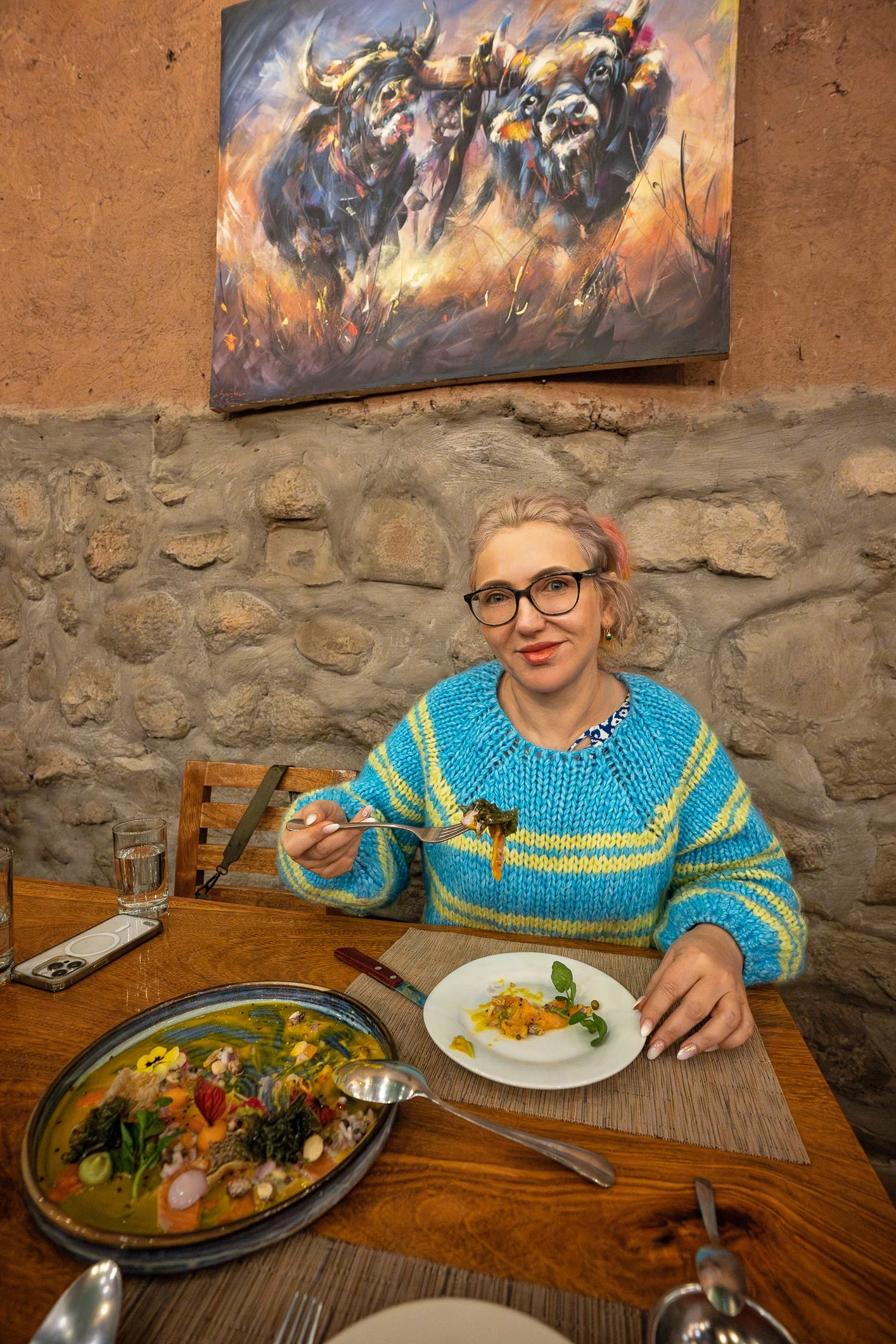
Yaku is quite famous for its unique ceviche. The menu describes it as follows: HIGHLANDER MARINATED TROUT - dazzle your senses with our delicious, sashimi-style “tiradito” trout, fresh slices accompanied by yellow chili pepper, "tiger's milk" sauce, topped with Andean chalaquita (a chopped onion mix), avocado, and sweet potato mousse. So we order it, and dazzled we are! It is undoubtedly the best ceviche in town. The presentation is also stunning. This “Tiradito de Altura” differs from traditional ceviche by emphasizing unique Andean ingredients and regional flavours. Traditional ceviche typically features white fish (but in Cusco, trout is quite common), red onions, and lime juice, Yaku’s dish incorporates specific ingredients from the Cusco region, including river trout together with its fried skin and citrus-based marinade.

Yaku jest znane ze swojego wyjątkowego ceviche. Menu opisuje je następująco: HIGHLANDER MARINATED TROUT - zachwyć swoje zmysły naszym pysznym pstrągiem „tiradito” w stylu sashimi, podanym z żółtą papryczką chili, sosem „mleko tygrysa” i zwieńczonym andyjską chalaquitą (mieszanką siekanej cebuli), awokado oraz musem ze słodkich ziemniaków. Zamawiamy więc i nasze zmysły są zachwycone! To bez wątpienia najlepsze ceviche w mieście. Prezentacja jest również piękna. „Tiradito de Altura” różni się od tradycyjnego ceviche, podkreślając unikalne andyjskie składniki i regionalne smaki. Tradycyjne ceviche zazwyczaj zawiera białą rybę (chociaż akurat w Cuzco pstrąg jest dość powszechny), czerwoną cebulę i sok z limonki. Danie w Yaku zawiera zaś specyficzne składniki z regionu Cuzco, w tym pstrąga rzecznego wraz z jego smażoną skórą i marynatą na bazie cytrusów.

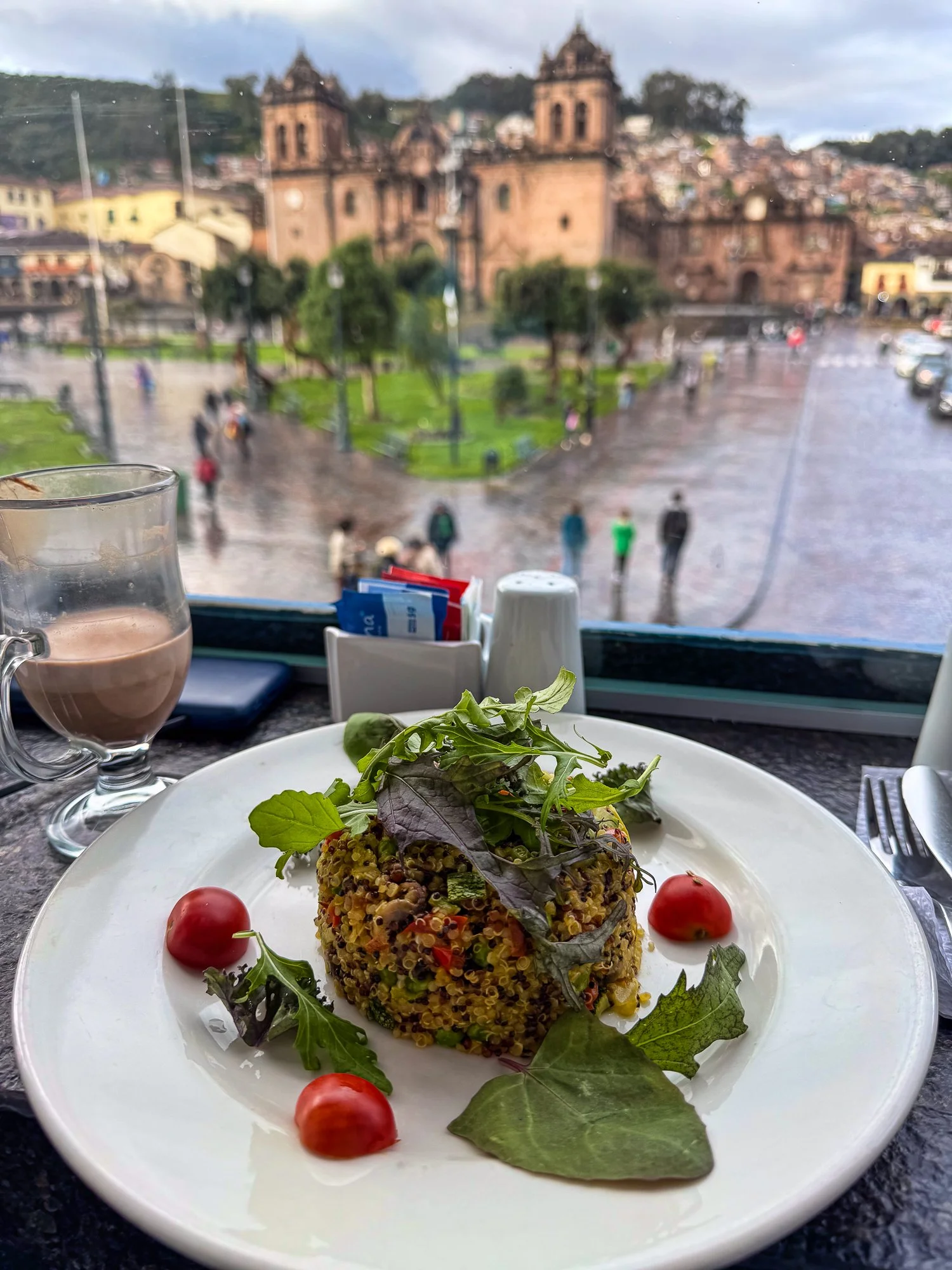
We also order a wok-stir-fried rice with crispy vegetables and pork. For dessert, I opt for the “warm chocolate brownie 'Quillabambino' garnished with house-made seasonal fruit ice cream” and their fantastic herbal tea. Marcin chooses “sponge chocolate cake soaked in a mixture of three kinds of milk and mocha, garnished with seasonal homemade fruit ice cream,” along with a glass of passionfruit pisco sour. To say we are happy with our meals is an understatement. Yobe, who takes care of us, also deserves recognition for her hospitality and attentive service.

Yaku sets the bar for food quality exceptionally high, and now I will compare every subsequent meal in Peru to this one. But I can say it in advance: nothing will beat their ceviche.

Zamówiliśmy również ryż smażony w woku z chrupiącymi warzywami i wieprzowiną. Na deser ja wybieram „ciepłe czekoladowe brownie 'Quillabambino' z domowymi sezonowymi lodami owocowymi” i ich fantastyczną herbatę ziołową. Marcin wybiera „biszkopt czekoladowy nasączony mieszanką trzech rodzajów mleka i mokki, z lodami” wraz ze szklaneczką pisco sour z marakują. Powiedzieć, że jesteśmy zadowoleni z naszych posiłków, to zdecydowanie za mało. Yobe, która się nami opiekuje, również zasługuje na uznanie za swoją gościnność i uważną ale nie nachalną obsługę.

Yaku ustawia poprzeczkę jakości jedzenia wyjątkowo wysoko i teraz będę porównywać każdy kolejny posiłek w Peru do włanie tego. Ale jedno mogę powiedzieć z góry: nic nie przebije ich ceviche.

Portal de Panes and fountain controversy

The rain had been relentless during our Korean lesson that afternoon, drumming steadily against the windows, but as soon as the class concluded, the clouds parted with a sudden squint of sunlight—the kind that dappled the streets with gold, inviting us outside. With dinner still a few hours away (and snacks in our bellies), we decided to seize the moment and took a walk around the Plaza de Armas. Once the ceremonial Huacapata, the heart of the Incas, the square now echoes with the energy of tourists and locals alike. The northern and western sides overflow with small shops and cozy cafes. On the northeastern edge, the imposing cathedral stands like a guardian of the past, while the Templo de la Compañía de Jesús at the southeast corner boasts its impressive belfries.

Tego popołudnia podczas naszej lekcji koreańskiego lunął deszcz, ale gdy tylko lekcja się skończyła, deszcz także się skończył. Bardzo to było miłe z jego strony. Do obiadu było jeszcze sporo czasu (i przekąski swieżo w naszych brzuchach), postanowiliśmy więc wykorzystać tę chwilę i poszliśmy na spacer po Plaza de Armas. Kiedyś ceremonialna Huacapata, serce Inków, plac po dziś dzień jest samym pępkiem Cusco. Północna i zachodnia strona jest pełna małych sklepików i przytulnych kawiarni. Na północno-wschodnim krańcu wznosi się imponująca katedra, podczas gdy Templo de la Compañía de Jesús w południowo-wschodnim narożniku szczyci się imponującymi dzwonnicami.

We meander through the Portal de Panes, a covered cloister pavement with overhanding buildings, supported by stone pillars or arches, that is circling the plaza. It creates a rain-free and sun-shaded walking space nearly all the way around the square. The Portal de Panes used to be part of the palace of Pachacuti.


Okrążamy plac idąc przez Portal de Panes, kryty chodnik klasztorny z nadwieszonymi budynkami, podpartymi kamiennymi filarami i łukami, który okrąża plac. Tworzy on wolną od deszczu i zacienioną słońcem przestrzeń do spacerów niemal wokół całego placu. Portal de Panes był kiedyś częścią pałacu Pachacuti.

The ornamental fountain in the central part of the square is a cast-iron design, installed in 1872, and has quite the story to tell—one marred by a lot of controversy. Originally, it featured the figure known as “the Apache,” a striking image of a Native American named Chief Kisko. Why this figure topped the fountain instead of an Inca ruler sparked much debate. Some said it was a simple mistake during shipping; others suggested it was a peculiar choice by the rector of the local university. Even the famous explorer Hiram Bingham commented on the oddity of a Native American statue standing in the heart of the former Inca capital. In 2011, with a nod to history’s importance, the Apache statue was removed (story says it was a group of not completely sober local men who initiated it), replaced by a representation of Manco Capac, the first Inca ruler. Now, this figure proudly adorns the fountain, a testament to the city’s heritage and a reflection of its intricate past.

Ornamentalna fontanna w centralnej części placu to żeliwna konstrukcja zainstalowana tu w 1872 roku, której historia jest dość kontrowersyjna. Jeśli patrząc na jej rzeźby, myślicie, że są one tutaj - przepraszam za język - ni w pipę, ni w oko, to wcześniej było jeszcze gorzej. Pierwotnie na jej szczycie znajdowała się bowiem postać znana jako „Apacz”, uderzający wizerunek rdzennego Amerykańskiego wodza Kisko. Dlaczego to ta figura znajdowała się na szczycie fontanny, a nie reprezentacja władcy Inków jest przedmiotem wielu dyskusji. Niektórzy twierdzą, że był to zwyczajnie błąd podczas wysyłania fontanny (która była produktem masowej produkcji, zamówionej z katalogu), a inni sugerują, że był to osobliwy wybór rektora lokalnego uniwersytetu. Nawet słynny odkrywca Machu Picchu, Hiram Bingham, skomentował obecność posągu rdzennego Amerykanina stojącego w sercu dawnej stolicy Inków. W końcu, w 2011 roku, w uznaniu znaczenia historii, posąg Apacza został usunięty i zastąpiony postacią Manco Capac’a, pierwszego władcy Inków (niektórzy twierdzą, ze usunięciem Apacza zajęło się kilku mieszkańców miasta po pijaku...). Ta nowa figura Inki dumnie zdobi fontannę, będąc świadectwem dziedzictwa miasta i odzwierciedleniem jego skomplikowanej przeszłości.

As the sun dips below the horizon, casting a warm glow over the city, the lights around Plaza de Armas flicker on, bathing the entire square in golden radiance. Still wet cobblestones reflect the illumination making everything shimmer as if sprinkled with golden dust. It looks quite impressive.

PS. The church you can see on the hill is St Cristobal’s church and obviously we plan to climb there one day. The view must be respectable!

Gdy słońce chowa się za horyzontem, zapalają się światła wokół Plaza de Armas, zalewając cały plac złotym blaskiem. Nadal mokre od deszczu brukowane kamienie odbijają światło, sprawiając, że wszystko lśni, jakby posypane złotym pyłem. Wygląda to całkiem imponująco.

PS. Ten kościół, który widzicie na wzgórzu (San Cristobal)? My też już zauważyliśmy, że widok stamtąd musi być zacny i mamy w planach wizytę.

Let's talk more about the hotel...

“In the heart of Cusco, where the echoes of ancient Incan footsteps mingle with the vibrant pulse of contemporary life, there stands an accommodation known as the Hotel Plaza de Armas. To speak of this place is to invoke the sacred trinity of location, location, and location; for here, amidst the cobblestone veins of the city, one can feel the very spirit of history wrap around them like a cherished shawl woven from the threads of time.”

We could begin our story like this, but, seriously, this is without a doubt one of the best hotels on Cusco’s famous Plaza de Armas or Main Square. Owned by a local family, it is a vision of modern simplicity. Its rooms are light and airy with crisp white linen, good showers, desks, electric heaters and complimentary coca tea, bottled water and wifi.

The allure of this hotel extended far beyond its walls. The vibrant Plaza de Armas came alive every morning, offering a sensory feast from the rich aroma of freshly brewed coffee to the laughter of children exercising every day in front of the cathedral for the fast approaching Sentimana Santa. It was impossible not to be swept up in the rhythm of the city, as cobblestone streets beckoned us to explore their hidden corners.

Plaza de Armas is also the gastronomic epicentre of the city so by staying here, we had access to a wide variety of restaurants offering authentic Peruvian cuisine.

„W sercu Cuzco, gdzie echa kroków starożytnych Inków mieszają się z tętniącym życiem pulsem współczesnego miasta, stoi Hotel Plaza de Armas. Mówiąc o tym miejscu do głowy przychodzą przede wszystkim trzy rzeczy: lokalizacja, lokalizacja, lokalizacja”. Moglibyśmy zacząć naszą opowieść w ten sposób, ale poważnie podchodząc do tematu, jest to bez wątpienia jeden z najlepszych hoteli na słynnym Plaza de Armas, czyli Głównym Rynku w Cuzco. Nasz pokój jest jasny i dość przestronny, wyposażony w wygodne łóżko i prysznic, biurkami, grzejnik elektrycznymi oraz bezpłatną herbatę z koki, wodą butelkowaną i Wi-Fi.

Urok tego hotelu wykracza jednak daleko poza jego mury. Tętniący życiem Plaza de Armas ożywa każdego ranka, oferując ucztę dla zmysłów od bogatego aromatu świeżo parzonej kawy po śmiech dzieci ćwiczących codziennie przed katedrą na szybko zbliżający się święty tydzień. Nie sposób jest nie dać się porwać rytmowi miasta, gdy brukowane uliczki zachęcają nas do eksploracji jego ukrytych zakątków.

Plaza de Armas jest także gastronomicznym centrum miasta, wiec dzięki temu, że tu mieszkamy, mamy natychmiastowy dostęp do mnóstwa restauracji oferujących autentyczne dania kuchni peruwiańskiej.

Apart from mentioned in my previous entry café balcony with its sweeping views on the plaza, the hotel has a lovely roof top terrace with one of the best views of the Main Square.

Oprócz wspomnianego we wcześniejszym wpisie balkonu kawiarnianego z rozległym widokiem na plac, hotel posiada także piękny taras na dachu z jednym z najlepszych widoków na Plaza de Armas.

Room and bar

The room is simple but nice, and we can just about see a cathedral from the window if we look to the side. For our Korean online lesson, I stay in the room and Marcin goes to the lounge, which is conveniently empty.

Pokój jest prosty, ale przyjemny, a z okna patrzeć mocno do boku można nawet zobaczyć katedrę. Na naszą lekcję koreańskiego online ja zostaję w pokoju, a Marcin idzie do hotelowego lounge’u, który jest wygodnie pusty.

After Korean we pop into the bar for a savoury snack, another cup of coca tea and hot chocolate. Here, hot chocolate is nothing like the sweet, sugary drinks we are accustomed to in Europe. Instead, it is rich with real cacao fat, offering a deeper, more profound taste with much less or no sugar at all.

Po koreańskim wpadamy do baru na przekąskę, kolejną filiżankę herbaty z koki i gorącą czekoladę. Gorąca czekolada nie przypomina tutaj słodkiego napoju, do którego jesteśmy przyzwyczajeni w Europie. Zamiast tego jest bogata w prawdziwy tłuszcz kakaowy, oferując głębszy, bardziej wyrazisty smak z dużo mniejszą ilością cukru lub nawet zupełnie bez cukru.

And we also discover the balcony. Oh, what a treat it is. The view is just perfect. From our perch, we can see the majestic cathedral, the stunning Jesuit church, and the bustling expanse of the Plaza de Armas below us.

I odkrywamy też balkon. Och, balkon jest fenomenalny. Możemy z niego podziwiać majestatyczną katedrę, wspaniały kościół jezuicki i tętniącą życiem przestrzeń całego Plaza de Armas.

Coca tea and ice-cream

One of the first things I discover in our hotel is the coca tea station—an essential fixture in every decent Andean hotel, as I would soon find out. Both Marcin and I were already feeling the effects of the high altitude: more and more nagging headache and a fatigue that suddenly seemed to settle over us like a blanket. So, naturally, we seized the opportunity to immediately indulge in this local brew.

Now, in terms of taste, coca tea is rather similar to green tea, with just a hint more sweetness. Known also as "mate de coca" in Peru, it is made from the leaves of the coca plant, which is native to the Andes region. Traditionally consumed by Indigenous peoples, coca tea is valued for its stimulant properties—yes, it contains a smidgen of cocaine, and yes, you will test positive after drinking it—and it’s said to boost energy and tackle fatigue. Despite its association with the production of cocaine, coca tea is legal in Peru and is often enjoyed by locals and tourists alike for its cultural significance and health benefits. I will soon discover, that if I drink it regularly enough, coca tea dulls the edge of everything: tiredness, headache, annoyance, and even hunger.

Jedną z pierwszych rzeczy, jakie odkrywam w naszym hotelu, jest stacja z herbatą z koki — nieodzowny element każdego przyzwoitego hotelu w Andach, o czym się wkrótce przekonam. Zarówno Marcin, jak i ja odczuwamy już skutki przebywania na dużej wysokości: coraz bardziej dokuczliwy ból głowy i zadyszka po przejściu 5 kroków. Więc oczywiście korzystamy z okazji napojenia się tym lokalnym naparem. W smaku herbata z koki jest dość podobna do zielonej herbaty, trochę może bardziej słodka. Znana tutaj głównie jako „mate de coca, jest ona wytwarzana z liści koki – rośliny, która pochodzi z regionu Andów. Wszyscy ją tutaj piją na co dzień ze względu na jej właściwości pobudzające — tak, zawiera ona odrobinę kokainy i tak, po jej wypiciu testuje się pozytywnie. Pomimo związku z produkcją kokainy, herbata z koki jest legalna w Peru i często jest spożywana nie tylko przez miejscowych, ale i turystów ze względu na jej znaczenie kulturowe i korzyści zdrowotne (w tym pomoc w aklimatyzacji). Wkrótce odkryję, że jeśli piję napar z koki wystarczająco regularnie, łagodzi ona wszystko: zmęczenie, ból głowy, irytację, a nawet głód. Wielka szkoda, że nie mogę jej ze sobą przywlec do UK.

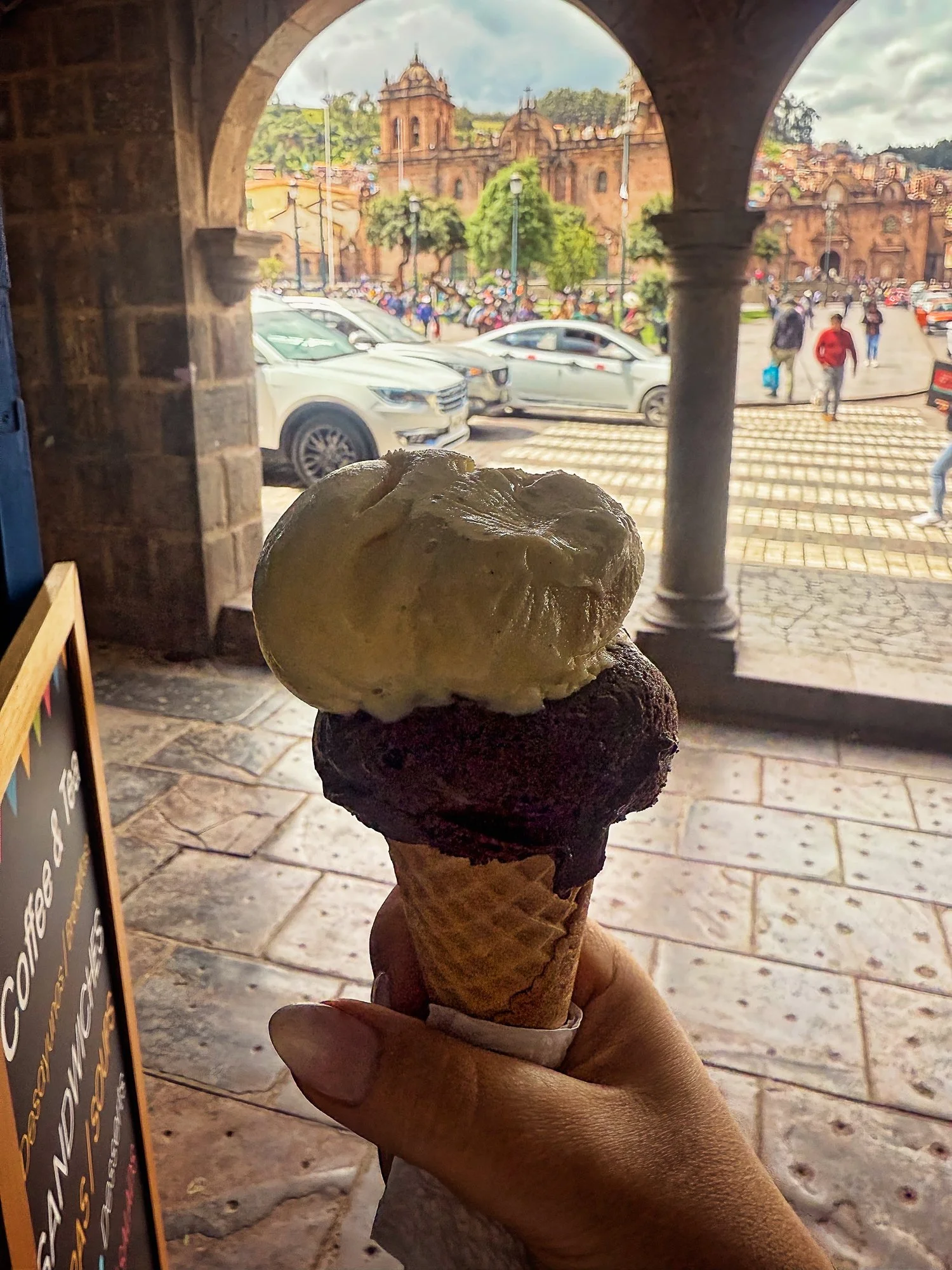
Our first cup of coca tea is consumed before we even checked in, and that is not our only indulgence. As luck would have it, there’s a little ice cream parlour right at the entrance, and we do not even try to resist the temptation. So, in a moment of pure delightful abandon, I order a scoop of rich chocolate and creamy vanilla, while Marcin opts for something decidedly more adventurous: a scoop of mango and a scoop of cheese ice-cream. Yes, you read that correctly—cheese. (Disclaimer: even though it is called “cheese ice cream = queso helado”, no cheese is used in making it. Instead, it features 3 types of milk, sweetened condensed, evaporated, and whole milk, as well as cinnamon, cloves and coconut. Some versions may contain egg yolks). With our frosty treats in hand and coca tea still warming our hearts, we’re officially ready to embrace the quirks of our Peruvian adventure. Or at least to see our room.

Pierwszą filiżankę herbaty z koki wypijamy jeszcze zanim zdążymy się zameldować, ale to nie jedyna nasza rozpusta. Tuż przy wejściu do naszego hotelu znajduje się bowiem mała lodziarnia i nawet nie próbujemy oprzeć się pokusie. Ja wybieram gałkę ciemnej czekolady i kremowej wanilii, podczas gdy Marcin decyduje się na coś mniej dla nas tradycyjnego -  gałkę mango i gałkę lodów serowych. Tak, dobrze czytacie — serowych. (Disclaimer: mimo że nazywa się to „lodami serowymi = queso helado”, do ich produkcji nie używa się tak naprawdę sera. Zamiast tego zawierają one trzy rodzaje mleka: słodzone zagęszczone, odparowane i pełne, a także cynamon, goździki i kokos. Niektóre wersje mogą zawierać także żółtka jaj). Zameldowani, z lodami w dłoniach i herbatą z koki w systemie, jesteśmy już oficjalnie gotowi, aby w pełni rozpocząć naszą peruwiańską przygodę. Albo przynajmniej zobaczyć nasz pokój.