night

Santa Ana Arch

There’s still plenty of time before dinner, so we decide to take a casual stroll up to the Santa Ana arch. Very casual. Very chill. Or so we thought…

We pass a llama fountain (yes, that’s a thing), turn left, and suddenly a steep, charming little street opens up before us. It looks lovely. Inviting, even. A friendly cobblestone welcome. But don’t be fooled, this street is a seasoned con artist, luring naive visitors into believing that by day two, they’ve somehow conquered the altitude.

Spoiler: we have not.


Do kolacji zostało jeszcze sporo czasu, więc postanawiamy wybrać się na spacer do łuku Św Anny. Ot, taki mały spacerek. Na spokojnie. 10 minut w każda stronę. Tak nam się przynajmniej wydawało.

Mijamy więc fontannę z lamami skręcamy w lewo i nagle otwiera się przed nami stroma, urocza uliczka. Wygląda zachęcająco. Prawie jak z pocztówki. Ale zaraz się przekonamy, że to czysta zasadzka – ta ulica doskonale wie, jak skusić naiwnych turystów, którym się wydaje, że po dwóch dniach w Cuzco ogarnęli już chorobę wysokościową.

Spoiler: nie ogarnęliśmy.

As we wheeze our way up, red-faced and rethinking all life choices, we turn right into yet another delightfully vertical street — the final ascent to the arch. Raincoats come off because we’ve each created our own personal saunas inside them. Step by step, we climb, each one a negotiation with gravity.

If high altitude were a person, she’d be lounging on a nearby balcony, popcorn in hand, watching us with a smirk.

But then — finally — we pass through the arch and turn around. And the view?

Worthy. So worthy.


Zasapani, czerwoni na twarzach docieramy na górę i skręcamy w prawo, gdzie kolejna, jeszcze bardziej stroma droga prowadzi już prosto do łuku. Zdejmujemy płaszcze przeciwdeszczowe, bo zdążyliśmy już sobie w środku zorganizować własne sauny. Krok po kroku, wleczemy się do góry walcząc z grawitacją.

Gdyby wysokość była człowiekiem, siedziałaby teraz na balkonie z miską popcornu, obserwując nas z politowaniem i rozbawieniem.

Ale w końcu przechodzimy przez łuk i odwracamy się, żeby popatrzeć na miasto.

A widok jest zacny.

We arrive at just the right moment - that magical in-between time when the sky is glowing with sunset colours and the lights of the city below start to flicker on. The scene is absurdly pretty, almost suspiciously cinematic. We stay a while, letting the sky darken, setting up the tripod to capture long exposures of car lights trailing down the hill. The street is relatively busy, which helps. Cars pass, red lights streak, and just like that, we’ve got our shot.

And so our second day in Cusco is nearly over. Breathless, glowing (mostly from the uphill effort), we are ready for our dinner. We go down again.


Trafiamy idealnie – na niebie widać jeszcze kolory, ale światła miasta właśnie zaczynają się zapalać. To najbardziej magiczny czas dnia, jeśli chodzi o światło. A potem rozstawiamy statyw i czekamy, aż zrobi się ciemniej i robimy zdjęcia z długim naświetlaniem - czerwone światła samochodów zostawiają smugi na brukowanej ulicy. Ruch jest wciąż dość duży, co nam tylko pomaga. Klik, pstryk  i mamy to.

I tak kończy się nasz drugi dzień w Cuzco, zasapani, rozgrzani (głównie przez podejście), jesteśmy gotowi na kolację. Schodzimy zatem znowu niżej.

Portal de Panes and fountain controversy

The rain had been relentless during our Korean lesson that afternoon, drumming steadily against the windows, but as soon as the class concluded, the clouds parted with a sudden squint of sunlight—the kind that dappled the streets with gold, inviting us outside. With dinner still a few hours away (and snacks in our bellies), we decided to seize the moment and took a walk around the Plaza de Armas. Once the ceremonial Huacapata, the heart of the Incas, the square now echoes with the energy of tourists and locals alike. The northern and western sides overflow with small shops and cozy cafes. On the northeastern edge, the imposing cathedral stands like a guardian of the past, while the Templo de la Compañía de Jesús at the southeast corner boasts its impressive belfries.

Tego popołudnia podczas naszej lekcji koreańskiego lunął deszcz, ale gdy tylko lekcja się skończyła, deszcz także się skończył. Bardzo to było miłe z jego strony. Do obiadu było jeszcze sporo czasu (i przekąski swieżo w naszych brzuchach), postanowiliśmy więc wykorzystać tę chwilę i poszliśmy na spacer po Plaza de Armas. Kiedyś ceremonialna Huacapata, serce Inków, plac po dziś dzień jest samym pępkiem Cusco. Północna i zachodnia strona jest pełna małych sklepików i przytulnych kawiarni. Na północno-wschodnim krańcu wznosi się imponująca katedra, podczas gdy Templo de la Compañía de Jesús w południowo-wschodnim narożniku szczyci się imponującymi dzwonnicami.

We meander through the Portal de Panes, a covered cloister pavement with overhanding buildings, supported by stone pillars or arches, that is circling the plaza. It creates a rain-free and sun-shaded walking space nearly all the way around the square. The Portal de Panes used to be part of the palace of Pachacuti.


Okrążamy plac idąc przez Portal de Panes, kryty chodnik klasztorny z nadwieszonymi budynkami, podpartymi kamiennymi filarami i łukami, który okrąża plac. Tworzy on wolną od deszczu i zacienioną słońcem przestrzeń do spacerów niemal wokół całego placu. Portal de Panes był kiedyś częścią pałacu Pachacuti.

The ornamental fountain in the central part of the square is a cast-iron design, installed in 1872, and has quite the story to tell—one marred by a lot of controversy. Originally, it featured the figure known as “the Apache,” a striking image of a Native American named Chief Kisko. Why this figure topped the fountain instead of an Inca ruler sparked much debate. Some said it was a simple mistake during shipping; others suggested it was a peculiar choice by the rector of the local university. Even the famous explorer Hiram Bingham commented on the oddity of a Native American statue standing in the heart of the former Inca capital. In 2011, with a nod to history’s importance, the Apache statue was removed (story says it was a group of not completely sober local men who initiated it), replaced by a representation of Manco Capac, the first Inca ruler. Now, this figure proudly adorns the fountain, a testament to the city’s heritage and a reflection of its intricate past.

Ornamentalna fontanna w centralnej części placu to żeliwna konstrukcja zainstalowana tu w 1872 roku, której historia jest dość kontrowersyjna. Jeśli patrząc na jej rzeźby, myślicie, że są one tutaj - przepraszam za język - ni w pipę, ni w oko, to wcześniej było jeszcze gorzej. Pierwotnie na jej szczycie znajdowała się bowiem postać znana jako „Apacz”, uderzający wizerunek rdzennego Amerykańskiego wodza Kisko. Dlaczego to ta figura znajdowała się na szczycie fontanny, a nie reprezentacja władcy Inków jest przedmiotem wielu dyskusji. Niektórzy twierdzą, że był to zwyczajnie błąd podczas wysyłania fontanny (która była produktem masowej produkcji, zamówionej z katalogu), a inni sugerują, że był to osobliwy wybór rektora lokalnego uniwersytetu. Nawet słynny odkrywca Machu Picchu, Hiram Bingham, skomentował obecność posągu rdzennego Amerykanina stojącego w sercu dawnej stolicy Inków. W końcu, w 2011 roku, w uznaniu znaczenia historii, posąg Apacza został usunięty i zastąpiony postacią Manco Capac’a, pierwszego władcy Inków (niektórzy twierdzą, ze usunięciem Apacza zajęło się kilku mieszkańców miasta po pijaku...). Ta nowa figura Inki dumnie zdobi fontannę, będąc świadectwem dziedzictwa miasta i odzwierciedleniem jego skomplikowanej przeszłości.
As the sun dips below the horizon, casting a warm glow over the city, the lights around Plaza de Armas flicker on, bathing the entire square in golden radiance. Still wet cobblestones reflect the illumination making everything shimmer as if sprinkled with golden dust. It looks quite impressive.

PS. The church you can see on the hill is St Cristobal’s church and obviously we plan to climb there one day. The view must be respectable!

Gdy słońce chowa się za horyzontem, zapalają się światła wokół Plaza de Armas, zalewając cały plac złotym blaskiem. Nadal mokre od deszczu brukowane kamienie odbijają światło, sprawiając, że wszystko lśni, jakby posypane złotym pyłem. Wygląda to całkiem imponująco.

PS. Ten kościół, który widzicie na wzgórzu (San Cristobal)? My też już zauważyliśmy, że widok stamtąd musi być zacny i mamy w planach wizytę.

Christmas at kew (2024 edition) part 3

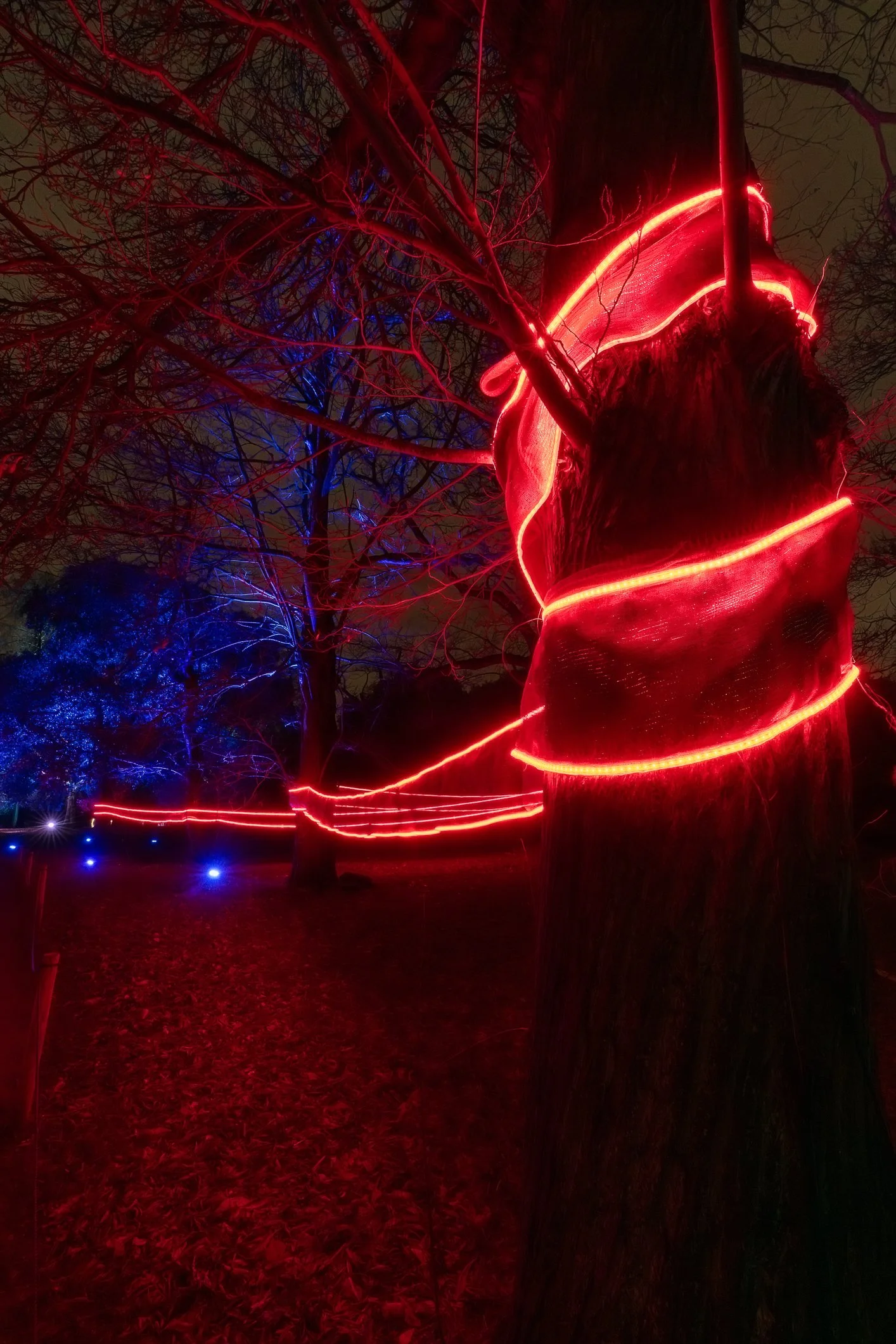
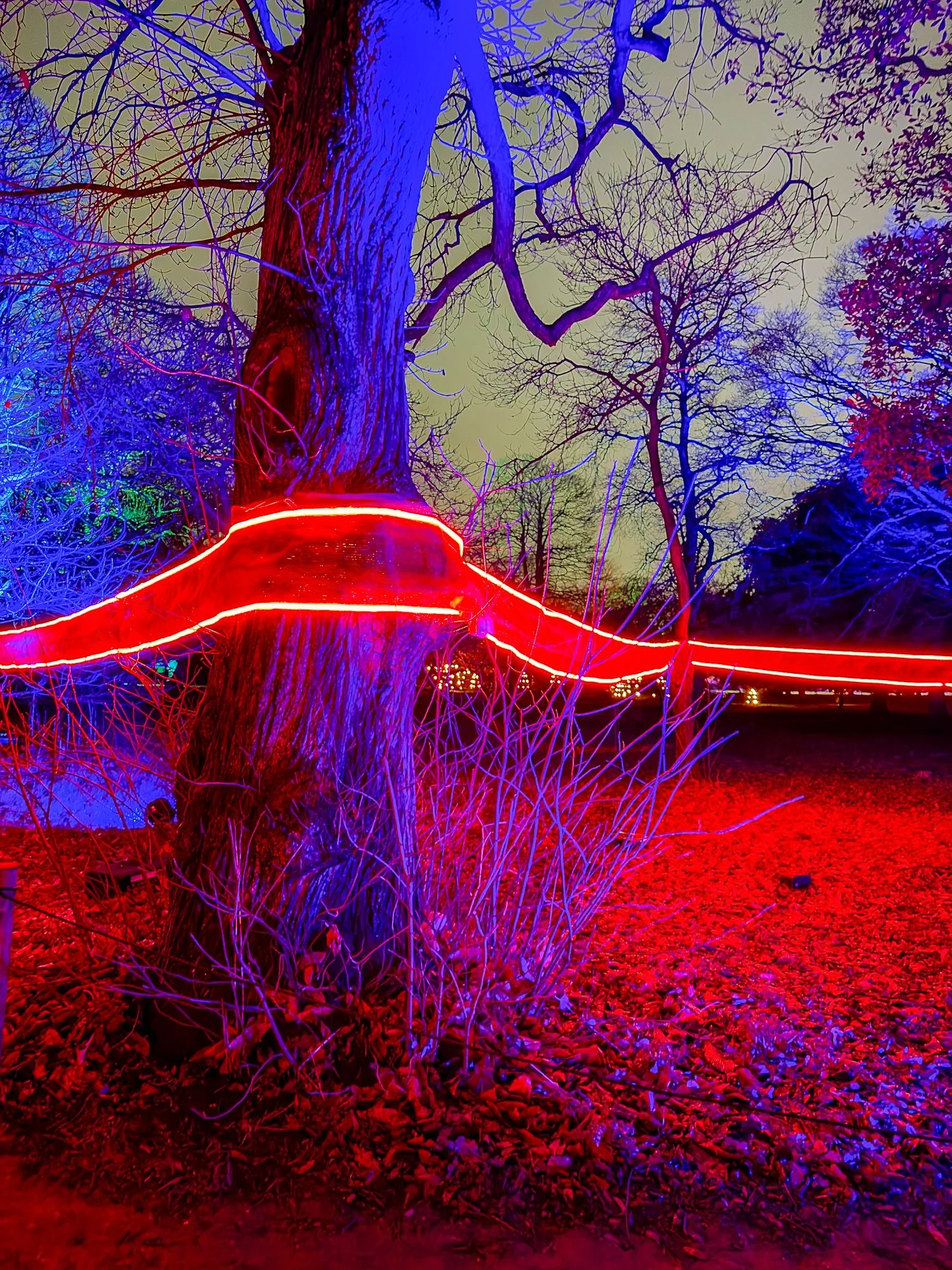
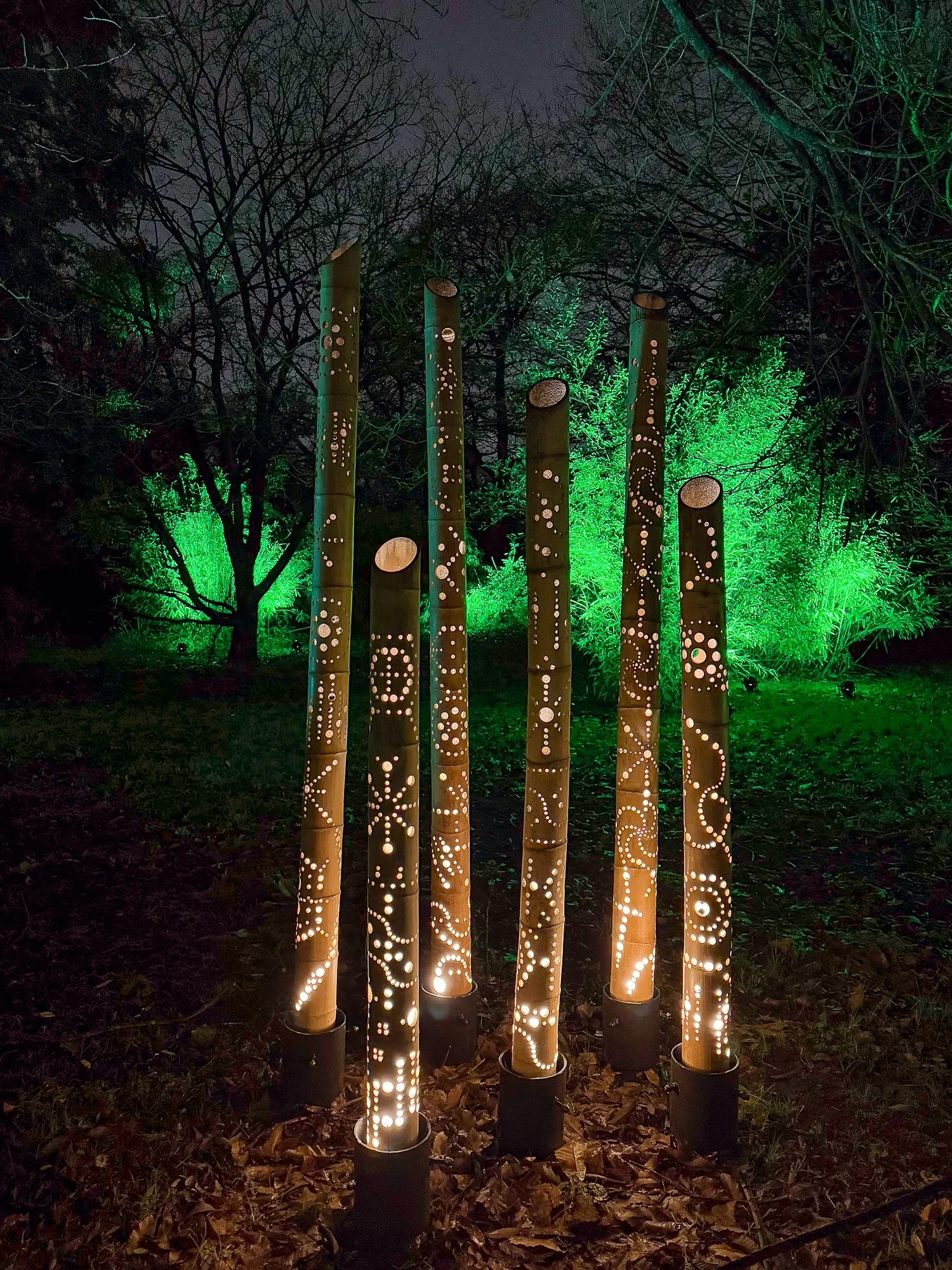
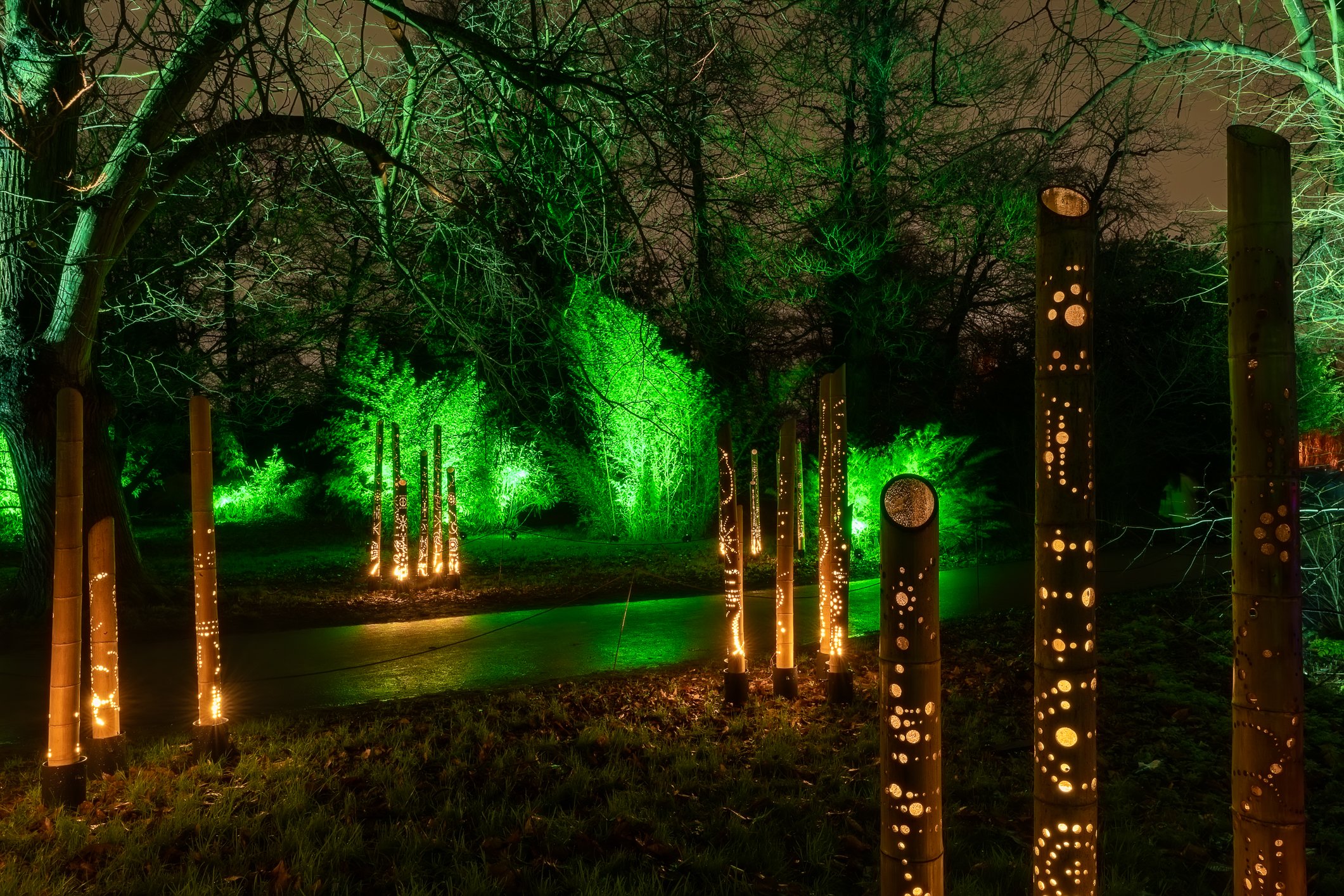
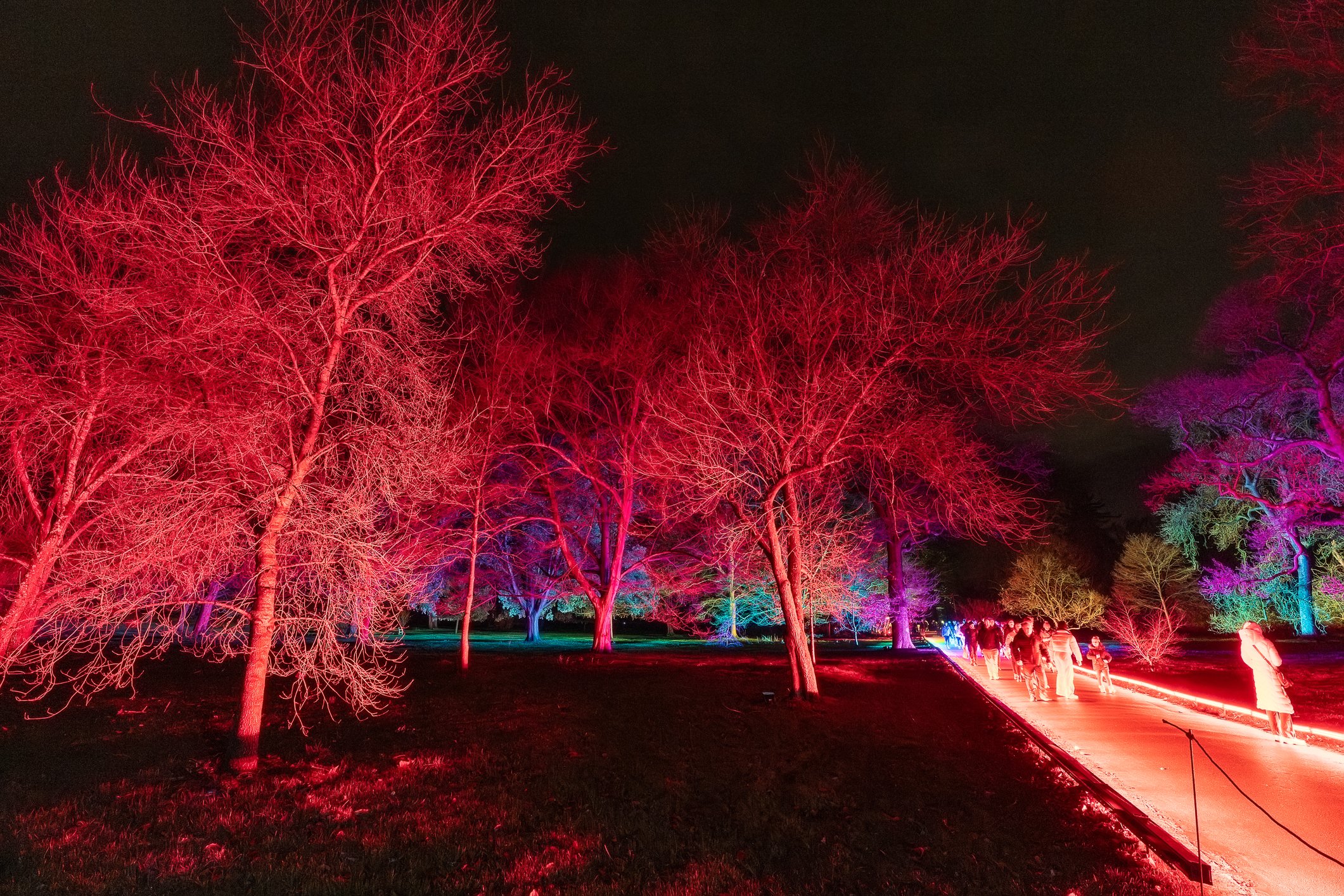
Next comes the Electric Ribbon, a swirling ribbon of red light weaving through several trees. Behind it is Electric Bamboo, made up of thick bamboo poles with patterned holes, lit from within so the light shines through.

Potem pojawia się Electric Ribbon - wijąca się wśród drzew czerwona wstęga światła. Tuż za nią znajduje się instalacja Electric Bamboo, złożona z podświetlonych od środka grubych bambusowych słupów z wyciętymi wzorami.

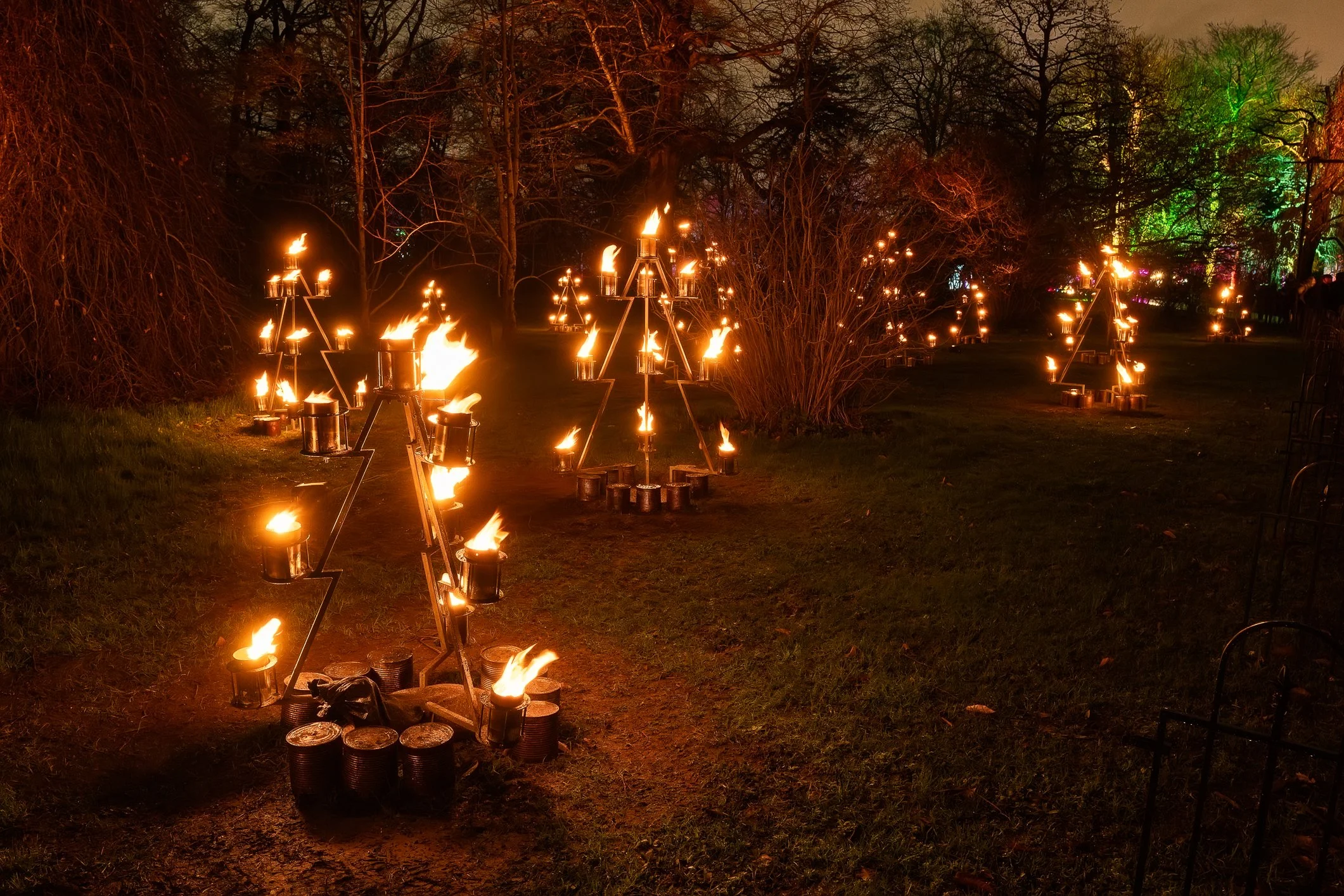
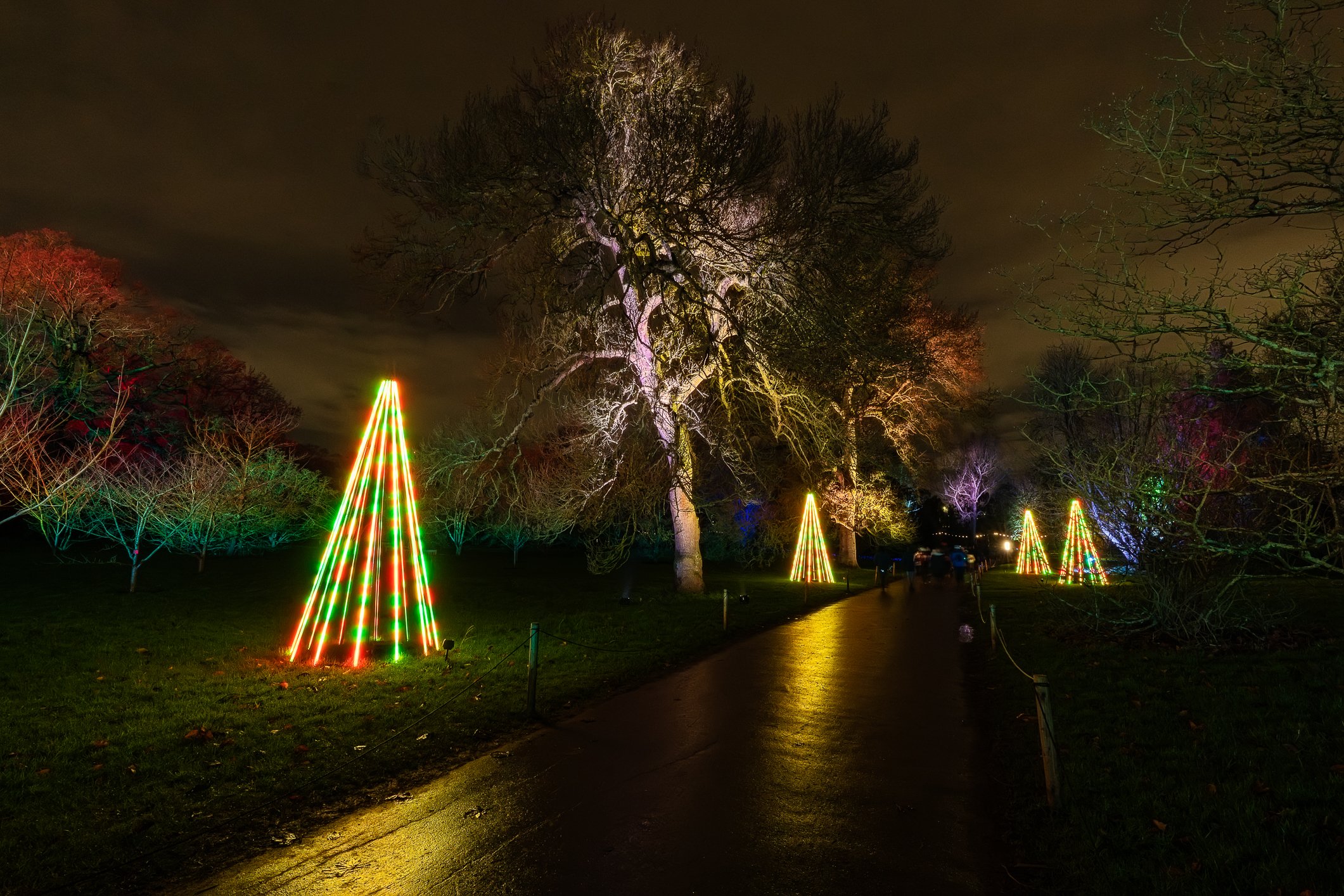
We then enter the Fire Garden, where more than 20 metal Christmas-tree structures (between 1 and 1.75 metres tall) stand along either side of the path, each adorned with flaming lanterns. I suspect these are the same lanterns used to create the Sea of Fire in front of the Temperate House last year (see my blog entry from the previous season), repurposed for this year’s trail - which does not make this installation less peasant. We can feel the warmth of the fire, much appreciated on a cold night, and smell the burning wood and oil while watching the flickering flames in their orange glow.

Kolejna instalacja to Fire Garden, gdzie po obu stronach ścieżki stoi ponad 20 metalowych konstrukcji w kształcie choinek (o wysokości od 1 do 1,75 metra), każda udekorowana płonącymi lampionami. Podejrzewam, że są to te same lampiony, które w zeszłym roku posłużyły do stworzenia Sea of Fire przed Temperate House (o czym jest mój wpis na blogu z poprzedniego roku), teraz wykorzystane ponownie na tegorocznym szlaku  - co absolutnie nie umniejsza obecnej instalacji. Czujemy przyjemne ciepło ognia, szczególnie mile widziane w chłodny wieczór, i wyczuwamy zapach palącego się drewna oraz oleju, obserwując migoczące płomienie skąpane w pomarańczowej poświacie.

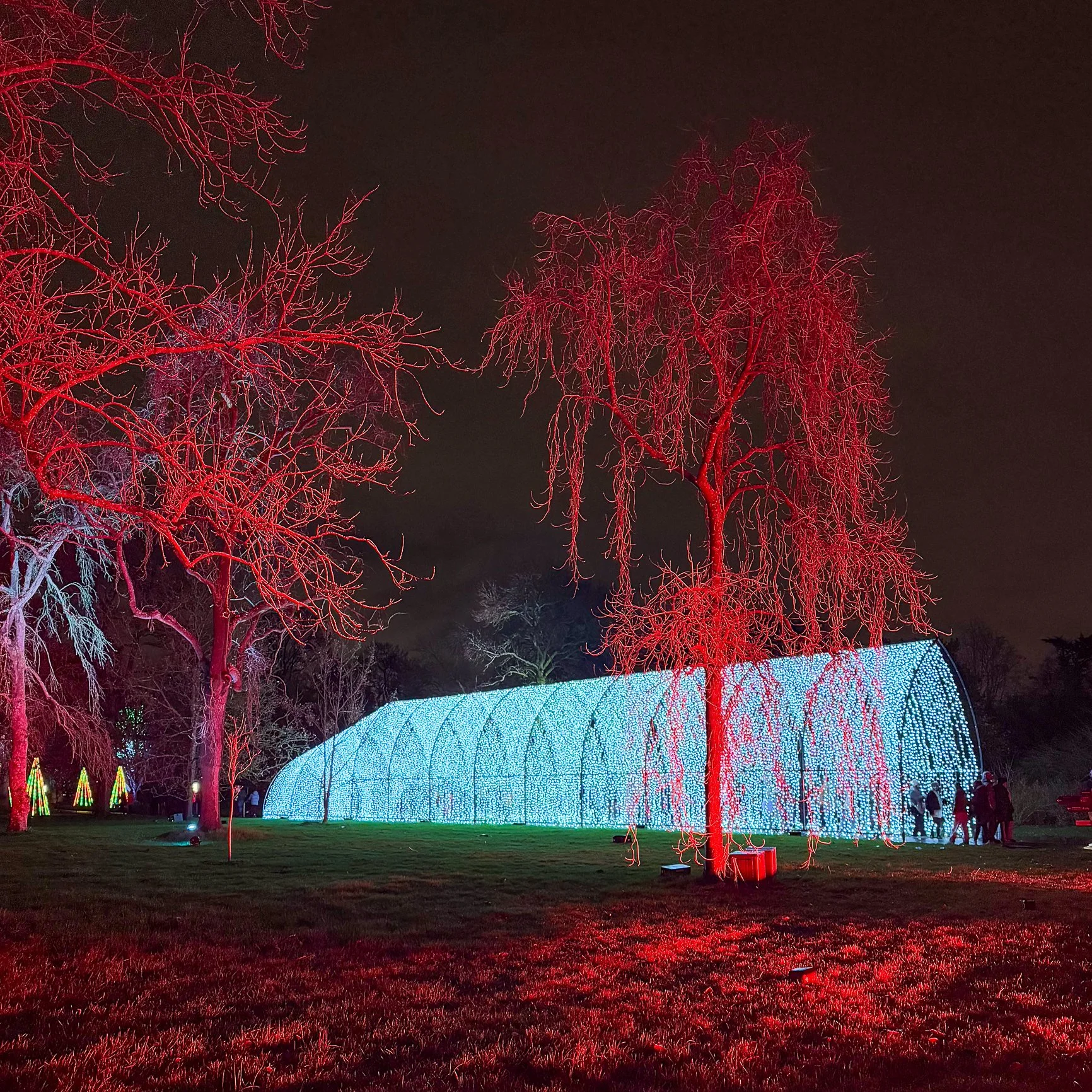
Rainbow Road - a path flooded with the colours of the rainbow - leads us to the Christmas Cathedral, a 39-metre-long installation made from tens of thousands of twinkling LED lights.

Rainbow Road - ścieżka skąpana we wszystkich kolorach tęczy - prowadzi nas do Christmas Cathedral, 39-metrowej instalacji złożonej z dziesiątek tysięcy migoczących świateł LED

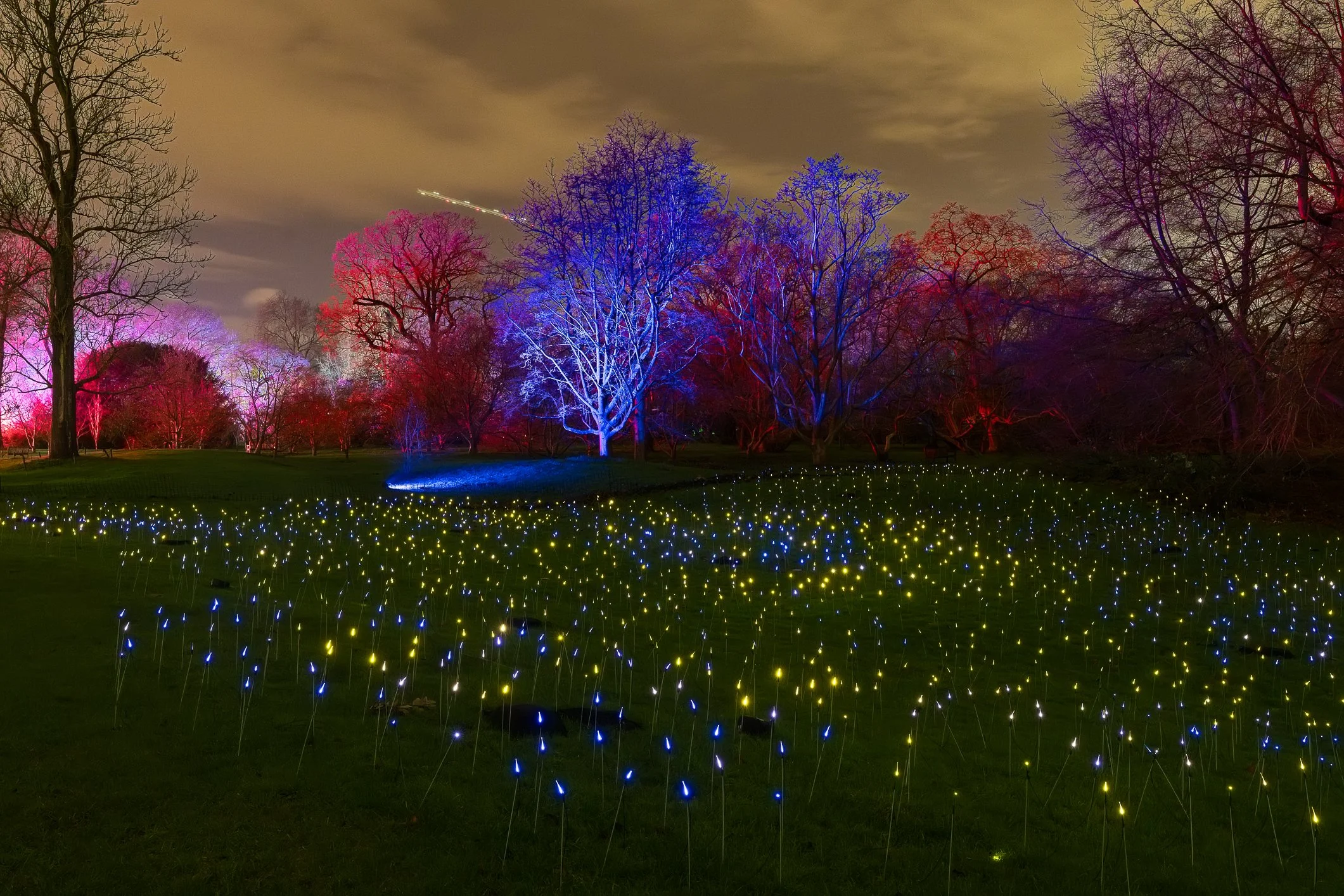
From here, Candy Trees made of neon sticks guide us to the Meadow of Lights, where more than 10,000 flowers bloom using fibre-optic blades of light.

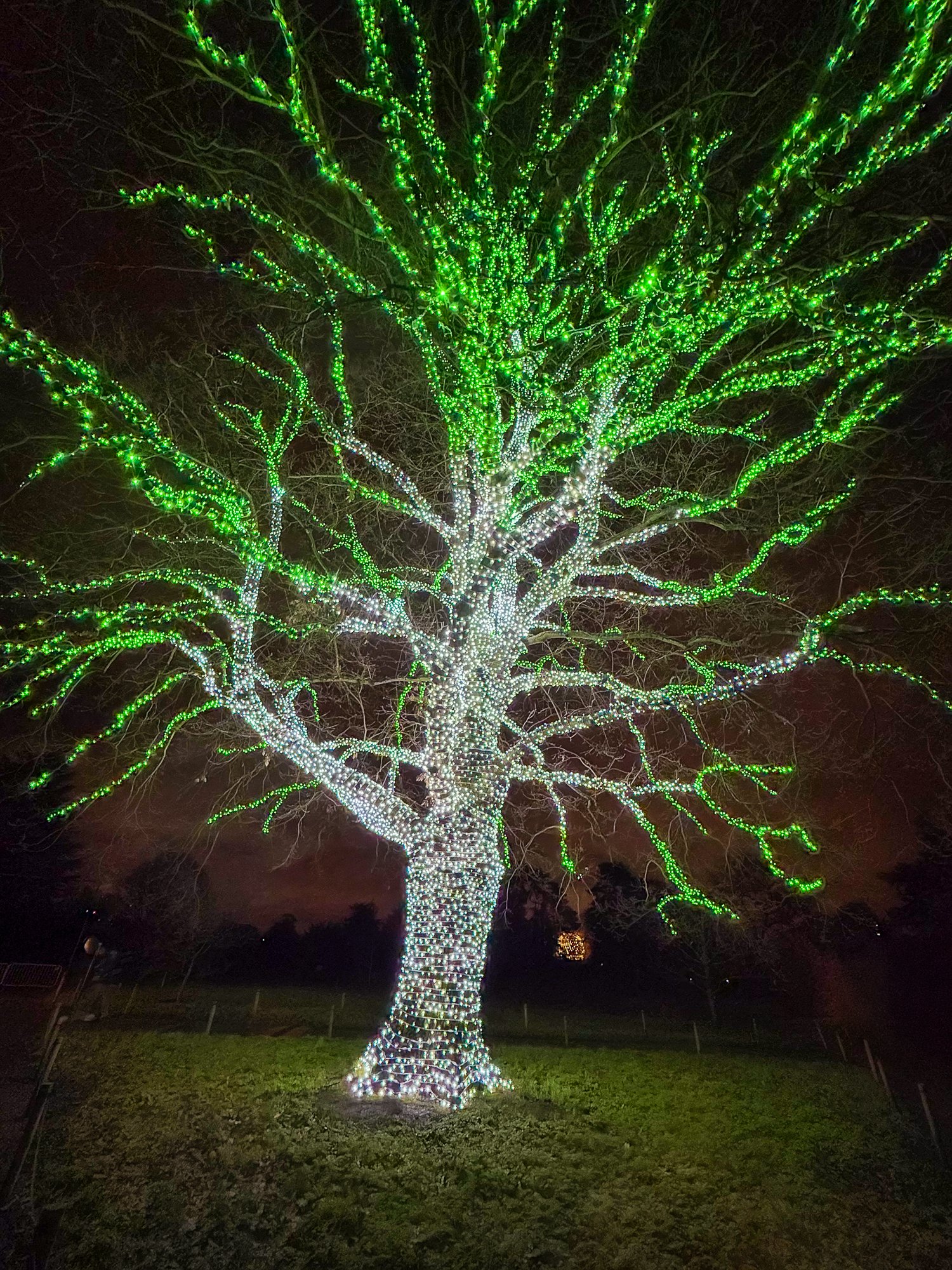
The final installation of this year’s trail is the Christmas Turkey Oak, a magnificent tree with its trunk and branches completely covered in countless tiny lights.

Stąd Candy Trees wykonane z neonowych słupów prowadzą nas do Meadow of Lights, gdzie ponad 10 000 kwiatów „rozkwita” dzięki światłowodowym światłom.

Ostatnią instalacją tegorocznego szlaku jest Christmas Turkey Oak - majestatyczne drzewo, którego pień i gałęzie są całkowicie pokryte niezliczonymi maleńkimi światełkami.

Christmas at Kew (2024 edition) part 1

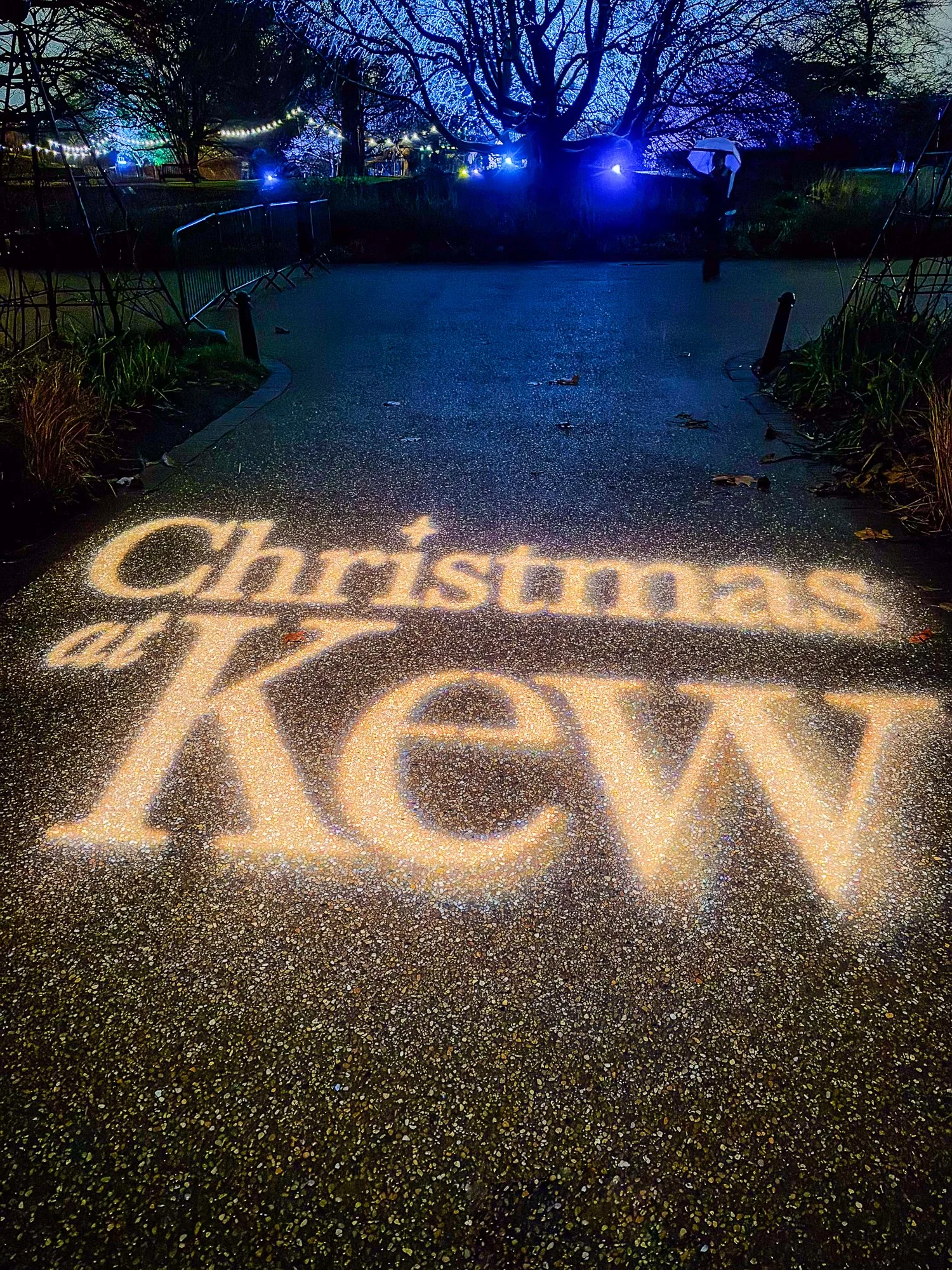
We start 2025 with a visit to Kew Gardens to see their light trail. The trail is approximately 3 km long and, in theory, takes about two hours to complete, though for us it was closer to three and a half ;). It is raining when we arrive, and we brace ourselves for a wet few hours, but the universe is kind: the rain slows to a light drizzle before we get too cold and miserable. It stops and returns a few times, but never becomes heavy again.

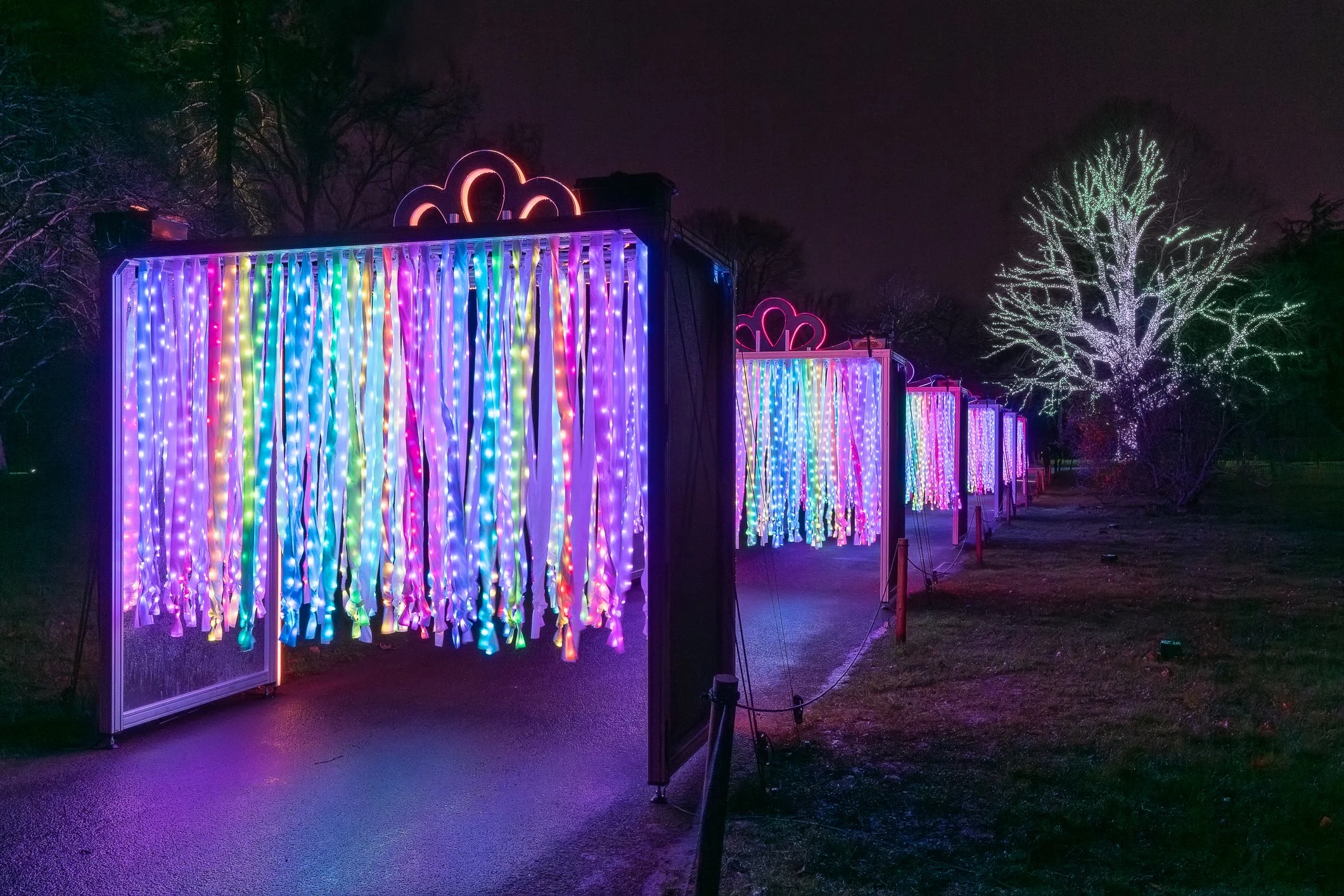
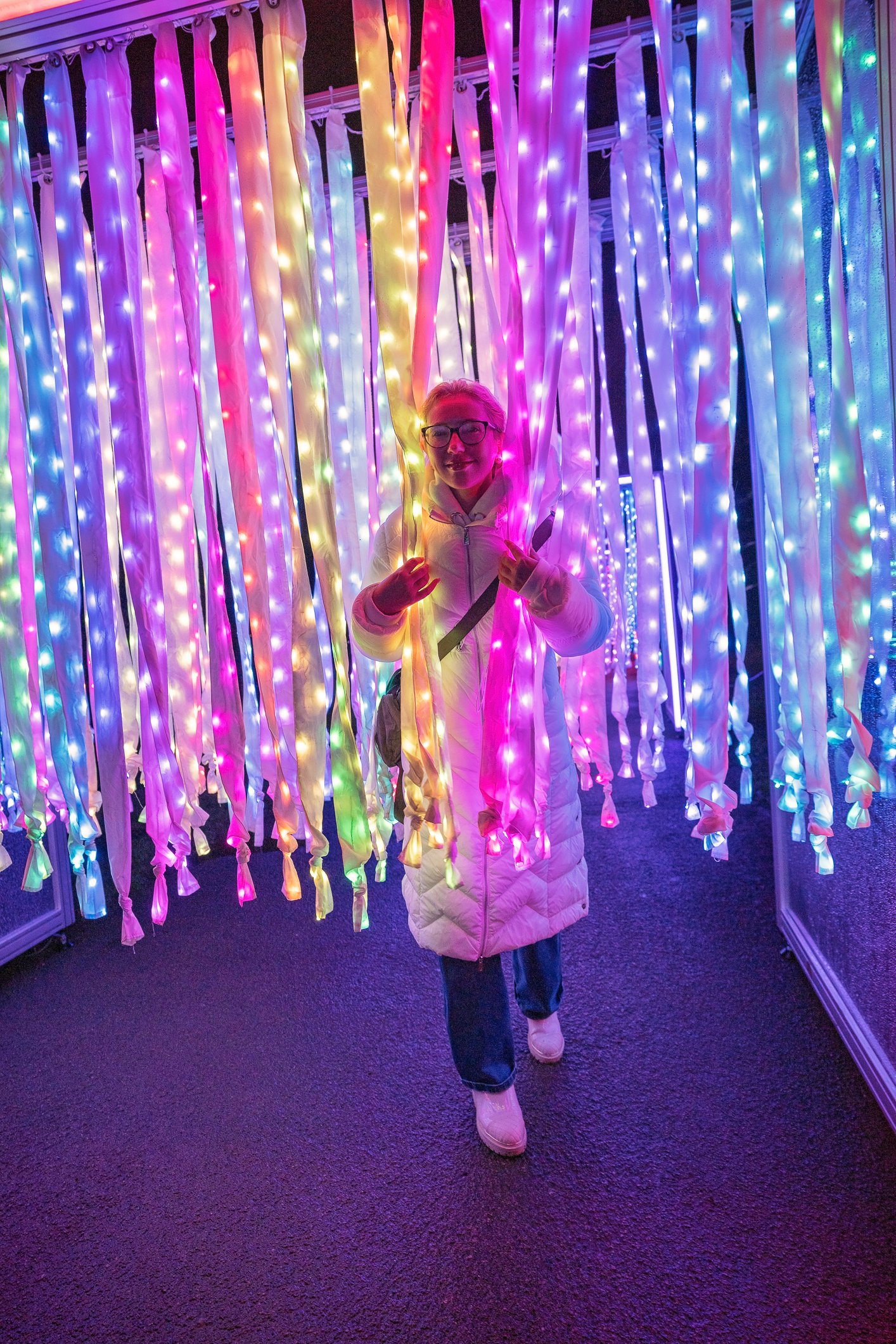
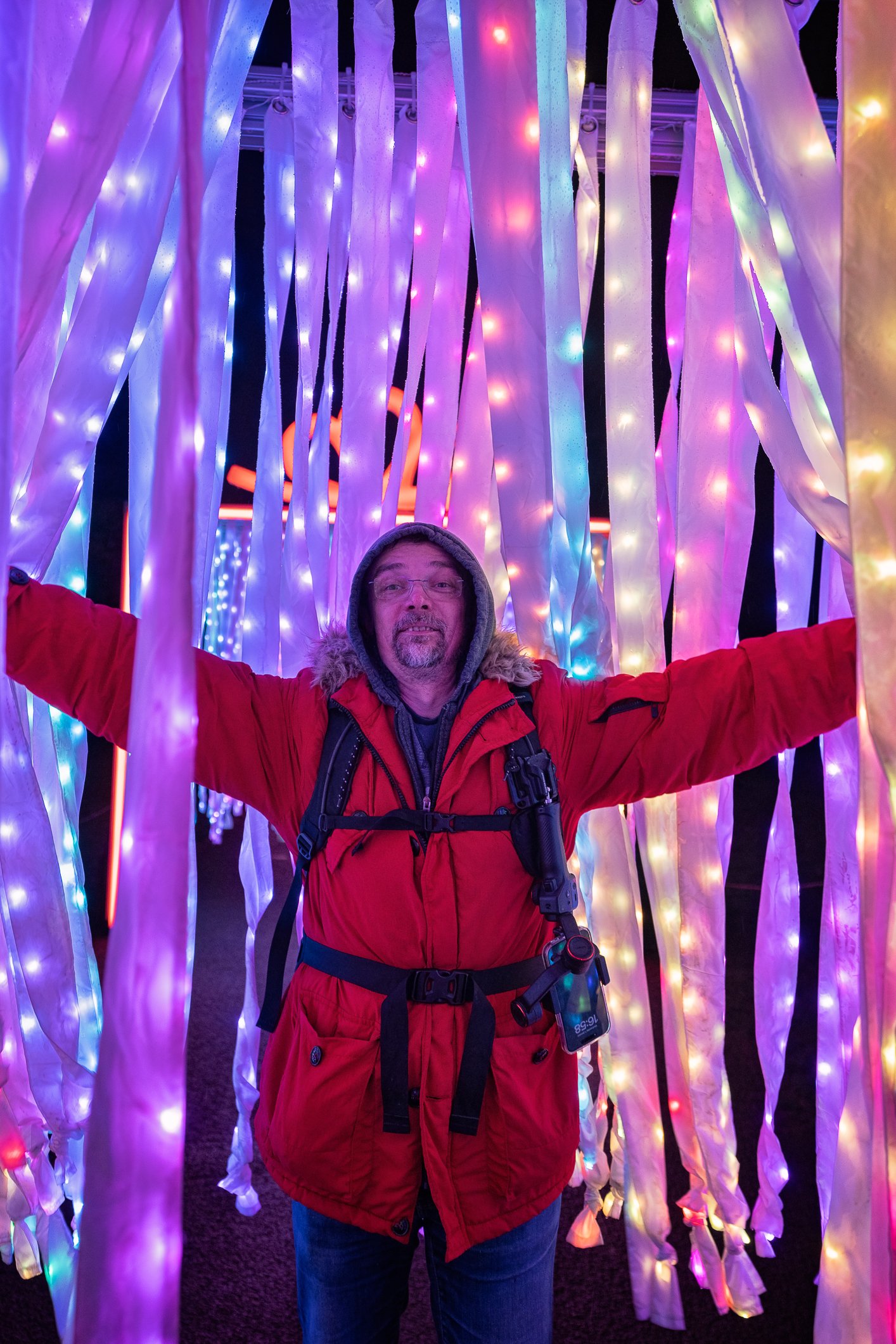
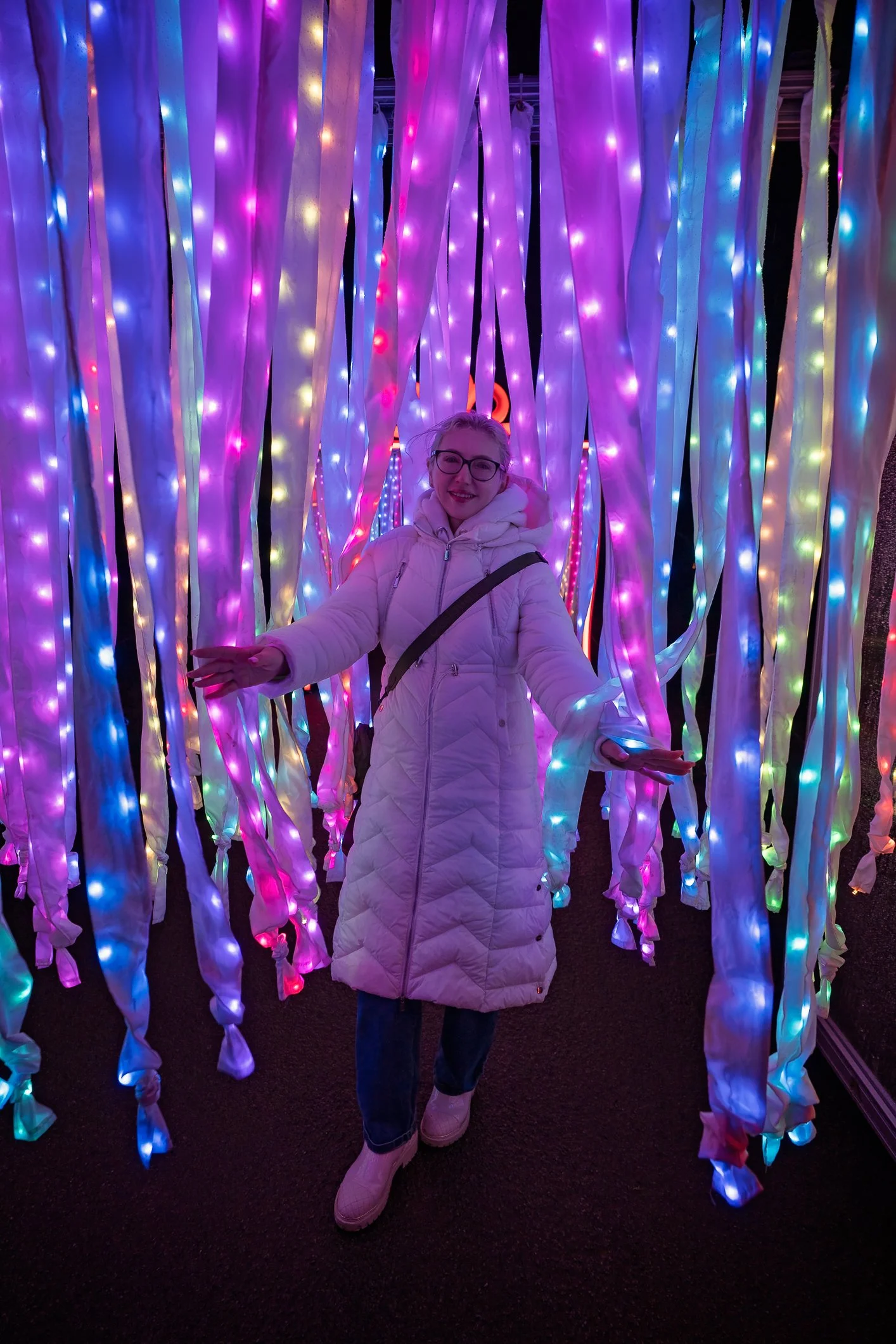
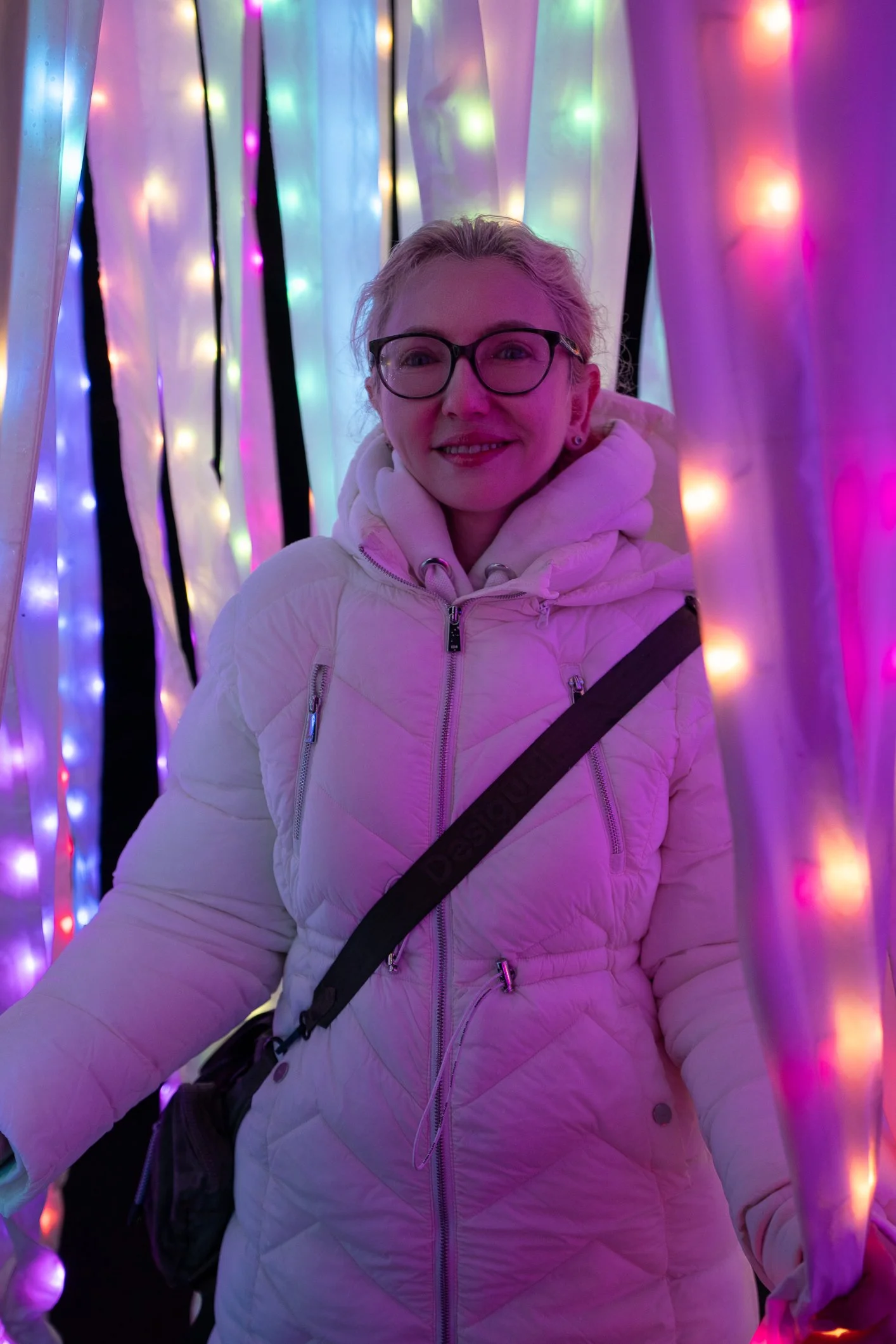
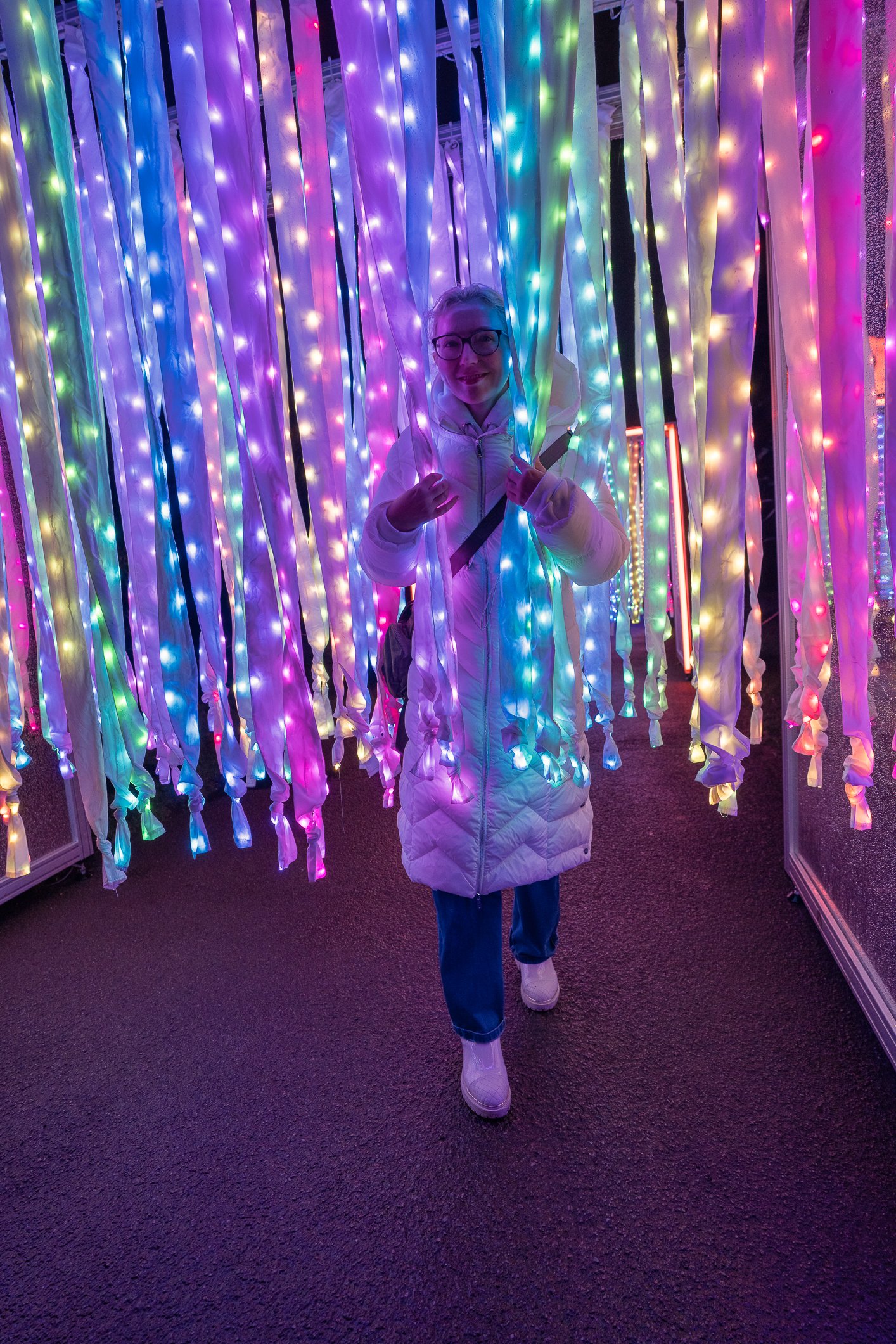
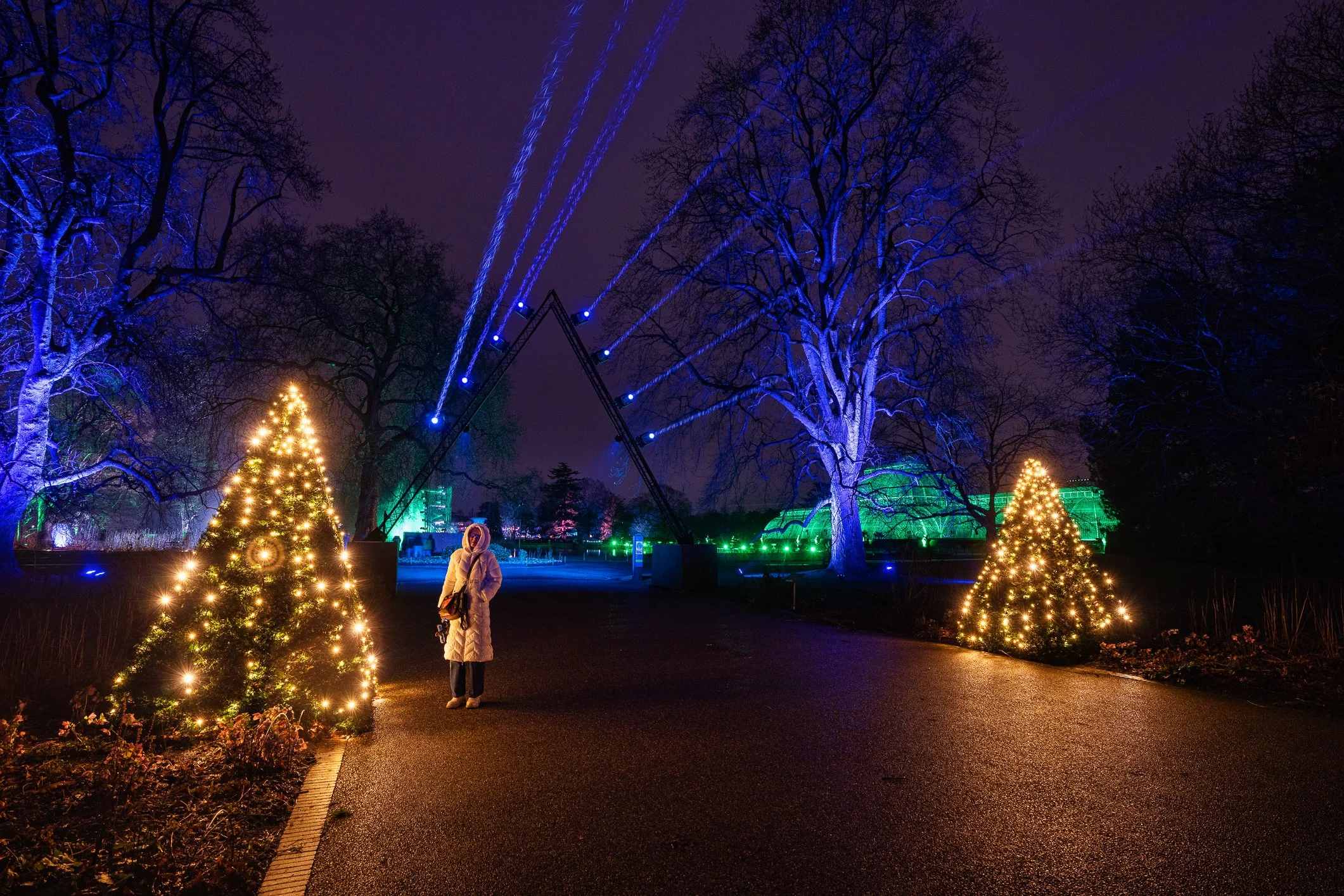
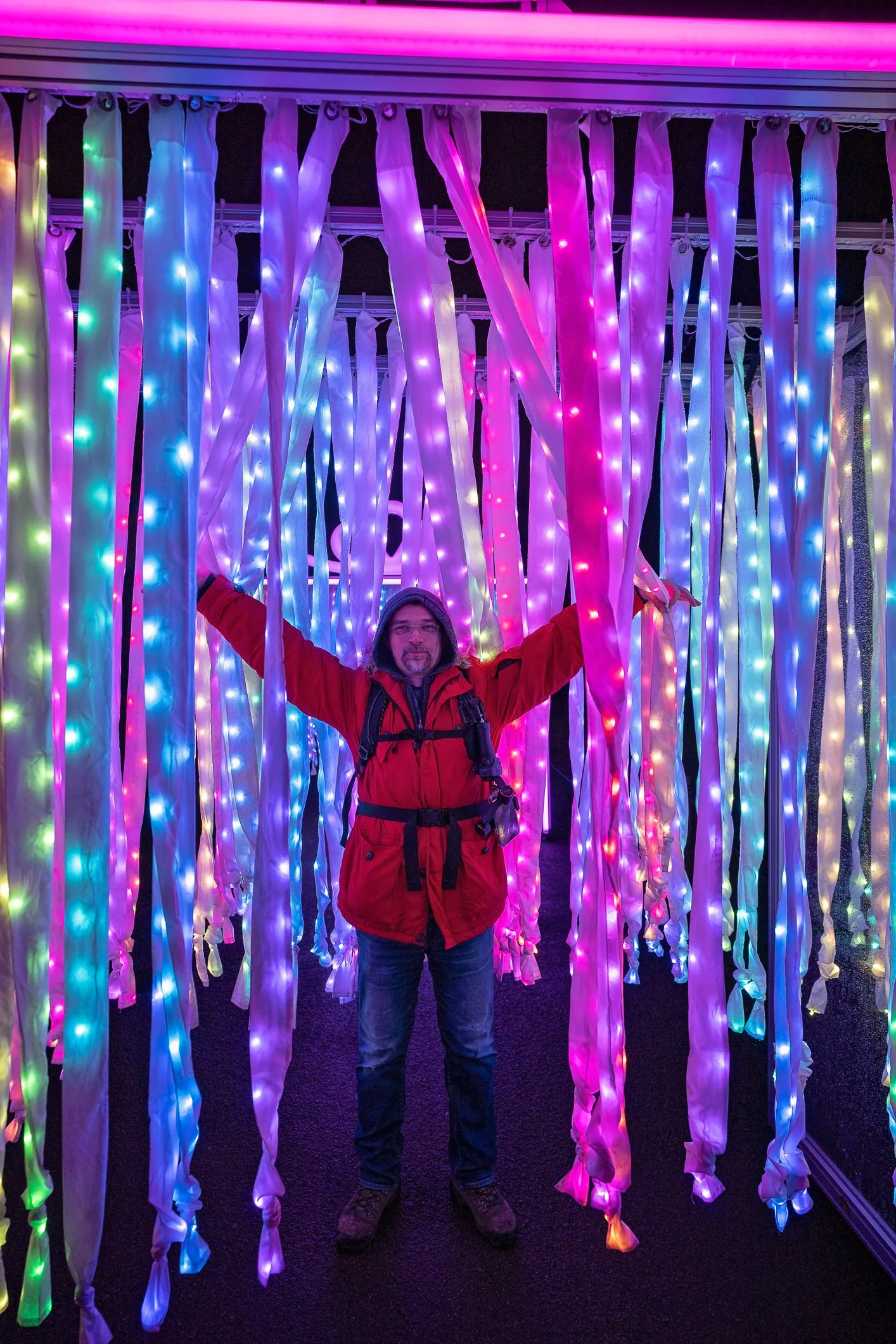
We enter via Victoria Gate, and as such the first installation we encounter is Christmas Presents. This consists of a series of two-metre-high arches with hanging ribbons lit by multi-coloured lights. Walking through them immerses us in light and colour, and our spirits immediately lift.

Rok 2025 zaczynamy wizytą w Kew Gardens i ich zimowym szlakiem świetlnym. Trasa ma około 3 km długości i teoretycznie powinna zająć dwie godziny, ale w naszym przypadku było to raczej trzy i pół ;). Kiedy przyjeżdżamy, pada deszcz i mentalnie przygotowujemy się na mokry, niezbyt przyjemny wieczór. Na szczęście los okazuje się łaskawy - deszcz szybko słabnie do lekkiej mżawki, zanim zdążymy naprawdę zmarznąć i przemoknąć. Co prawda kilka razy jeszcze wraca, ale już nigdy nie pada zbyt mocno.

Do ogrodów wchodzimy przez Victoria Gate, dlatego nasza pierwsza instalacja to Christmas Presents. To seria dwumetrowych łuków z wiszącymi wstążkami, podświetlonymi kolorowymi światłami. Przechodzimy przez nie, zanurzając się w barwach i świetle, co od razu poprawia nam nastrój.
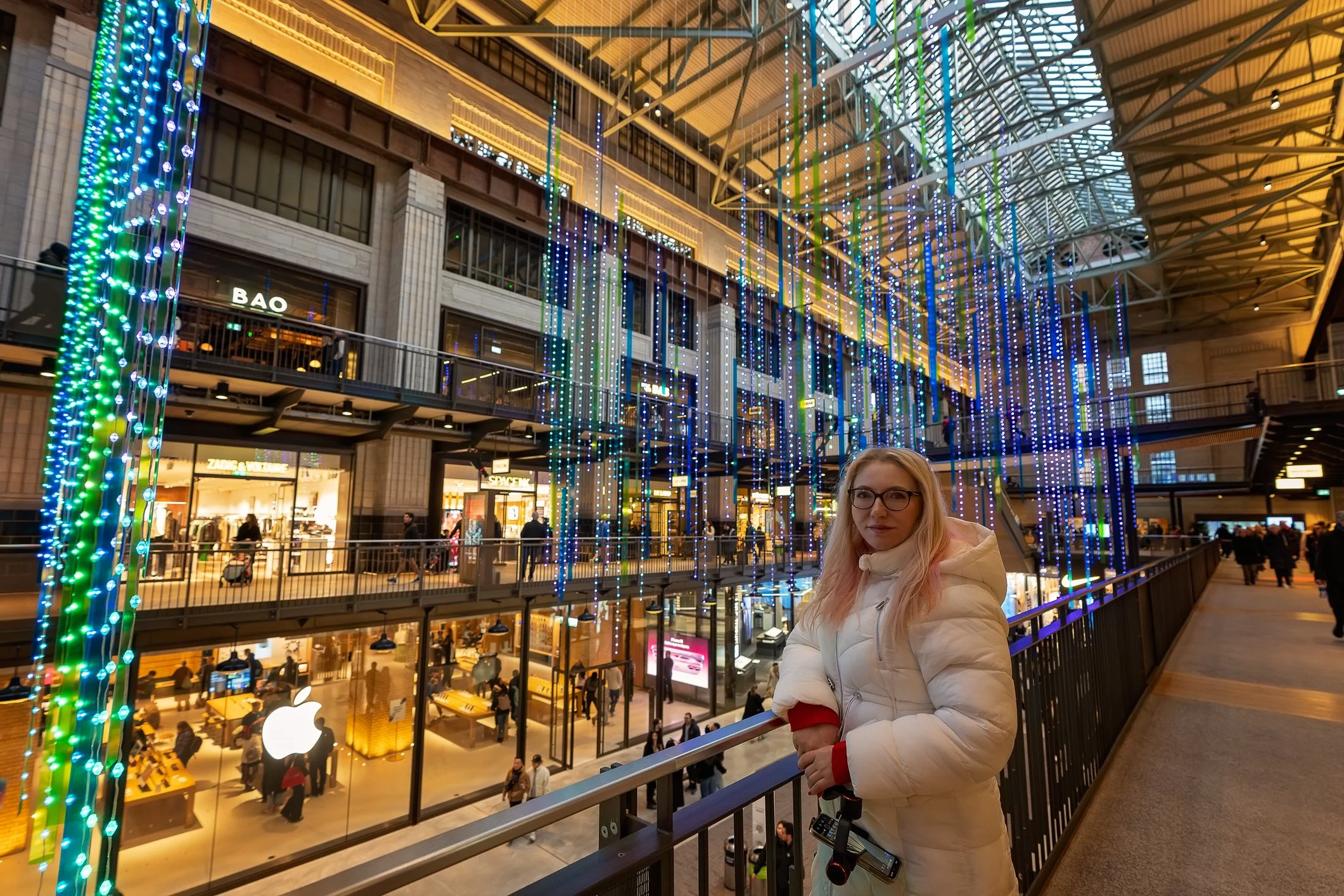
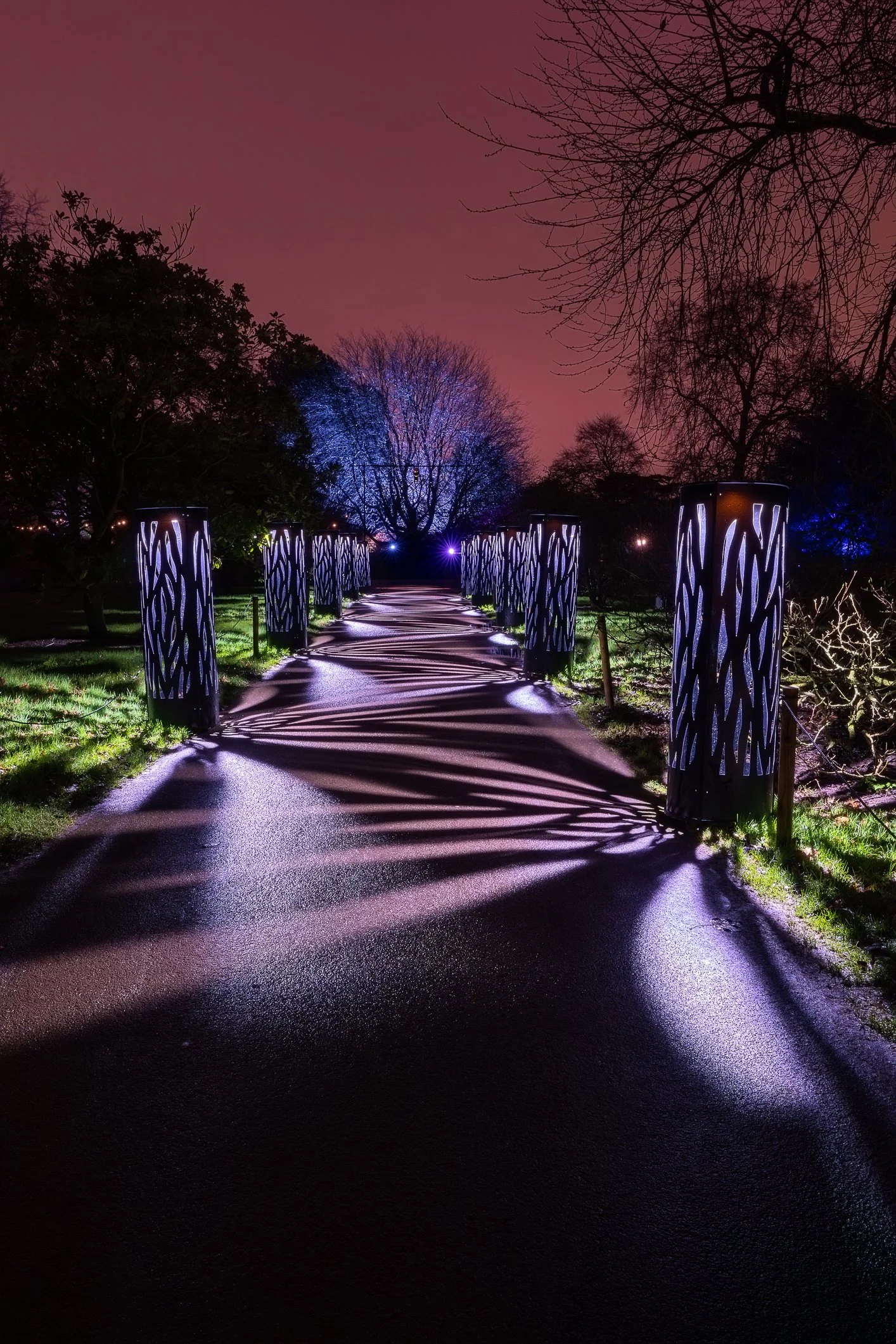
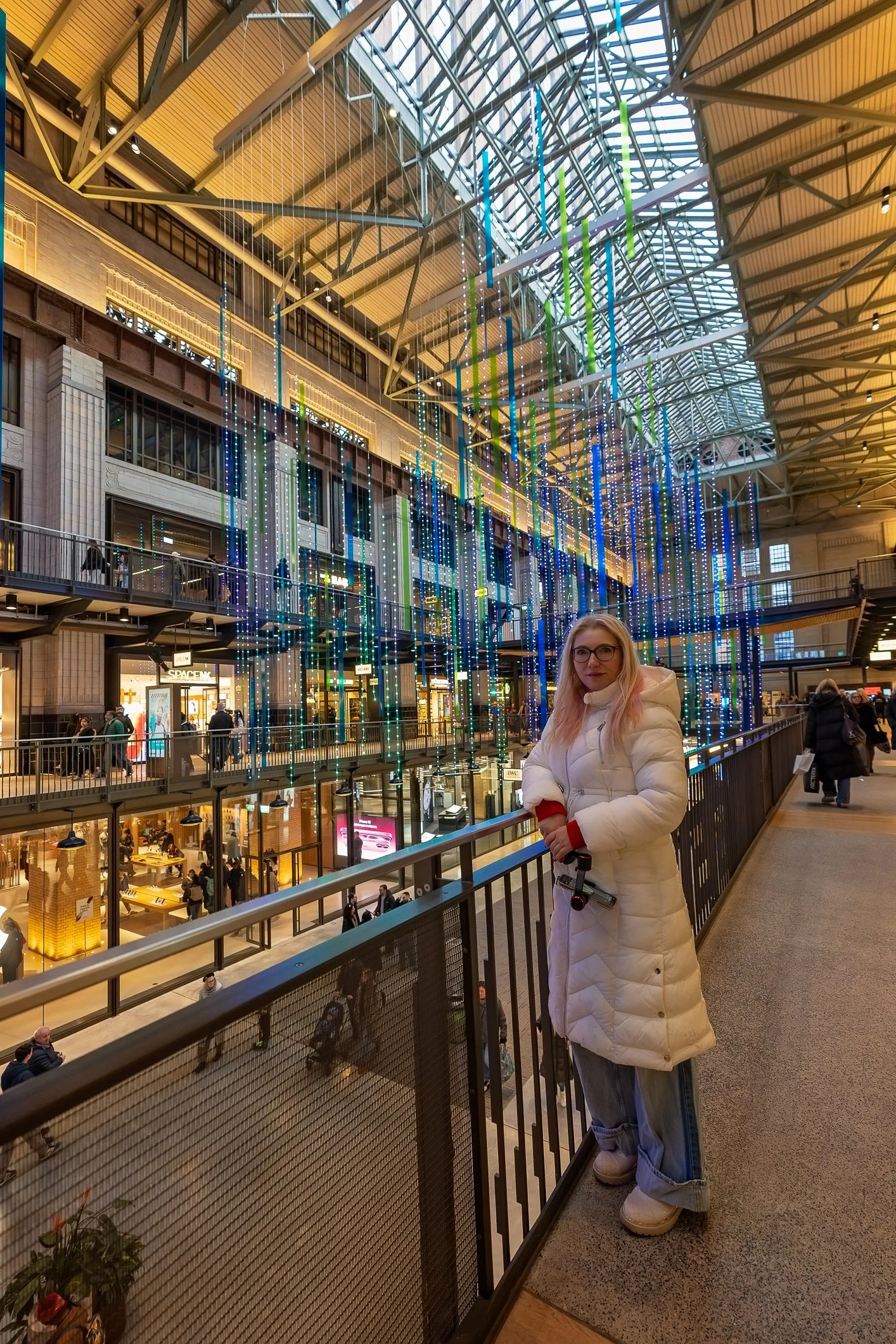
From here we reach the Shadow Lanterns, which cast patterned light across an otherwise very dark pathway. At the end of this path, a tree is lit from behind and silhouetted against the sky.
 

Dalej trafiamy na Shadow Lanterns, które rzucają wzorzyste światło na inaczej nie oświetloną ścieżkę.

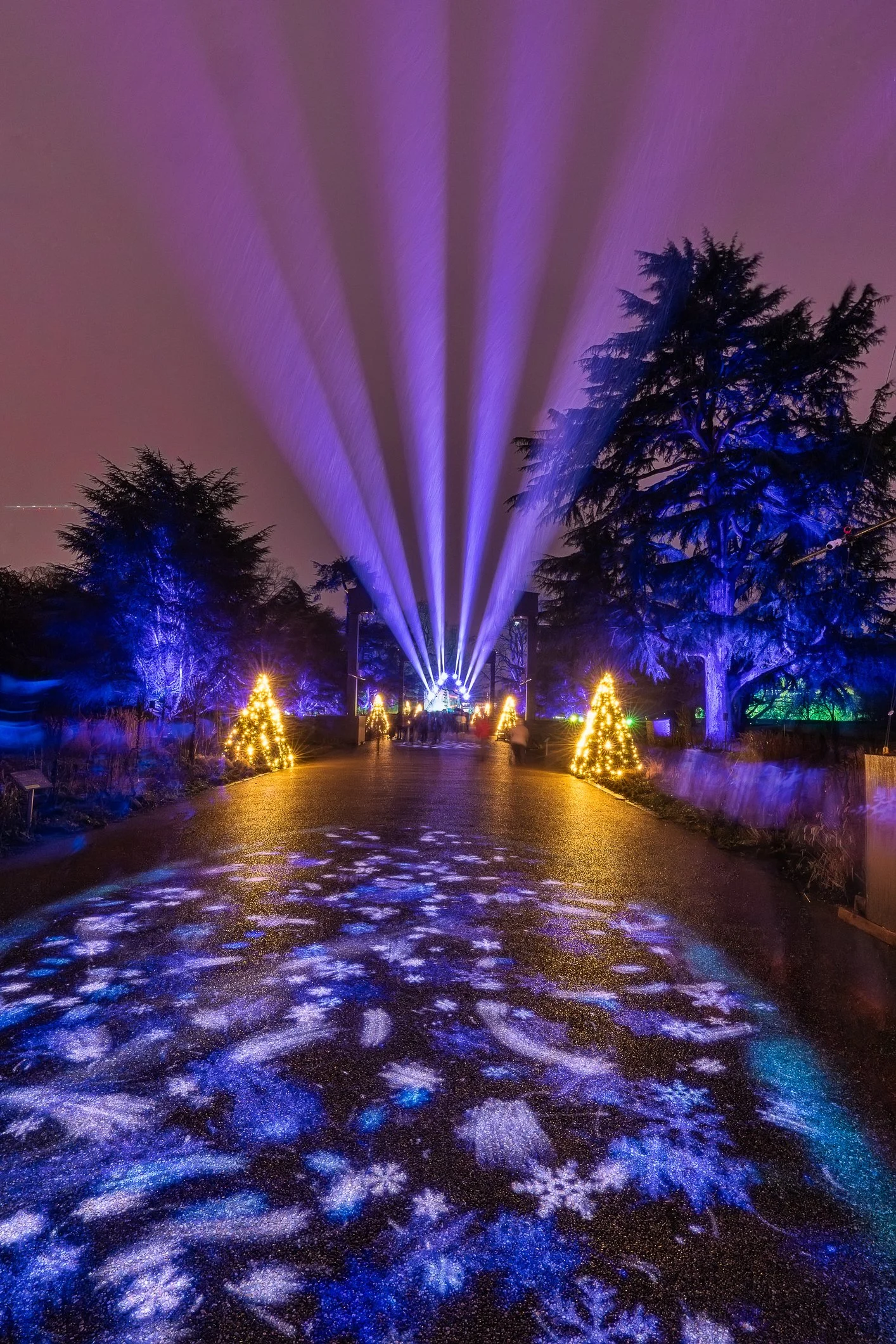
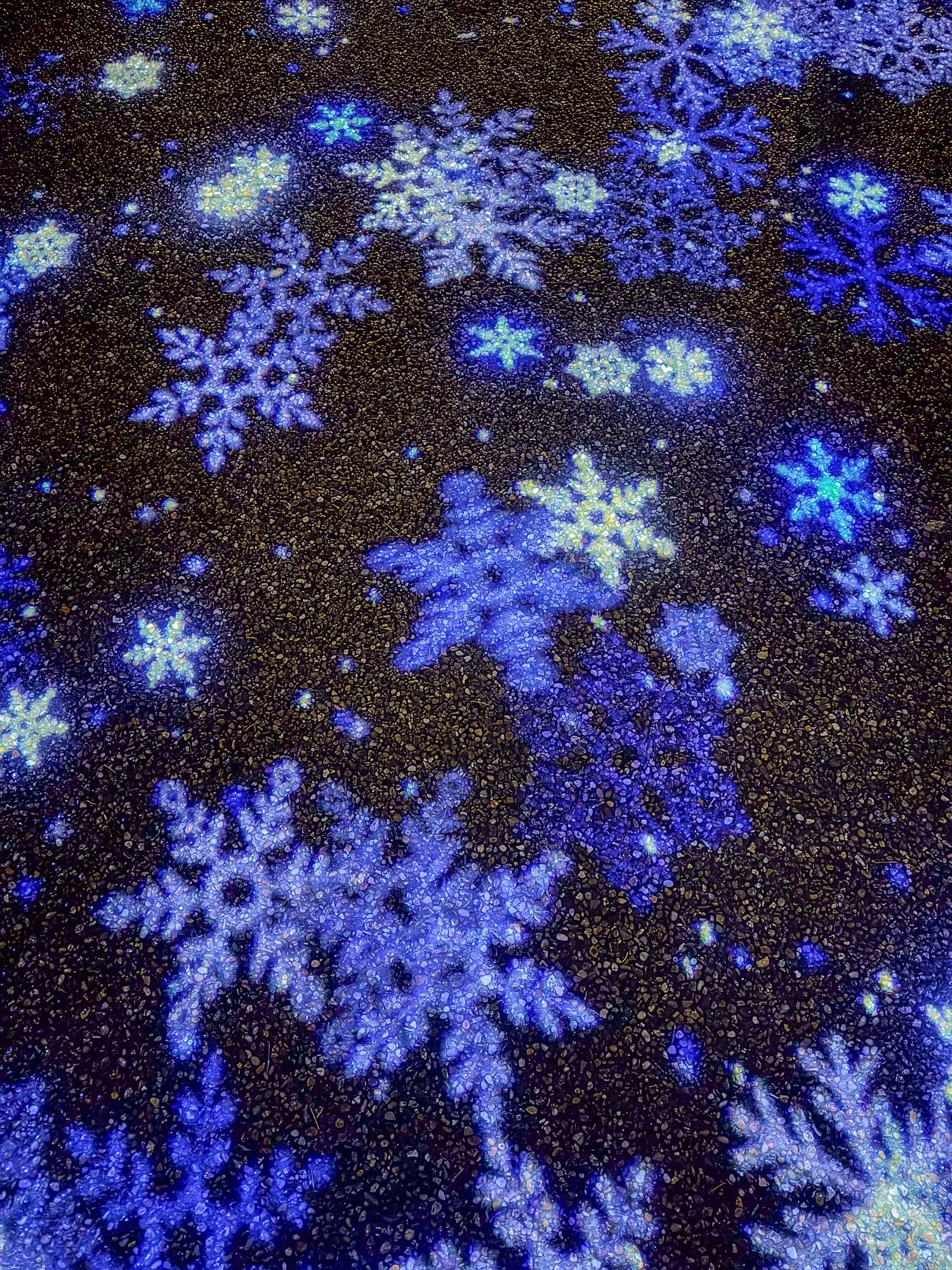
Next is the Snowflake Walk, an interactive path where snowflakes projected onto the ground appear and multiply beneath our steps. Ahead of us, beams of light move and swirl as we walk towards and through the Arch of Light.

Kolejną instalacją jest Snowflake Walk - interaktywna alejka, na której na ziemi pojawiają się i rozmnażają świetlne płatki śniegu reagujące na nasze kroki. Przed nami snopy światła wirują w powietrzu, prowadząc nas w stronę i potem pod Arch of Light.

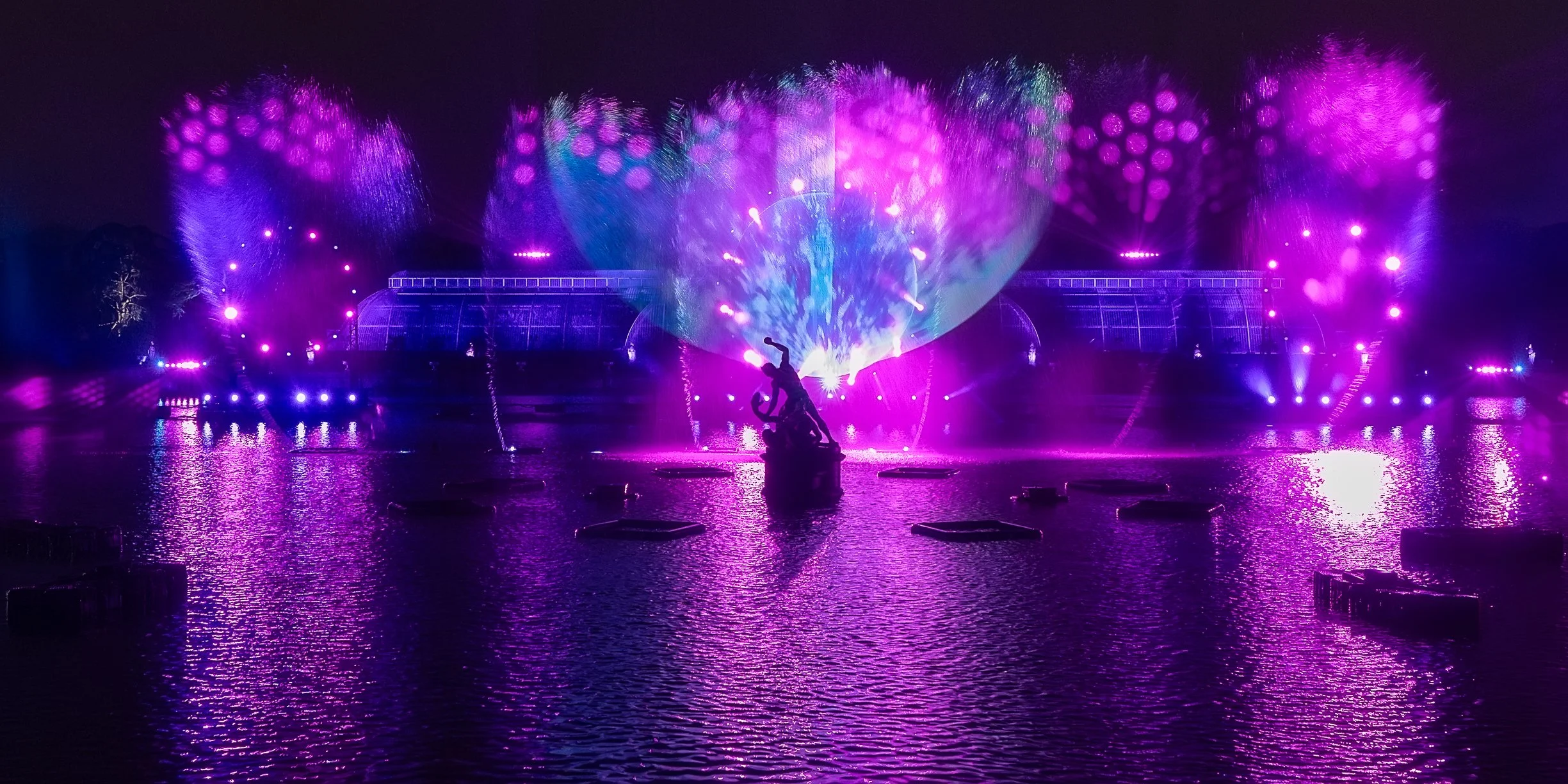
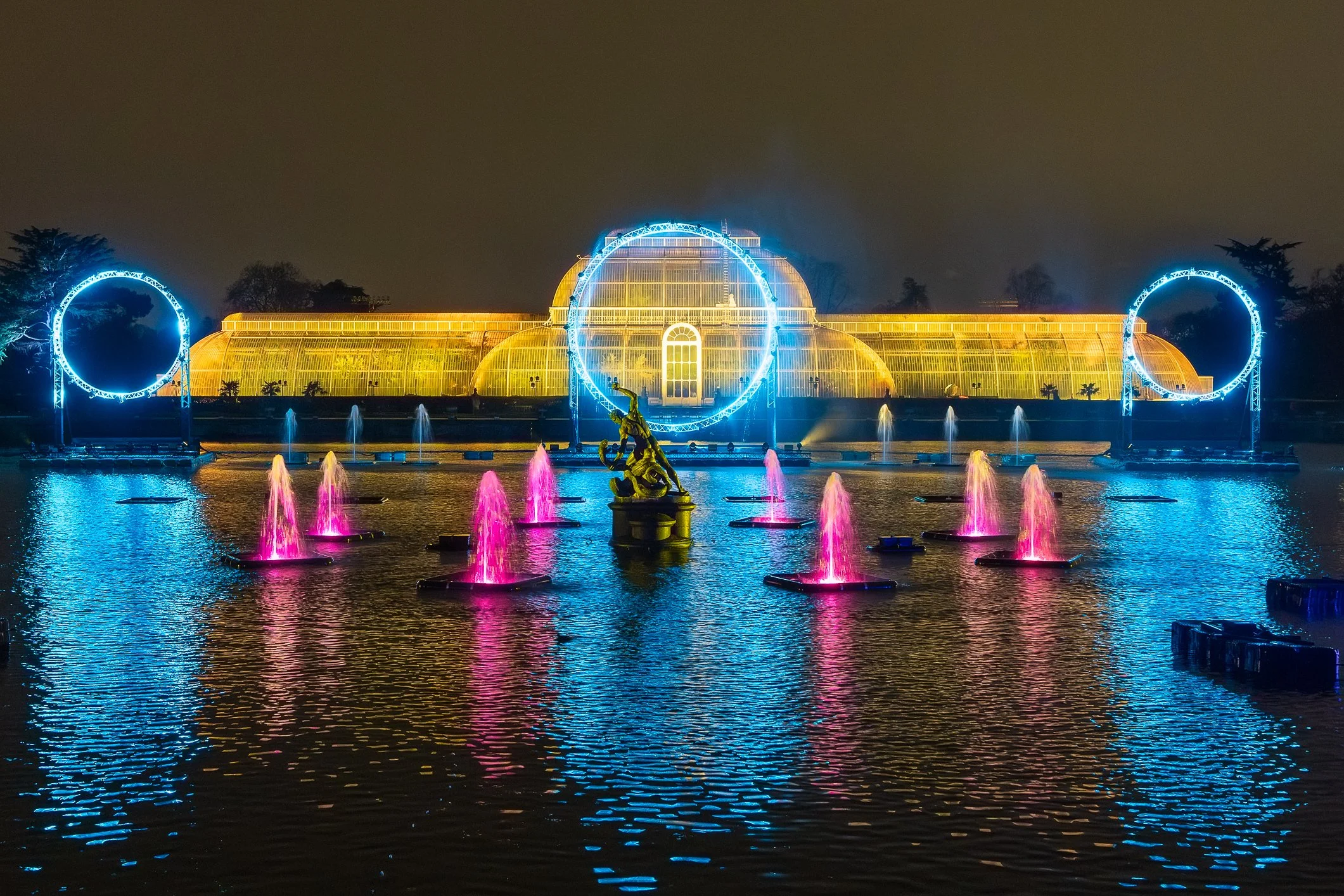
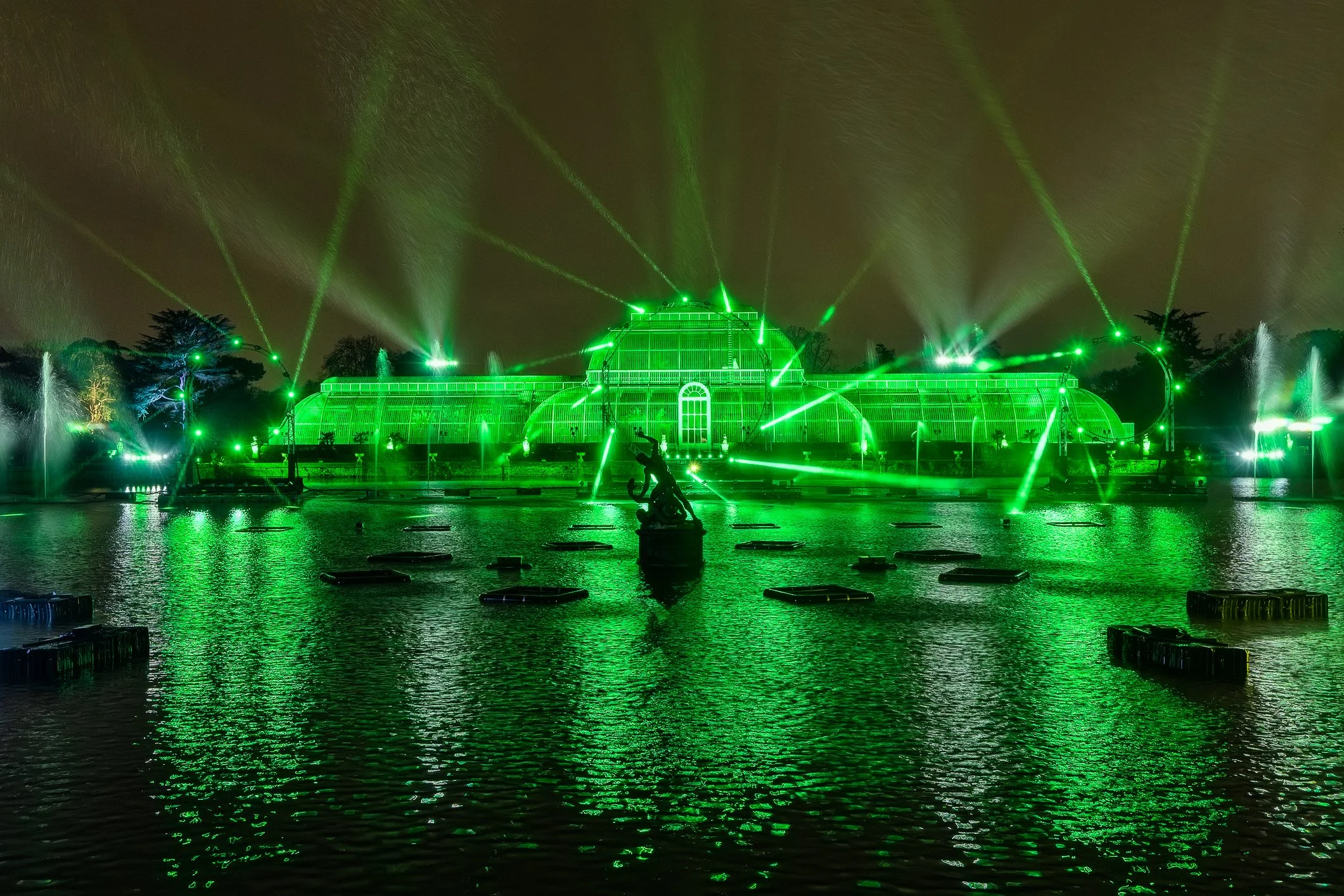
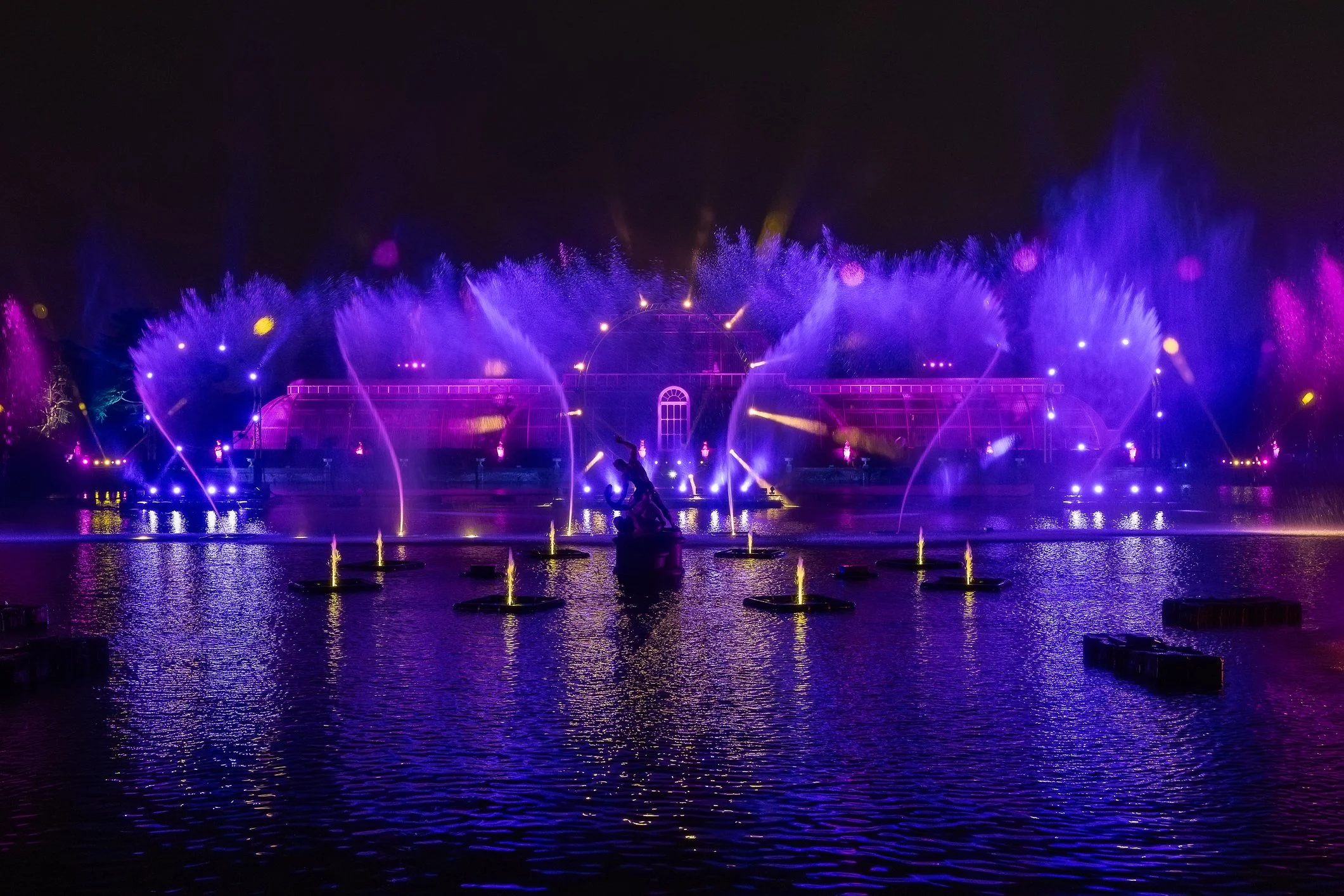
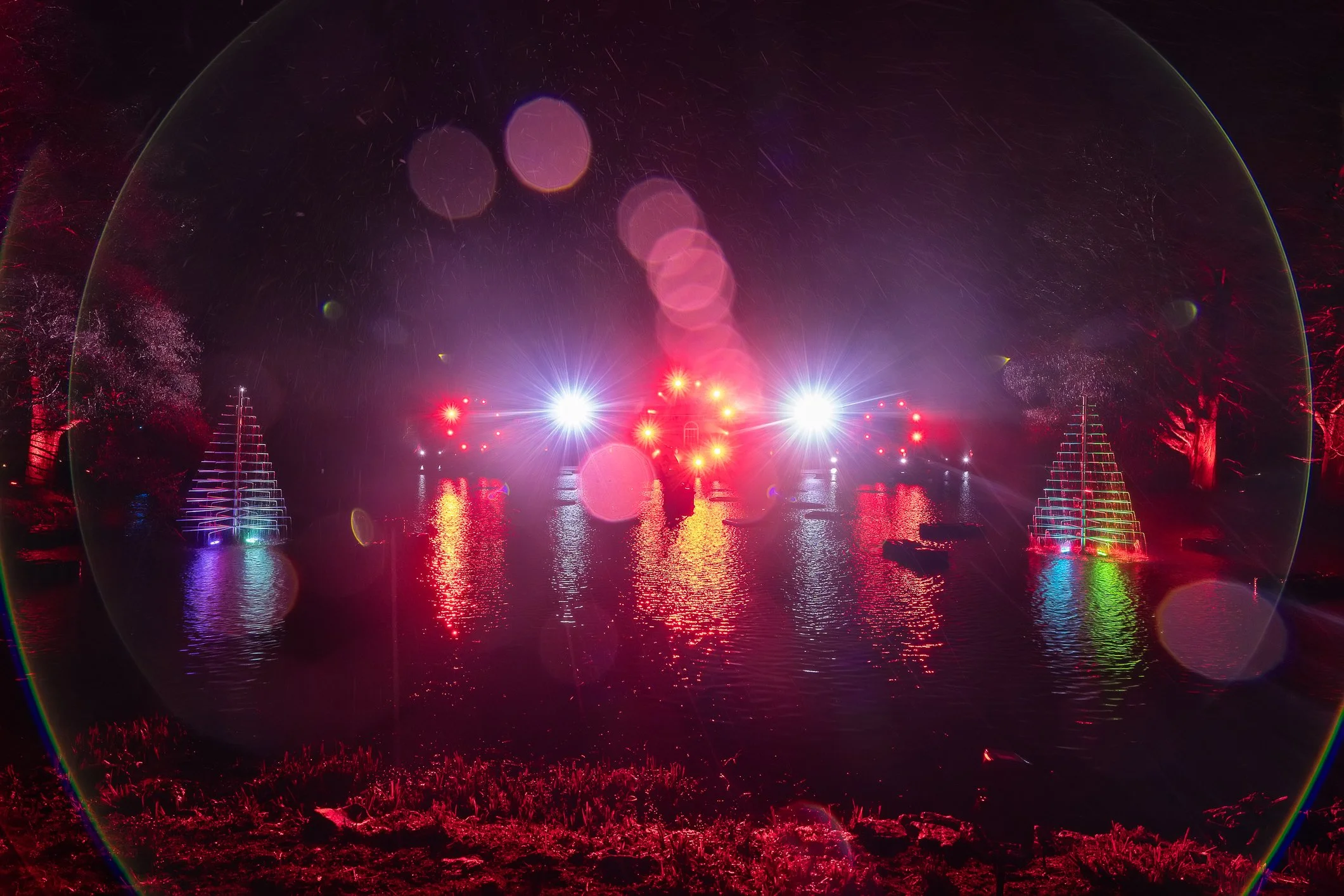
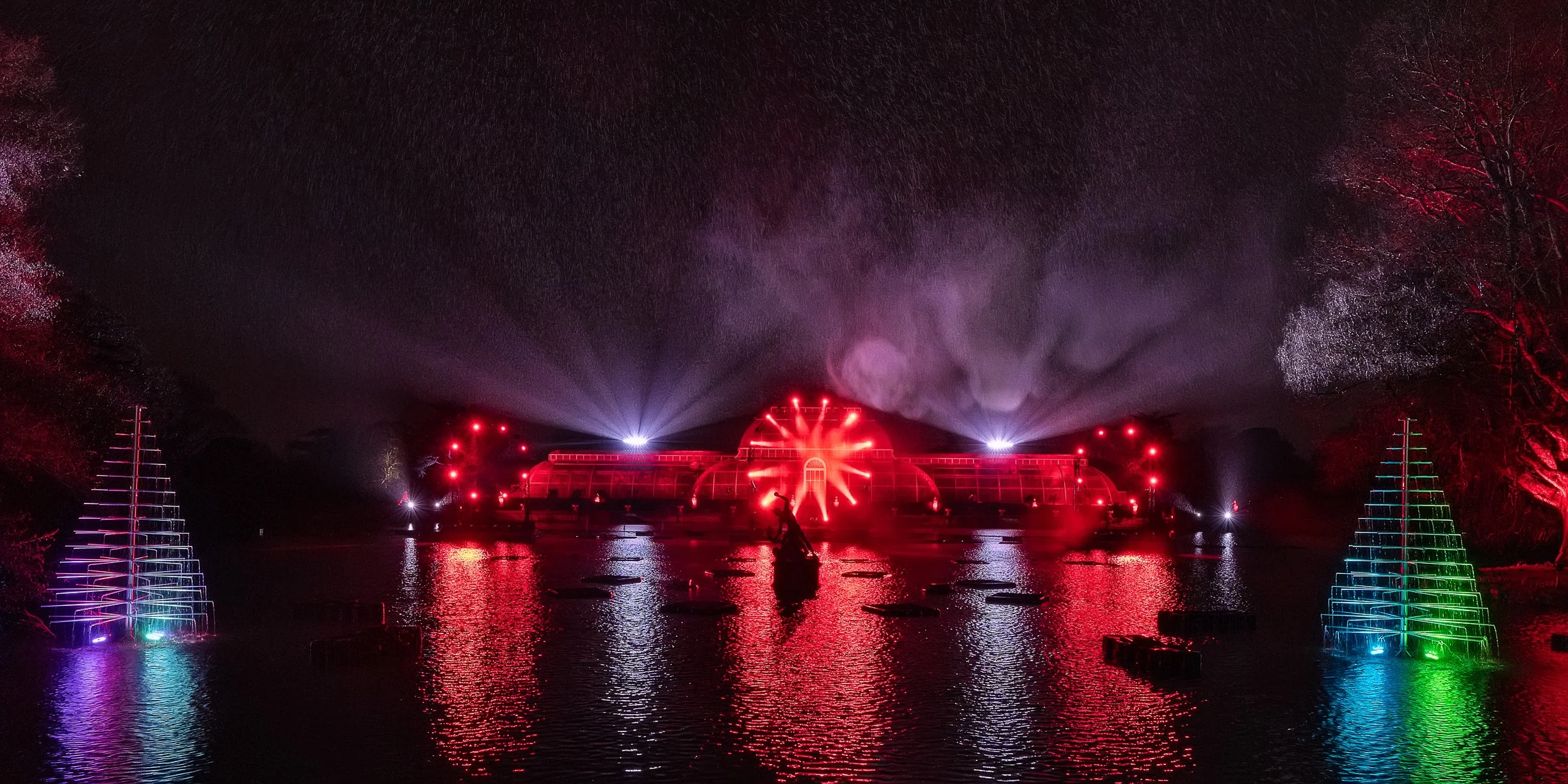
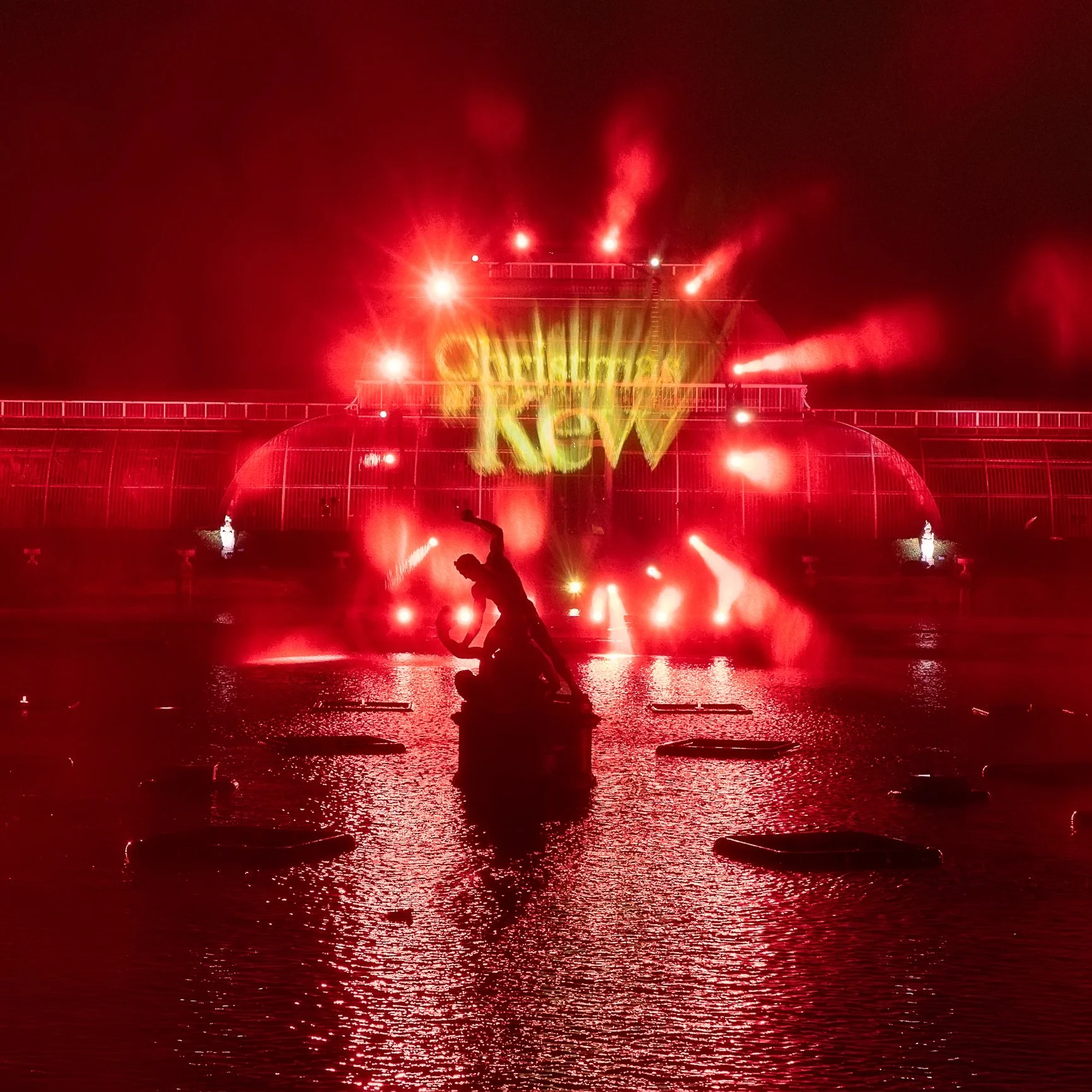
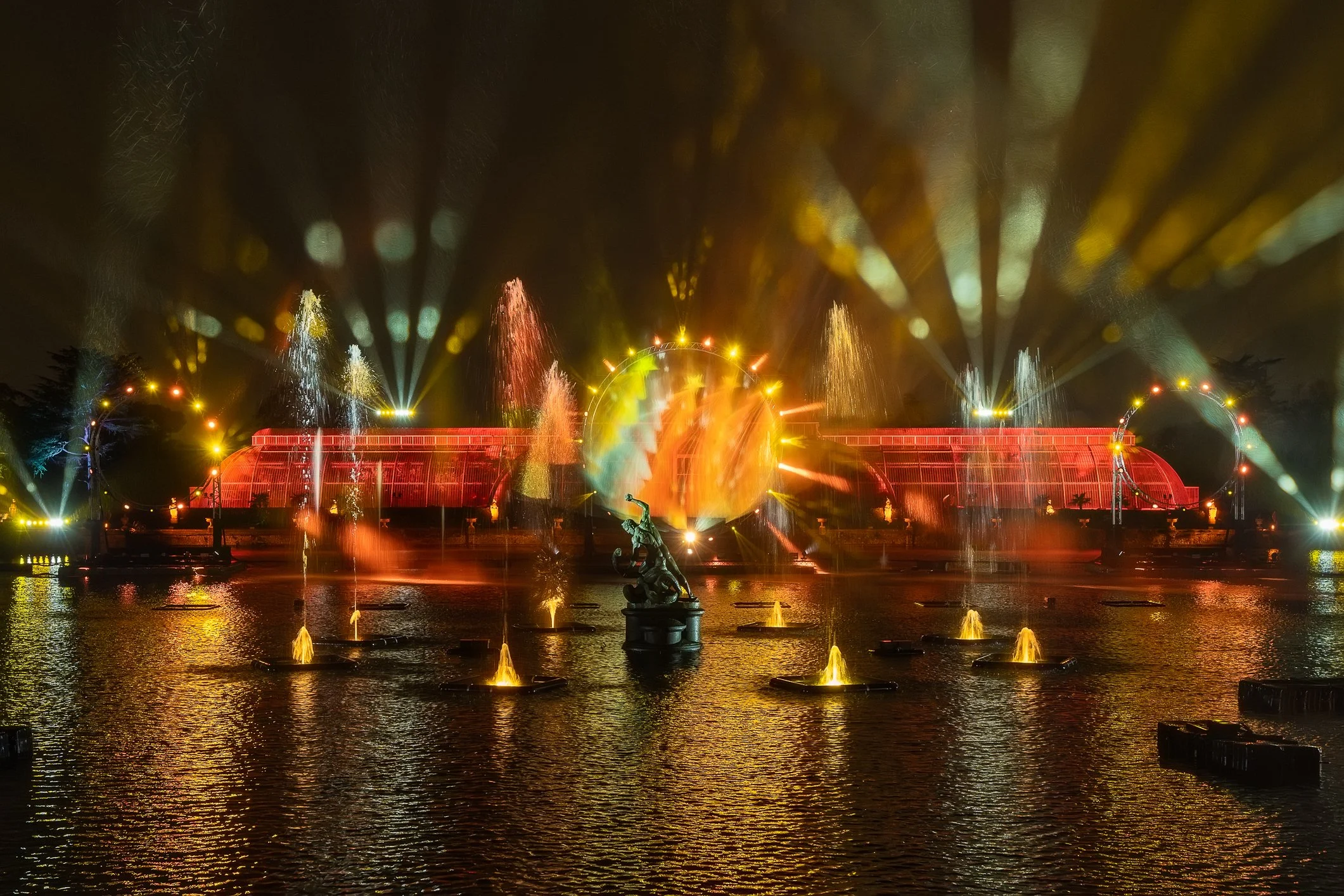
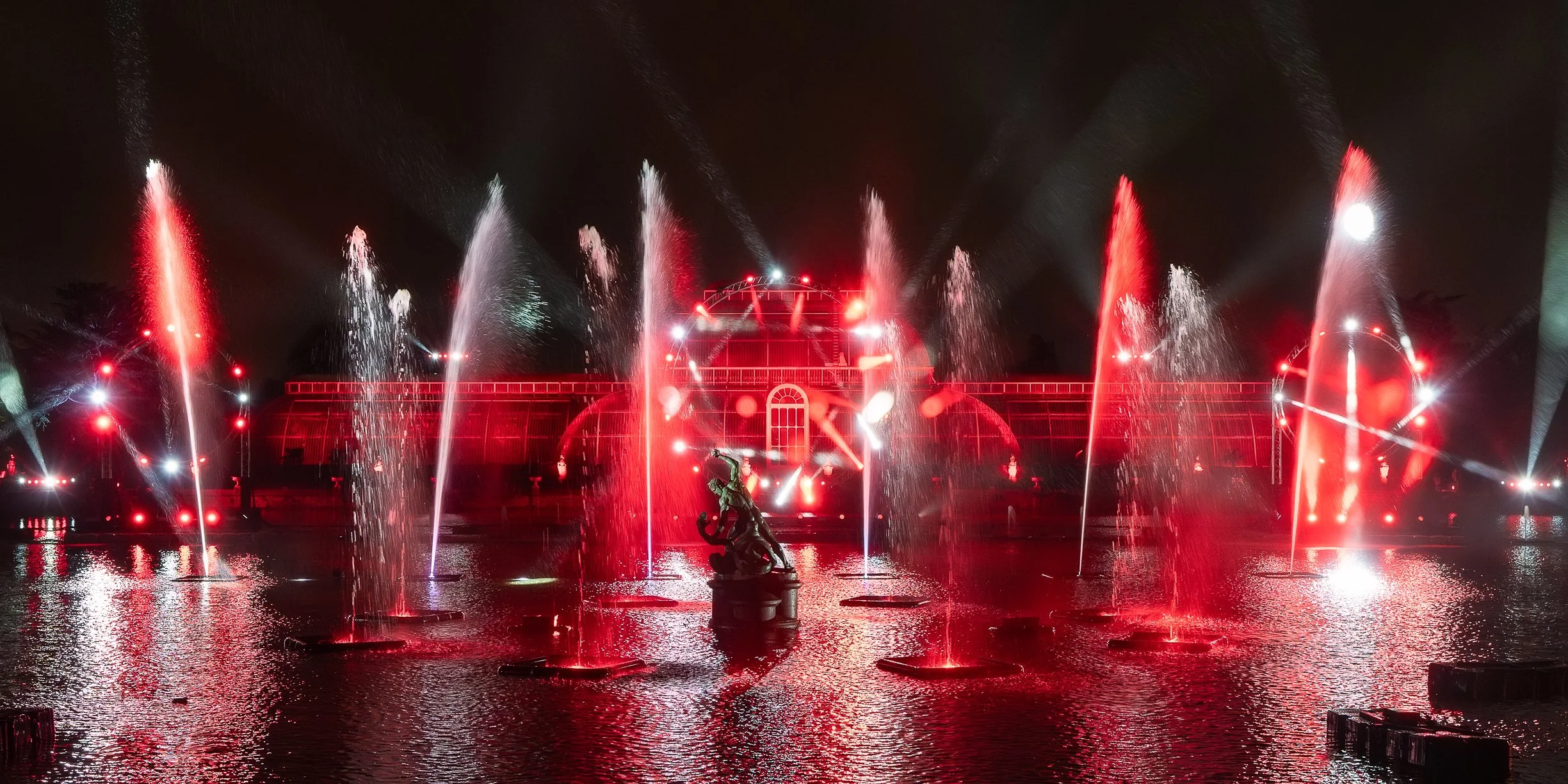
We then arrive at one of the main highlights of the trail: the Palm House Show. Here, the circles and splashes of light are projected through the pond across the surface of Kew’s Palm House, all synchronised with music and fountains. A glowing snow-globe made of light reveals silhouettes of London landmarks, including Big Ben, which feels particularly fitting for the New Year. We stand on the platform to watch the show, which lasts about ten minutes and is excellent - though perhaps just half a mark below the one we saw at Blenheim earlier this season.

Jedną z głównych instalacji tej trasy jest - podobnie, jak w zeszłym roku - Palm House Show. Na fasadzie Palmiarni wyświetlane są światła lasera, zsynchronizowane z muzyką i fontannami. W ogromnej świetlnej kuli pojawiają się londyńskie symbole, w tym Big Ben, jako noworoczny akcent. Spektakl trwa około dziesięciu minut i robi duże wrażenie, choć minimalnie ustępuje temu, który widzieliśmy w tym sezonie w Blenheim.

And now it is time for churros.

A po tym spektaklu jest czas na małe co nieco, czyli churros.

Hillier Garden Light Up Trail

Last Thursday, the Light Up Trail opened at Hillier Gardens in Romsey, and we chose it as our official inauguration of the festive season this year.

The trail begins with a real sense of drama: a beautiful arched, multicoloured tunnel leads into a magical display of oversized illuminated creatures, a giant bauble you can step inside, and the word Christmas spelled out in enormous glowing letters.


W zeszły czwartek rozpoczął się „Light Up Trail” w Hillier Gardens w Romsey i właśnie tam postanowiliśmy rozpocząć nasz sezon świąteczny w tym roku.

Trasa zaczyna się bardzo efektownie - przechodzimy przez piękny, wielobarwny tunel świetlny w kształcie łuku, który wprowadza nas do bajkowej scenerii z ogromnymi, podświetlanymi reniferami, choinkami i gigantyczną bombką, do której można wejść, oraz napisem Christmas ułożonym z wielkich, świecących liter.

Further along, we came across a meadow dotted with giant baubles, each featuring charming children’s designs projected onto their surfaces. This was followed by a section of beautifully lit trees - some adorned with glowing “chandeliers,” others animated with projections of Christmas trees across their silhouettes.

Idąc dalej, trafiamy na polanę z wielkimi bombkami ozdobionymi dziecięcymi rysunkami. Następnie przechodzimy obok pięknie oświetlonych drzew - niektóre z nich udekorowano świetlnymi „żyrandolami”, inne ożywają dzięki projekcjom świątecznie ustrojonych choinek.

One of the highlights of this light path was a long field of illuminated tulips, glowing softly against the darkness, followed by a cluster of giant egg-like structures that slowly changed colours. Around the next corner, we found ourselves surrounded by vibrant neon flowers and butterflies, creating a wonderfully immersive scene.

Jednym z najciekawszych fragmentów trasy było długie pole świecących tulipanów, wyglądające spektakularnie po zmroku. Za nimi trafiliśmy na ogromne instalacje przypominające jajka, powoli zmieniające kolory. Zaś za kolejnym zakrętem otaczyły nas intensywnie świecące neonowe kwiaty i motyle, tworząc bardzo wciągającą, niemal bajkową scenerię.

At the ponds, we stopped to admire the Symphony of Light – a mesmerising light and sound show featuring laser beams reflected in the water, drifting mist, and atmospheric music that brought the whole area to life.


Przy stawach zatrzymujemy się na dłużej, by obejrzeć Symfonię Światła - pokaz światła i dźwięku, z laserami odbijającymi się w tafli wody, unoszącą się mgłą i klimatyczną muzyką.

We then walked along the Magic Footpath, where interactive projections beneath our feet caused flowers to “explode” with every step. We also couldn’t resist the walk-on pianos -light-up installations where jumping on the keys triggered changing colours and playful musical notes.

Throughout the trail, there were plenty of reindeer and festive decorations adding to the seasonal charm. About halfway through, we reached a Christmas market and festive food and drink area, where we stopped to refuel with a German grilled sausage and some freshly made churros - an excellent mid-trail treat.


Kolejnym punktem jest magiczna ścieżka  - odcinek drogi z projekcjami na ziemi, gdzie pod naszymi stopami „wybuchają” kolorowe kwiaty. Nie omijamy też interaktywnych fortepianów: podświetlanych instalacji, po których można skakać, a klawisze reagują dźwiękiem i zmieniającymi się kolorami.

Na całej trasie nie brakuje reniferów i świątecznych dekoracji, które konsekwentnie budują bożonarodzeniowy klimat. Mniej więcej w połowie spaceru był też jarmark świąteczny z jedzeniem i napojami. Zatrzymaliśmy się tam na niemiecką grillowaną kiełbaskę i churrosy  - idealna przerwa na rozgrzanie się i złapanie oddechu.