Terrase des Palais

I was joking, but… not joking. Here we are again, seeking respite from the relentless heat under a mist of water sprayed above the tables while sipping on some juice. This is how you survive a heat wave in Marrakech, I guess…


Żartowałam, a jednak nie żartowałam. Oto jesteśmy znowu w kafejce, szukając wytchnienia od nieustającego upału w mgiełce wody rozpylanej nad stołami i popijając sok. Jest to jeden ze sposobów na przetrwanie fali upałów w Marrakeszu.

Kasbah mosque and the Zeitoun café

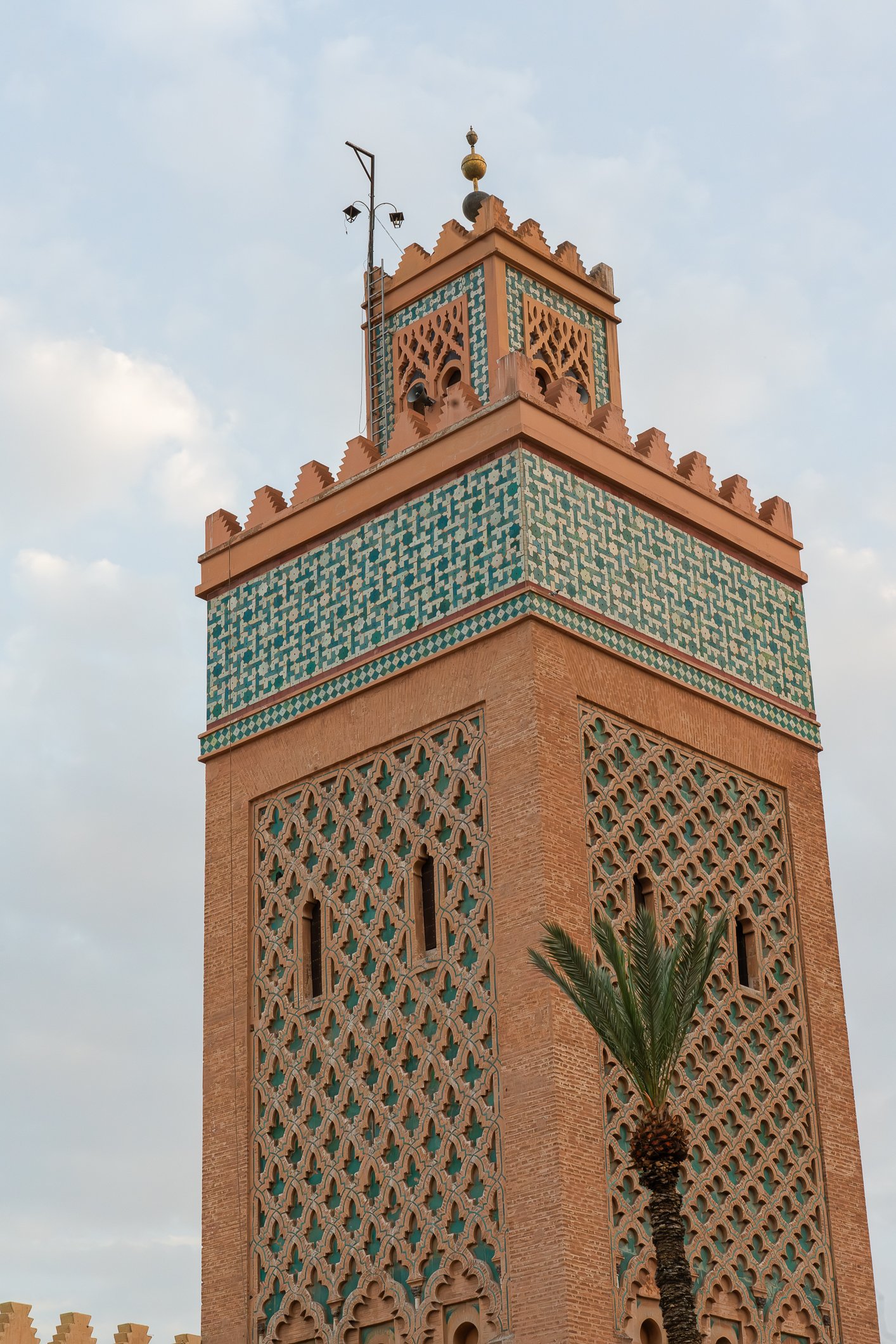
Our path takes us now to the Kasbah Mosque, also known as the Moulay al-Yazid Mosque. This impressive structure was built way back in the late 12th century by a ruler named Yaqub al-Mansur. It’s nestled in the Kasbah district, right where the city’s old citadel once stood, not too far from the remnants of the royal palaces.

The mosque had its share of drama—back in the late 1500s, a massive explosion at a nearby gunpowder storage area really took a toll on it. Historians can’t pinpoint the exact date of that explosion, but they believe the repairs did a decent job of keeping the original Almohad design intact.

These days, the mosque is still active for prayers, and non-Muslims can’t go inside. But even from the outside, it’s pretty striking. The high walls topped with merlons set a grand tone, while large pointed horseshoe arches—some walled in and some framing gates—add to the character.

The minaret got a square base that measures about 8.8 meters on each side and it is split into two sections: a main body and a smaller lantern on top. The lower section is made of rough stone, but things get fancier as you get higher. Three narrow horseshoe arches sit atop each facade, topped by larger polylobed arches—think half-circles piled together. Façade above them features a wide interlacing sebka pattern (a common Maghrebi motif that roughly resembles palmettes or fleur-de-lys) sculpted in brick and filled-in with green faience. Towards the top, a large frieze of green and white geometric mosaic tiles wraps around the minaret, before finishing in a crown of merlons.


Kolejny punkt dzisiejszego programu to meczetu Kasbah, znany również jako meczet Moulay Al-Yazid. Ta imponująca struktura została zbudowana pod koniec XII wieku przez władcę Yaqub al-Mansur. Meczet położony jest w dzielnicy Kasbah, w miejscu, w którym kiedyś stała stara cytadela miasta, nie za daleko od pałaców, które oglądaliśmy dzisiaj i wczoraj.

W XVI wieku ogromna eksplozja w pobliskim magazynie prochu (historycy nie mogą określić dokładnej daty tej eksplozji) uszkodziła znacząco meczet Kasbah, ale odbudowano go utrzymując głównie oryginalny projekt.

Obecnie meczet jest nadal aktywny i niemuzułmanie nie mogą wejść do środka. Ale nawet z zewnątrz jest to budowla robiąca duże wrażenie. Wysokie ściany zwieńczone są merlonami. Minaret ma kwadratową podstawę, która z każdej strony mierzy około 8,8 metra i jest podzielona na dwie sekcje: główny korpus i mniejszą latarnię na górze. Dolna sekcja jest wykonana z szorstkiego kamienia, ale im wyżej, tym się robi ciekawiej. Na poziomie dachu trzy wąskie podkowy zdobią każdą stronę fasady, zwieńczone większymi łukami. Fasada nad nimi ma szeroki, przeplatający się wzór znany jako „sebka” (powszechny motyw Maghrebi, który z grubsza przypomina palmetki lub fleur-de-lys) z rzeźbionej cegły wypełnionej zieloną ceramiką. Jeszcze wyżej duży fryz zielonych i białych geometrycznych płytek mozaiki owija się wokół minaretu, sięgając aż do merlonów.

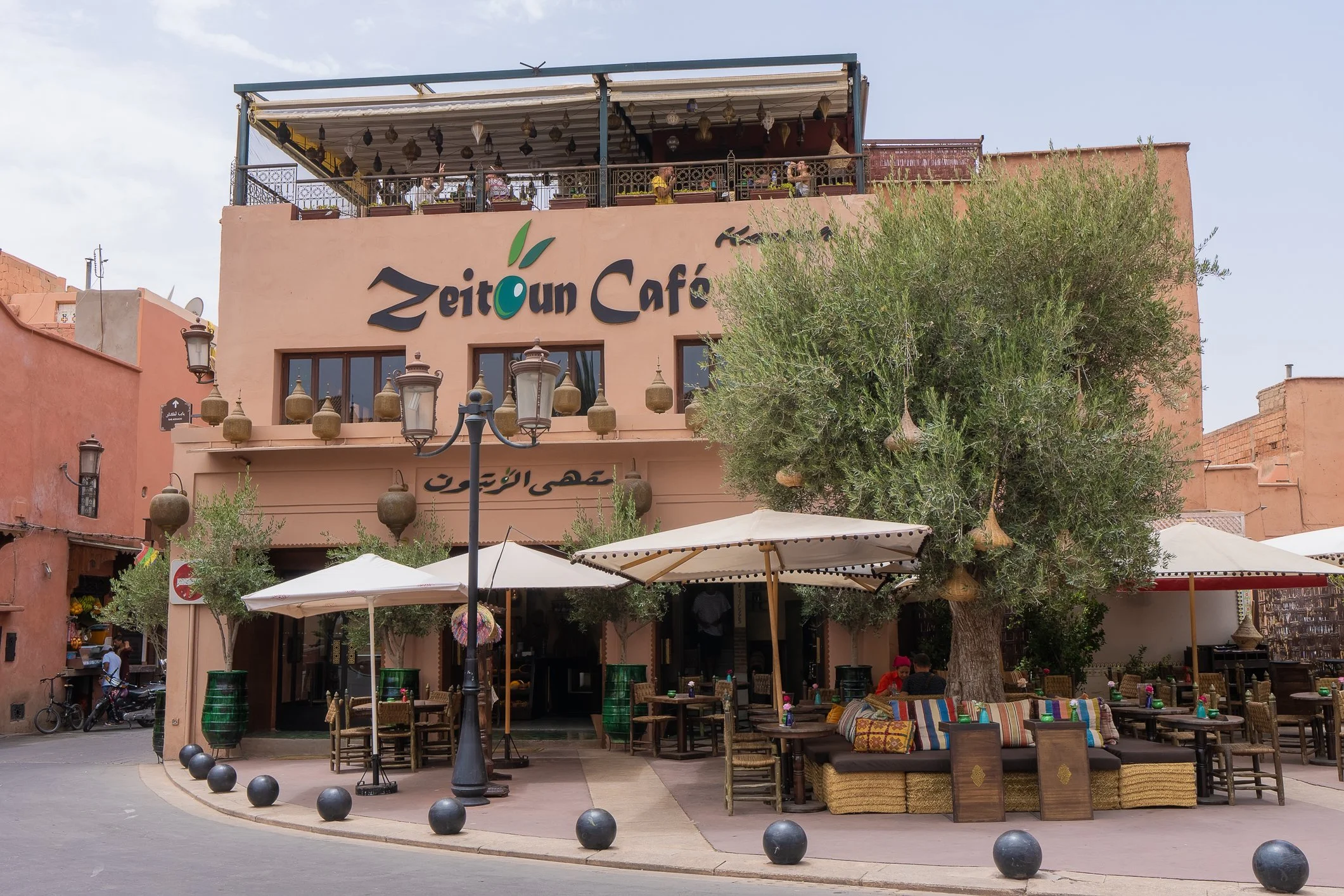
After soaking in some of that history, we needed a break from the heat—43 degrees outside! We ducked into the Zeitoun café right across from the mosque. What a lifesaver! They keep things cool with regular mists of water, and honestly, it felt like paradise. We grabbed a couple of refreshing juices and treated ourselves to some ice cream. Can’t beat that combo on a sweltering day!

Po obejściu meczetu potrzebowaliśmy znowu uciec na chwilę od skwaru - na zewnątrz jest jakby nie bylo 43 stopnie! Weszliśmy zatem do kawiarni Zeitoun naprzeciwko meczetu.  Taras kafejki cały czas jest zraszany mgiełką wodną a wnętrze jest utrzymywane w relatywnym chłodzie. Uczucie jest boskie. Pochłonęliśmy kilka orzeźwiających soków i poprawiliśmy lodami. Teraz możemy iść dalej. Najlepiej do kolejnej kafejki.

Saadian Tombs

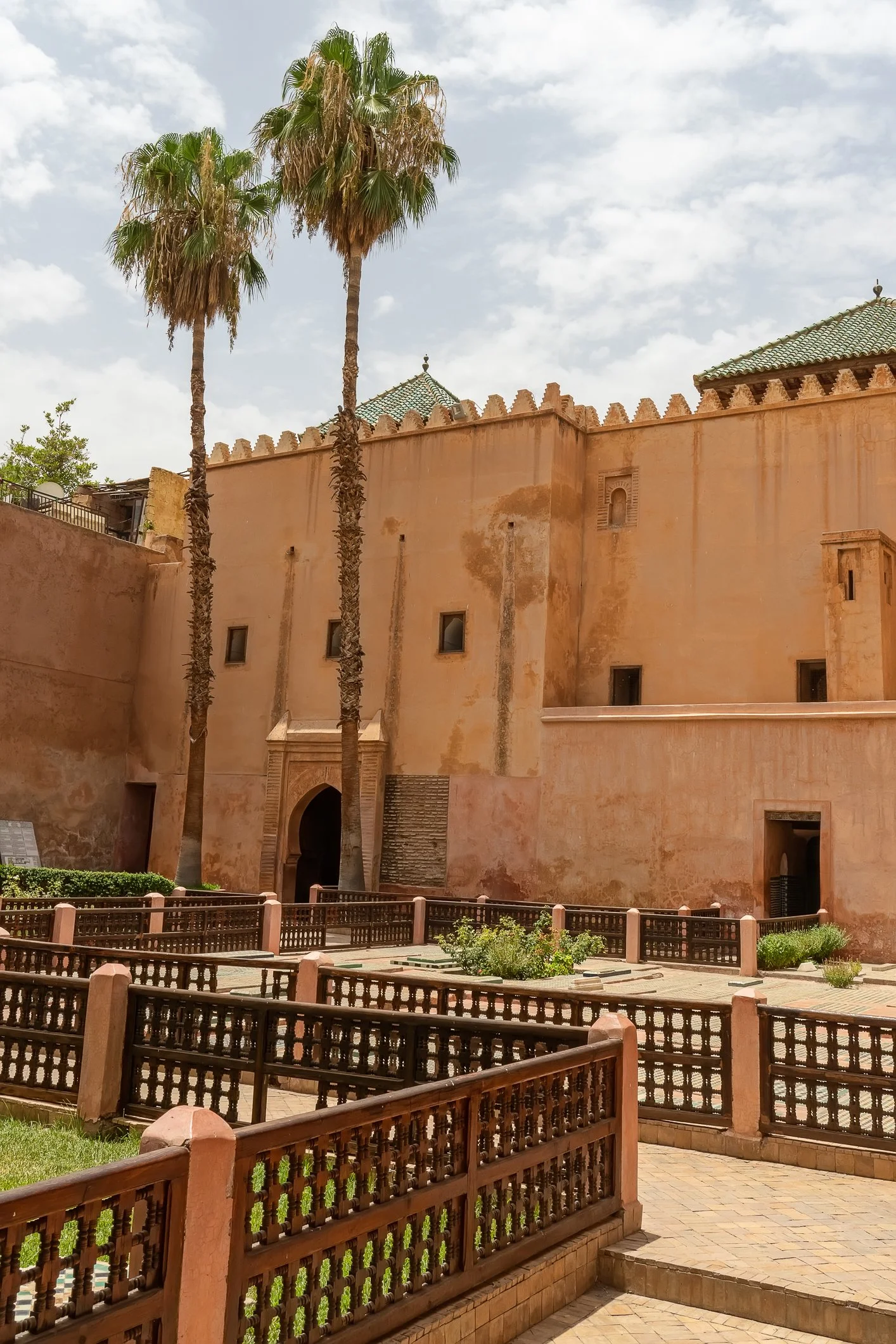
The Saadian Necropolis, a hidden gem in Marrakech, boasts two significant structures. To the east, surrounded by gardens, stands the oldest mausoleum, believed to have been erected by Sultan al-Ghalib. To the west, adjacent to today’s visitor entrance, lies a more recent structure.

Following the death of his mother, the Saadian Sultan Ahmad al-Mansour undertook an ambitious project to modify and expand an older, modest mausoleum. This venture marked a turning point in the necropolis's history, as al-Mansour imported exquisite materials, including Italian Carrara marble and decorative plaster embellished with pure gold. His own mausoleum, known as the Chamber of the Twelve Columns, is a testament to his lavish tastes and the grandeur of the period.

The design of the mausoleum is intricate, comprising three chambers that extend from south to north. The first is the Chamber of the Mihrab, a prayer room that was not originally intended to serve as a burial site. Next is the Chamber of the Twelve Columns, the regal tomb chamber where Sultan al-Mansour was laid to rest upon his death in 1603. Finally, there is the Chamber of the Three Niches, which serves as an annexe to the main tomb chamber.

Surrounding these structures, the gardens of the necropolis extend to house the tombs of chancellors and esteemed members of the royal household. After al-Mansour's passing, several of his family members were interred alongside him.

In the years following al-Mansour's death, the necropolis fell into obscurity when another sultan walled up the tombs, concealing them from public view until their rediscovery in 1917. Today, the area is commonly referred to as the Saadian Tombs.


Nekropolia Saadytów szczyci się dwiema znaczącymi strukturami. Na wschodzie, otoczone ogrodami, stoi najstarsze mauzoleum, prawdopodobnie wzniesione przez sułtana al-Ghaliba. Na zachodzie, obok dzisiejszego wejścia dla zwiedzających, znajduje się nowsza struktura.

Po śmierci matki sułtan Saadytów Ahmad al-Mansour podjął się ambitnego projektu modyfikacji i rozbudowy starszego, skromnego mauzoleum. Przedsięwzięcie to stanowiło punkt zwrotny w historii nekropolii, ponieważ al-Mansour importował wykwintne materiały, w tym włoski marmur karraryjski i dekoracyjny tynk zdobiony złotem. Jego własne mauzoleum, znane jako Komnata Dwunastu Kolumn, jest świadectwem jego wystawnych gustów i wielkości okresu.

Budynek nowszego mauzoleum składa się z trzech komnat, ułożonych z południa na północ. Pierwsza to Komnata Mihrabu, sala modlitewna, która pierwotnie nie miała służyć jako miejsce pochówku. Następna jest Komnata Dwunastu Kolumn, królewska komnata grobowa, w której sułtan al-Mansour został pochowany po swojej śmierci w 1603 roku. Na końcu znajduje się Komnata Trzech Nisz, która służy jako aneks do głównej komnaty grobowej. Otaczające te struktury ogrody nekropolii mieszczą w sobie grobowce kanclerzy i szanowanych członków rodziny królewskiej.

Po śmierci al-Mansoura nekropolia popadła w zapomnienie, gdy inny sułtan zamurował grobowce, ukrywając je przed widikiem publicznym aż do ich ponownego odkrycia w 1917 roku. Obecnie obszar ten jest powszechnie nazywany Grobowcami Saadytów.

Rehydrate

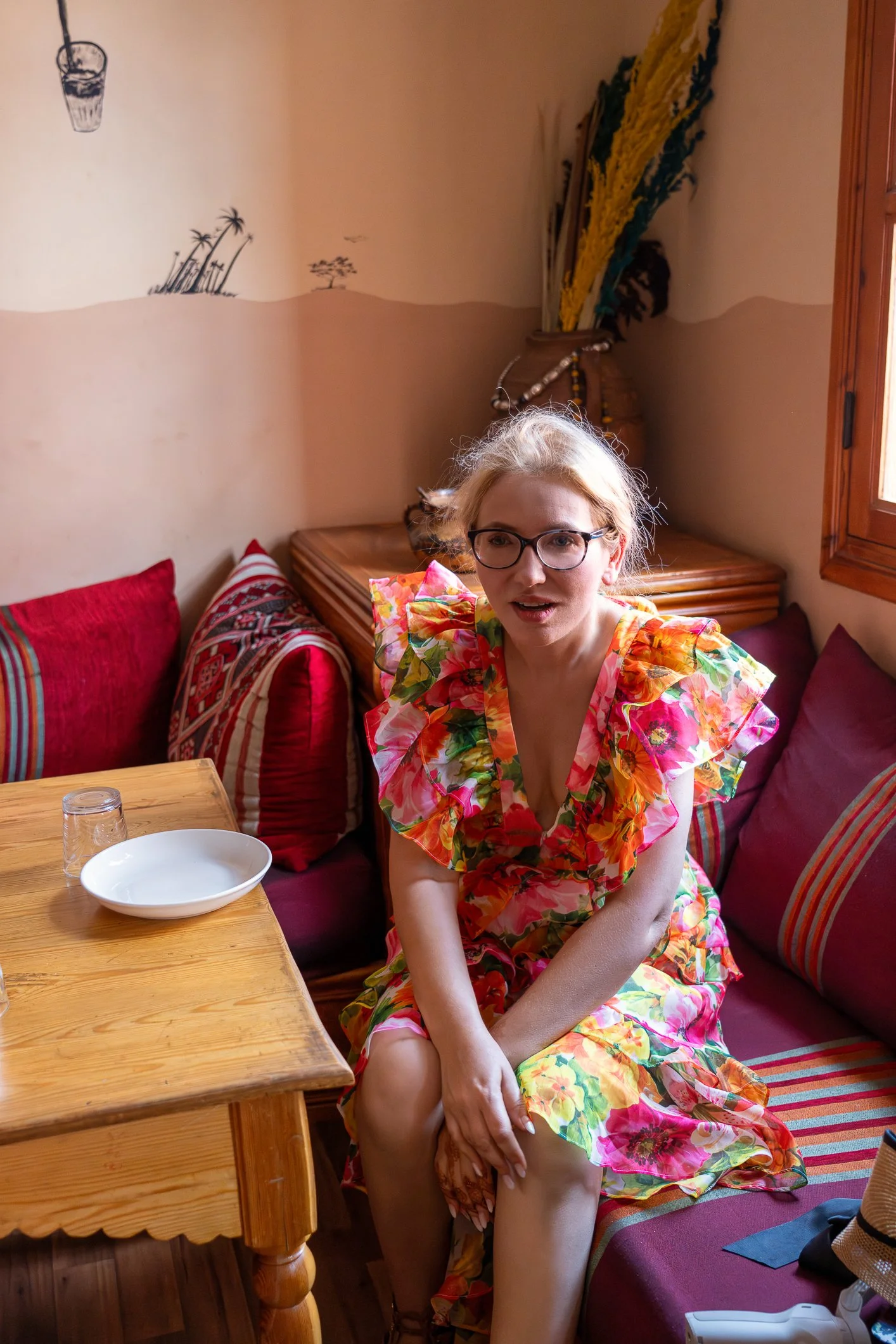
It’s another scorching hot day, so we decided to take a refreshing break and randomly stop at a café to cool down and hydrate. The upstairs interior is delightfully cool, and after savouring a large glass of cold juice, we feel recharged and ready to explore the Saadian Tombs.


Mamy kolejny upalny dzień, więc postanowiliśmy zrobić sobie orzeźwiającą przerwę i zatrzymać się w przypadkowej kawiarni, aby się ochłodzić i nawodnić. Wnętrze na piętrze jest przyjemnie chłodne i po wypiciu dużej szklanki zimnego soku jesteśmy gotowi na zwiedzanie Grobowców Saadytów.

Badi Palace

El Badi Palace, also known as the "Palace of Wonder" or the "Incomparable Palace," is a remarkable symbol of the Saadian Dynasty's grandeur in Morocco. Commissioned by Sultan Ahmad al-Mansur shortly after his accession in 1578, construction of the palace continued until 1594, with some finishing work extending until 1603, the year of the Sultan's death. The palace was primarily financed through ransoms collected from the Portuguese after their defeat in the Battle of al-Qasr al-Quibir.

Originally comprising 360 rooms, the palace served as a reception venue for the Sultan to host foreign dignitaries, showcasing the opulence of the Saadian era. However, following al-Mansur's death, the palace fell into disrepair, and valuable materials were repurposed for other buildings in Morocco.


Pałac El Badi, znany również jako „Pałac Cudów” lub „Nieporównywalny Pałac”, jest symbolem wielkości dynastii Saadytów w Maroku. Zlecona przez sułtana Ahmada al-Mansura krótko po jego objęciu tronu w 1578 r., budowa pałacu trwała do 1594 r., a niektóre prace wykończeniowe trwały do ​​1603 roku, czyli roku śmierci sułtana. Pałac był finansowany głównie z okupów zebranych od Portugalczyków po ich porażce w bitwie pod al-Qasr al-Quibir.

Pierwotnie składający się z 360 pokoi pałac służył jako miejsce przyjęć przez sułtana, który gościł tu zagranicznych dygnitarzy, prezentując przepych ery Saadytów. Jednak po śmierci al-Mansura pałac popadł w ruinę, a cenne materiały wykorzystano do budowy innych budynków w Maroku.

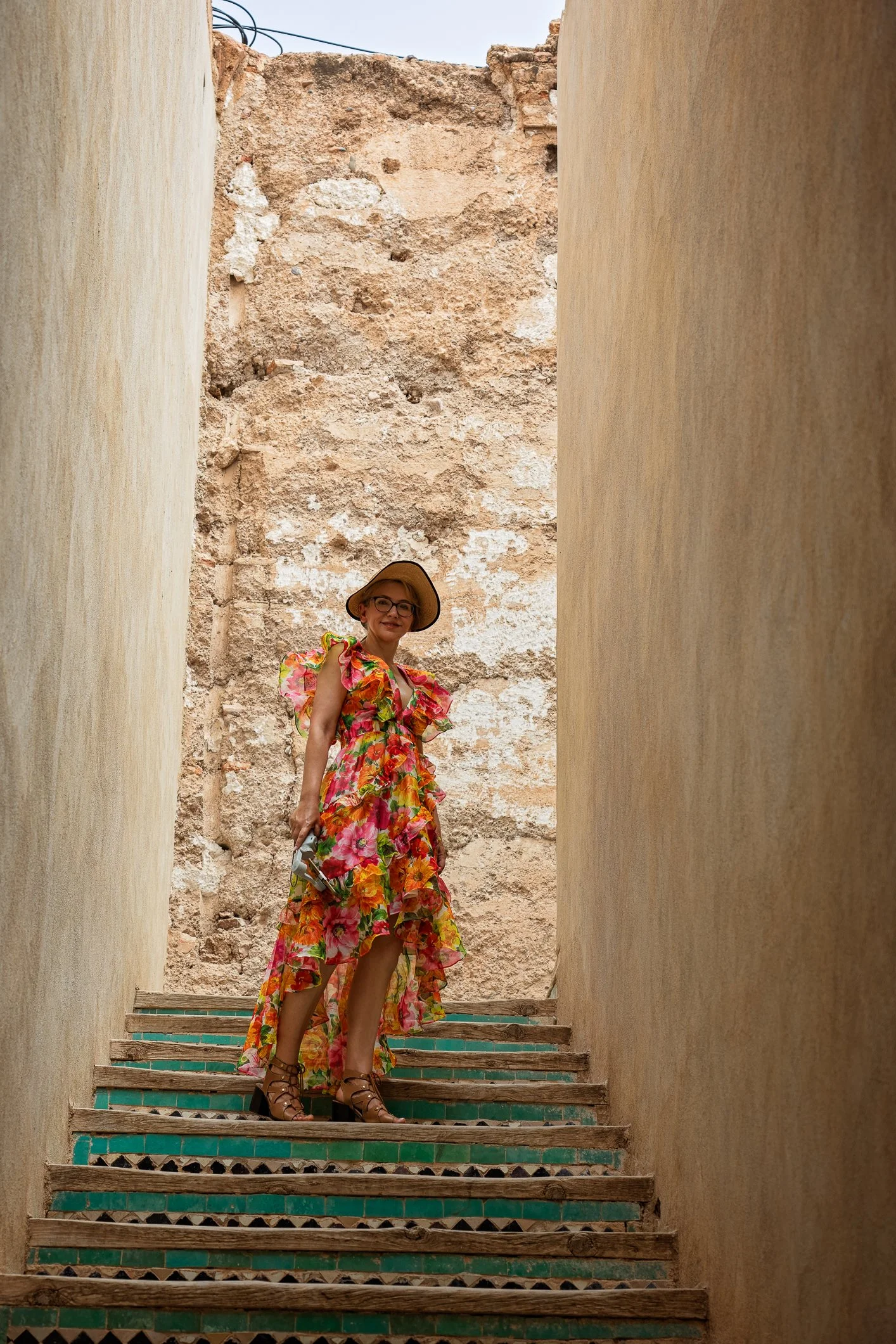
Today, El Badi Palace is a significant tourist attraction in Marrakech.  After entering through a towering doorway into the impressive ruins of the Qubbat al-Khadra, or Green Pavilion, which once featured a pyramidal roof of green terracotta tiles, we took stairs down to explore underground passageways that served as dungeons, now displaying archaeological artifacts and photographs. An annex to the west-north side, adorned with zellij, is also accessible to visitors and may have once housed guest quarters for foreign ambassadors.

Dziś Pałac El Badi jest znaczącą atrakcją turystyczną Marakeszu. Po wejściu przez wysokie drzwi do imponujących ruin Qubbat al-Khadra, czyli Zielonego Pawilonu, który kiedyś miał piramidalny dach zbudowany z zielonych płytek terakoty, zeszliśmy po schodach do podziemnych korytarzy, które służyły za lochy, a obecnie eksponują artefakty archeologiczne i fotografie. Zwiedzającym udostępniono także aneks pawilonu od strony zachodnio-północnej, gdzie zachowane są podłogi ozdobione płytkami zelliij. W aneksie tym niegdyś prawdopodobnie znajdowały się kwatery gościnne dla zagranicznych ambasadorów.

The palace was designed as a grand display of the Sultan's power, featuring a rectangular layout centred around an impressive courtyard measuring 135 by 110 meters. At the heart of the courtyard lies a central pool, flanked by four enormous sunken gardens arranged symmetrically, embodying the principles of Moorish garden (riad) design on a grand scale. The courtyard was lined with magnificent pavilions, including the "Crystal Pavilion" and "Audience Pavilion," notable for their ornate cupolas and intricate decorations. The remnants of the Audience Pavilion on the West side are still visible but the Crystal Pavillion is completely gone.

Pałac został zaprojektowany jako zamaszysty pokaz potęgi sułtana, na planie prostokątnym skupionym wokół imponującego dziedzińca o wymiarach 135 na 110 metrów. W sercu dziedzińca znajduje się centralny basen, oflankowany czterema ogromnymi, zapadniętymi ogrodami rozmieszczonymi symetrycznie wokół niego zgodnie z zasadami projektowania ogrodów mauretańskich (riadów) ale tutaj na wielką skalę. Wokół dziedzińca wzniesione zostały okazałe pawilonami, w tym „Pawilon Kryształowy” i „Pawilon Audiencji”, wyróżniające się ozdobnymi kopułami i misternymi dekoracjami. Pozostałości Pawilonu Audiencji po stronie zachodniej są nadal widoczne, ale Pawilon Kryształowy został całkowicie rozebrany.

El Badi Palace was constructed using the finest materials sourced from various regions, including exquisite marble columns from Italy and lime from Timbuktu. The craftsmanship of the palace was evident in its lavish decoration, featuring gold, turquoise, and crystal, as well as intricately designed zellij (mosaic tilework) that showcased geometric patterns more complex than those seen in previous periods. The ceilings and capitals were gilded, and the walls were embellished with detailed stucco carvings, including calligraphic inscriptions. Unfortunately, very little of it has remained today.  

The Khayzuran Pavilion houses contemporary art displays and historic artefacts, including the Almoravid minbar from the Koutoubia Mosque. This masterpiece of Arab-Andalusian art, originally from Cordoba, is intricately carved from cedar and inlaid with silver, showcasing the expertise of 12th-century artisans.


Pałac El Badi został zbudowany z najlepszej jakości materiałów pochodzących z różnych regionów świata, w tym marmuru z Włoch i wapnia z Timbuktu. Kunszt wykonania pałacu był widoczny w jego bogatych dekoracjach, obejmujących złoto, turkus i kryształ, a także misternie zaprojektowanych zellij (mozaikowych kafelkach), które prezentowały geometryczne wzory bardziej złożone niż te widziane w poprzednich okresach. Sufity i kapitele były złocone, a ściany ozdobiono pięknymi rzeźbami stiukowymi, w tym inskrypcjami kaligraficznymi. Niestety bardzo niewiele z tego przepychu jest dzisiaj widoczne.

Pawilon Khayzuran mieści obecnie wystawę sztuki współczesnej i historyczne artefakty, w tym minbar Almoravidów z meczetu Koutoubia. To arcydzieło sztuki arabsko-andaluzyjskiej, pierwotnie pochodzące z Kordoby, jest misternie rzeźbione z cedru i inkrustowane srebrem, prezentując umiejętności rzemieślników z XII wieku.

Finally, we enjoy beautiful views of the palace grounds as well as Marrakech and the Atlas Mountains from the palace's rooftop terrace.

Na koniec wchodzimy na tarasu na dachu pałacu, aby podziwiać widoki na teren pałacu, a także Marrakesz i góry Atlas.