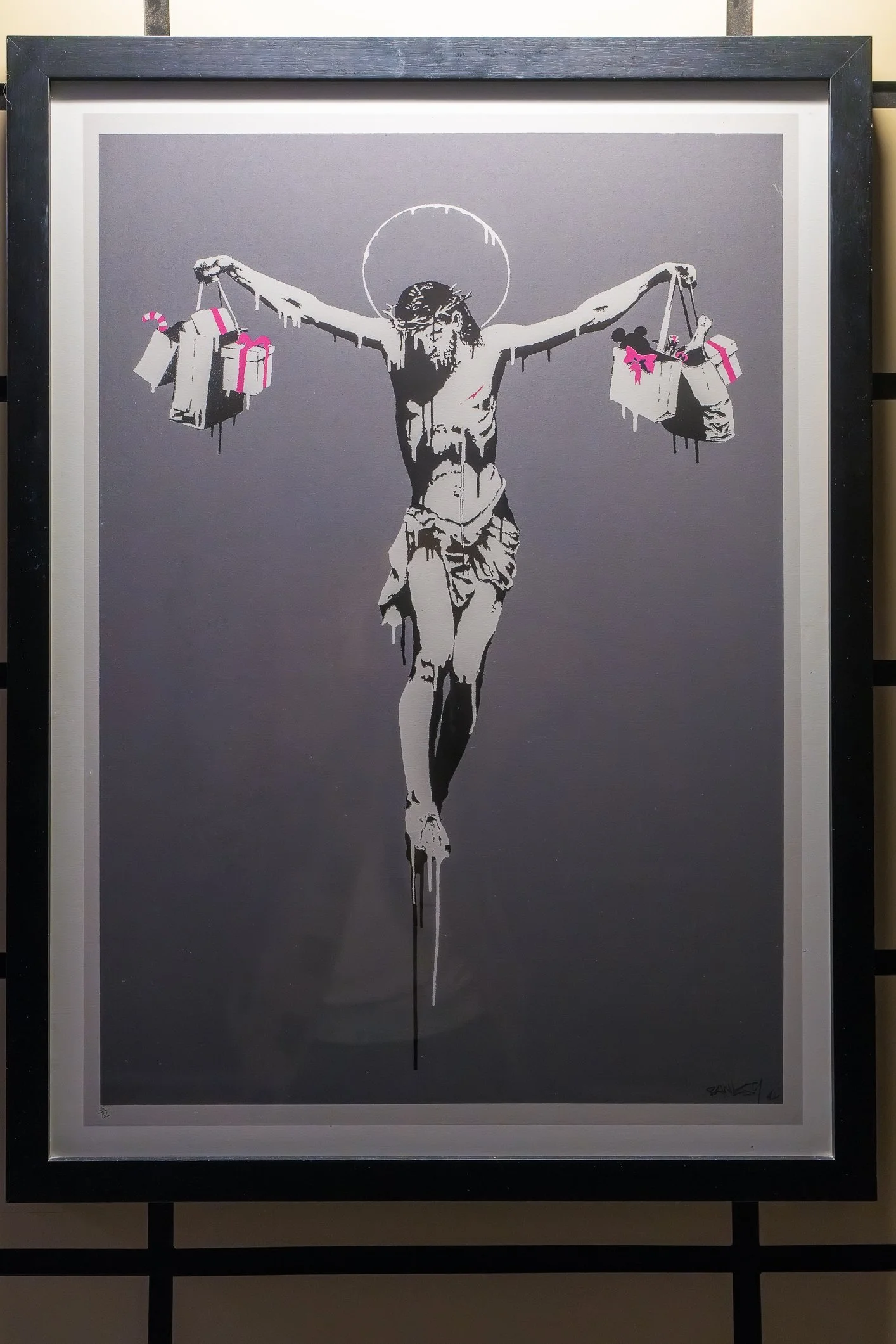
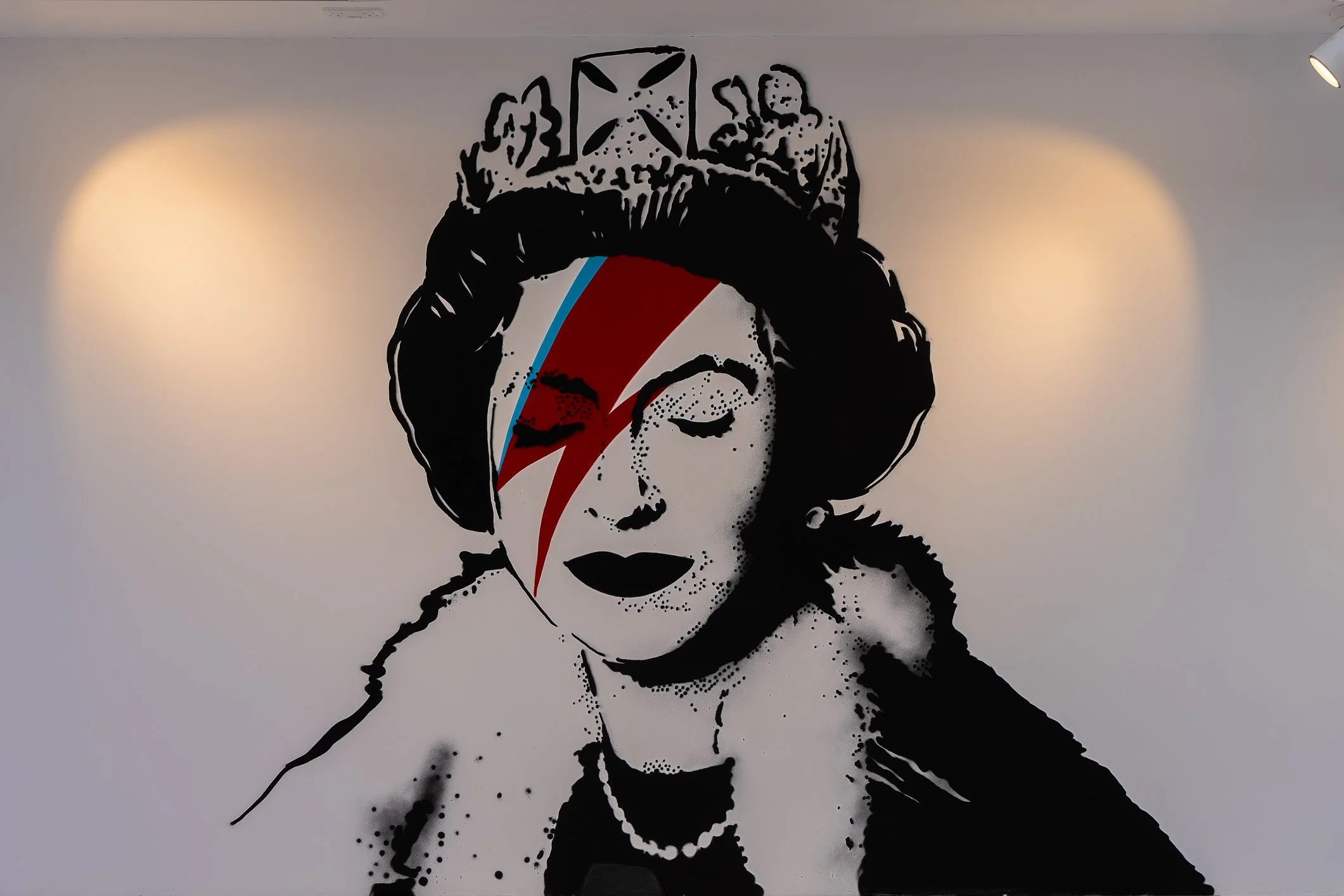
Behind that wall, the exhibition turns inward. Here is Banksy’s dialogue with art history - his re-seen masterpieces. Sunflowers from Petrol Station, where Van Gogh’s blossoms have withered, Show Me the Monet, where the lily pond is choked with shopping carts. Graffiti Village, CCTV Countryside, The Banality of the Banality of Evil, Vettriano’s Lovers, even Simon Cowell Judges the Ballet. These rewritings are not mere vandalism of classics; they show how the world itself – through consumerism, surveillance, environmental degradation, mass production, loss of privacy - has become the vandalised canvas.
Some of these works have been planted in Banksy’s famous museum “pranks”. For example, in October 2003, Banksy entered Tate Britain disguised as a pensioner and installed Crimewatch UK Has Ruined the Countryside for All of Us in a vacant gallery slot. On 13 March 2005, he placed works simultaneously in four major New York museums - the Met, MoMA, the Brooklyn Museum, and the American Museum of Natural History - using a fake beard/hat to blend in as a visitor, and strong glue to fix the painting to the wall. This is an example of Banksy’s method of infiltration and critique: entering elite cultural institutions unannounced to place his own work, thereby questioning notions of legitimacy, curation and who gets to decide what art is. It also highlights his interest in institutional critique: by placing the work “inside” the system, he forces the system to respond (remove it, comment on it, etc.).
Kolejna część tej wystawy to dialog Banksy’ego z historią sztuki – jego „ponownie zobaczone” arcydzieła. Sunflowers from Petrol Station, w których słoneczniki Van Gogha zwiędły; Show Me the Monet, gdzie staw lilii dławią wózki sklepowe. Graffiti Village, CCTV Countryside, The Banality of the Banality of Evil, Vettriano’s Lovers, a nawet Simon Cowell Judges the Ballet. Te przeróbki nie są zwykłym wandalizowaniem klasyków; pokazują raczej, że sam świat - poprzez konsumpcjonizm, inwigilację, degradację środowiska, masową produkcję, utratę prywatności - stał się zdewastowanym płótnem.
Część z prezentowanych tu prac została „podrzucona” w słynnych muzealnych „psikusach” Banksy’ego. Na przykład w październiku 2003 roku Banksy wszedł do Tate Britain przebrany za emeryta i umieścił Crimewatch UK Has Ruined the Countryside for All of Us w jednym z wolnym miejsc na ścianie. 13 marca 2005 roku umieścił swoje prace jednocześnie w czterech głównych nowojorskich muzeach - Met, MoMA, Brooklyn Museum oraz American Museum of Natural History - używając fałszywej brody i kapelusza, by wmieszać się w tłum, oraz mocnego kleju, by przytwierdzić obrazy do ściany. To przykład metody infiltracji i krytyki Banksy’ego: wchodzenia niepostrzeżenie do elitarnych instytucji kultury, by ulokować tam własną pracę, a tym samym zakwestionować pojęcia legitymizacji, kuratorstwa i tego, kto ma prawo decydować, czym jest sztuka. Podkreśla to również jego zainteresowanie krytyką instytucjonalną: umieszczając pracę „wewnątrz” systemu, zmusza system do reakcji (usunięcia jej, skomentowania itd.).