London

Banksy Limitless - additions

The final section of the exhibition was the Underground Immersive Experience. One highlight was a pair of Puma trainers displayed in a glass case, specially designed for Banksy’s Turf War exhibition. There was also a reconstruction of the Grim Reaper riding a Dodgem, inspired by the infamous Dismaland event. Through a door marked Atelier, we entered a small room. Inside, a figure sat at a desk, cutting out stencils, while a semi-transparent screen between this figure and us displayed some moving pictures. The projection told a story about Banksy and included some of his most famous quotes. To be honest, this section was less impressive than the others and only took a few minutes to explore.


Ostatnia część wystawy to Underground Immersive Experience. Jednym z głównych punktów były tu buty Puma wystawione w szklanej gablocie, specjalnie zaprojektowane na potrzeby wystawy Banksy’ego Turf War. Znajdowała się tu także rekonstrukcja Śmierci jeżdżącej na Dodgemie, inspirowana słynnym wydarzeniem Dismaland. Przez drzwi oznaczone jako Atelier weszliśmy do małego pokoju. W środku przy biurku siedziała postać, wycinająca szablony, podczas gdy umieszczony pomiędzy nią a nami półprzezroczysty ekran wyświetlał ruchome obrazy. Projekcja opowiadała historię Banksy’ego i zawierała niektóre z jego najsłynniejszych cytatów. Szczerze mówiąc, ta część była mniej imponująca niż pozostałe i zajęła nam tylko kilka minut.

The spray-painting experience was also included with our tickets. We each received a t-shirt in our chosen size and had the chance to create our own stencil-style design inspired by Banksy. We did this activity first, then left our creations to dry before taking them home as a unique memento of the exhibition.

W cenę biletu wliczone było również doświadczenie malowania sprayem. Każdy z nas otrzymało koszulkę i wybrany przez siebie szablon inspirowany Banksym. Zajęliśmy się tym na samym początku, a następnie zostawiliśmy nasze prace do wyschnięcia, aby móc zabrać je do domu jako nietypową pamiątkę z wystawy.

Banksy Limitless part 2

Passing the famous Meat Truck, we enter a replica of a London Underground platform - Prankadilly Circus. The walls are tiled, the recorded rush of trains hums, and posters line the platform: Trolley Hunters, The English Maid, and others. We walk through a space where Banksy’s art once existed illegally, but here it is safe, ticketed, and curated.

Mijając słynną Ciężarówkę z Mięsem, wchodzimy na replikę peronu londyńskiego metra – Prankadilly Circus. Ściany wyłożone są kafelkami, w tle dudni nagrany szum przejeżdżających pociągów, a peron zdobią plakaty: Trolley Hunters, The English Maid i inne. Przechodzimy przez przestrzeń, w której sztuka Banksy’ego kiedyś istniała nielegalnie, ale tutaj jest bezpieczna, biletowana i starannie zaaranżowana.
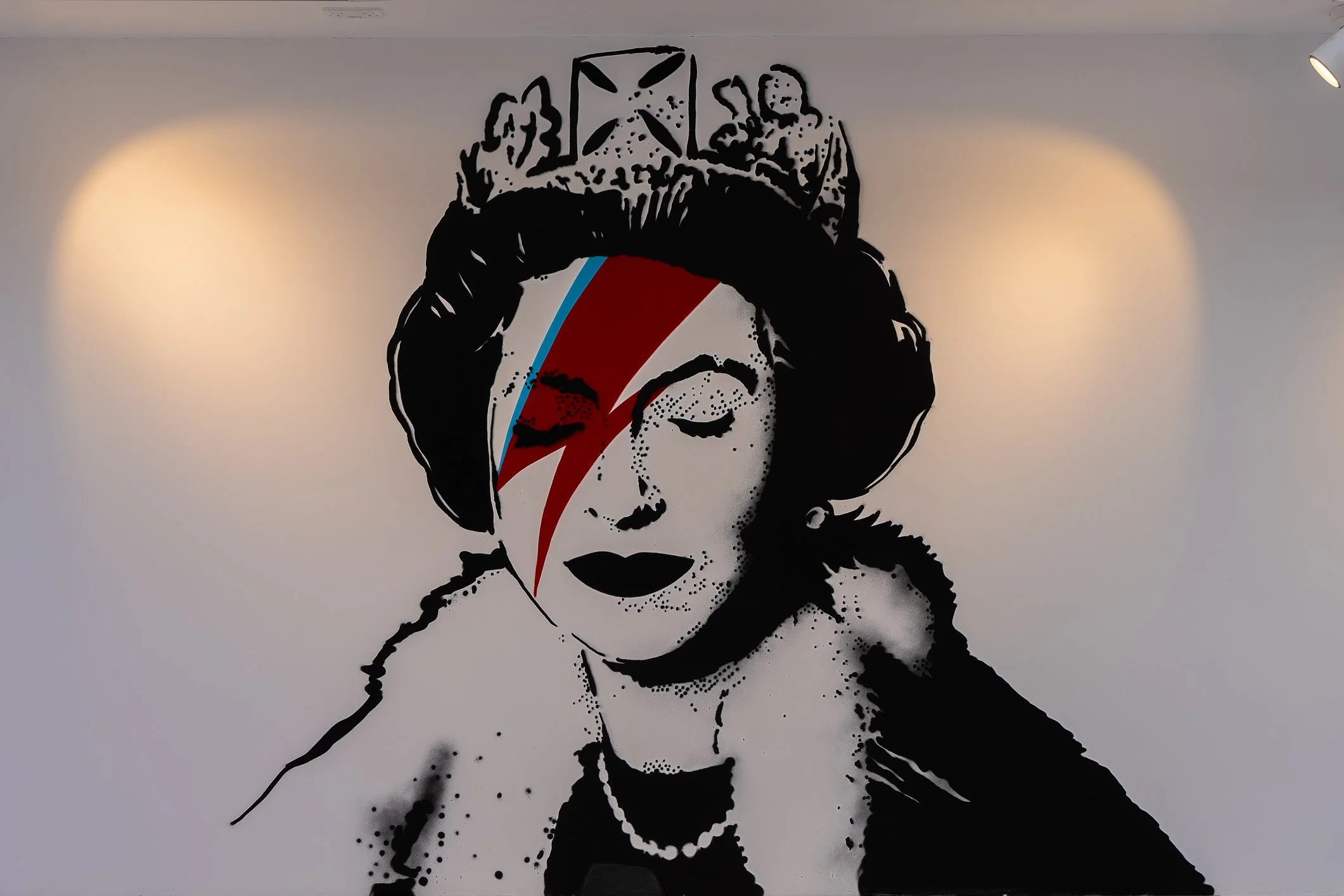
As we leave the station behind, daylight floods the next vast white hall, ornamented by the skeletal base of a Ferris wheel, its empty spokes clawing skyward. A glass-painted replica of Girl with Balloon floats above our heads, her red heart-shaped balloon suspended mid-air. Around the edges, provocations resurface: a crushed red telephone box, Kate Moss rendered in Warhol’s pop palette, and £10 banknotes printed with Princess Diana’s face.
A corner dedicated to Banksy’s view on immigration presents a famous drawings of anti-immigration birds alongside a boat overloaded with refugees, stark and sobering.

 

Opuszczamy stację i wchodzimy do kolejnej ogromnej sali, gdzie przez szklany sufit wlewa się światło dzienne. Nad naszymi głowami unosi się szklano-malowana replika Girl with Balloon, jej czerwony, sercowaty balonik zawieszony w bezruchu, a za nimi wznosi się rama diabelskiego młyna. Sala nie jest oczywiście wolna od prowokacji: uszkodzona czerwona budka telefoniczna z kilofem „w plecach”, Kate Moss w pop-artowej palecie w stylu Warhola oraz banknoty £10 z twarzą księżnej Diany.

W rogu poświęconym Banksy’ego poglądach na imigrację słynny rysunek „antyimigracyjnych” ptaków obok łodzi przeładowanej uchodźcami - obraz surowy i trzeźwiący.

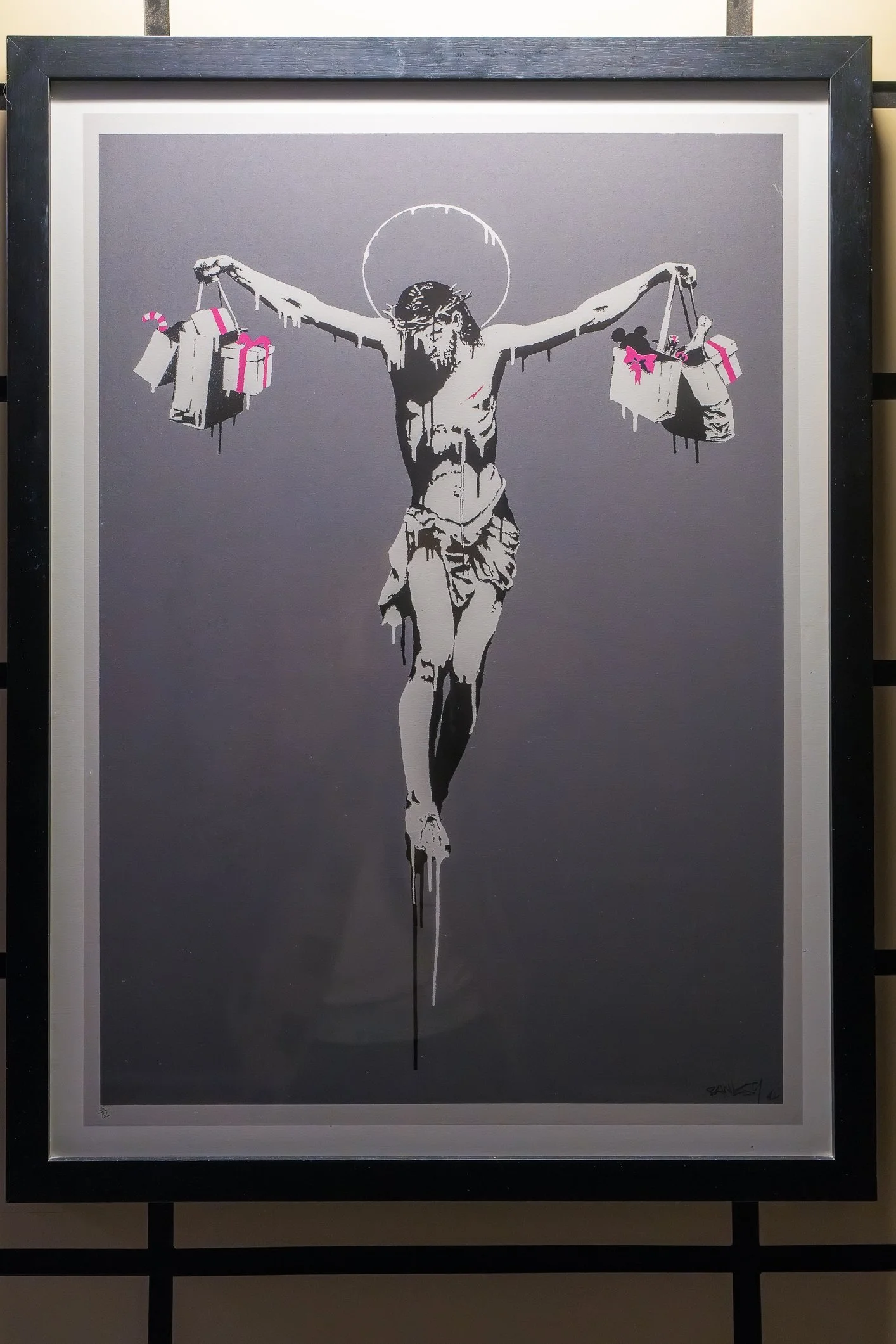
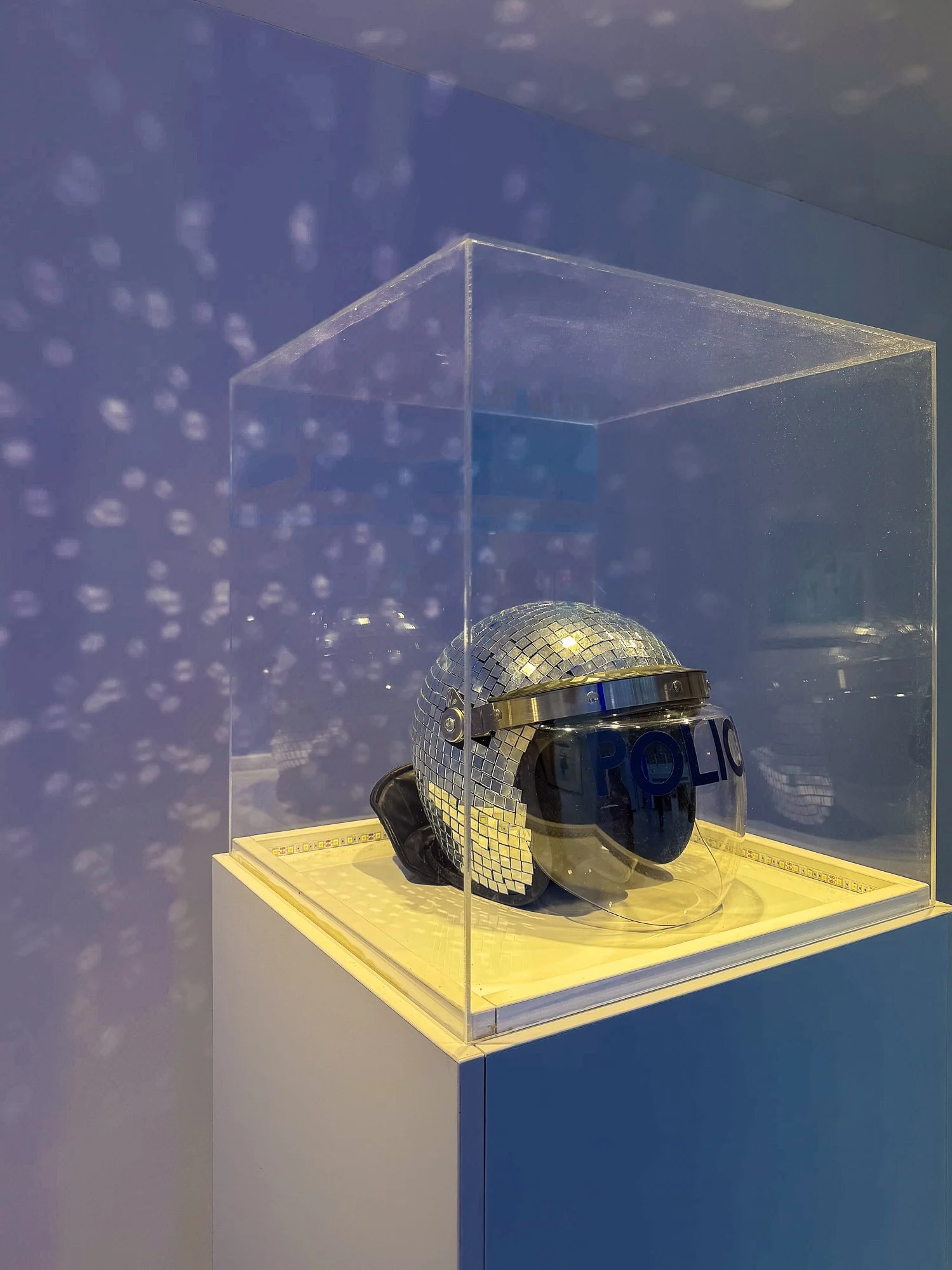
Opposite a riot helmet made of disco-ball crystals as a small but potent symbol. It fuses two worlds: authority, law enforcement, state control, and threat of violence in helmet form, contrasted with mirrored crystals evoking spectacle and entertainment. Named Met Ball, it wittily references one of the most exclusive celebrity events, turning oppression into spectacle. Surrounding it, the walls are covered with posters from past Banksy exhibitions, while Forgive Us Our Trespassing and Stop Me Before I Paint Again occupy their niches - a dialogue about guilt, rebellion, and the tension between legality and artistry. For me, this corner encapsulates Banksy himself: a constant insurgent navigating authority and spectacle, rebellion and recognition, always just beyond the reach of control.


Po przeciwnej stronie hełm policyjny wykonany z lśniących kryształów dyskotekowej kuli - niewielki, lecz wymowny symbol. Łączy dwa światy: świat autorytetu, egzekwowania prawa, kontroli państwa i groźby przemocy zaklętej w formie hełmu, zestawiony jest z lustrzanymi kryształami przywołującymi widowisko i rozrywkę. Nazwany Met Ball, sprytnie nawiązuje do jednego z najbardziej ekskluzywnych wydarzeń celebryckich, zamieniając opresję w spektakl. Na ścianach w tej części galerii znajdują się także plakaty z dawnych wystaw Banksy’ego, a Forgive Us Our Trespassing oraz Stop Me Before I Paint Again zajmują kluczowe miejsca na ścianach, prowadząc dialog o winie, buncie i napięciu panującym między prawem a sztuką. Dla mnie ta sekcja jest podsumowaniem samego Banksy’ego: wiecznego buntownika lawirującego między systemem a sztuką, prowokacją a sławą, wymykającego się każdej próbie kontroli.

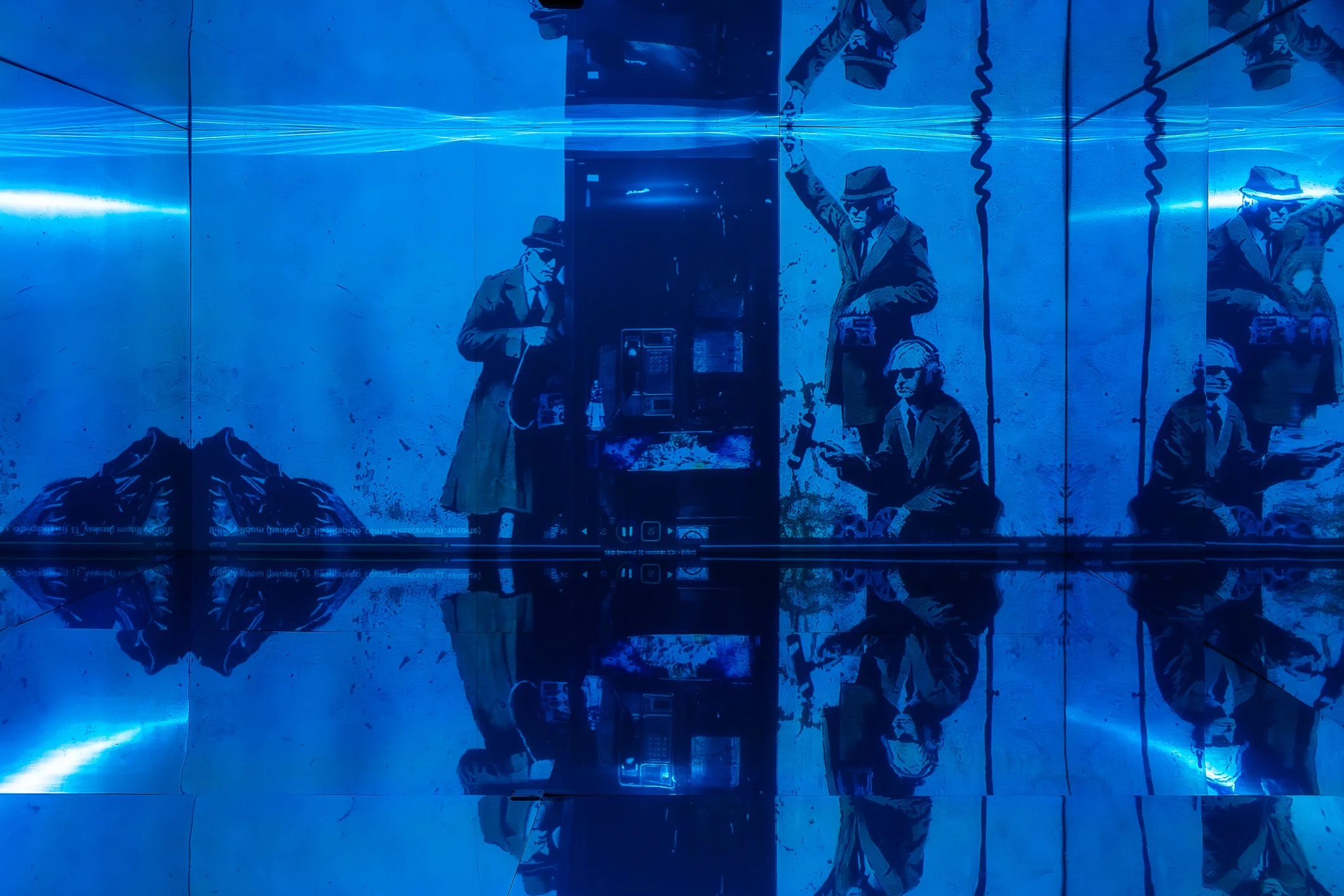
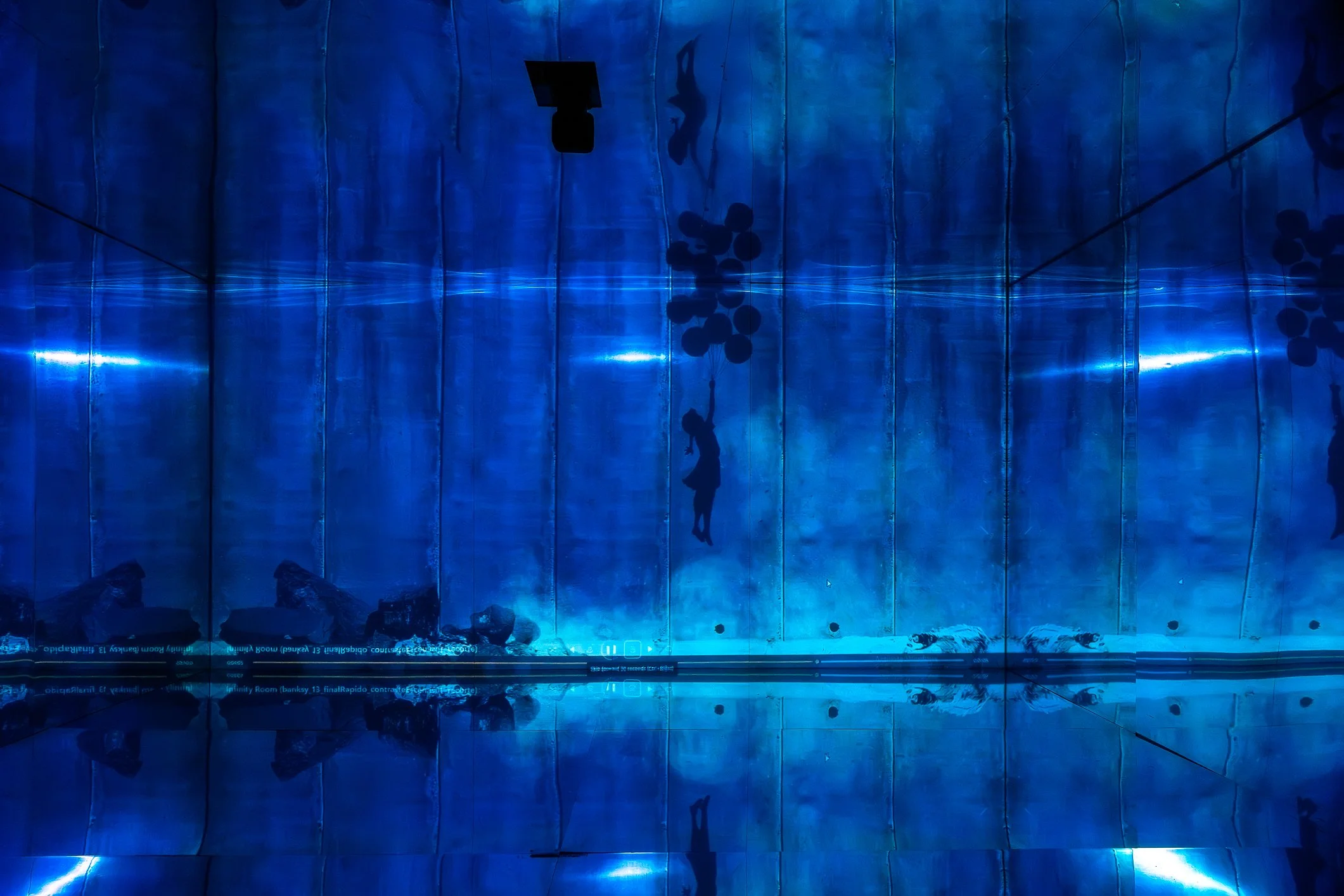
The final installation is the Infinity Room. Mirrors extend in every direction, multiplying visitors into many reflections. Fragments of Banksy’s imagery start to flicker around: the girl with her balloon, a rat with a brush, slogans half-familiar and half-erased. The exhibition is about Banksy - but it is also about you. It has been so from the start, but now it is spelled out explicitly: reflections fold in on themselves until you are both spectator and spectacle, the protest and the product. Every wall you passed, every image photographed, every plaque read ask: Who are you? Where are you in the grand scheme of things? Rebellious or complacent? Repressed or repressing? Blissfully ignorant or painfully aware? Or maybe all of it?

Then we exit through the gift shop, of course… past T-shirts bearing faces of defiance. And for a moment, the whole experience feels like a trap you willingly stepped into. And it makes you think all over again…


Ostatnią instalacją jest Infinity Room. Lustra ciągną się tu we wszystkich kierunkach, mnożąc odwiedzających w nieskończone odbicia. Na tych lustrach wyświetlane są przez chwilę fragmenty obrazów Banksy’ego: dziewczynka z balonikiem, szczur z pędzlem, sceny z Palestyny, hasła na pół znane, na pół wymazane z pamięci. Wystawa opowiada o Banksym, ale tak naprawdę opowiada też o tobie. Od początku była ona o tobie, lecz dopiero w tym miejscu mówi to wprost: odbicia nakładają się na siebie, aż stajesz się jednocześnie widzem i widowiskiem, protestem i produktem. Każda ściana, obok której tu przeszedłeś, każde zrobione zdjęcie, każda przeczytana tabliczka pyta: Kim jesteś? Gdzie lokujesz się w tej rzeczywistości? Jesteś buntownikiem czy biernym obserwatorem? Jesteś represjonowany czy represjonujący? Błogo nieświadomy czy może boleśnie świadomy? A może jesteś wszystkim tym naraz, zależnie od kontekstu?

Potem, rzecz jasna, wychodzimy przez sklepik… mijając koszulki z symbolami buntu. I przez ułamek chwili całe doświadczenie wydaje się komercyjną pułapką, w którą wszedłeś z własnej nieprzymuszonej woli. I zmusza cię to, byś jeszcze raz wszystko przemyślał…

Viola's room

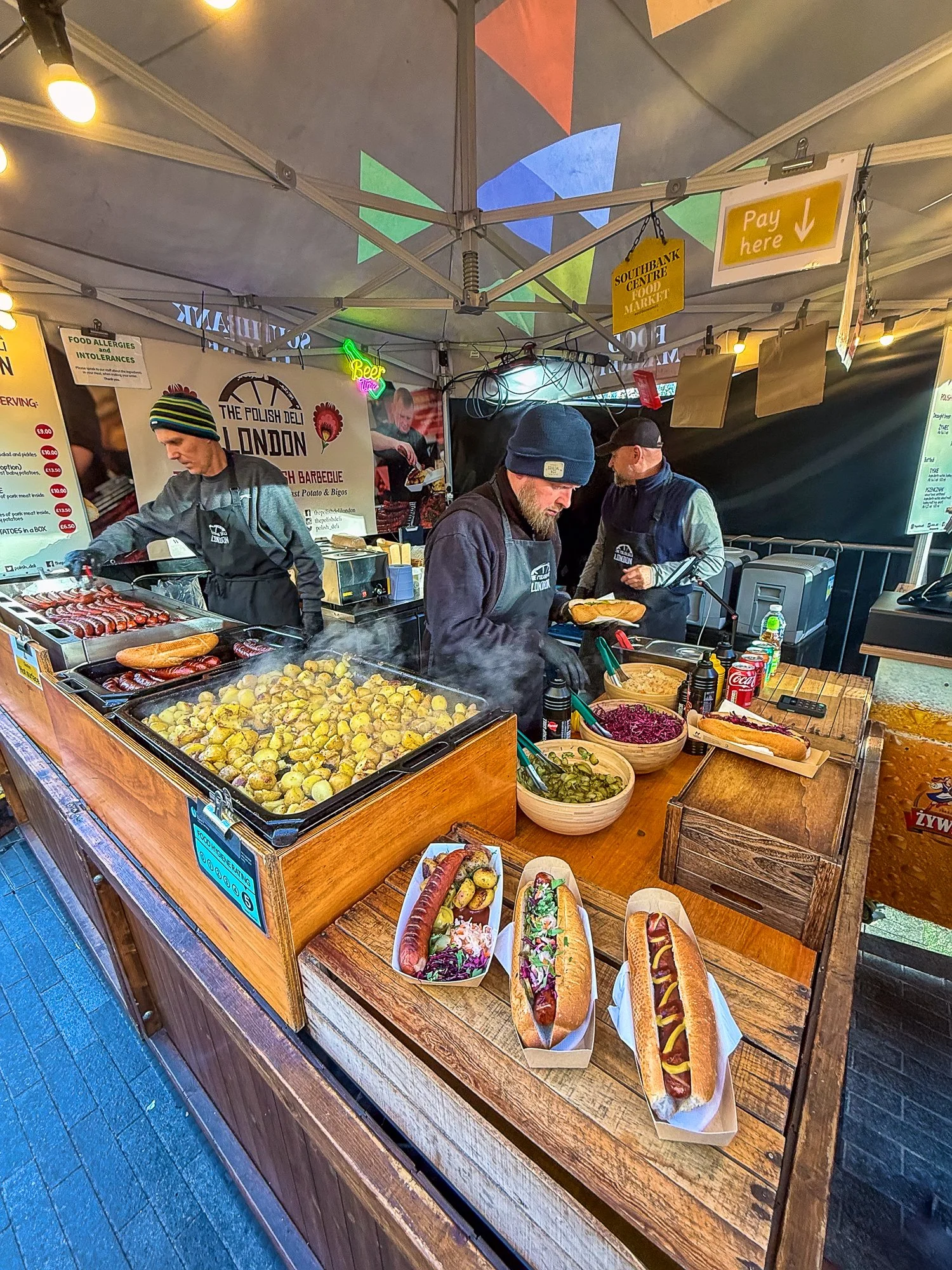
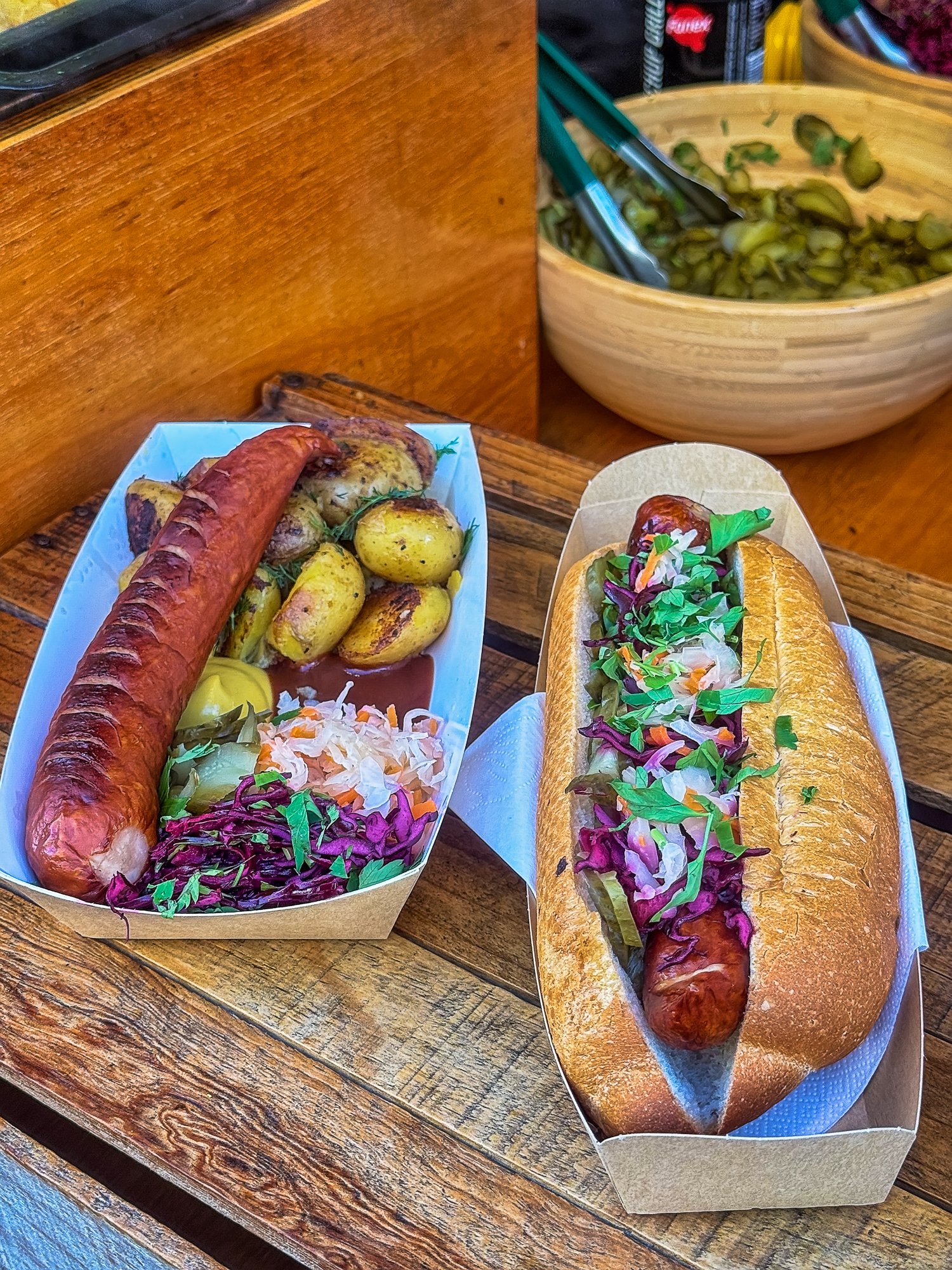
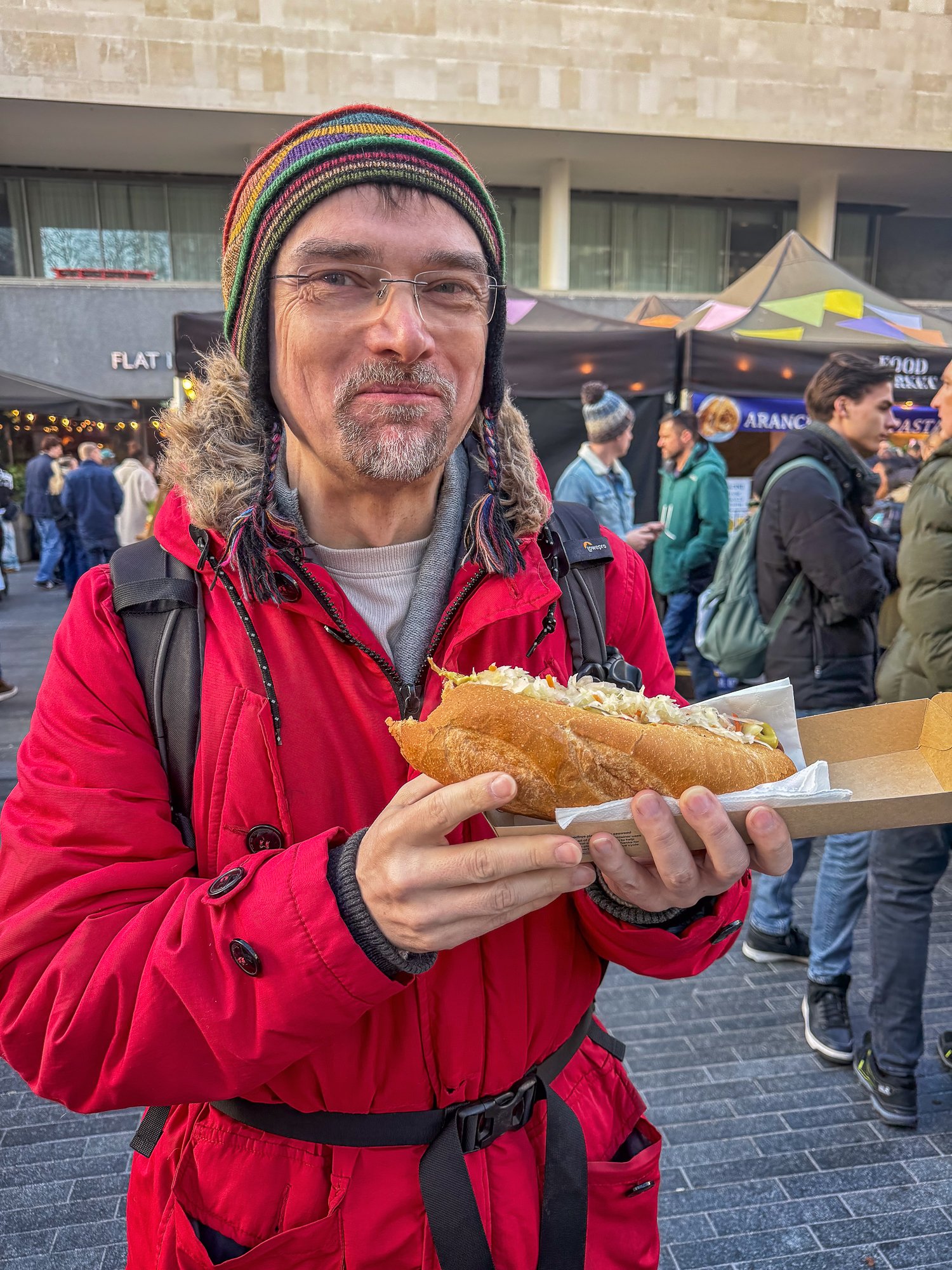
We had a pleasant experience at the Art of the Brick, although the exhibition itself was not particularly big. As such, before heading home, we decided to check out the famous Viola’s Room. But first, we stop by the Upmarket Brick Lane Food Hall for some street food. This food market is rather big offering a diverse selection of options, and since we arrived early, it is pleasantly uncrowded.


Nasza wizyta w Art of the Brick była raczej udana, ale sama wystawa nie była szczególnie duża. Dlatego też przed powrotem do domu postanowiliśmy zahaczyć o słynny Viola’s Room.  Ale najpierw zatrzymujemy się w Upmarket Brick Lane Food Hall na street food. Ta hala targowa oferuje różnorodne potrawy głównie kuchni azjatyckiej, a ponieważ zjawiamy się wcześnie, omijają nas tłumy i kolejki.

Viola’s Room is an immersive experience that transports a small group of participants—capped at six, though our group consisted of just five—through a dimly lit dreamscape as Helena Bonham-Carter narrates Daisy Johnson’s story (an adaptation of a gothic mystery by Barry Pain called The Moon-Slave ).

 “Follow the light” is a very simple instruction from the immersive theatre company Punchdrunk, and that we do. Barefoot. And with headphones on.

The experience unfolds linearly, allowing us to walk through the narrative as if we are inside of the story. The light guides us and we follow it like human moths drawn to a flame, often brushing against the walls of narrow corridors, feet encountering different textures that match the storyline: it feels sometimes like walking through a soft sand, and the other times like stepping on old polished wood, soft carpets or grass and tree roots. It is not for people with claustrophobia I must say. The pathway is often narrow and the light is usually scarce apart from a few vividly crafted scenes illustrating the turning points of the story (the banquet hall, the lights in the garden, the tree with ballet shoes, to name just a few – they are beautifully created, with great attention to details and quite lavish imagination). Traversing this dreamscape feels very much like sleepwalking, moving through the surreal landscape of someone else’s dream. The atmosphere is exciting but tinged with a subtle layer of anxiety and foreboding that keeps us on our toes. Once the narrative reaches its conclusion (I am not going to talk about the plot to not spoil it for future visitors) we are treated to a warm foot bath and fluffy towels, allowing us to reorient ourselves before donning our shoes. Finally, we stop for a drink in a dimly illuminated bar.


Viola’s Room to teatr immersyjny, który przenosi małą grupę uczestników — ograniczoną do maksymalnie sześciu osób, chociaż nasza grupa składała się z zaledwie pięciu — do oświetlonego przygaszonym światłem świata snów, podczas gdy Helena Bonham-Carter opowiada historię napisaną przez Daisy Johnson (chociaż warto dodać, że jest to adaptacja gotyckiej noweli Barry’ego Paina zatytułowanej The Moon-Slave).

„Podążaj za światłem” to bardzo prosta instrukcja od Punchdrunk, grupy teatralnej odpowiedzialnej za ten spektakl i to dokładnie robimy. Boso. I w słuchawkach.

Cała historia rozwija się liniowo, pozwalając nam przejść przez narrację, jakbyśmy byli jej częścią. Światło nas prowadzi, a my podążamy za nim niczym ludzkie ćmy, często ocierając się o ściany wąskich korytarzy, podczas gdy stopy napotykają różne faktury, pasujące do aktualnej fabuły: czasami wydaje się, że idziemy po miękkim piasku, a innym razem, że stąpamy po starym polerowanym drewnie, miękkich dywanach lub trawie i korzeniach drzew. Myślę sobie, że to dobrze, że nie mamy z Marcinem klaustrofobii. Ścieżka jest często wąska, a światło zwykle skąpe, poza kilkoma barwnie wykreowanymi scenami ilustrującymi punkty zwrotne opowieści (sala bankietowa, światła w ogrodzie, drzewo obwieszone baletkami, żeby wymienić tylko kilka – są one pięknie stworzone, z wielką dbałością o szczegóły i polotem wyobraźni). Przemierzanie tych instalacji przypomina trochę lunatykowanie, jakbyśmy poruszali się przez surrealistyczny krajobraz czyjegoś snu. Atmosfera jest ekscytująca, ale podszyta subtelną warstwą niepokoju i złego przeczucia, które trzymają nas cały czas w napięciu. Gdy narracja dobiega końca (nie będę opowiadać o fabule, żeby nie zepsuć nikomu zabawy), czeka na nas ciepła kąpielą stóp i swieże ręczniki. Na koniec, już z butami na nogach, zatrzymujemy się na drinka w nastrojowo oświetlonym barze.

On our way back, we decide to stop by the Outernet to see if there are any new presentations on display. To our delight, there are! We linger for about half an hour. Check them out!

W drodze powrotnej postanawiamy zatrzymać się przy Outernet, aby sprawdzić, czy są jakieś nowe prezentacje. Ku naszej uciesze, są! Zatrzymujemy się więc na około pół godziny. Poniżej nasza krótka video relacja.

Afterwards, we head over to the Bao Spot on Newport Street to keep our street food theme going strong. Just a few meters away, we can’t resist popping into Donutelier, which has gained a reputation as the best doughnut shop in London. We grab a selection of their fantastic doughnuts to enjoy as a sweet treat before catching the train home (and then at home). And we also get some free sweets at the train station, too. Marcin likes them, me - not so much.


Następnie udajemy się do Bao Spot na Newport Street, aby podtrzymać dzisiejszy motyw przewodni, czyli street food. Kilka metrów dalej nie możemy się też oprzeć, by nie wpaść do Donutelier, który zyskał reputację najlepszego sklepu z pączkami w Londynie. Kupujemy kilka ich fantastycznych pączków, aby cieszyć się nimi jako słodką przekąską przed złapaniem pociągu do domu (i w domu). A jeszcze dostajemy darmowe słodycze na stacji Waterloo. Marcin je zjada, bo mi tak średnio smakują.

The art of the brick

We caught the early train to London this morning and grabbed a quick breakfast at Waterloo station.

Dziś rano złapaliśmy poranny pociąg do Londynu i zjedliśmy szybkie śniadanie na stacji Waterloo.

Next, we visited 'The Art of the Brick,' a critically acclaimed exhibition by Nathan Sawaya. This world-renowned exhibition has traveled to numerous cities, including New York, Los Angeles, Melbourne, Shanghai, and Singapore, before making its highly anticipated debut in London. Sawaya has gained international recognition for his groundbreaking use of LEGO bricks as a medium for contemporary art. The exhibition showcases an impressive array of sculptures and installations crafted solely from LEGO bricks. The artworks on display span from intricate, large-scale sculptures to smaller, meticulously crafted pieces, frequently incorporating human figures and abstract forms.

Następnie udaliśmy się na wystawę „The Art of the Brick” autorstwa Nathana Sawaya. Jest to znana podróżująca wystawa sztuki (po pokazach w Nowym Jorku, Los Angeles, Melbourne, Szanghaju i Singapurze w końcu dotarła do Londynu), a Sawaya słynie z nowatorskiego wykorzystania klocków LEGO jako medium dla sztuki współczesnej. Wszystkie instalacje na wystawie wykonane są w całości z klocków LEGO i obejmują zarówno skomplikowane, wielkoformatowe rzeźby, jak i dużo mniejsze ekspozycje.

A quite interesting area of the exhibition focused on emotions, offering clever representations of sadness, loneliness, fear, aggression, and self-destruction, alongside themes of growth, transformation, escape, nostalgia, and introspection. The dramatic lighting in this section enhanced the impact of the LEGO pieces, giving them a more powerful and "serious" presence.

Dość interesująca część wystawy skupiona była na emocjach, oferując pomysłowe przedstawienia smutku, samotności, strachu, agresji i samozniszczenia, obok tematów wzrostu, transformacji, ucieczki, nostalgii i introspekcji. Dramatyczne oświetlenie w tej sekcji wzmocniło przekaz prac, nadając im bardziej potężną i „poważną” obecność.

Another interesting corner was packed with LEGO renditions of famous artworks (Rodin’s The Thinker, Leonardo Da Vinci’s Mona Lisa, Michelangelo’s ‘David’, Gustav Klimt’s The Kiss and Edvard Munch’s The Scream to name just a few).

Kolejna interesująca sekcja wypełniona była zbudowanymi z klocków LEGO wersjami słynnych dzieł sztuki (m.in. Myśliciel Rodina, Mona Lisa Leonarda da Vinci, Dawid Michała Anioła, Pocałunek Gustava Klimta i Krzyk Edvarda Muncha, żeby wymienić tylko kilka).

Perhaps our favourite section of the exhibition featured LEGO brick-built props that were inspired by various photographs. A red dress, an umbrella, a cloud, a piece of rail track, and a few others were displayed alongside the photographs, supposedly serving as their inspiration. However, upon closer inspection, you realize that the props were already included in the photographs themselves…

Najciekawsza dla nas sekcja wystawy zawierała rekwizyty zbudowane z klocków LEGO, które zostały zainspirowane różnymi zdjęciami. Czerwona sukienka, parasol, chmura, kawałek torów kolejowych i kilka innych propów wyeksponowanych było obok zdjęć, rzekomo stanowiąc ich inspirację. Jednak po bliższym przyjrzeniu się można było zauważyć, że te zrobione z LEGO rekwizyty były już obecne na samych zdjęciach…

Overall, "The Art of the Brick" was an interesting exhibit that presented a different take on what art can be. And then we went for food. Obviously.

 „The Art of the Brick” okazało się całkiem interesującą wystawą, która pokazała inne spojrzenie na to, czym może być sztuka. A potem poszliśmy na jedzenie. Oczywiście.

Spirited Away

Another studio Ghibli’s anime, Oscar-winning Spirited Away, created by the legendary Hayao Miyazaki, has been reimagined for the stage. Directed by John Caird (known for Les Miserables), this breath-taking production is performed in Japanese (but with subtitles,) and accompanied by a live orchestra. Each night, the Coliseum fills to the brim, leaving audiences in awe.


Kolejna anmiacja studia Ghibli, nagrodzone Oscarem Spirited Away autorstwa legendarnego Hayao Miyazaki, zostało przystosowane do potrzeb teatralnej sceny. Reżyserem tej fantastycznej produkcji jest John Caird (znany z Les Miserables), a akompaniuje je orkiestra na żywo. Każdej nocy Londyński teatr Coliseum wypełnia się po brzegi, zabierając publiczność w prawdziwie magiczną podróż.

The visuals are stunning, and the performance is exceptional. If you haven't seen the film yet (I highly recommend watching it ASAP!), Spirited Away tells the story of Chihiro, a young girl who accidentally enters a world of spirits. Her parents are transformed into pigs, and Chihiro must navigate this enchanting but perilous realm, ruled by the sorceress Yubaba, to save her parents and find a way back to the human world. I’ll leave the plot here, to not spoil your fun.


Efekty wizualne są oszałamiające, a gra aktorska też znakomita. Jeśli jeszcze nie widzieliście filmu (gorąco polecam obejrzeć go jak najszybciej!), Spirited Away opowiada historię Chihiro, dziewczynki, która przypadkowo trafia do świata duchów. Jej rodzice zostają zamienieni w świnie, a Chihiro ich uratować i znaleźć drogę powrotną do świata ludzi. Więcej fabuły nie zdradzę, aby nie zepsuć wam zabawy.


In March, we attended another Studio Ghibli production—My Neighbor Totoro (check out my March blog entry for that!). It's hard not to compare the two, and while both are incredible, I have to give a slight edge to Totoro. There’s just something magical about Jim Henson's puppets and the unique storytelling in Totoro. That said, Spirited Away was still absolutely fantastic! My favorite characters were No Face and Haku, and my favourite scene was the one inside the train – so powerfully imagined.

W marcu obejrzeliśmy inną produkcję Studio Ghibli — My Neighbor Totoro (sprawdźcie wpis na blogu z marca!). Trudno nie porównywać tych dwóch przedstawien ze sobą i chociaż obydwa są niesamowite, niewielką przewagę ma wg mnie Totoro. Jest coś absolutnie magicznego w marionetkach Jima Hensona i wyjątkowej narracji Totoro. Mimo to, Spirited Away było absolutnie fantastyczne! Moimi ulubionymi postaciami byli No Face i Haku, a moją ulubioną sceną była ta w pociągu — niby prosta ale najbardziej kopiąca po nerkach.

As is typical, recording was not allowed during the performance, so this entry includes a few mobile snaps from before and after the show, as well as glimpses from the program. Plus, I cannot resist sharing a photo of the sushi we enjoyed during our pre-show lunch in the theatre.


Jak zwykle, nagrywanie nie było dozwolone podczas występu, więc ten wpis zawiera kilka zdjęć telefonem przed i po pokazie, a także fragmenty programu. Plus sushi, które jedliśmy podczas naszego lunchu w teatrze.