Big Fish

We are staying in Moxy, but I will write more about the hotel later. Before we start our Titanic adventure tomorrow, we go for a stroll to the river to reconnoitre the area. The plan is to reach the River Lagan and see the Salmon of Knowledge.

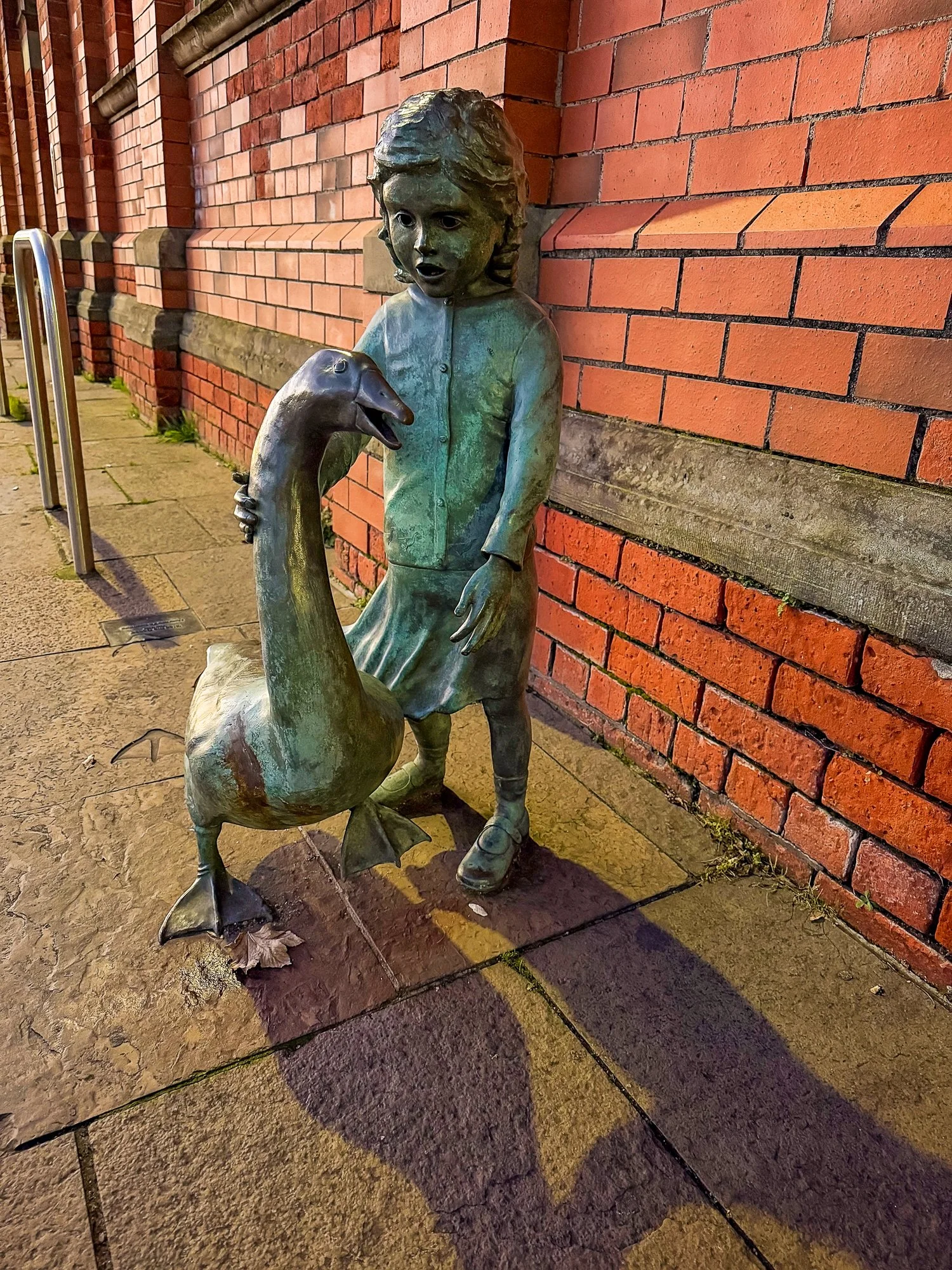
The first interesting thing we pass is a bronze artwork standing right outside the southern entrance of St. George’s Market on East Bridge Street - a girl with a goose. It commemorates a real goose named Alec, who became something of a local character in the 1920s. Alec belonged to a poultry vendor at the market and was known for wandering around the area and even escorting local schoolchildren on their way to school. Sadly, Alec was hit by a vehicle and died, but his memory lives on in this charming statue that shows him beside a young girl, capturing a little of quirky Belfast history and community spirit.


Zatrzymujemy się w Moxy, ale o hotelu napiszę później. Dziś, zanim ruszymy jutro na naszą przygodę z Titanikiem, wybieramy się na rekonesans okolicy. Naszym celem jest dotarcie do rzeki Lagan i zobaczenie Salmon of Knowledge (Łosia Wiedzy).

Pierwszą ciekawostką, na którą natrafiamy, jest rzeźba stojąca tuż przy południowym wejściu na St. George's Market przy East Bridge Street – dziewczynka z gęsią. Upamiętnia ona prawdziwą gęś o imieniu Alec, która w latach dwudziestych była tu przez wszystkich znana. Należała do lokalnego sprzedawcy drobiu i często wędrowała po okolicy, a czasem nawet odprowadzała dzieci do szkoły. Niestety, Alec został potrącony przez samochód i tak zginął, ale jego pamięć przetrwała w tej uroczej rzeźbie, przedstawiającej gęś obok dziewczynki - mały fragment lokalnej historii Belfastu.
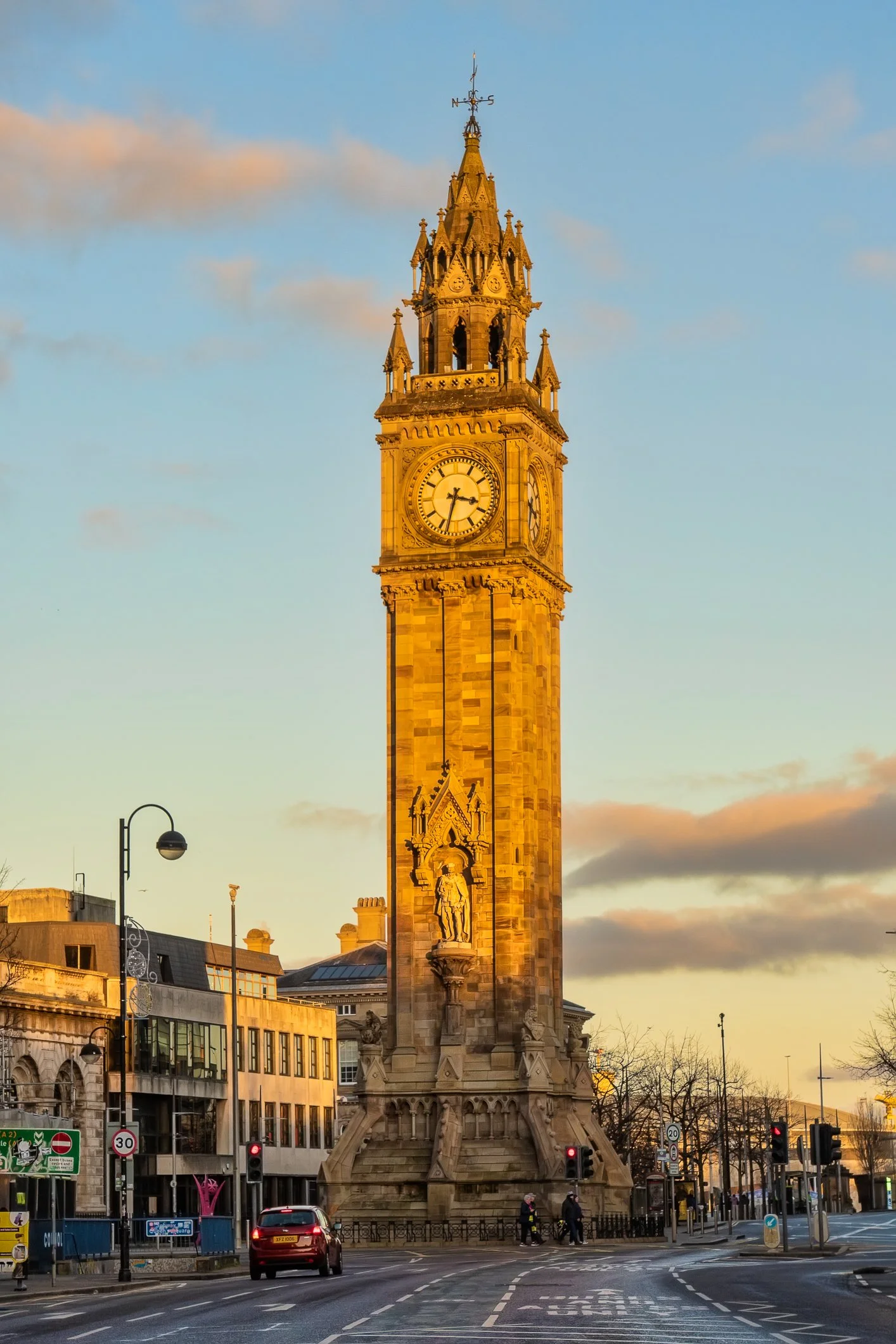
On our way to the waterfront, we pass one of Belfast’s best-known landmarks, the Albert Memorial Clock, built in 1869 in memory of Prince Albert, the husband of Queen Victoria. It is about 34 metres (113 feet) tall sandstone tower built in a Gothic Revival style.

The tower stands at Queen’s Square, not far from the River Lagan and the Big Fish sculpture. Fun fact: it actually leans slightly due to unstable ground near the river. For years it tilted about 4 feet off centre at the top, so it is sometimes called Belfast’s “Leaning Tower.” It was restored in the early 2000s to stabilise it and prevent further movement. The landmark is now affectionately described as having both „the time and inclination”.

Idąc w stronę nabrzeża mijamy jeden z najbardziej rozpoznawalnych punktów miasta - Albert Memorial Clock, zbudowany w 1869 roku na cześć księcia Alberta, męża królowej Wiktorii. Wieża zegarowa ma około 34 metrów wysokości i jest wykonana w piaskowcu w stylu neogotyckim.

Zegar stoi na Queen's Square, niedaleko rzeki Lagan i wielkiej ryby. Ciekawostka: wieża lekko się przechyliła z powodu niestabilnego gruntu nad rzeką. Przez lata odchylenie w górnej części doszło do około 1,2 metra, dlatego czasami nazywana jest ona „Krzywą Wieżą Belfastu”. W 2002 przeszła restaurację, aby ustabilizować konstrukcję i zapobiec dalszym przesunięciom.
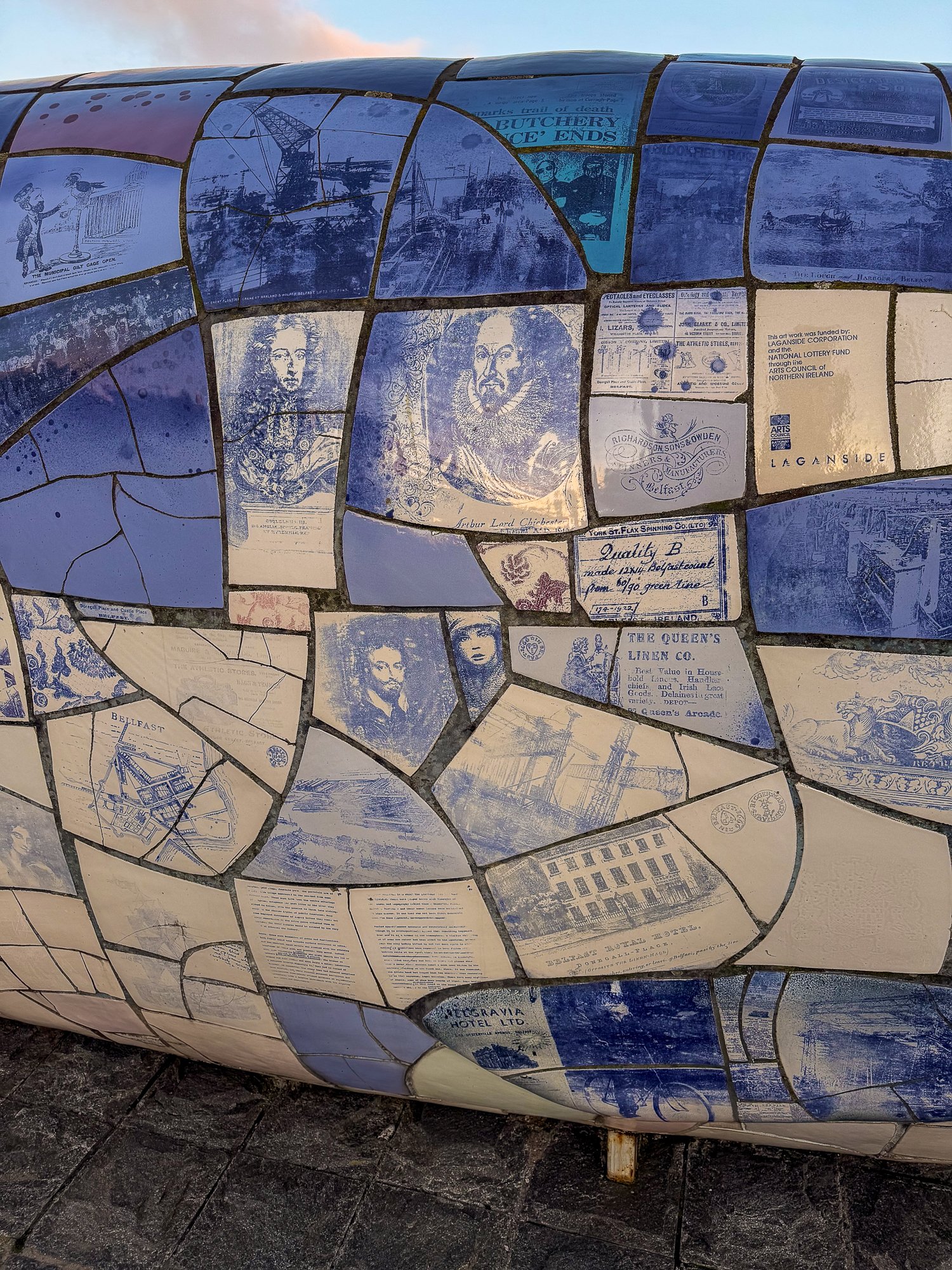
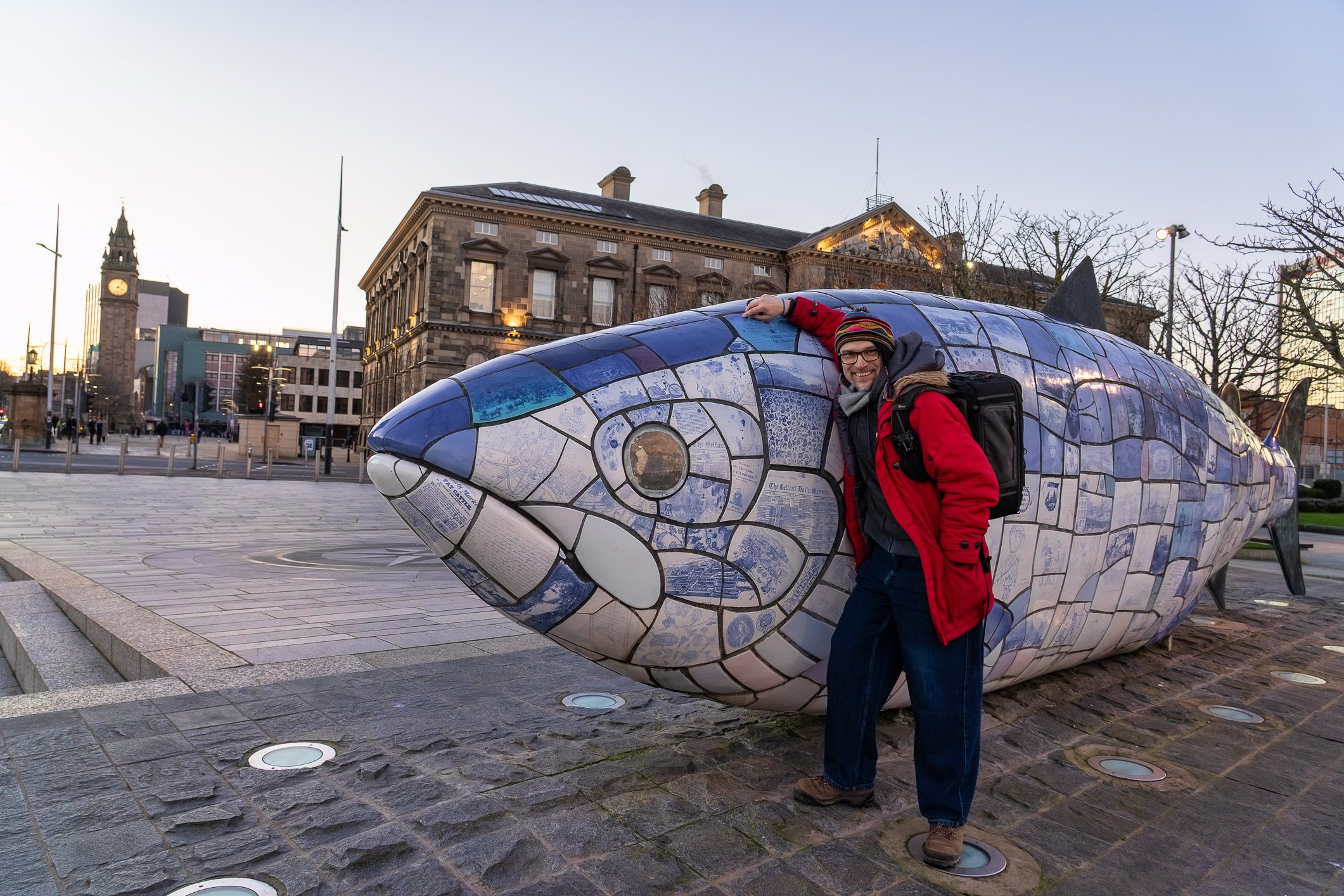
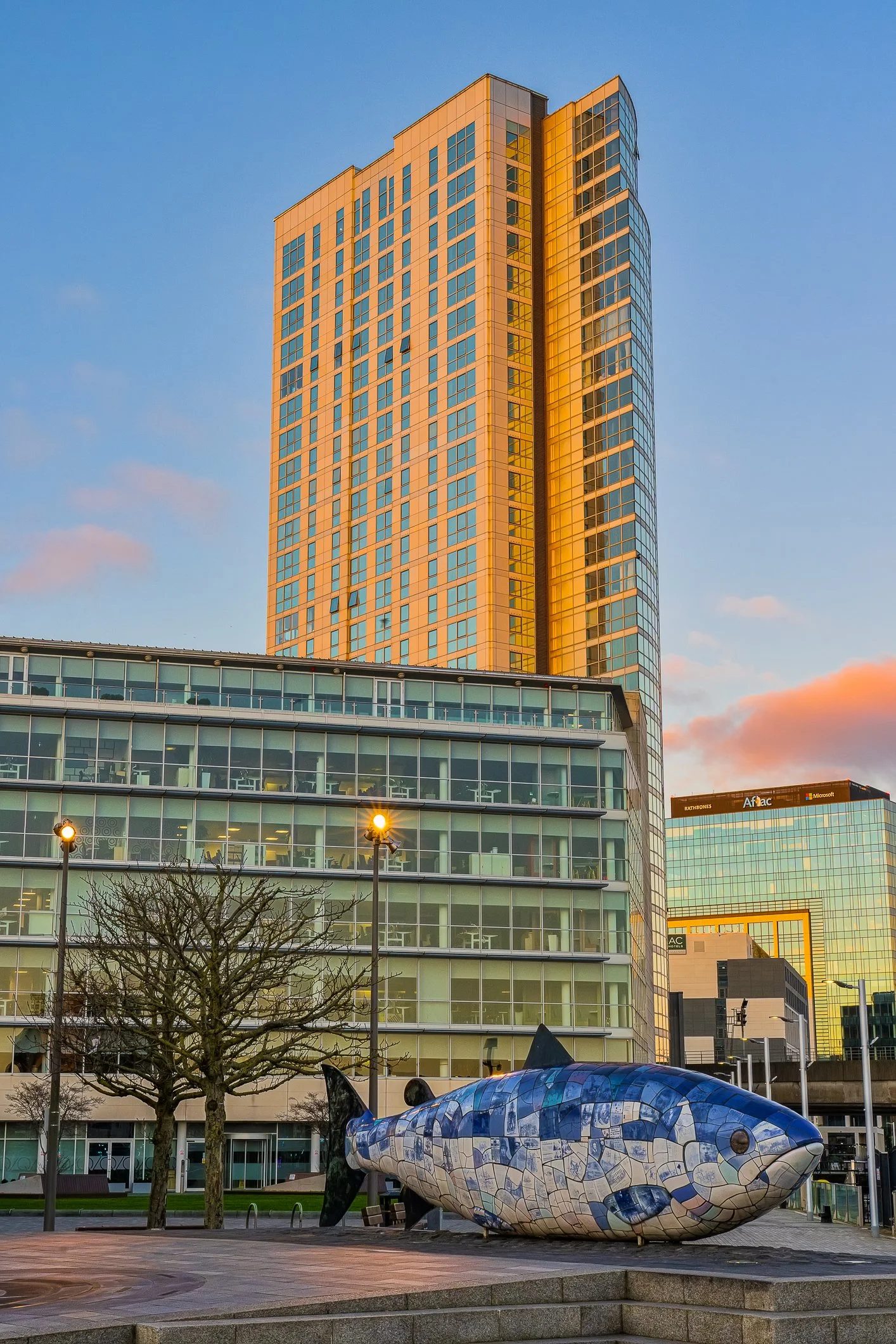
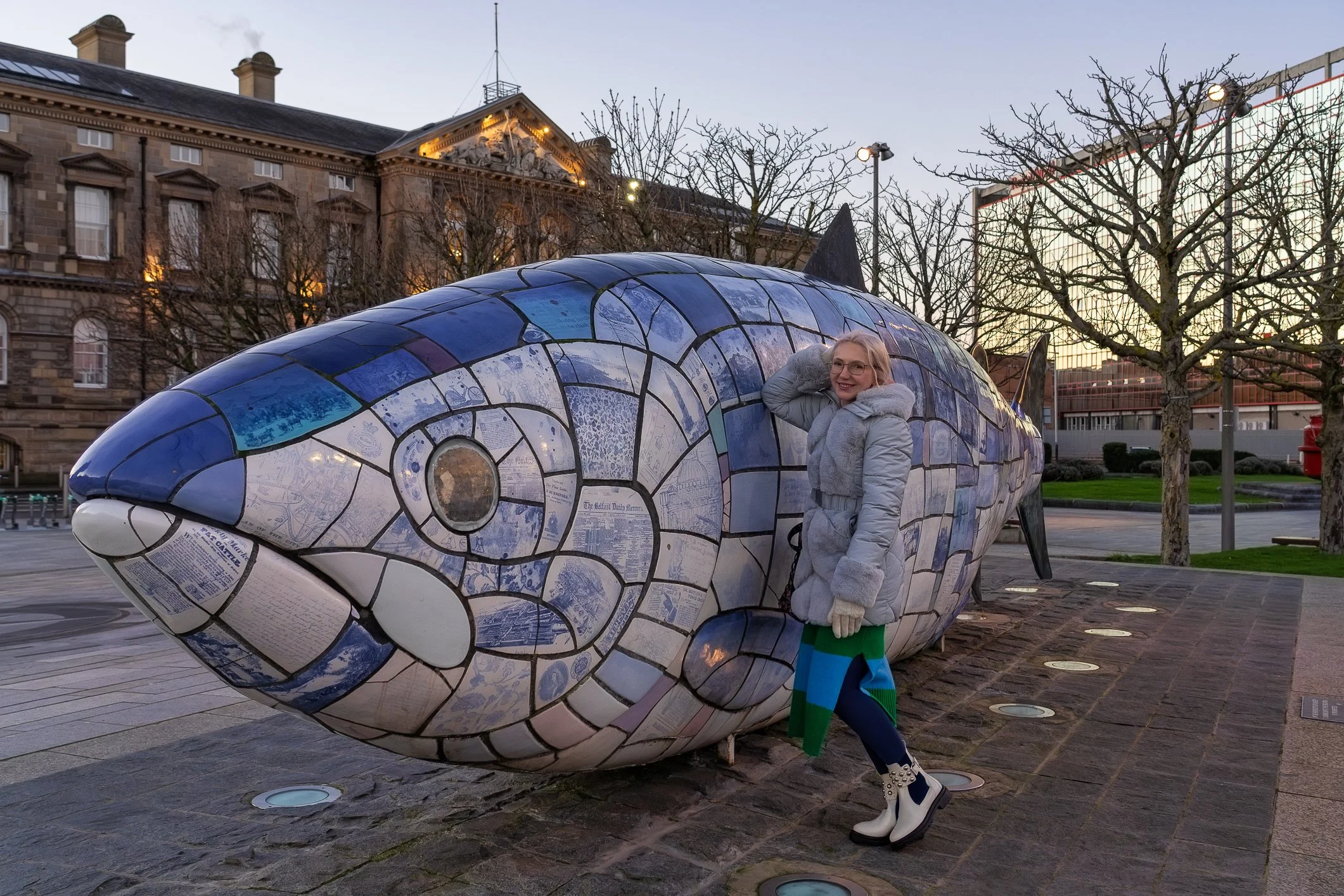
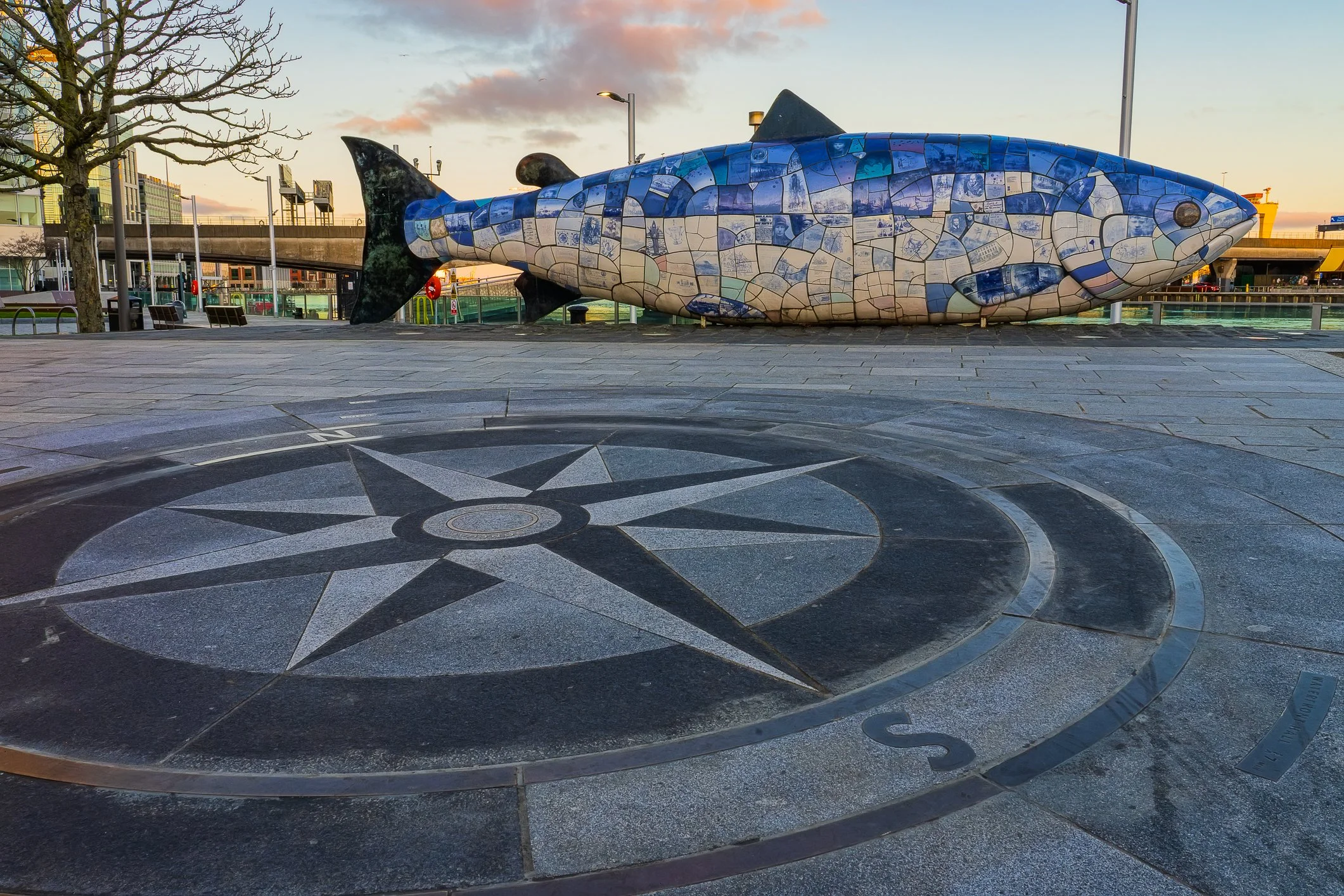
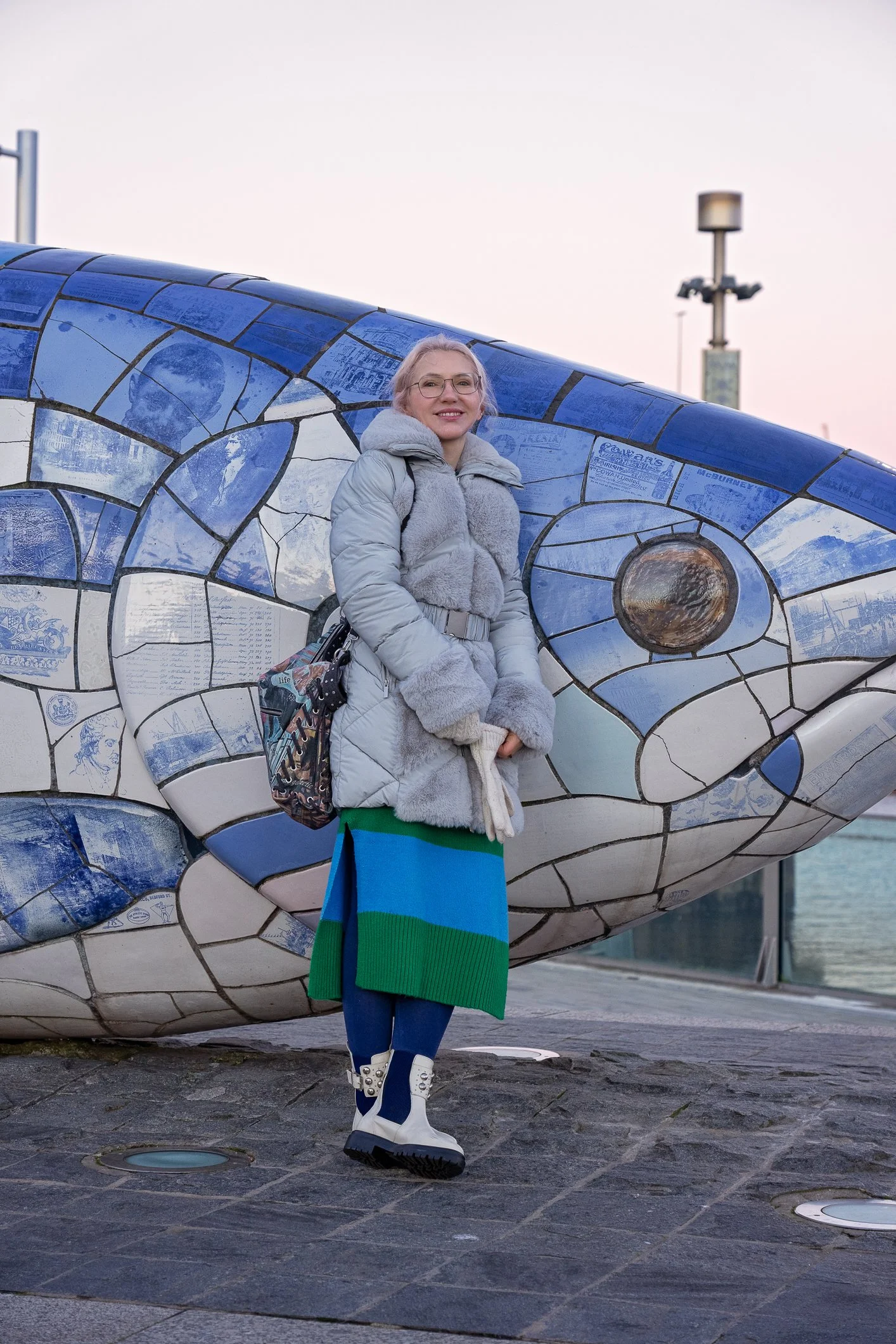
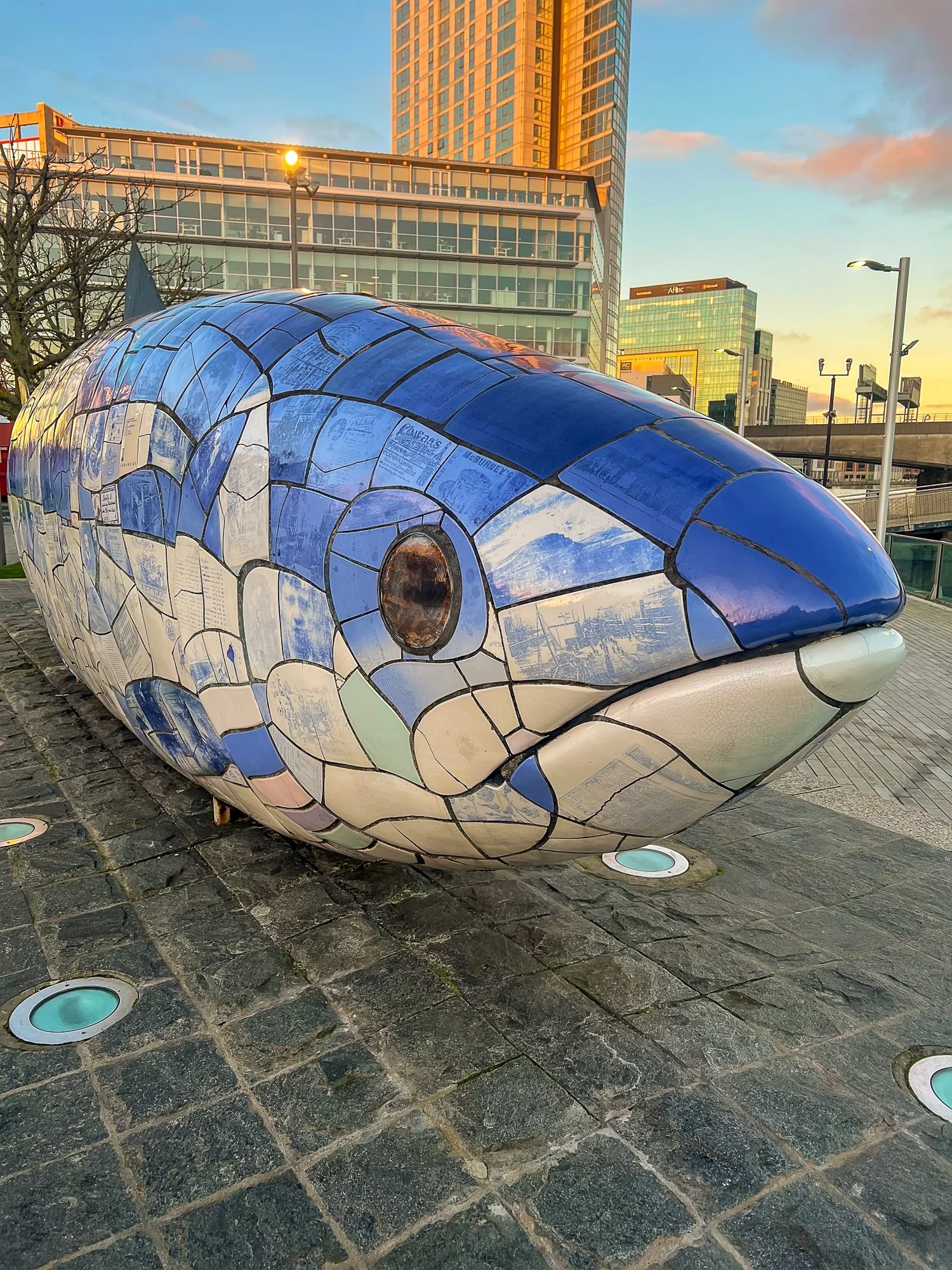
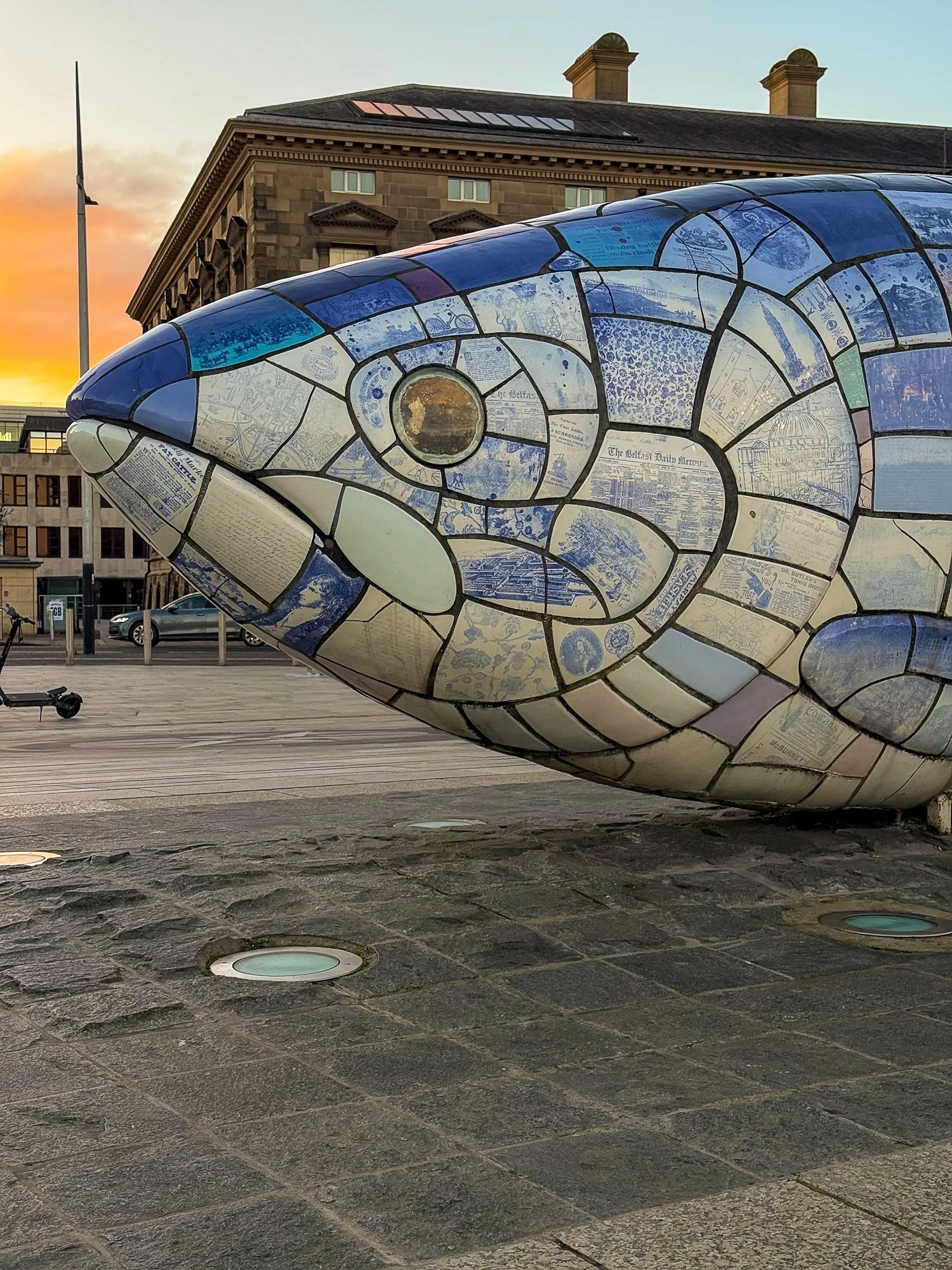
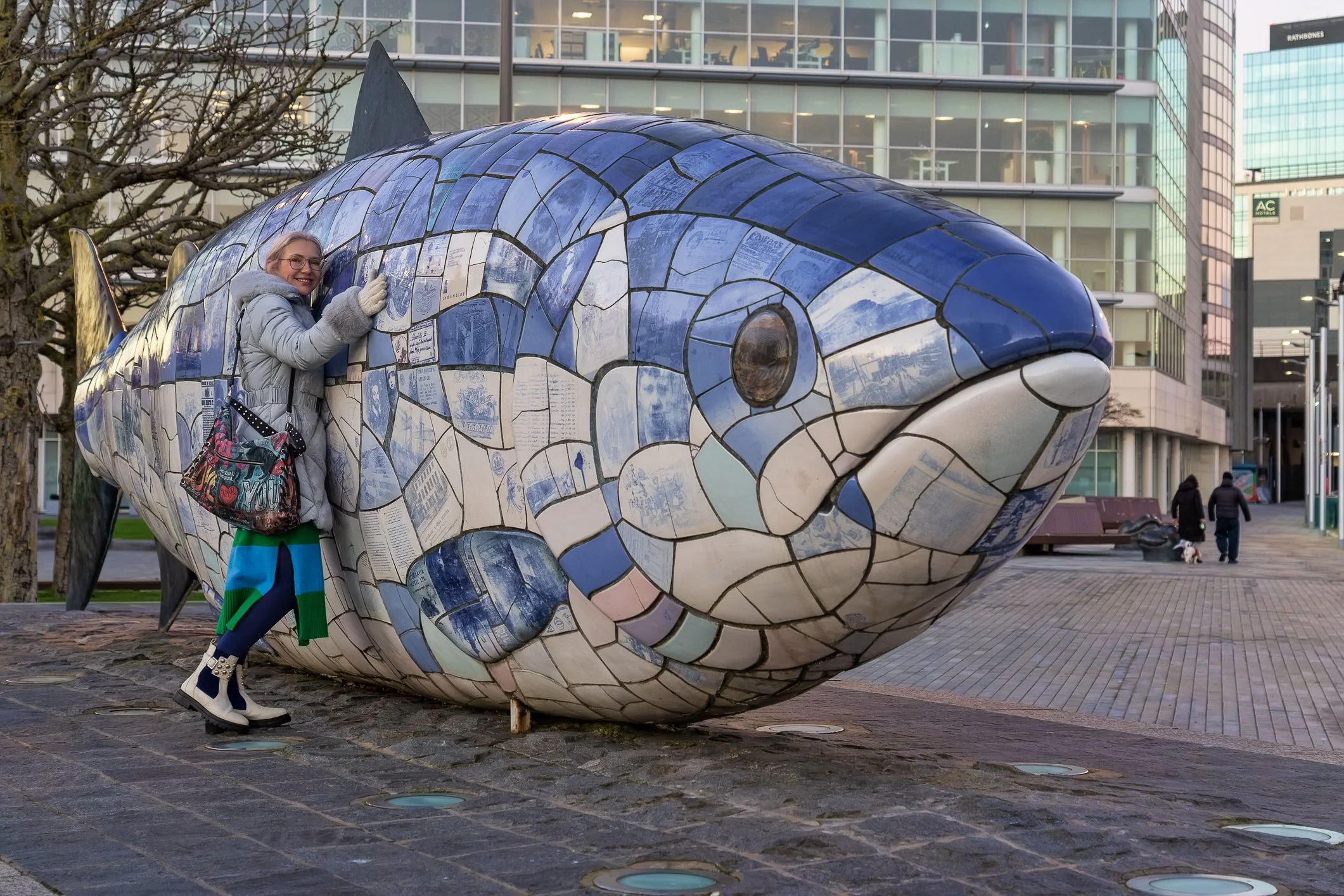
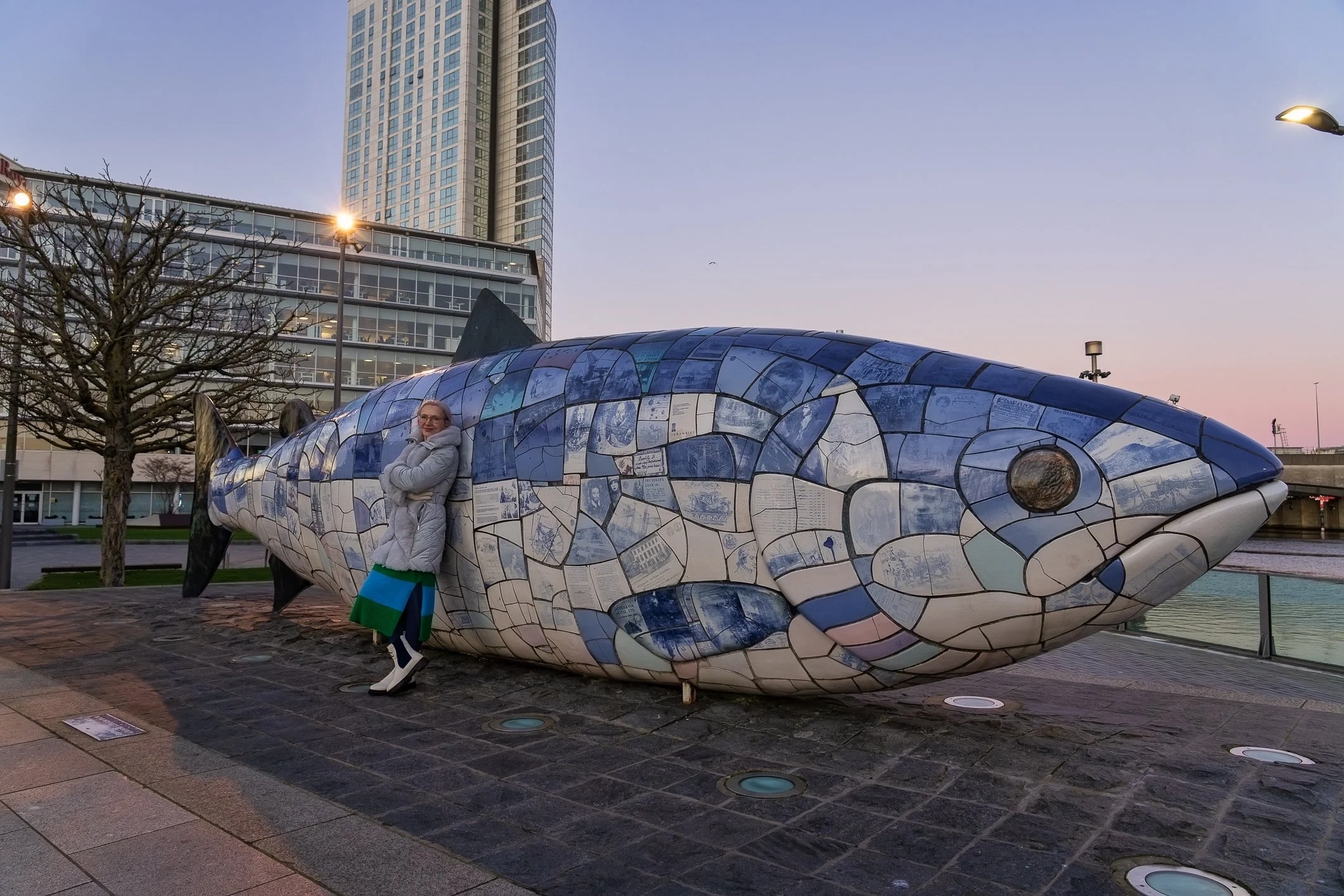
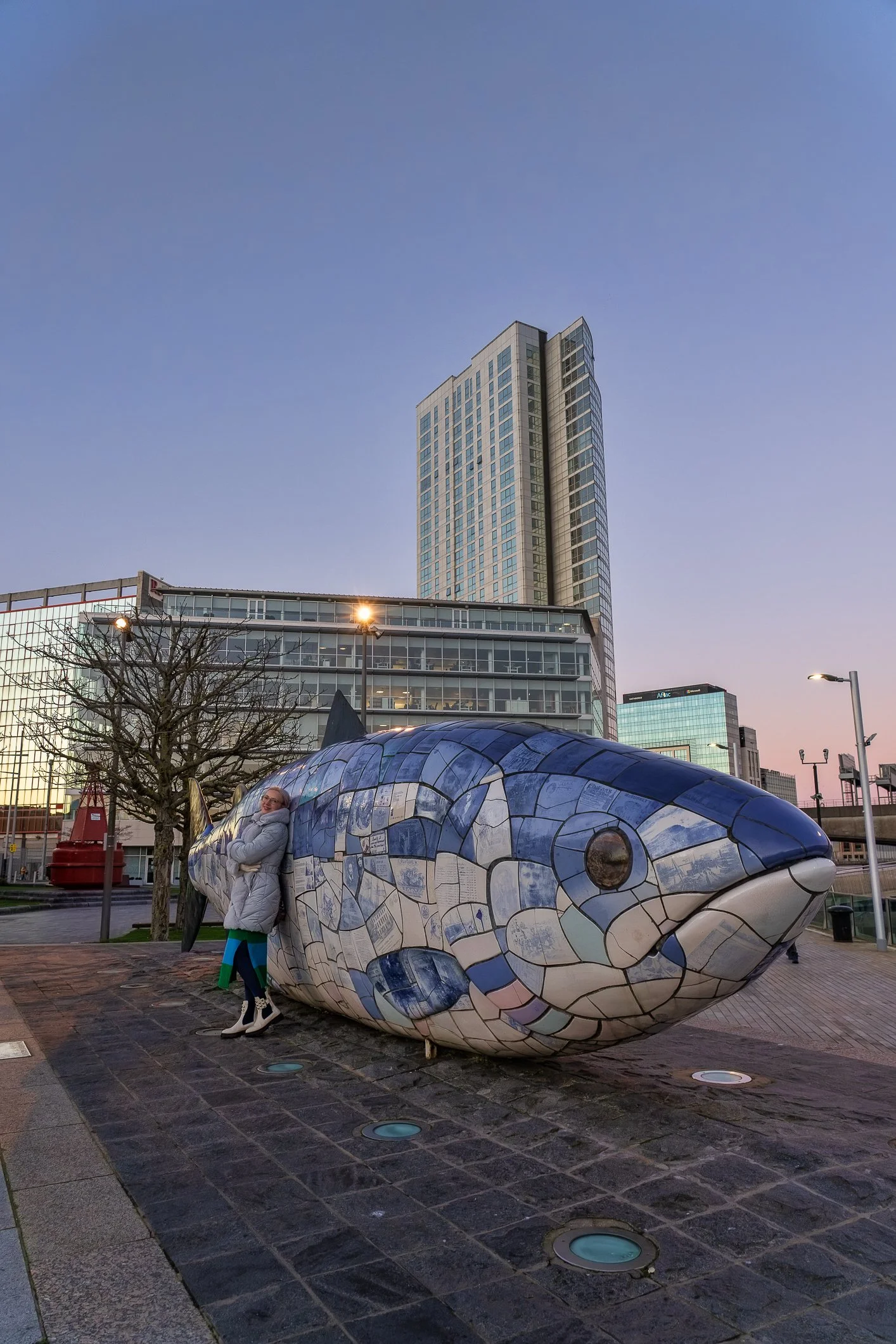
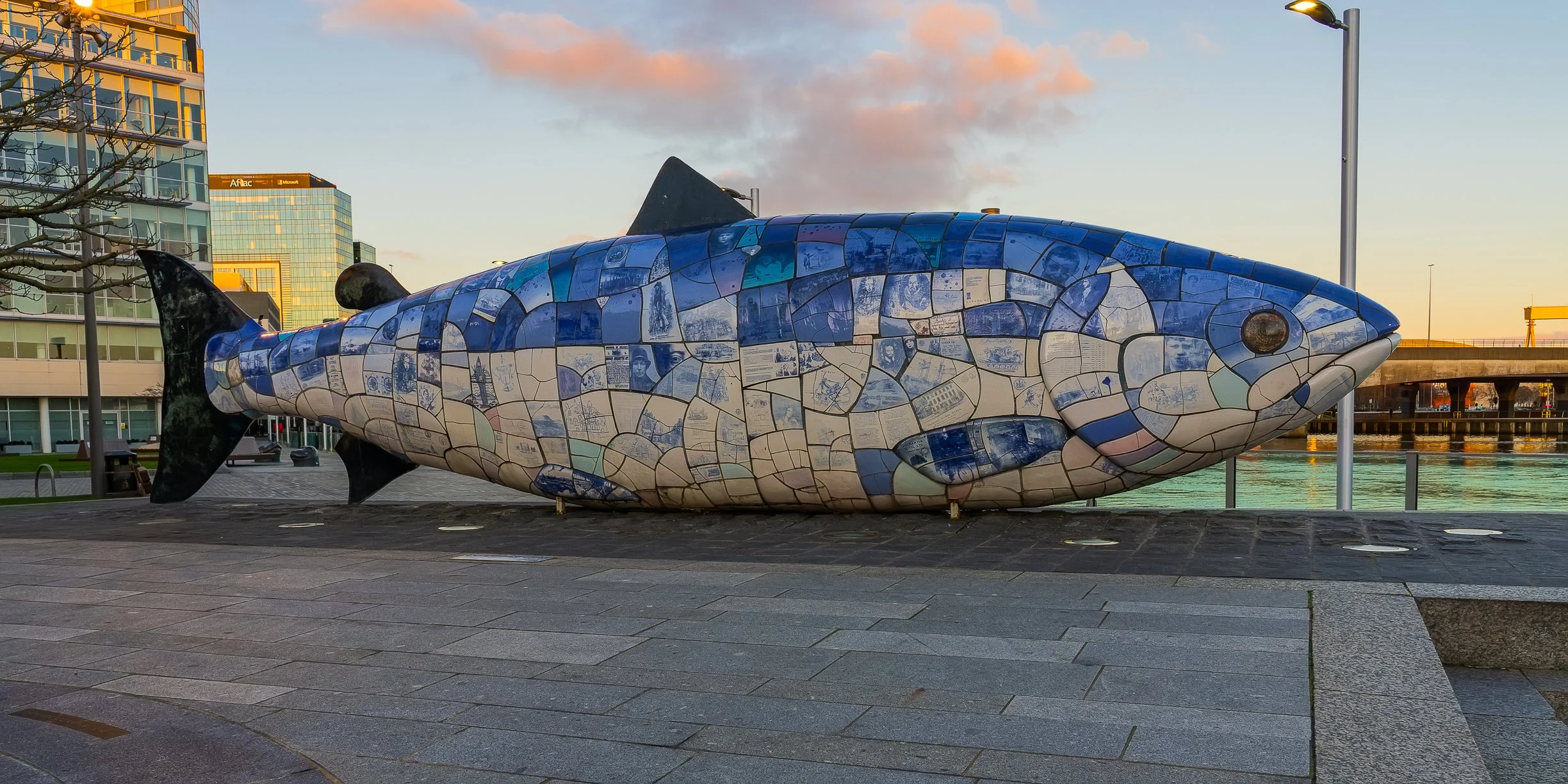
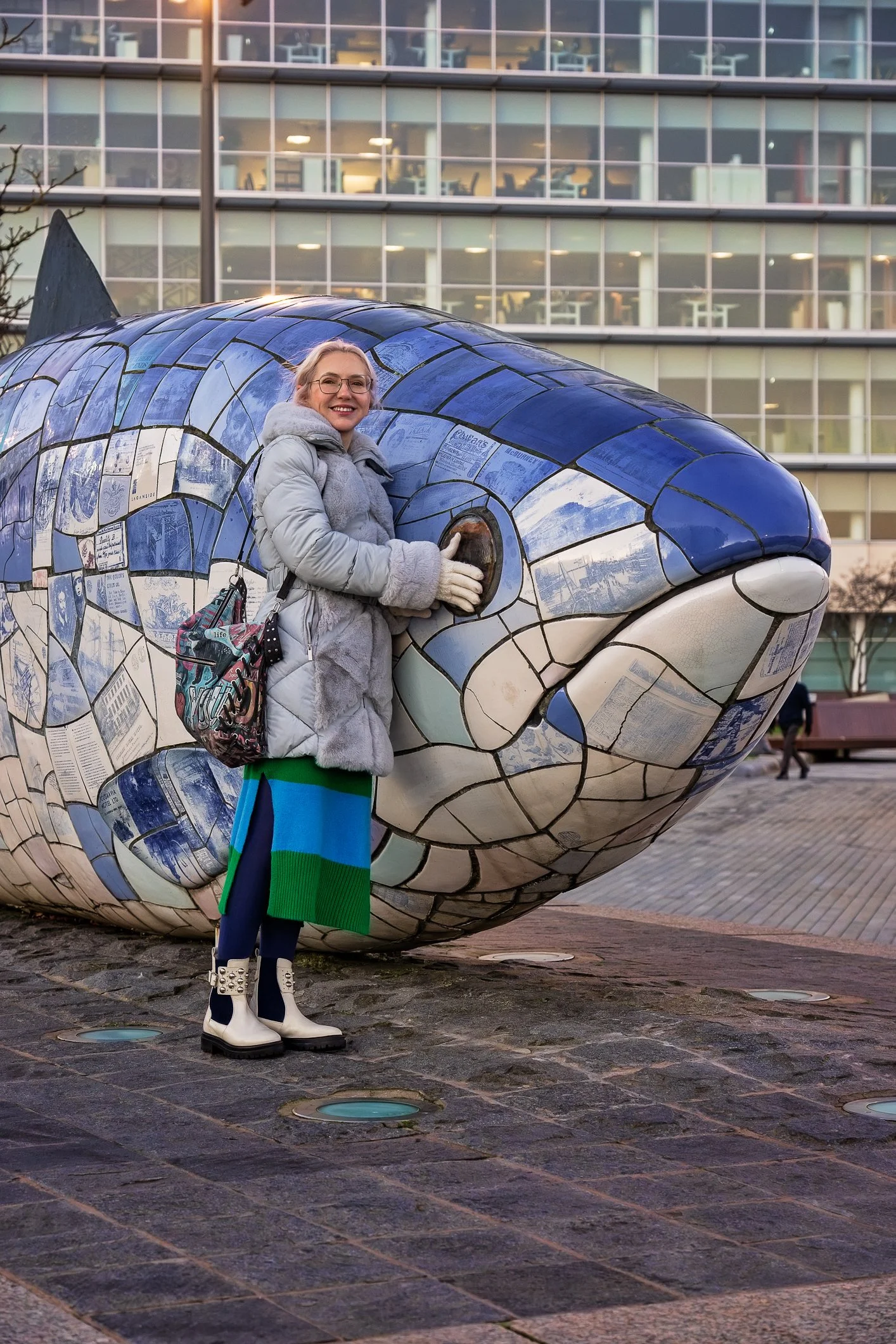
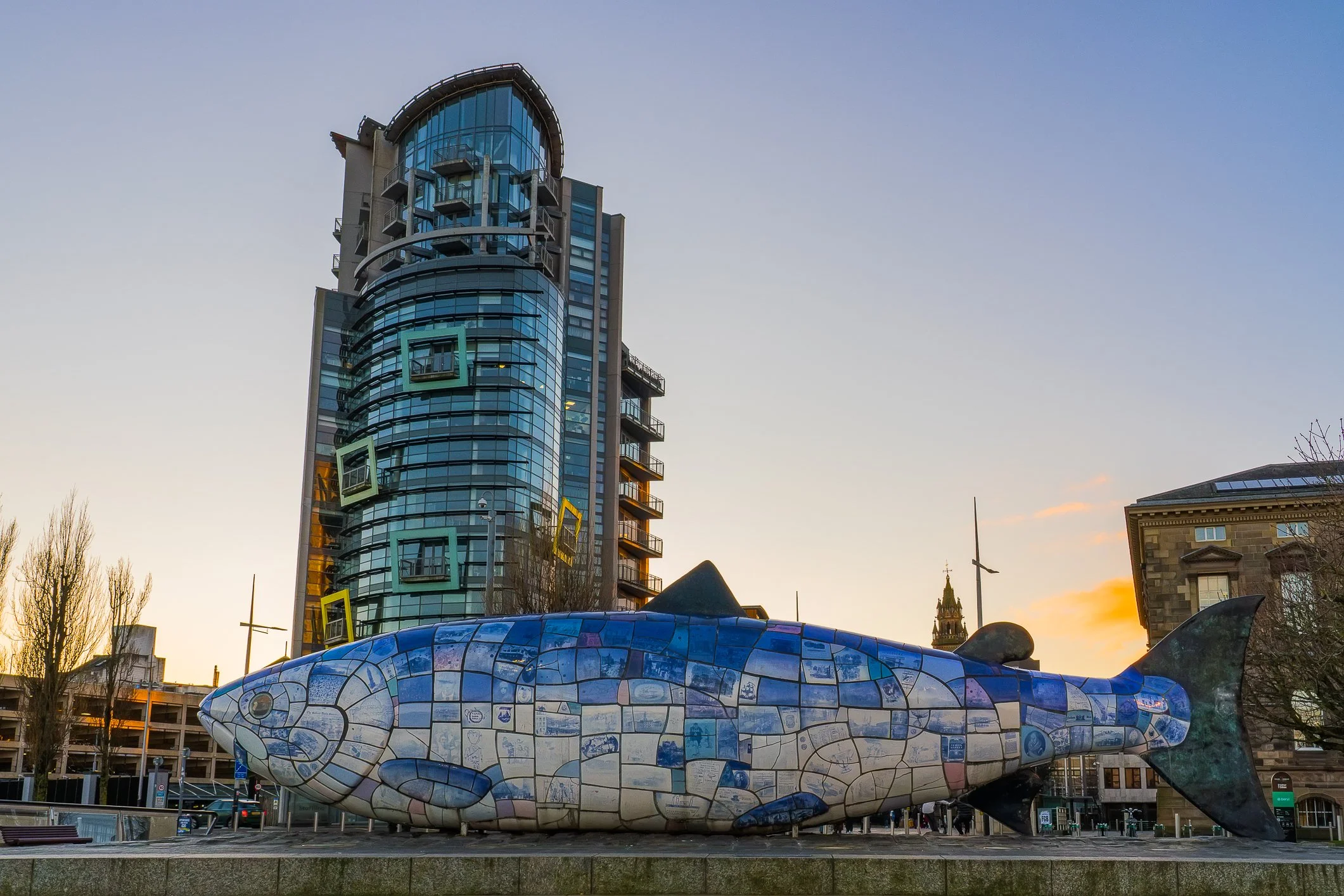
A few steps from here, we arrive at today’s destination - the Big Fish, officially called the Salmon of Knowledge. This 10-metre-long sculpture was created in 1999. The fish is covered in blue-and-white ceramic tiles decorated with images, texts, maps, and newspaper clippings that reflect Belfast’s history. In a way, it acts as a visual time capsule, capturing moments from the city’s past and preserving them in art. There are images of politicians John Hume and David Trimble, architectural drawings of the Grand Opera House, U2’s Bono as a reference to a concert held to promote the Good Friday Agreement of 1998, and many more.

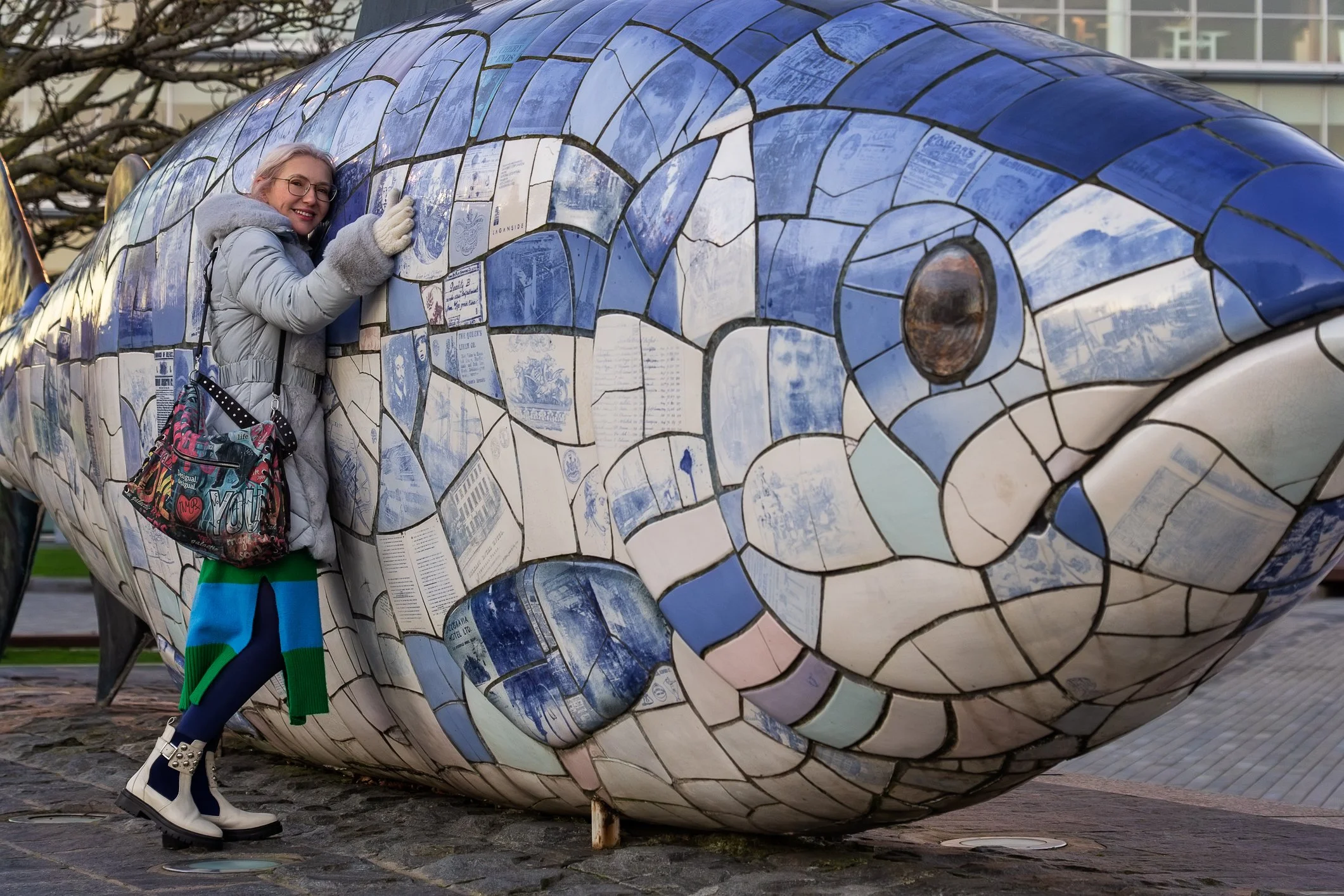
The name “Salmon of Knowledge” comes from Irish mythology. According to legend, a magical salmon gained all the wisdom in the world by eating hazelnuts that had fallen into the Well of Wisdom (it is complicated, I know). The hero Fionn mac Cumhaill accidentally tasted the salmon and instantly acquired its knowledge. Because of this story, there is a playful belief that touching the sculpture might bring you wisdom. So from now on, call me the wise one.

Salmon were historically found in the River Lagan, so at least the fish makes sense. Today, the sculpture symbolises renewal and shared history, especially meaningful given its installation not long after the peace process in Northern Ireland. It has become not just a piece of public art, but a gentle reminder of Belfast’s stories, resilience, and cultural roots.


Kilka kroków dalej docieramy do naszego celu – Wielkiej Ryby (Big Fish), oficjalnie zwanej Łososiem Wiedzy - Salmon of Knowledge. Ta 10-metrowa figura powstała w 1999 roku i jest pokryta ceramicznymi płytkami w odcieniach niebieskiego i białego, ozdobnymi obrazami, tekstami, mapami i wycinkami z gazet, które opowiadają historię Belfastu. W pewnym sensie pełni rolę wizualnej kapsuły czasu, zachowując fragmenty przeszłości miasta w formie sztuki. Wśród motywów znajdują się wizerunki polityków Johna Hume’a i Davida Trimble’a, szkice Grand Opera House, zdjęcie Bono z koncertu promującego Porozumienie Wielkopiątkowe z 1998 roku i wiele innych.

Nazwa „Salmon of Knowledge” pochodzi z mitologii irlandzkiej. Według legendy magiczny łosoś zdobył całą mądrość świata, jedząc orzechy laskowe spadające do Studni Wiedzy (to jest długa historia…). Bohater Fionn mac Cumhaill przypadkowo spróbował łososia i natychmiast przyswoił jego wiedzę. W związku z tym powstał zabobon, że dotknięcie rzeźby może przynieść wielką mądrość. No to podotykaliśmy.

Historycznie łososie żyły w rzece Lagan, więc wybór ryby ma przynajmniej sens. Dziś rzeźba symbolizuje odnowę i wspólną historię, co jest szczególnie wymowne, biorąc pod uwagę, że powstała niedługo po procesie pokojowym w Irlandii Północnej. Stała się nie tylko dziełem sztuki publicznej, ale też subtelnym przypomnieniem historii, wytrwałości i kulturowych korzeni Belfastu.
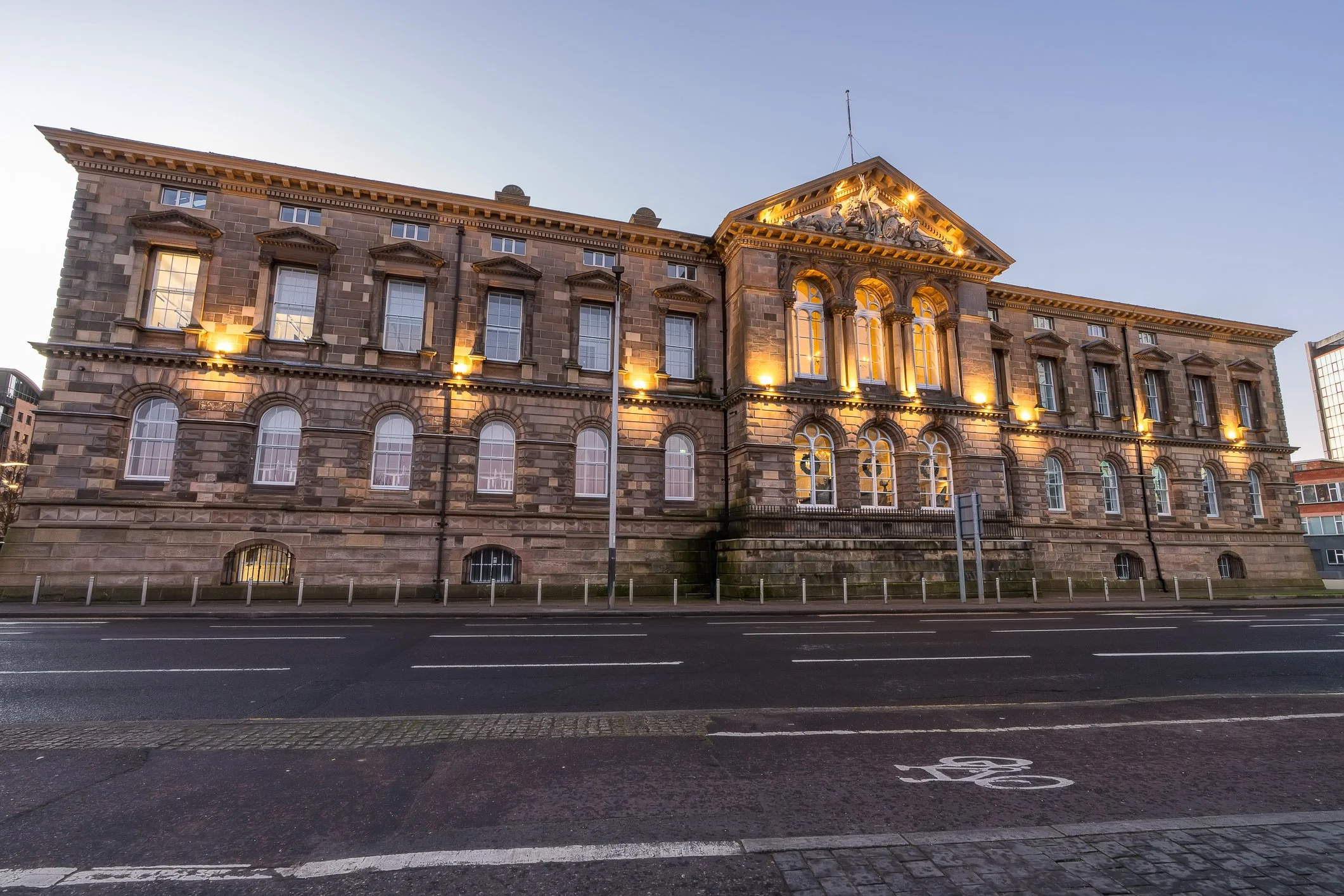
The large historic building directly opposite The Big Fish is the Custom House. It is one of Belfast’s most impressive 19th-century buildings. Completed in 1857, it was originally used by the Commissioners of Customs to manage trade and shipping in what was then a booming industrial port. At that time, Belfast was expanding rapidly thanks to shipbuilding, linen production, and global trade. The building is designed in a classical style, with a symmetrical façade, grand columns, and a central dome topped with sculptures representing commerce and navigation, a nod to Belfast’s maritime importance. Its prominent position facing the River Lagan symbolised the city’s connection to trade and the wider world.


Duży, historyczny budynek naprzeciw Big Fish to Custom House. Jest to jeden z najbardziej imponujących budynków XIX wieku w Belfaście. Został ukończony w 1857 roku dla Urzędu Celnego do zarządzania handlem i transportem w rozwijającym się porcie przemysłowym. W tym czasie Belfast szybko się rozrastał dzięki stoczniom, produkcji lnu i handlowi międzynarodowemu. Budynek zaprojektowano w stylu klasycystycznym, z symetryczną fasadą, kolumnami i centralną kopułą zwieńczoną rzeźbami symbolizującymi handel i żeglugę. Jego położenie nad rzeką podkreślało znaczenie Belfastu jako ośrodka handlu i kontaktów ze światem.
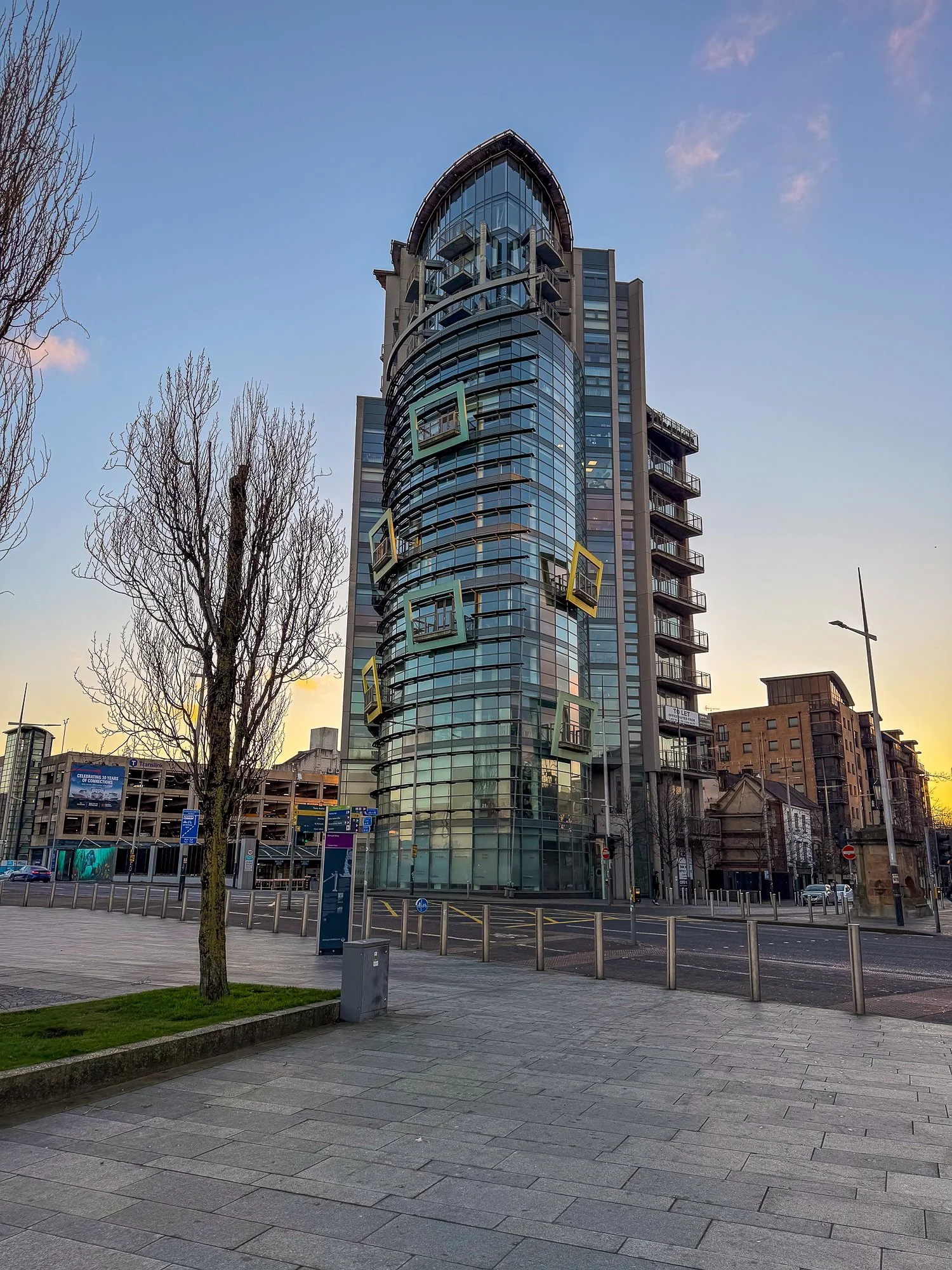
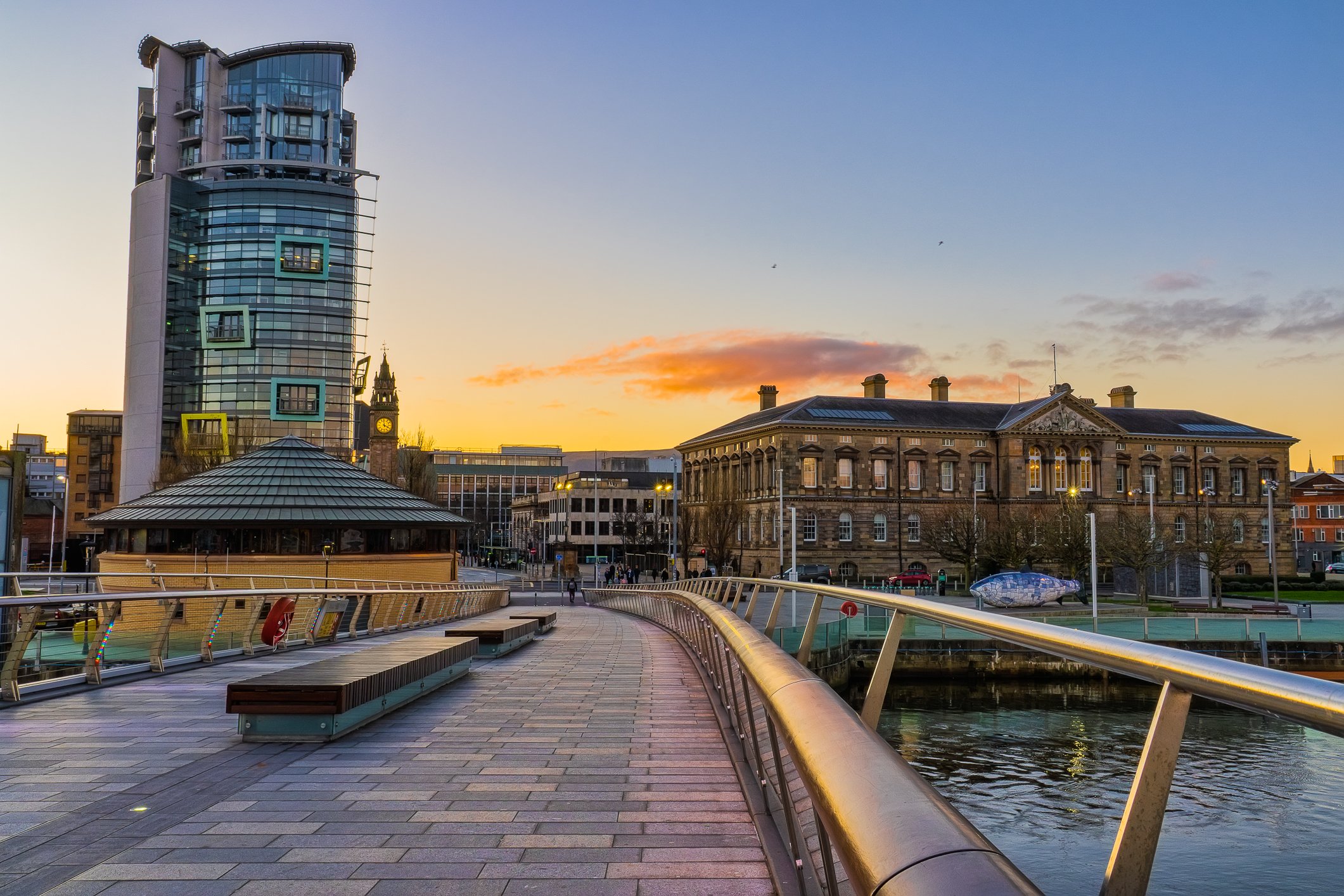
Our attention also goes to a different riverside building called The Boat, a modern block with distinctive geometric shapes in different colours on its façade. It is designed to resemble the prow of a boat.

Naszą uwagę przyciąga też nowoczesny budynek nad rzeką, zwany The Boat (Łódź), o geometrycznej, kolorowej fasadzie, która ma przypominać dziób statku.
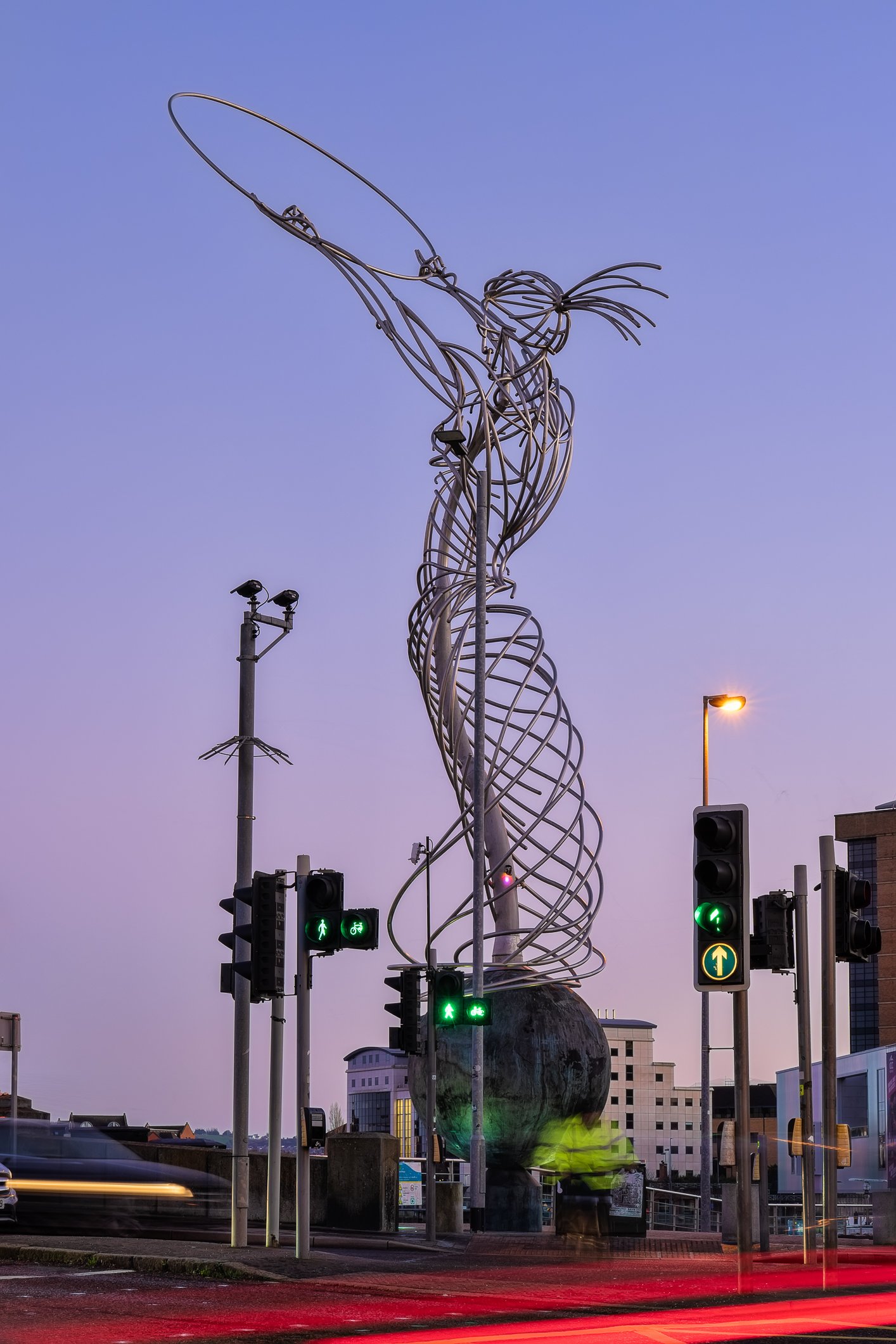
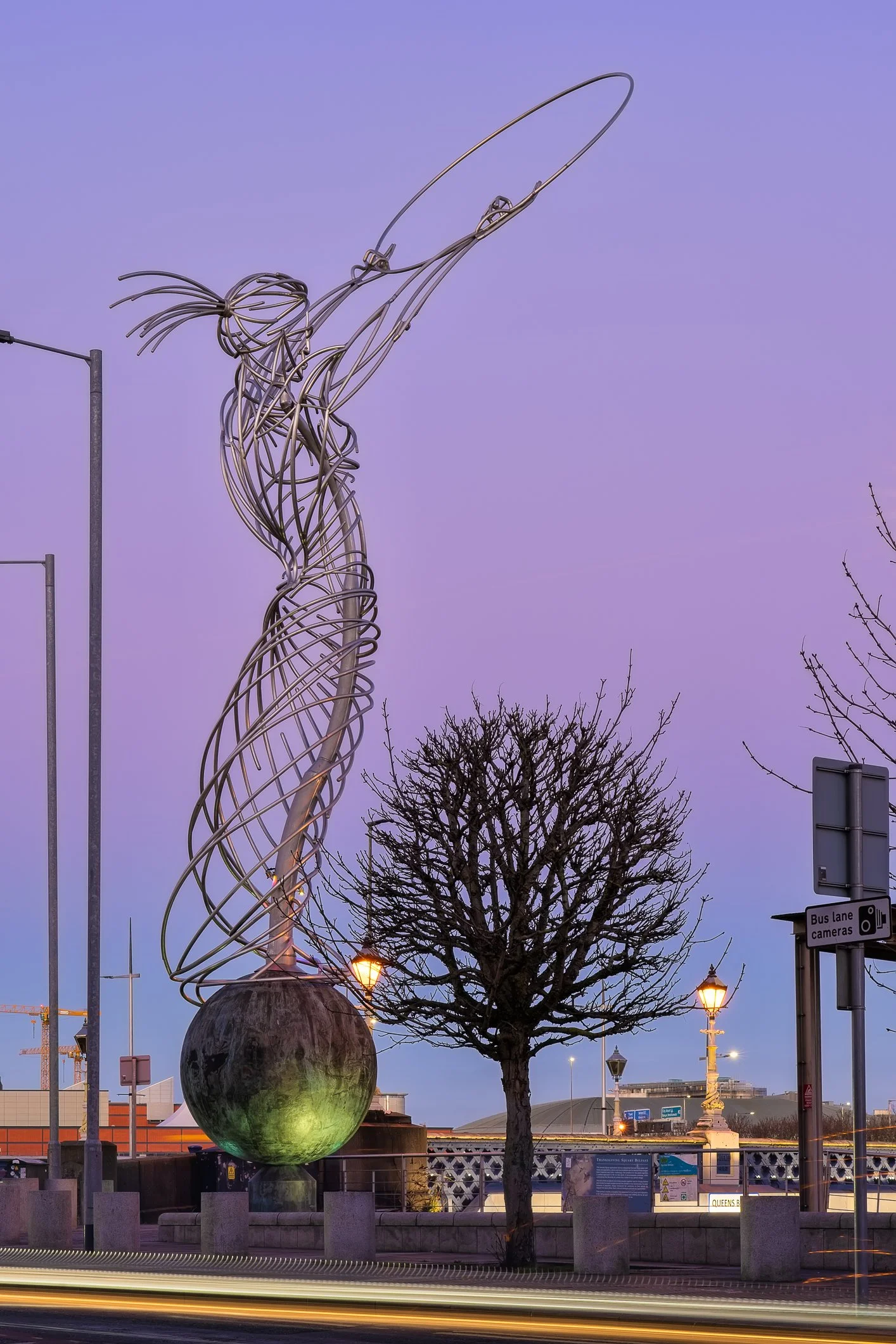
Just a short stroll along the River Lagan brings us to the Beacon of Hope, a sculpture created by Andy Scott in 2007. It depicts a woman holding a shimmering globe, symbolising peace, harmony, and gratitude. Locals affectionately call it “Nuala with the Hula.”


Zaledwie krótki spacer wzdłuż rzeki Lagan prowadzi nas do „Beacon of Hope”, rzeźby stworzonej przez Andy’ego Scotta w 2007 roku. Przedstawia ona kobietę trzymającą lśniącą kulę, symbolizującą pokój, harmonię i wdzięczność. Mieszkańcy nazywają ją pieszczotliwie „Nuala z Hula”.
Off to Belfast

Off we go!!!!! Work has been so, so busy, and it’s also been an emotionally draining time due to illnesses in our families, so it feels great to reset and change our environment. Dear Belfast, here we come.

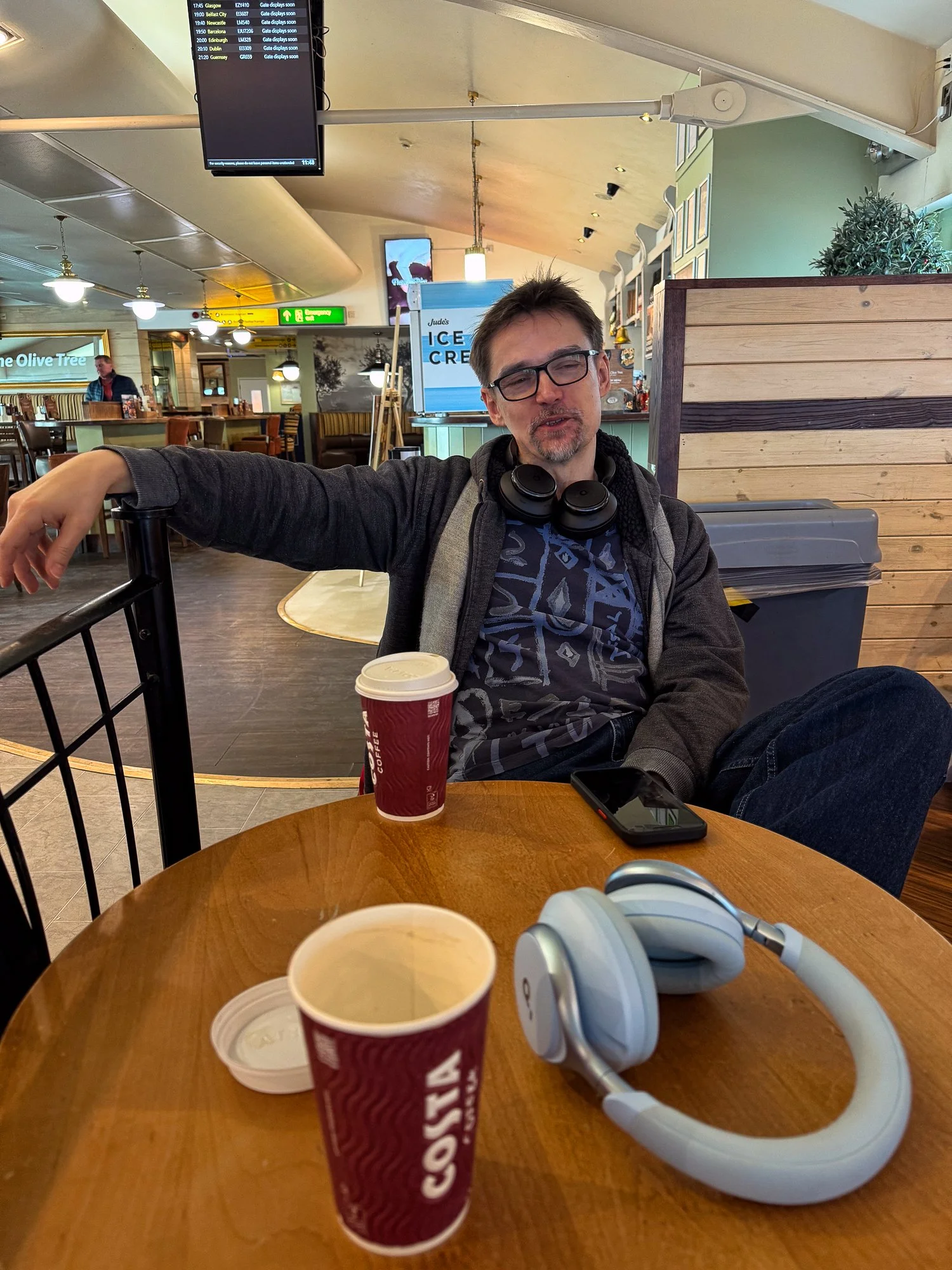
We’re flying from our local airport, which is very convenient, and because it’s Christmas, it’s so empty and quiet that it feels somewhat ghostly. But everything goes smoothly, and after a short flight, we land in cold Ireland.


No to w drogę!!!!! Praca była ostatnio bardzo, bardzo intensywna, a dodatkowo był to emocjonalnie wyczerpujący czas z powodu chorób w naszych rodzinach, więc należy nam się chwilowy reset i zmiana otoczenia. Drogi Belfaście, oto nadchodzimy.

Wylatujemy z naszego lokalnego lotniska, co jest bardzo wygodne, a ponieważ to okres świąteczny, na lotnisku jest tak pusto i cicho, że aż trochę upiornie. Wszystko jednak przebiega sprawnie i po krótkim locie lądujemy w zimnej Irlandii.

Wahaca Covent Garden

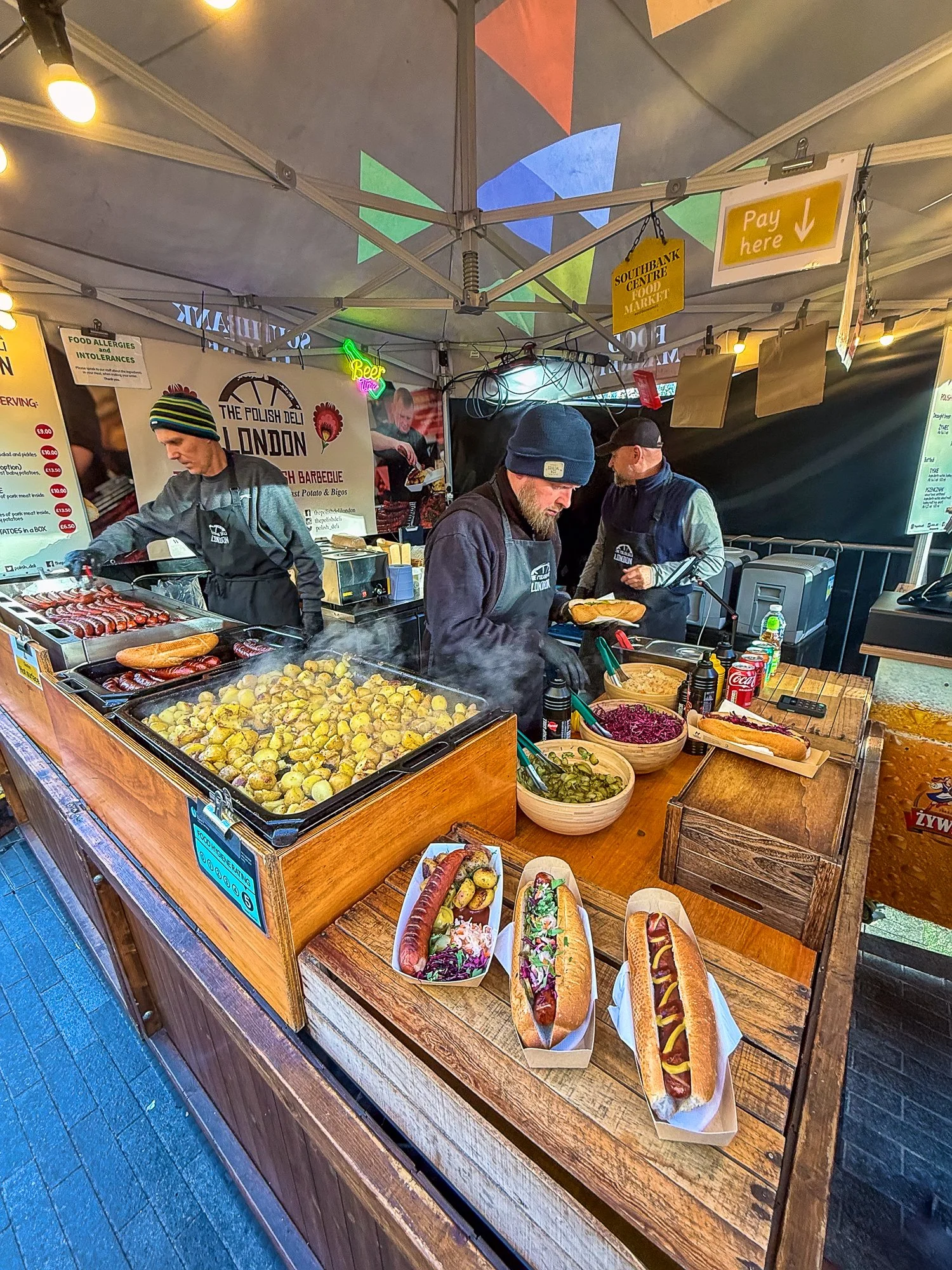
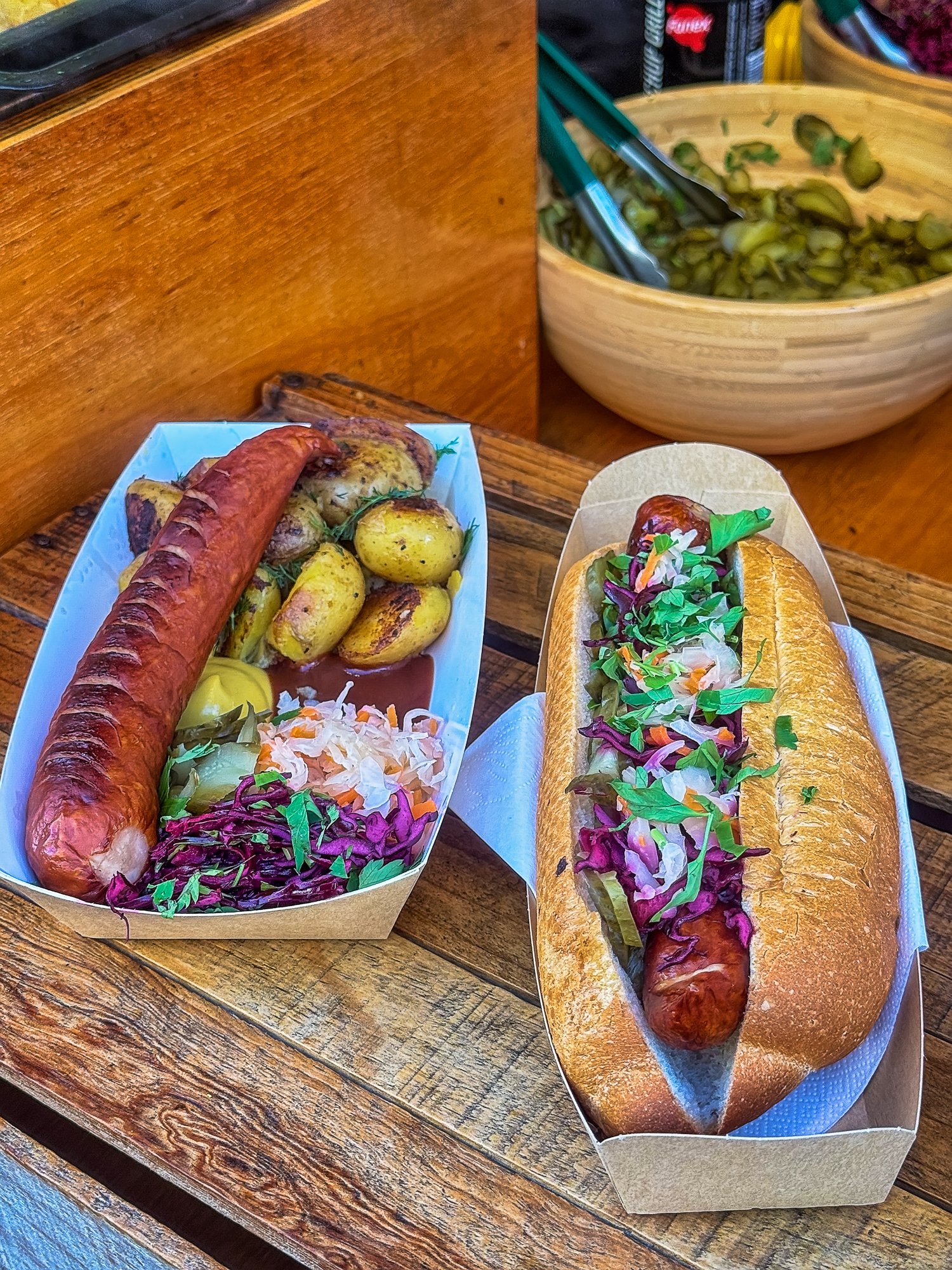
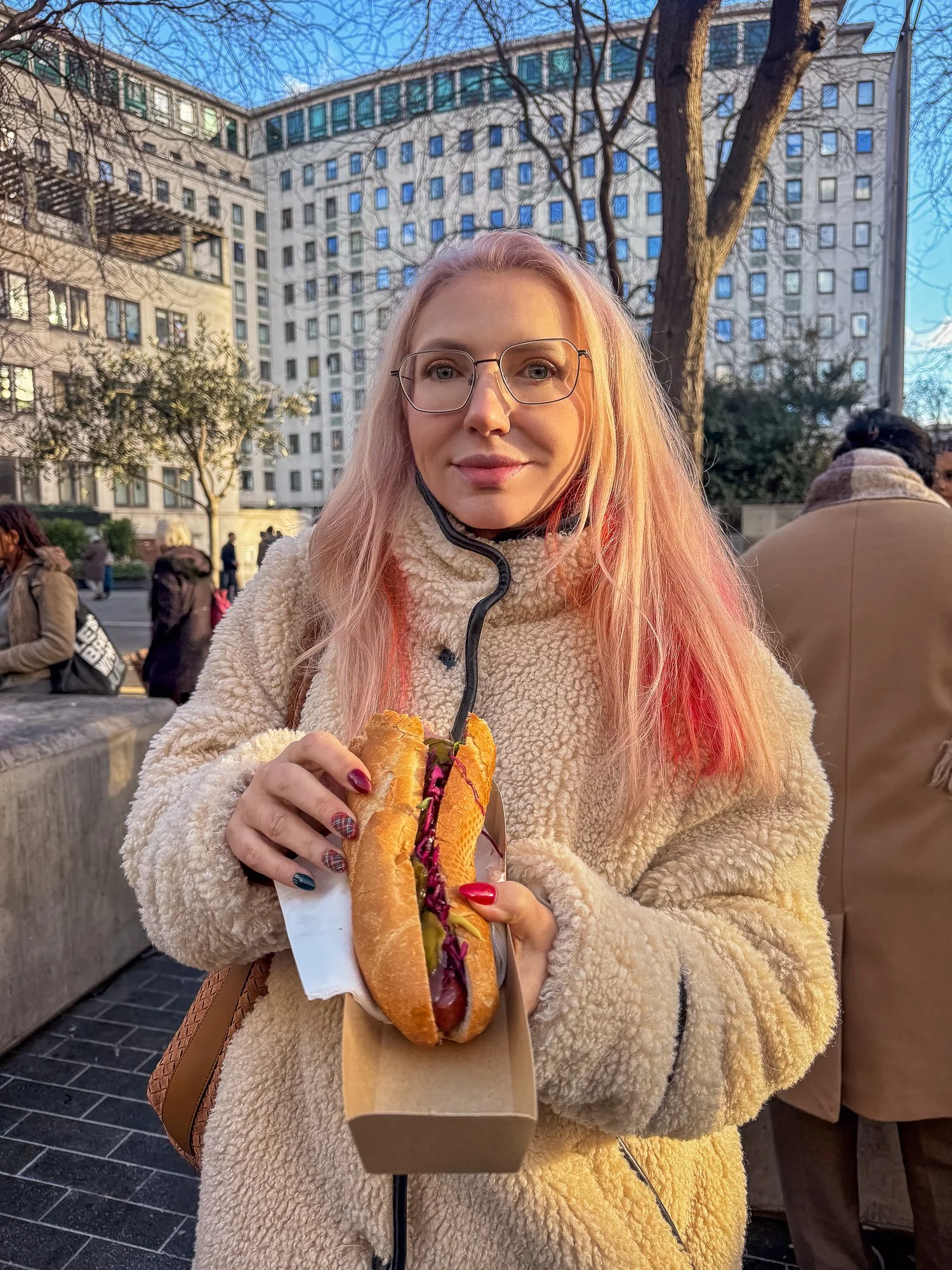
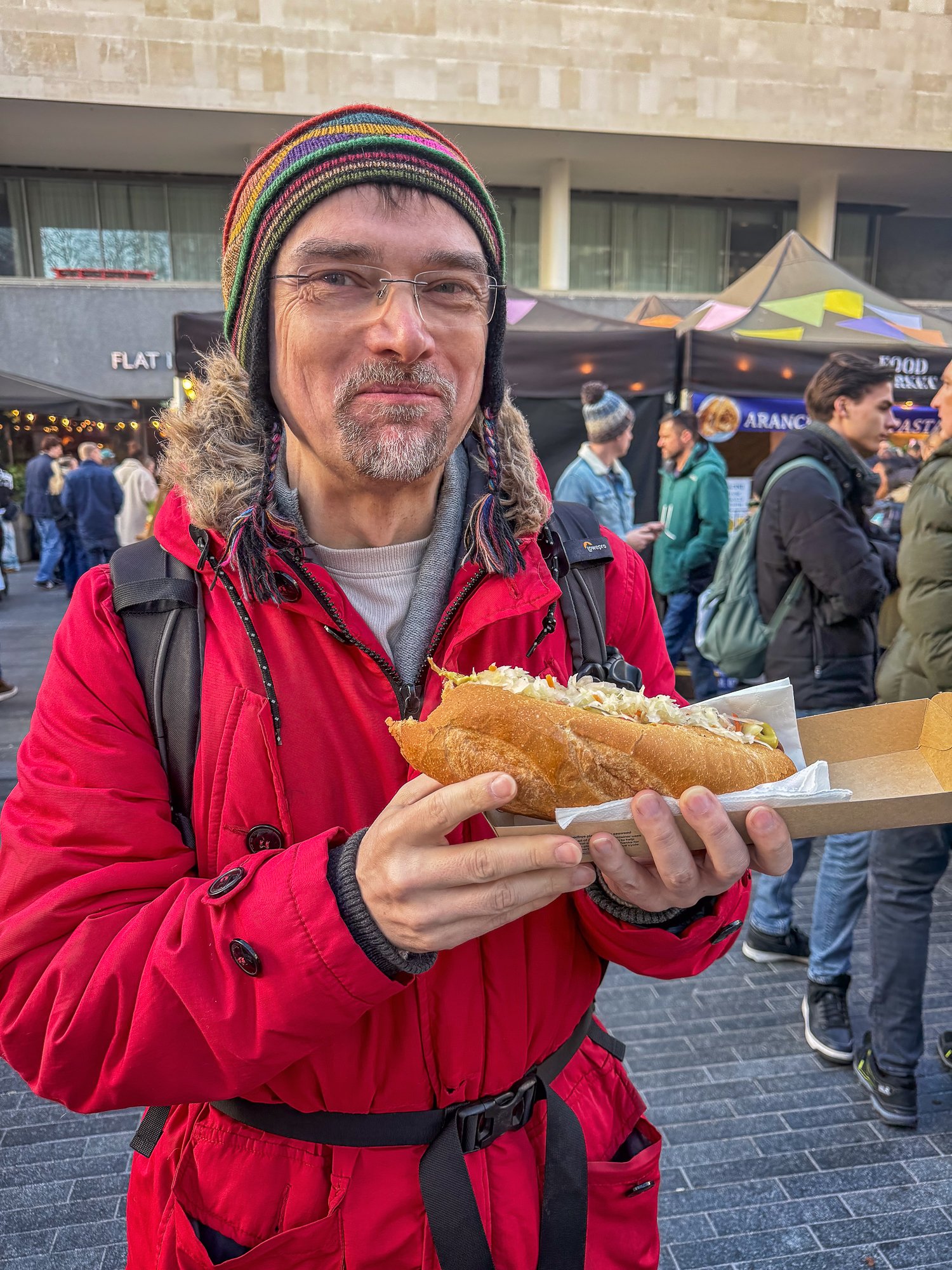
As always, a visit to London means food. On the way to the theatre, we briefly stop at the Southbank Centre Food Market after noticing a Polish stand selling grilled sausages. We very rarely eat sausages these days, but the pull of nostalgia was strong.

Jak zawsze, wizyta w Londynie oznacza że będziemy jeść. W drodze do teatru zatrzymujemy się na chwilę na Southbank Centre Food Market, bo zauważamy polskie stoisko z grillowanymi kiełbaskami. Bardzo rzadko jemy obecnie kiełbasę, ale nostalgia zrobiła swoje.

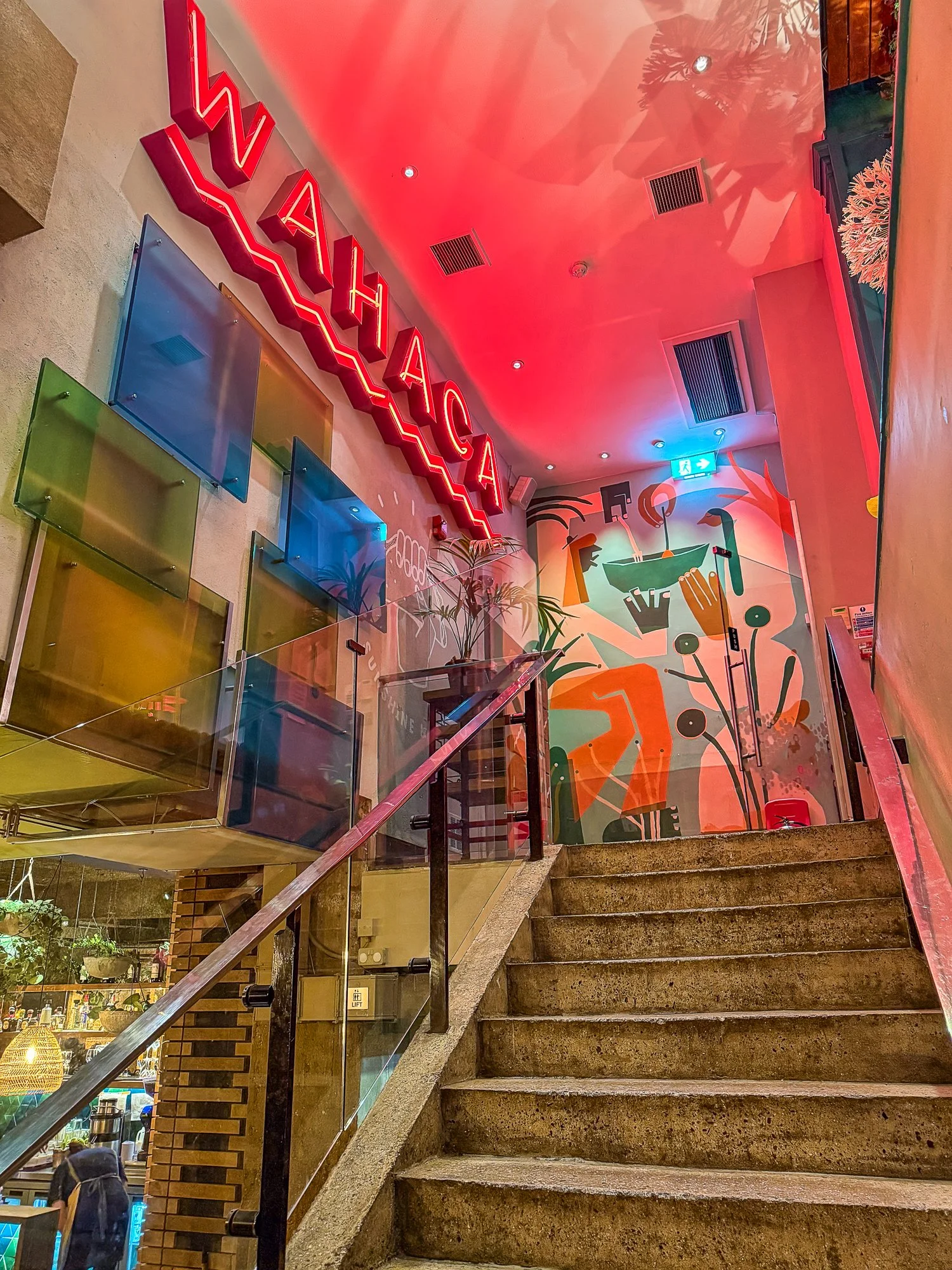
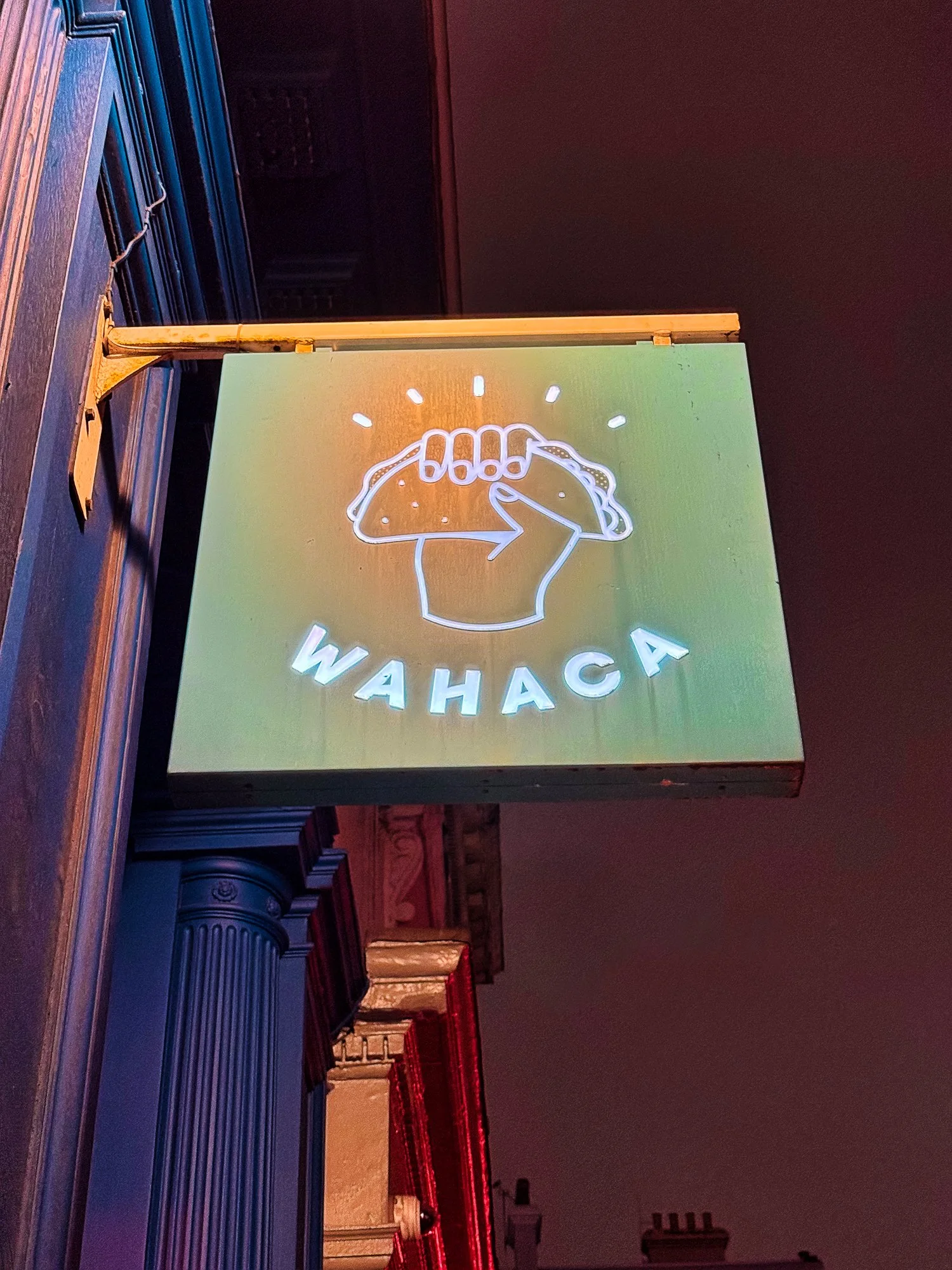
After the spectacle, we have dinner booked at Wahaca, a colourful, casual Mexican restaurant serving tacos, small plates, and quesadillas, with a lively, buzzy vibe right in the heart of the West End. It is actually the original Wahaca location, where the whole chain began back in 2007, inspired by the street food markets of Mexico. Btw, these Mexican eateries are the brainchild of Thomasina Miers, who won MasterChef in 2005.

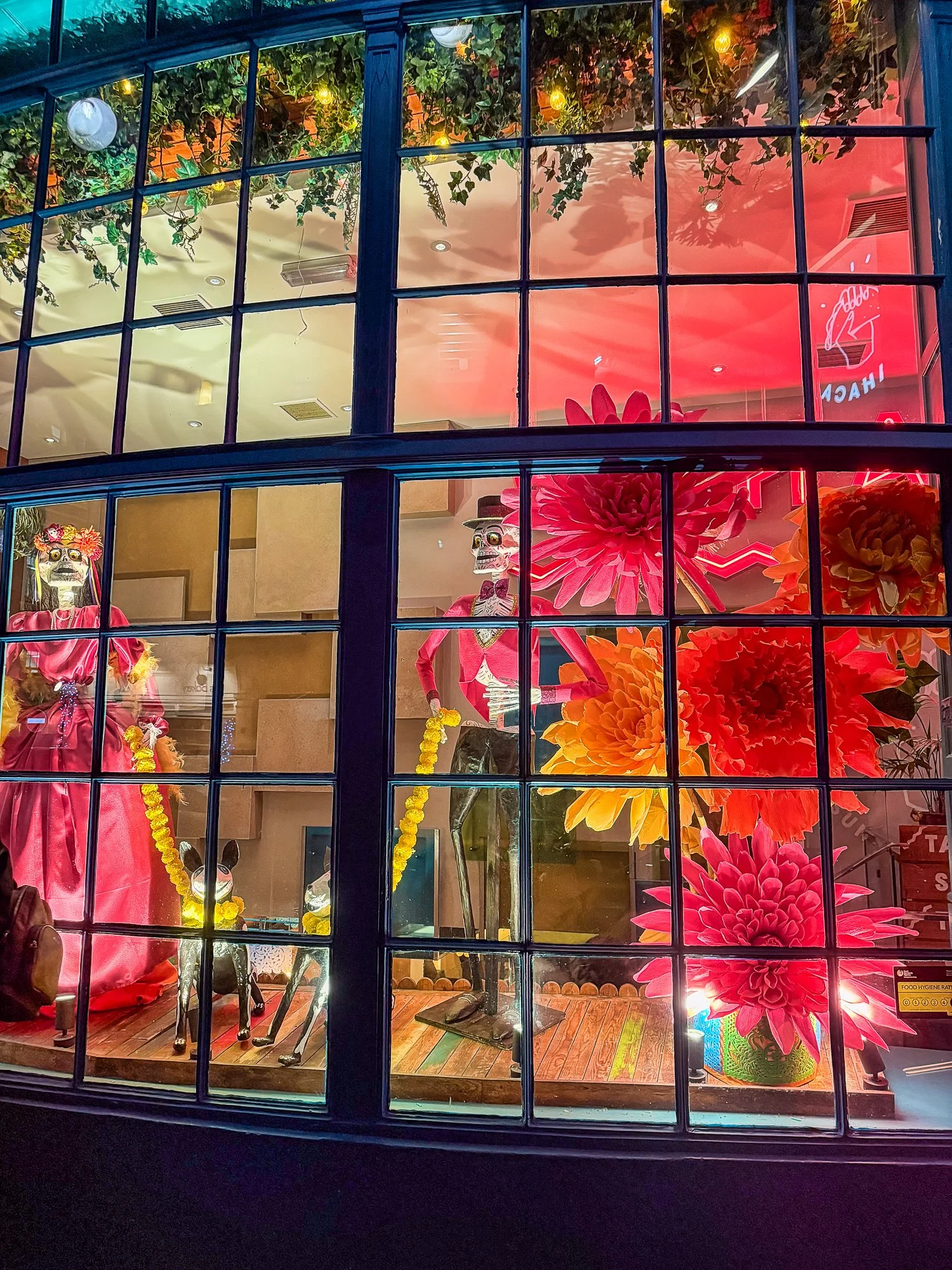
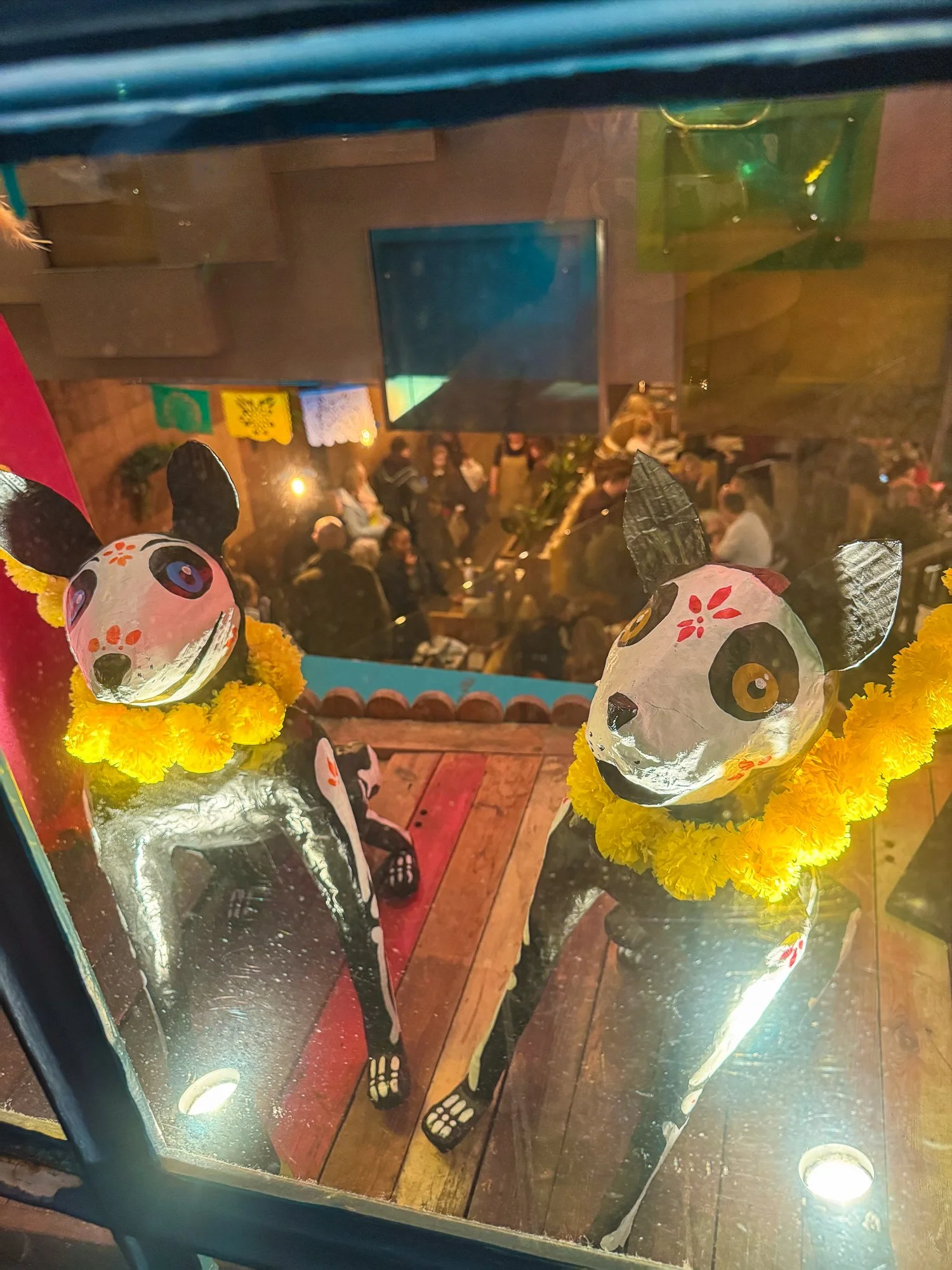
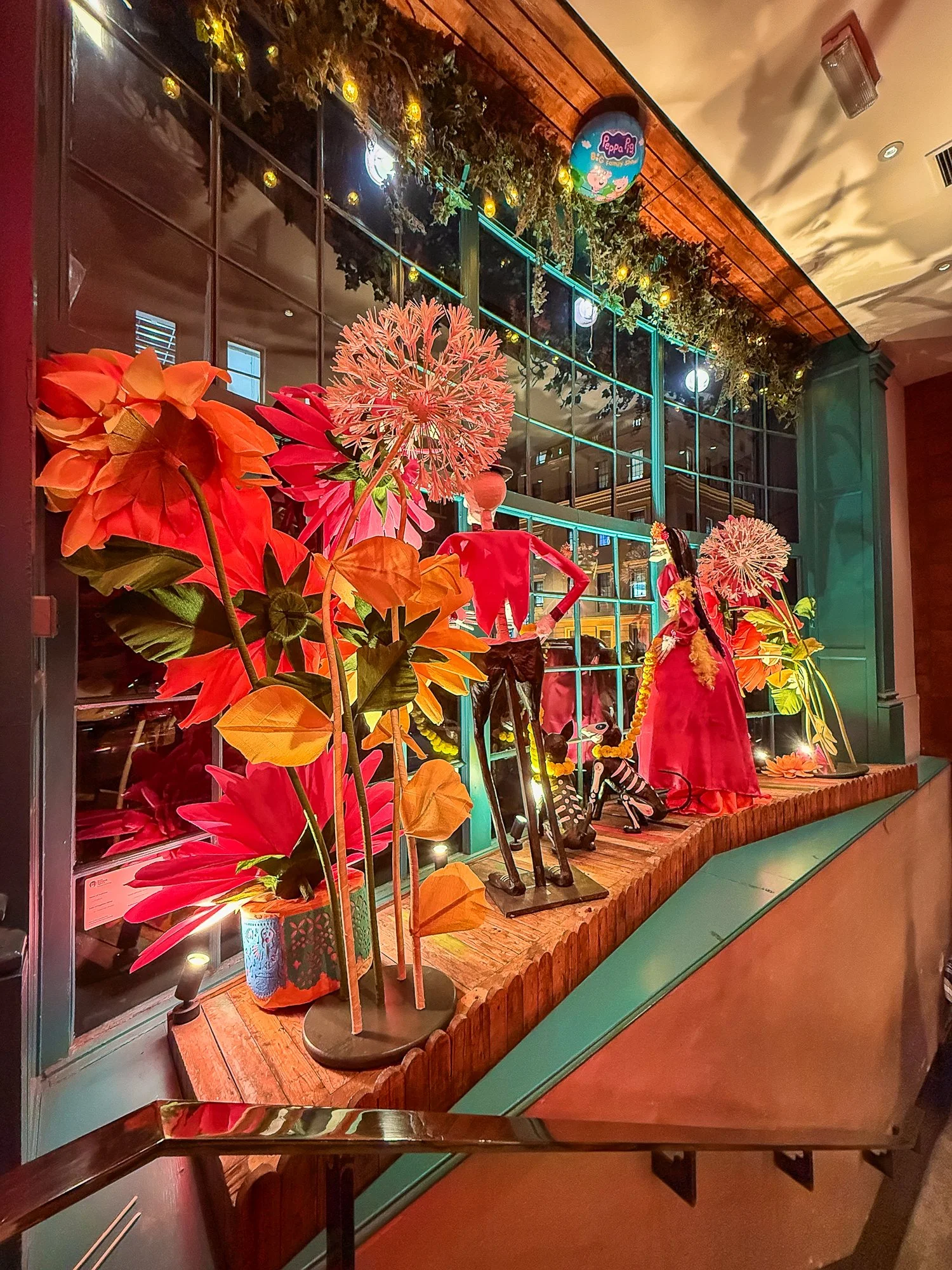
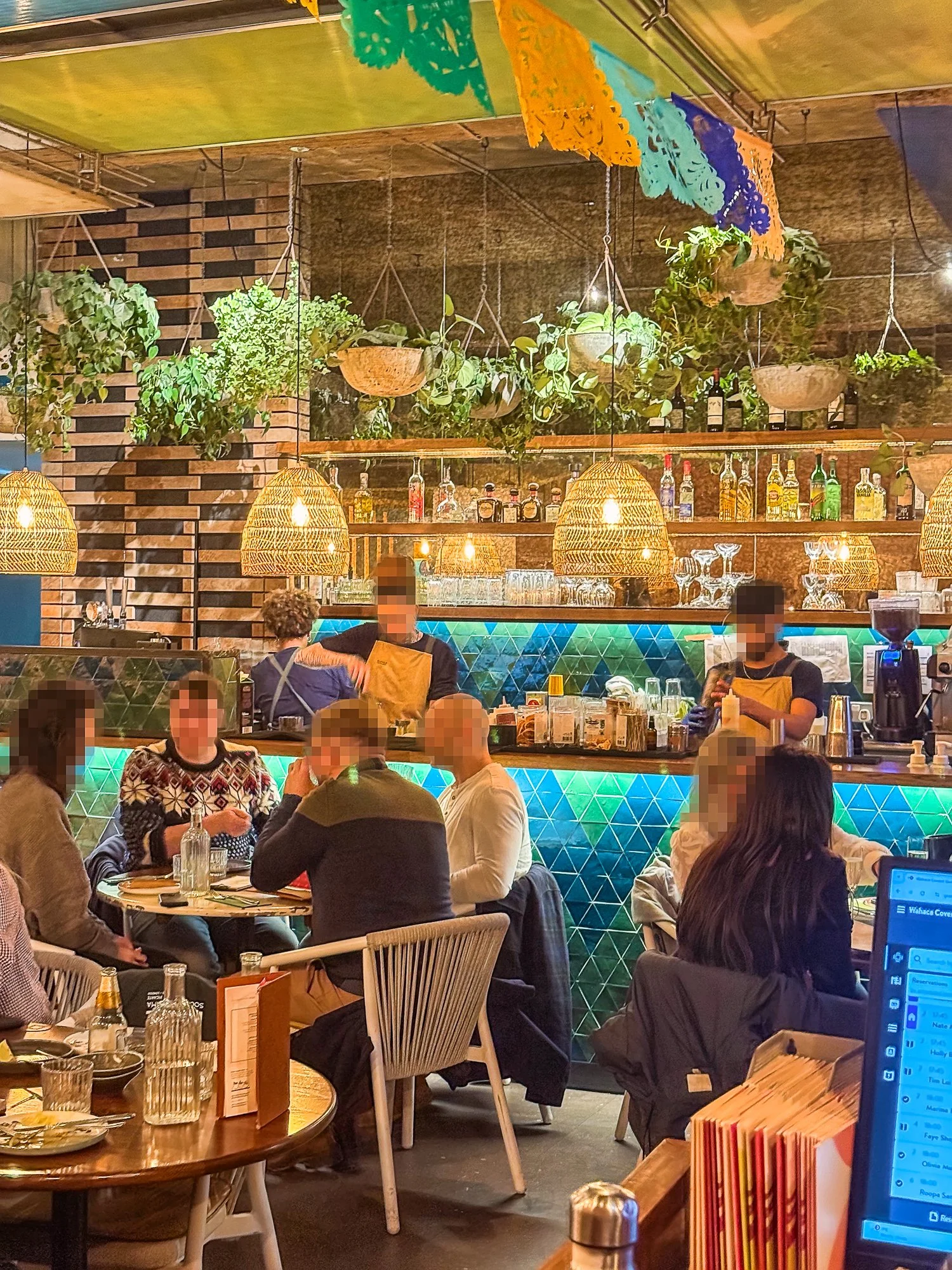
We spot it easily thanks to the bold, colourful display in the front window, filled with papier-mâché decorations and floral elements, and step down into the restaurant. The interior aims to evoke Mexico’s lively street markets and urban hangouts rather than a formal dining room. We are welcomed by bright colours, relaxed seating and a touch of industrial chic. The place is crowded, and we wait in line for a few minutes before getting our table. Without a reservation, they would likely have sent us away. From this moment on, though, everything runs smoothly and efficiently.

Po spektaklu mamy zarezerwowaną kolację w Wahaca, kolorowej meksykańskiej restauracji serwującej tacos, tapas i quesadillas w samym sercu West Endu. Jest to pierwsza lokalizacja sieci Wahaca, od której wszystko się zaczęło w 2007 roku, po tym, jak Thomasina Miers zwyciężyła w MasterChef w 2005 roku.

Łatwo ją zauważyć dzięki odważnej, kolorowej witrynie pełnej figure z papier-mâché, kwiatowych dekoracji i ozdób. Schodzimy zatem po schodach do środka Restauracja jest położona poniżej ulicy). Wnętrze przywołuje klimat tętniących życiem meksykańskich ulicznych targów i miejskich miejsc spotkań, a nie formalnej restauracji. Wita nas feeria barw, wygodne chociaż bardzo różne miejsca do siedzenia i lekka nuta industrialnego klimatu. Lokal jest pełen gości i czekamy dobrych kilka minut w kolejce, zanim dostaniemy stolik. Bez rezerwacji pewnie odesłaliby nas z kwitkiem. Od tego momentu jednak wszystko działa sprawnie i bez zarzutu.

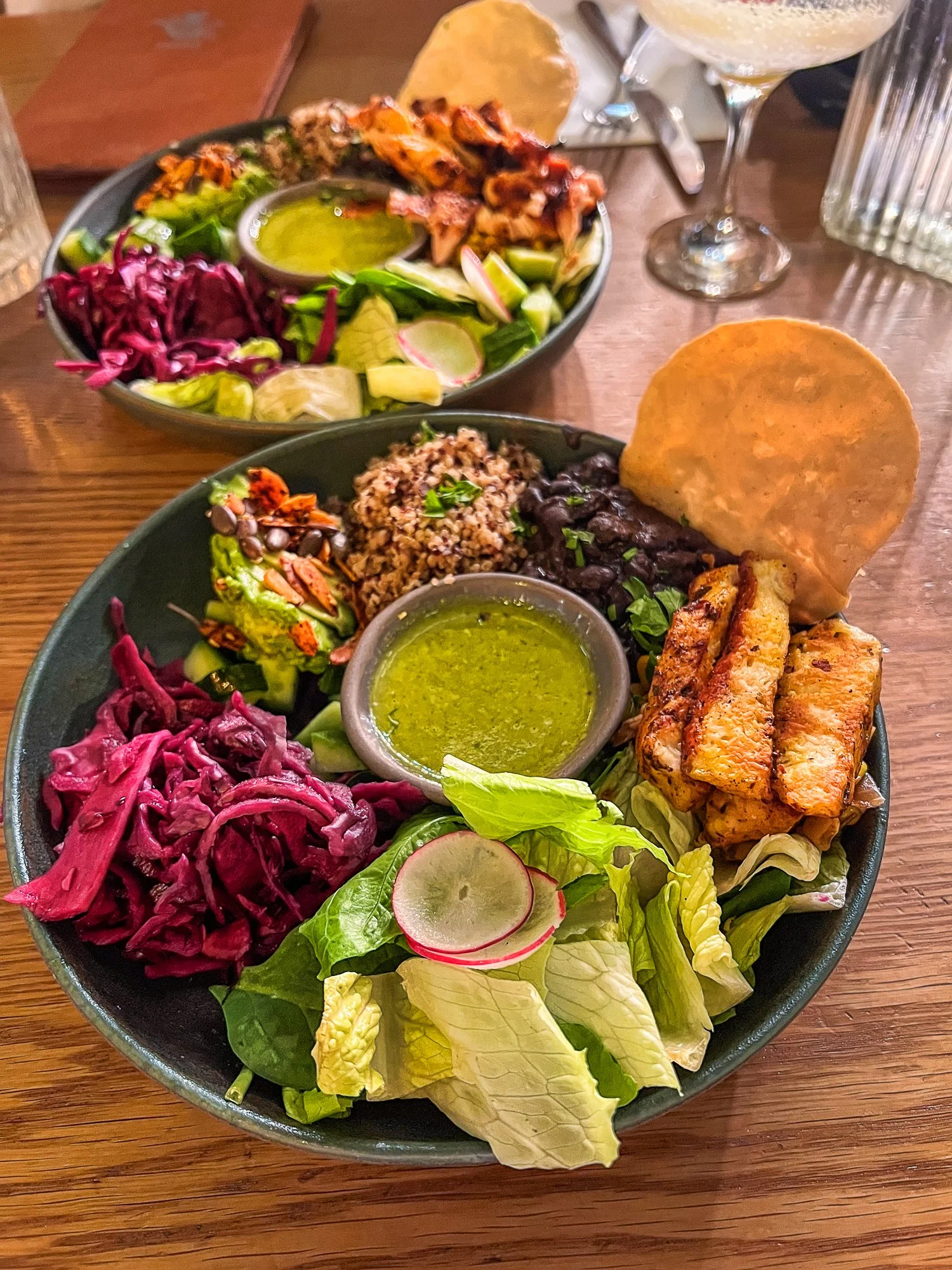
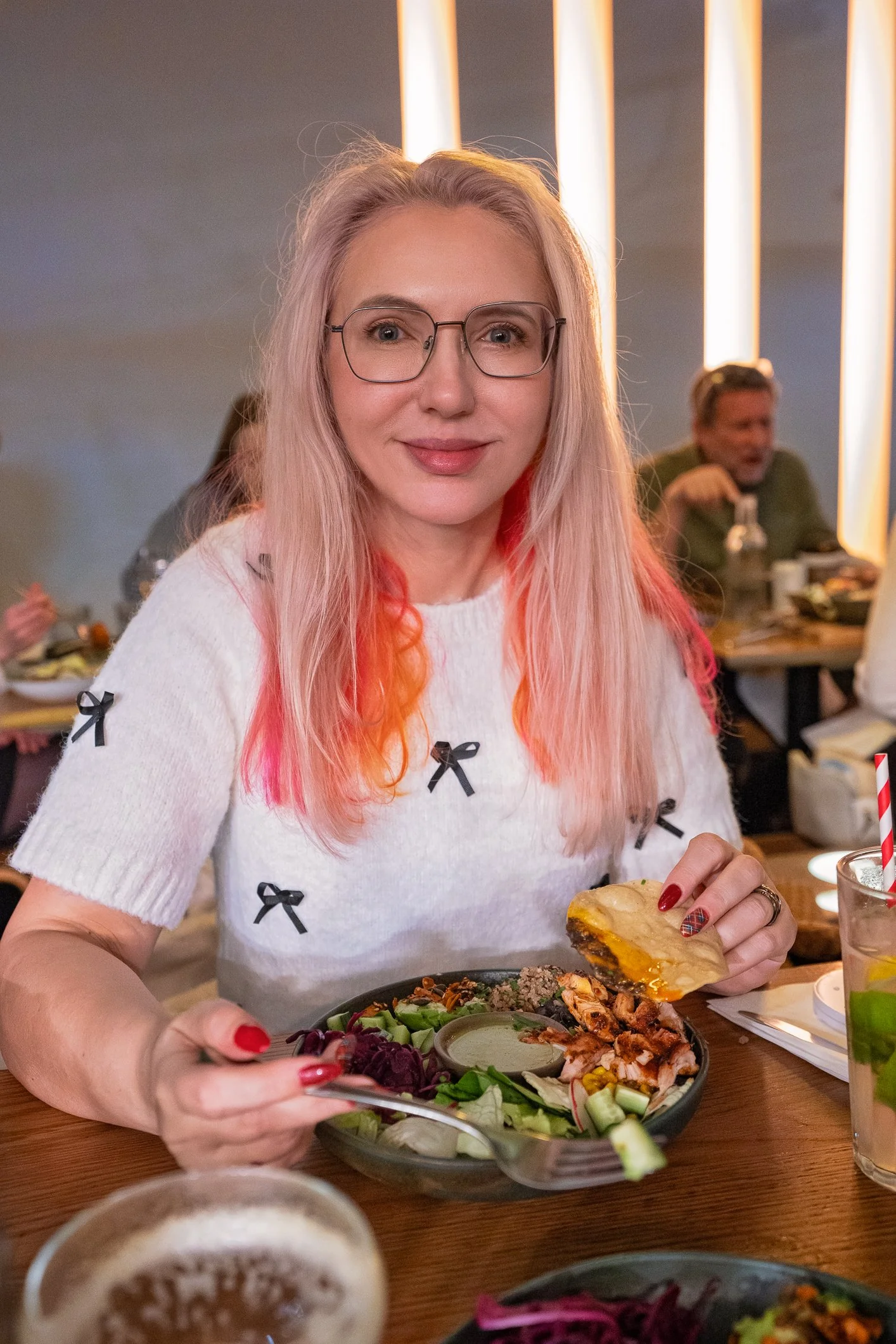
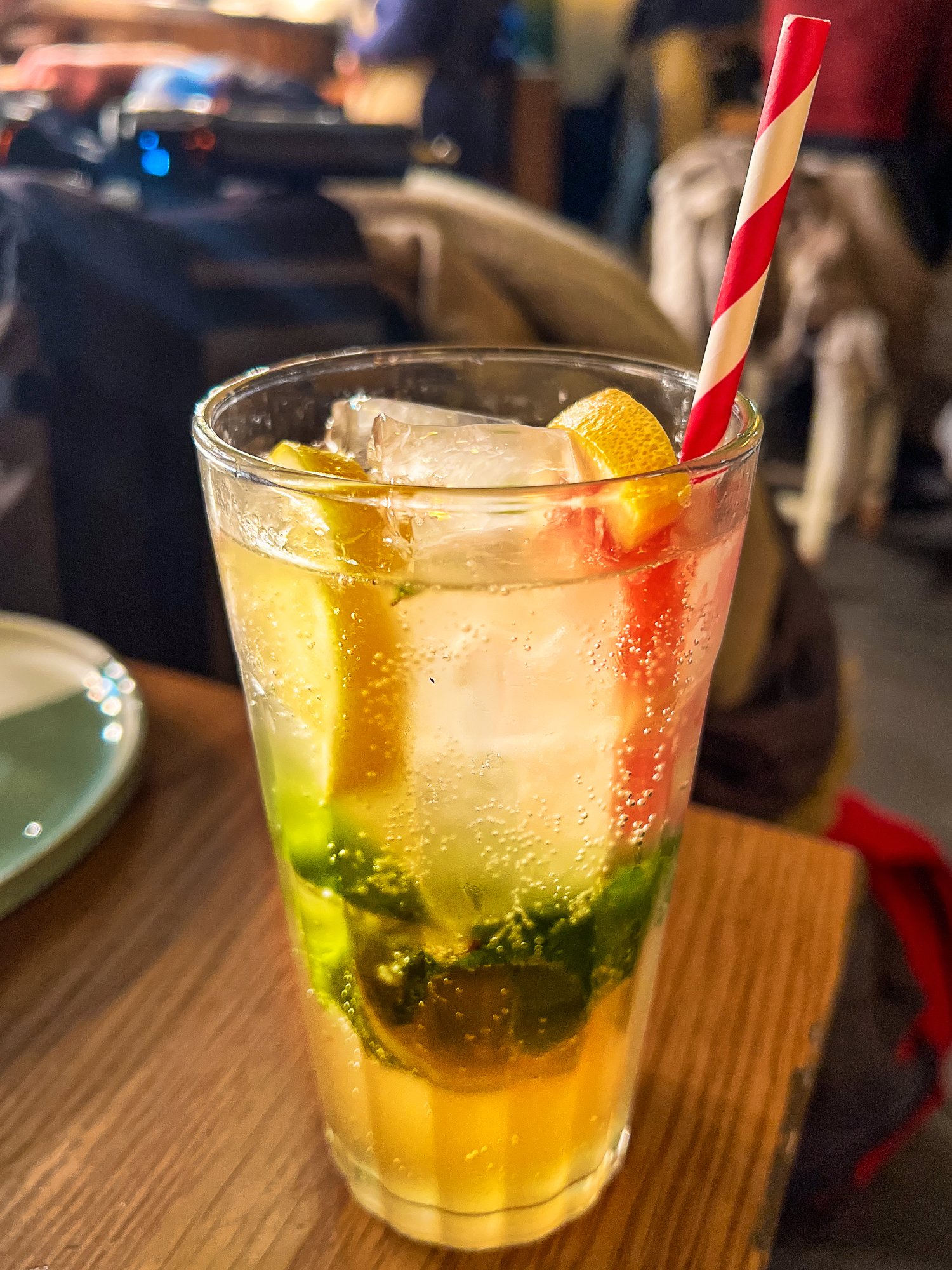
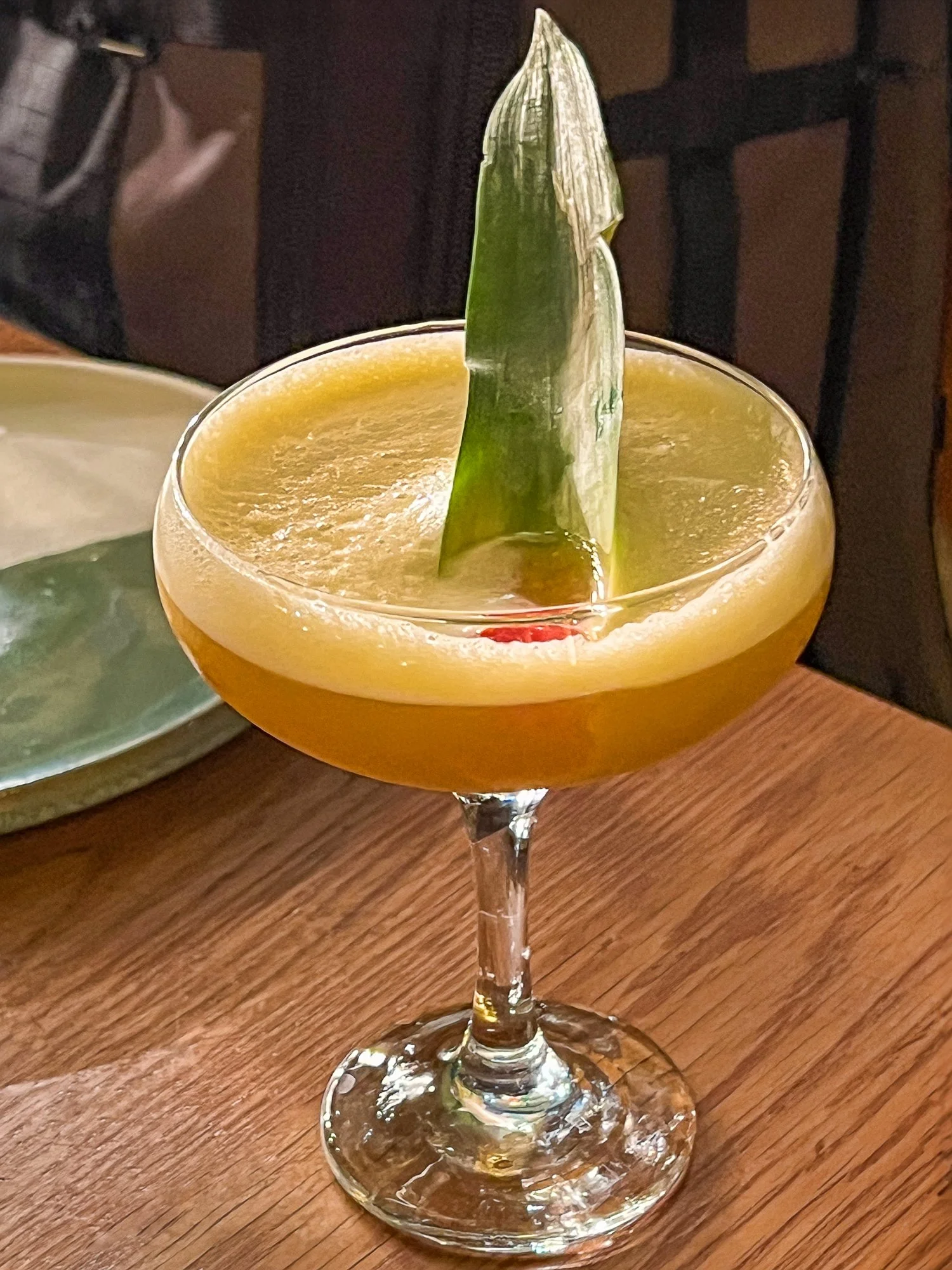
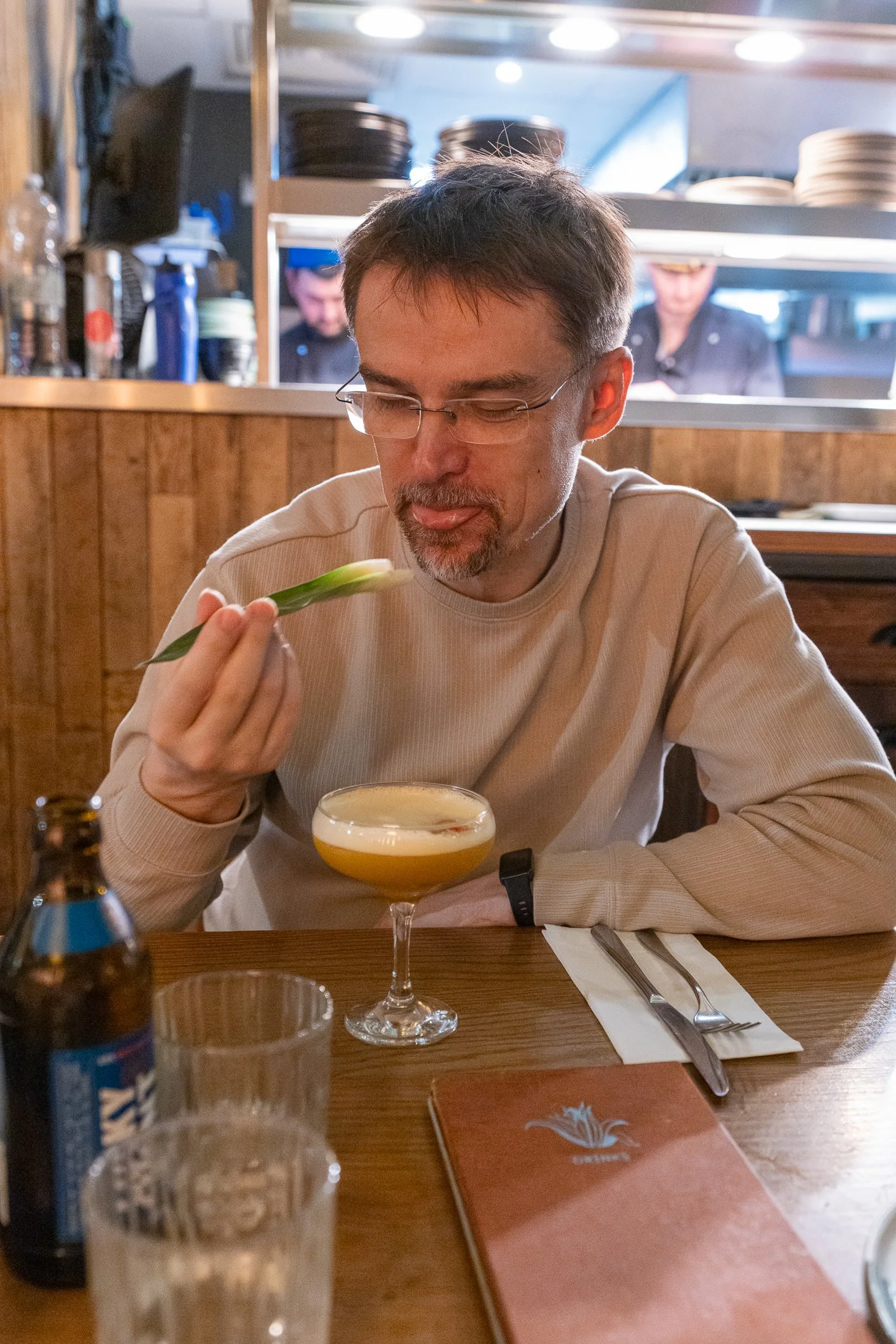
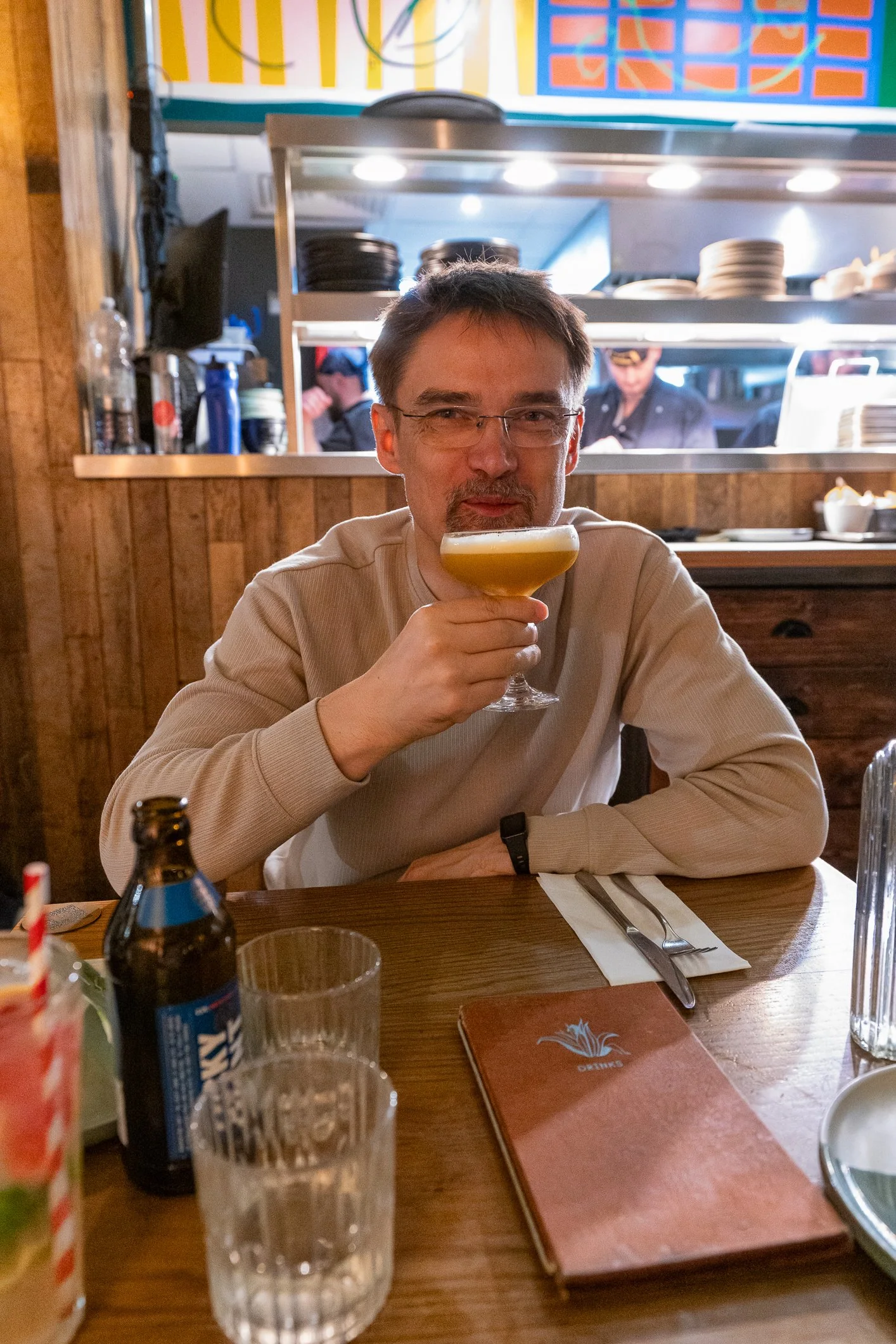
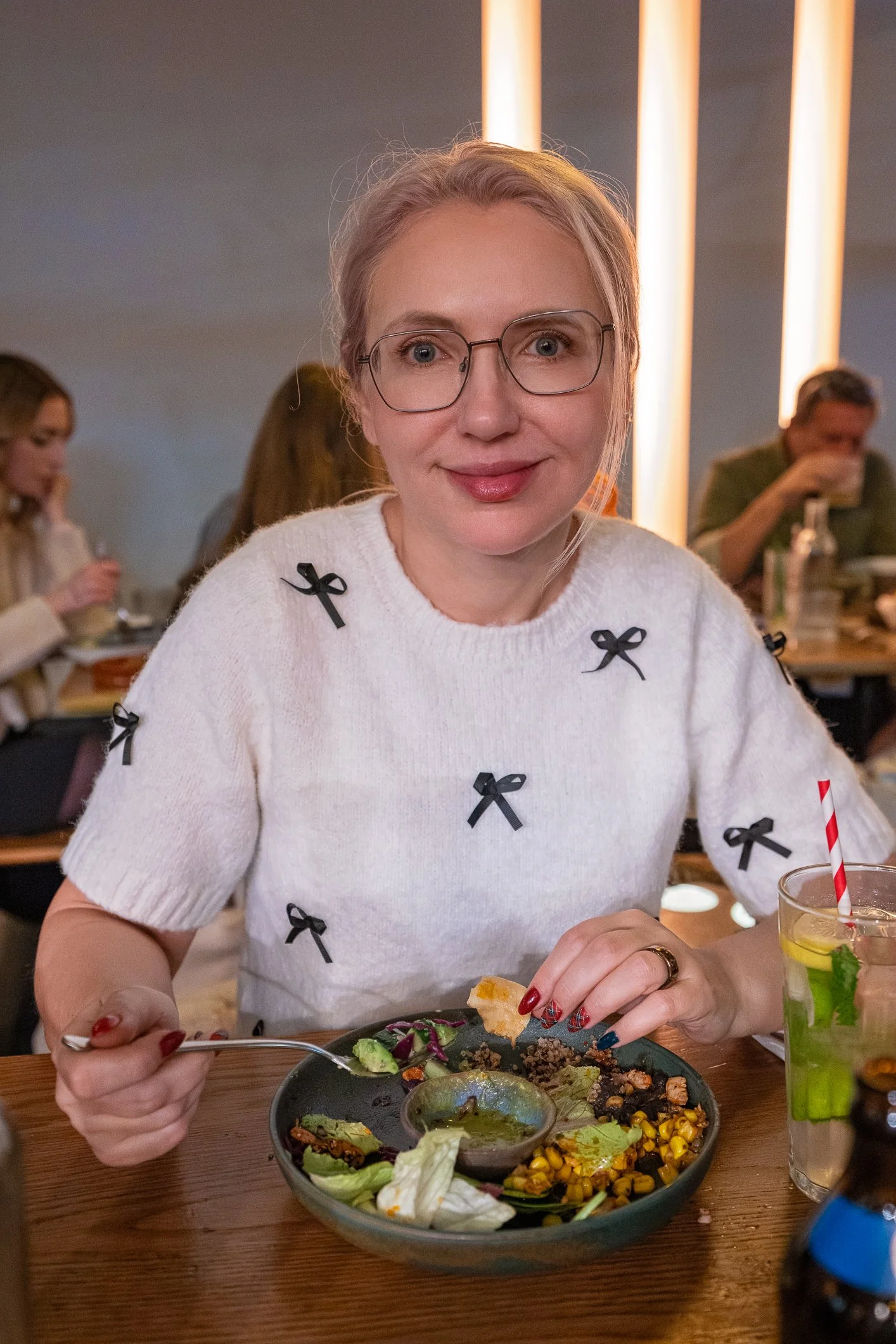
The menu offers a variety of fresh, street-food style Mexican dishes. Do not confuse it with the heavy, cheesy plates common in Tex-Mex, but instead think soft corn tortillas, smoky grilled flavours and fresh salsas. We immediately know what we want, even though many options are tempting. The Sunshine Bowls call our names. They are vibrant bowls of 30 plants, with avocado, corn, spinach, quinoa, black beans and a coconut and lime dressing. I choose grilled chicken, while Marcin goes for halloumi. They look beautiful and taste even better. I also order a Three Citrus Fizz, pink grapefruit, lime and lemon served sparkling over ice, while Marcin opts for a margarita and Lucky Saint.

Menu oferuje szeroki wybór świeżych, street foodowych dań kuchni meksykańskiej. Nie chodzi tu o ciężkie, serowe potrawy znane jako Tex-Mex, raczej zaś o miękkie kukurydziane tortille, dymne grillowane smaki i świeże salsy. Od razu wiemy, co chcemy zamówić, choć wiele propozycji w menu naprawdę kusi. Sunshine Bowls wołają do nas najgłośniej. To kolorowe miski pełne aż 30 roślin, z awokado, kukurydzą, szpinakiem, komosą ryżową, czarną fasolą i kokosowo-limonkowym dressingiem. Ja wybieram wersję z grillowanym kurczakiem, a Marcin z halloumi. Wyglądają pięknie i smakują jeszcze lepiej. Do tego zamawiam Three Citrus Fizz, różowy grejpfrut, limonkę i cytrynę podane na lodzie z bąbelkami, a Marcin decyduje się na margaritę i Lucky Saint.

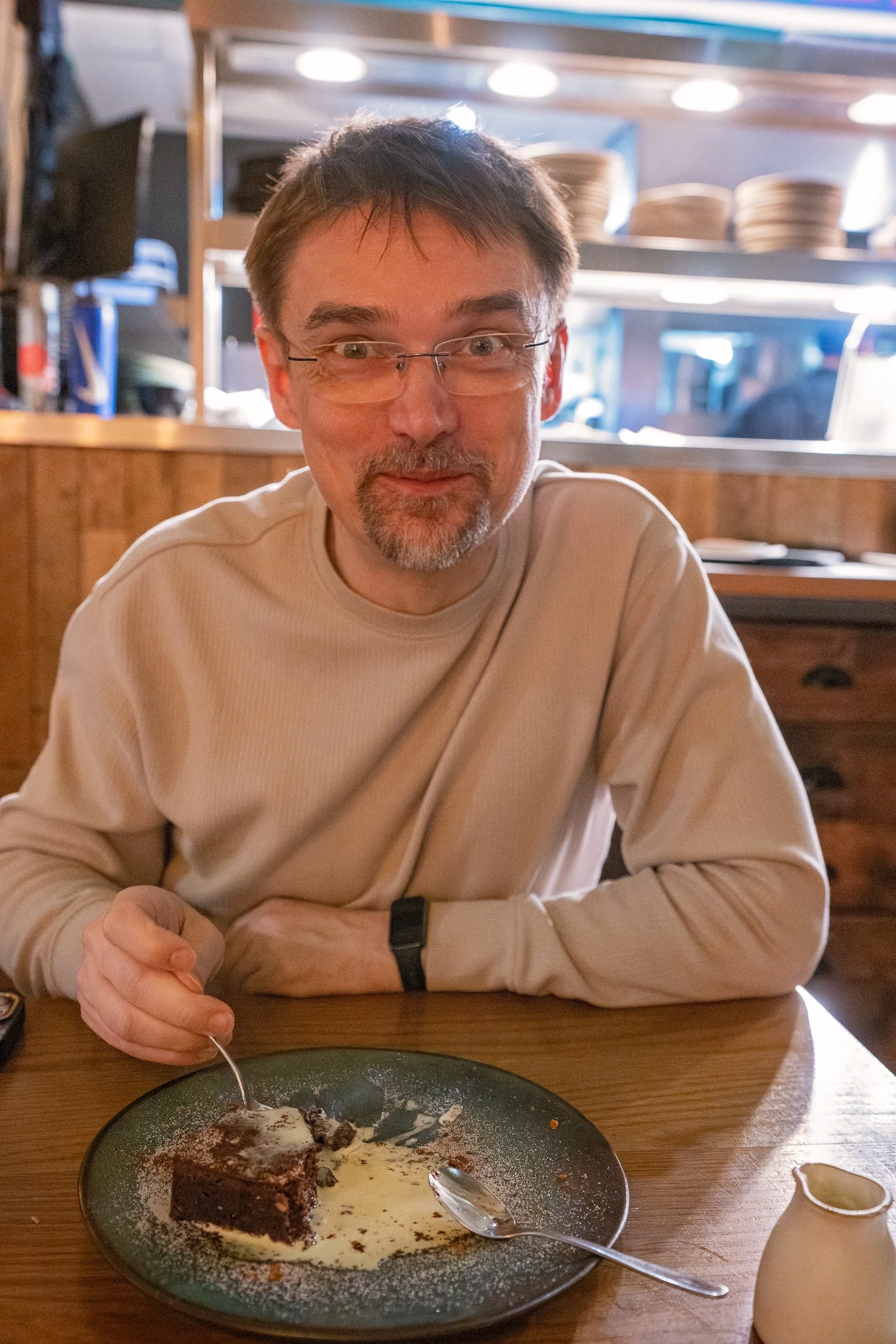
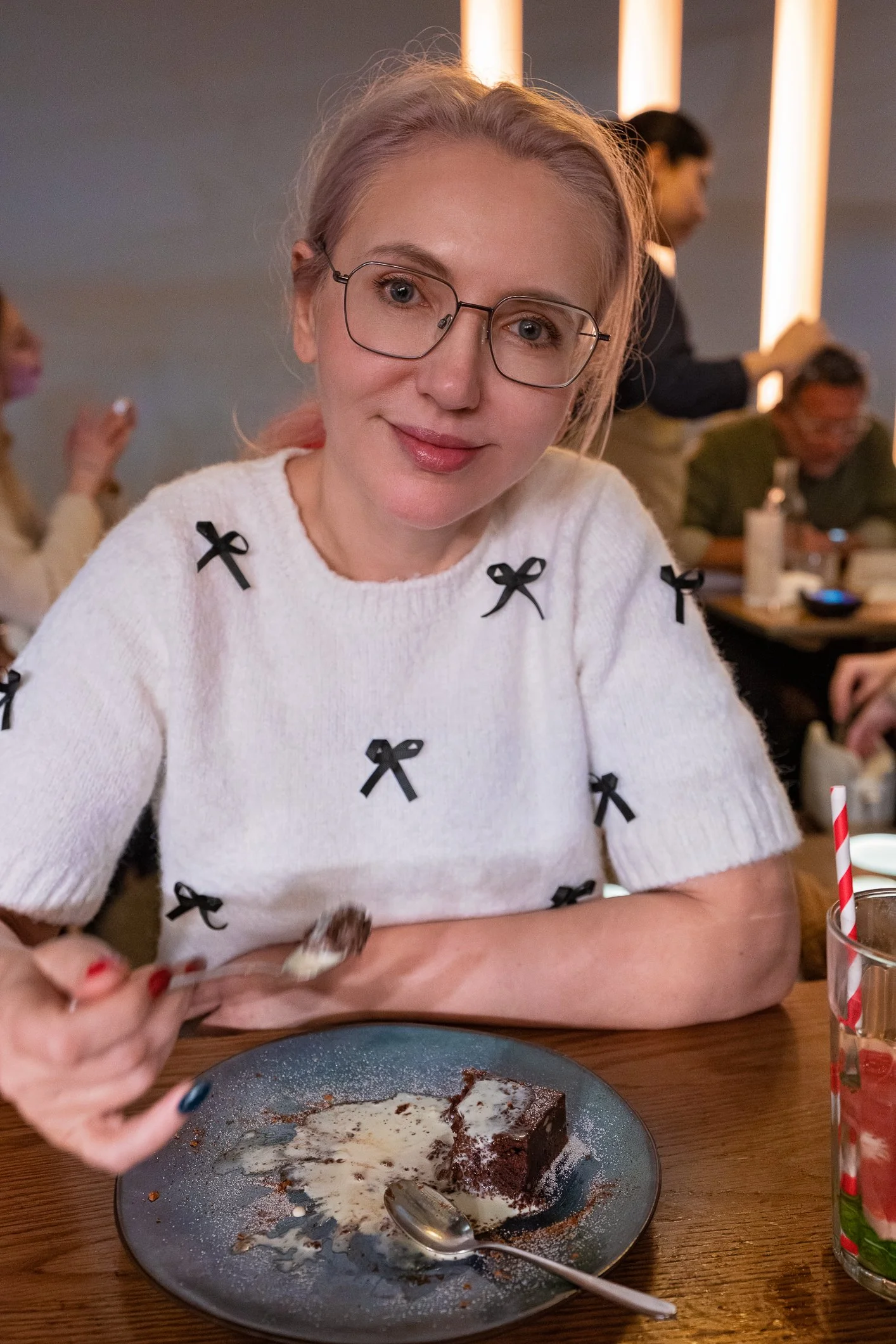
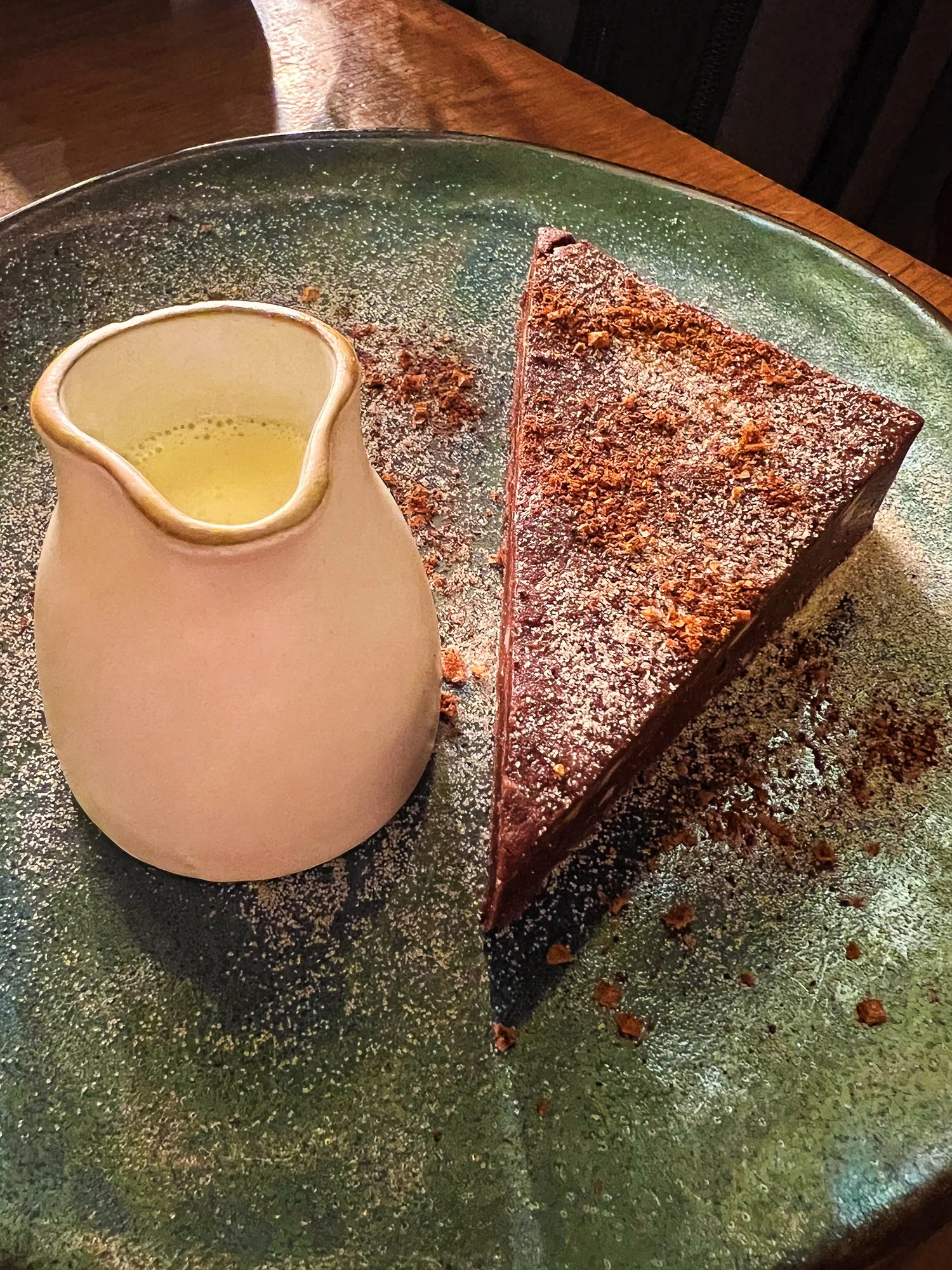
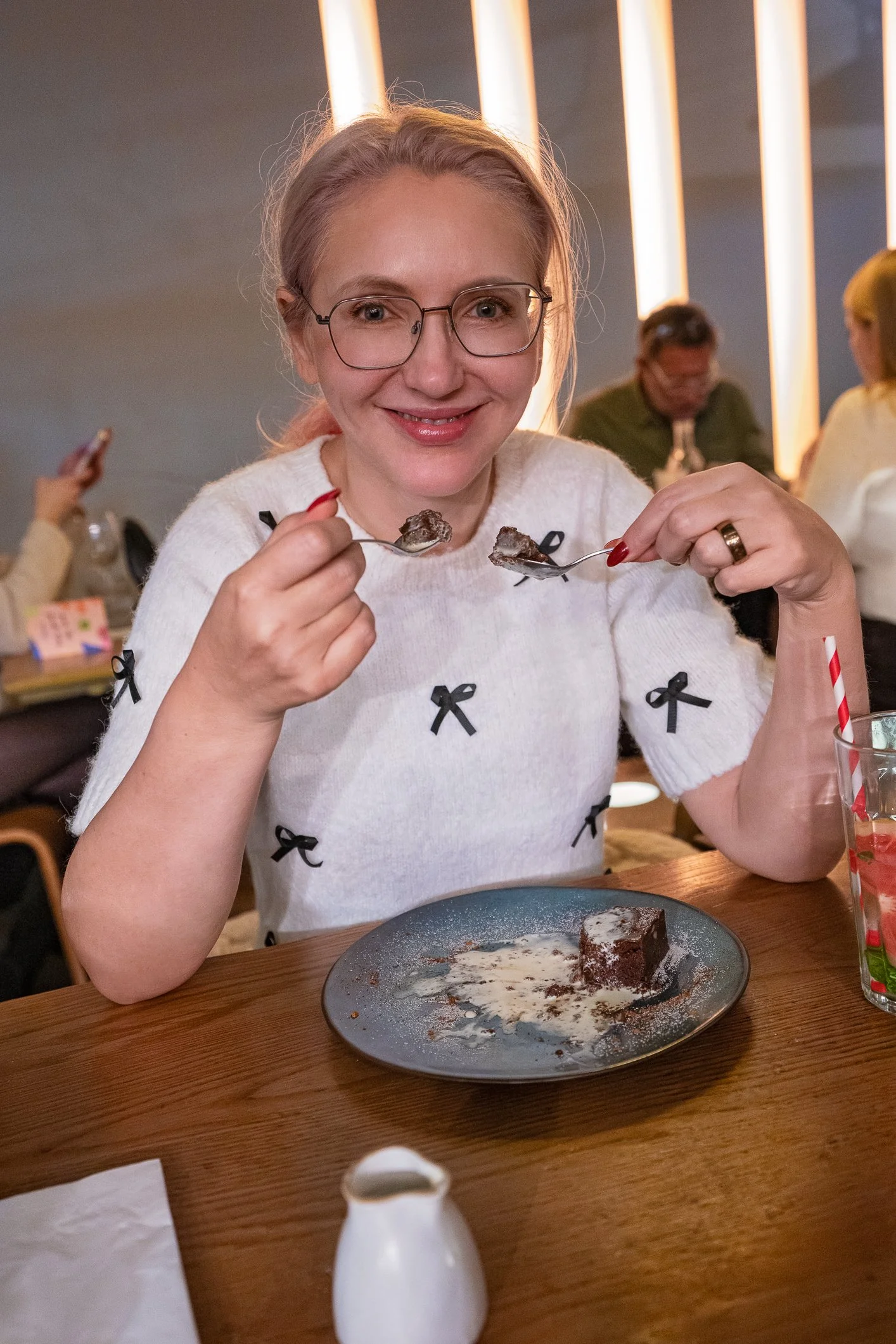
For dessert, we decide on the Warm Chocolate and Pecan Cake, a dense, moist cake featuring toasted sesame and ancho sugar, served with a unique, very slightly alcoholic whipped tequila cream, Earl Grey tea and coffee. I am officially a fan of Wahaca after this first visit. It was so good that I now want to visit all the Wahacas.

Na deser wybieramy ciepłe ciasto czekoladowo-pekanowe, gęste i wilgotne, z dodatkiem prażonego sezamu i cukru ancho, podawane z wyjątkowym, lekko alkoholowym kremem z tequilą. Oczywiście do tego herbata Earl Greyem i kawa. Po tej pierwszej wizycie zostałam oficjalną fanką Wahaki. Jedzenie było tak dobre, że teraz chcę odwiedzić wszystkie Wahaki w Londynie.

Paranormal Activity

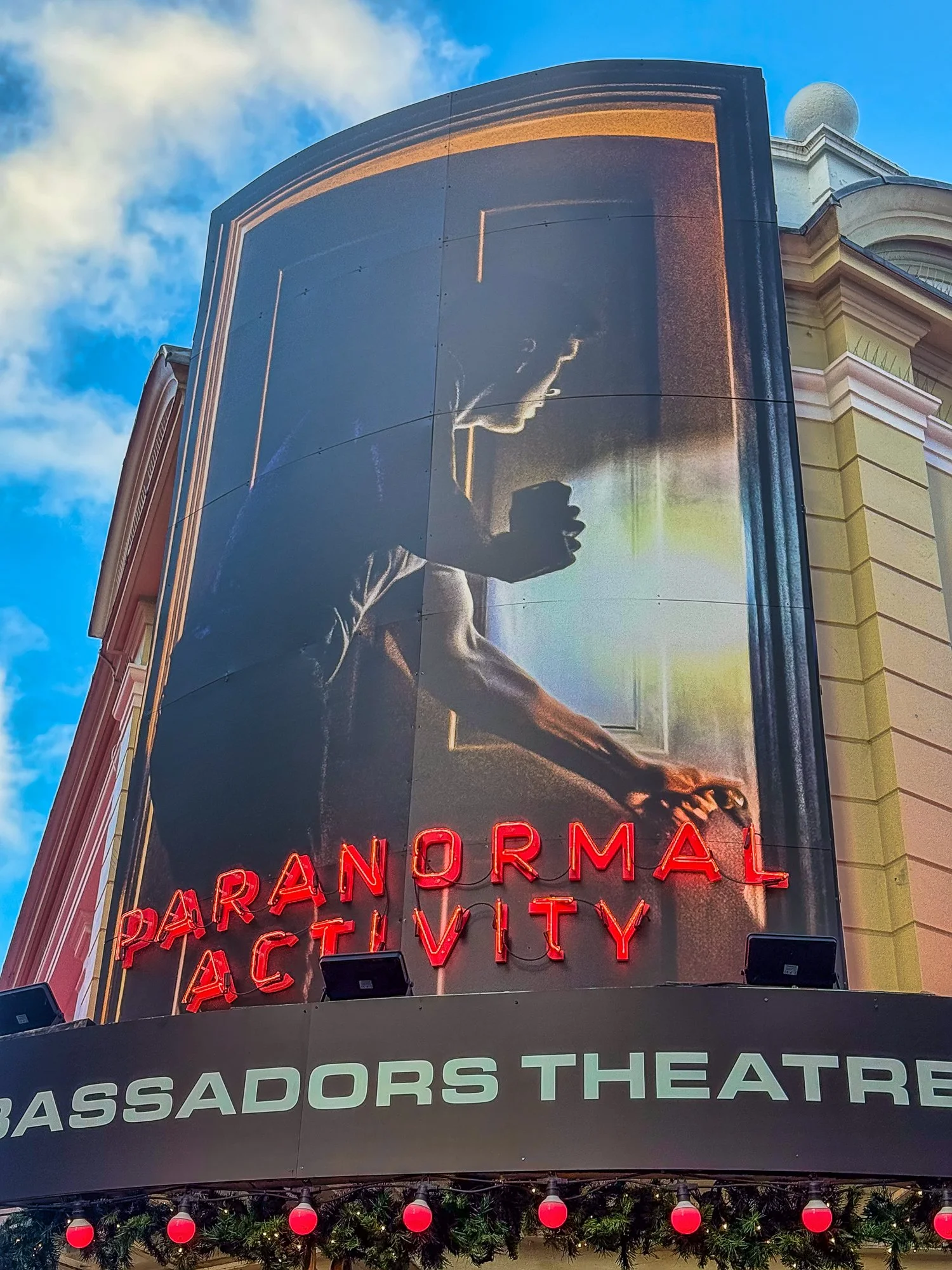
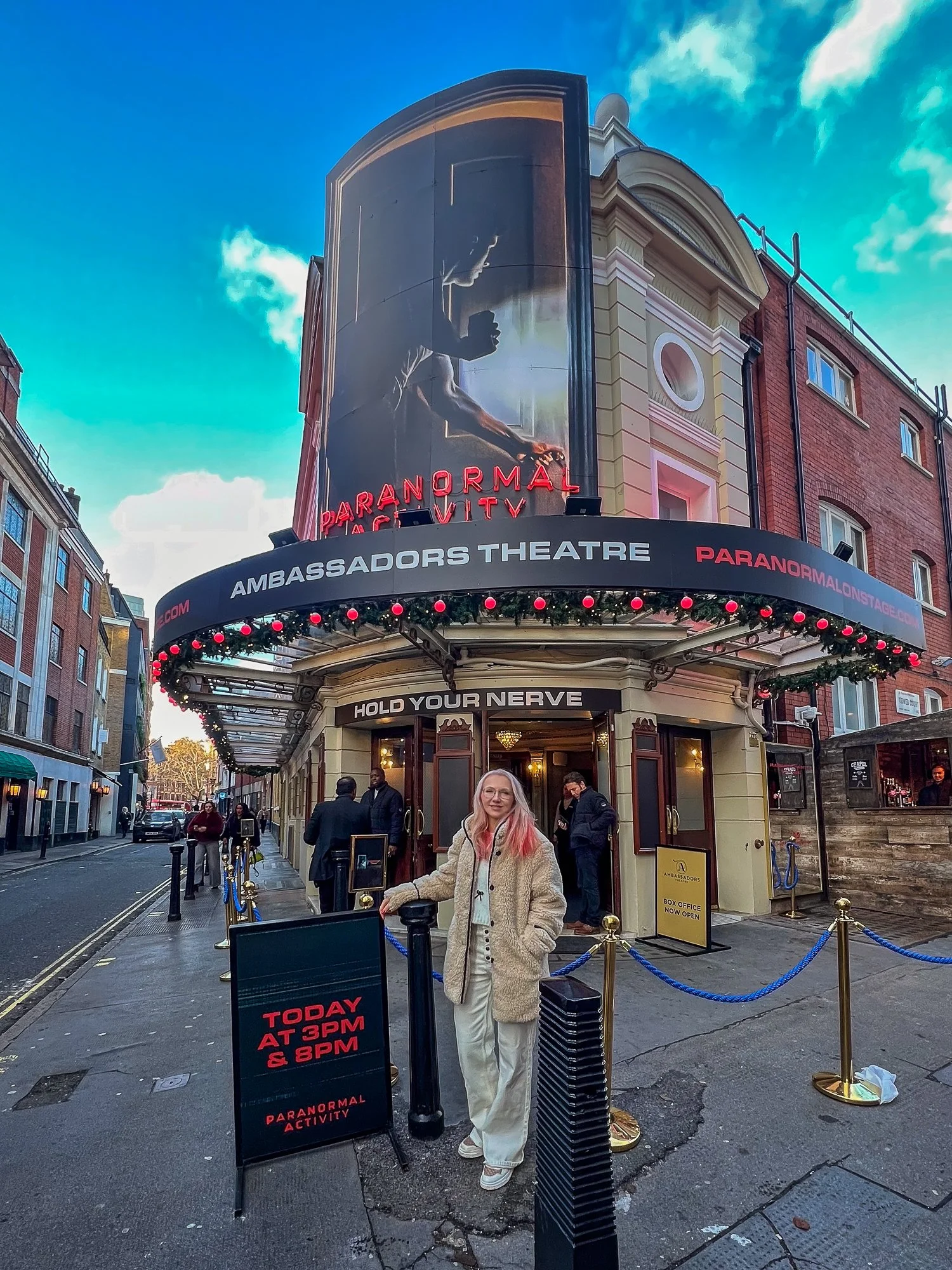
The Ambassadors Theatre is currently hosting “Paranormal Activity”. Written by Levi Holloway and directed by Felix Barrett of Punchdrunk, it follows a couple who begin to experience unsettling events after moving to London. I will not go into plot details to avoid spoilers, but the involvement of Felix Barrett alone was enough to convince us that this was something we should see.
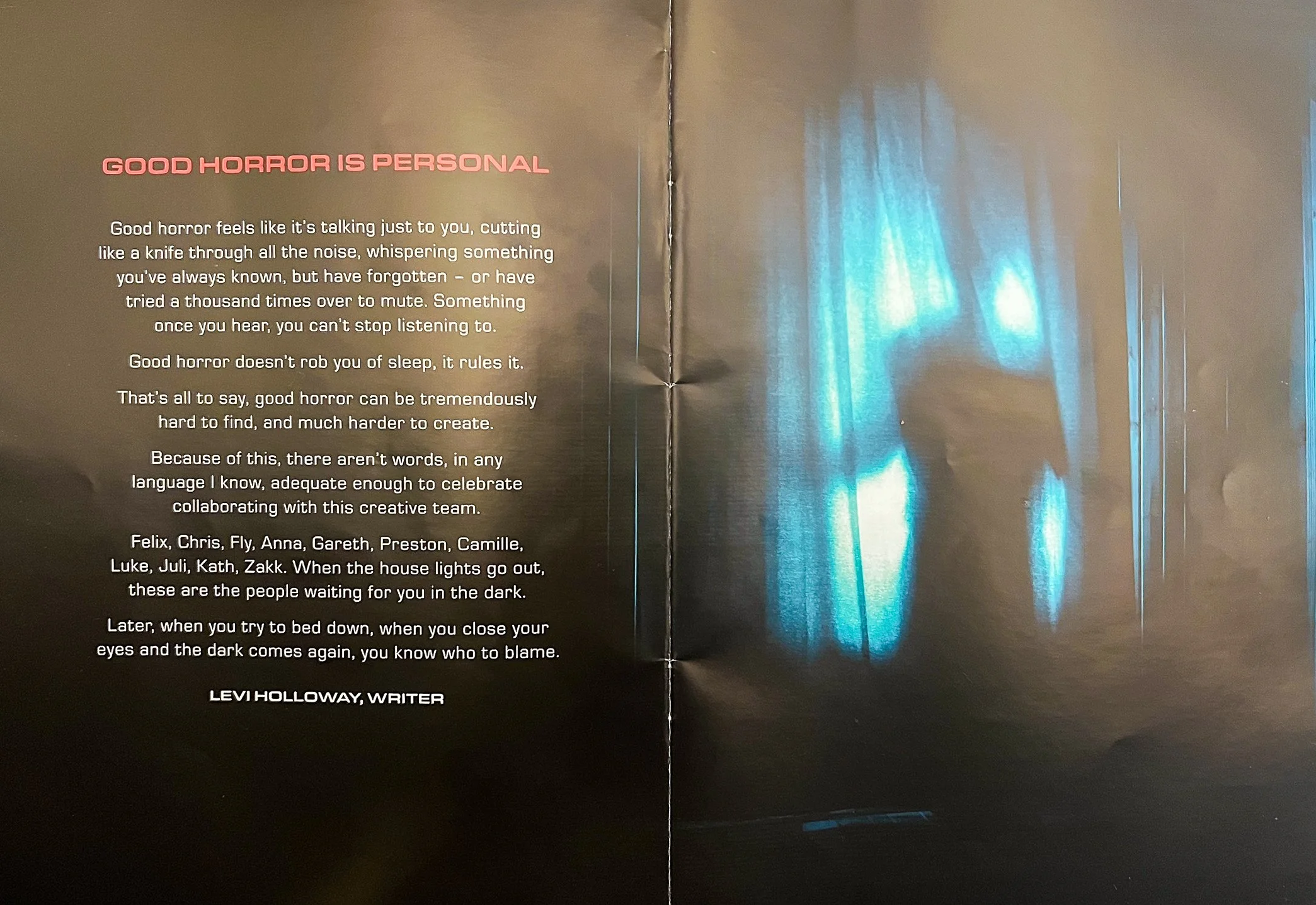
So I got hold of tickets and off we went.

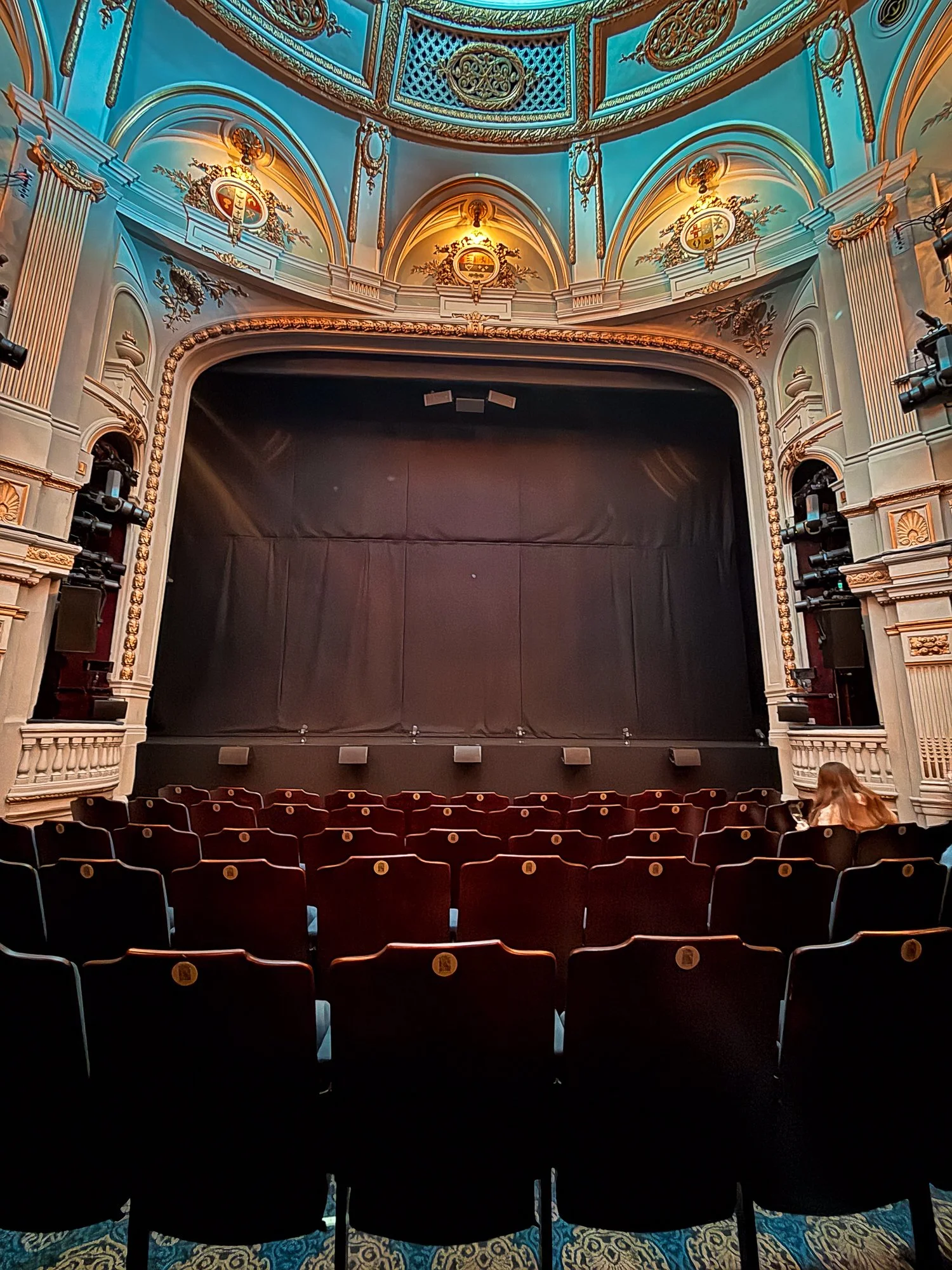
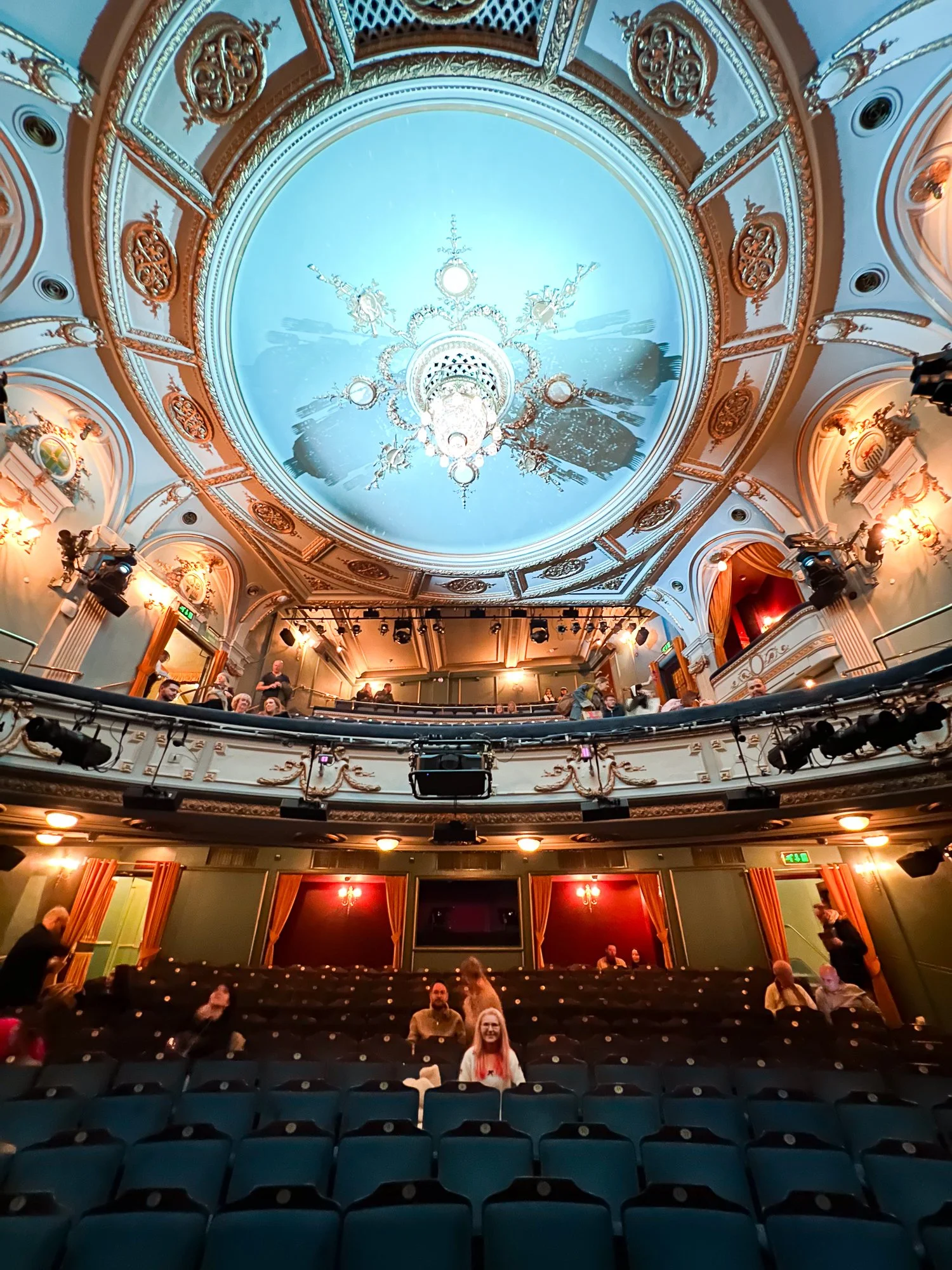
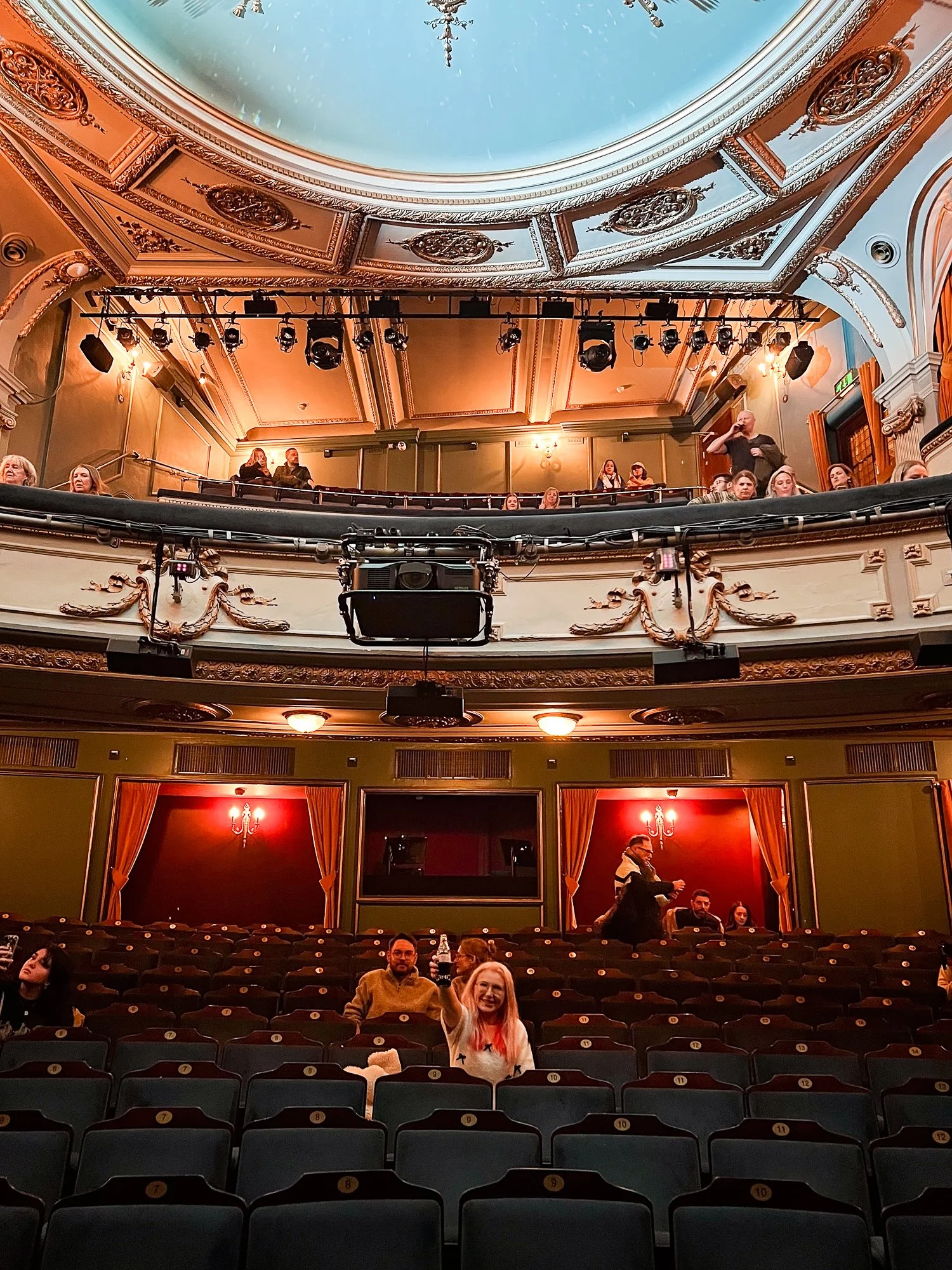
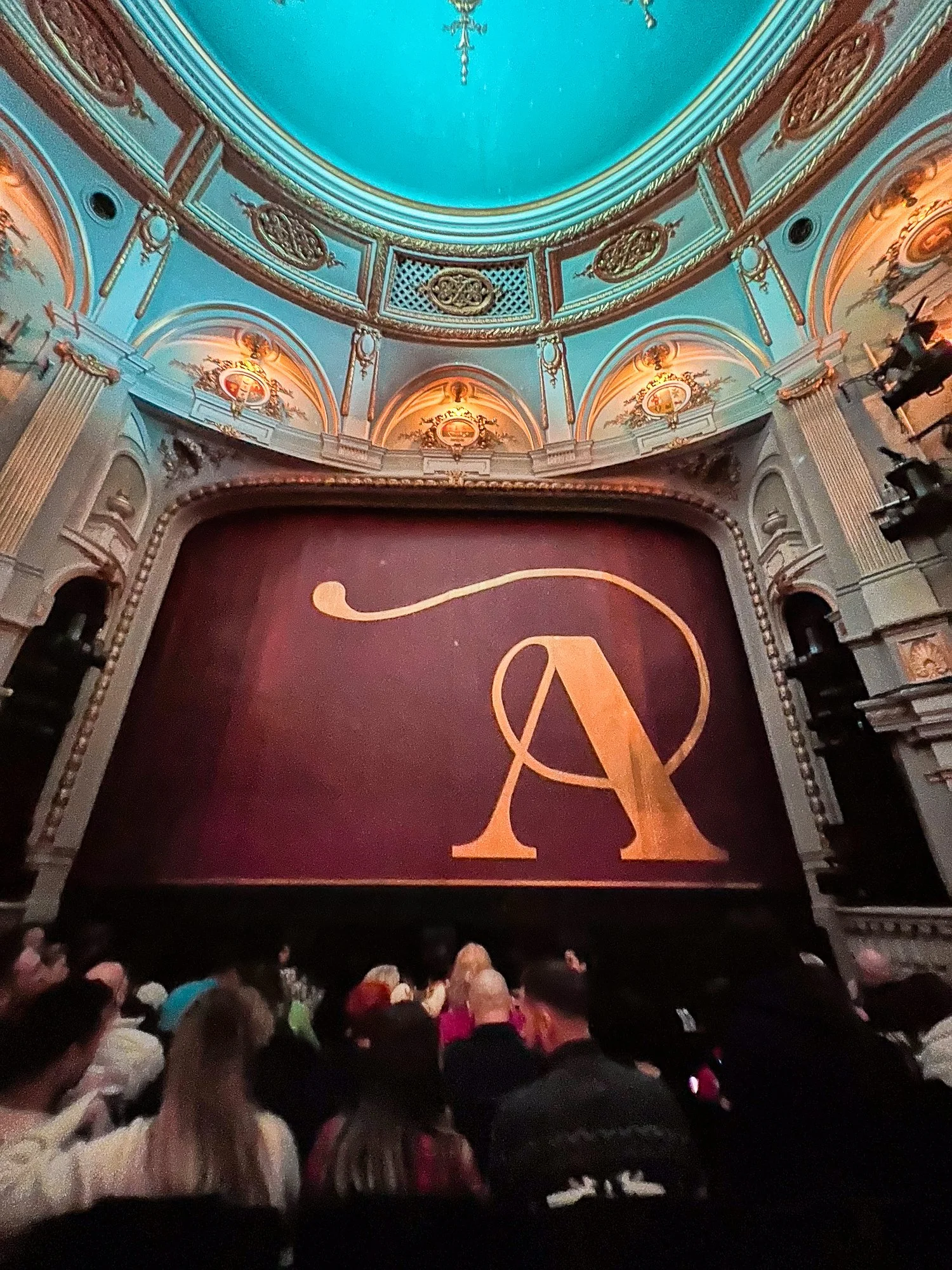
This was our first visit to the Ambassadors Theatre. Built in 1913, it is a Grade II listed building and relatively small by West End standards, seating around 400 to 440 people across two levels, with stalls at ground level and a single dress circle above. The modest size and intimate sightlines mean you are much closer to the actors and the action than in many larger theatres. We were seated downstairs, fairly close to the stage, which worked particularly well for this production.

The exterior is restrained and classical, with a stuccoed façade on West Street, pilasters, a deep cornice and a balustraded parapet. The building occupies a compact, almost triangular site.

Teatr Ambassadors wystawia obecnie „Paranormal Activity”. Autorem tekstu jest Levi Holloway, a reżyserii podjął się Felix Barrett z Punchdrunk. Historia opowiada o parze, która po przeprowadzce do Londynu zaczyna doświadczać niepokojących zdarzeń. Nie będę tu wchodzić w szczegóły, żeby niczego nie zdradzić, ale gdy tylko usłyszałam nazwisko Barretta, wiedziałam, że nie możemy tego przegapić.

Zdobyliśmy zatem bilety i ruszyliśmy do teatru.

Była to nasza pierwsza wizyta w tym teatrze. Budynek powstał w 1913 roku i jest obiektem klasy II na liście zabytków. To raczej kameralna scena jak na West End, mieszcząca około 400–440 widzów, z parterem i jednym balkonem. Dzięki niewielkim rozmiarom i dobrym proporcjom widowni ma się poczucie bliskości z aktorami i samą akcją. My siedzieliśmy na dole, dość blisko sceny, co w przypadku tego spektaklu było dużym plusem.

Z zewnątrz teatr prezentuje się dość powściągliwie, w klasycznym stylu, ze stiukową fasadą przy West Street, pilastrami i wyraźnym gzymsem. Obszar teatru jest mały i nieregularny, niemal trójkątny.

Inside, the theatre is decorated in an elegant Louis XVI style, with a colour palette traditionally associated with Parma violet, ivory and gold. It feels quite refined. The foyer and public areas feature decorative plasterwork and pilasters, with a pleasing circular space that leads into the auditorium.

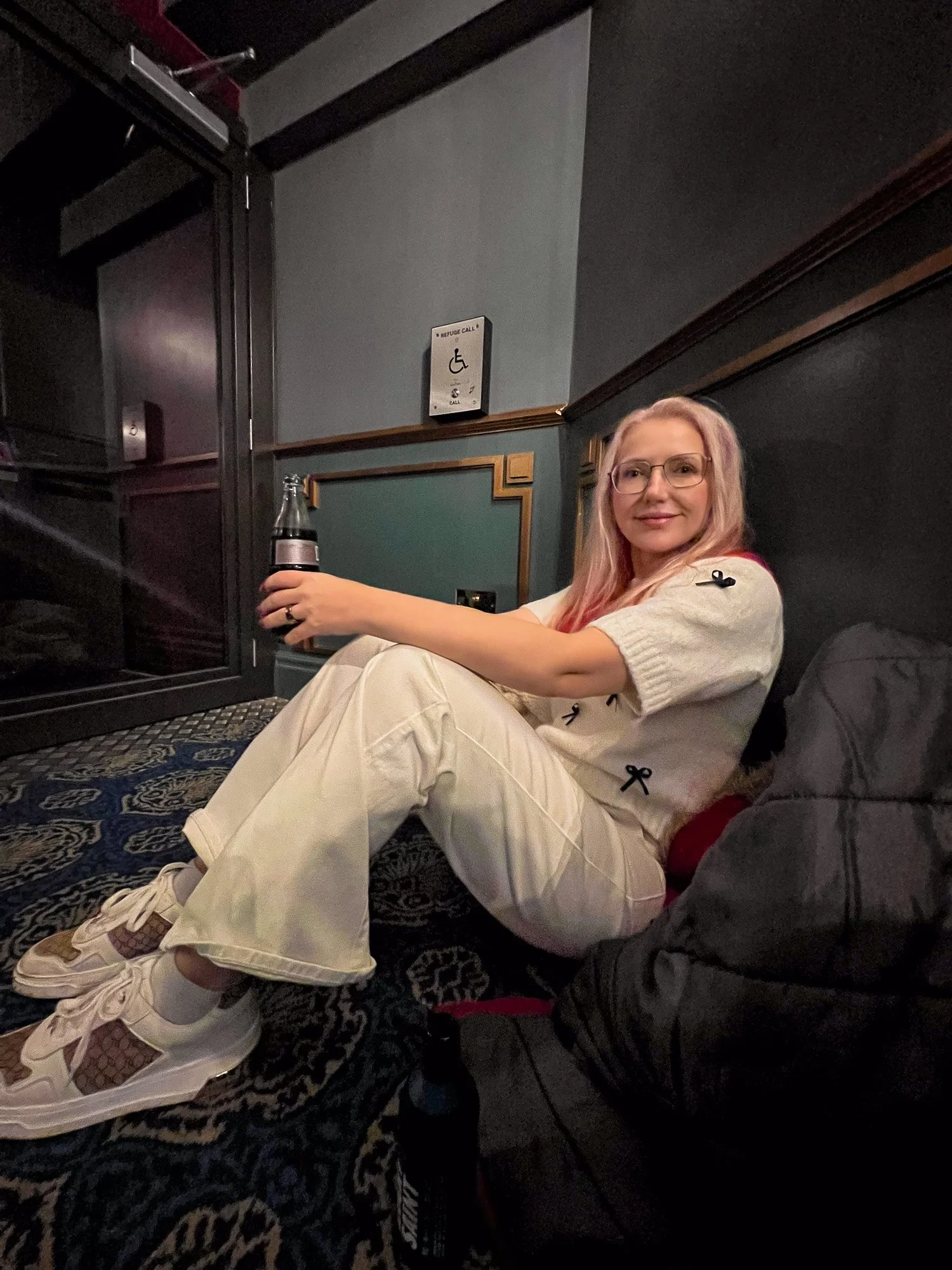
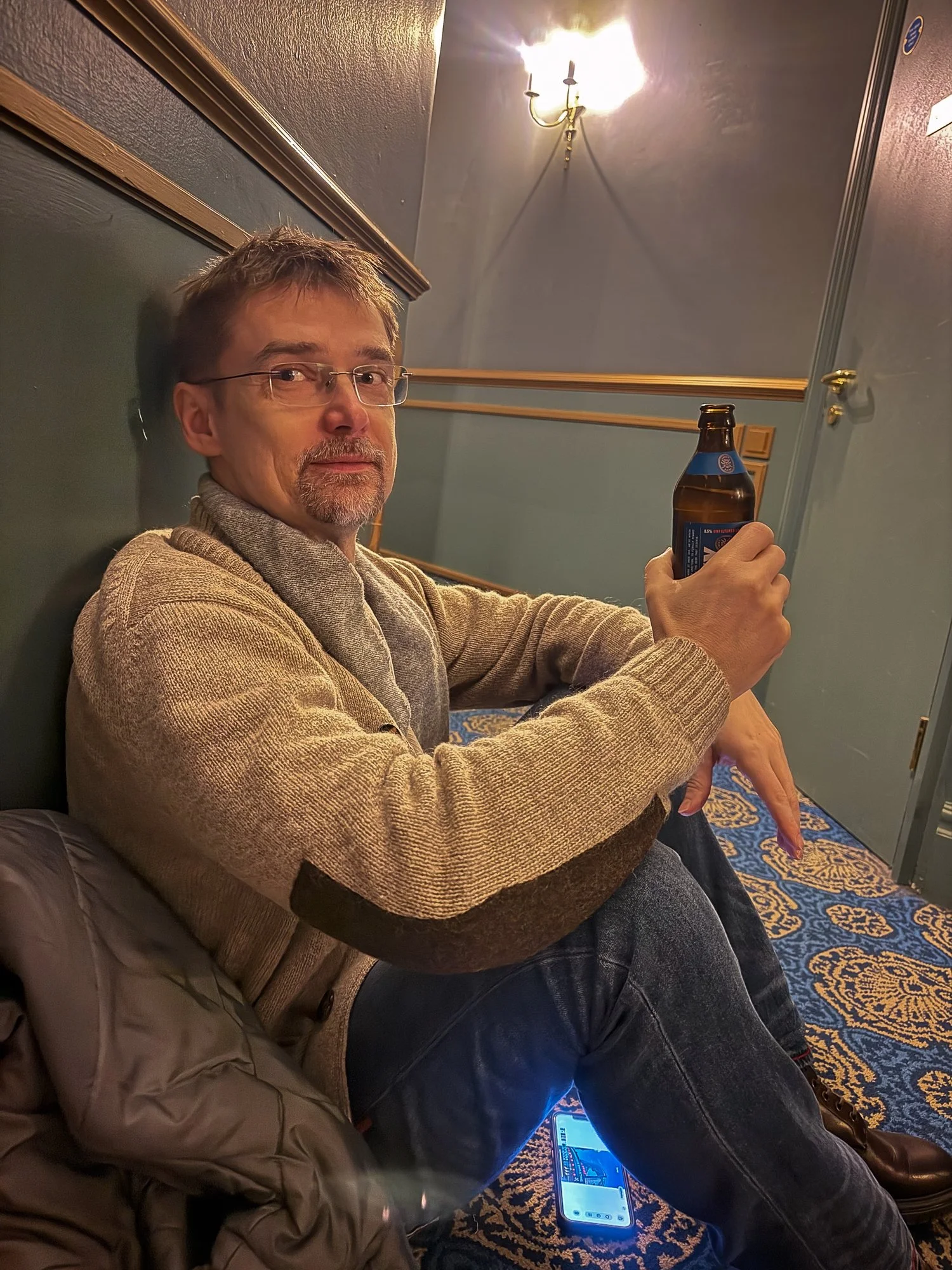
We arrived quite early and had a drink. As the bar area is very small, and the auditorium had not yet opened, we waited in the corridor, sitting on the floor and using the time to unwind a little before being let in to find our seats.

Wnętrze zaskakuje eleganckim wystrojem w stylu Ludwika XVI, z paletą kolorów, w której dominuje fiolet, kość słoniowa i złoto. Całość jest dość wyrafinowana. Przestrzenie foyer mają dekoracyjne sztukaterie i przyjemny, półkolisty układ prowadzący do widowni.

Przyjechaliśmy dość wcześnie i mieliśmy sporo czasu, żeby napić się czegoś przed spektaklem. Bar jest jednak bardzo mały, a ponieważ widownia nie była jeszcze otwarta, rozsiedliśmy się na podłodze korytarza.

The play itself is highly atmospheric and genuinely unsettling without tipping into tackiness. The tone is creeping and tense, often very quiet, until it suddenly is not. The set represents a London home, shown as a cross-section over two floors, like a doll-house with one wall removed. Sound design, darkness and practical stage effects are used extensively, with some moments that feel closer to stage magic than conventional theatre, and which we are still trying to work out.

Silence is used deliberately and effectively, to the point where you can hear the audience holding its breath or reacting audibly. Modern horror does not often manage to sustain this level of unease, but this production does.

To sum it up, we liked it a great deal.

Sam spektakl jest bardzo sugestywny i naprawdę niepokojący, ale bez tanich efektów. Nastrój budowany jest powoli i konsekwentnie. Scenografia przedstawia londyński dom pokazany w przekroju, na dwóch poziomach, jak domek dla lalek bez jednej ściany. Ogromną rolę odgrywa dźwięk, światło (lub jego brak) i efekty realizowane na żywo. Niektóre z nich przypominają sztuczki iluzjonistyczne i do tej pory nie jesteśmy pewni, jak zostały zrobione. Cisza jest także używana w tym przedstawieniu bardzo świadomie. Widać i słychać reakcje widowni, w tym wstrzymywanie oddechu. Współczesny horror rzadko potrafi wywołać taki poziom napięcia, a tutaj to się ewidentnie udało.

Krótko mowiąć, bardzo nam się ten spektakl podobał.

New Molden: Hair and Korean food

After three whole months since my previous colouring, my hair was screaming for a visit to Seung Ki Baek’s studio. A few hours later, with a fresh splash of colour and no roots in sight, I felt much more human.

Po trzech miesiącach od ostatniego farbowania moje włosy zdecydowanie domagały się wizyty w studiu Seung Ki Baeka. Kilka godzin później, z odświeżonym kolorem i bez śladu odrostów, poczułam się zdecydowanie bardziej jak człowiek.

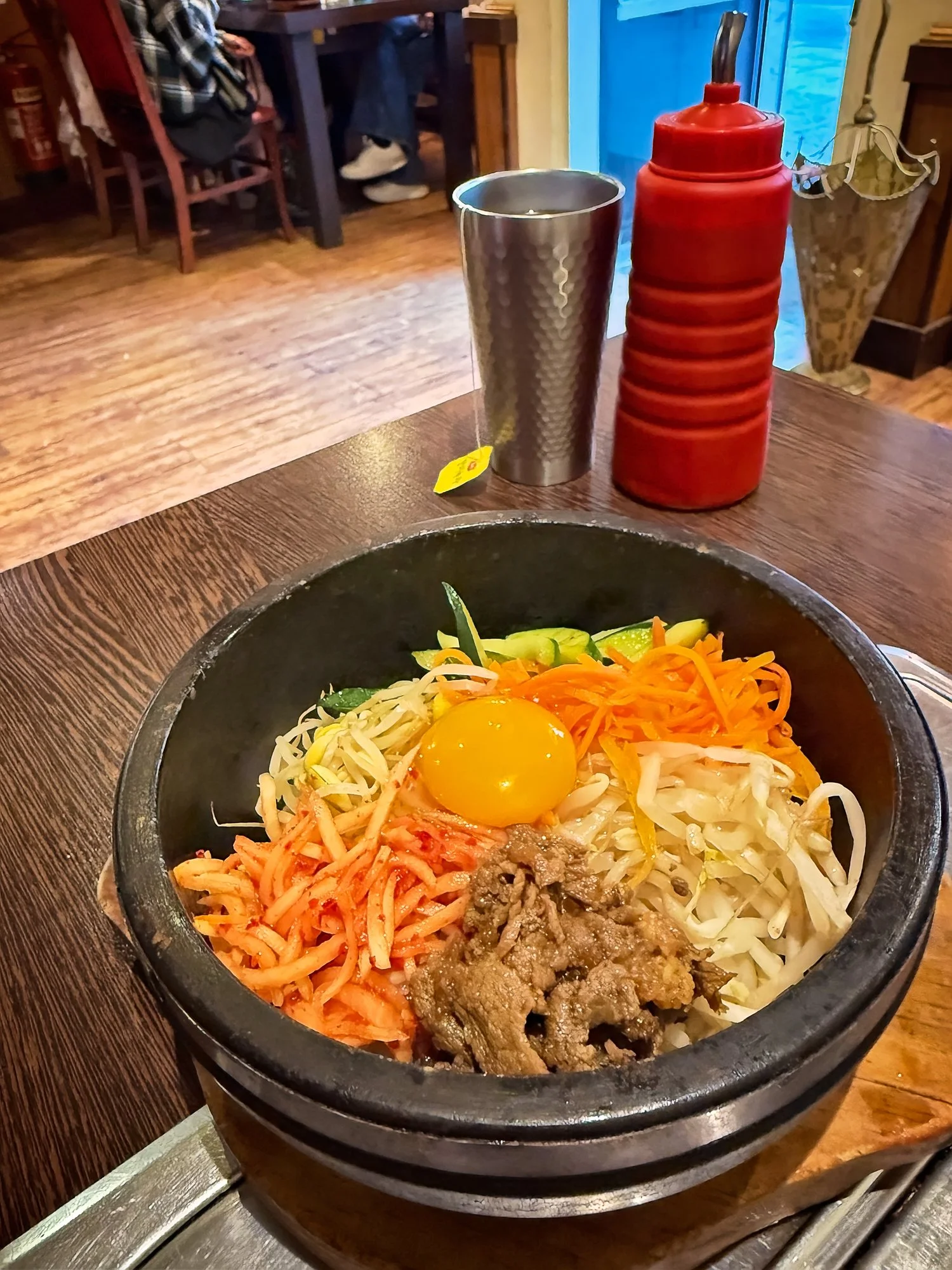
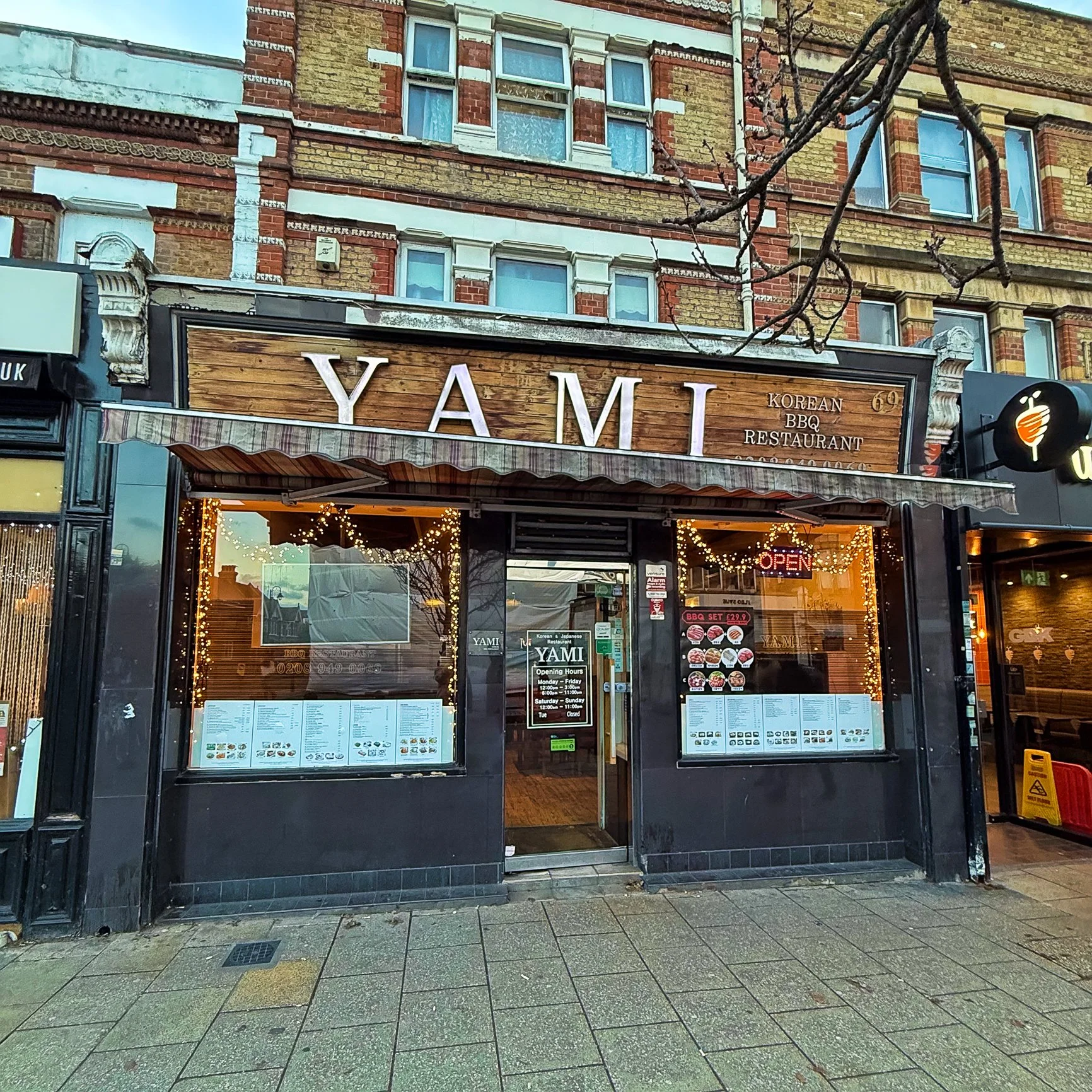
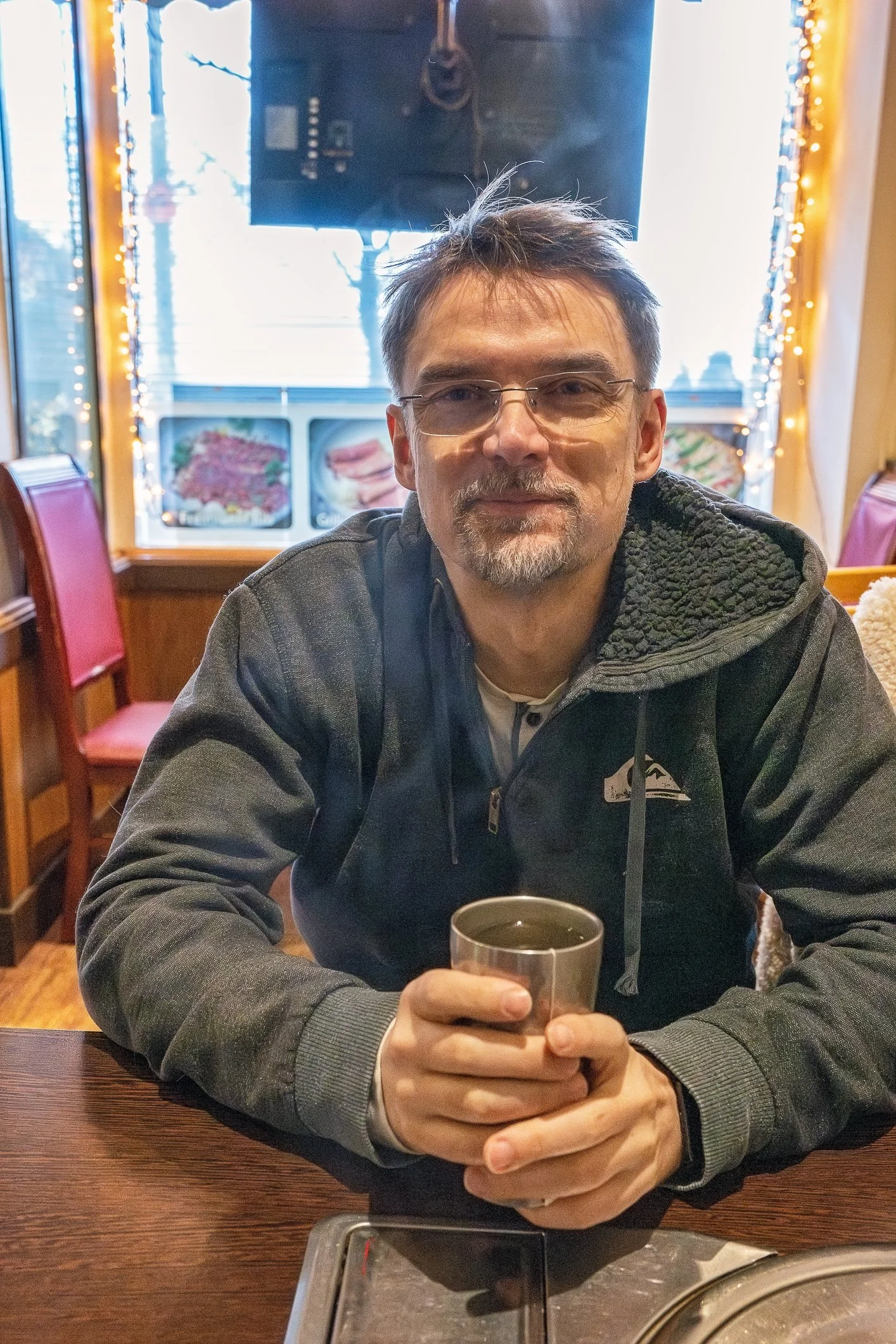
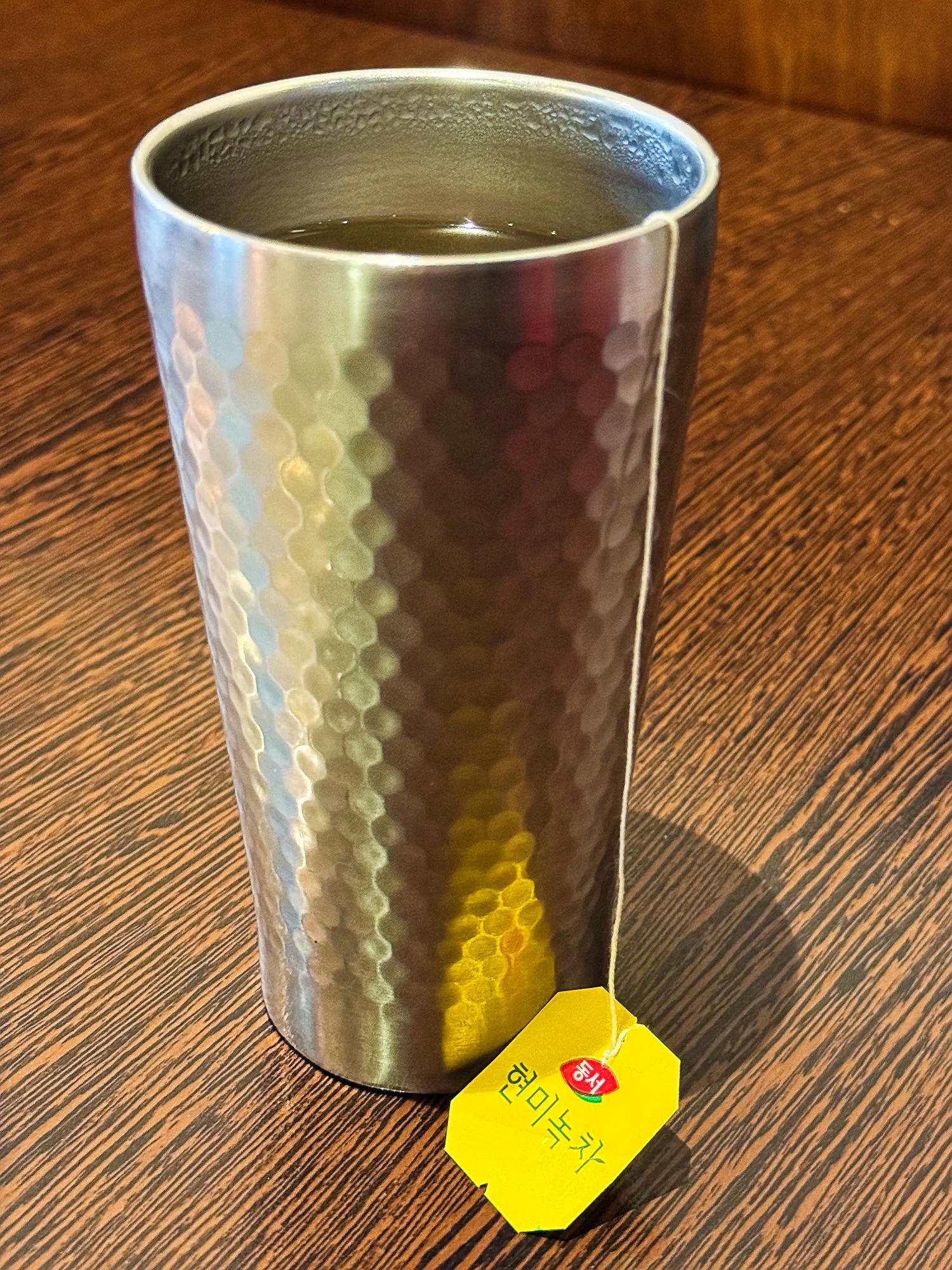
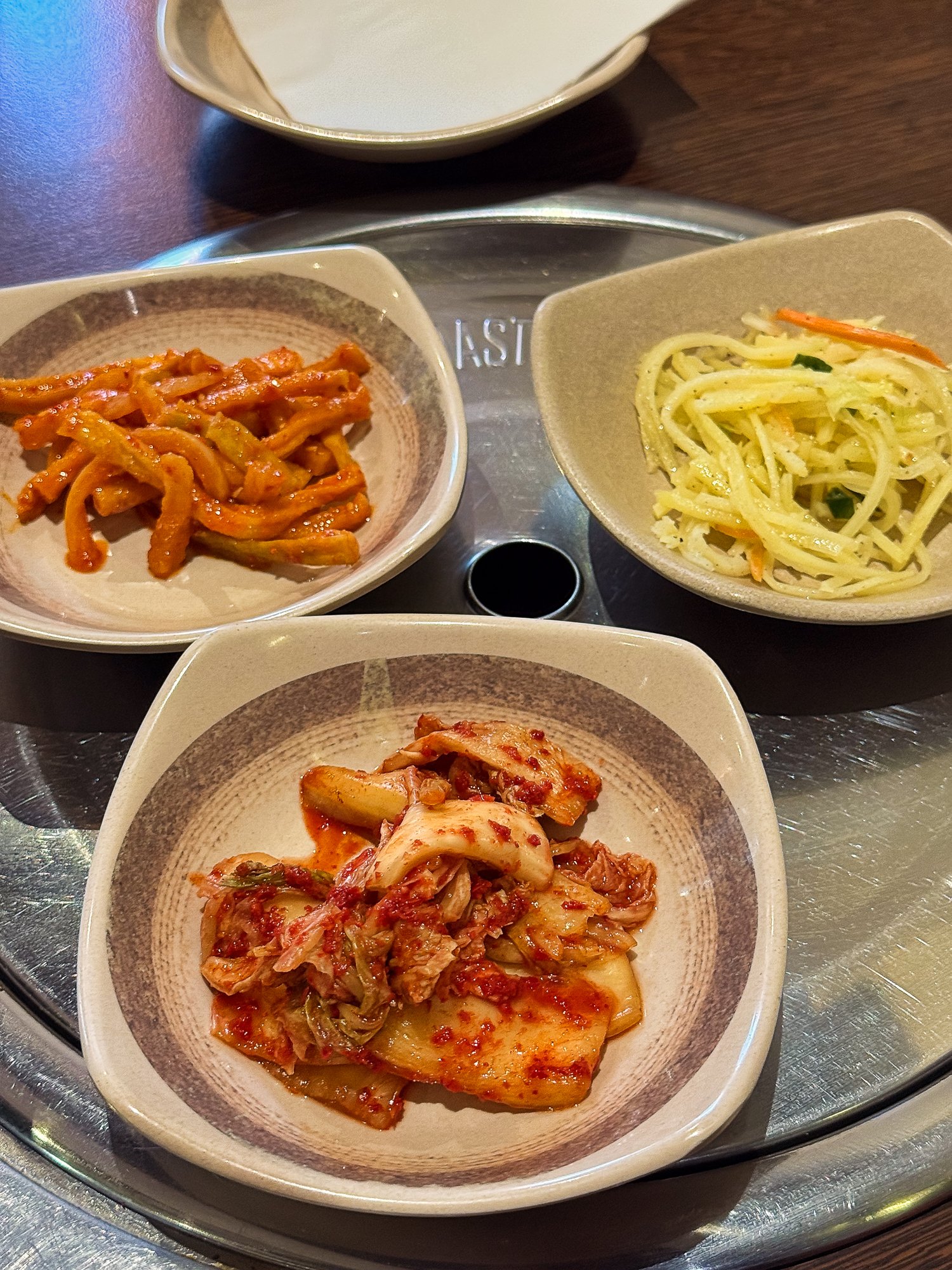
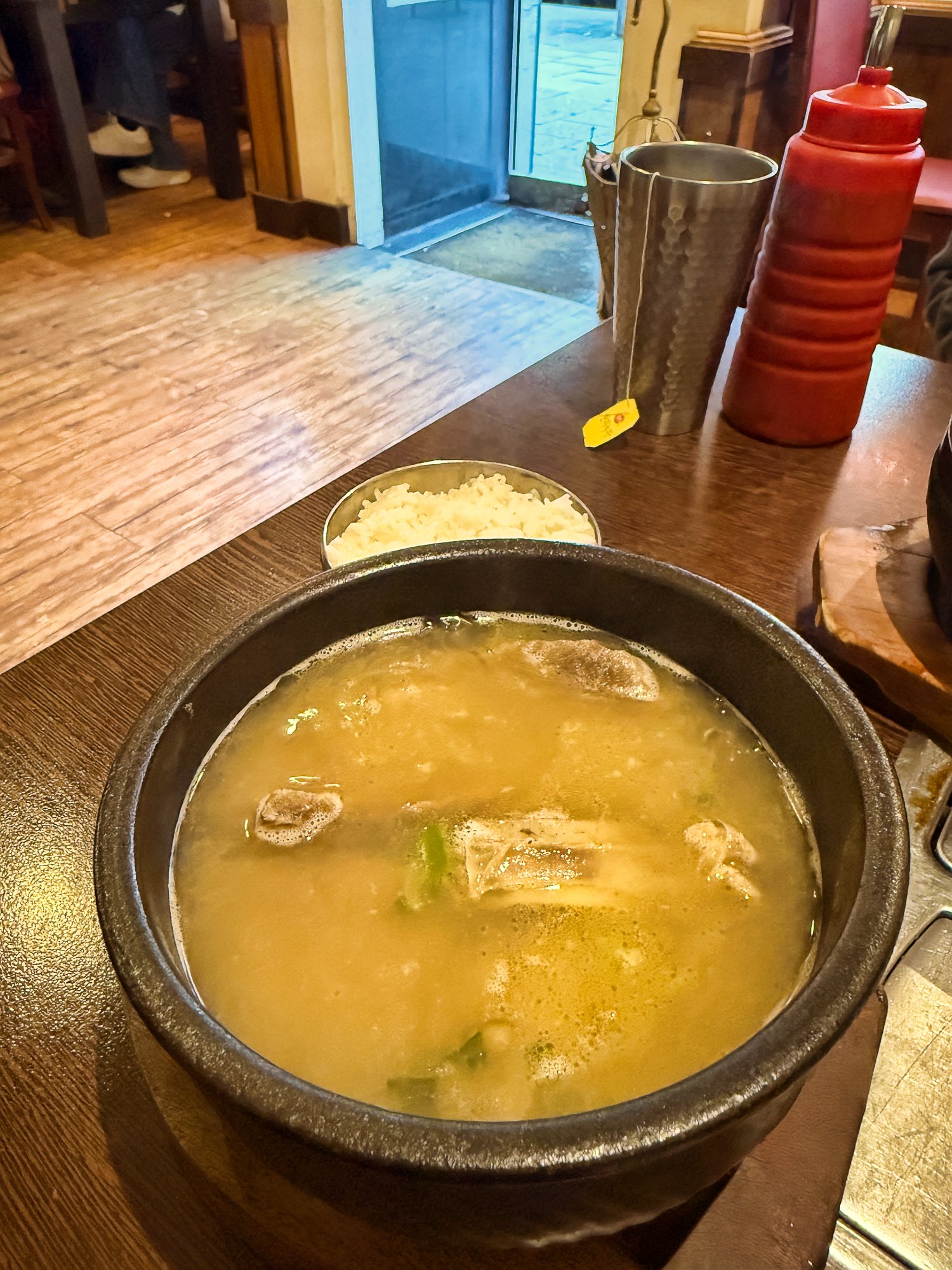
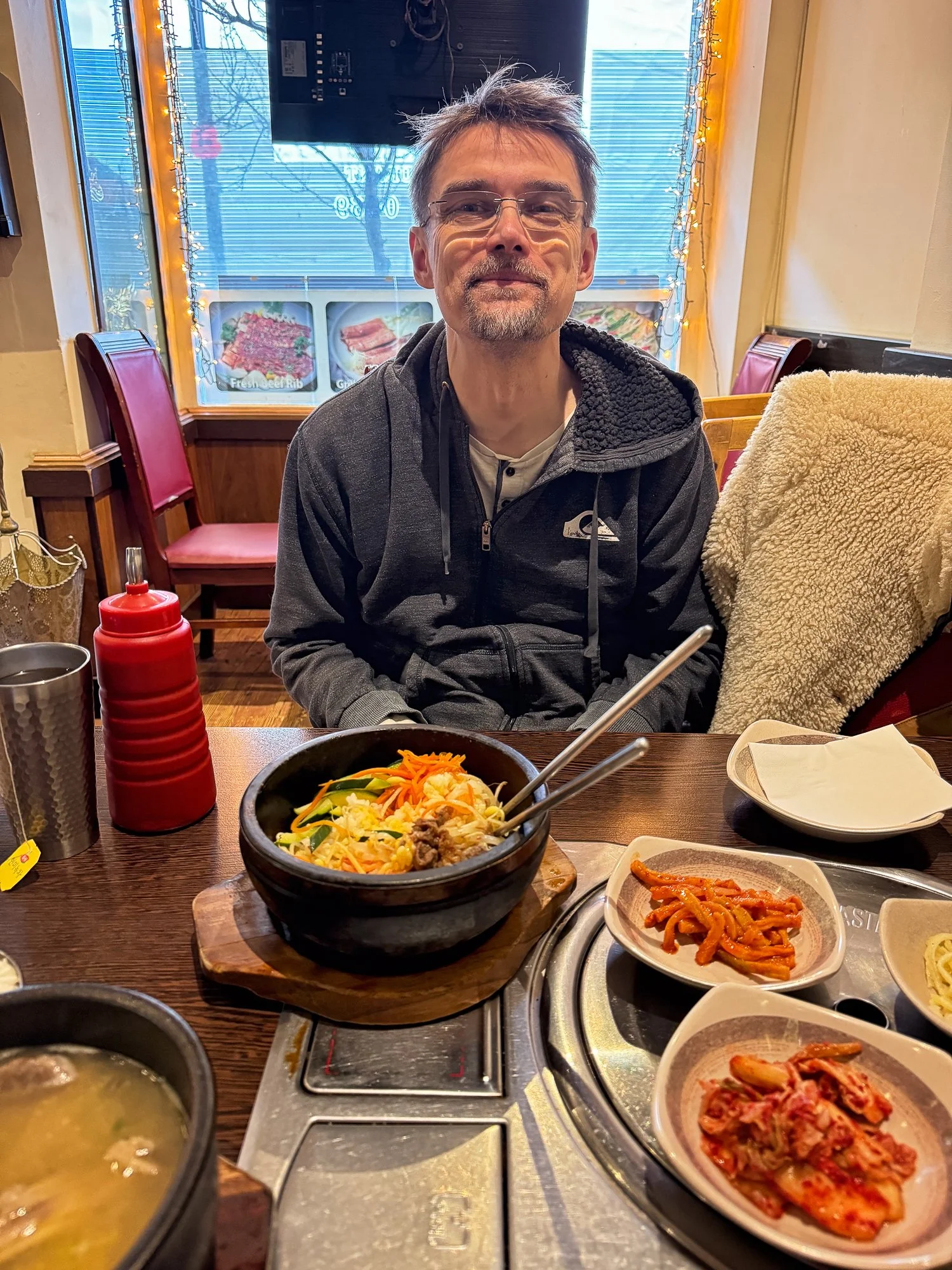
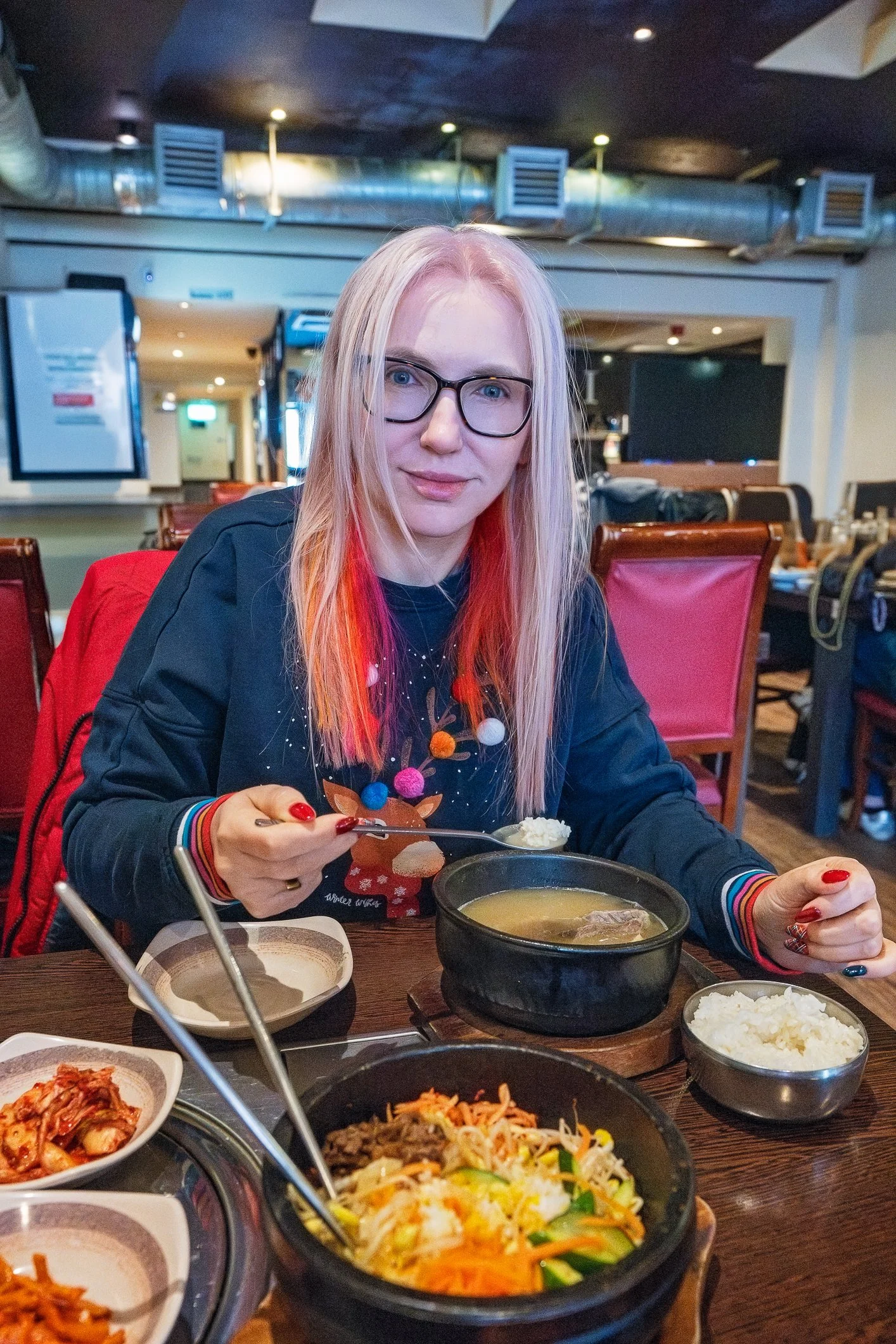
But obviously, a visit to New Malden by default means Korean food. This time we stopped by Yami, a relatively new restaurant on the High Street. We kept things simple and classic, ordering bibimbap served in a hot stone bowl along with a beef soup. The bibimbap arrived still sizzling and was deeply comforting and delicious. The beef soup was equally satisfying, served steaming hot with tender pieces of beef in a rich, savoury broth. The service was friendly and unhurried, making it a pleasant place to sit and enjoy the meal.

Ale oczywiście wyjazd do New Malden niemal automatycznie oznacza koreańskie jedzenie. Tym razem trafiliśmy do Yami, relatywnie niedawno otwartej restauracji przy High Street. Zamówiliśmy klasycznie i bez kombinowania: bibimbap podawany w rozgrzanej kamiennej misce oraz zupę z wołowiny. Bibimbap dotarł na stół jeszcze skwierczący i był - jak zawsze – pyszny. Zupa wołowa również była przyzwoita - aromatyczna, i z miękkimi kawałkami mięsa. Obsługa była miła i nienachalna, dzięki czemu można było spokojnie cieszyć się posiłkiem. Także lunch był bardzo udany.