day out

Banksy Limitless part 1

There are exhibitions that show you art, and there are exhibitions that show you yourself. And it may be a very unfiltered image of yourself. Banksy Limitless, housed in the Sussex Mansions in South Kensington, attempts both - and in its best moments, it succeeds. Stepping inside feels like stepping through the looking glass of the 21st-century world. Part retrospective, part fun-house (it would be funny if it weren’t true), and part moral interrogation - every corner of this exhibition is lined with a provocation.

The first stretch is a kind of documentary tunnel. Along the walls runs a meticulous timeline of Banksy’s life and works, charting the years not as milestones of success but as waves of protest. Each date anchors a moment: the Bristol nights when a spray can was his passport to visibility, the walls of Bethlehem, the auction houses where his art literally destroyed itself. Accompanying text gives context - where he was, what he was fighting, what the world looked like that year. Even this introductory passage holds tension: between vandalism and uplift, between moral right and legal constraint, and between the artist’s desire for invisibility and the public’s obsession with unmasking him. A short film at the end stitches together global headlines - Gaza, Brexit, Ukraine, the art-market circus – underscoring how Banksy’s career shadows our collective anxieties. It is less about biography than zeitgeist: the political weather that produced him.

Są wystawy, które pokazują ci sztukę, i są wystawy, które pokazują ci ciebie samego. I to całkiem bez filtrów. Banksy Limitless, mieszcząca się w Sussex Mansions w South Kensington, próbuje robić jedno i drugie - i w swoich najlepszych momentach naprawdę jej się to udaje. Wejście na teren tej wystawy przypomina przekroczenie zwierciadła XXI wieku. Częściowo retrospektywna, częściowo gabinet osobliwości (byłoby śmieszniej, gdyby nie było aż tak prawdziwie), a częściowo moralne przesłuchanie - każdy zakątek tej wystawy obudowany jest prowokacją.

Pierwszy fragment to rodzaj dokumentalnego tunelu. Na ścianach biegnie dość szczegółowa oś czasu twórczości Banksy’ego, która odmierza lata nie tyle jako kamienie milowe sukcesu, co jako fale protestu. Każda data zakotwicza jakiś moment: bristolskie noce, kiedy puszka ze sprayem była jego paszportem do widzialności; mury Betlejem; domy aukcyjne, w których jego sztuka dosłownie sama się niszczyła. Towarzyszące teksty nadają kontekst – gdzie był, o co walczył, jak wyglądał wtedy świat. Nawet ten wstępny fragment wystawy niesie napięcie: między wandalizmem a podnoszeniem na duchu, między moralną słusznością a prawnym ograniczeniem, między pragnieniem anonimowości a publiczną obsesją na punkcie jego demaskacji. Krótki film na końcu sumuje globalne nagłówki - Gaza, Brexit, Ukraina, cyrk rynku sztuki - podkreślając, jak kariera Banksy’ego odbija nasze zbiorowe niepokoje. To mniej biografia, a bardziej zeitgeist: polityczny klimat, który go ukształtował.

Then, through a cartoon-style security door - one of the original props from Dismaland, his dystopian theme-park installation - we cross from documentation into theatre.

The first rooms feel like stripped galleries: white, raw, with concrete floors and silver industrial air ducts. It can be seen as a deliberate aesthetic friction - the street or a warehouse repackaged as museum. Banksy’s work thrives on such contradiction - rebellion dressed as institution, vandalism sold with a time slot.

Every surface here bears something iconic. Saints of Banksy’s mythology - Bomb Hugger, Laugh Now, Barcode Leopard, GDP Rat, Stick Police, and many others are framed, captioned, and lit, their raw edges polished by the museum glow. White sculptures punctuate the space: a muscular Bullet Proof David; a famous elephant with strapped ballistic rocket. Some other walls depict destruction of war for freedom of Ukraine with rabble covered in his graffiti.

Potem, przez kreskówkowe drzwi bezpieczeństwa - jeden z oryginalnych rekwizytów z Dismaland, dystopijnej instalacji Banksy’ego w formie parku rozrywki – przechodzimy od dokumentacji do teatru.

Pierwsze sale przypominają ogołocone galerie: białe, surowe, z betonowymi podłogami i metalicznymi przemysłowymi kanałami wentylacyjnymi. Można to odczytać jako celowe estetyczne napięcie  - magazyn przemysłowy przepakowany w muzeum. Twórczość Banksy’ego żywi się takimi sprzecznościami  - bunt przebrany za instytucję, wandalizm sprzedawany na godziny.

Każda powierzchnia tutaj niesie coś ikonicznego. Święci Banksy’owej ikonografii – Bomb Hugger, Laugh Now, Barcode Leopard, GDP Rat, Stick Police i wiele innych prac - oprawione, opisane i oświetlone, ich surowy przekaz wypolerowany muzealnym blaskiem. Przestrzeń punktują też białe rzeźby: muskularny Bullet Proof David czy słynny słoń z przypasaną rakietą dalekiego zasięgu. Inne ściany z kolei starają się oddać ogrom zniszczeń podczas wojny o wolność Ukrainy, gdzie zniszczone ściany pokrywają graffiti Banksy’ego.

On one of the walls hangs Love Is in the Bin, the shredded remains of Girl with Balloon from its notorious Sotheby’s moment. We see the self- destructive mechanism that devoured half the canvas as the auctioneer’s hammer fell - a perfect metaphor for art devouring itself under capitalism’s spotlight.


Na jednej ze ścian wisi Love Is in the Bin, czyli postrzępione szczątki Girl with Balloon z jej słynnego momentu w Sotheby’s. Widzimy mechanizm autodestrukcji, który pożarł połowę płótna w chwili, gdy opadł młotek licytatora - idealną metaforę sztuki pożerającej samą siebie w świetle kapitalistycznych reflektorów.

A mural of Love Is in the Air dominates one corridor, a protestor frozen mid-throw, in his hand flowers instead of a weapon. Visitors instinctively pose beside it, smiling to the camera - revolution turned into Instagram backdrop.

Mural Love Is in the Air dominuje jeden z korytarzy - protestant zastygły w półrzucie, w dłoni trzyma nie broń, lecz kwiaty. Odwiedzający instynktownie pozują obok niego, uśmiechając się do aparatu  -  rewolucja zamieniona w instagramową dekorację.

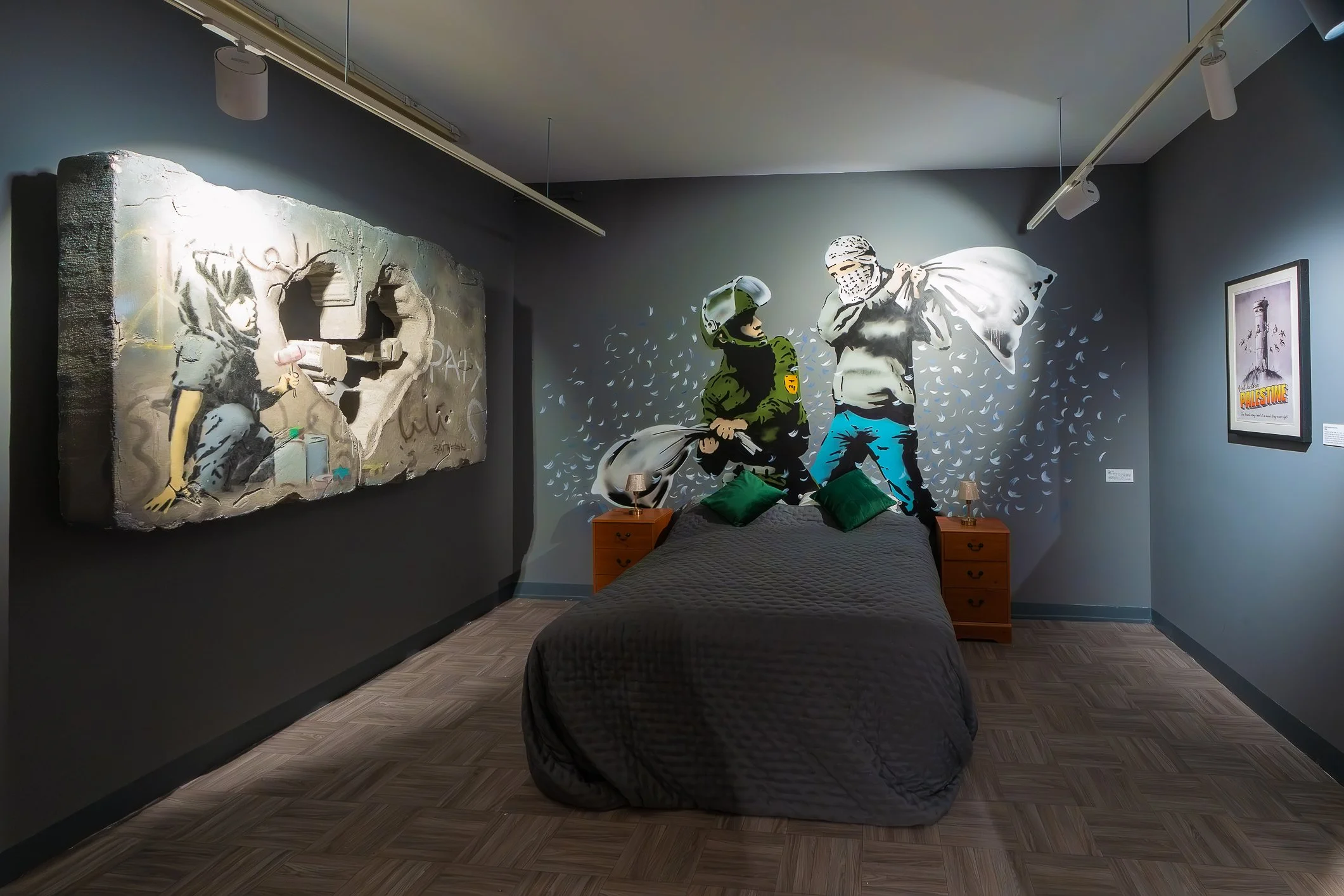
The atmosphere in those rooms hums with tension: satire made sacred, protest institutionalised. More familiar images - No Ball Games, Donut Van, Girl with Balloon - cluster around like echoes from a collective conscience. A small screen plays an animated short about the girl and her balloon, turning sentimentality into something even more fragile and haunting. A reconstruction of the Walled Off Hotel’s facade, guarded by a chained chimpanzee, reminds us that Banksy’s world blends absurdity with menace.

Atmosfera w tych salach jest pełna napięcia: satyra wyniesiona do rangi sacrum, protest zinstytucjonalizowany. Bardziej znajome obrazy - No Ball Games, Donut Van, Girl with Balloon - zgromadzone są wokół jak echo zbiorowej podświadomości. Na małym ekranie prezentowana jest krótka animacja o dziewczynce i jej balonie, zamieniając sentymentalność w coś jeszcze bardziej kruchego i jednocześnie strasznego. Rekonstrukcja fasady Walled Off Hotel, strzeżonej przez przykutego łańcuchem szympansa, przypomina, że świat Banksy’ego miesza absurd z grozą.

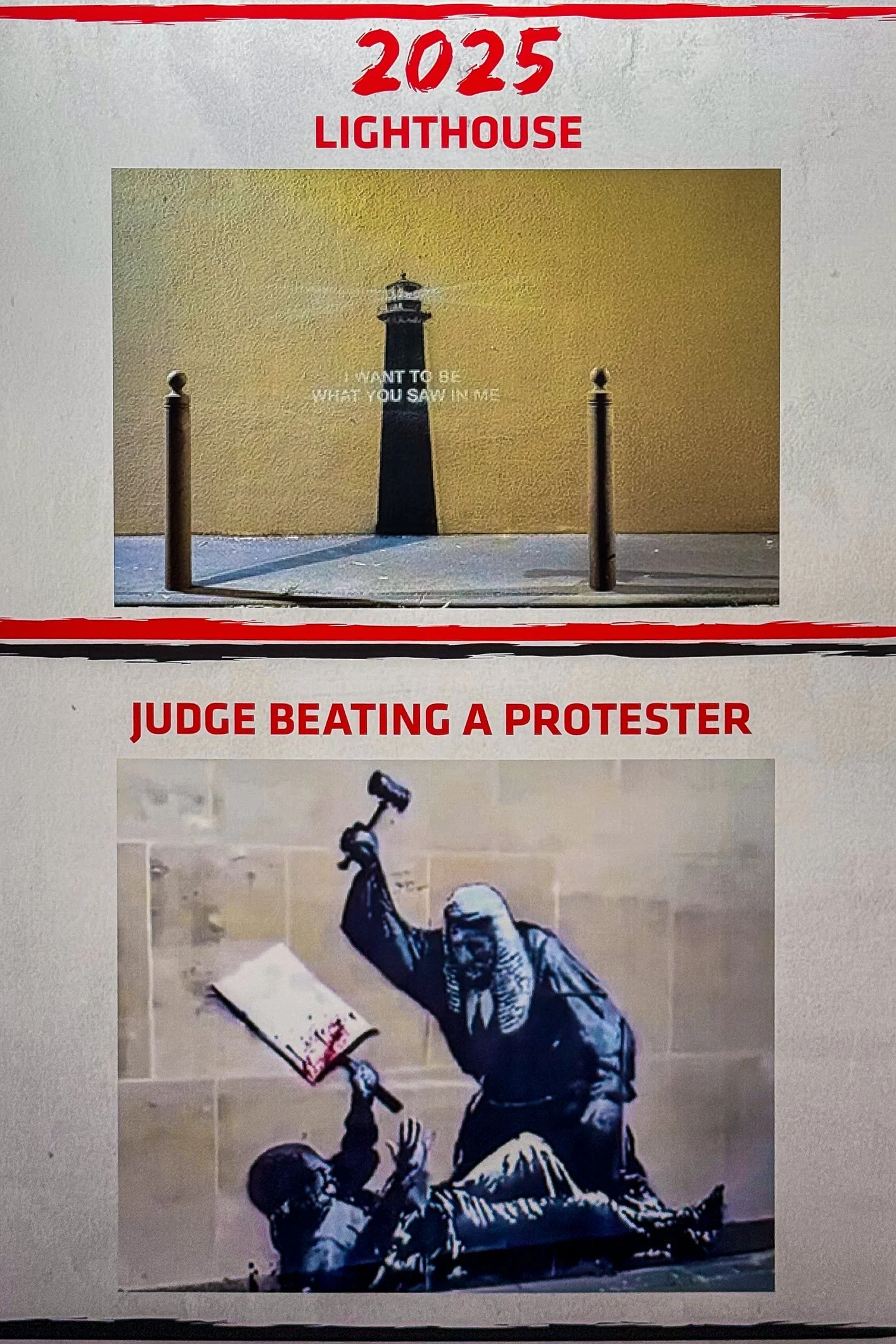
The next room is darker, its atmosphere even heavier. One side is dominated by a huge recreation of Devolved Parliament, the absurdist canvas in which the House of Commons is filled with chimpanzees. The atmosphere is half-cathedral, half-circus. Nearby hang Lenin in Sight, Morons, and other provocative works. Opposite, an enormous mural depicts a Judge Beating a Protestor (recently removed from the facade of Queen’s Building in London). In the corner of the same wall there is I Fought the Law and I Won and I cannot decide if it hints at hope to win, or simply necessity of defiance and persistence, even when the win may be small and symbolic.


Kolejna sala jest ciemniejsza, a jej atmosfera jeszcze cięższa. Jedną ze ścian dominuje ogromna rekonstrukcja Devolved Parliament, absurdystycznego płótna, na którym Izbę Gmin brytyjskiego parlamentu wypełniają szympansy. Atmosfera jest trochę jak w katedrze, a trochę jak w cyrku. W pobliżu wiszą Lenin in Sight, Morons i inne prowokacyjne prace. Naprzeciwko rozciąga się monumentalny mural przedstawiający Judge Beating a Protestor (usunięty ostatnio z Queen’s Building w Londynie). W rogu tej samej ściany znajduje się I Fought the Law and I Won - i nie potrafię zdecydować, czy sugeruje ono nadzieję na zwycięstwo, czy raczej konieczność nieustannego sprzeciwu i wytrwałości, nawet jeśli wygrana jest mała i wyłącznie symboliczna.

Behind that wall, the exhibition turns inward. Here is Banksy’s dialogue with art history - his re-seen masterpieces. Sunflowers from Petrol Station, where Van Gogh’s blossoms have withered, Show Me the Monet, where the lily pond is choked with shopping carts. Graffiti Village, CCTV Countryside, The Banality of the Banality of Evil, Vettriano’s Lovers, even Simon Cowell Judges the Ballet. These rewritings are not mere vandalism of classics; they show how the world itself – through consumerism, surveillance, environmental degradation, mass production, loss of privacy - has become the vandalised canvas.

Some of these works have been planted in Banksy’s famous museum “pranks”. For example, in October 2003, Banksy entered Tate Britain disguised as a pensioner and installed Crimewatch UK Has Ruined the Countryside for All of Us in a vacant gallery slot. On 13 March 2005, he placed works simultaneously in four major New York museums - the Met, MoMA, the Brooklyn Museum, and the American Museum of Natural History - using a fake beard/hat to blend in as a visitor, and strong glue to fix the painting to the wall. This is an example of Banksy’s method of infiltration and critique: entering elite cultural institutions unannounced to place his own work, thereby questioning notions of legitimacy, curation and who gets to decide what art is. It also highlights his interest in institutional critique: by placing the work “inside” the system, he forces the system to respond (remove it, comment on it, etc.).


Kolejna część tej wystawy to dialog Banksy’ego z historią sztuki – jego „ponownie zobaczone” arcydzieła. Sunflowers from Petrol Station, w których słoneczniki Van Gogha zwiędły; Show Me the Monet, gdzie staw lilii dławią wózki sklepowe. Graffiti Village, CCTV Countryside, The Banality of the Banality of Evil, Vettriano’s Lovers, a nawet Simon Cowell Judges the Ballet. Te przeróbki nie są zwykłym wandalizowaniem klasyków; pokazują raczej, że sam świat - poprzez konsumpcjonizm, inwigilację, degradację środowiska, masową produkcję, utratę prywatności - stał się zdewastowanym płótnem.

Część z prezentowanych tu prac została „podrzucona” w słynnych muzealnych „psikusach” Banksy’ego. Na przykład w październiku 2003 roku Banksy wszedł do Tate Britain przebrany za emeryta i umieścił Crimewatch UK Has Ruined the Countryside for All of Us w jednym z wolnym miejsc na ścianie. 13 marca 2005 roku umieścił swoje prace jednocześnie w czterech głównych nowojorskich muzeach - Met, MoMA, Brooklyn Museum oraz American Museum of Natural History - używając fałszywej brody i kapelusza, by wmieszać się w tłum, oraz mocnego kleju, by przytwierdzić obrazy do ściany. To przykład metody infiltracji i krytyki Banksy’ego: wchodzenia niepostrzeżenie do elitarnych instytucji kultury, by ulokować tam własną pracę, a tym samym zakwestionować pojęcia legitymizacji, kuratorstwa i tego, kto ma prawo decydować, czym jest sztuka. Podkreśla to również jego zainteresowanie krytyką instytucjonalną: umieszczając pracę „wewnątrz” systemu, zmusza system do reakcji (usunięcia jej, skomentowania itd.).

A side corner amplifies industrial tension: brick walls, streaked with deep red and cobalt blue light, showcase Banksy’s August 2024 London animal series. A mountain goat balances precariously, a gorilla lifts a shutter to reveal a sea lion and escaping birds, glowing eyes peer from the shadows, and a cat arching close to a scratched wall.

Boczny zakątek tej sali wystawowej potęguje industrialne napięcie: ceglane ściany, spowite głęboką czerwienią i kobaltowym błękitem laserowego światła, prezentują londyńską serię zwierzęcą Banksy’ego z sierpnia 2024 roku. Koziorożec balansuje na samej krawędzi ściany, goryl podnosi roletę, odsłaniając uchatkę i uciekające ptaki, jarzące się oczy wyglądają z cienia, a kot wygina grzbiet tuż przy podrapanej ścianie.

Whales Beneath the Vaulted Ceiling

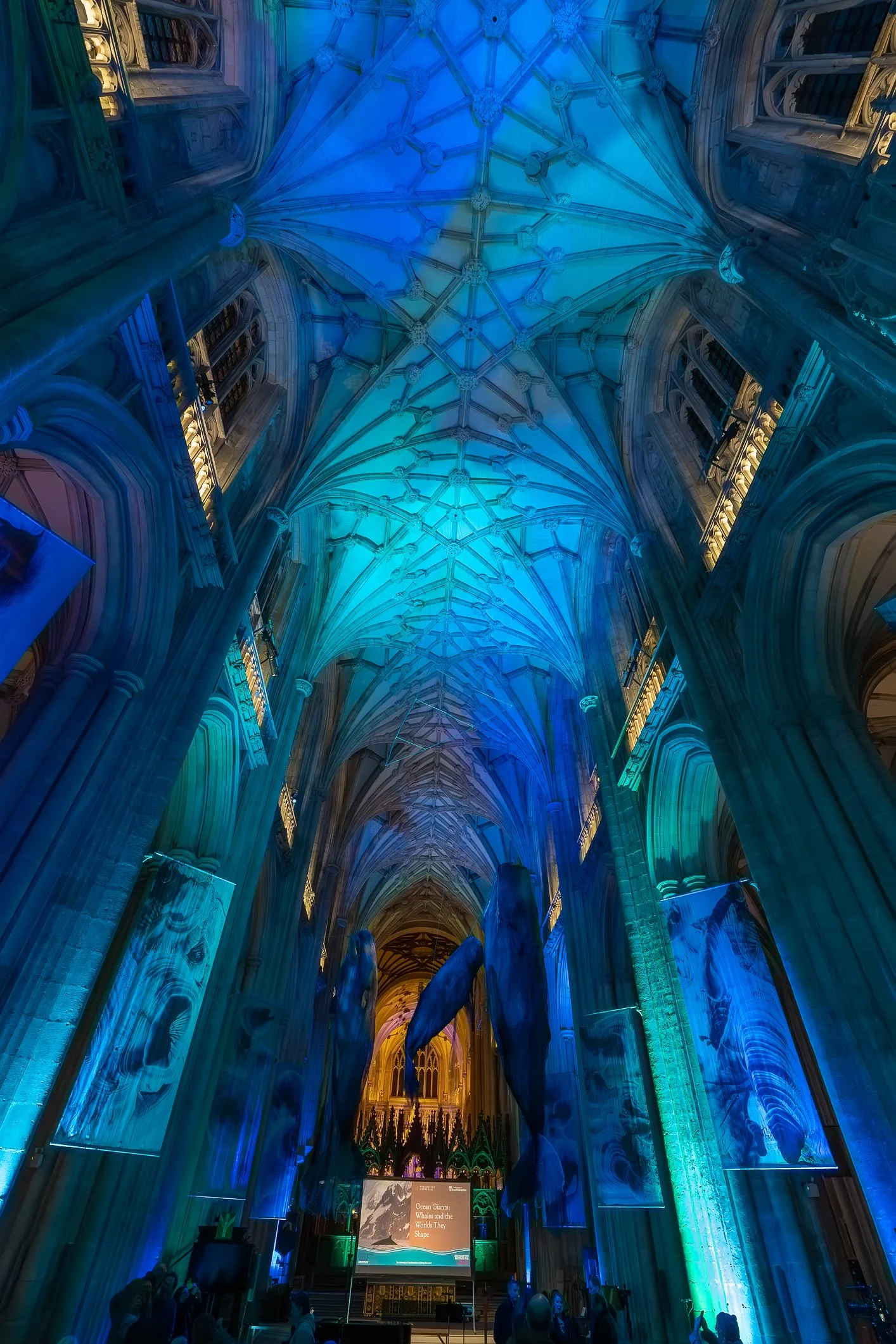
Last night, we stepped into a truly unforgettable world inside Winchester Cathedral—one filled with deep blue light, haunting music, and… whales.

Yes, whales. Three monumental sperm whale sculptures, suspended from the nave of the ancient cathedral, seemed to float through the air above us. The largest measured over five meters long. Created by artist Tessa Campbell Fraser, these breathtaking sculptures formed the centrepiece of an immersive exhibition that blends art, science, and awe.

We were there for a special event hosted by the University of Southampton—an evening of talks, performances, and reflection titled Whales: A Journey Through Worlds. It explored the incredible ways whales shape not just the ocean, but our entire planet, our laws, and even our imaginations.

Three standout talks anchored the night:

  • Professor Jon Copley shared astonishing insights about deep-sea ecosystems that form around whale carcasses, turning death into life for countless ocean creatures.

  • Dr Ryan Reisinger spoke about whale migrations and how these giants connect oceans across the globe, influencing ecosystems and even human life.

  • Dr Dina Lupin took us into the world of environmental law, revealing how whales are reshaping legal thinking about nature and rights.

And between the lectures, the evening flowed with poetry and live music.

Wczoraj wieczorem przenieśliśmy się do zupełnie innego świata — świata błękitnego światła, nastrojowej muzyki i… wielorybów.

Tak, wielorybów. Trzy monumentalne rzeźby tych ssaków, stworzone przez artystkę Tessę Campbell Fraser, zawisły pod sklepieniem nawy głównej w katedrze w Winchesterze.

Pojawiliśmysię tam na wyjątkowe wydarzenie zorganizowane przez Uniwersytet w Southampton – wieczór pod hasłem Whales: A Journey Through Worlds, pełen wykładów, występów artystycznych i refleksji. Tematem przewodnim były wieloryby i ich niezwykły wpływ na oceany, ekosystemy, kulturę i prawo.

Najważniejsze były trzy wykłady:

  • Profesor Jon Copley opowiadał o ekosystemach, które tworzą się na dnie oceanu wokół martwych wielorybów – śmierć jednych daje życie innym.

  • Dr Ryan Reisinger mówił o migracjach wielorybów i o tym, jak te olbrzymy łączą ze sobą oceany, wpływając na środowisko i życie ludzi.

  • Dr Dina Lupin przedstawiła fascynujące spojrzenie na rolę wielorybów w prawie – i jak zmieniają one sposób, w jaki myślimy o naturze i sprawiedliwości.

Między wykładami zaś rozbrzmiewała poezja i muzyka na żywo.

Orchid festival 2025

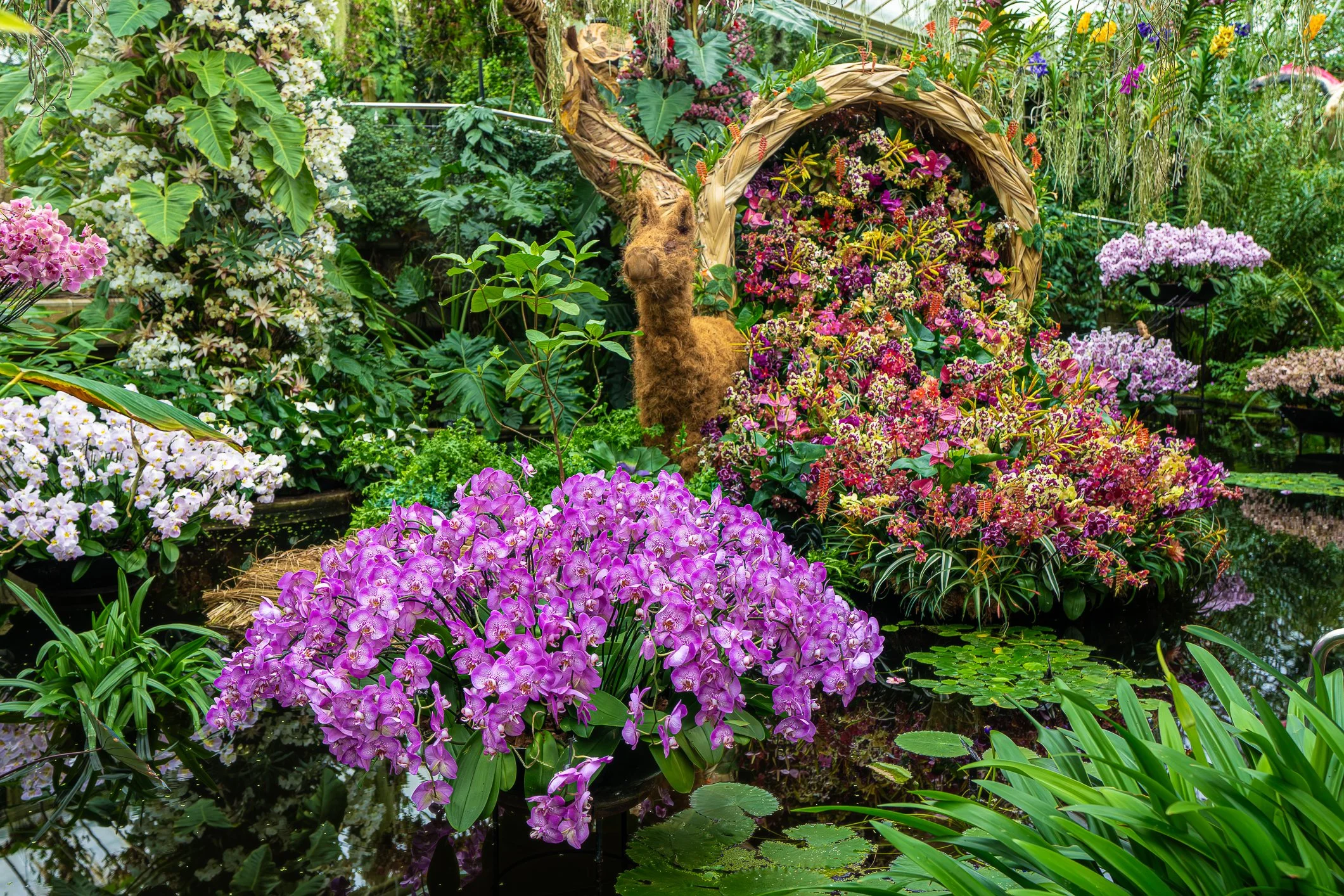
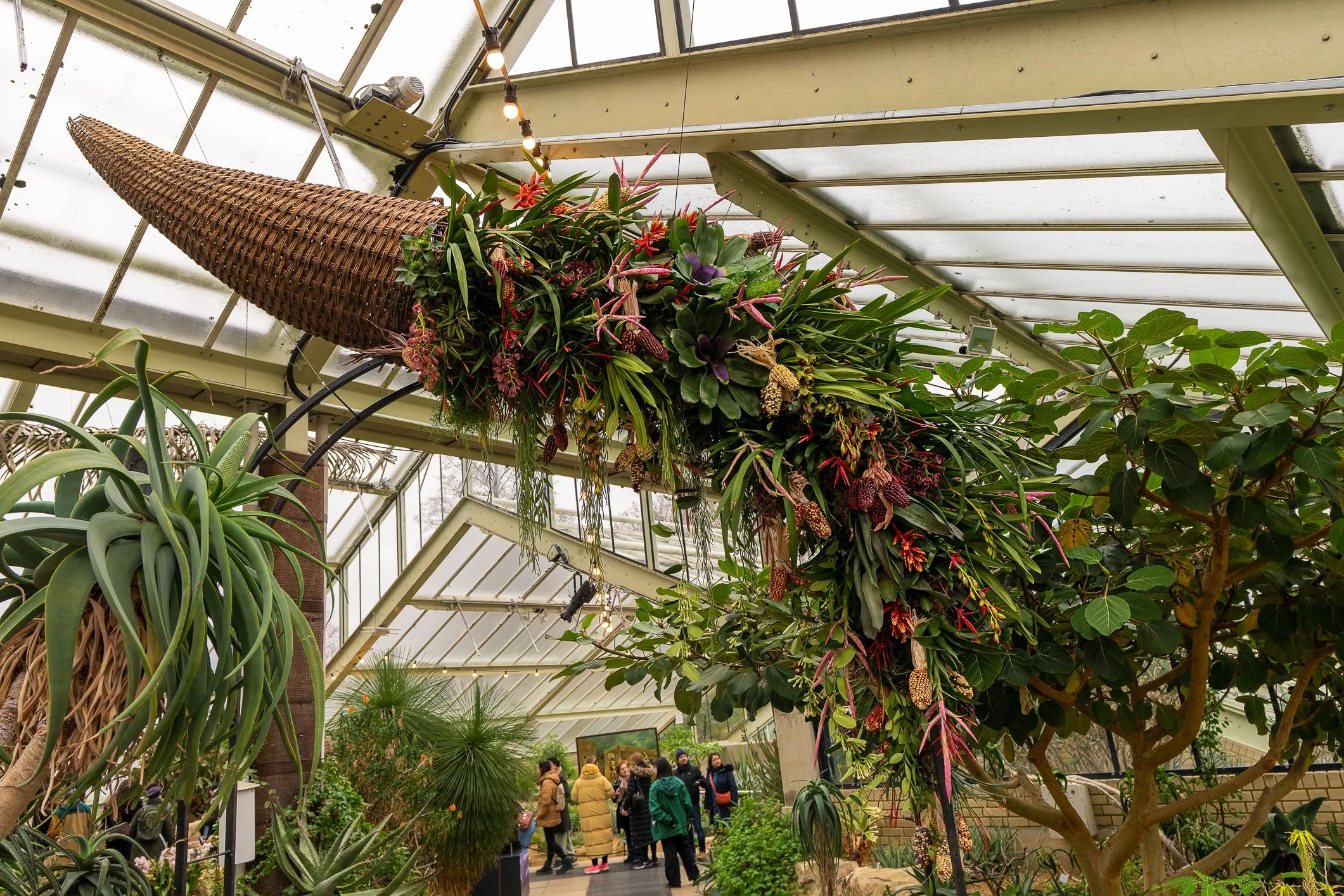
The Orchid Festival at Kew Gardens is back, and this year's theme is Peru! Talk about perfect timing - we're actually heading to Peru in March!

Tegorocznym tematem Festiwalu Orchidei w Kew Gardens jest Peru! O wilku mowa. W Marcu jakby nie było jedziemy na naszą pierwsza wyprawę do Peru.

As we were making our way to the conservatory, we bumped into a wild fox! It was clearly hungry and with a bit of a limp. The day was freezing, too. Luckily, I happened to have some cat food in my bag (I usually do), and the fox was incredibly pleased to get it. And that made us happy.

Po drodze do szklarni przydarzyło nam się spotkanie z liskiem. Lis wyraźnie głodny i trochę utykał, a dzień był wyjątkowo zimny. Na szczęście miałam w torebce saszetkę kociej karmy (od wyjazdu do Maroko zrobił mi się taki zwyczaj). Lis był bardzo zadowolony, że ją dostał. A my jeszcze bardziej.

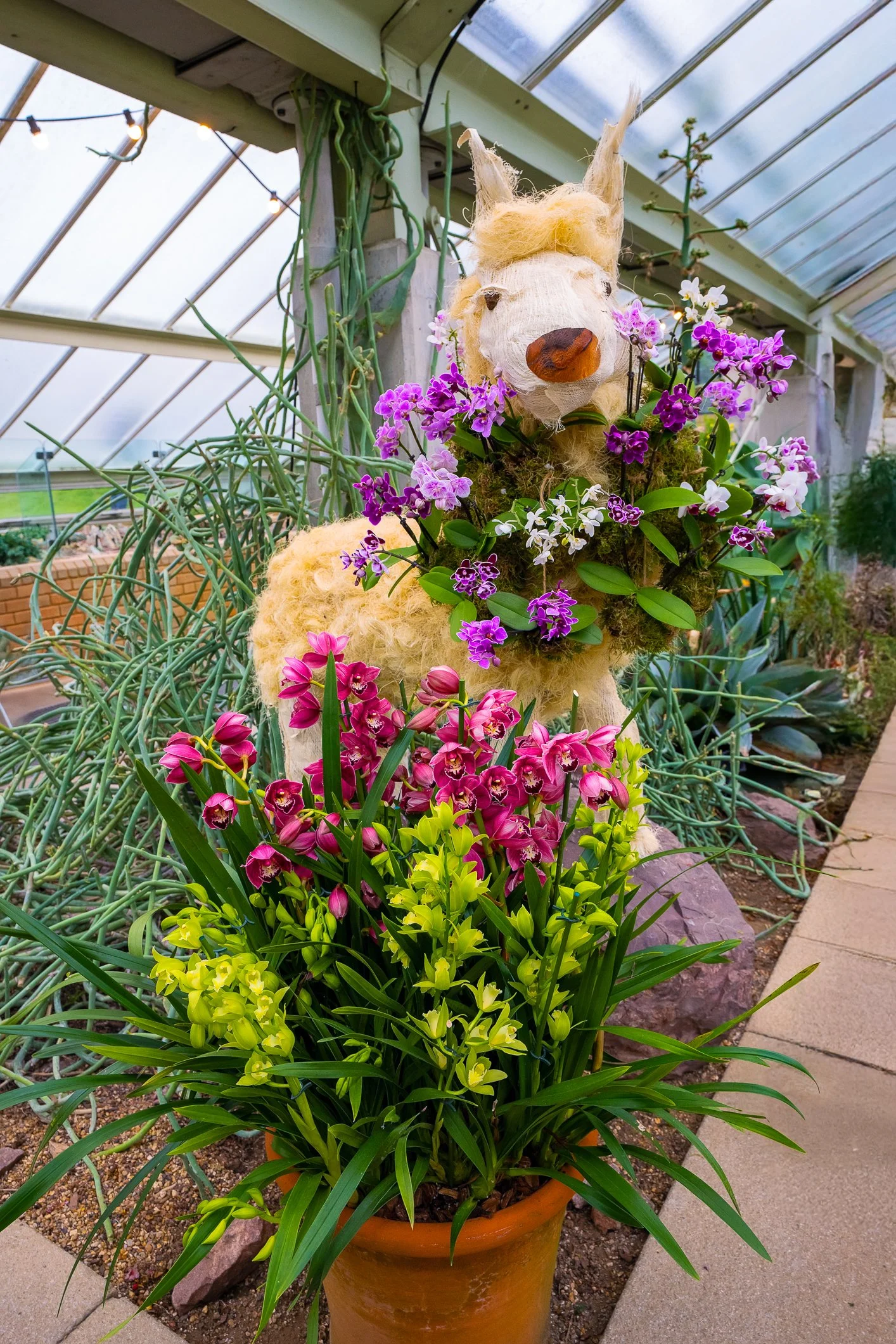
Walking into the glasshouse, we’re immediately greeted by an alpaca covered in orchids.

Wchodząc do szklarni, od razu wita nas alpaka pokryta orchideami.

Then, the Peruvian landscape comes to life in floral form. The central pond is transformed into a scene reminiscent of Lake Titicaca, one of Peru’s national symbols. The flowers spill out, showcasing the country’s rich biodiversity. In the next pond, we find floral flamingos standing proudly against a backdrop of Machu Picchu – another iconic image.

Dalej peruwiański krajobraz odzwierciedlony jest w kwiatowych instalacjach. Centralny staw przekształca się w scenę przypominającą jezioro Titicaca, jeden z peruwiańskich symboli narodowych. Kwiaty wylewają się tu z każdego kąta, prezentując bogatą bioróżnorodność kraju. W kolejnym stawie kwiatowe flamingi stoją dumnie na tle Machu Picchu.

The next part of the exhibition has a form of an aviary with installations representing various birds to celebrate Peru's diverse bird populations.  There are also various butterflies and other insects.

Kolejna część wystawy ma formę woliery z instalacjami przedstawiającymi różne gatunki ptaków, symbol zróżnicowanej populacji ptaków w Peru. Na wystawie zobaczyć można również różne motyle i inne owady.

It was also nice to wander under a “night sky”, decorated with Allium flower heads recycled from Kew's outdoor gardens.

Miło było także powłóczyć się pod „nocnym niebem”, udekorowanym główkami kwiatów Allium uzbieranych w ogrodach Kew.

After browsing a souvenir shop where we ended up with unreasonable amount of locally made chocolate, we continued our walk and came across cute spectacled bears hiding among the flowers and close to the waterfall.

Po wizycie w sklepie z pamiątkami, z którego wyszliśmy z idiotyczną ilością lokalnie produkowanej czekolady, natknęliśmy się na urocze niedźwiedzie andyjskie ukrywające się wśród kwiatów i nad wodospadem.

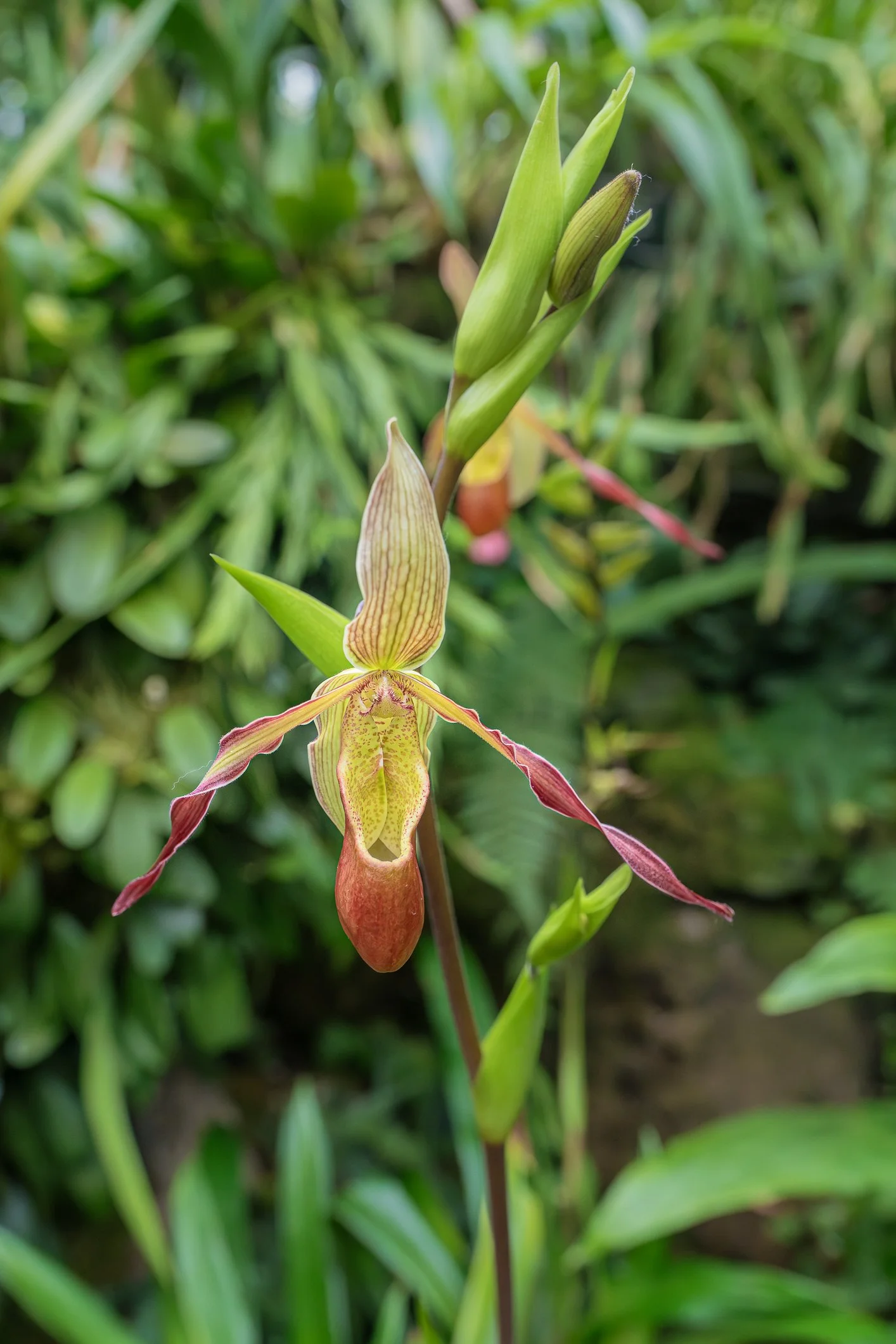
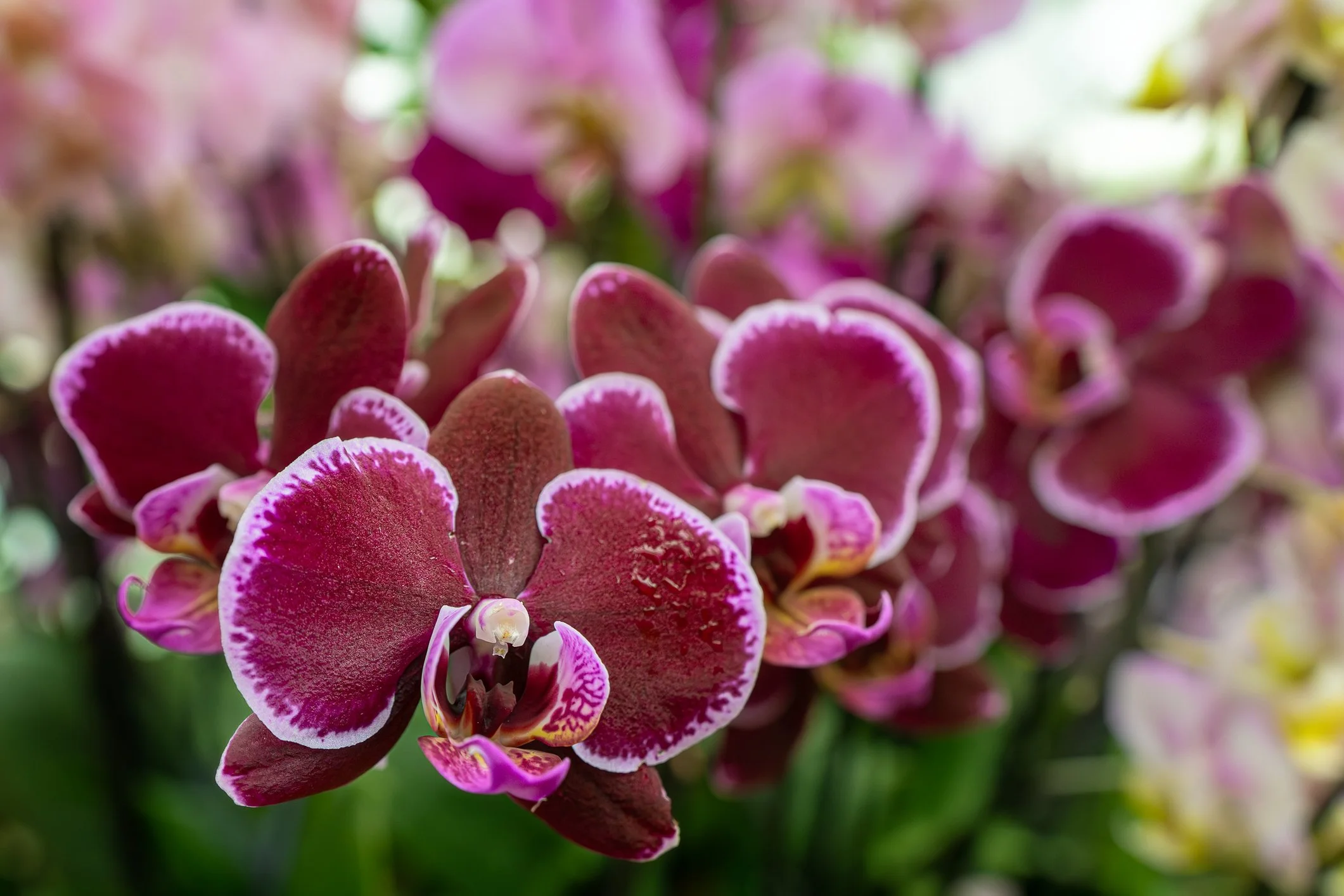
Peru's got it all, from stunning beaches and lush rainforests to dramatic deserts and towering mountains. It's also home to an incredible 3,000+ species of orchids, plus a ton of other amazing wildlife. The festival does a fantastic job of capturing that beauty and biodiversity in the Princess of Wales Conservatory.

Peru ma wszystko, od pięknych plaż i bujnych lasów deszczowych po dramatyczne pustynie i wznoszące się wysoko góry. Jest także domem dla ponad 3000 gatunków orchidei. Festiwal odbywający się całkowicie na terenie szklarni Princess of Wales pokazuje piękno i bioróżnorodności tego kraju.

Winter Lights 2025 part 1

Canary Wharf’s Winter Lights festival makes its much-anticipated return to London for its ninth year. This year's trail features 12 impressive temporary installations alongside the well-loved permanent light artworks.

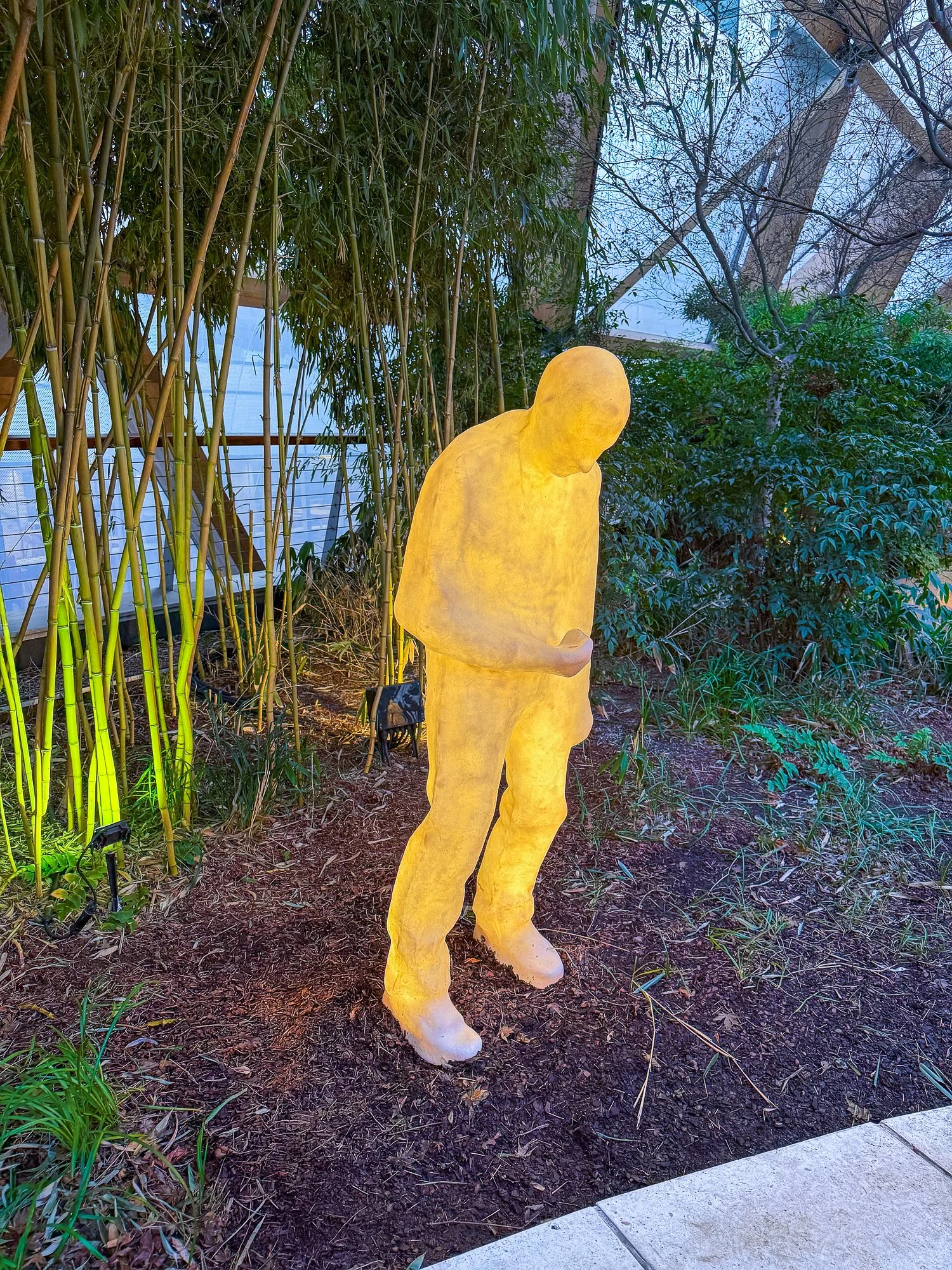
We begin our exploration with Artificial Humans, an installation by Atelier Haute Cuisine from Belgium, located between Adam’s Plaza and the Crossrail Place roof. Developed with the assistance of AI (DALL-E), this piece portrays figures hunched over their something, seemingly their mobiles  (although mobiles are not explicitly presented) - a commentary on modern life. Despite the figures being glowing with a warm light, they carry a sense of detachment, reflecting the emotional disconnect often seen in today’s society.


Po raz dziewiąty powraca do Londynu Festiwal „Winter Lights” w Canary Wharf. Tegoroczna trasa obejmuje 12 imponujących tymczasowych instalacji obok permanentnych espozycji sztuki świetlnej.

Naszą wizytę rozpoczynamy od Artificial Humans, instalacji autorstwa Atelier Haute Cuisine z Belgii, znajdującej się między Adam’s Plaza a dachem Crossrail Place. Zaprojektowana przez AI (DALL-E) praca przedstawia postaci ludzi pochylonych nad czymś, prawdopodobnie telefonami (choć telefony nie są same w sonie widoczne)  i jest komentarzem do współczesnego życia. Pomimo że postacie świecą ciepłym światłem, wydają się być odizolowane i emocjonalnie niedostępne.  

We then traverse Canary Wharf in the fading pre-sunset light, on our way towards Union Square. Along Bellmouth Passage at Crossrail Place Quayside, we discover vibrant new murals created by UK-based female artists for the Global Street Art’s London Mural Festival.  

Następnie w słabnącym świetle dnia przemierzamy Canary Wharf, kierując się do Union Square. Wzdłuż Bellmouth Passage w Crossrail Place Quayside odkrywamy nowe murale stworzone przez artystki z Wielkiej Brytanii z okazji London Mural Festival organizowanego przez Global Street Art.

At Union Square, we admire Portal by Lucid Creates, a monumental public art installation that stands 13 meters tall. The interior is lined with shifting, diffused LEDs, and the exterior covered withs mirrors seamlessly blends into the cityscape leaving visitors momentarily unsure of what is tangible and what is merely a reflection.

Na Union Square podziwiamy Portal autorstwa Lucid Creates, monumentalną publiczną instalację o wysokości 13 metrów. Wnętrze jest wyłożone diodami LED świecącymi zmieniającym się rozproszonym światłem, a zewnętrzna część instalacji, pokryta lustrami idealnie wtapia się w miejski krajobraz, pozostawiając zwiedzających na chwilę w niepewności, czy to, na co akurat patrzą jest realne, czy jest jedynie odbiciem.

Just around the corner on Water Street, we come across a giant bird installation by Luminariste. It is composed of 64 sections of fluorescent tubes, and the light sequences are modelled on birds in various phases of flight This piece quickly becomes one of my favourites.

Tuż obok, na Water Street natrafiamy na gigantyczną instalację przedstawiającą ptaki autorstwa Luminariste. Składa się ona z 64 sekcji świetlówek, a sekwencje świetlne są wzorowane na różnych fazach ptasiego lotu. Ta praca szybko staje się jedną z naszych ulubionych.

 Feeling hungry, we head to a street food corner of the festival to indulge in some burritos and doughnut “hot dogs.”

Zdecydowanie zgłodnieliśmy, więc udajemy się do rejonu festiwalu z jedzeniem ulicznym, gdzie pożeramy burrito i pączkowe „hot dogi”.

As darkness settles in, we head to Montgomery Square to see Mirage by Atelier Sisu (the artists are from Australia and Peru). Mirage is a large installation that examines the impact of social media on our perception of reality.

Gdy mrok się pogłębia, udajemy się na Montgomery Square, aby zobaczyć Mirage autorstwa Atelier Sisu (artyści pochodzą z Australii i Peru). Mirage to duża instalacja, która ma skłaniać do refleksji nad wpływem mediów społecznościowych na nasze postrzeganie rzeczywistości.

In contrast, Positive Spin at Jubilee Place fails to capture our attention, especially due to the crowd. This 5.5-meter-high structure, inspired by beachfront arcades, appeared to engage the children more than the adults.

The Eden Dock was also congested, but this time we chose to brave the crowds in order to see the Illusion Hole by UxU studio from Taiwan. Its precise and geometric arrangements create a captivating effect, as if light is being channelled into a swirling black hole on the water.


Natomiast Positive Spin w Jubilee Place nie przykuwa naszej uwagi, być może z powodu tłumu. Ta 5,5-metrowa konstrukcja, inspirowana grami z nadmorskich pasaży, wydawała się bardziej angażować dzieci niż dorosłych.

 Eden Dock również był zatłoczony, ale tym razem postanowiliśmy stawić czoła tłumom, aby zobaczyć Illusion Hole studia UxU z Tajwanu. Precyzyjny geometryczny układ tej instalacji tworzy efekt, jakby światło było kierowane do wirującej czarnej dziury na wodzie.

Christmas at kew (2024 edition) part 3

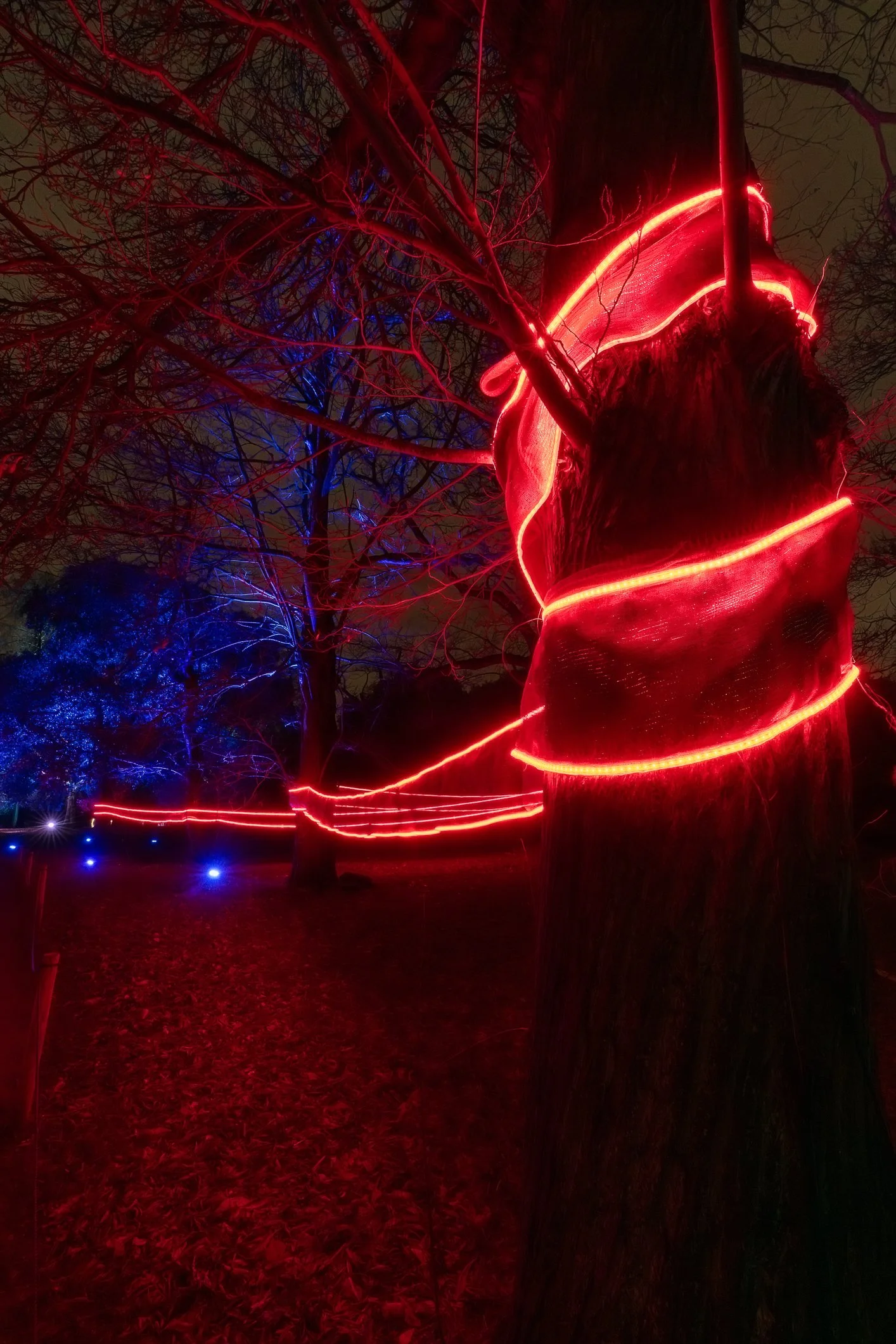
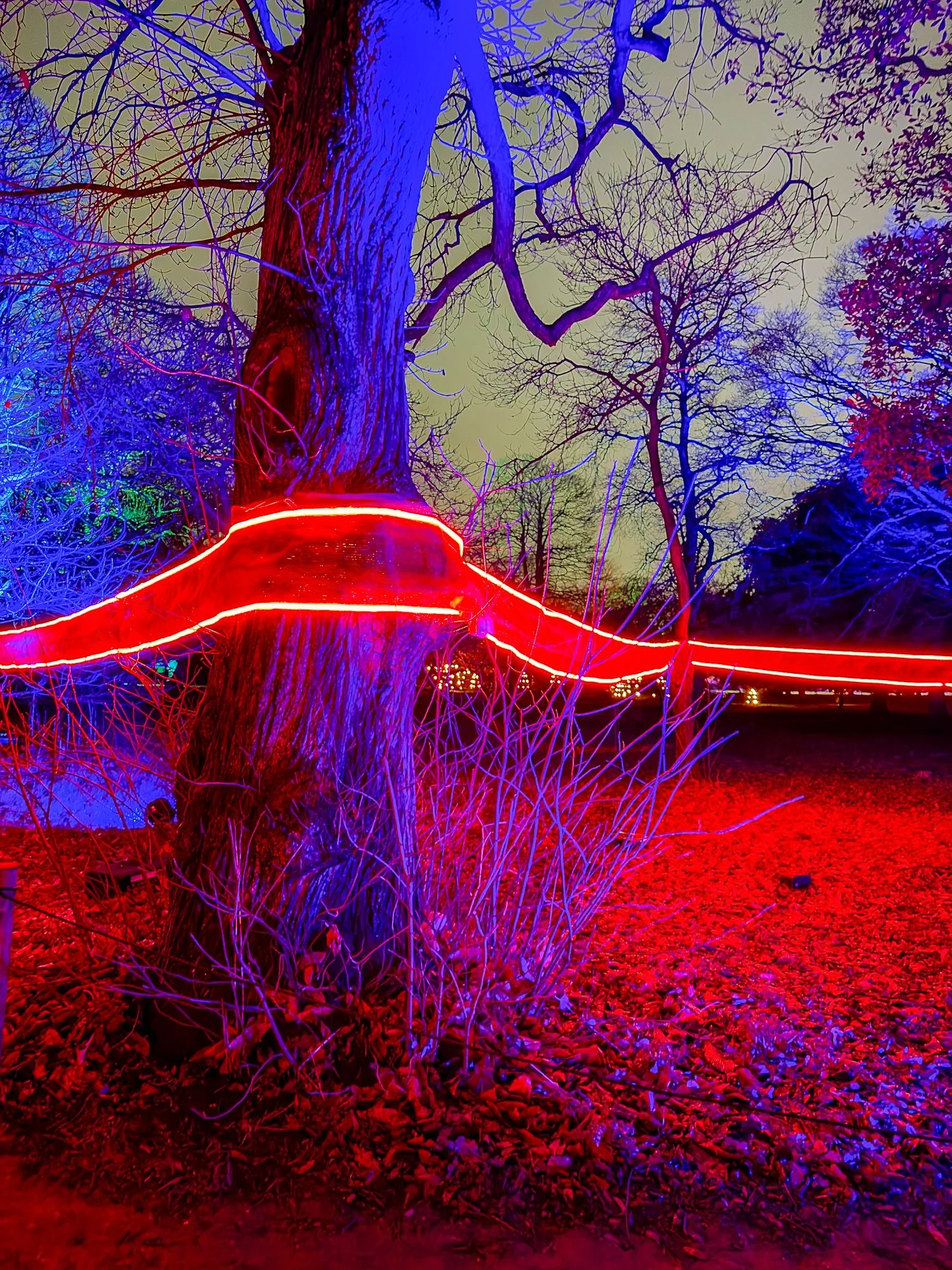
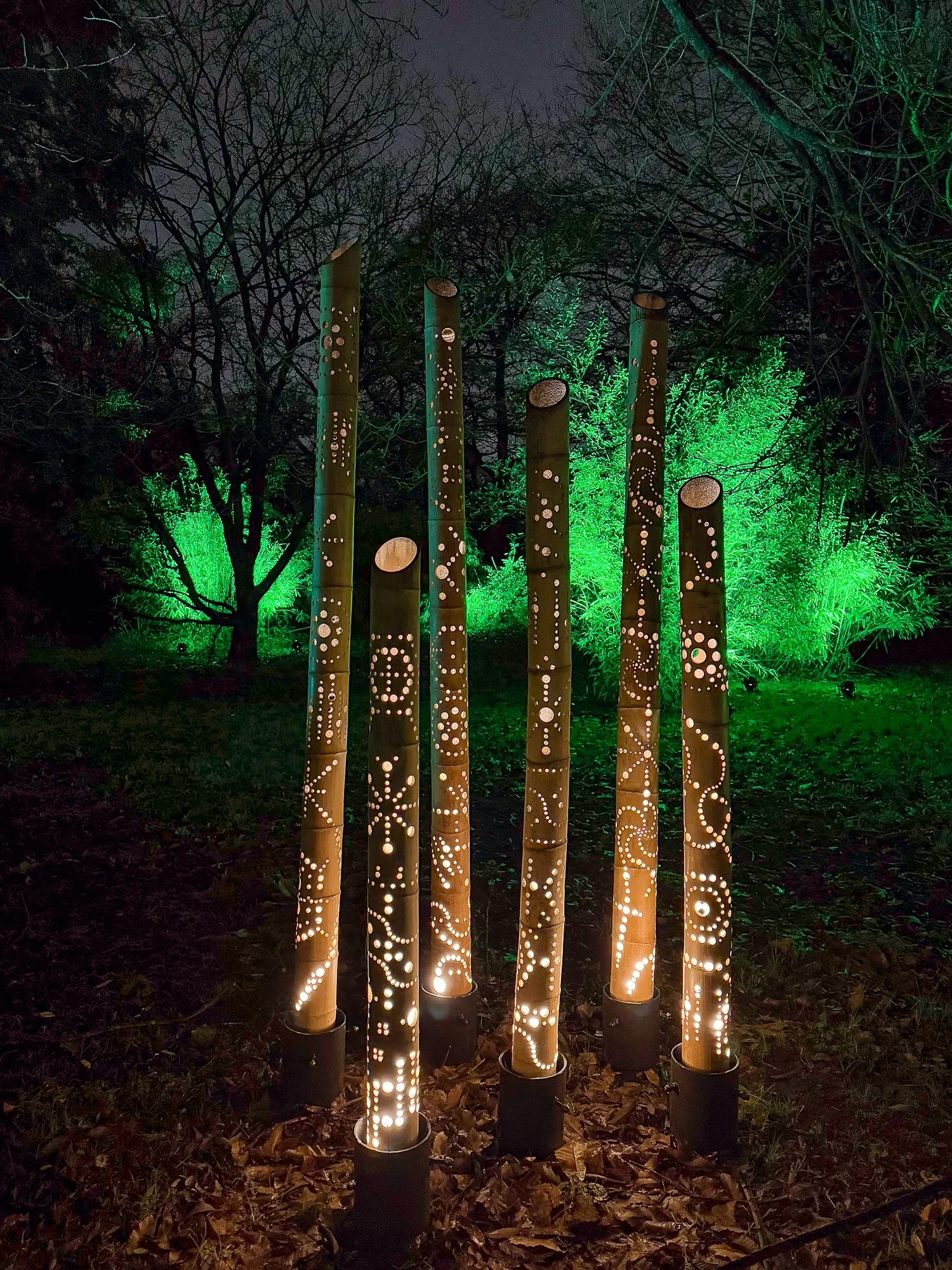
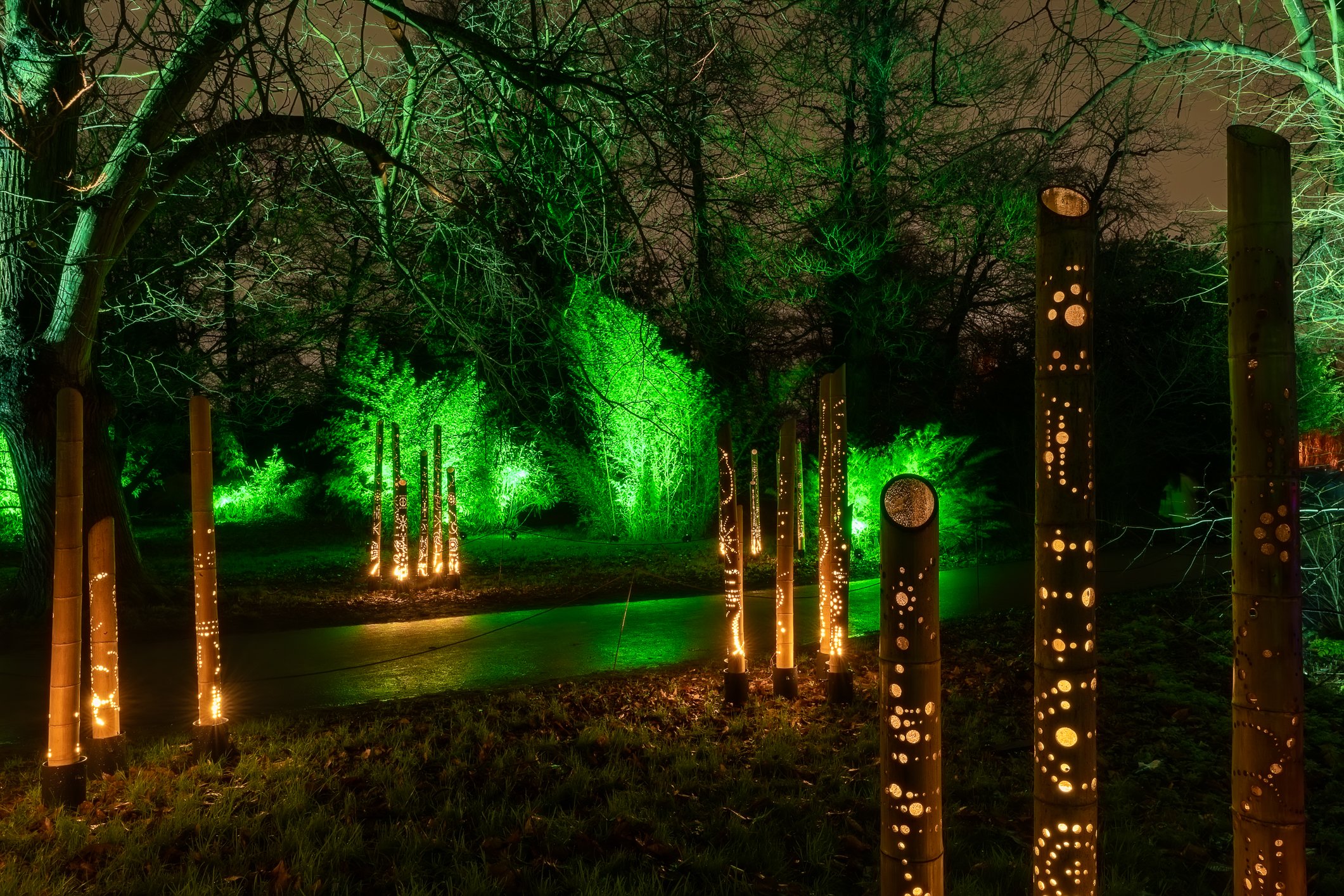
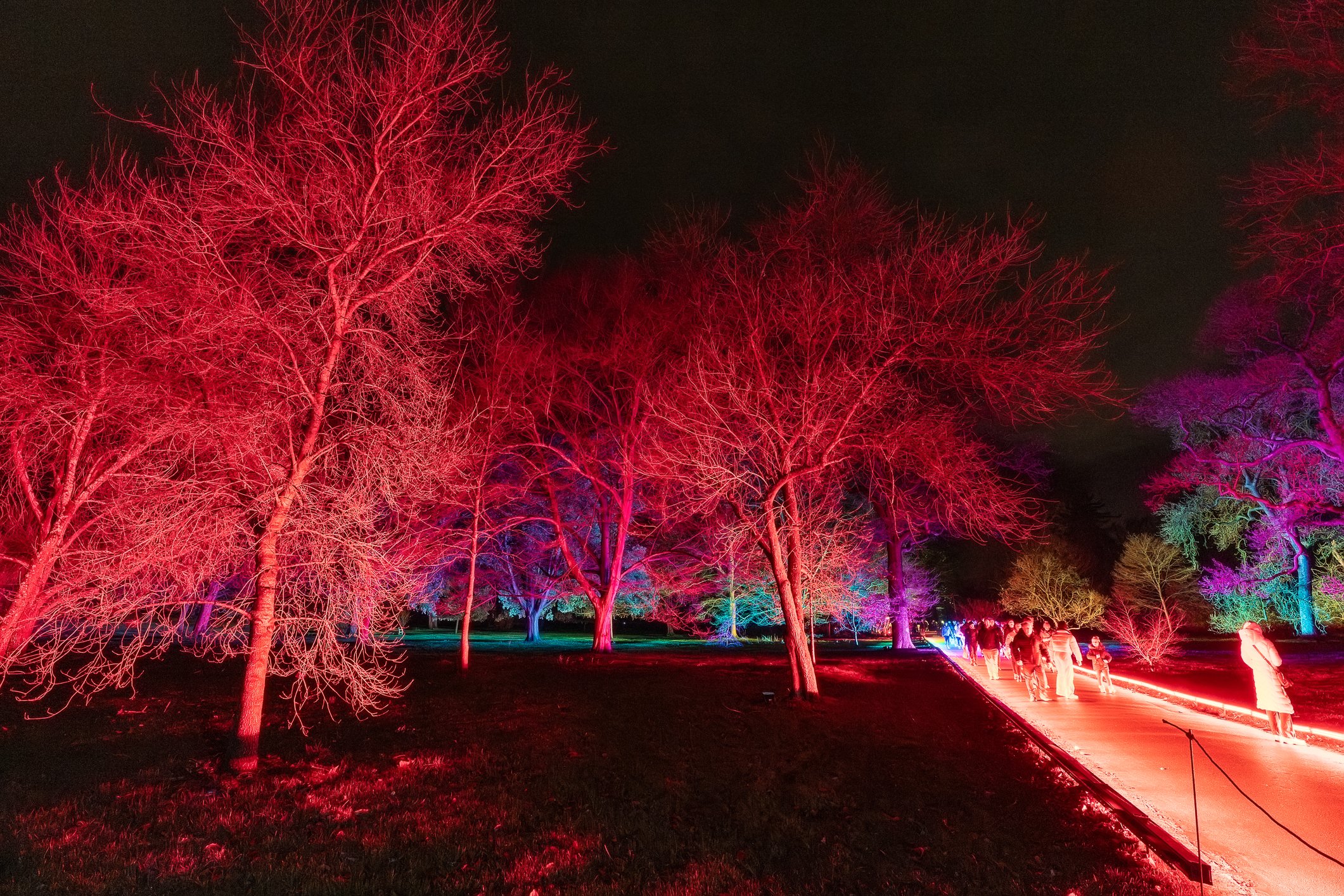
Next comes the Electric Ribbon, a swirling ribbon of red light weaving through several trees. Behind it is Electric Bamboo, made up of thick bamboo poles with patterned holes, lit from within so the light shines through.

Potem pojawia się Electric Ribbon - wijąca się wśród drzew czerwona wstęga światła. Tuż za nią znajduje się instalacja Electric Bamboo, złożona z podświetlonych od środka grubych bambusowych słupów z wyciętymi wzorami.

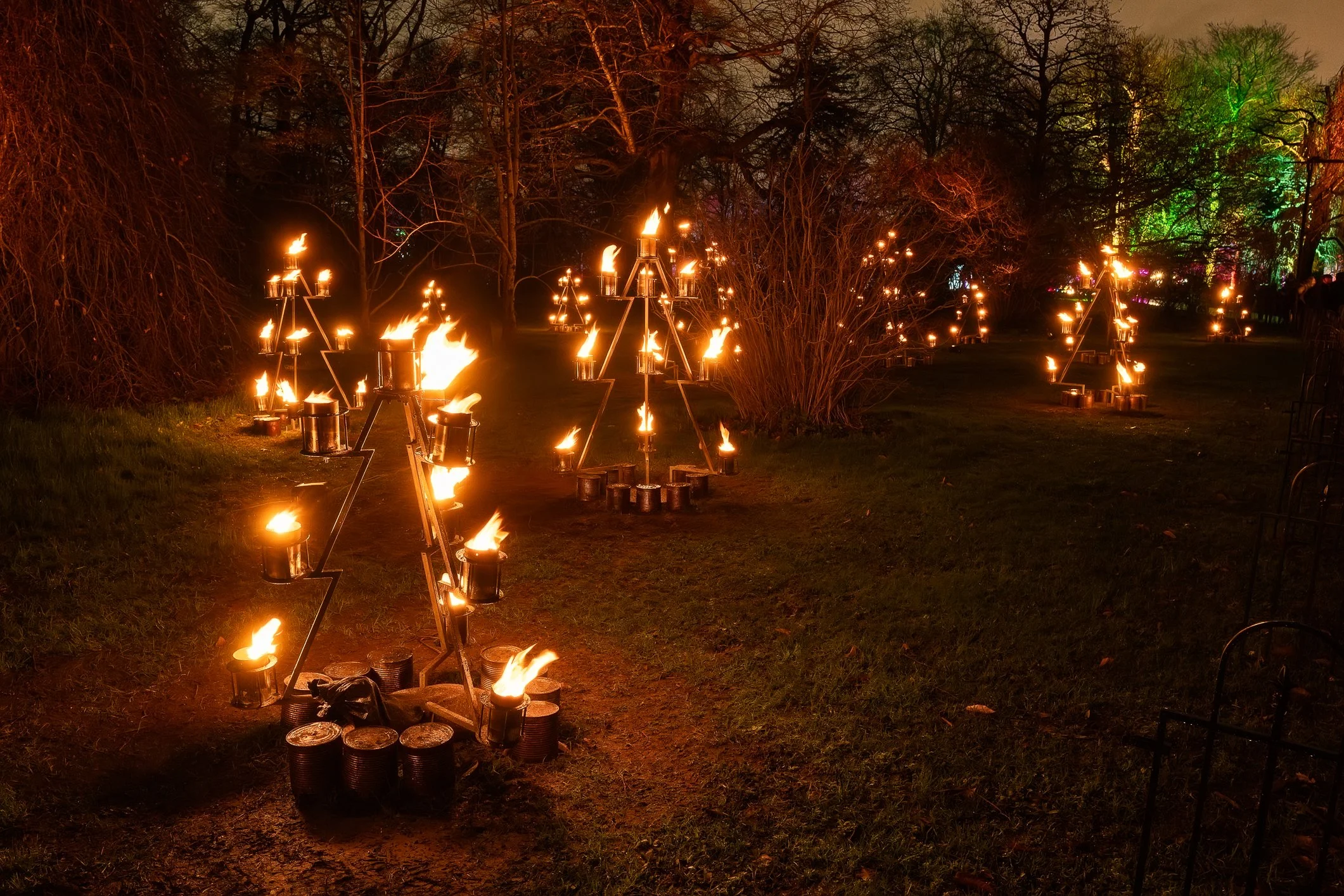
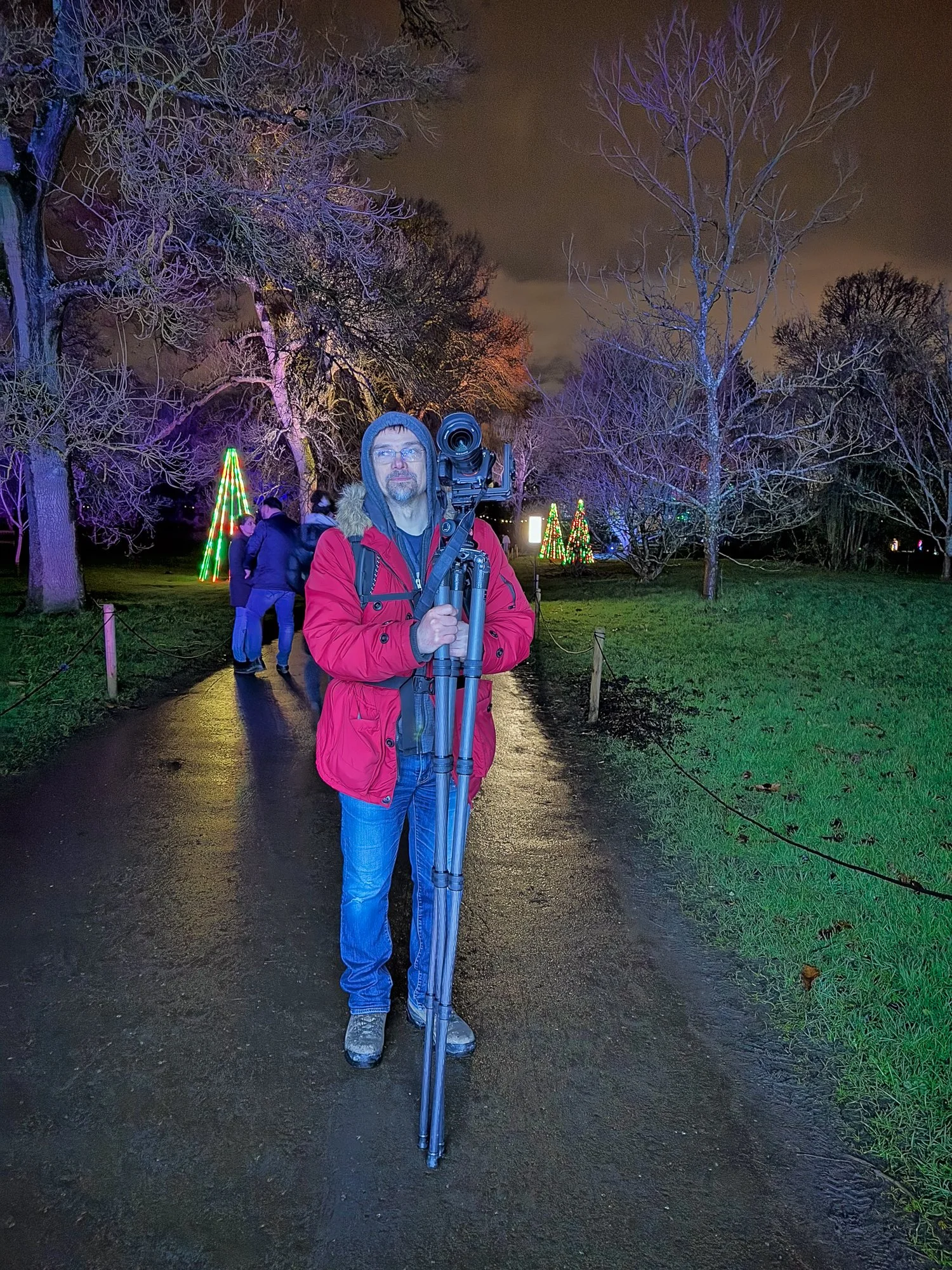
We then enter the Fire Garden, where more than 20 metal Christmas-tree structures (between 1 and 1.75 metres tall) stand along either side of the path, each adorned with flaming lanterns. I suspect these are the same lanterns used to create the Sea of Fire in front of the Temperate House last year (see my blog entry from the previous season), repurposed for this year’s trail - which does not make this installation less peasant. We can feel the warmth of the fire, much appreciated on a cold night, and smell the burning wood and oil while watching the flickering flames in their orange glow.

Kolejna instalacja to Fire Garden, gdzie po obu stronach ścieżki stoi ponad 20 metalowych konstrukcji w kształcie choinek (o wysokości od 1 do 1,75 metra), każda udekorowana płonącymi lampionami. Podejrzewam, że są to te same lampiony, które w zeszłym roku posłużyły do stworzenia Sea of Fire przed Temperate House (o czym jest mój wpis na blogu z poprzedniego roku), teraz wykorzystane ponownie na tegorocznym szlaku  - co absolutnie nie umniejsza obecnej instalacji. Czujemy przyjemne ciepło ognia, szczególnie mile widziane w chłodny wieczór, i wyczuwamy zapach palącego się drewna oraz oleju, obserwując migoczące płomienie skąpane w pomarańczowej poświacie.

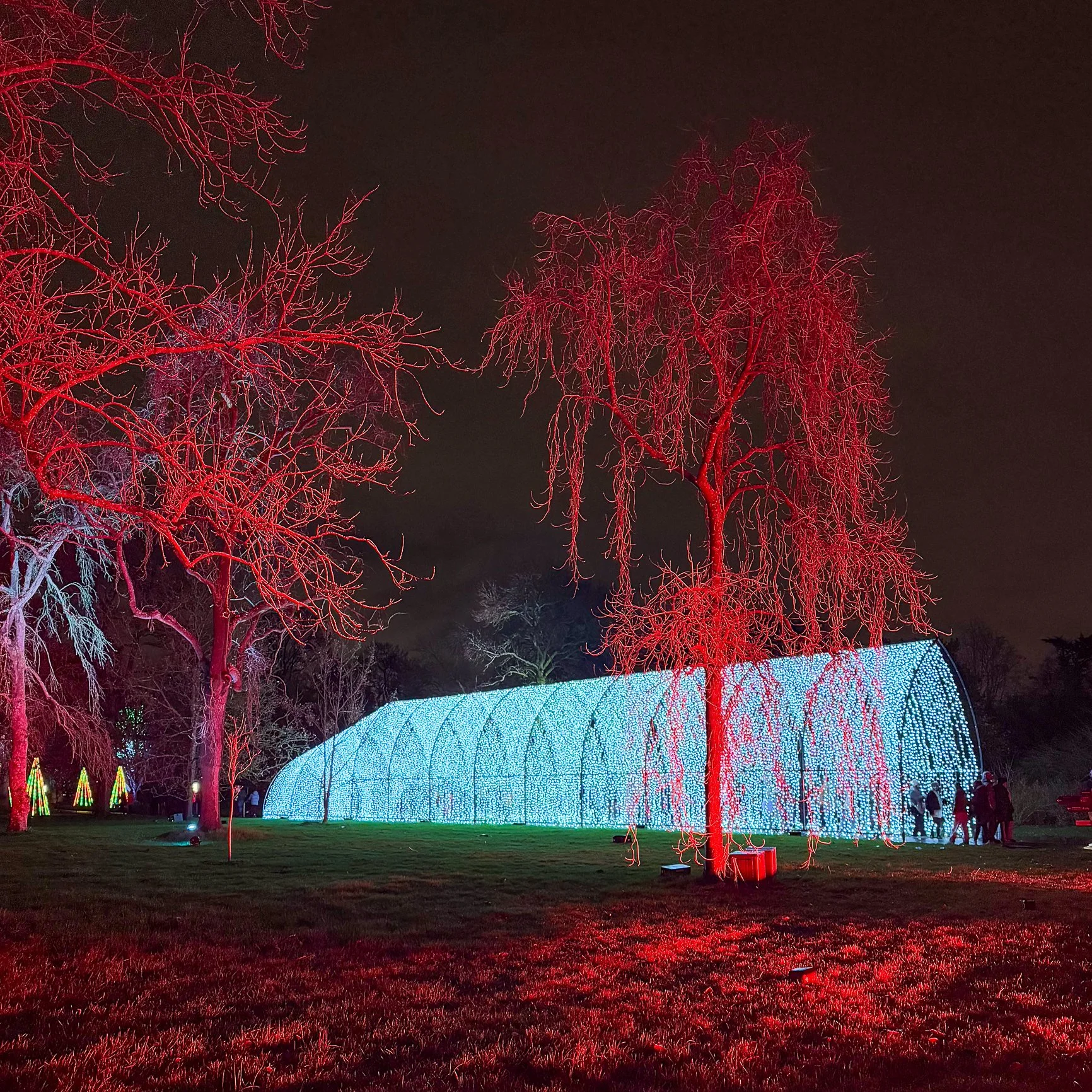
Rainbow Road - a path flooded with the colours of the rainbow - leads us to the Christmas Cathedral, a 39-metre-long installation made from tens of thousands of twinkling LED lights.
Rainbow Road - ścieżka skąpana we wszystkich kolorach tęczy - prowadzi nas do Christmas Cathedral, 39-metrowej instalacji złożonej z dziesiątek tysięcy migoczących świateł LED

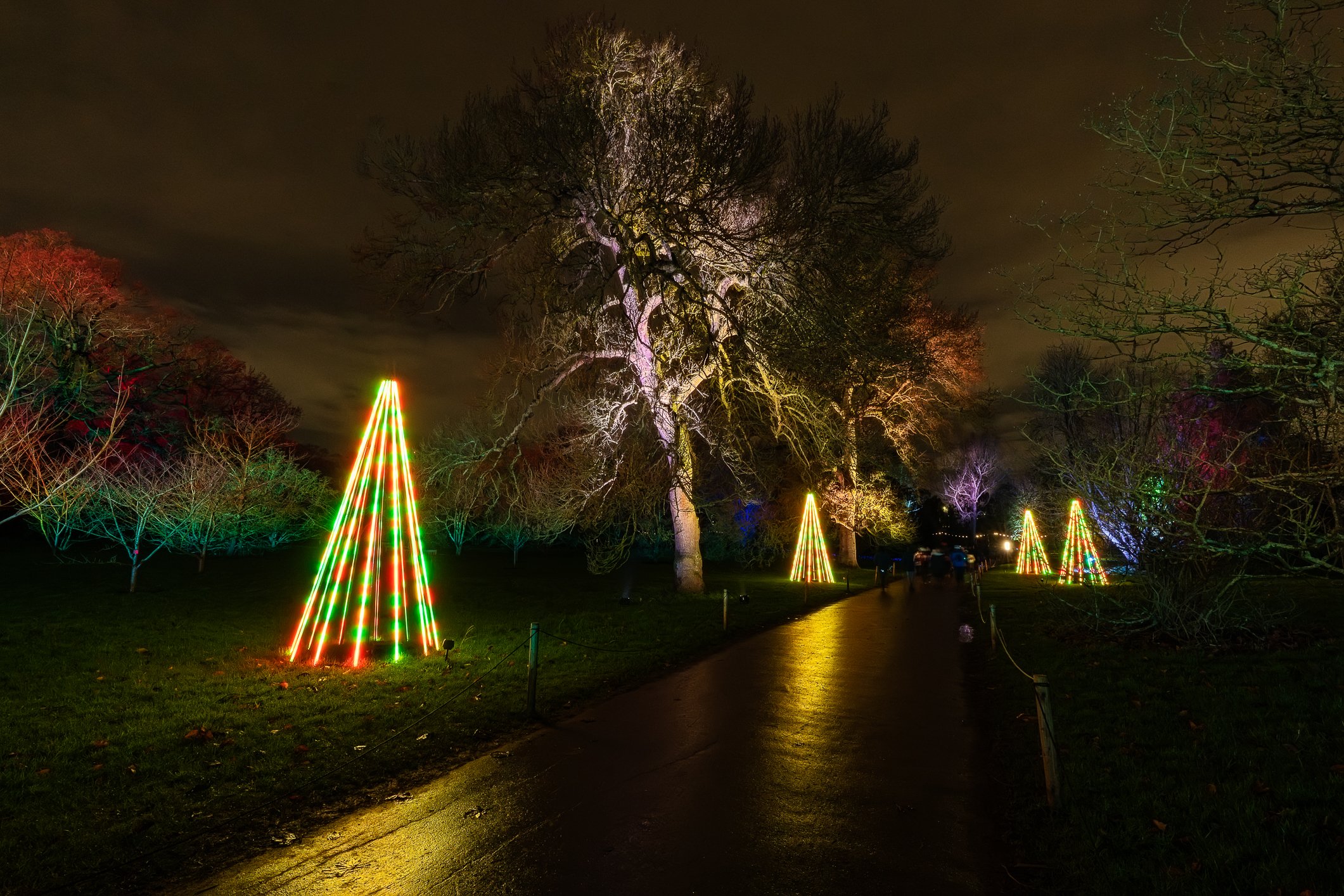
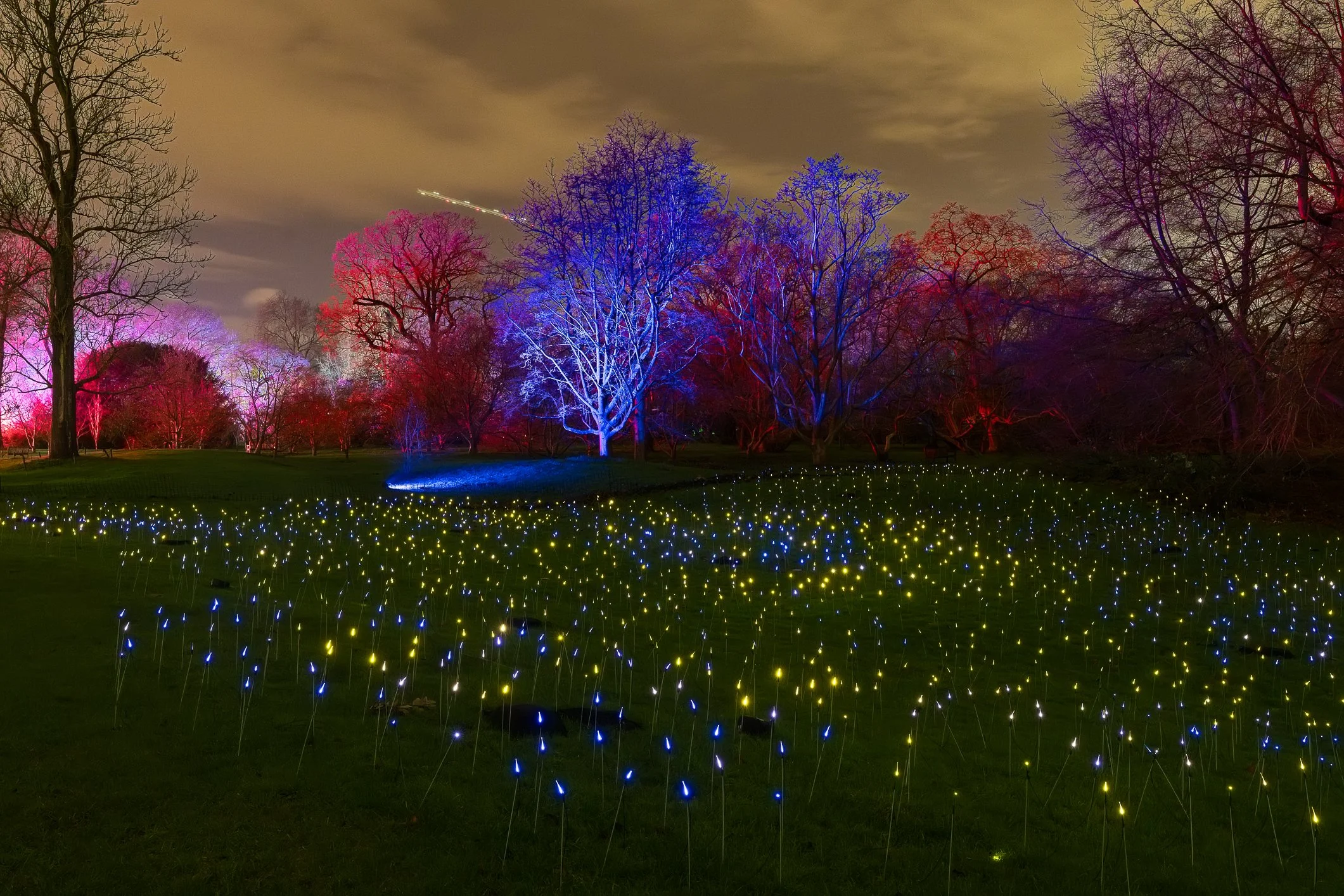
From here, Candy Trees made of neon sticks guide us to the Meadow of Lights, where more than 10,000 flowers bloom using fibre-optic blades of light.

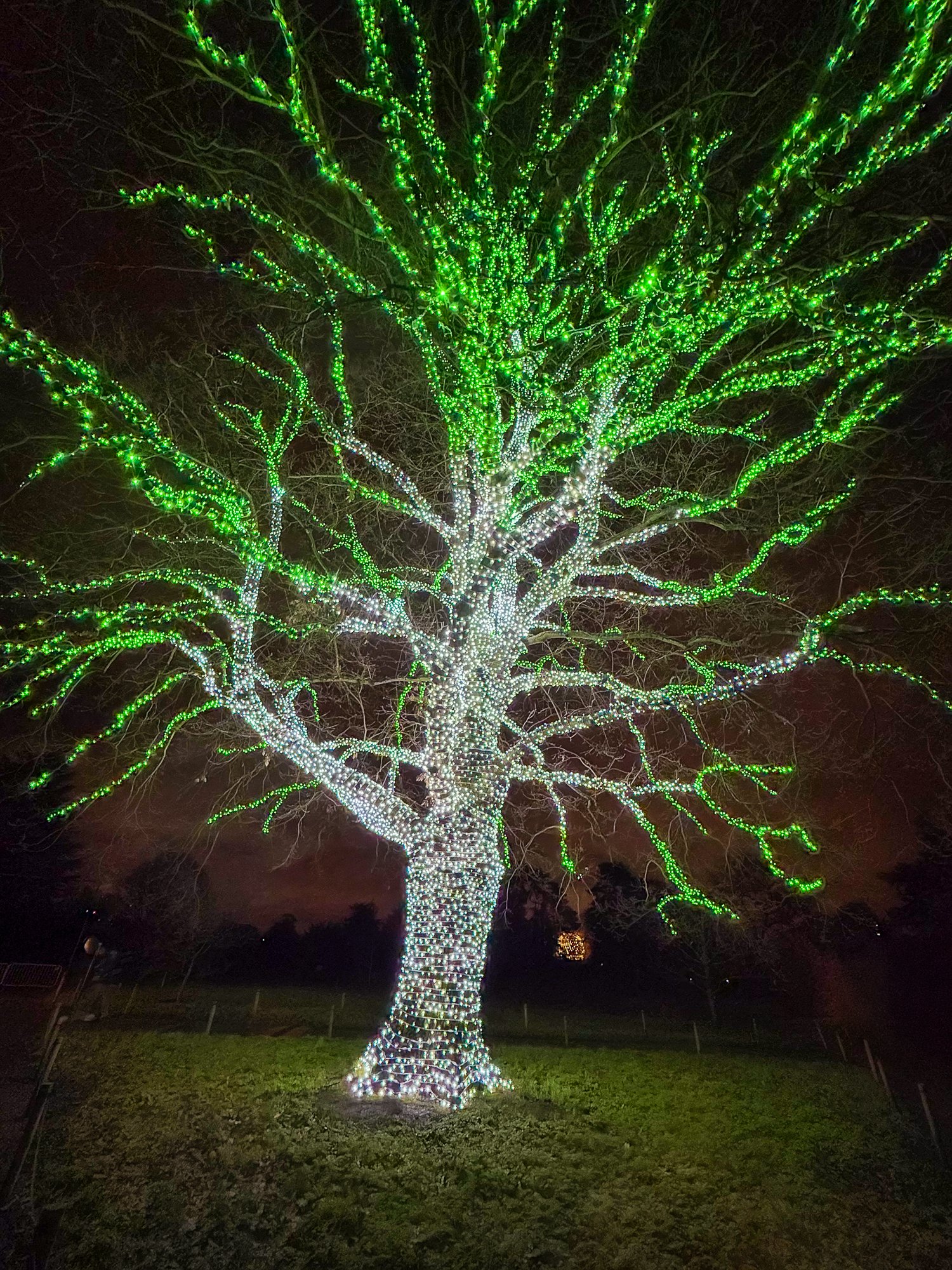
The final installation of this year’s trail is the Christmas Turkey Oak, a magnificent tree with its trunk and branches completely covered in countless tiny lights.

Stąd Candy Trees wykonane z neonowych słupów prowadzą nas do Meadow of Lights, gdzie ponad 10 000 kwiatów „rozkwita” dzięki światłowodowym światłom.

Ostatnią instalacją tegorocznego szlaku jest Christmas Turkey Oak - majestatyczne drzewo, którego pień i gałęzie są całkowicie pokryte niezliczonymi maleńkimi światełkami.